SUBSCRIBE TO OUR FREE NEWSLETTER
Daily news & progressive opinion—funded by the people, not the corporations—delivered straight to your inbox.
5
#000000
#FFFFFF
To donate by check, phone, or other method, see our More Ways to Give page.
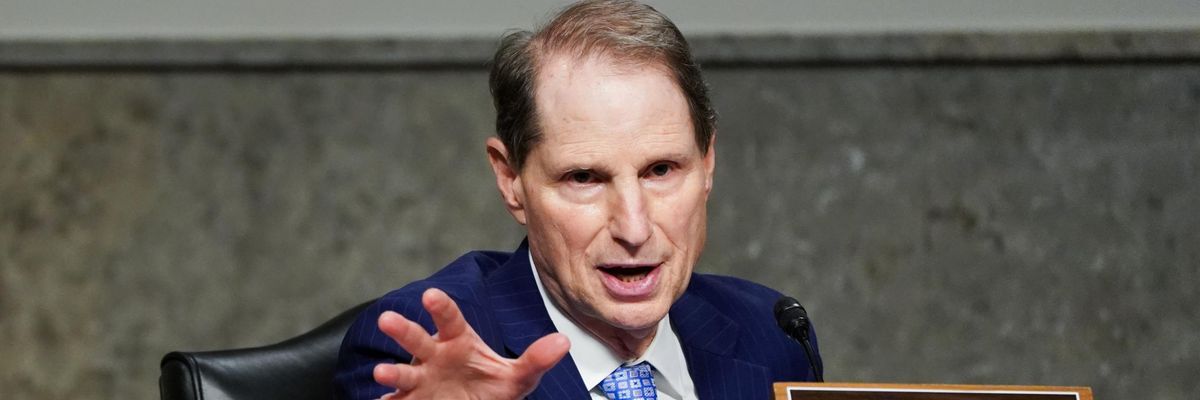
Progressive lawmakers and other advocates of economic justice welcomed new legislative text for the Billionaires Income Tax unveiled Wednesday by Senate Finance Committee Chair Ron Wyden as part of Democrats' Build Back Better Package.
"The Billionaires Income Tax will begin to tax income from wealth like income from work."
"Justice and just plain common sense demand that billionaires pay something closer to their fair share of taxes. The Billionaires Income Tax will see that they do," said Americans for Tax Fairness executive director Frank Clemente in a statement.
The tax would apply to Americans with over $1 billion in assets or more than $100 million in income for three consecutive years. Wyden (D-Ore.) estimates it would affect only about 700 taxpayers but raise hundreds of billions of dollars that policymakers can invest in key priorities such as affordable housing, child care, climate action, and Medicare expansion.
The proposal would impose the capital gains tax on tradable assets like stocks each year, whether or not they are sold. Additionally, when a billionaire who meets Wyden's criteria sells a nontradable asset such as real estate, they would pay not only capital gains tax but also a new charge "akin to interest on tax deferred while the individual held that asset."
"The Billionaires Income Tax will begin to tax income from wealth like income from work," said Clemente. "America's 700-odd billionaires have grown 70%, or $2.1 trillion, wealthier during the pandemic alone, yet many of them have paid zero federal income taxes in recent years."
Stephen Prince, vice chair of the Patriotic Millionaires and owner of National Business Products, also highlighted that the nation's rich have seen their wealth soar during the global health crisis.
"Meanwhile, the regular, hardworking Americans--particularly the essential workers who were lauded as 'heroes'--paid taxes on every dollar that they earned," Prince said, adding that he supports Wyden's plan "because it's only right that we end this injustice and start making wealthy Americans pay their fair share."
Related Content

Others who expressed support for the proposal include labor leaders like AFL-CIO president Liz Shuler and National Education Association president Becky Pringle, as well as Main Street Alliance co-executive director Chanda Causer and National Women's Law Center president and CEO Fatima Goss Graves.
"For too long, families have been denied basic supports such as paid leave, child care, and an expanded child tax credit, all while billionaires evade taxes on obscene amounts of wealth," Goss Graves said Wednesday. "This dynamic is economically dangerous and morally unsustainable."
Politico highlighted some of the barriers the Billionaires Income Tax faces:
Many House Democrats are already balking at the proposal, preferring a slate of more traditional tax increases approved last month by the Ways and Means Committee.
And the proposal, should it pass, would almost certainly be challenged in court.
The Constitution restricts so-called direct taxes, an antiquated term referring to levies imposed directly on someone that can't be imposed on someone else. There's a big exception for income taxes, thanks to the 16th Amendment, which allows Congress to tax earnings. The question with the billionaires tax will be whether it counts as an income tax.
The new legislative text comes as congressional leaders and President Joe Biden are still negotiating the details of the sweeping budget reconciliation package, which House progressives maintain must advance to secure their support for smaller Senate-approved bipartisan infrastructure legislation.
A few corporate-backed, right-wing Democrats--namely Sens. Joe Manchin of West Virginia and Kyrsten Sinema of Arizona--have joined with business lobbyists in trying to water down the broader bill, which has to be backed by the full Senate Democratic Caucus to pass.
Related Content

While Sinema has challenged Democrats' efforts to hike the corporate tax rate slashed by congressional Republicans and former President Donald Trump, Manchin spoke out against Wyden's plan to reporters on Wednesday morning, according to The New York Times.
"I don't like the connotation that we're targeting different people," specifically those who "contributed to society and create a lot of jobs and a lot of money and give a lot of philanthropic pursuits," he said. "It's time that we all pull together and grow together."
Sharing a Washington Post report that the tax proposal "could raise more than half of its revenue from just 10 people," Rep. Rashida Tlaib (D-Mich.) tweeted that "it is so wrong that there is any hesitation on taxing a handful of the richest Americans."
Wyden, in a statement, argued the proposal is grounded in fairness.
"There are two tax codes in America. The first is mandatory for workers who pay taxes out of every paycheck. The second is voluntary for billionaires who defer paying taxes for years, if not indefinitely," he said. "Two tax codes allow billionaires to use largely untaxed income from wealth to build more wealth, while working families struggle to balance the mortgage against groceries, and utilities against saving for the future."
"That's why it's time" for a policy to "ensure billionaires pay tax every year, just like working Americans," Wyden added. "We have a historic opportunity with the Billionaires Income Tax to restore fairness to our tax code and fund critical investments in American families."
Progressive lawmakers and other advocates of economic justice welcomed new legislative text for the Billionaires Income Tax unveiled Wednesday by Senate Finance Committee Chair Ron Wyden as part of Democrats' Build Back Better Package.
"The Billionaires Income Tax will begin to tax income from wealth like income from work."
"Justice and just plain common sense demand that billionaires pay something closer to their fair share of taxes. The Billionaires Income Tax will see that they do," said Americans for Tax Fairness executive director Frank Clemente in a statement.
The tax would apply to Americans with over $1 billion in assets or more than $100 million in income for three consecutive years. Wyden (D-Ore.) estimates it would affect only about 700 taxpayers but raise hundreds of billions of dollars that policymakers can invest in key priorities such as affordable housing, child care, climate action, and Medicare expansion.
The proposal would impose the capital gains tax on tradable assets like stocks each year, whether or not they are sold. Additionally, when a billionaire who meets Wyden's criteria sells a nontradable asset such as real estate, they would pay not only capital gains tax but also a new charge "akin to interest on tax deferred while the individual held that asset."
"The Billionaires Income Tax will begin to tax income from wealth like income from work," said Clemente. "America's 700-odd billionaires have grown 70%, or $2.1 trillion, wealthier during the pandemic alone, yet many of them have paid zero federal income taxes in recent years."
Stephen Prince, vice chair of the Patriotic Millionaires and owner of National Business Products, also highlighted that the nation's rich have seen their wealth soar during the global health crisis.
"Meanwhile, the regular, hardworking Americans--particularly the essential workers who were lauded as 'heroes'--paid taxes on every dollar that they earned," Prince said, adding that he supports Wyden's plan "because it's only right that we end this injustice and start making wealthy Americans pay their fair share."
Related Content
Others who expressed support for the proposal include labor leaders like AFL-CIO president Liz Shuler and National Education Association president Becky Pringle, as well as Main Street Alliance co-executive director Chanda Causer and National Women's Law Center president and CEO Fatima Goss Graves.
"For too long, families have been denied basic supports such as paid leave, child care, and an expanded child tax credit, all while billionaires evade taxes on obscene amounts of wealth," Goss Graves said Wednesday. "This dynamic is economically dangerous and morally unsustainable."
Politico highlighted some of the barriers the Billionaires Income Tax faces:
Many House Democrats are already balking at the proposal, preferring a slate of more traditional tax increases approved last month by the Ways and Means Committee.
And the proposal, should it pass, would almost certainly be challenged in court.
The Constitution restricts so-called direct taxes, an antiquated term referring to levies imposed directly on someone that can't be imposed on someone else. There's a big exception for income taxes, thanks to the 16th Amendment, which allows Congress to tax earnings. The question with the billionaires tax will be whether it counts as an income tax.
The new legislative text comes as congressional leaders and President Joe Biden are still negotiating the details of the sweeping budget reconciliation package, which House progressives maintain must advance to secure their support for smaller Senate-approved bipartisan infrastructure legislation.
A few corporate-backed, right-wing Democrats--namely Sens. Joe Manchin of West Virginia and Kyrsten Sinema of Arizona--have joined with business lobbyists in trying to water down the broader bill, which has to be backed by the full Senate Democratic Caucus to pass.
Related Content
While Sinema has challenged Democrats' efforts to hike the corporate tax rate slashed by congressional Republicans and former President Donald Trump, Manchin spoke out against Wyden's plan to reporters on Wednesday morning, according to The New York Times.
"I don't like the connotation that we're targeting different people," specifically those who "contributed to society and create a lot of jobs and a lot of money and give a lot of philanthropic pursuits," he said. "It's time that we all pull together and grow together."
Sharing a Washington Post report that the tax proposal "could raise more than half of its revenue from just 10 people," Rep. Rashida Tlaib (D-Mich.) tweeted that "it is so wrong that there is any hesitation on taxing a handful of the richest Americans."
Wyden, in a statement, argued the proposal is grounded in fairness.
"There are two tax codes in America. The first is mandatory for workers who pay taxes out of every paycheck. The second is voluntary for billionaires who defer paying taxes for years, if not indefinitely," he said. "Two tax codes allow billionaires to use largely untaxed income from wealth to build more wealth, while working families struggle to balance the mortgage against groceries, and utilities against saving for the future."
"That's why it's time" for a policy to "ensure billionaires pay tax every year, just like working Americans," Wyden added. "We have a historic opportunity with the Billionaires Income Tax to restore fairness to our tax code and fund critical investments in American families."
Progressive lawmakers and other advocates of economic justice welcomed new legislative text for the Billionaires Income Tax unveiled Wednesday by Senate Finance Committee Chair Ron Wyden as part of Democrats' Build Back Better Package.
"The Billionaires Income Tax will begin to tax income from wealth like income from work."
"Justice and just plain common sense demand that billionaires pay something closer to their fair share of taxes. The Billionaires Income Tax will see that they do," said Americans for Tax Fairness executive director Frank Clemente in a statement.
The tax would apply to Americans with over $1 billion in assets or more than $100 million in income for three consecutive years. Wyden (D-Ore.) estimates it would affect only about 700 taxpayers but raise hundreds of billions of dollars that policymakers can invest in key priorities such as affordable housing, child care, climate action, and Medicare expansion.
The proposal would impose the capital gains tax on tradable assets like stocks each year, whether or not they are sold. Additionally, when a billionaire who meets Wyden's criteria sells a nontradable asset such as real estate, they would pay not only capital gains tax but also a new charge "akin to interest on tax deferred while the individual held that asset."
"The Billionaires Income Tax will begin to tax income from wealth like income from work," said Clemente. "America's 700-odd billionaires have grown 70%, or $2.1 trillion, wealthier during the pandemic alone, yet many of them have paid zero federal income taxes in recent years."
Stephen Prince, vice chair of the Patriotic Millionaires and owner of National Business Products, also highlighted that the nation's rich have seen their wealth soar during the global health crisis.
"Meanwhile, the regular, hardworking Americans--particularly the essential workers who were lauded as 'heroes'--paid taxes on every dollar that they earned," Prince said, adding that he supports Wyden's plan "because it's only right that we end this injustice and start making wealthy Americans pay their fair share."
Related Content
Others who expressed support for the proposal include labor leaders like AFL-CIO president Liz Shuler and National Education Association president Becky Pringle, as well as Main Street Alliance co-executive director Chanda Causer and National Women's Law Center president and CEO Fatima Goss Graves.
"For too long, families have been denied basic supports such as paid leave, child care, and an expanded child tax credit, all while billionaires evade taxes on obscene amounts of wealth," Goss Graves said Wednesday. "This dynamic is economically dangerous and morally unsustainable."
Politico highlighted some of the barriers the Billionaires Income Tax faces:
Many House Democrats are already balking at the proposal, preferring a slate of more traditional tax increases approved last month by the Ways and Means Committee.
And the proposal, should it pass, would almost certainly be challenged in court.
The Constitution restricts so-called direct taxes, an antiquated term referring to levies imposed directly on someone that can't be imposed on someone else. There's a big exception for income taxes, thanks to the 16th Amendment, which allows Congress to tax earnings. The question with the billionaires tax will be whether it counts as an income tax.
The new legislative text comes as congressional leaders and President Joe Biden are still negotiating the details of the sweeping budget reconciliation package, which House progressives maintain must advance to secure their support for smaller Senate-approved bipartisan infrastructure legislation.
A few corporate-backed, right-wing Democrats--namely Sens. Joe Manchin of West Virginia and Kyrsten Sinema of Arizona--have joined with business lobbyists in trying to water down the broader bill, which has to be backed by the full Senate Democratic Caucus to pass.
Related Content
While Sinema has challenged Democrats' efforts to hike the corporate tax rate slashed by congressional Republicans and former President Donald Trump, Manchin spoke out against Wyden's plan to reporters on Wednesday morning, according to The New York Times.
"I don't like the connotation that we're targeting different people," specifically those who "contributed to society and create a lot of jobs and a lot of money and give a lot of philanthropic pursuits," he said. "It's time that we all pull together and grow together."
Sharing a Washington Post report that the tax proposal "could raise more than half of its revenue from just 10 people," Rep. Rashida Tlaib (D-Mich.) tweeted that "it is so wrong that there is any hesitation on taxing a handful of the richest Americans."
Wyden, in a statement, argued the proposal is grounded in fairness.
"There are two tax codes in America. The first is mandatory for workers who pay taxes out of every paycheck. The second is voluntary for billionaires who defer paying taxes for years, if not indefinitely," he said. "Two tax codes allow billionaires to use largely untaxed income from wealth to build more wealth, while working families struggle to balance the mortgage against groceries, and utilities against saving for the future."
"That's why it's time" for a policy to "ensure billionaires pay tax every year, just like working Americans," Wyden added. "We have a historic opportunity with the Billionaires Income Tax to restore fairness to our tax code and fund critical investments in American families."