SUBSCRIBE TO OUR FREE NEWSLETTER
Daily news & progressive opinion—funded by the people, not the corporations—delivered straight to your inbox.
5
#000000
#FFFFFF
To donate by check, phone, or other method, see our More Ways to Give page.
Daily news & progressive opinion—funded by the people, not the corporations—delivered straight to your inbox.
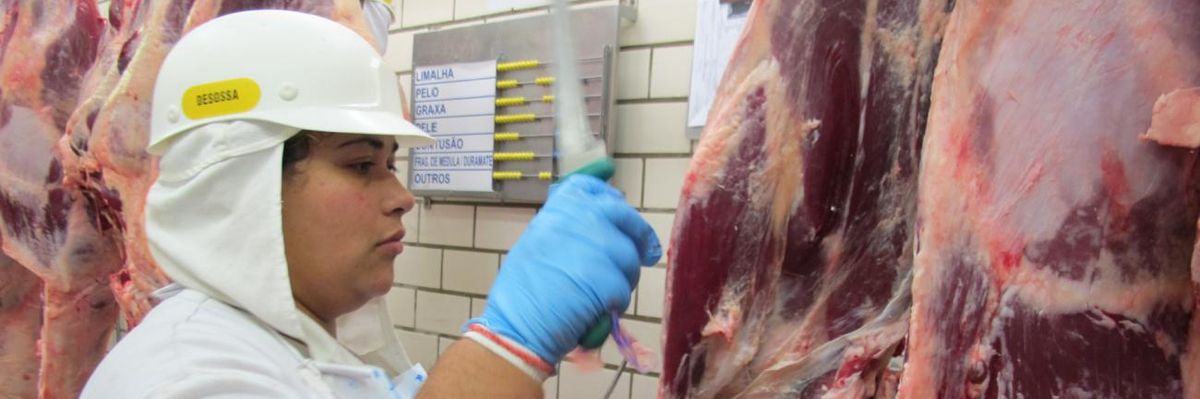
At the JBS meat plant in Lins, workers with sharp knives carefully take apart what was once a 1,000-pound steer, making sure to cut along the correct anotomical divisions in the search for the best cuts of beef. (Photo: Juan Forero/The Washington Post via Getty Images)
One-fifth of U.S. beef production capacity was reportedly "wiped out" Tuesday and slaughterhouses were shuttered worldwide following a cyberattack on JBS SA, the world's largest meat producer.
The Brazilian company shut down its North American and Australian operations following an attack on its servers, with market experts reporting that more extensive shutdowns across the globe are possible.
"This is quickly escalating into a very serious situation," tweeted Robert Burgess, executive editor of Bloomberg Opinion.
The five biggest beef plants in the U.S. shut down operations, halting the handling of 22,500 cattle. One of Canada's largest meat processing plants was also shut down for the second day in a row.
"There are at least 10 plants I have knowledge of that have had operations suspended because of the cyberattack," Paula Schelling-Soldner, acting chairperson for the national council of locals representing food inspectors for the American Federation of Government Employees, told Bloomberg.
JBS SA did not confirm it had been targeted by a ransomware attack, but the situation "has all of the hallmarks of one," Allan Liska, senior security architect at the cybersecurity analytics firm Recorded Future, told Al Jazeera.
The attack comes three weeks after hackers disrupted the operations of Colonial Pipeline Co., which runs the biggest gasoline pipeline in the United States.
White House Deputy Press Secretary Karine Jean-Pierre told reporters Tuesday the Biden administration believes the attack came "from a criminal organization likely based in Russia," and that the White House is offering support to JBS SA and "engaging directly with the Russian government on this matter."
In addition to shutting down meat processing operations, Bloomberg reported, the attack prevented the U.S. Department of Agriculture from releasing wholesale prices for pork and beef, crippling agriculture markets.
"No One Knows How Much U.S. Meat Costs After Cyberattack Jams Report," the outlet's headline read.
"Totally normal and functioning food system," Bloomberg journalist Deena Shanker tweeted sarcastically.
This country and this world are at a monumental crossroads. US voters have an opportunity to beat back the forces of fascism and confront the billionaires who are rigging the economy, our media system, and our democracy, making it increasingly impossible for ordinary people to get by. We’re not just talking about the election. We’re talking about what must be done once these fascist elements are vanquished from power. We need a bolder set of solutions than what either major party has so far been willing to offer and a working-class movement ready to fight like hell for it. Trump didn't emerge from nowhere. The conditions that fueled MAGA authoritarianism were created by decades of radical neoliberal economic policies and a corrupt political system dominated by corporate interests. They slashed taxes on the super-rich, promising that the benefits would trickle down. They said giveaways to the corporate titans would make life more affordable for the rest of us. It was all bullshit. And when a bitter, betrayed populace searches for someone to blame, right-wing demagogues have little trouble finding scapegoats. People know when they're being lied to, but you won't hear any of this from the corporate media. Only independent journalism—powered and funded by people who believe in building a better world—can deliver truly trustworthy daily news. If you share our vision, please contribute whatever you can to sustain our work. |
One-fifth of U.S. beef production capacity was reportedly "wiped out" Tuesday and slaughterhouses were shuttered worldwide following a cyberattack on JBS SA, the world's largest meat producer.
The Brazilian company shut down its North American and Australian operations following an attack on its servers, with market experts reporting that more extensive shutdowns across the globe are possible.
"This is quickly escalating into a very serious situation," tweeted Robert Burgess, executive editor of Bloomberg Opinion.
The five biggest beef plants in the U.S. shut down operations, halting the handling of 22,500 cattle. One of Canada's largest meat processing plants was also shut down for the second day in a row.
"There are at least 10 plants I have knowledge of that have had operations suspended because of the cyberattack," Paula Schelling-Soldner, acting chairperson for the national council of locals representing food inspectors for the American Federation of Government Employees, told Bloomberg.
JBS SA did not confirm it had been targeted by a ransomware attack, but the situation "has all of the hallmarks of one," Allan Liska, senior security architect at the cybersecurity analytics firm Recorded Future, told Al Jazeera.
The attack comes three weeks after hackers disrupted the operations of Colonial Pipeline Co., which runs the biggest gasoline pipeline in the United States.
White House Deputy Press Secretary Karine Jean-Pierre told reporters Tuesday the Biden administration believes the attack came "from a criminal organization likely based in Russia," and that the White House is offering support to JBS SA and "engaging directly with the Russian government on this matter."
In addition to shutting down meat processing operations, Bloomberg reported, the attack prevented the U.S. Department of Agriculture from releasing wholesale prices for pork and beef, crippling agriculture markets.
"No One Knows How Much U.S. Meat Costs After Cyberattack Jams Report," the outlet's headline read.
"Totally normal and functioning food system," Bloomberg journalist Deena Shanker tweeted sarcastically.