SUBSCRIBE TO OUR FREE NEWSLETTER
Daily news & progressive opinion—funded by the people, not the corporations—delivered straight to your inbox.
5
#000000
#FFFFFF
To donate by check, phone, or other method, see our More Ways to Give page.
Daily news & progressive opinion—funded by the people, not the corporations—delivered straight to your inbox.
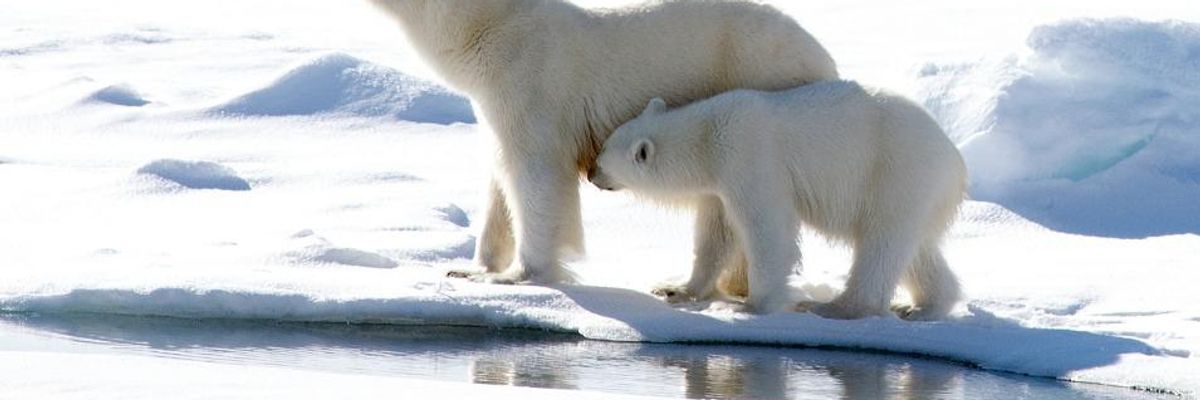
The strongest sea ice in the Arctic began breaking up for the first time in recorded history, according to scientists. (Photo: Christopher Michel/Flickr/cc)
After abnormal heatwaves this year in the Arctic, the region's oldest and thickest sea ice has thinned out considerably--to the point of breaking up in recent days.
As the Guardian reported, the Norwegian Ice Service found this week that the ice cover in the area off the northern coast of Greenland has been at record low levels at least 14 days in the past month, sometimes reaching levels 40 percent lower than the average for this time of year.
The new development is causing grave concerns among climate scientists regarding their previously-held beliefs about the Arctic's ice.
"Open water off the north coast of Greenland is unusual," Ruth Mottram of the Danish Meteorological Institute told the Guardian. "This area has often been called 'the last ice area' as it has been suggested that the last perennial sea ice in the Arctic will occur here."
Heatwaves last February and this month as well as warm winds have pushed ice that is generally about 65 feet thick away from Greenland's northern coast. Warming trends that have been maintained over the last 15 years, according to scientists, has made ice that's usually packed close together, much less stable.
Generally, "The ice there has nowhere else to go so it piles up," research scientist Walt Meier of the US National Snow and Ice Data Center told the Guardian. "However, that was not the case this past winter in February and March and now. The ice is being pushed away from the coast by the winds."
"It's a pretty dramatic indication of the transformation of the Arctic sea ice and Arctic climate," Meier added.
Another climate researcher, Thomas Lavergne of the Norwegian Meteorological Institute, called the findings "scary" on social media.
Scientists have traced the record-defying ice thinning back to a notable heatwave in February.
As Common Dreams reported, a weather station in northern Greenland usually registers temperatures of about -4 degrees Fahrenheit in February, but this year there were 10 days that month where warm winds and temperatures above freezing were recorded.
Dear Common Dreams reader, It’s been nearly 30 years since I co-founded Common Dreams with my late wife, Lina Newhouser. We had the radical notion that journalism should serve the public good, not corporate profits. It was clear to us from the outset what it would take to build such a project. No paid advertisements. No corporate sponsors. No millionaire publisher telling us what to think or do. Many people said we wouldn't last a year, but we proved those doubters wrong. Together with a tremendous team of journalists and dedicated staff, we built an independent media outlet free from the constraints of profits and corporate control. Our mission has always been simple: To inform. To inspire. To ignite change for the common good. Building Common Dreams was not easy. Our survival was never guaranteed. When you take on the most powerful forces—Wall Street greed, fossil fuel industry destruction, Big Tech lobbyists, and uber-rich oligarchs who have spent billions upon billions rigging the economy and democracy in their favor—the only bulwark you have is supporters who believe in your work. But here’s the urgent message from me today. It's never been this bad out there. And it's never been this hard to keep us going. At the very moment Common Dreams is most needed, the threats we face are intensifying. We need your support now more than ever. We don't accept corporate advertising and never will. We don't have a paywall because we don't think people should be blocked from critical news based on their ability to pay. Everything we do is funded by the donations of readers like you. When everyone does the little they can afford, we are strong. But if that support retreats or dries up, so do we. Will you donate now to make sure Common Dreams not only survives but thrives? —Craig Brown, Co-founder |
After abnormal heatwaves this year in the Arctic, the region's oldest and thickest sea ice has thinned out considerably--to the point of breaking up in recent days.
As the Guardian reported, the Norwegian Ice Service found this week that the ice cover in the area off the northern coast of Greenland has been at record low levels at least 14 days in the past month, sometimes reaching levels 40 percent lower than the average for this time of year.
The new development is causing grave concerns among climate scientists regarding their previously-held beliefs about the Arctic's ice.
"Open water off the north coast of Greenland is unusual," Ruth Mottram of the Danish Meteorological Institute told the Guardian. "This area has often been called 'the last ice area' as it has been suggested that the last perennial sea ice in the Arctic will occur here."
Heatwaves last February and this month as well as warm winds have pushed ice that is generally about 65 feet thick away from Greenland's northern coast. Warming trends that have been maintained over the last 15 years, according to scientists, has made ice that's usually packed close together, much less stable.
Generally, "The ice there has nowhere else to go so it piles up," research scientist Walt Meier of the US National Snow and Ice Data Center told the Guardian. "However, that was not the case this past winter in February and March and now. The ice is being pushed away from the coast by the winds."
"It's a pretty dramatic indication of the transformation of the Arctic sea ice and Arctic climate," Meier added.
Another climate researcher, Thomas Lavergne of the Norwegian Meteorological Institute, called the findings "scary" on social media.
Scientists have traced the record-defying ice thinning back to a notable heatwave in February.
As Common Dreams reported, a weather station in northern Greenland usually registers temperatures of about -4 degrees Fahrenheit in February, but this year there were 10 days that month where warm winds and temperatures above freezing were recorded.
After abnormal heatwaves this year in the Arctic, the region's oldest and thickest sea ice has thinned out considerably--to the point of breaking up in recent days.
As the Guardian reported, the Norwegian Ice Service found this week that the ice cover in the area off the northern coast of Greenland has been at record low levels at least 14 days in the past month, sometimes reaching levels 40 percent lower than the average for this time of year.
The new development is causing grave concerns among climate scientists regarding their previously-held beliefs about the Arctic's ice.
"Open water off the north coast of Greenland is unusual," Ruth Mottram of the Danish Meteorological Institute told the Guardian. "This area has often been called 'the last ice area' as it has been suggested that the last perennial sea ice in the Arctic will occur here."
Heatwaves last February and this month as well as warm winds have pushed ice that is generally about 65 feet thick away from Greenland's northern coast. Warming trends that have been maintained over the last 15 years, according to scientists, has made ice that's usually packed close together, much less stable.
Generally, "The ice there has nowhere else to go so it piles up," research scientist Walt Meier of the US National Snow and Ice Data Center told the Guardian. "However, that was not the case this past winter in February and March and now. The ice is being pushed away from the coast by the winds."
"It's a pretty dramatic indication of the transformation of the Arctic sea ice and Arctic climate," Meier added.
Another climate researcher, Thomas Lavergne of the Norwegian Meteorological Institute, called the findings "scary" on social media.
Scientists have traced the record-defying ice thinning back to a notable heatwave in February.
As Common Dreams reported, a weather station in northern Greenland usually registers temperatures of about -4 degrees Fahrenheit in February, but this year there were 10 days that month where warm winds and temperatures above freezing were recorded.