SUBSCRIBE TO OUR FREE NEWSLETTER
Daily news & progressive opinion—funded by the people, not the corporations—delivered straight to your inbox.
5
#000000
#FFFFFF
To donate by check, phone, or other method, see our More Ways to Give page.
Interestingly, 50% of the participating countries are members or “partners” of NATO, the NORTH ATLANTIC Treaty Organization. Eight of the 10 NATO countries are from Europe: Denmark, Germany, Greece, Italy, Netherlands, Poland, Spain, and the United Kingdom.
Canada is the only other NATO member from the Western Hemisphere, along with, of course, the host country, the United States.
Five of the 6 NATO “partners” have Pacific Ocean coasts: Australia, Japan, New Zealand, Korea, and Colombia.
Invited from its wars in the Middle East, Israel, the US partner in the genocide of Palestinians in Gaza, the ethnic cleansing of the West Bank, the destruction of southern Lebanon, and the war on Iran, will also have a presence in RIMPAC as it continues to weave itself into the fabric of the US military.
Although RIMPAC has not specified what the role of the Israeli military delegation is, one can surmise that its members will act as liaison officers, planners, observers, or staff officers participating in command-and-control and multinational planning activities and giving lessons learned in the genocide of Palestinians in Gaza.
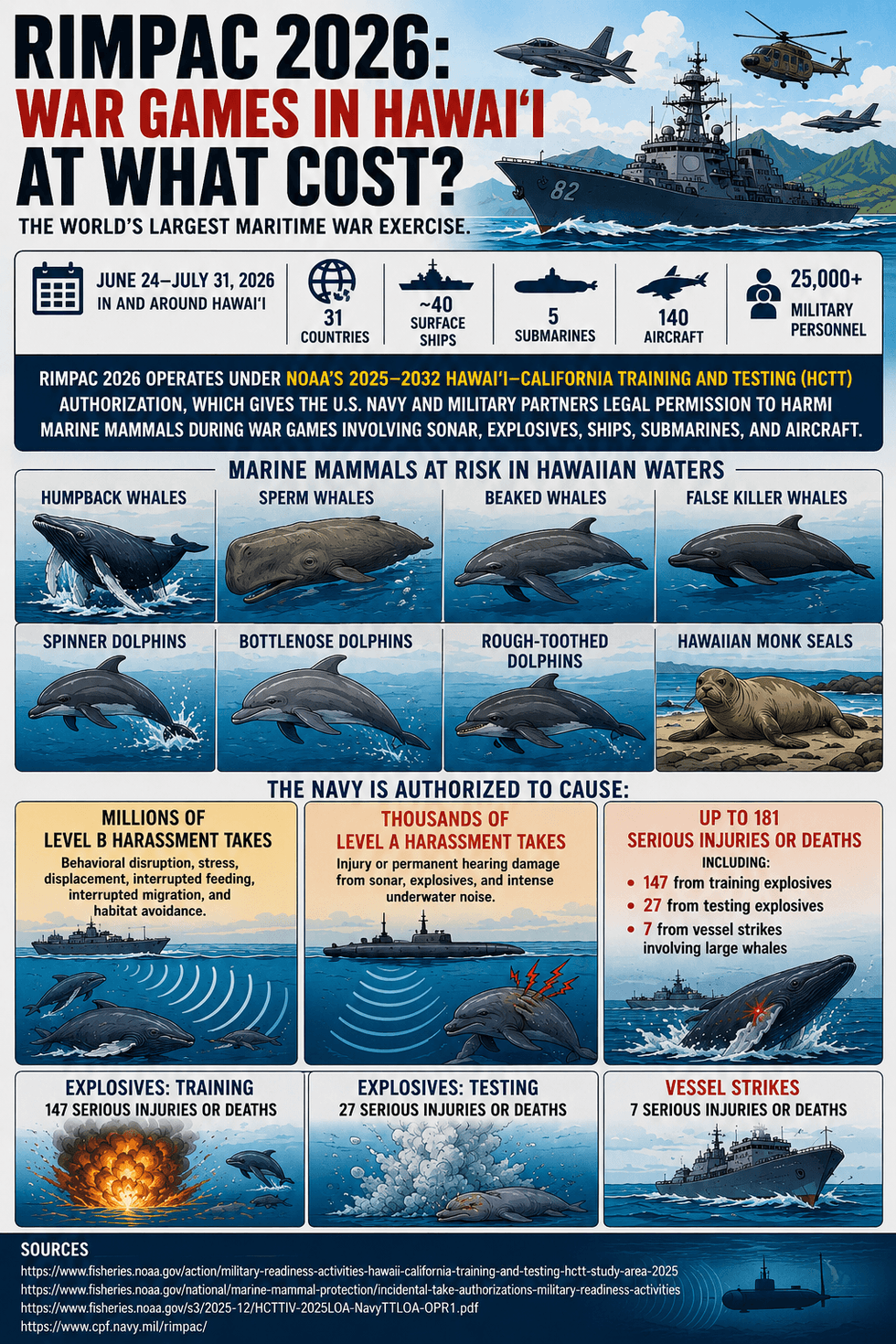
40 military ships, including 13 from the US, 200 aircraft, 25,000 military personnel, and five Submarines will practice their violent mission of war in this year’s RIMPAC, which will include live fire and bombings on the Pohakuloa range on the Big Island of Hawaii, sinking a large retired US navy ship off the island of Kauai and amphibious landings on the turtle hatching beach of Bellows on the island of Oahu.
Harm to marine mammals created by the large numbers of ships continues to be a major concern. The numbers of “takes” or deaths of marine mammals allowed by the US government permits are horrendous.
On February 28, 2026, the Trump administration allowed itself to get suckered into joining Israel in attacking Iran. The massive bombings and missile attacks from the US and Israel assassinated the Iranian supreme leader Ali Khamenei and many other senior Iranian officials on the first day of the war on Iran.
Also killed on February 28, 2026, the first day of the US-Israeli attack on Iran, were 156 civilians, including 120 school children when a US missile destroyed the Shajareh Tayyebe Elementary School school in Minab, southern Iran.
One of the five submarines in 2026 RIMPAC is the US Navy’s USS Charlotte.
On March 4, 2026, five days after the US-Israel war on Iran began, the USS Charlotte torpedoed and sunk the Iranian frigate IRIS Dena in international waters 19 nautical miles off the southern tip of Sri Lanka in the Indian Ocean.
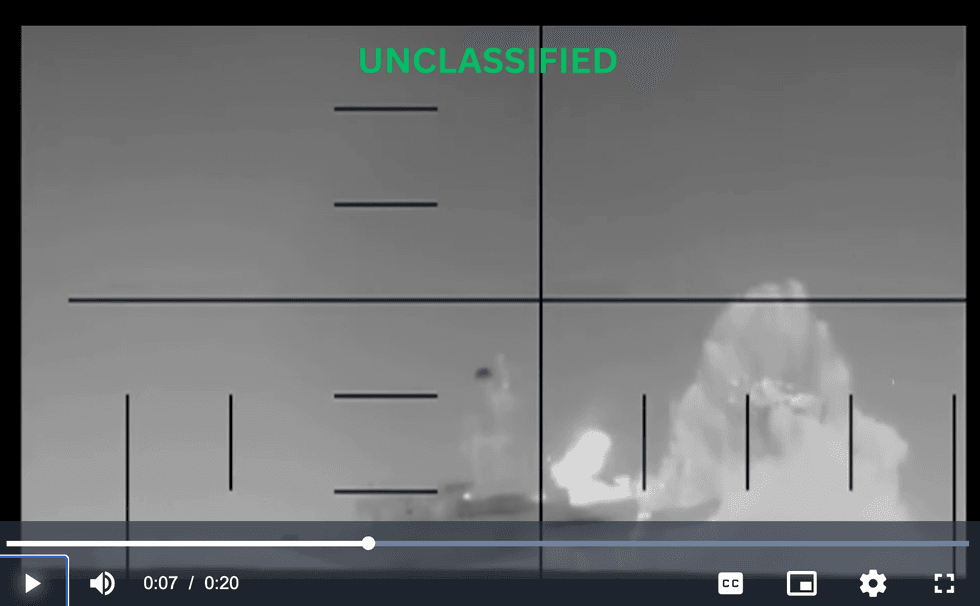
The USS Charlotte torpedoing of the Dena killed 104 Iranian sailors. At the time of the attack, Dena had a crew of 136 personnel and only 32 survived. According to reports, the remains of 20 of the deceased were not recovered.
It is the only instance since World War II in which a United States Navy submarine sank a surface vessel using torpedoes.
The Iranian ship was 2,300 miles from Iran having participated in the multilateral naval exercise MILAN 2026, in February 2026, and in the International Fleet Review 2026, held at the Indian port of Visakhaptnam.
The US sent US Pacific Fleet commander Admiral Steve Koehler, the highest-ranking naval officer in the Pacific Command, to the International Fleet Review. Ironically, a US Navy release revealed that a P-8A Poseidon maritime patrol and reconnaissance aircraft took part and conducted anti-submarine warfare drills with other participating forces in MILAN 2026.
The United States Navy was to have sent the Arleigh Burke Class guided-missile destroyer USS Pinckney (DDG-91), but participation was cancelled at the last minute for “undisclosed operational reasons.”
According to an article in The Maritime Executive written before the US-Israeli war on Iran started, the Indian military was probably not concerned about the lack of US participation, “as the It would have been embarrassing for the Indian hosts to have had Pinckney moored alongside IRINS Dena, should war have broken out with Iran during the period of the fleet review.”
After the USS Charlotte sunk the Dena, India allowed Iranian warship IRIS Lavan to dock at the port of Kochi on March, 4 2026 with its 183-member crew housed at naval facilities. Sri Lanka allowed another Iranian warship IRIS Bushehr, to dock at Trincomalee port and housed its 208-member crew at the naval camp on March 5, 2026.
India's former chief of naval staff, Admiral Arun Prakah, commented: "It’s a bit of treachery of the US to attend a peaceful function side-by-side with Iranian navy, where there’s a lot of camaraderie, and then the moment the Iranian ship pops out of harbour, it’s sunk... They could have delayed this action to spare India this embarrassment."
That comment, and India allowing one Iranian ship to seek safe harbor in an Indian port after the USS Charlotte torpedoed the IRIS Dena, is probably the reason why the massive US military unified command “Indo-Pacific Command,” and host of RIMPAC, recently dropped “Indo” from its name and is now called the “Pacific Command,” even though its area of responsibility still includes the Indian subcontinent.
The US Central command said that the US has now sunk and destroyed 60 Iranian naval vessels.
However, those of us who live in Hawaii and those from Japan remember another tragic incident with a US submarine homeported in Pearl Harbor.
On February 9, 2001, the US Navy’s USS Greenville conducted an “emergency” surfacing with 16 VIP civilians onboard as a part of the US Navy's Distinguished Visitor Embarkation (DVE) program. The USS Greeneville came up under the Japanese student training vessel Ehime Maru, 9 nautical miles off the island of Oahu, breaking the hull of the ship which quickly sank. Thirty-five people were aboard the Ehime Maru, of which 26 were rescued, one with serious injuries. Nine were killed, four high school students, two teachers, and three crew members, with US Navy and Japanese divers retrieving 8 of the 9 bodies from the sunken vessel which was raised from the ocean floor during October 2001.
Thankfully, the USS Greeneville is not participating in RIMPAC 2026 and is now homeported in San Diego.
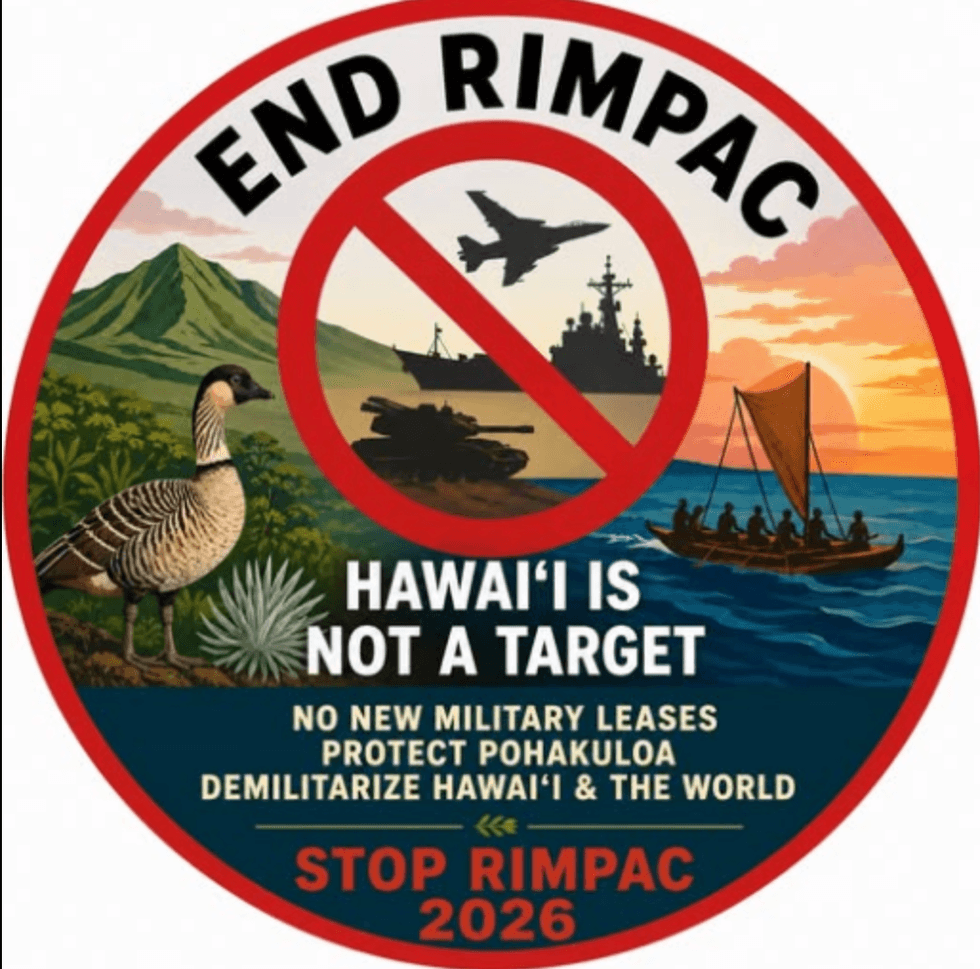
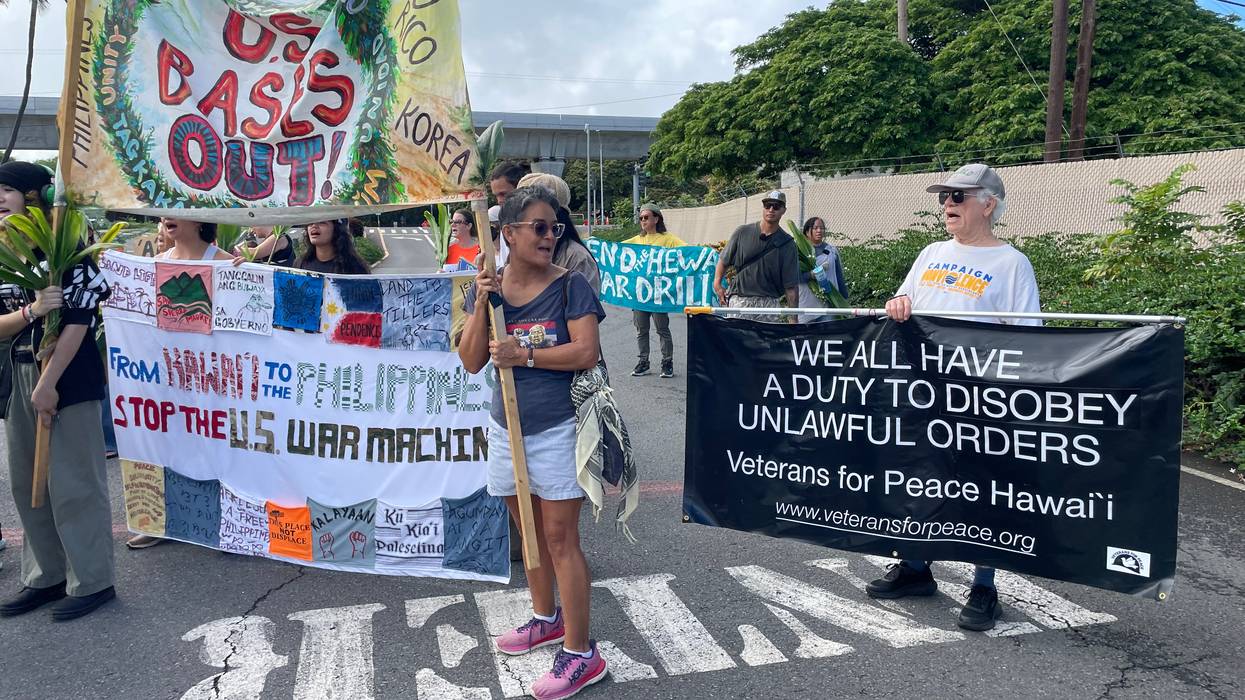
Each edition of RIMPAC is protested by citizens in Hawaii. On June 24 a spirited ceremony and procession preceded the protest at the gates of the US Pacific Fleet at Pearl Harbor.
Numerous persons will be at the gates of Pearl Harbor over the next weeks to continue the challenge to the war practice called RIMPAC.

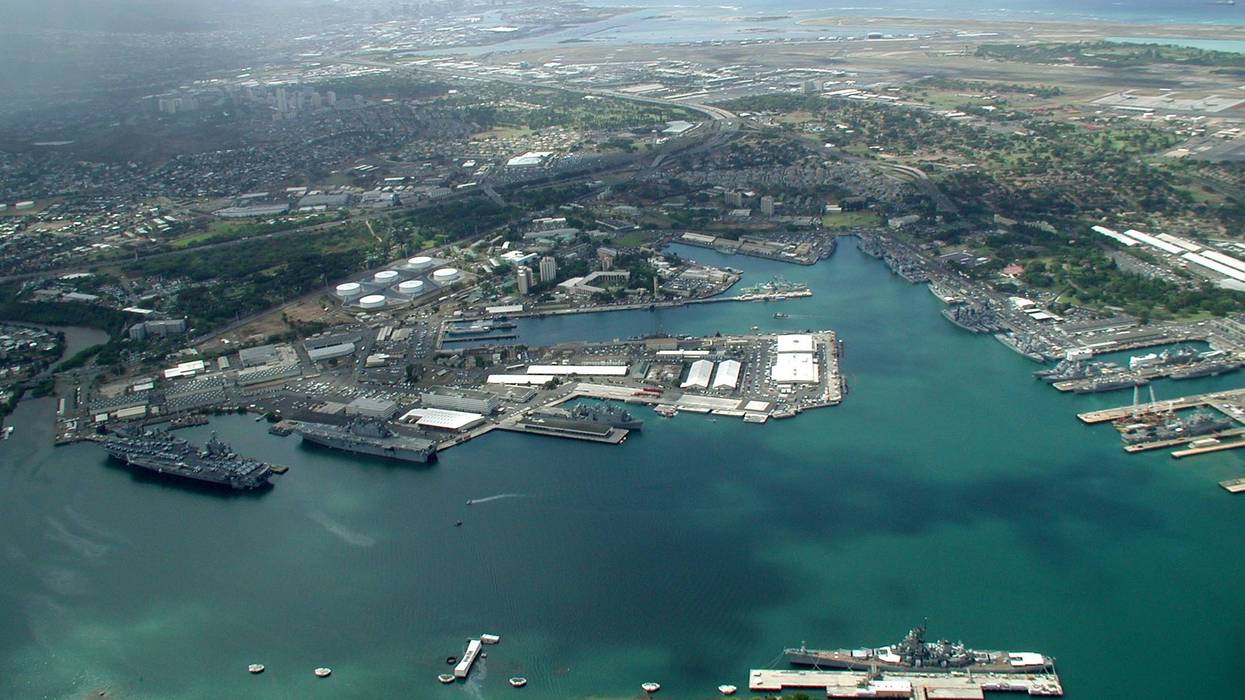
Hawai’i is the most militarized state per capita in our nation. Not only does it have a high concentration of service members, but more than 230,000 acres of land out of the 4.1 million in the island chain are currently under military control.
A dense network of military bases is conspicuously scattered across the eight islands. And almost a quarter of the state’s most populous island, O’ahu—home to Honolulu and Kailua—is currently under what local activists and groups call a military occupation, contributing to land shortages and higher land prices that make real estate development even more expensive.
To help alleviate the inflationary impacts of military rental demand on the Hawai’i’s housing market, our report recommends that all active-duty service members be housed on base.
More than 98% of the 42,503 active-duty service members in Hawai’i were stationed in O’ahu in the summer of 2024. But not all of them lived on base. According to the Department of Defense, there were 14,700 active-duty service members who entered the private rental market. We estimate that they resided in 10.3% of the 142,130 renter-occupied units in Honolulu County.
Not only does the military have a significant presence in O’ahu’s rental market, but it also contributes to upward pressures on Hawai’i’s housing prices because of the tax-free stipends—known as Basic Allowance for Housing or BAH—that active-duty service members receive on a monthly basis.
Local residents have difficulty competing with compensation packages bolstered by BAH payments, making military renters more attractive to landlords.
An E5 Sergeant, a rank of enlisted personnel who have been promoted to lead a small team or section, with dependents and four years experience, had a base pay of $40,388 and a BAH of $39,852 in 2024 for a total of $80,240. This is $10,000 more than the average annual salary of an urban Honolulu worker, who earned $70,179 (a mean wage of $33.74) in the same year. This difference does not include food allowances and bonuses that military personnel also receive.
The graph below demonstrates that E5 non-commissioned officers with and without dependents can comfortably afford a one- or two-bedroom apartment while more than half of Hawai’i’s working-class residents are cost-burdened, i.e. they spend more than 30% of their income on rent and utilities. Other households struggle to afford to rent and are forced to leave Hawai’i altogether, particularly to Nevada, which is often jokingly referred to as Ninth Island.
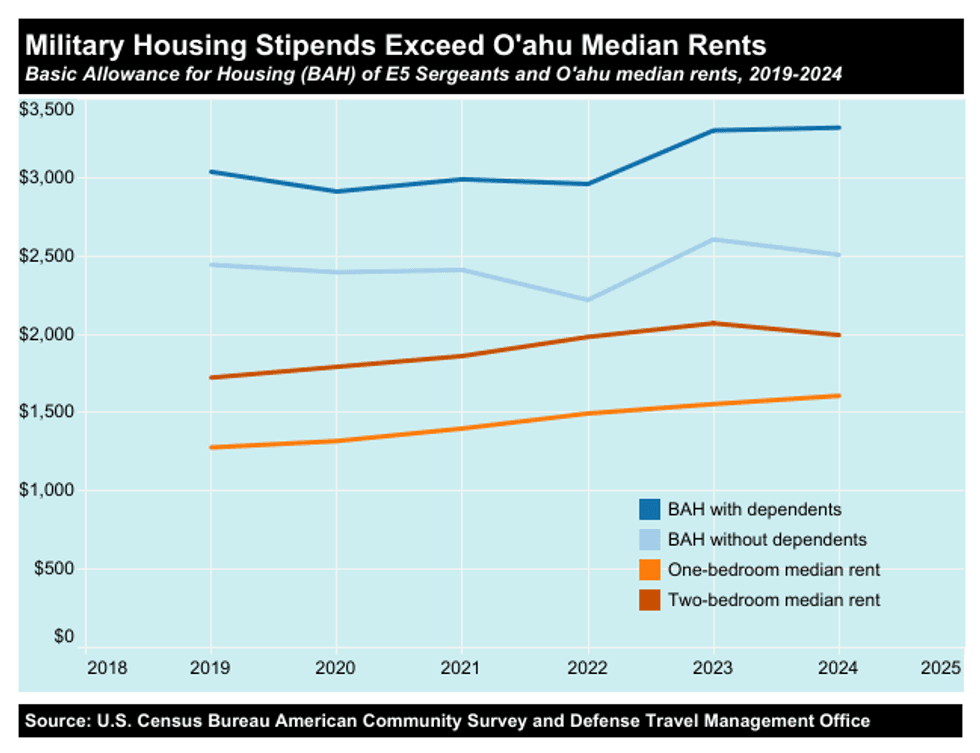
It is clear that the BAH contributes to rental market tightness, and thereby higher prices. However, further analysis is stymied by a lack of data transparency from the Department of Defense. We know the DOD spent $27.9 billion to endow the BAH program in 2024, but we have no information on how those resources are distributed state-by-state nor how much BAH money enters the rental market.
Our report estimates that the DOD spent $1.1 billion on BAH just in O’ahu with more than half of that money—$648.9 million—entering the private rental market. The average BAH monthly payment per service member is $3,679, and we estimate this dynamic caused rents to increase by 7.1% in 2024. As a result, non-military tenants in O’ahu spent an estimated $234.8 million more in rent that year.
To help alleviate the inflationary impacts of military rental demand on the Hawai’i’s housing market, our report recommends that all active-duty service members be housed on base.
Vacancy rates at military installations should be 0%, and the number of service members in the private market should also be zero. The US military should disclose how many on-base housing units they own, operate, and monitor. And new, dense military housing should be built if necessary.
Critical tenant protections like rent control need to be implemented in order to provide immediate relief for renters. And the development of permanently affordable social housing is necessary to deliver high-quality and inexpensive housing. Sixty-five percent of all new units need to be set at 80% of area median income, and market-based solutions have proven incapable of delivering affordability to lower-income households.
Our findings demonstrate that the military plays a significant role in Hawai’i’s affordability crisis, but there are steps that can be taken to make Hawai’i affordable to the people of Hawai’i.