March, 26 2015, 11:45am EDT

For Immediate Release
Contact:
Symone Sanders (202) 454-5108
Lori Wallach (202) 454-5107, lwallach@citizen.org
TPP Leak Reveals Extraordinary New Powers for Thousands of Foreign Firms to Challenge US Policies and Demand Taxpayer Compensation
Unveiling of Parallel Legal System for Foreign Corporations Will Fuel TPP Controversy, Further Complicate Obama’s Push for Fast Track
WASHINGTON
The Trans-Pacific Partnership's (TPP) Investment Chapter, leaked today, reveals how the pact would make it easier for U.S. firms to offshore American jobs to low-wage countries while newly empowering thousands of foreign firms to seek cash compensation from U.S. taxpayers by challenging U.S. government actions, laws and court rulings before unaccountable foreign tribunals. After five years of secretive TPP negotiations, the text - leaked by WikiLeaks -proves that growing concerns about the controversial "investor-state dispute settlement" (ISDS) system that the TPP would extend are well justified, Public Citizen said.
Enactment of the leaked chapter would increase U.S. ISDS liability to an unprecedented degree by newly empowering about 9,000 foreign-owned firms from Japan and other TPP nations operating in the United States to launch cases against the government over policies that apply equally to domestic and foreign firms. To date, the United States has faced few ISDS attacks because past ISDS-enforced pacts have almost exclusively been with developing nations whose firms have few investments here.
The leak reveals that the TPP would replicate the ISDS language found in past U.S. agreements under which tribunals have ordered more than $3.6 billion in compensation to foreign investors attacking land use rules; water, energy and timber policies; health, safety and environmental protections; financial stability policies and more. And while the Obama administration has sought to quell growing concerns about the ISDS threat with claims that past pacts' problems would be remedied in the TPP, the leaked text does not include new safeguards relative to past U.S. ISDS-enforced pacts. Indeed, this version of the text, which shows very few remaining areas of disagreement, eliminates various safeguard proposals that were included in a 2012 leaked TPP Investment Chapter text.
"With the veil of secrecy ripped back, finally everyone can see for themselves that the TPP would give multinational corporations extraordinary new powers that undermine our sovereignty, expose U.S. taxpayers to billions in new liability and privilege foreign firms operating here with special rights not available to U.S. firms under U.S. law," said Lori Wallach, director of Public Citizen's Global Trade Watch. "This leak is a disaster for the corporate lobbyists and administration officials trying to persuade Congress to delegate Fast Track authority to railroad the TPP through Congress."
Even before today's leak, U.S. law professors and those in other TPP nations, the U.S. National Conference of State Legislatures, the Cato Institute and numerous members of Congress and civil society groups have announced opposition to the ISDS system, which would elevate individual foreign firms to the same status as sovereign governments and empower them to privately enforce a public treaty by skirting domestic courts and "suing" governments before extrajudicial tribunals. The tribunals are staffed by private lawyers who are not accountable to any electorate, system of legal precedent or meaningful conflict of interest rules. Their rulings cannot be appealed on the merits. Many ISDS lawyers rotate between roles - serving both as "judges" and suing governments for corporations, creating an inherent conflict of interest.
The TPP's expansion of the ISDS system would come amid a surge in ISDS cases against public interest policies that has led other countries, such as South Africa and Indonesia, to begin to revoke their ISDS-enforced treaties. While ISDS agreements have existed since the 1960s, just 50 known ISDS cases were launched worldwide in the regime's first three decades combined. In contrast, foreign investors launched at least 50 ISDS claims each year from 2011 through 2013. Recent cases include Eli Lilly's attack on Canada's cost-saving medicine patent system, Philip Morris' attack on Australia's public health policies regulating tobacco, Lone Pine's attack on a fracking moratorium in Canada, Chevron's attack on an Ecuadorian court ruling ordering payment for mass toxic contamination in the Amazon and Vattenfall's attack on Germany's phase-out of nuclear power.
"By definition, only multinational corporations could benefit from this parallel legal system, which empowers them to skirt domestic courts and laws, and go to tribunals staffed by highly paid corporate lawyers, where they grab unlimited payments of our tax dollars because they don't want to comply with the same laws our domestic firms follow," Wallach said.
Public Citizen's analysis of the leaked text is available here.
Public Citizen is a nonprofit consumer advocacy organization that champions the public interest in the halls of power. We defend democracy, resist corporate power and work to ensure that government works for the people - not for big corporations. Founded in 1971, we now have 500,000 members and supporters throughout the country.
(202) 588-1000LATEST NEWS
Israel Hits Lebanon With Drone Strikes Hours After Trump and Iran Sign Interim Peace Deal
A spokesperson for Iran's Foreign Ministry said the agreement with the US would be "nullified" if the Trump administration refused to "force" Israel to end its assault on Lebanon.
Jun 18, 2026
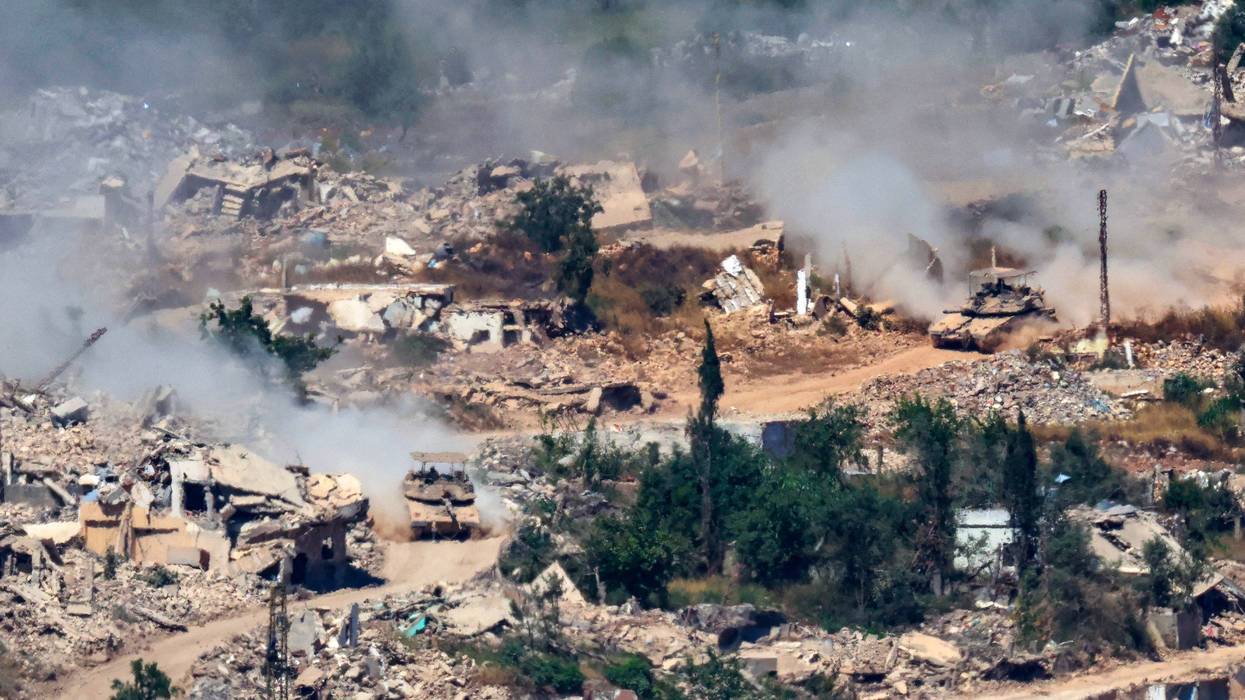
The Israeli military carried out drone strikes in southern Lebanon on Thursday, just hours after the presidents of the US and Iran signed a memorandum of understanding that establishes a framework for negotiations to end the war launched by the Trump administration and Israel in late February.
Lebanese media reported that "an Israeli drone dropped a munition on Beit Yahoun, injuring two people." A separate drone strike "on a vehicle at the roundabout between Kfartebnit and Arnoun killed one person and critically wounded another," according to Lebanon's National News Agency.
The attacks underscored the threat that Israel's ongoing military occupation of and assault on Lebanon poses to the prospects of a final peace agreement between the US and Iran. The memorandum of understanding (MOU) that Trump signed in France late Wednesday explicitly includes Lebanon and indicates that continued Israeli attacks would violate the deal.
"The United States of America and the Islamic Republic of Iran and their allies in the current war, by signing this MOU, declared the immediate and permanent termination of military operations on all fronts, including in Lebanon, and undertake from now on not to initiate any war or any military operation against each other and to refrain from the threat or use of force against each other and ensuring the territorial integrity and sovereignty of Lebanon," the document states.
Smoke rises in Lebanon as Israeli military activity continues despite its inclusion in the US-Iran "peace deal".
🔴 LIVE updates: https://t.co/snAR8SBhl1 pic.twitter.com/CFUevtQffs
— Al Jazeera English (@AJEnglish) June 18, 2026
Israeli Prime Minister Benjamin Netanyahu, who has been accused of working to sabotage diplomatic progress, has voiced defiance in response to negotiations between the US and Iran, refusing to commit to the withdrawal of Israeli troops from southern Lebanon. Since March 2, Israeli attacks on Lebanon have killed around 3,800 people, including hundreds of children, according to Lebanese authorities.
Reuters reported Thursday that Israel is "holding negotiations with the US as it seeks to continue its deployment of troops in southern Lebanon." An unnamed senior Israeli official, described as close to Netanyahu, told the news outlet that "Israel would not back down on its positions, including keeping troops deployed in the area south of Lebanon's Litani River."
"A second Israeli official told Reuters that the outcome of the talks would ultimately depend on whether US President Donald Trump 'decides to force the issue' by threatening repercussions if Israel does not abide by the interim Iran pact's terms," the outlet added.
Speaking during a press conference on Wednesday, Trump called Netanyahu "a very good man" and an "amazing prime minister."
"We have a little dispute over Lebanon," the president added. "I say, 'You can do a little softer touch, Bibi. You don't have to knock down a building every time somebody walks into it that's from Hezbollah.'"
Esmaeil Baqaei, the spokesperson for Iran's Foreign Ministry, said Thursday that the MOU signed Wednesday would be "nullified" in the absence of a full Israeli withdrawal from Lebanon and an end to military attacks.
"It is the responsibility of the US," said Baqaei, to "force" Israel to "respect the US commitments to Iran in this document."
Keep ReadingShow Less
'Mistakes Are Made': Trump Rejects Accountability for US Massacre at Iran Girls' School
"War is nasty," the president said when asked about the February cruise missile strike that killed 156 students and staff in Minab, continuing the centuries-old presidential tradition of dismissing American atrocities.
Jun 18, 2026
President Donald Trump on Wednesday joined a long line of US leaders to brush off atrocities committed by American forces when he dodged questions about responsibility for the February cruise missile strike on an Iranian girls school that massacred students and staff.
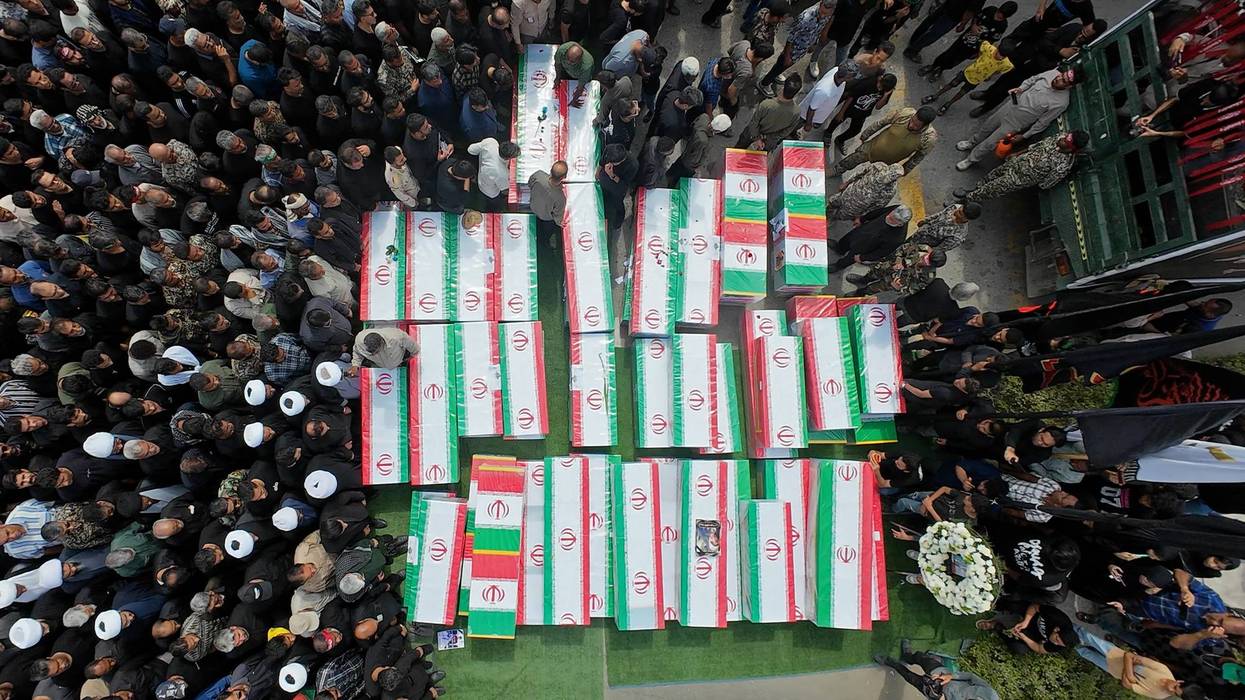
On February 28—the first day of the illegal US-Israeli war of choice on Iran—a US strike on the Shajareh Tayyebeh girls’ elementary school in Minab killed 156 people, at least 120 of them children, and wounded 95 others.
Satellite imagery analyses confirmed eyewitness accounts that the attack was a “triple-tap” airstrike, in which an initial bombing was followed up with two additional strikes meant to kill survivors and rescue workers.
Asked by a journalist at the G7 meeting in France if anyone would be held accountable for the bombing, Trump replied, "It's such a strange question to be asked at this date, because you're talking about a long time ago."
"Nobody did that on purpose," Trump said of the school strike. "Mistakes are made. War is nasty. But I know it's under investigation."
"I would ask Pete Hegseth," the president added, referring to his defense secretary, who said at the war's start that US forces would not be bound by “stupid rules of engagement” and would instead prioritize “lethality.”
Fragments of a Tomahawk cruise missile found at the school and marked with the names of US weapons companies, a Pentagon contract number, and “Made in USA” added to the body of evidence pointing to the United States as the perpetrator of what numerous experts called a likely war crime.
Trump first claimed that Iran bombed the school, and when it was revealed that a Tomahawk missile was used in the strike, he risibly asserted that Tehran had such highly restricted US missiles in its arsenal. The US has not sold weaponry to the Iranian government since the 1970s, with the extraordinary exception of during the Iran-Contra Affair, in which the Reagan administration secretly sold arms to Iran in the 1980s to fund anti-communist Contra terrorists in Nicaragua.
A preliminary Pentagon probe indicated US responsibility for the Minab massacre—and that the building was struck intentionally, raising questions about the possible use of artificial intelligence for targeting purposes. The US military has confirmed use of AI in the Iran War, which is being carried out in partnership with Israeli forces that have used artificial intelligence extensively in their genocidal assault on the Gaza Strip. More than 250,000 Palestinians have been killed or wounded—most of them civilians—since the Hamas-led attack of October 7, 2023.
Numerous investigative journalism outlets and rights groups—including Bellingcat, The New York Times, Sky News, NPR, The Associated Press, the BBC, Reuters, Al Jazeera, CNN, and Amnesty International—also investigated the attack and concluded the US was responsible.
Trump administration officials and Republican US lawmakers dismissed or stonewalled efforts by journalists, activists, and Democratic legislators to seek accountability for one of the deadliest US civilian massacres in modern times.
The Minab strike ranks up with the bombing of a Baghdad bomb shelter during the 1991 Gulf War—which killed more than 400 people, mostly women, children, and elders—and the March 2017 slaughter of at least 105 people in an apartment building in Mosul, Iraq during Trump’s first-term “war of annihilation” against the so-called Islamic State.
The school massacre also drew comparisons with the 1968 wholesale slaughter of 504 unarmed villagers, mostly women and children—at least some of them raped before being killed—by US troops at My Lai in Vietnam.
Trump joins a long line of US leaders who have ducked accountability for—or worse, tried to justify—atrocities committed on their watch.
Faced with what was then commonly called the "Indian problem," a young Virginia governor named Thomas Jefferson justified what he called "their extermination, or their removal," because "the same world would scarcely do for them and us.”
During the Civil War, Gen. William Tecumseh Sherman, commander of an indiscriminate scorched-earth campaign during his March to the Sea, wrote that "war is cruelty, and you cannot refine it."
President Theodore Roosevelt attempted to defend US troops accused of mass murder and torture—including what's now known as waterboarding—during the Philippines War by shaming critics who condemned those crimes but turned blind eyes to the lynching of Black Americans in the South.
After ordering the only nuclear war in human history against a defeated enemy making efforts to surrender, President Harry S. Truman said of his Japanese victims, "The only language they seem to understand is the one we have been using to bombard them."
After US forces killed hundreds of thousands of Vietnamese, Cambodian, and Laotian civilians in the 1960s and 1970s, US Army Chief of Staff Gen. William Westmoreland attempted to rationalize the slaughter by explaining: "The Oriental doesn't put the same high price on life as does the Westerner... Life is cheap in the Orient."
As US-driven United Nations sanctions reportedly killed hundreds of thousands of Iraqi children in the 1990s, Madeleine Albright, President Bill Clinton's secretary of state, opined that "we think the price is worth it."
During President George W. Bush's invasion of Iraq, US Central Command chief Gen. Tommy Franks said, "We don't do body counts" when asked about the staggering number of civilian casualties, while Vice President Dick Cheney dismissed waterboarding as a mere "dunk in the water" amid a worldwide torture scandal.
When President Barack Obama's drone war killed an American teenager in Yemen, administration spokesperson Robert Gibbs deflected blame by arguing that the child should have had "a far more responsible father.”
As Trump loosened rules of engagement meant to protect civilians during his first-term campaign to "bomb the shit out of" Islamic State militants in Iraq and Syria and "take out their families," his defense secretary, James "Mad Dog" Mattis, announced that the US was shifting from a policy of “attrition” to one of “annihilation."
“Civilian casualties are a fact of life in this sort of situation,” he said.
Keep ReadingShow Less
'Unlikely Bedfellows': Left-Leaning Groups Join Newsom-Backed Effort to Sink California Billionaire Tax
“This is not going to be, ‘Billionaires killed this wealth tax’ if it appears on the November ballot,” said Newsom's chief of staff. “It’s going to be Planned Parenthood, doctors, teachers, and labor killed it.”
Jun 17, 2026
It comes as no shock that Silicon Valley oligarchs and other plutocrats are trying to keep a proposed billionaire tax backed by California governor and presumptive Democratic presidential aspirant Gavin Newsom off November's ballot. But the participation of progressive groups as "unlikely bedfellows" in the effort to kill the wealth tax has surprised many observers.
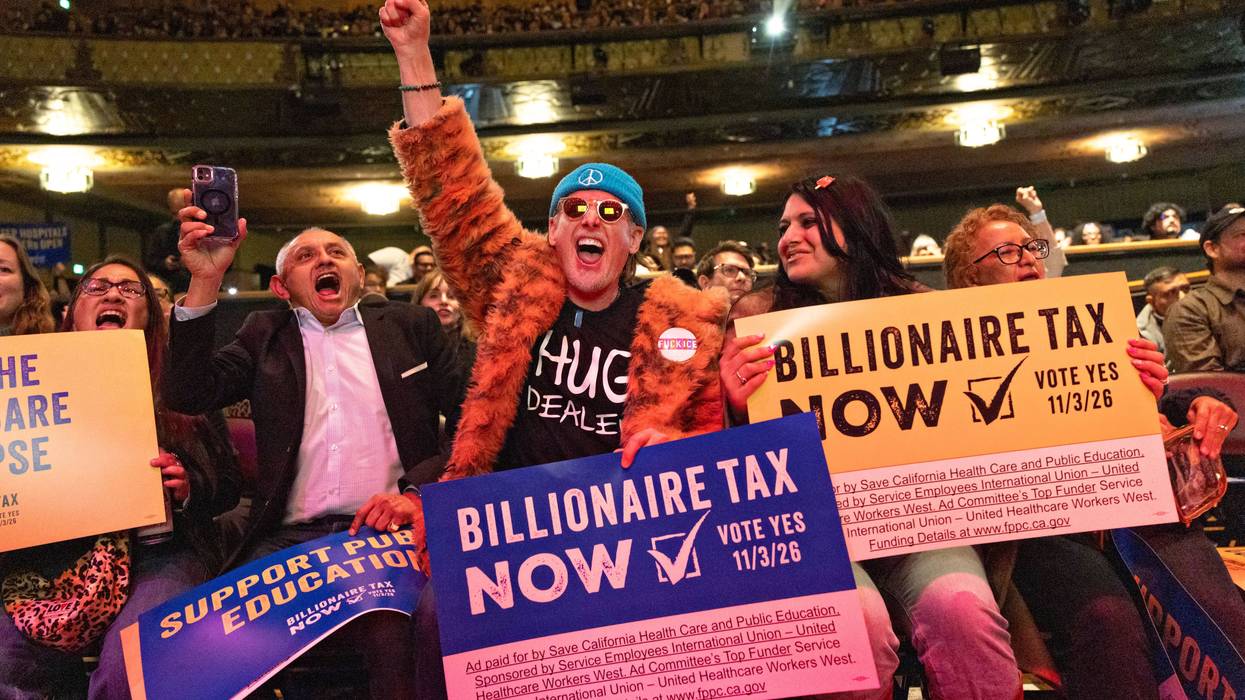
Introduced by the Service Employees International Union-United Healthcare Workers West (SEIU-UHW), the California Billionaire Tax would impose a one-time 5% levy on people worth $1 billion or more, to be paid in annual installments of 1% over five years. Proponents say the tax would raise roughly $100 billion in revenue.
The proposal requires the state to spend 90% of revenue from the tax on healthcare and the rest on food assistance and public education. Opponents counter it could drive wealthy residents and investment from California.
Supporters of the billionaire tax have submitted more than 1.5 million signatures, far more than the roughly 875,000 valid signatures required to qualify for November's ballot. The signatures are still being verified, and the office of California Secretary of State Shirley Weber has until June 25, 2026 to determine whether the initiative qualifies.
The measure is backed by numerous progressive groups including the Teamsters union, California Democratic Socialists of America (DSA), and Our Revolution, as well as individual progressives like Sen. Bernie Sanders (I-Vt.), Rep. Ro Khanna (D-Calif.), and Democratic congressional candidate Connie Chan, who is running to replace retiring longtime San Francisco congresswoman Nancy Pelosi.
However, opponents are trying to stop the proposal from qualifying for the ballot, while preparing for a fight in the likely event that it does.
Newsom, the California Democratic Party, and a growing list of groups—including the California Teachers Association (CTA), Planned Parenthood Affiliates of California (PPAC), and the State Building and Construction Trades Council of California—are publicly opposing the tax and are urging SEIU-UHW to pull the proposal before June 25.
Republicans, the California Chamber of Commerce, and other capitalist interests oppose the billionaire tax, as do both candidates for California governor, Democrat Xavier Becerra and Republican Steve Hilton, and Chan's opponent in the San Francisco congressional race, state Sen. Scott Wiener (D-11).
Newsom said that the proposed tax "makes no sense" and would be "really damaging to the state."
CTA argues that the tax is a one-time revenue source, while California schools and healthcare programs need permanent, recurring funding. To that end, the union is backing a separate ballot measure—the Children's Education and Health Care Protection Act—which would permanently extend Proposition 55, California's existing high-income-earner tax, set to expire in 2030.
Jodi Hicks, PPAC's president, recently said that the California Billionaire Tax's "uncertain impacts on the state budget and lack of specificity on healthcare allocations will do more harm than good in the long term."
PPAC and aligned groups including California Medical Association and California Primary Care Association also support extending Prop 55.
Meanwhile, tech billionaires and Silicon Valley executives—including Google co-founder Sergey Brin, former Google CEO Eric Schmidt, PayPal and Palantir co-founder Peter Thiel, and Ripple co-founder Chris Larsen—have raised tens of millions of dollars for Building a Better California, a political action committee dedicated to defeating the proposed tax at the ballot box.
Building a Better California is also backing separate initiatives designed to weaken or nullify the billionaire tax, including a ban on retroactive wealth taxation, restrictions on how any new tax revenue can be allocated, and the imposition of new auditing requirements.
Newsom and his allies have a useful weapon to deflect claims that he's helping billionaires who are trying to defeat the proposed tax.
“This is not going to be, ‘Billionaires killed this wealth tax’ if it appears on the November ballot,” Nathan Barankin, Newsom’s chief of staff, told The New York Times Wednesday. “It’s going to be Planned Parenthood, doctors, teachers, and labor killed it.”
SEIU-UHW accused opponents of the proposed tax of “carrying water for a few of the world’s most controversial billionaires."
“Their complicity with billionaires at the expense of patient interests is no surprise,” SEIU-UHW chief of staff Suzanne Jimenez told the Times.
Keep ReadingShow Less
Most Popular