SUBSCRIBE TO OUR FREE NEWSLETTER
Daily news & progressive opinion—funded by the people, not the corporations—delivered straight to your inbox.
5
#000000
#FFFFFF
To donate by check, phone, or other method, see our More Ways to Give page.
Daily news & progressive opinion—funded by the people, not the corporations—delivered straight to your inbox.
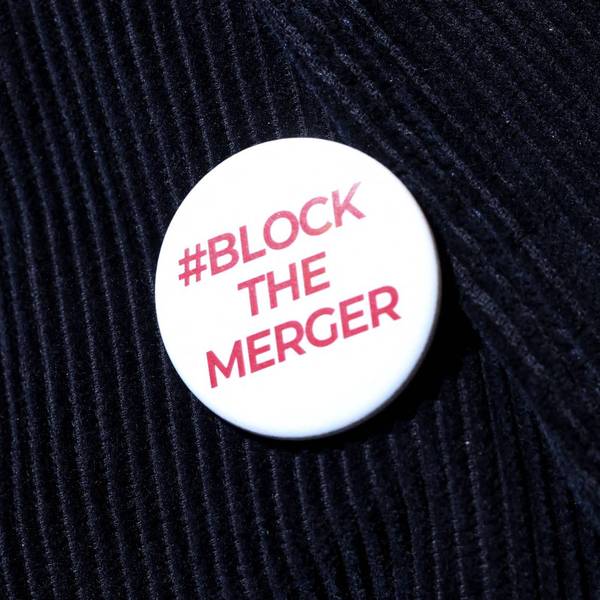
With the proposed health insurance mega-merger between Anthem and Cigna--one of the Obama administration's last antitrust cases--in court Monday, observers are speculating about how consolidation within healthcare and other industries will be impacted under President-elect Donald Trump.
A merger between Anthem and Cigna (much like the Aetna-Humana deal set to go to court in December) would "create a health insurance Goliath [that] would compromise physicians' ability to advocate for their patients--something we consider an integral part of our place in society," American Medical Association president Andrew W. Gurman said Monday. "In practice, market power allows insurers to exert control over clinical decisions, which undermines our relationships with patients and eliminates crucial safeguards of patient care."
As Attorney General Loretta Lynch said of both deals in July: "If allowed to proceed, these mergers would fundamentally reshape the health insurance industry. They would leave much of the multi-trillion dollar health insurance industry in the hands of three mammoth insurance companies, drastically constricting competition in a number of key markets that tens of millions of Americans rely on to receive healthcare."
These cases are likely to be decided before Trump takes office in January, and the New York Times reports that "[t]here is little expectation that the Justice Department under the Trump administration would drop the case if the companies lost and appealed, for example."
However, the newspaper continues, "it might be inclined to strike a settlement less onerous to the insurer. After the department under President Bill Clinton won its antitrust case against Microsoft, the officials taking over for President George W. Bush pursued a settlement that many viewed as less far-reaching than one that would have been sought by their predecessors."
Looking past these two cases, it remains to be seen how Trump's nominee for attorney general, Sen. Jeff Sessions (R-Ala.), would handle antitrust matters. Unlike on other issues, such as civil rights protections, Sessions has left few clues as to his position on mega-mergers.
Bloomberg noted on Friday:
While on the Judiciary Committee, Sessions hasn't played a big role in the committee's oversight of antitrust enforcement. He asked no questions of the past two chiefs of the antitrust division during their Senate confirmation hearings, according to transcripts.
But investment advisory firm Evercore ISI's head of political analysis, Terry Haines, predicted last week that "Sessions' likely nomination and confirmation by the Senate, in which he has served since 1997, is a market positive for merger and acquisition activity. Sessions as attorney general would shift immediately from the current mostly 'red light' Obama antitrust/competition policy and move towards one that would be friendlier to M&A activity."
Similarly, Robert Raben, formerly an assistant attorney general under former President Bill Clinton and now head of consulting firm the Raben Group told the Washington Post: "Sen. Sessions brings experience, intelligence, and passion to Justice. Regrettably, it is likely to be exercised toward the attempted elimination of civil rights, environmental, and antitrust enforcement."
Meanwhile, Trump has expressed opposition to the $85 billion deal between AT&T and Time Warner, though Politico points out, "his position appeared to be for personal reasons in that case. (He didn't like CNN's coverage of his campaign.)"
In general, Trump has said he wants less government regulation of business--and as ProPublica put it last week, "the early signs are that his administration will weaken antitrust enforcement and strengthen the hand of economists."
For example, the outlet continued:
He selected Joshua Wright, an economist and professor at George Mason's Antonin Scalia Law School, to lead his transition on antitrust matters. Wright, himself a former consultant for Boston-based Charles River Associates, regularly celebrates mergers in speeches and articles and has supported increasing the influence of economists in assessing monopoly power. "Mergers between competitors do not often lead to market power but do often generate significant benefits for consumers," he wrote in the New York Times.
With more Big Ag, Big Pharma, and Frackopoly mergers in the wings, the Times reports: "The clearest sign of the new administration's position, antitrust experts said, will come from who is appointed to crucial positions at the Justice Department and the Federal Trade Commission [FTC]."
As for the latter, Wright, the pro-merger economist, "has been put in charge of transition efforts at the influential Federal Trade Commission after pulling off the rare revolving-door quadruple-play, moving from Google-supported academic work to government--as an FTC commissioner--back to the Google gravy train and now back to the government," David Dayen wrote at The Intercept last week.
"Whether Wright recommends himself to an FTC commissioner slot or not," Dayen said, "it's clear that he would favor those who see only upside from market consolidation."
Dear Common Dreams reader, It’s been nearly 30 years since I co-founded Common Dreams with my late wife, Lina Newhouser. We had the radical notion that journalism should serve the public good, not corporate profits. It was clear to us from the outset what it would take to build such a project. No paid advertisements. No corporate sponsors. No millionaire publisher telling us what to think or do. Many people said we wouldn't last a year, but we proved those doubters wrong. Together with a tremendous team of journalists and dedicated staff, we built an independent media outlet free from the constraints of profits and corporate control. Our mission has always been simple: To inform. To inspire. To ignite change for the common good. Building Common Dreams was not easy. Our survival was never guaranteed. When you take on the most powerful forces—Wall Street greed, fossil fuel industry destruction, Big Tech lobbyists, and uber-rich oligarchs who have spent billions upon billions rigging the economy and democracy in their favor—the only bulwark you have is supporters who believe in your work. But here’s the urgent message from me today. It's never been this bad out there. And it's never been this hard to keep us going. At the very moment Common Dreams is most needed, the threats we face are intensifying. We need your support now more than ever. We don't accept corporate advertising and never will. We don't have a paywall because we don't think people should be blocked from critical news based on their ability to pay. Everything we do is funded by the donations of readers like you. When everyone does the little they can afford, we are strong. But if that support retreats or dries up, so do we. Will you donate now to make sure Common Dreams not only survives but thrives? —Craig Brown, Co-founder |
With the proposed health insurance mega-merger between Anthem and Cigna--one of the Obama administration's last antitrust cases--in court Monday, observers are speculating about how consolidation within healthcare and other industries will be impacted under President-elect Donald Trump.
A merger between Anthem and Cigna (much like the Aetna-Humana deal set to go to court in December) would "create a health insurance Goliath [that] would compromise physicians' ability to advocate for their patients--something we consider an integral part of our place in society," American Medical Association president Andrew W. Gurman said Monday. "In practice, market power allows insurers to exert control over clinical decisions, which undermines our relationships with patients and eliminates crucial safeguards of patient care."
As Attorney General Loretta Lynch said of both deals in July: "If allowed to proceed, these mergers would fundamentally reshape the health insurance industry. They would leave much of the multi-trillion dollar health insurance industry in the hands of three mammoth insurance companies, drastically constricting competition in a number of key markets that tens of millions of Americans rely on to receive healthcare."
These cases are likely to be decided before Trump takes office in January, and the New York Times reports that "[t]here is little expectation that the Justice Department under the Trump administration would drop the case if the companies lost and appealed, for example."
However, the newspaper continues, "it might be inclined to strike a settlement less onerous to the insurer. After the department under President Bill Clinton won its antitrust case against Microsoft, the officials taking over for President George W. Bush pursued a settlement that many viewed as less far-reaching than one that would have been sought by their predecessors."
Looking past these two cases, it remains to be seen how Trump's nominee for attorney general, Sen. Jeff Sessions (R-Ala.), would handle antitrust matters. Unlike on other issues, such as civil rights protections, Sessions has left few clues as to his position on mega-mergers.
Bloomberg noted on Friday:
While on the Judiciary Committee, Sessions hasn't played a big role in the committee's oversight of antitrust enforcement. He asked no questions of the past two chiefs of the antitrust division during their Senate confirmation hearings, according to transcripts.
But investment advisory firm Evercore ISI's head of political analysis, Terry Haines, predicted last week that "Sessions' likely nomination and confirmation by the Senate, in which he has served since 1997, is a market positive for merger and acquisition activity. Sessions as attorney general would shift immediately from the current mostly 'red light' Obama antitrust/competition policy and move towards one that would be friendlier to M&A activity."
Similarly, Robert Raben, formerly an assistant attorney general under former President Bill Clinton and now head of consulting firm the Raben Group told the Washington Post: "Sen. Sessions brings experience, intelligence, and passion to Justice. Regrettably, it is likely to be exercised toward the attempted elimination of civil rights, environmental, and antitrust enforcement."
Meanwhile, Trump has expressed opposition to the $85 billion deal between AT&T and Time Warner, though Politico points out, "his position appeared to be for personal reasons in that case. (He didn't like CNN's coverage of his campaign.)"
In general, Trump has said he wants less government regulation of business--and as ProPublica put it last week, "the early signs are that his administration will weaken antitrust enforcement and strengthen the hand of economists."
For example, the outlet continued:
He selected Joshua Wright, an economist and professor at George Mason's Antonin Scalia Law School, to lead his transition on antitrust matters. Wright, himself a former consultant for Boston-based Charles River Associates, regularly celebrates mergers in speeches and articles and has supported increasing the influence of economists in assessing monopoly power. "Mergers between competitors do not often lead to market power but do often generate significant benefits for consumers," he wrote in the New York Times.
With more Big Ag, Big Pharma, and Frackopoly mergers in the wings, the Times reports: "The clearest sign of the new administration's position, antitrust experts said, will come from who is appointed to crucial positions at the Justice Department and the Federal Trade Commission [FTC]."
As for the latter, Wright, the pro-merger economist, "has been put in charge of transition efforts at the influential Federal Trade Commission after pulling off the rare revolving-door quadruple-play, moving from Google-supported academic work to government--as an FTC commissioner--back to the Google gravy train and now back to the government," David Dayen wrote at The Intercept last week.
"Whether Wright recommends himself to an FTC commissioner slot or not," Dayen said, "it's clear that he would favor those who see only upside from market consolidation."
With the proposed health insurance mega-merger between Anthem and Cigna--one of the Obama administration's last antitrust cases--in court Monday, observers are speculating about how consolidation within healthcare and other industries will be impacted under President-elect Donald Trump.
A merger between Anthem and Cigna (much like the Aetna-Humana deal set to go to court in December) would "create a health insurance Goliath [that] would compromise physicians' ability to advocate for their patients--something we consider an integral part of our place in society," American Medical Association president Andrew W. Gurman said Monday. "In practice, market power allows insurers to exert control over clinical decisions, which undermines our relationships with patients and eliminates crucial safeguards of patient care."
As Attorney General Loretta Lynch said of both deals in July: "If allowed to proceed, these mergers would fundamentally reshape the health insurance industry. They would leave much of the multi-trillion dollar health insurance industry in the hands of three mammoth insurance companies, drastically constricting competition in a number of key markets that tens of millions of Americans rely on to receive healthcare."
These cases are likely to be decided before Trump takes office in January, and the New York Times reports that "[t]here is little expectation that the Justice Department under the Trump administration would drop the case if the companies lost and appealed, for example."
However, the newspaper continues, "it might be inclined to strike a settlement less onerous to the insurer. After the department under President Bill Clinton won its antitrust case against Microsoft, the officials taking over for President George W. Bush pursued a settlement that many viewed as less far-reaching than one that would have been sought by their predecessors."
Looking past these two cases, it remains to be seen how Trump's nominee for attorney general, Sen. Jeff Sessions (R-Ala.), would handle antitrust matters. Unlike on other issues, such as civil rights protections, Sessions has left few clues as to his position on mega-mergers.
Bloomberg noted on Friday:
While on the Judiciary Committee, Sessions hasn't played a big role in the committee's oversight of antitrust enforcement. He asked no questions of the past two chiefs of the antitrust division during their Senate confirmation hearings, according to transcripts.
But investment advisory firm Evercore ISI's head of political analysis, Terry Haines, predicted last week that "Sessions' likely nomination and confirmation by the Senate, in which he has served since 1997, is a market positive for merger and acquisition activity. Sessions as attorney general would shift immediately from the current mostly 'red light' Obama antitrust/competition policy and move towards one that would be friendlier to M&A activity."
Similarly, Robert Raben, formerly an assistant attorney general under former President Bill Clinton and now head of consulting firm the Raben Group told the Washington Post: "Sen. Sessions brings experience, intelligence, and passion to Justice. Regrettably, it is likely to be exercised toward the attempted elimination of civil rights, environmental, and antitrust enforcement."
Meanwhile, Trump has expressed opposition to the $85 billion deal between AT&T and Time Warner, though Politico points out, "his position appeared to be for personal reasons in that case. (He didn't like CNN's coverage of his campaign.)"
In general, Trump has said he wants less government regulation of business--and as ProPublica put it last week, "the early signs are that his administration will weaken antitrust enforcement and strengthen the hand of economists."
For example, the outlet continued:
He selected Joshua Wright, an economist and professor at George Mason's Antonin Scalia Law School, to lead his transition on antitrust matters. Wright, himself a former consultant for Boston-based Charles River Associates, regularly celebrates mergers in speeches and articles and has supported increasing the influence of economists in assessing monopoly power. "Mergers between competitors do not often lead to market power but do often generate significant benefits for consumers," he wrote in the New York Times.
With more Big Ag, Big Pharma, and Frackopoly mergers in the wings, the Times reports: "The clearest sign of the new administration's position, antitrust experts said, will come from who is appointed to crucial positions at the Justice Department and the Federal Trade Commission [FTC]."
As for the latter, Wright, the pro-merger economist, "has been put in charge of transition efforts at the influential Federal Trade Commission after pulling off the rare revolving-door quadruple-play, moving from Google-supported academic work to government--as an FTC commissioner--back to the Google gravy train and now back to the government," David Dayen wrote at The Intercept last week.
"Whether Wright recommends himself to an FTC commissioner slot or not," Dayen said, "it's clear that he would favor those who see only upside from market consolidation."