SUBSCRIBE TO OUR FREE NEWSLETTER
Daily news & progressive opinion—funded by the people, not the corporations—delivered straight to your inbox.
5
#000000
#FFFFFF
To donate by check, phone, or other method, see our More Ways to Give page.
Daily news & progressive opinion—funded by the people, not the corporations—delivered straight to your inbox.
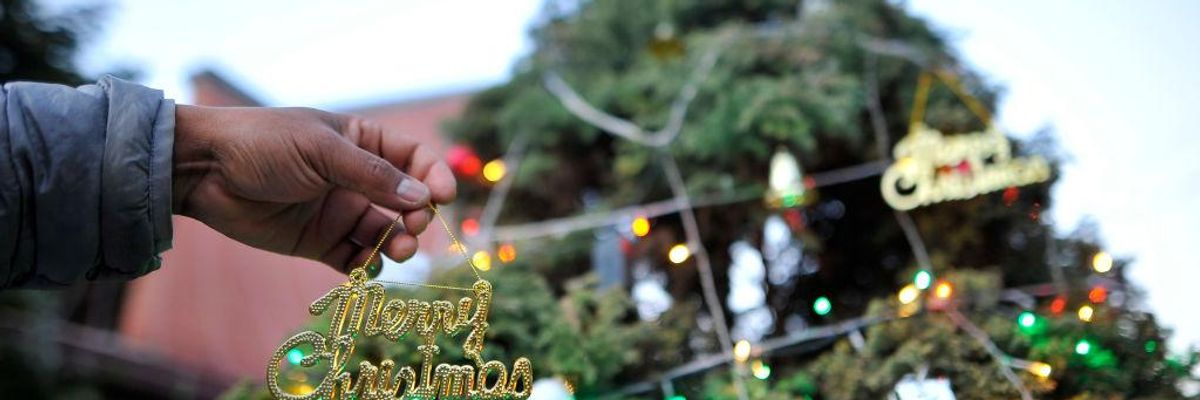
In this secular age, let us remember the message of Christmas. Jesus demonstrated the astonishing power of faith, hope and charity, the importance of love. (Photo by Narayan Maharjan/NurPhoto via Getty Images)
On Friday, millions of people across the world will celebrate Christmas. Here and abroad, safety -- staying home, social distancing, wearing masks, being sensible -- requires limits on the gatherings and parties. Yet the bells still ring, music is in the air, lights on homes and lampposts shine, blessings are shared.
For so many, this holiday is a difficult time: the cold and hungry, those separated from families, those alone or imprisoned or sick. With the pandemic raging and millions unemployed and on the verge of eviction, this Christmas will witness tears among the smiles. Each year at this time, I use this column to remind us of the true meaning of Christmas.
Christmas is literally the mass for Christ, marking the birth of Jesus. He was born under occupation. Joseph and Mary were ordered to go far from home to register with authorities. The innkeeper told Joseph there was no room at the inn. Jesus was born on a cold night in a stable, lying in a manger, an "at risk baby." His earthly father was a carpenter, not a prince or a banker.
Jesus was born at a time of great misery and turmoil, with his country under Roman occupation. Prophets predicted that a new Messiah was coming -- a King of Kings -- who would rout the occupiers and free the people.
Many expected a mighty warrior, like the superheroes of today's movies, who would mobilize an army to defeat Rome's legions. Fearing the prophecy, the Roman King Herod ordered the "massacre of the innocents," the slaughter of all boys two and under in Bethlehem and the nearby region.
Jesus was the great liberator, but by his words and example, not by his sword. He converted rather than conquered. He accumulated no worldly wealth. He threw the moneylenders from the temple. He owned no home, no land, and had no regular paycheck. His time with us was too brief, and he was crucified for his ministry.
And yet, Jesus succeeded beyond all expectation to transform the world. The Prince of Peace, he taught us that peace is not the absence of violence; it is the presence of justice and righteousness.
These days, Christmas too often becomes a stressful holiday rather than a prayerful holy day. It is a time of sales, shopping and Santa. Yet Jesus taught us to focus on the most vulnerable among us.
This is even more vital today. Poverty is rising, not falling. Food kitchens are overwhelmed. Millions of hard-working people have lost their jobs through no fault of their own. Millions more are deemed "essential workers," risking their lives for us, yet many receive the lowest pay and the fewest benefits.
And at the same time, the economy is rigged so that the very richest -- the billionaires in America -- have added over a trillion dollars to their fortunes in the midst of the pandemic.
Jesus praised the Good Samaritan who cared for the stranger on the Jericho Road. Yet today, racial inequities -- too often structured into our institutions -- continue to cost lives and waste futures. Demagogues fuel fears and hatreds of the other; harsh immigration policies -- separating children from their mothers in the extreme -- violate our own values. We continue to lock up more people than any nation in the world.
Ignoring the climate crisis that increasingly threatens all of God's creation now costs us daily in lives, in the destructions of extreme weather, in economic disruptions that already generate millions of refugees.
In this secular age, let us remember the message of Christmas. Jesus demonstrated the astonishing power of faith, hope and charity, the importance of love. He showed that people of conscience can make a difference, even against the most powerful oppressor. He demonstrated the strength of summoning our better angels, rather than rousing our fears or feeding our divisions. This Christmas, this surely is a message to remember.
Merry Christmas, everybody.
Dear Common Dreams reader, It’s been nearly 30 years since I co-founded Common Dreams with my late wife, Lina Newhouser. We had the radical notion that journalism should serve the public good, not corporate profits. It was clear to us from the outset what it would take to build such a project. No paid advertisements. No corporate sponsors. No millionaire publisher telling us what to think or do. Many people said we wouldn't last a year, but we proved those doubters wrong. Together with a tremendous team of journalists and dedicated staff, we built an independent media outlet free from the constraints of profits and corporate control. Our mission has always been simple: To inform. To inspire. To ignite change for the common good. Building Common Dreams was not easy. Our survival was never guaranteed. When you take on the most powerful forces—Wall Street greed, fossil fuel industry destruction, Big Tech lobbyists, and uber-rich oligarchs who have spent billions upon billions rigging the economy and democracy in their favor—the only bulwark you have is supporters who believe in your work. But here’s the urgent message from me today. It's never been this bad out there. And it's never been this hard to keep us going. At the very moment Common Dreams is most needed, the threats we face are intensifying. We need your support now more than ever. We don't accept corporate advertising and never will. We don't have a paywall because we don't think people should be blocked from critical news based on their ability to pay. Everything we do is funded by the donations of readers like you. When everyone does the little they can afford, we are strong. But if that support retreats or dries up, so do we. Will you donate now to make sure Common Dreams not only survives but thrives? —Craig Brown, Co-founder |
On Friday, millions of people across the world will celebrate Christmas. Here and abroad, safety -- staying home, social distancing, wearing masks, being sensible -- requires limits on the gatherings and parties. Yet the bells still ring, music is in the air, lights on homes and lampposts shine, blessings are shared.
For so many, this holiday is a difficult time: the cold and hungry, those separated from families, those alone or imprisoned or sick. With the pandemic raging and millions unemployed and on the verge of eviction, this Christmas will witness tears among the smiles. Each year at this time, I use this column to remind us of the true meaning of Christmas.
Christmas is literally the mass for Christ, marking the birth of Jesus. He was born under occupation. Joseph and Mary were ordered to go far from home to register with authorities. The innkeeper told Joseph there was no room at the inn. Jesus was born on a cold night in a stable, lying in a manger, an "at risk baby." His earthly father was a carpenter, not a prince or a banker.
Jesus was born at a time of great misery and turmoil, with his country under Roman occupation. Prophets predicted that a new Messiah was coming -- a King of Kings -- who would rout the occupiers and free the people.
Many expected a mighty warrior, like the superheroes of today's movies, who would mobilize an army to defeat Rome's legions. Fearing the prophecy, the Roman King Herod ordered the "massacre of the innocents," the slaughter of all boys two and under in Bethlehem and the nearby region.
Jesus was the great liberator, but by his words and example, not by his sword. He converted rather than conquered. He accumulated no worldly wealth. He threw the moneylenders from the temple. He owned no home, no land, and had no regular paycheck. His time with us was too brief, and he was crucified for his ministry.
And yet, Jesus succeeded beyond all expectation to transform the world. The Prince of Peace, he taught us that peace is not the absence of violence; it is the presence of justice and righteousness.
These days, Christmas too often becomes a stressful holiday rather than a prayerful holy day. It is a time of sales, shopping and Santa. Yet Jesus taught us to focus on the most vulnerable among us.
This is even more vital today. Poverty is rising, not falling. Food kitchens are overwhelmed. Millions of hard-working people have lost their jobs through no fault of their own. Millions more are deemed "essential workers," risking their lives for us, yet many receive the lowest pay and the fewest benefits.
And at the same time, the economy is rigged so that the very richest -- the billionaires in America -- have added over a trillion dollars to their fortunes in the midst of the pandemic.
Jesus praised the Good Samaritan who cared for the stranger on the Jericho Road. Yet today, racial inequities -- too often structured into our institutions -- continue to cost lives and waste futures. Demagogues fuel fears and hatreds of the other; harsh immigration policies -- separating children from their mothers in the extreme -- violate our own values. We continue to lock up more people than any nation in the world.
Ignoring the climate crisis that increasingly threatens all of God's creation now costs us daily in lives, in the destructions of extreme weather, in economic disruptions that already generate millions of refugees.
In this secular age, let us remember the message of Christmas. Jesus demonstrated the astonishing power of faith, hope and charity, the importance of love. He showed that people of conscience can make a difference, even against the most powerful oppressor. He demonstrated the strength of summoning our better angels, rather than rousing our fears or feeding our divisions. This Christmas, this surely is a message to remember.
Merry Christmas, everybody.
On Friday, millions of people across the world will celebrate Christmas. Here and abroad, safety -- staying home, social distancing, wearing masks, being sensible -- requires limits on the gatherings and parties. Yet the bells still ring, music is in the air, lights on homes and lampposts shine, blessings are shared.
For so many, this holiday is a difficult time: the cold and hungry, those separated from families, those alone or imprisoned or sick. With the pandemic raging and millions unemployed and on the verge of eviction, this Christmas will witness tears among the smiles. Each year at this time, I use this column to remind us of the true meaning of Christmas.
Christmas is literally the mass for Christ, marking the birth of Jesus. He was born under occupation. Joseph and Mary were ordered to go far from home to register with authorities. The innkeeper told Joseph there was no room at the inn. Jesus was born on a cold night in a stable, lying in a manger, an "at risk baby." His earthly father was a carpenter, not a prince or a banker.
Jesus was born at a time of great misery and turmoil, with his country under Roman occupation. Prophets predicted that a new Messiah was coming -- a King of Kings -- who would rout the occupiers and free the people.
Many expected a mighty warrior, like the superheroes of today's movies, who would mobilize an army to defeat Rome's legions. Fearing the prophecy, the Roman King Herod ordered the "massacre of the innocents," the slaughter of all boys two and under in Bethlehem and the nearby region.
Jesus was the great liberator, but by his words and example, not by his sword. He converted rather than conquered. He accumulated no worldly wealth. He threw the moneylenders from the temple. He owned no home, no land, and had no regular paycheck. His time with us was too brief, and he was crucified for his ministry.
And yet, Jesus succeeded beyond all expectation to transform the world. The Prince of Peace, he taught us that peace is not the absence of violence; it is the presence of justice and righteousness.
These days, Christmas too often becomes a stressful holiday rather than a prayerful holy day. It is a time of sales, shopping and Santa. Yet Jesus taught us to focus on the most vulnerable among us.
This is even more vital today. Poverty is rising, not falling. Food kitchens are overwhelmed. Millions of hard-working people have lost their jobs through no fault of their own. Millions more are deemed "essential workers," risking their lives for us, yet many receive the lowest pay and the fewest benefits.
And at the same time, the economy is rigged so that the very richest -- the billionaires in America -- have added over a trillion dollars to their fortunes in the midst of the pandemic.
Jesus praised the Good Samaritan who cared for the stranger on the Jericho Road. Yet today, racial inequities -- too often structured into our institutions -- continue to cost lives and waste futures. Demagogues fuel fears and hatreds of the other; harsh immigration policies -- separating children from their mothers in the extreme -- violate our own values. We continue to lock up more people than any nation in the world.
Ignoring the climate crisis that increasingly threatens all of God's creation now costs us daily in lives, in the destructions of extreme weather, in economic disruptions that already generate millions of refugees.
In this secular age, let us remember the message of Christmas. Jesus demonstrated the astonishing power of faith, hope and charity, the importance of love. He showed that people of conscience can make a difference, even against the most powerful oppressor. He demonstrated the strength of summoning our better angels, rather than rousing our fears or feeding our divisions. This Christmas, this surely is a message to remember.
Merry Christmas, everybody.