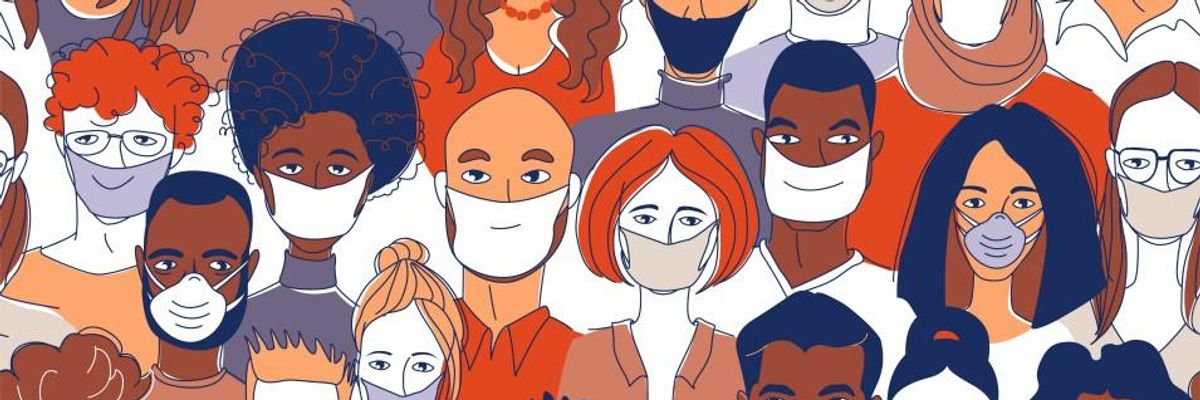
(Image: iStock/sv_sunny)
Colleges are Still in Uncharted Territority
We’ve had the summer to prepare, but there are just no easy answers for teaching during a global pandemic.
In a few weeks, I begin my semester as a teaching assistant in an undergraduate sociology class. I am not sure what to expect.
Last March, when our school sent the students home, everything happened suddenly.
We weren't sure what time zones our students would be in. We didn't know if each student had a computer or an internet connection at home. We didn't know if they would get sick with COVID, or have loved ones who got sick. We didn't know if they were going home to abusive families, or if financial losses would leave their families without enough to get by.
I was working with a professor and two other teaching assistants. We made the best plan we could to allow for every possible contingency. We switched our curriculum to online and made it "asynchronous," so students in different time zones would not have to log in at a specific time of day.
Once our class went online, we saw new challenges. Compared to seeing our students in person several times a week, now communication was limited to material we posted online or emails we sent. Did students even read it? Did they have questions?
I tried to imagine what it was like in my students' shoes.
Even in the best-case scenario, they were now dealing with a number of professors and teaching assistants who had just gone online without experience or preparation. For every email I sent, how many other emails were they getting? How did they handle time management now that they no longer had to attend classes at set times?
As we approach the coming semester, our situation is different once again.
My school offers a combination of face-to-face, remote synchronous, and remote asynchronous classes. I'll be teaching remote and synchronous, and my students are choosing to learn that way when they sign up for my class. This time, I can at least assume that students signing up to learn online at the same time each week have the technology and the availability to do so.
Last semester, we graded students leniently in light of the circumstances they were in. I gave the same feedback that I usually would, but with much higher grades. We attempted to ask for as little as possible from the students while still teaching the curriculum. What should we do this semester?
My point is not that I have the answers, but that nobody does.
In the past few months, we've watched many states' economies start to open back up and then shut down again once COVID cases spiked. Students who begin the semester healthy may not remain so.
Even campuses that begin the semester open may not remain so for long. Already, the University of North Carolina and Notre Dame have had to shut down almost immediately after opening in person due to COVID-19 outbreaks.
Educators have had all summer to prepare for the fall, but we're also still living through a global pandemic. I've familiarized myself with online tools and pedagogy, and I am ready and excited to do my job, but I'm also preparing to be adaptive to the needs of my students as we start the semester.
Even after moving online last spring, none of us have been here before. As I see students, teachers, and schools preparing to go back, we should all keep that in mind. There's no way to perfectly plan this semester beforehand, and we should plan in advance for flexibility and responsiveness to whatever unfolds.
We are at a crossroads
This country and this world are at a monumental crossroads. In a few short weeks, US voters will have an opportunity to beat back the forces of fascism and confront the billionaires who are rigging the economy, our media system, and our democracy, making it increasingly impossible for ordinary people to get by. We’re not just talking about the election. We’re talking about what must be done once these fascist elements are vanquished from power. We need a bolder set of solutions than what either major party has so far been willing to offer and a working-class movement ready to fight like hell for it. Trump didn't emerge from nowhere. The conditions that fueled MAGA authoritarianism were created by decades of radical neoliberal economic policies and a corrupt political system dominated by corporate interests. They slashed taxes on the super-rich, promising that the benefits would trickle down. They said giveaways to the corporate titans would make life more affordable for the rest of us. It was all bullshit. And when a bitter, betrayed populace searches for someone to blame, right-wing demagogues have little trouble finding scapegoats. People know when they're being lied to, but you won't hear any of this from the corporate media. Only independent journalism—powered and funded by people who believe in building a better world—can deliver truly trustworthy daily news. Our Fall Campaign is underway, and we need your help. To power our newsroom through the rest of the year, we need to raise $125,000 by midnight on October 31. So if you share our vision, please contribute whatever you can to sustain our work. |
In a few weeks, I begin my semester as a teaching assistant in an undergraduate sociology class. I am not sure what to expect.
Last March, when our school sent the students home, everything happened suddenly.
We weren't sure what time zones our students would be in. We didn't know if each student had a computer or an internet connection at home. We didn't know if they would get sick with COVID, or have loved ones who got sick. We didn't know if they were going home to abusive families, or if financial losses would leave their families without enough to get by.
I was working with a professor and two other teaching assistants. We made the best plan we could to allow for every possible contingency. We switched our curriculum to online and made it "asynchronous," so students in different time zones would not have to log in at a specific time of day.
Once our class went online, we saw new challenges. Compared to seeing our students in person several times a week, now communication was limited to material we posted online or emails we sent. Did students even read it? Did they have questions?
I tried to imagine what it was like in my students' shoes.
Even in the best-case scenario, they were now dealing with a number of professors and teaching assistants who had just gone online without experience or preparation. For every email I sent, how many other emails were they getting? How did they handle time management now that they no longer had to attend classes at set times?
As we approach the coming semester, our situation is different once again.
My school offers a combination of face-to-face, remote synchronous, and remote asynchronous classes. I'll be teaching remote and synchronous, and my students are choosing to learn that way when they sign up for my class. This time, I can at least assume that students signing up to learn online at the same time each week have the technology and the availability to do so.
Last semester, we graded students leniently in light of the circumstances they were in. I gave the same feedback that I usually would, but with much higher grades. We attempted to ask for as little as possible from the students while still teaching the curriculum. What should we do this semester?
My point is not that I have the answers, but that nobody does.
In the past few months, we've watched many states' economies start to open back up and then shut down again once COVID cases spiked. Students who begin the semester healthy may not remain so.
Even campuses that begin the semester open may not remain so for long. Already, the University of North Carolina and Notre Dame have had to shut down almost immediately after opening in person due to COVID-19 outbreaks.
Educators have had all summer to prepare for the fall, but we're also still living through a global pandemic. I've familiarized myself with online tools and pedagogy, and I am ready and excited to do my job, but I'm also preparing to be adaptive to the needs of my students as we start the semester.
Even after moving online last spring, none of us have been here before. As I see students, teachers, and schools preparing to go back, we should all keep that in mind. There's no way to perfectly plan this semester beforehand, and we should plan in advance for flexibility and responsiveness to whatever unfolds.