

SUBSCRIBE TO OUR FREE NEWSLETTER
Daily news & progressive opinion—funded by the people, not the corporations—delivered straight to your inbox.
5
#000000
#FFFFFF
To donate by check, phone, or other method, see our More Ways to Give page.
Daily news & progressive opinion—funded by the people, not the corporations—delivered straight to your inbox.
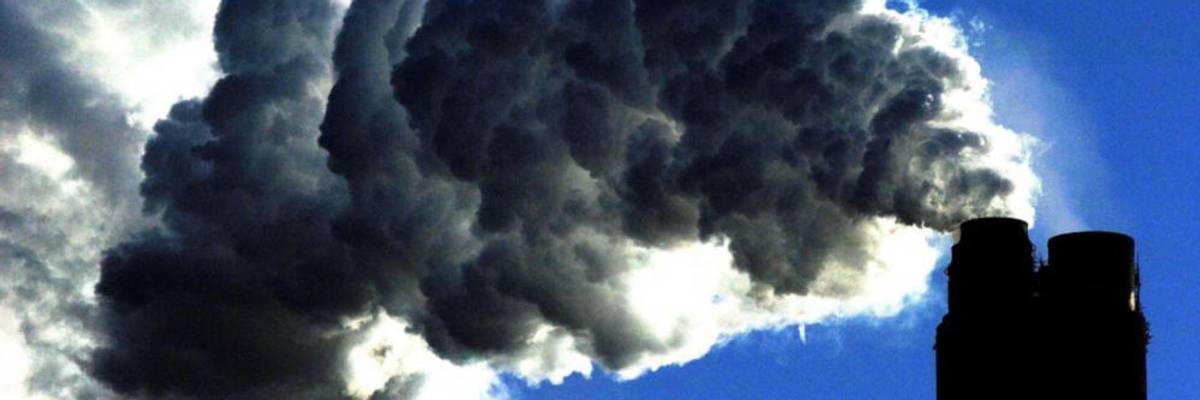
Net zero targets require a significant reduction in pollution and any emissions that remain are offset with measures such as tree planting to reach zero overall. (Photo: Flickr)
Almost half the world's economic output is generated in areas where there are now moves to cut carbon emissions to net zero by 2050, analysis suggests.
The analysis finds more than 39 trillion US dollars (PS30 trillion) of the world's annual gross domestic product (GDP), or around 49 percent, is being generated in nations, regions and cities with an actual or proposed net zero target.
That includes 121 nations which have set or are proposing a goal to cut their carbon emissions down to net zero in or before 2050.
Industrial
Net zero targets require a significant reduction in pollution and any emissions that remain are offset with measures such as tree planting to reach zero overall.
The list drawn up in the analysis by think tank the Energy and Climate Intelligence Unit (ECIU) includes places where a net zero target is being discussed by politicians, where leaders have made a political declaration, where legislation is being developed, or where it has been enacted.
It also includes two countries - Bhutan and Suriname - which are already carbon negative, absorbing more emissions through their forests than they produce.
The data comes from ECIU's net zero online tracker, which shows that the amount of GDP covered by net zero ambitions has trebled in the eight months since the tracker was launched, while the number of countries with a target on the table has risen from just 15.
The world needs to deliver more ambitious action than currently pledged to meet commitments in the Paris climate accord to curb temperature rises to well below 2C or to 1.5C above pre-industrial levels.
Cities
In October 2018, an assessment by the UN's Intergovernmental Panel on Climate Change (IPCC) showed that to have a 50 percent chance of keeping global warming to 1.5C, global carbon emissions need to reach net zero by 2050.
It warned that going beyond 1.5C would expose the world to worsening drought, weather extremes, disease spread, sea level rises, harm to crop yields and damage to wildlife.
ECIU director Richard Black said: "It's extraordinary that just 18 months on from the IPCC report that showed the scientific case for reaching global net zero emissions by 2050, nations, regions and cities representing virtually half of global GDP have set compatible goals.
"The majority of these targets are just targets - but still, it shows how quickly policymakers are grasping the science, and - in the case of cities and regions - deciding to act themselves when their national governments will not."
Zero club
Countries and regions with net zero targets secured or in the works include Germany, where Chancellor Angela Merkel has pledged to make the country carbon neutral by 2050, and California where Governor Jerry Brown has signed an order mandating the move by 2045.
The UK, which is hosting the key UN climate summit Cop26 in Glasgow in November, which aims to drive more ambitious action on global warming, is one of five countries which has set a legal target for net zero.
But the Government has been warned it is off track to meet its legally binding emissions cuts goals.
Mr Black said that if it gets its own carbon-cutting in order, the UK will be in a position to launch a "net zero club" of nations seriously embarking on a zero carbon transformation, to help drive action at the summit.
Dear Common Dreams reader, It’s been nearly 30 years since I co-founded Common Dreams with my late wife, Lina Newhouser. We had the radical notion that journalism should serve the public good, not corporate profits. It was clear to us from the outset what it would take to build such a project. No paid advertisements. No corporate sponsors. No millionaire publisher telling us what to think or do. Many people said we wouldn't last a year, but we proved those doubters wrong. Together with a tremendous team of journalists and dedicated staff, we built an independent media outlet free from the constraints of profits and corporate control. Our mission has always been simple: To inform. To inspire. To ignite change for the common good. Building Common Dreams was not easy. Our survival was never guaranteed. When you take on the most powerful forces—Wall Street greed, fossil fuel industry destruction, Big Tech lobbyists, and uber-rich oligarchs who have spent billions upon billions rigging the economy and democracy in their favor—the only bulwark you have is supporters who believe in your work. But here’s the urgent message from me today. It's never been this bad out there. And it's never been this hard to keep us going. At the very moment Common Dreams is most needed, the threats we face are intensifying. We need your support now more than ever. We don't accept corporate advertising and never will. We don't have a paywall because we don't think people should be blocked from critical news based on their ability to pay. Everything we do is funded by the donations of readers like you. When everyone does the little they can afford, we are strong. But if that support retreats or dries up, so do we. Will you donate now to make sure Common Dreams not only survives but thrives? —Craig Brown, Co-founder |
Almost half the world's economic output is generated in areas where there are now moves to cut carbon emissions to net zero by 2050, analysis suggests.
The analysis finds more than 39 trillion US dollars (PS30 trillion) of the world's annual gross domestic product (GDP), or around 49 percent, is being generated in nations, regions and cities with an actual or proposed net zero target.
That includes 121 nations which have set or are proposing a goal to cut their carbon emissions down to net zero in or before 2050.
Industrial
Net zero targets require a significant reduction in pollution and any emissions that remain are offset with measures such as tree planting to reach zero overall.
The list drawn up in the analysis by think tank the Energy and Climate Intelligence Unit (ECIU) includes places where a net zero target is being discussed by politicians, where leaders have made a political declaration, where legislation is being developed, or where it has been enacted.
It also includes two countries - Bhutan and Suriname - which are already carbon negative, absorbing more emissions through their forests than they produce.
The data comes from ECIU's net zero online tracker, which shows that the amount of GDP covered by net zero ambitions has trebled in the eight months since the tracker was launched, while the number of countries with a target on the table has risen from just 15.
The world needs to deliver more ambitious action than currently pledged to meet commitments in the Paris climate accord to curb temperature rises to well below 2C or to 1.5C above pre-industrial levels.
Cities
In October 2018, an assessment by the UN's Intergovernmental Panel on Climate Change (IPCC) showed that to have a 50 percent chance of keeping global warming to 1.5C, global carbon emissions need to reach net zero by 2050.
It warned that going beyond 1.5C would expose the world to worsening drought, weather extremes, disease spread, sea level rises, harm to crop yields and damage to wildlife.
ECIU director Richard Black said: "It's extraordinary that just 18 months on from the IPCC report that showed the scientific case for reaching global net zero emissions by 2050, nations, regions and cities representing virtually half of global GDP have set compatible goals.
"The majority of these targets are just targets - but still, it shows how quickly policymakers are grasping the science, and - in the case of cities and regions - deciding to act themselves when their national governments will not."
Zero club
Countries and regions with net zero targets secured or in the works include Germany, where Chancellor Angela Merkel has pledged to make the country carbon neutral by 2050, and California where Governor Jerry Brown has signed an order mandating the move by 2045.
The UK, which is hosting the key UN climate summit Cop26 in Glasgow in November, which aims to drive more ambitious action on global warming, is one of five countries which has set a legal target for net zero.
But the Government has been warned it is off track to meet its legally binding emissions cuts goals.
Mr Black said that if it gets its own carbon-cutting in order, the UK will be in a position to launch a "net zero club" of nations seriously embarking on a zero carbon transformation, to help drive action at the summit.
Almost half the world's economic output is generated in areas where there are now moves to cut carbon emissions to net zero by 2050, analysis suggests.
The analysis finds more than 39 trillion US dollars (PS30 trillion) of the world's annual gross domestic product (GDP), or around 49 percent, is being generated in nations, regions and cities with an actual or proposed net zero target.
That includes 121 nations which have set or are proposing a goal to cut their carbon emissions down to net zero in or before 2050.
Industrial
Net zero targets require a significant reduction in pollution and any emissions that remain are offset with measures such as tree planting to reach zero overall.
The list drawn up in the analysis by think tank the Energy and Climate Intelligence Unit (ECIU) includes places where a net zero target is being discussed by politicians, where leaders have made a political declaration, where legislation is being developed, or where it has been enacted.
It also includes two countries - Bhutan and Suriname - which are already carbon negative, absorbing more emissions through their forests than they produce.
The data comes from ECIU's net zero online tracker, which shows that the amount of GDP covered by net zero ambitions has trebled in the eight months since the tracker was launched, while the number of countries with a target on the table has risen from just 15.
The world needs to deliver more ambitious action than currently pledged to meet commitments in the Paris climate accord to curb temperature rises to well below 2C or to 1.5C above pre-industrial levels.
Cities
In October 2018, an assessment by the UN's Intergovernmental Panel on Climate Change (IPCC) showed that to have a 50 percent chance of keeping global warming to 1.5C, global carbon emissions need to reach net zero by 2050.
It warned that going beyond 1.5C would expose the world to worsening drought, weather extremes, disease spread, sea level rises, harm to crop yields and damage to wildlife.
ECIU director Richard Black said: "It's extraordinary that just 18 months on from the IPCC report that showed the scientific case for reaching global net zero emissions by 2050, nations, regions and cities representing virtually half of global GDP have set compatible goals.
"The majority of these targets are just targets - but still, it shows how quickly policymakers are grasping the science, and - in the case of cities and regions - deciding to act themselves when their national governments will not."
Zero club
Countries and regions with net zero targets secured or in the works include Germany, where Chancellor Angela Merkel has pledged to make the country carbon neutral by 2050, and California where Governor Jerry Brown has signed an order mandating the move by 2045.
The UK, which is hosting the key UN climate summit Cop26 in Glasgow in November, which aims to drive more ambitious action on global warming, is one of five countries which has set a legal target for net zero.
But the Government has been warned it is off track to meet its legally binding emissions cuts goals.
Mr Black said that if it gets its own carbon-cutting in order, the UK will be in a position to launch a "net zero club" of nations seriously embarking on a zero carbon transformation, to help drive action at the summit.

