A President needs political understanding to run the government, but he may be elected without it.
-- Harry Truman, Memoirs
A number of people have asked how it is that three weeks before the election debate organizers were able to find an uncommitted group of people to question the candidates in the second debate. Since we are now only a few weeks away from the beginning of the 2016 election season, a refresher as to what to expect during the next four years is in order, and that explanation may help explain how it was that three weeks before the election there were still undecided voters.
The best way to insure that voters are informed and, therefore, committed, is to provide ample time for them to examine the positions of the people they are being asked to support. No other country takes greater pains to make sure its electorate is informed than the United States. In France, for example, the presidential election lasts four months from start to finish, hardly enough time for an interested voter to make an informed decision. (In addition, and as an additional handicap for the voter, political advertising is not allowed on the airwaves in France, thus almost guaranteeing that the voters will be uninformed.)
The first event that will signal the beginning of the 2016 election cycle will be the announcement by a politician that he or she is going to visit Iowa, a state not normally associated with vacation planning. A politician's announcement of a trip to Iowa is the same thing as a formal announcement that the visitor is seriously considering a run for the presidency. Iowa is a good place for a politician to start since not only does it hold the first primary in the country but politicians can test out positions and see if they appeal to the voters. If, not, they can revise them in future primaries. In addition, in primaries where all the candidates are members of the same party, as was the case this year, they can change their positions in order to effectively compete with the other participants in the primary process. This year, the goal for each entrant was to be more conservative than any of the other participants. In order to compete with his conservative rivals during the primaries, Mr. Romney, among other things, disavowed much of what he had done with respect to health care as governor of Massachusetts and said he supported a Senate piece of legislation that would permit employers to select insurance plans that denied contraceptive coverage to women (a position he rejected in the second debate.) Since the interested voter recognizes that whatever is said during the primary is of no moment, it is easy to see why a voter would, at that stage in the process, remain uncommitted.
Following the conclusion of the primary season the campaign begins in earnest. That is when the survivor has a chance to look inward and figure out what, if anything, he really believes and firm up the platform on which the candidate plans to run. During that time an uncommitted voter might have the opportunity to become committed except for one thing. The candidates rely on thirty and sixty second ads that do more to demonize the opponent than edify the voter and, as a result, the large sums of money that are spent benefit the media outlets more than the voter. Thus, the uncommitted voter can easily remain uncommitted.
It is estimated that this year supporters of the two candidates will each have spent $1 billion on explaining why the candidate they oppose is not qualified to be president. To put that sum in perspective, $1 billion is the amount that bald men in America spend each year on shampoos, hair transplants and other treatments designed to cure baldness. Unlike the hair products, the $2 billion spent on the campaign is used to tear down rather than restore. It is easy to see why, at the end of the process, unless they have done independent study, the voter is able to remain uncommitted even though the election looms.
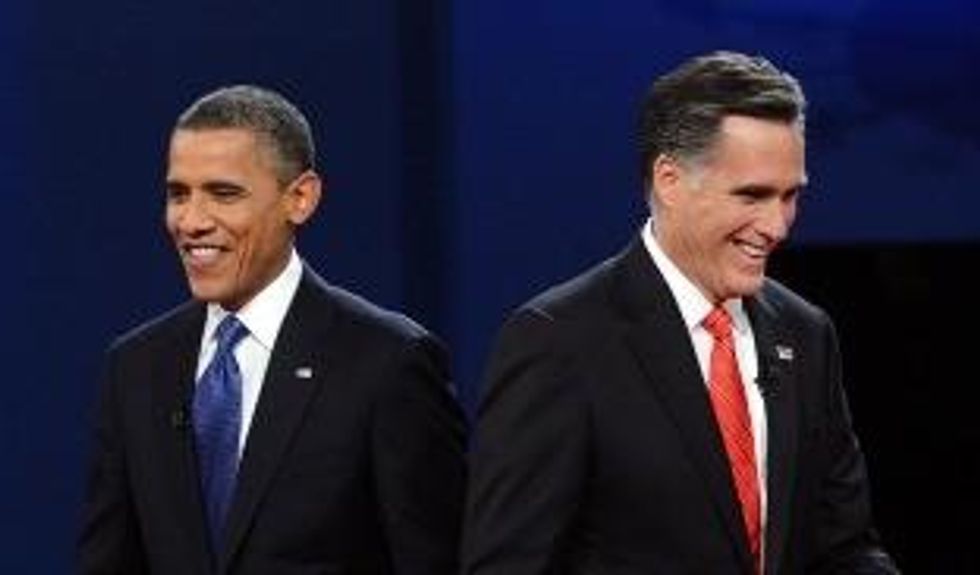
After months of campaigning and $2 billion having been spent, the whole four-year process of selecting a president boils down to one thing-who performed better in three one and one-half hour debates. The only question is who smiled too much or not enough, who seemed subdued or aggressive, who snuck in a cheat sheet and other matters of non-substance. Based on the foregoing, voters will cast their ballots to select the next leader of the free world. It is at that point that the uncommitted voter will decide for whom to vote.
It is not too late to change the process for 2016. Instead of spending $2 billion and wasting four years on another election cycle, we could reduce the entire process to three debates and spend $2 billion to make restorative hair products available at no cost for all the balding men in America. It won't happen and the first visit to Iowa is only a few months away.
A President needs political understanding to run the government, but he may be elected without it.
-- Harry Truman, Memoirs
A number of people have asked how it is that three weeks before the election debate organizers were able to find an uncommitted group of people to question the candidates in the second debate. Since we are now only a few weeks away from the beginning of the 2016 election season, a refresher as to what to expect during the next four years is in order, and that explanation may help explain how it was that three weeks before the election there were still undecided voters.
The best way to insure that voters are informed and, therefore, committed, is to provide ample time for them to examine the positions of the people they are being asked to support. No other country takes greater pains to make sure its electorate is informed than the United States. In France, for example, the presidential election lasts four months from start to finish, hardly enough time for an interested voter to make an informed decision. (In addition, and as an additional handicap for the voter, political advertising is not allowed on the airwaves in France, thus almost guaranteeing that the voters will be uninformed.)
The first event that will signal the beginning of the 2016 election cycle will be the announcement by a politician that he or she is going to visit Iowa, a state not normally associated with vacation planning. A politician's announcement of a trip to Iowa is the same thing as a formal announcement that the visitor is seriously considering a run for the presidency. Iowa is a good place for a politician to start since not only does it hold the first primary in the country but politicians can test out positions and see if they appeal to the voters. If, not, they can revise them in future primaries. In addition, in primaries where all the candidates are members of the same party, as was the case this year, they can change their positions in order to effectively compete with the other participants in the primary process. This year, the goal for each entrant was to be more conservative than any of the other participants. In order to compete with his conservative rivals during the primaries, Mr. Romney, among other things, disavowed much of what he had done with respect to health care as governor of Massachusetts and said he supported a Senate piece of legislation that would permit employers to select insurance plans that denied contraceptive coverage to women (a position he rejected in the second debate.) Since the interested voter recognizes that whatever is said during the primary is of no moment, it is easy to see why a voter would, at that stage in the process, remain uncommitted.
Following the conclusion of the primary season the campaign begins in earnest. That is when the survivor has a chance to look inward and figure out what, if anything, he really believes and firm up the platform on which the candidate plans to run. During that time an uncommitted voter might have the opportunity to become committed except for one thing. The candidates rely on thirty and sixty second ads that do more to demonize the opponent than edify the voter and, as a result, the large sums of money that are spent benefit the media outlets more than the voter. Thus, the uncommitted voter can easily remain uncommitted.
It is estimated that this year supporters of the two candidates will each have spent $1 billion on explaining why the candidate they oppose is not qualified to be president. To put that sum in perspective, $1 billion is the amount that bald men in America spend each year on shampoos, hair transplants and other treatments designed to cure baldness. Unlike the hair products, the $2 billion spent on the campaign is used to tear down rather than restore. It is easy to see why, at the end of the process, unless they have done independent study, the voter is able to remain uncommitted even though the election looms.
After months of campaigning and $2 billion having been spent, the whole four-year process of selecting a president boils down to one thing-who performed better in three one and one-half hour debates. The only question is who smiled too much or not enough, who seemed subdued or aggressive, who snuck in a cheat sheet and other matters of non-substance. Based on the foregoing, voters will cast their ballots to select the next leader of the free world. It is at that point that the uncommitted voter will decide for whom to vote.
It is not too late to change the process for 2016. Instead of spending $2 billion and wasting four years on another election cycle, we could reduce the entire process to three debates and spend $2 billion to make restorative hair products available at no cost for all the balding men in America. It won't happen and the first visit to Iowa is only a few months away.
A President needs political understanding to run the government, but he may be elected without it.
-- Harry Truman, Memoirs
A number of people have asked how it is that three weeks before the election debate organizers were able to find an uncommitted group of people to question the candidates in the second debate. Since we are now only a few weeks away from the beginning of the 2016 election season, a refresher as to what to expect during the next four years is in order, and that explanation may help explain how it was that three weeks before the election there were still undecided voters.
The best way to insure that voters are informed and, therefore, committed, is to provide ample time for them to examine the positions of the people they are being asked to support. No other country takes greater pains to make sure its electorate is informed than the United States. In France, for example, the presidential election lasts four months from start to finish, hardly enough time for an interested voter to make an informed decision. (In addition, and as an additional handicap for the voter, political advertising is not allowed on the airwaves in France, thus almost guaranteeing that the voters will be uninformed.)
The first event that will signal the beginning of the 2016 election cycle will be the announcement by a politician that he or she is going to visit Iowa, a state not normally associated with vacation planning. A politician's announcement of a trip to Iowa is the same thing as a formal announcement that the visitor is seriously considering a run for the presidency. Iowa is a good place for a politician to start since not only does it hold the first primary in the country but politicians can test out positions and see if they appeal to the voters. If, not, they can revise them in future primaries. In addition, in primaries where all the candidates are members of the same party, as was the case this year, they can change their positions in order to effectively compete with the other participants in the primary process. This year, the goal for each entrant was to be more conservative than any of the other participants. In order to compete with his conservative rivals during the primaries, Mr. Romney, among other things, disavowed much of what he had done with respect to health care as governor of Massachusetts and said he supported a Senate piece of legislation that would permit employers to select insurance plans that denied contraceptive coverage to women (a position he rejected in the second debate.) Since the interested voter recognizes that whatever is said during the primary is of no moment, it is easy to see why a voter would, at that stage in the process, remain uncommitted.
Following the conclusion of the primary season the campaign begins in earnest. That is when the survivor has a chance to look inward and figure out what, if anything, he really believes and firm up the platform on which the candidate plans to run. During that time an uncommitted voter might have the opportunity to become committed except for one thing. The candidates rely on thirty and sixty second ads that do more to demonize the opponent than edify the voter and, as a result, the large sums of money that are spent benefit the media outlets more than the voter. Thus, the uncommitted voter can easily remain uncommitted.
It is estimated that this year supporters of the two candidates will each have spent $1 billion on explaining why the candidate they oppose is not qualified to be president. To put that sum in perspective, $1 billion is the amount that bald men in America spend each year on shampoos, hair transplants and other treatments designed to cure baldness. Unlike the hair products, the $2 billion spent on the campaign is used to tear down rather than restore. It is easy to see why, at the end of the process, unless they have done independent study, the voter is able to remain uncommitted even though the election looms.
After months of campaigning and $2 billion having been spent, the whole four-year process of selecting a president boils down to one thing-who performed better in three one and one-half hour debates. The only question is who smiled too much or not enough, who seemed subdued or aggressive, who snuck in a cheat sheet and other matters of non-substance. Based on the foregoing, voters will cast their ballots to select the next leader of the free world. It is at that point that the uncommitted voter will decide for whom to vote.
It is not too late to change the process for 2016. Instead of spending $2 billion and wasting four years on another election cycle, we could reduce the entire process to three debates and spend $2 billion to make restorative hair products available at no cost for all the balding men in America. It won't happen and the first visit to Iowa is only a few months away.