

SUBSCRIBE TO OUR FREE NEWSLETTER
Daily news & progressive opinion—funded by the people, not the corporations—delivered straight to your inbox.
5
#000000
#FFFFFF
To donate by check, phone, or other method, see our More Ways to Give page.
Daily news & progressive opinion—funded by the people, not the corporations—delivered straight to your inbox.
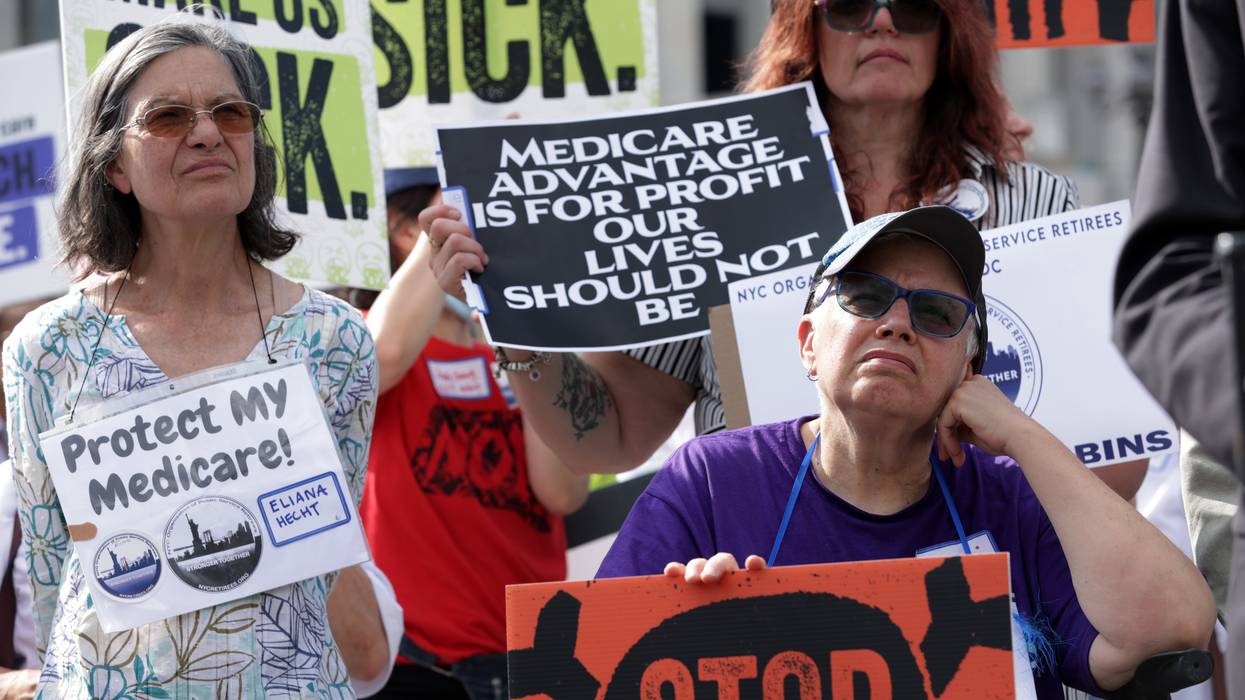
"These private insurer-run plans are more expensive AND lead to worse outcomes for patients," said Rep. Pramila Jayapal. "It’s time to rein in Medicare DisAdvantage and protect traditional Medicare."
A report released earlier this month to little fanfare estimated that federal overpayments to privately run Medicare Advantage plans could total $76 billion this year—or potentially a staggering $1.2 trillion over the next decade if current trends persist.
The Medicare Payment Advisory Commission (MedPAC), an independent congressional agency that advises lawmakers on Medicare, calculates overpayments by comparing spending on Medicare Advantage (MA) plans to what the federal government would have spent if MA enrollees were on traditional fee-for-service Medicare.
In a report published earlier this month, MedPAC showed that overpayments to MA plans this year are projected to be around $76 billion. Roughly $22 billion of that total is due to coding practices by MA providers, which are notorious for making patients appear sicker than they are to receive larger payments from the federal government. MA plans are paid lump sums to cover expected future healthcare services for patients based on their risk scores.
Another factor driving overpayments to MA plans—which now cover 55% of eligible Medicare beneficiaries—is a phenomenon known as favorable selection. MA enrollees tend to be healthier on average than recipients of traditional Medicare, resulting in higher payments to Medicare Advantage plans than are necessary based on patients' healthcare needs.
According to MedPAC, favorable selection will account for $57 billion of the expected overpayments to MA plans this year. The Trump administration gave Medicare Advantage plans a more than $25 billion boost in federal payments for 2026, even amid mounting bipartisan concerns about fraud in the program.
The National Committee to Preserve Social Security and Medicare (NCPSSM) said the MedPAC analysis "confirms that these private plans are bleeding taxpayers for billions of dollars more than traditional Medicare would cost for comparable enrollees."
US Rep. Pramila Jayapal (D-Wash.) wrote in response to the MedPAC findings that "Medicare DisAdvantage will rip off American taxpayers to the tune of $76 billion in 2026."
"These private insurer-run plans are more expensive AND lead to worse outcomes for patients," Jayapal, a leading supporter of Medicare for All legislation in the House, wrote in a social media post. "It’s time to rein in Medicare DisAdvantage and protect traditional Medicare."
The MedPAC analysis was released days after Republicans on the Senate Judiciary Committee published a report revealing how UnitedHealth Group, the largest provider of MA plans in the US, "has turned risk adjustment into a major profit-centered strategy," reaping massive payments from the federal government through upcoding.
NCPSSM noted that "while UnitedHealth... has emerged as the worst offender, it’s abundantly clear that many MA insurers are engaged in these shady practices."
"Look no further than insurers’ reliance on prior authorizations for procedures and treatments that normally would be automatically covered in traditional Medicare," the group said. "This includes denying skilled nursing care that jeopardizes older patients who have nowhere else to turn."
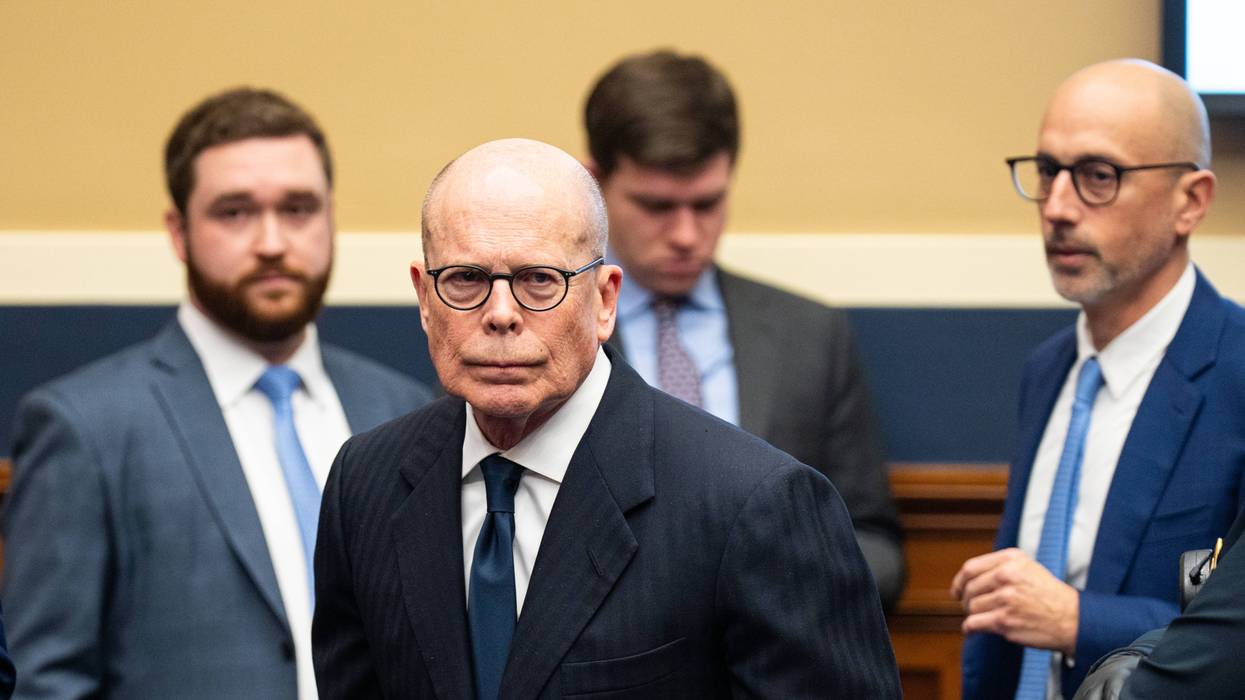
"Most of the perpetrators are lodged within large corporations run by white executives with excellent and expensive legal representation," wrote one journalist.
US President Donald Trump has used unsubstantiated allegations of large-scale fraud in Minnesota's Somali community as a pretext to surge federal agents into the state—with deadly consequences—and cut off federal childcare funding.
But unlike the Somali community, which Trump has subjected to grotesque attacks that have left many fearing for their safety, Minnesota-based UnitedHealth Group (UHG) has not faced the president's public ire.
One of the nation's largest for-profit health insurance companies, UHG is the leading beneficiary of a long-running Medicare Advantage fraud scheme that could cost US taxpayers $1.2 trillion over the next decade—a sum that dwarfs even the White House's wildest claims about the costs of fraud allegedly committed by Somali-run daycares.
The $1.2 trillion estimate comes from a report published earlier this month by the Medicare Payment Advisory Commission (MedPAC), which found that federal overpayments to privately run, publicly funded Medicare Advantage plans will total around $76 billion this year in part due to a practice known as upcoding, whereby insurers present patients as sicker than they actually are to reap larger payments.
UnitedHealthcare, UHG's insurance division, is the leading Medicare Advantage provider in the United States. Stephen Hemsley, UnitedHealth Group's CEO, received a base salary of $1 million last year and a one-time equity award worth $60 million.
ICE/CBP swarms into Minnesota to crack down on government fraud. Somehow they sidestep the orders-of-magnitude higher government fraud by Minnesota-based UnitedHealth, who leads a Medicare Advantage fraud that government analyst MedPac estimates as costing America $76 billion/yr pic.twitter.com/dECnwgUCRV
— David Dayen (@ddayen) January 27, 2026
A Senate report released on January 12 found that UnitedHealth Group uses "aggressive strategies" to maximize patients' so-called "risk-adjustment scores" in an effort to receive larger Medicare Advantage payments from the federal government.
"UHG has turned risk adjustment into a major profit-centered strategy, which was not the original intent of the program," states the report, which was based on more than 50,000 pages of company documents obtained by the Senate Judiciary Committee.
The Senate report cited a 2024 Wall Street Journal investigation showing that "insurer-driven diagnoses by UnitedHealth for diseases that no doctor treated generated $8.7 billion in 2021 payments to the company... UnitedHealth’s net income that year was about $17 billion."
"A real crackdown on fraud would go after those big fish first."
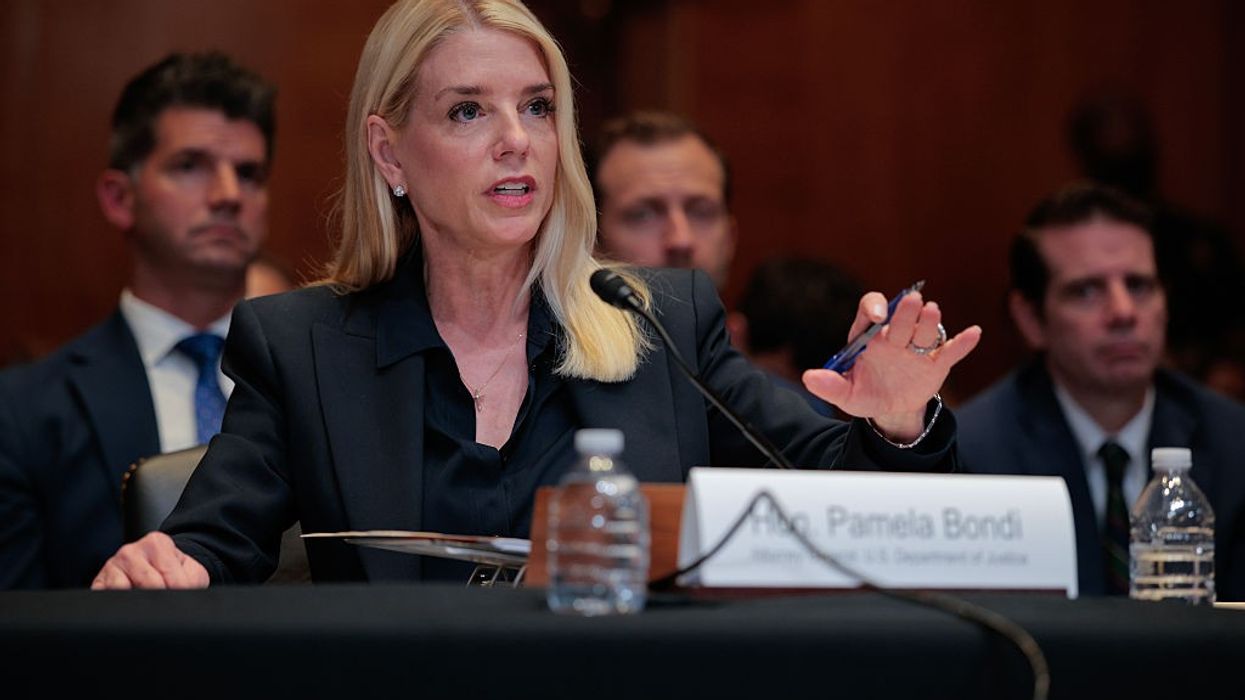
While the US Justice Department—headed by former corporate lobbyist Pam Bondi—is currently investigating UnitedHealth Group over its Medicare billing practices, the Trump administration has enabled the conglomerate's continued expansion and abuses.
Last August, the DOJ settled a Biden-era legal challenge aimed at preventing UnitedHealth Group from absorbing yet another competitor. According to a tracker run by the American Economic Liberties Project, the corporation is still denying necessary care to patients, overbilling the federal government, and engaging in anticompetitive behavior on the Trump administration's watch.
Journalist Merrill Goozner wrote last week that "there is no doubt greedy operators ripped off Minnesota safety net programs," observing that "several of the nearly 100 people under investigation have already pleaded guilty."
"But if federal officials in Minnesota really want to go after industrial-scale fraud, they ought to step up their slow-motion investigation of UnitedHealth Group," Goozner wrote. "The nation’s tattered social safety net, under assault by the Trump administration and shrinking daily, remains prone to abuse by unscrupulous operators. Medicare and Medicaid are especially juicy targets. Most of the perpetrators are lodged within large corporations run by white executives with excellent and expensive legal representation."
"A real crackdown on fraud," he added, "would go after those big fish first."
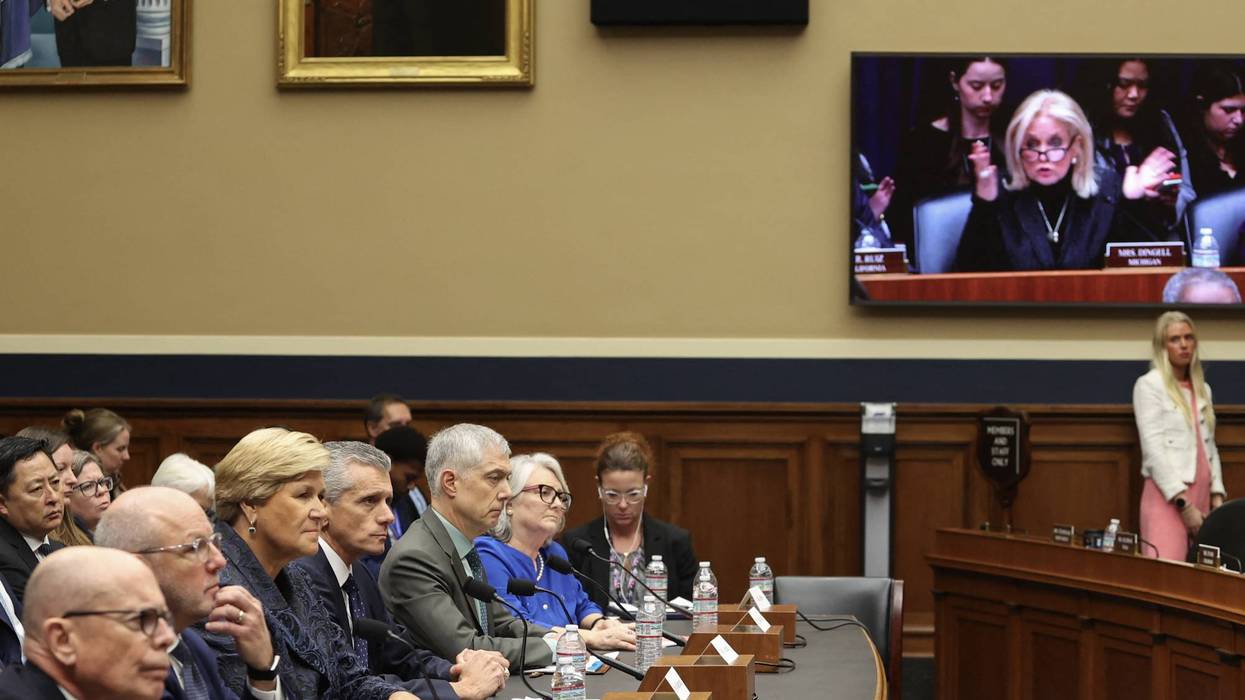
"Under Medicare for All, these insurance vultures who profit from the suffering of everyday Americans would all be out of a job—bringing down costs across the health system—which should be reason enough to support it," said one advocate.
If you want a compelling case for Medicare for All, just listen to the ultra-rich CEOs of the insurance companies profiting off the United States' disastrous for-profit status quo.
That was Public Citizen healthcare policy advocate Eagan Kemp's takeaway from congressional testimony delivered Thursday by the top executives of UnitedHealth Group, Cigna, Aetna owner CVS Health, Elevance, and Ascendiun, some of the largest beneficiaries of a system under which millions of Americans face massive costs, care denials, and labyrinthine administrative hurdles.
"In both of today’s House hearings, health insurance executives’ devil-may-care attitude towards Americans’ health made the case for Medicare for All better than almost anyone I have ever seen," Kemp said in a statement following the hearings held by the House Ways and Means Committee and the House Energy and Commerce Committee's healthcare panel.
"Rarely has there been a more feckless, uncaring, and unsympathetic group of paper pushers," said Kemp. "Under Medicare for All, these insurance vultures who profit from the suffering of everyday Americans would all be out of a job—bringing down costs across the health system—which should be reason enough to support it. We need Medicare for All to finally put us on par with every other comparably wealthy country by guaranteeing everyone in the U.S. can get the health care they need, throughout their lives."
The executives faced angry grilling from both Democrats and Republicans during Thursday's hearings, which came as health insurance premiums are skyrocketing due to the GOP's refusal to extend Affordable Care Act (ACA) subsidies that lapsed at the end of 2025.
"Do you understand why the American people are not a fan of UnitedHealthcare and big healthcare companies?" Rep. Nanette Barragán (D-Calif.) asked UnitedHealth Group CEO Stephen Hemsley, telling the story of a 3-year-old girl whose family was forced to take on more than $1 million in medical debt and declare bankruptcy because the insurance giant would not cover doctors' recommended treatment for a tumor in her bladder.
Rep. Greg Murphy (R-NC), who recently underwent brain surgery, told the insurance executives that he faced eight care denials for necessary medication.
"You have put profits above patients, and you have put profits above those who care for patients," said Murphy, a physician. "If it were up to me, I would throw out all for-profit systems in this country and turn everybody into nonprofit. It has gotten that bad."
"If I had my way, I'd turn all of you guys into dust," he added. "We'd start back from scratch."
The @WaysandMeansGOP held a hearing on the impact of rising health care costs on patients and families.
We have to have serious reform of health insurers, pharmacy benefit managers, and their subsidiaries to reduce the cost of healthcare. pic.twitter.com/pQEE4WgQtk
— Congressman Greg Murphy, M.D. (@RepGregMurphy) January 22, 2026
The insurance executives attempted to shift the blame for high costs and other systemic issues onto hospitals, doctors, and pharmaceutical companies, while offering Band-Aid solutions.
UnitedHealth Group's CEO pledged during his testimony to return its 2026 Affordable Care Act profits to consumers in the form of rebates.
"If you’re feeling a little misty-eyed about this sudden burst of corporate altruism, let me save you the trouble. This isn’t a moral awakening. It’s a PR maneuver and narrative control being implemented in real-time," said Wendell Potter, a former health insurance executive who now supports Medicare for All, which would virtually eliminate private insurance and provide comprehensive health coverage for everyone in the US for free at the point of service, for a lower overall cost than the for-profit status quo.
"UnitedHealth’s pledge is just a long, desperate PR pass into the end zone, praying lawmakers and reporters will focus on the gesture instead of the business model that allows them to gobble up those dollars in the first place," Potter added. "This isn’t a gift. It’s a distraction."
Kemp of Public Citizen said Thursday that “in the short term, the Senate must pass a clean three-year extension of the enhanced ACA premium tax credits to address runaway premium increases for millions of Americans."
"In the long run," he added, "we must continue building the movement that will pass Medicare for All and make it the law of the land."

“Across the country, insurance companies are buying up doctors’ offices, driving up costs, and putting insurance company profits over patients."
A group of Democratic lawmakers on Thursday unveiled new legislation aimed at cracking down on for-profit insurance companies that are buying up local health clinics across the US.
The Patients Over Profits Act—which is being introduced by Sens. Jeff Merkley (D-Ore.) and Elizabeth Warren (D-Mass.), alongside Reps. Val Hoyle (D-Ore.), Pat Ryan (D-NY), and Pramila Jayapal (D-Wash.)—seeks to end mass consolidation in the healthcare industry by barring large insurance companies and subsidiaries such as UnitedHealth Group and Optum from purchasing independently run health clinics.
Specifically, the proposed legislation would bar insurance companies and their subsidiaries from owning Medicare Part B or Part C providers; would mandate insurance companies that already own these providers to divest of them under penalty of civil action by the Federal Trade Commission and other law enforcement entities; and would bar the Health and Human Services department from contracting with Medicare Advantage organizations that also own Medicare Part B or Part C providers.
The legislators behind the bill said that it is necessary to stop large conglomerates from further price-gouging patients while limiting their access to healthcare.
“Across the country, insurance companies are buying up doctors’ offices, driving up costs, and putting insurance company profits over patients," said Merkley. "Our bill cracks down on greedy insurance companies’ attempts to control doctors and squeeze patients for every cent."
While it's a nationwide issue, the impacts are felt locally, Merkeley added, citing one Oregon clinic "reportedly losing dozens of physicians and subsequently kicking out thousands of patients after it was purchased by Optum."
The new legislation, he said, "reins in these out-of-control consolidations, which are great for corporate greed and a bad deal for patients.”
Ryan told a similar story about how healthcare industry consolidation had harmed his district in New York.
"UnitedHealth has gobbled up our local healthcare practices, creating a monopoly that directly hurts everyone in our community," he said. "In their greedy pursuit of profits, they now own the insurance company, they own your doctor, they own the pharmacy and they own the software that processes all of your information—and they use it all to keep prices high and drive quality down. Enough—it’s time to break up UnitedHealth and put you back in control of your own healthcare."
The proposed legislation has also won the support of advocacy organizations American Economic Liberties Project, Center for Health and Democracy, Health Care for America Now, Just Care, Labor Campaign for Single Payer, MoveOn, Physicians for a National Health Program, Public Citizen, Social Security Works, and Puget Sound Advocates for Retirement Action.
Rachel Madley, the director of policy and advocacy at the Center for Health and Democracy, described the bill as "vital legislation that will protect patients" while reining in large insurers.
"Big Insurance is rapidly consolidating and creating monopolistic companies that control virtually every part of our health care system," she added. "It is a system now rigged to ensure their profits, not our care."
"As a result, Big Medicine will profit at the expense of vulnerable hospice patients, some of whom will pay with their lives, and the workers who care for them."
The Trump Justice Department on Thursday paved the way for yet another corporate merger, this time settling a Biden-era legal challenge that aimed to block UnitedHealth Group from adding the home health and hospice care provider Amedisys to its eye-popping list of subsidiaries.
The DOJ's Antitrust Division, which is under siege by lobbyists connected to the White House, said the settlement would require UnitedHealth and Amedisys to "divest 164 home health and hospice locations across 19 states." The deal, which must be approved by a judge, would also require Amedisys to "pay a $1.1 million civil penalty to the United States for falsely certifying that it had provided 'true, correct, and complete' responses under the Hart-Scott-Rodino (HSR) Antitrust Improvements Act of 1976."
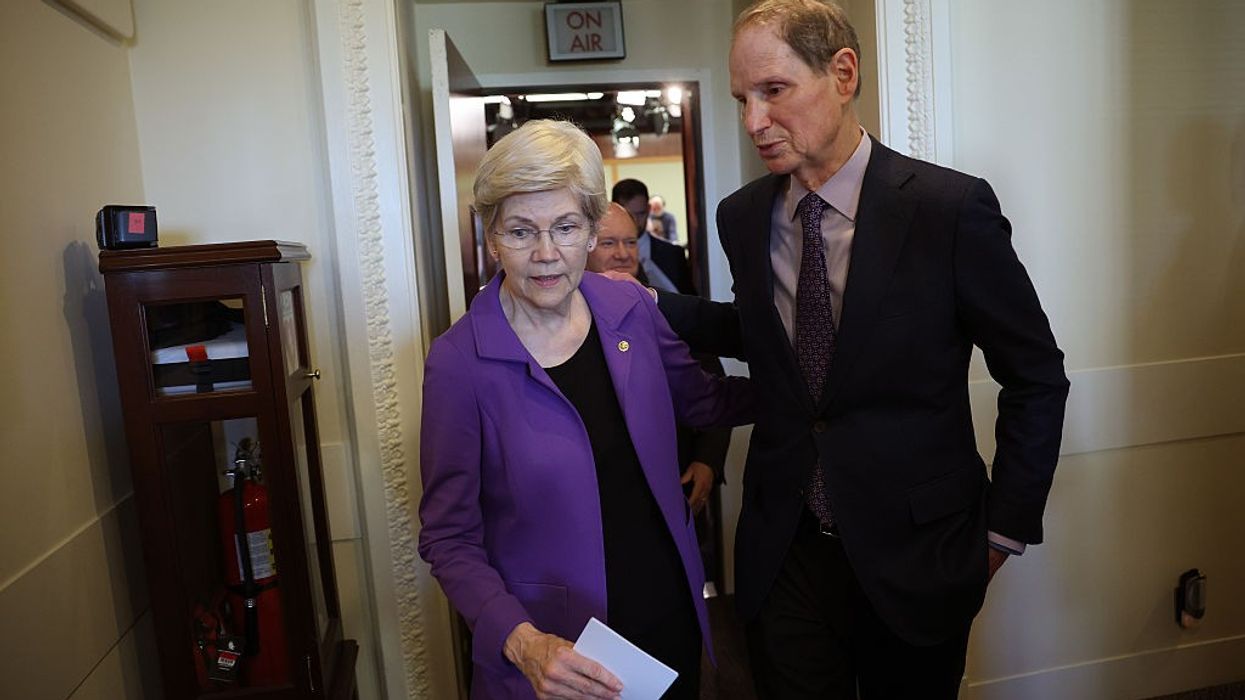
The settlement was announced on the same day that Sens. Ron Wyden (D-Ore.) and Elizabeth Warren (D-Mass.) launched an investigation into UnitedHealth, specifically probing the company's alleged practice of incentivizing nursing homes to slash patient care costs.
Warren was among those who criticized the UnitedHealth-Amedisys settlement, writing on social media that she "sounded the alarm about UnitedHealth's attempt to purchase this home health giant years ago."
"This is another half-baked merger settlement by the Trump DOJ—this time at the expense of the most vulnerable," Warren added. "The public deserves to know if this deal is based on political favors."
"It claims to divest home health and hospice care providers in overlapping markets but, in actuality, cedes them to similarly conflicted buyers, including a highly leveraged private equity firm."
The settlement came as the Trump Justice Department is under growing scrutiny for terminating or sidelining top antitrust officials and acquiescing to lobbyists fighting DOJ merger lawsuits.
Last week, as Common Dreams reported, the Justice Department dropped an antitrust case against American Express Global Business Travel, a company that has paid Ballard Partners—Attorney General Pam Bondi's former lobbying firm—hundreds of thousands of dollars this year to pressure the DOJ on antitrust matters.
Ballard has also been paid big money this year by UnitedHealth, far and away the most powerful healthcare company in the U.S. According to a recent analysis by the Center for Health and Democracy, UnitedHealth currently has around 2,700 subsidiaries, giving it a foothold in virtually every aspect of the U.S. healthcare system.
The legal challenge against UnitedHealth's proposed $3.3 billion acquisition of Amedisys was brought in November 2024 by the Biden Justice Department alongside the attorneys general of Maryland, Illinois, New Jersey, and New York, each of whom backed the Trump DOJ's settlement.
Upon announcing the challenge, then-Assistant Attorney General Jonathan Kanter—the head of the Biden DOJ's Antitrust Division—warned that "unless this $3.3 billion transaction is stopped, UnitedHealth Group will further extend its grip to home health and hospice care, threatening seniors, their families, and nurses."
Emma Freer, senior policy analyst for healthcare at the American Economic Liberties Project, said in a statement Thursday that "the DOJ was right to challenge this deal, which would eliminate head-to-head competition that lowers costs, improves care quality, and betters working conditions for nurses and other caregivers."
"This settlement abandons that goal and caves to UnitedHealth Group, one of the most dangerous monopolists in American healthcare," said Freer. "It claims to divest home health and hospice care providers in overlapping markets but, in actuality, cedes them to similarly conflicted buyers, including a highly leveraged private equity firm."
"As a result," Freer added, "Big Medicine will profit at the expense of vulnerable hospice patients, some of whom will pay with their lives, and the workers who care for them."
One whistleblower accused the giant corporation of "compelling medical professionals to comply with its financially-driven playbook at the expense of patient safety."
A pair of Democratic senators on Thursday launched an investigation into the most powerful corporation in the U.S. healthcare system, sounding alarm over allegations that UnitedHealth Group is incentivizing nursing homes to slash care expenses for patients insured by the company.
Sens. Ron Wyden (D-Ore.) and Elizabeth Warren (D-Mass.) wrote in a new letter to the company's CEO that UnitedHealth Group (UHG) has "been at the center of numerous reports suggesting that it is maximizing profits at the expense of patients' health and well-being," including accusations that the company "systematically denied needed care to children and adults with chronic illnesses" and used an artificial intelligence algorithm to deny Medicare Advantage enrollees necessary care.
Most recently, the senators noted, reporting by The Guardian alleged that UnitedHealth is using a bonus scheme to push nursing homes that contract with Optum to reduce hospital transfers as part of an aggressive cost-cutting effort. Optum is a UHG subsidiary that employs or affiliates with roughly 10% of all physicians in the U.S.
Wyden and Warren demanded that UnitedHealth provide answers to numerous questions related to its practices at nursing homes, including whether it institutes "hospital transfer quotas" at the facilities it works with.
"UHG denies the allegations in The Guardian's reporting and maintains that its practices reflect best practices in the care of nursing home residents," the senators wrote. "However, we are concerned that the methods UHG appears to rely on to deliver the high-quality care it purports to provide may in fact incentivize practices that threaten resident safety."
"I'd like to see them held accountable for putting profits over patients."
The Guardian's reporting underscores the extent to which UHG has injected itself into virtually every aspect of the American healthcare system. The healthcare conglomerate has roughly 2,700 subsidiaries, according to an analysis by the Center for Health and Democracy.
Using confidential corporate and patient records, whistleblower accounts, and interviews with UHG staffers and nursing home employees, The Guardian examined a company program under which Optum medical teams provide care on-site at nursing homes or in partnership with facility staff.
The newspaper identified "several cases" in which "nursing home residents who needed immediate hospital care under the program failed to receive it, after interventions from UnitedHealth staffers."
"At least one lived with permanent brain damage following his delayed transfer, according to a confidential nursing home incident log, recordings, and photo evidence," the newspaper reported. "To reduce residents' hospital visits, UnitedHealth has offered nursing homes an array of financial sweeteners that sounded more like they came from stockbrokers than medical professionals."
The company also allegedly gave its medical teams "budgets" limiting the number of hospital admissions they could allow for nursing home patients.
One whistleblower, a nurse practitioner formerly employed by a UnitedHealth insurance subsidiary, said in a statement that "scores of elderly patients may never have received the care that they needed, all because UnitedHealthcare skimped on care to cut costs."
“UnitedHealthcare is compelling medical professionals to comply with its financially-driven playbook at the expense of patient safety in a way that pressures providers to violate their ethical obligations," the whistleblower added. "I'd like to see them held accountable for putting profits over patients."
UnitedHealth raked in over $34 billion in profits last year—far more than any other U.S. healthcare company.
Wendell Potter, a former Cigna executive who now serves as president of the Center for Health and Democracy, wrote in a recent blog post that mounting scrutiny of UHG's practices shows the company is "facing a reckoning it can't ignore."
"It's coming from every direction: the U.S. Department of Justice (under President Donald J. Trump), congressional Republicans and Democrats, state lawmakers and regulators, the media, physicians, hospital administrators, tens of thousands of Americans on the internet sharing their own personal UnitedHealth horror stories, and, most importantly for the C-Suite, enraged investors who've lost hundreds of billions of dollars in recent months," Potter wrote.
"Privatized Medicare plans are denying patients the care they need, while defrauding the government of billions a year," said one advocacy group. "Donald Trump is giving them even more taxpayer money."
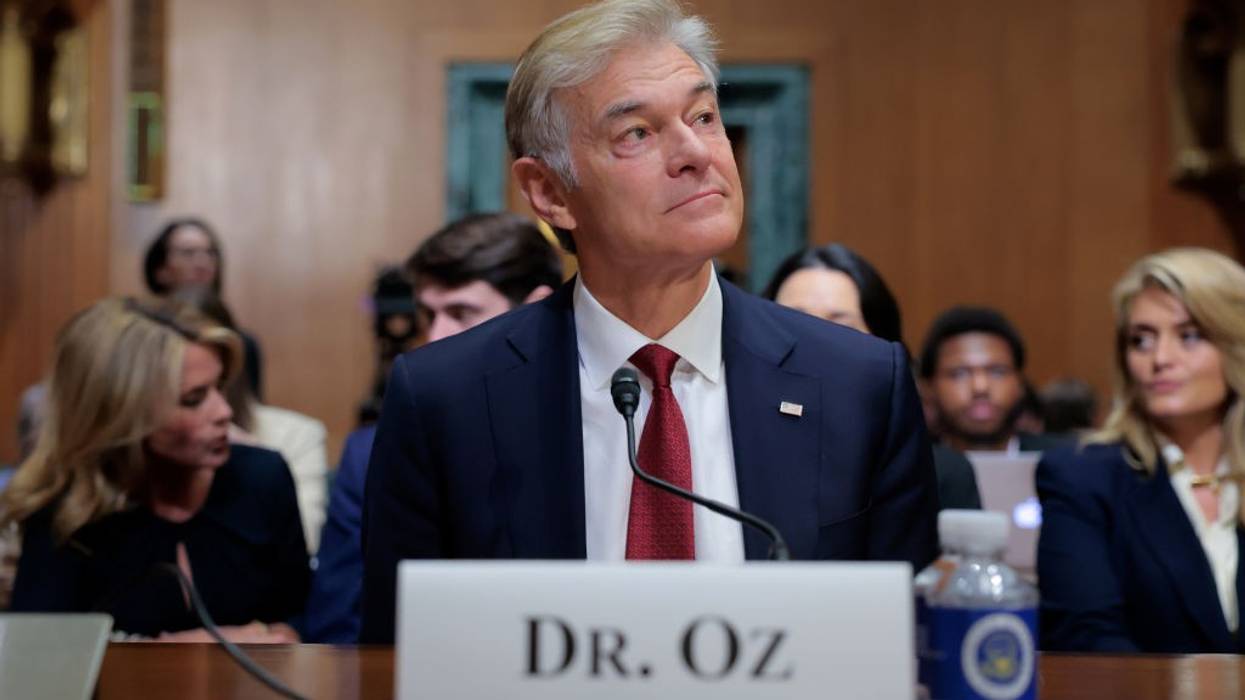
The federal agency now headed by former television host Mehmet Oz announced Monday that it is substantially boosting payments to privately run Medicare Advantage plans, a boon for an industry notorious for overcharging taxpayers and denying patients necessary care.
The Centers for Medicare and Medicaid Services (CMS) said it is jacking up payments to Medicare Advantage (MA) plans by more than 5% for 2026—an increase of over $25 billion. That's more than double the increase proposed by the Biden administration.
Health insurance company stocks jumped in response to the news of the Trump administration's payment hike, with shares of UnitedHealth Group—the largest provider of Medicare Advantage plans—rising more than 6% following the CMS statement.
Oz, whom the Republican-controlled Senate confirmed in a party-line vote last week, previously reported holding tens of millions of dollars worth of stock in companies with interests before CMS, including UnitedHealth.
Social Security Works, a progressive advocacy group that campaigns against Medicare Advantage,
said Monday that "privatized Medicare plans are denying patients the care they need, while defrauding the government of billions a year."
"Trump is giving them even more taxpayer money," the group wrote on social media. "Trump-Musk don't care about 'efficiency.' They care about stealing our money."
"Medicare Advantage is wasteful and inefficient relative to traditional Medicare and everyone knows it."
One industry analyst, Chris Meekins of the financial services firm Raymond James, told Axios that the payment boost for Medicare Advantage "leads one to believe that DOGE"—the Elon Musk-led advisory commission also known as the Department of Government Efficiency—"does not care about MA."
Healthcare writer Natalie Shure
called the payment increase a clear "illustration that this administration's goal is upward wealth distribution and the dismantling of public goods, not 'efficiency.'"
"Medicare Advantage is wasteful and inefficient relative to traditional Medicare," Shure added, "and everyone knows it."
The CMS announcement came weeks after Oz told Sen. Elizabeth Warren (D-Mass.) during his confirmation hearing that he is concerned about and prepared to "go after" Medicare Advantage upcoding, the practice of making patients appear sicker than they actually are to reap larger government payments.
The Wall Street Journal reported Monday that the Trump administration did opt to "stick with a Biden administration policy change that limits certain billing practices that have boosted payments to Medicare Advantage insurers," despite industry objections to the policy.
But Oz's record, including his past support for a proposal dubbed "Medicare Advantage for All," has led watchdog groups to doubt that he intends to aggressively take on large-scale overpayments and fraud in the program. According to one estimate from 2023, Medicare Advantage plans are overcharging U.S. taxpayers by up to $140 billion a year.
Robert Weissman, co-president of Public Citizen, warned after his Senate confirmation that Oz will "seek to further privatize Medicare, increasing the risk that seniors will receive inferior care and further threatening the long-term health of the Medicare program."
"Dr. Oz is joining a team of snake oil salesmen and anti-science flunkies that have already shown disdain for the American people and their health," said Weissman.
In addition to Oz and Robert F. Kennedy Jr. at the Department of Health and Human Services, which oversees CMS, Trump appointed former Medicare Advantage lobbyist Don Dempsey as associate director for health at the Office of Management and Budget, another signal that the administration intends to be an ally to the MA industry.

One critic said UnitedHealth Group chief executive Andrew Witty should "resign and then dedicate every dollar he has to dismantling the current system brick by brick and building one based on public health in its stead."
UnitedHealth Group CEO Andrew Witty wrote in a New York Times op-ed Friday that the for-profit U.S. healthcare system "does not work as well as it should" and that "no one would design a system like the one we have," admissions that came as his industry faced a torrent of public anger following the murder of UnitedHealthcare's chief executive.
Witty declared that his firm, the parent company of UnitedHealthcare and the nation's largest private insurer, is "willing to partner with anyone, as we always have—healthcare providers, employers, patients, pharmaceutical companies, governments, and others—to find ways to deliver high-quality care and lower costs."
But critics didn't buy Witty's expressed commitment to reforming an industry that his company has helped shape and profited from massively. Witty was the highest-paid healthcare executive in the U.S. last year, and 40% of the private insurance industry's total profit since the passage of the Affordable Care Act has flowed to UnitedHealth Group.
"It is (barely) true that UnitedHealth didn't design the U.S. system of corporate insurance, which kills tens of thousands of people a year through denial of care," Alex Lawson, executive director of the progressive advocacy group Social Security Works, told Common Dreams. "But they certainly have perfected it and turned it into a medical murder apparatus at industrial scale. They not only block all attempts to change the system in the direction of public health, they bribe and bully with their billions in blood money to make it even crueler."
"Andrew Witty is the high priest of the temple to Moloch and Mammon, murder and money," Lawson added. "And there is no way for him to wash his hands of it, except perhaps to resign and then dedicate every dollar he has to dismantling the current system brick by brick and building one based on public health in its stead."
"Medicare for All is the only proposal on the table capable of delivering universal, continuous coverage for everyone, while also securing the efficiency and savings only possible through the elimination of private insurance."
While publicly pledging to cooperate with reform efforts, Witty has defended his company's care denials in private and urged his employees not to engage with media outlets in the aftermath of Thompson's murder.
Contrary to Witty's depiction of his company in his Times op-ed, UnitedHealth has historically been an aggressive opponent of reform efforts aimed at mitigating the harms of for-profit insurance and building public alternatives. The Lever reported in 2021 that UnitedHealth Group "held a webinar to pressure its rank-and-file employees to mobilize against efforts in Connecticut to create a state-level public health insurance option."
At the national level, UnitedHealth has spent over $5.8 million this year lobbying federal lawmakers, according to OpenSecrets.
Michael Lighty, president of HealthyCalifornia Now, offered condolences to the family of UnitedHealthcare CEO Brian Thompson in an email to Common Dreams and argued that supporters of healthcare justice must reject reform paths "controlled by economic elites such as collaborations like Andrew Witty invites."
"Our demand is actually simple: free healthcare paid for by our taxes (like firefighting). Let's build on this powerful moment of righteous outrage to change what's possible," Lighty added. "The healthcare industry needs to understand that they are not putting this genie back in the bottle: The healthcare system is a cancer that will take down anyone who defends it."
Witty, who was born in a country with a public healthcare system, did not detail the kinds of reforms he would support in his op-ed Friday, but it's clear he would oppose a transition to a single-payer system such as Medicare for All, which would effectively abolish private health insurance and provide coverage to all Americans for free at the point of service—and at a lower total cost than the status quo.
In a column for The Nation on Friday, writer Natalie Shure argued that "the appalling amount of resources and energy we put into maintaining the existence of health insurance is wasted on an industry with no social value whatsoever."
"You could eliminate every one of these corporations tomorrow and build a system without them that works better, for less money, and with less hassle," Shure wrote. "Other countries already have systems like this. Medicare for All is the only proposal on the table capable of delivering universal, continuous coverage for everyone, while also securing the efficiency and savings only possible through the elimination of private insurance."
"None of that means that murder is justified or useful," Shure added. "But anger can be. Some politicians, from Bernie Sanders, to Elizabeth Warren, to Alexandria Ocasio-Cortez, have begun to make public statements ascribing the reaction to Brian Thompson's murder to widespread fury over the health insurance industry. The next step is to harness it, and to build something new."
This story has been updated to include comment from Michael Lighty, president of HealthyCalifornia Now.

"A reminder: the U.S. has the #1 most expensive healthcare system in the world, yet we rank roughly #42 in life expectancy," the 26-year-old accused of assassinating a health insurance CEO reportedly wrote.
This is a breaking story… Please check back for possible updates...
A day after Luigi Mangione was arrested and charged as the alleged killer of UnitedHealthcare CEO Brian Thompson, independent journalist Ken Klippenstein on Tuesday published what he said was the 26-year-old's highly reported on manifesto.
The existence of the handwritten document found on Mangione when he was taken into custody in Pennsylvania on Monday was confirmed by the New York Police Department, and major media outlets have quoted from it, but none had released it in full.
"My queries to The New York Times, CNN, and ABC to explain their rationale for withholding the manifesto, while gladly quoting from it selectively, have not been answered," Klippenstein said on his Substack.
According to Klippenstein—who previously published dossiers on Vice President-elect JD Vance and Sen. Marco Rubio (R-Fla.), the nominee for U.S. secretary of state—Mangione's manifesto reads:
To the Feds, I'll keep this short, because I do respect what you do for our country. To save you a lengthy investigation, I state plainly that I wasn't working with anyone. This was fairly trivial: some elementary social engineering, basic CAD, a lot of patience. The spiral notebook, if present, has some straggling notes and To Do lists that illuminate the gist of it. My tech is pretty locked down because I work in engineering so probably not much info there. I do apologize for any strife of traumas but it had to be done. Frankly, these parasites simply had it coming. A reminder: the US has the #1 most expensive healthcare system in the world, yet we rank roughly #42 in life expectancy. United is the [indecipherable] largest company in the US by market cap, behind only Apple, Google, Walmart. It has grown and grown, but as our life expectancy? No the reality is, these [indecipherable] have simply gotten too powerful, and they continue to abuse our country for immense profit because the American public has allwed them to get away with it. Obviously the problem is more complex, but I do not have space, and frankly I do not pretend to be the most qualified person to lay out the full argument. But many have illuminated the corruption and greed (e.g.: Rosenthal, Moore), decades ago and the problems simply remain. It is not an issue of awareness at this point, but clearly power games at play. Evidently I am the first to face it with such brutal honesty.
Common Dreams has not independently verified its authenticity.
Klippenstein
said on social media that the manifesto he published is "the real one, not the fake one circulating online."
NBC News deputy technology editor Ben Goggin noted that language shared by Klippenstein "matches what NBC has reported here as real."
Earlier on Tuesday, Klippenstein published leaked talking points that UnitedHealthcare reportedly circulated to its employees as the insurance company faces widespread public criticism.

"This does not appear to be a random act of violence," according to the police commissioner.
The CEO of UnitedHealthcare, Brian Thompson, was fatally shot early Wednesday outside of a hotel in midtown Manhattan.
During a press conference, New York Police Department Commissioner Jessica Tisch said that Thompson was killed "in what appears, at this early stage in our investigation, to be a brazen, targeted attack. This does not appear to be a random act of violence." Thompson was taken to Mount Sinai West hospital before being pronounced dead.
Thompson, 50, was believed to be on his way to attend the company's annual investor conference, which was set to take place at the New York Hilton Hotel. Thompson, according to his LinkedIn page, has worked for UnitedHealth Group for 20 years and was named CEO of UnitedHealthcare in April 2021. He was a resident of Minnesota, according to the NYPD.
According to the NYPD, it appears the suspect was "lying in wait for several minutes" before approaching Thompson from behind and firing and striking Thompson multiple times. "Many people passed the suspect, but he appeared to wait for his intended target," said the commissioner.
The shooter, who a detective with the NYPD said appears to be male, then fled the scene, first on foot, and then on an e-bike, and was last seen in Central Park early this morning. There is currently a search underway for the shooter.