

SUBSCRIBE TO OUR FREE NEWSLETTER
Daily news & progressive opinion—funded by the people, not the corporations—delivered straight to your inbox.
5
#000000
#FFFFFF
To donate by check, phone, or other method, see our More Ways to Give page.
Daily news & progressive opinion—funded by the people, not the corporations—delivered straight to your inbox.
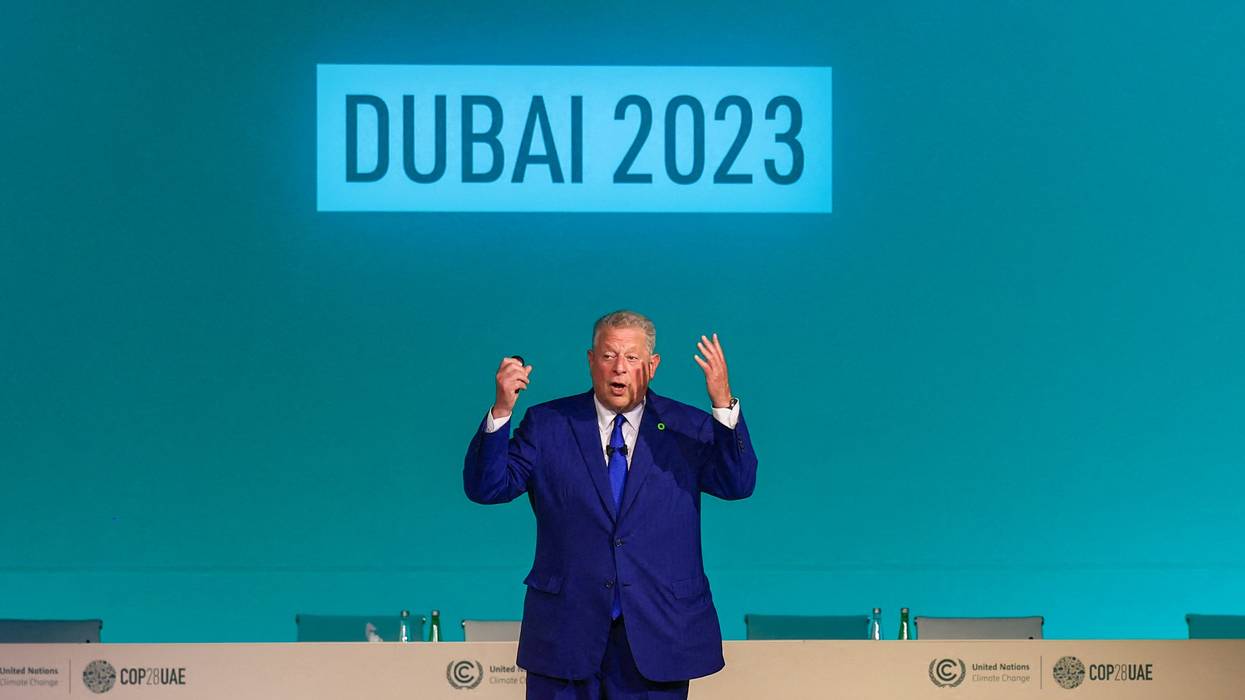
The former U.S. vice president accused the United Arab Emirates of "abusing the public's trust" by naming the CEO of its national oil company as president of COP28.
Former U.S. Vice President Al Gore said Sunday that fossil fuel interests have effectively seized the reins of the United Nations climate summit process, preventing the kind of ambitious action that scientists say is necessary to prevent catastrophic warming and all of its cascading impacts.
"This industry is way more effective at capturing politicians than they are at capturing emissions," Gore told Reuters on the sidelines of the COP28 summit in Dubai. "And they have captured the COP process itself now and overreached, abusing the public's trust by naming the CEO of one of the largest and least responsible oil companies in the world as head of the COP. It's an abuse of the public's right to have confidence in the processes by which the decisions about humanity's future are made."
Sultan Ahmed Al Jaber, COP28 president and chief executive of the Abu Dhabi National Oil Company (ADNOC)—which is planning a massive expansion of oil and gas production in the coming years—has insisted that any deal reached at the critical climate summit must include fossil fuels.
A record number of fossil fuel lobbyists are believed to be in attendance at the latest round of U.N. climate talks, and little has been done to curb their influence.
Gore's interview with Reuters came after he delivered a presentation highlighting the UAE's rising greenhouse gas emissions. Citing data from Climate TRACE—an emissions tracking coalition that he co-founded—Gore said the UAE's planet-warming emissions rose 7.5% last year compared to 2021, while the rest of the world's rose 1.5%.
As AFP reported Sunday, Dubai's skyline was "obscured by a blanket of smog rated as 'unhealthy'" as COP28 delegates attended day four of the summit, which was deemed "health day."
A Human Rights Watch report published Monday notes that the UAE's "dangerously high air pollution levels" are "creating major health risks for its citizens and residents." Pointing to World Health Organization estimates, the group observed that more than 1,800 people die from air pollution every year in the UAE.
"Even as the United Arab Emirates government works to burnish its image as a global climate leader," the report notes, "the country's vast fossil fuel production and use spew toxic pollutants into the air and contribute to climate change."
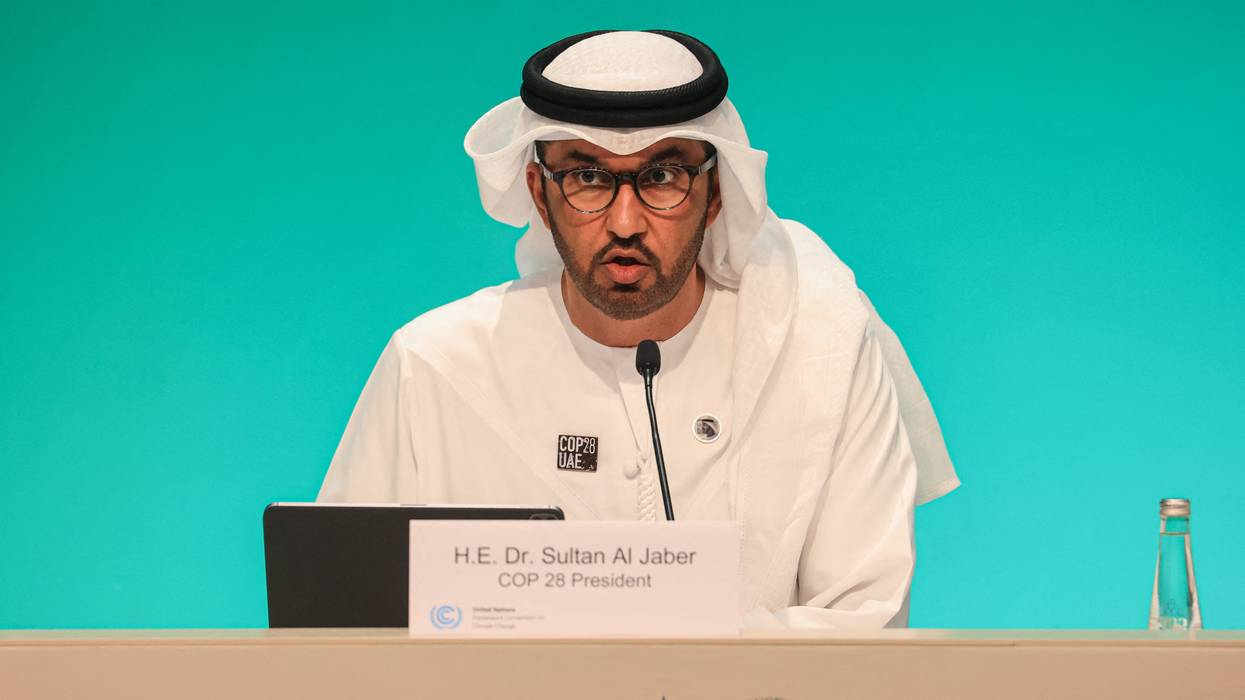
"This dismisses decades of work by IPCC scientists," said one expert. "Disgraceful."
Scientists and climate advocates responded with outrage Sunday to COP28 president Sultan Ahmed Al Jaber's claim that there is "no science" behind the push to rapidly phase out planet-warming fossil fuels, which Al Jaber's company is extracting on a large scale.
Al Jaber's comments, first reported by The Guardian on Sunday, came in response to questioning from Elders chair Mary Robinson during a virtual She Changes Climate discussion. Robinson told Al Jaber that "we're in an absolute crisis that is hurting women and children more than anyone... and it's because we have not yet committed to phasing out fossil fuel."
The COP28 chief and Abu Dhabi National Oil Company (ADNOC) CEO responded dismissively, saying he "accepted to come to this meeting to have a sober and mature conversation" and not to take part in "any discussion that is alarmist," according to audio published by The Guardian.
"There is no science out there, or no scenario out there, that says that the phaseout of fossil fuel is what's going to achieve 1.5°C," Al Jaber added. "Please help me, show me the roadmap for a phaseout of fossil fuel that will allow for sustainable socioeconomic development, unless you want to take the world back into caves."
That position runs directly counter to the outspoken stance of United Nations Secretary-General António Guterres, who said Friday that "the 1.5°C limit is only possible if we ultimately stop burning all fossil fuels," arguing that "the science is clear."
Joelle Gergis, a climate scientist and lead author of the Intergovernmental Panel on Climate Change's (IPCC) Working Group I contribution to the Sixth Assessment Report, called Al Jaber's remarks "disgraceful."
"This dismisses decades of work by IPCC scientists," Gergis wrote on social media.
"'Sending us back to caves' is the oldest of fossil fuel industry tropes: it's verging on climate denial."
The IPCC, which has synthesized the research of hundreds of climate scientists from around the world, has argued that any successful effort to prevent catastrophic planetary warming "will involve a substantial reduction in fossil fuel use."
"More than a century of burning fossil fuels as well as unequal and unsustainable energy and land use has led to global warming of 1.1°C above pre-industrial levels," the IPCC said following the release of its latest report earlier this year. "This has resulted in more frequent and more intense extreme weather events that have caused increasingly dangerous impacts on nature and people in every region of the world."
Other recent research has warned that rich nations must completely halt oil and gas production by 2034 to give the world a 50% chance of limiting warming to the 1.5°C target set by the Paris Agreement.
Bill Hare, chief executive of Climate Analytics, told The Guardian that Al Jaber's response to Robinson was "extraordinary, revealing, worrying, and belligerent."
"'Sending us back to caves' is the oldest of fossil fuel industry tropes: it's verging on climate denial," said Hare.
Al Jaber's comments, which he says have been misrepresented, were seen as further confirmation that he is ill-suited to lead a climate summit given his simultaneous role as the top executive at one of the world's largest fossil fuel firms. A Global Witness analysis released over the weekend found that ADNOC is on track to become the second-largest oil producer in the world by 2050, and Al Jaber has been accused of using his position as COP28 president to pursue oil and gas deals.
"ADNOC plans to produce more oil than any of the 'Big 5' supermajors—ExxonMobil, Chevron, Shell, BP, TotalEnergies," Global Witness found. "In fact, its projected output will positively dwarf that of the European majors; ADNOC's 35.9 billion barrels is 49% higher alone than the projected 24.1 billion barrels production of Shell, BP, and Total combined."
On Monday, the COP28 presidency published a summary of the World Climate Action Summit, a gathering of more than 150 heads of state aimed at facilitating coordinated climate action.
The document states that world leaders "highlighted the opportunities to cut emissions in every sector and to accelerate the technology innovation to address scope 3 emissions, as well as the phase-down of fossil fuels in support of a transition consistent with limiting warming to 1.5°C."
Romain Ioualalen, global policy lead at Oil Change International, said in a statement that "strong support from the leaders' summit to address fossil fuels in the final COP28 agreement is a promising sign, but it is just good enough."
"Leaders must raise their ambition above a phase-down, and agree to immediately stop new fossil fuel expansion, and build a fast, full, fair, and funded phaseout of all fossil fuels while rapidly phasing in renewables," said Ioualalen. "Contrary to the COP28 president's assertions, the science is abundantly clear that warming will continue as long as we keep producing and burning fossil fuels."

COP28 skepticism is understandable, but we owe it to the planet and future generations to remain hopeful, ambitious, and bold.
As delegates gather in Dubai for the United Nations Climate Conference, COP28, the mood is not upbeat. Hopes, already muted, that this would be a transformational gathering have been further dampened by revelations that the hosts, the UAE, have been planning to use their position to strike new oil and gas deals; a clear breach of U.N. protocol. So far, so demoralizing.
Indeed, the fact that the world’s seventh largest oil producer put the head of their national oil company in charge of negotiations, and no one was able to stop them, raises understandable questions about the credibility of these multilateral negotiations and their fitness to respond to the oh-so-real dangers of climate change.
The biggest barrier to progress is a minority of powerful vested interests who have captured many of the political processes, and exert undue influence over global and national negotiations.
And yet, there are reasons to be hopeful about this conference. In fact, it is incumbent upon us to keep the faith, and keep raising our voices, on behalf of our colleagues, our friends and families, the planet, and future generations.
For the first time, food is a major focus at a U.N. climate conference. On December 1, 134 countries signed the COP28 Emirates Declaration on Food and Farming, committing to making food and agricultural reform central to their climate action plans. This is welcome and long-overdue.
But it is important that we work together to ensure that a focus on food does not come at the expense of attention and progress on fossil fuels. Indeed, the declaration doesnt’t set out how governments will tackle food emissions, and makes no reference to fossil fuels. This omission is concerning, particularly since a new report from the Global Alliance for the Future of Food estimates that food systems account for a staggering 15% of all fossil fuels burned globally each year. That’s equivalent to the emissions of all E.U. countries and Russia combined.
There has been progress in Dubai, but still more work to be done. We must use our time at COP28 to drive acknowledgment of the urgent need to decouple food production from fossil fuel use. The message could not be clearer: To avoid catastrophic climate breakdown, countries must commit to breaking the link between fossil fuels and food.
I am privileged to be travelling to COP28 with a group of more than 40 frontline food and farming experts from Africa, Asia, the Middle East, and the Americas. These farmers, non-governmental organization representatives, land and Indigenous rights activists, and academics have the local knowledge and expertise needed to inform progressive policy.
Food growers, producers, and advocates already know what needs to be done to make food systems more sustainable. They are living the daily reality of climate change and other economic stresses. They are innovating to prepare for a more challenging future, while producing and consuming food in a way that protects nature and is better for their health. Now leaders have to listen to them.
The biggest barrier to progress is a minority of powerful vested interests who have captured many of the political processes, and exert undue influence over global and national negotiations. Sultan Al Jaber’s role as President of COP28, while simultaneously heading up UAE’s oil company ADNOC, is just the most visible and egregious of these relationships.
Oil and gas companies, petrochemical manufacturers, and industrial food producers all benefit from the status quo. At COP28, we must come together to counter their undemocratic, outsized influence and raise our voices to speak of a better future for all. We are the many and our voices will be heard.
Multilateralism does matter. In spite of the myriad challenges it is facing, COP is still the moment when every single country has a voice, large or small, and there is focused attention on the shared crisis. Media attention skyrockets, and past promises are scrutinized for the action that followed.
It is increasingly impossible for anyone to deny or ignore the reality of climate change. 2023 saw records set and broken: the hottest July, August, September, and October on record. Wildfires, droughts, melting ice, floods—the worst predictions coming true faster than we expected, in technicolor.
COP needs to end with an agreement to phase out fossil fuels and transform food systems.
This is as true in the UAE’s backyard as it is anywhere. This summer, devastating wildfires swept across North Africa and record temperatures were recorded around the Persian Gulf. In less than a decade, temperature rises in the Middle East and North Africa could surpass 2°C, exacerbating drought and water insecurity in what is already the world’s most water stressed region.
For too long, successive COPs have failed to enact the bold change we desperately need. That’s why it is even more important for COP28 to exceed expectations, restore trust, and deliver an outcome that is ambitious, comprehensive and, backed by genuine political will.
The long-awaited loss and damage fund agreement on day 1 of the Conference as well as the Emirates Food Declaration are a promising start. For the remainder of COP28, we need to hear messaging that speaks of transformation rather than incremental change: and see action to complement it. COP needs to end with an agreement to phase out fossil fuels and transform food systems. This will not only protect our environment; it will reduce hunger, create jobs, restore nature, improve health, and safeguard our collective future.
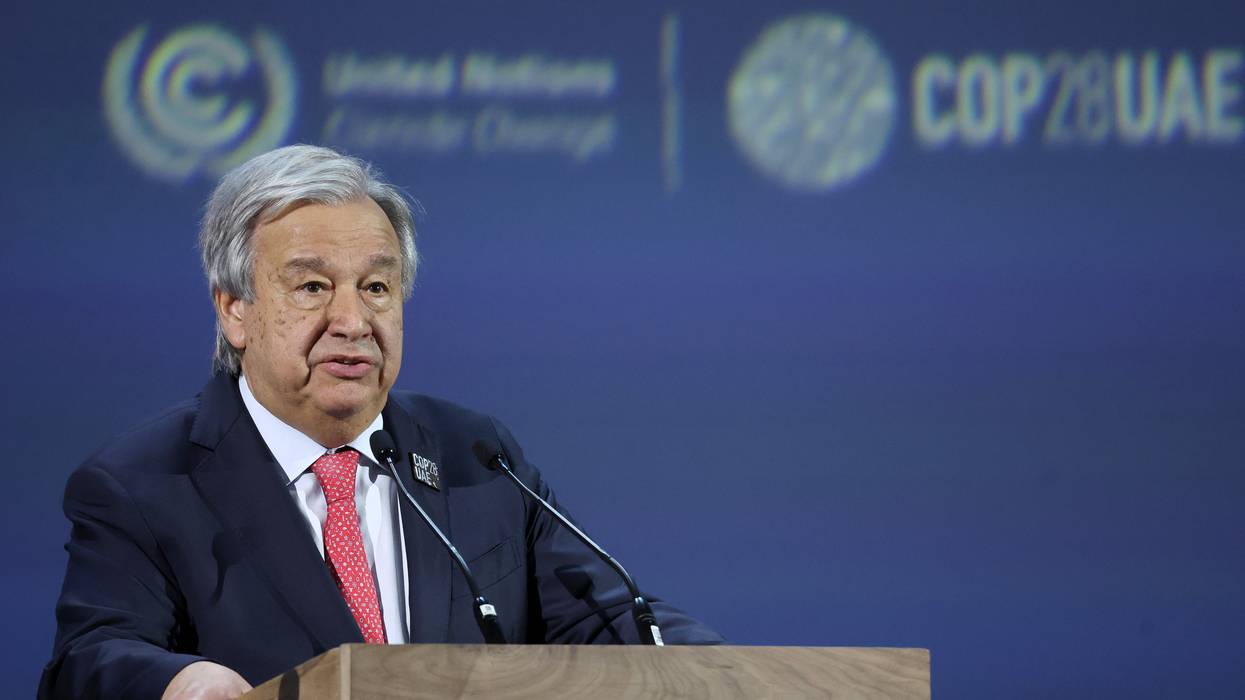
"Humanity's fate hangs in the balance," said U.N. Secretary-General António Guterres at second day of global climate conference.
United Nations Secretary-General António Guterres repeated the call for a global phaseout of fossil fuels during his remarks at the opening of the World Climate Action Summit as the U.N. Climate Change Conference entered its second day on Friday.
Guterres delivered a dire warning to the 260 world leaders gathered for the two-day summit taking place within the two week COP28 conference in Dubai as he urged them to ramp up their climate ambitions in the name of the future of human civilization.
"The science is clear," Guterres said. "The 1.5°C limit is only possible if we ultimately stop burning all fossil fuels. Not reduce. Not abate. Phaseout—with a clear timeframe aligned with 1.5°C."
"Make this COP count. Make this COP a gamechanger. Make this COP the new hope in the future of humankind."
Guterres began his remarks on a positive note, congratulating COP28 President Sultan Ahmed Al Jaber for a day-one agreement to operationalize the long-awaited "loss and damage" fund for developing nations. However, he quickly took a somber tone as he described recent visits to Antarctica and Nepal where he had seen ice and glaciers melt.
He said the ice loss was "just one symptom of the sickness bringing our climate to its knees. A sickness only you, global leaders, can cure."
"Earth's vital signs are failing: record emissions, ferocious fires, deadly droughts, and the hottest year ever," Guterres continued. "We can guarantee it even when we're still in November. We are miles from the goals of the Paris agreement—and minutes to midnight for the 1.5-°C."
The cure could come, Guterres said, with a successful "global stocktake." The global stocktake is a mechanism of the Paris agreement whereby world leaders assess their progress to date and set new goals. The first global stocktake concludes with the current conference in Dubai, and the process will repeat every five years from here on out.
Guterres made three main recommendations for the first stocktake:
In his remarks on fossil fuels and clean energy, Guterres also addressed fossil fuel executives directly.
"Your old road is rapidly changing," he said, quoting Bob Dylan's "The Times They Are a-Changin.'"
Guterres cited International Energy Agency (IEA) figures finding that oil and gas companies provide only 1% of all clean energy investments.
"Do not double-down on an obsolete business model," Guterres said, addressing fossil fuel CEOs and the hundreds of industry lobbysists in attendance at the conference. "Lead the transition to renewables using the resources you have available. Make no mistake—the road to climate sustainability is also the only viable pathway to economic sustainability of your companies in the future."
Guterres ended his speech with a call to leadership.
"Humanity's fate hangs in the balance," he said. "Make this COP count. Make this COP a gamechanger. Make this COP the new hope in the future of humankind."
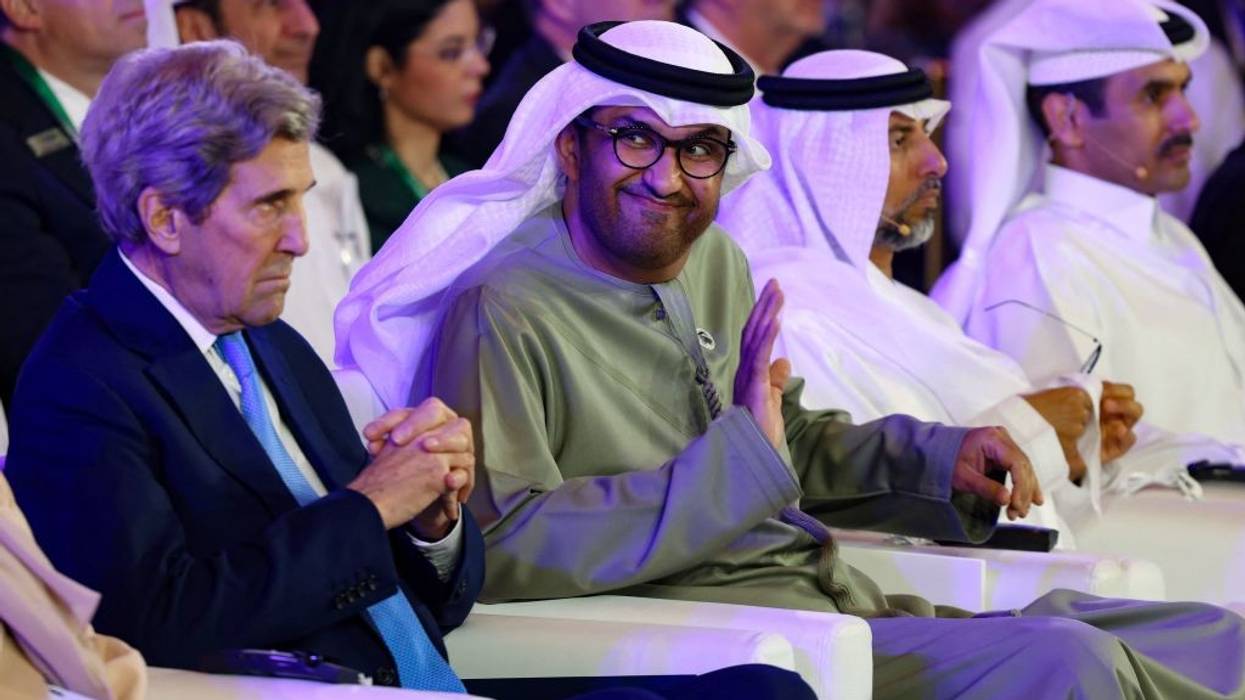
To keep pretending, year after year, decade after decade, that the U.N. process is working when everyone can see that it is failing, is its own kind of denial.
Every year, the world’s governments gather at what the United Nations Framework Convention on Climate Change, or UNFCCC, calls a Conference of the Parties, or COP, to talk about lowering carbon emissions while they just watch emissions continue to rise. It is time to start calling these annual UNFCCC gatherings what they are: COP-OUTs.
The U.N. climate negotiations are failing so miserably I have been thinking for years these COP-OUTs should be boycotted by civil society with the UNFCCC excoriated for its failure to adhere to its stated mission to “stabilize greenhouse gas concentrations in the atmosphere at a level that will prevent dangerous human interference with the climate system.” Earth to U.N.: We are already experiencing dangerous human climate interference at current levels of carbon pollution. Negotiations that allow even more lethal pollution are in direct contravention of the UNFCCC’s publicly declared goal.
So I was encouraged when climate visionary Naomi Klein called for a civil society boycott of COP28 last fall. I expected to hear a groundswell of support for her oppositional approach to the COP-OUT charade. Instead, all I heard was crickets. Some outside-the-box ideas take time to catch on, I guess. If only we had the luxury of time.
When the world is on fire, you don’t invite the arsonists to the negotiating table to argue for their right to toss on more fuel.
A boycott of climate negotiations may seem counterintuitive to those wanting to affect climate policy, but civil society is largely relegated to the sidelines at COP conferences anyway. Why lend the political facade the veneer of legitimacy with our presence? Why not instead use our power to withdraw their social license to speak in our name? I don’t know about you, but my government is not representing me at these annual negotiations. Chasing after 30 years of failure is not a recipe for success. We have lost too many precious decades playing the game the U.N.’s way. To keep pretending, year after year, decade after decade, that the U.N. process is working when everyone can see that it is failing, is its own kind of denial. The UNFCCC has to recommit to its mission.
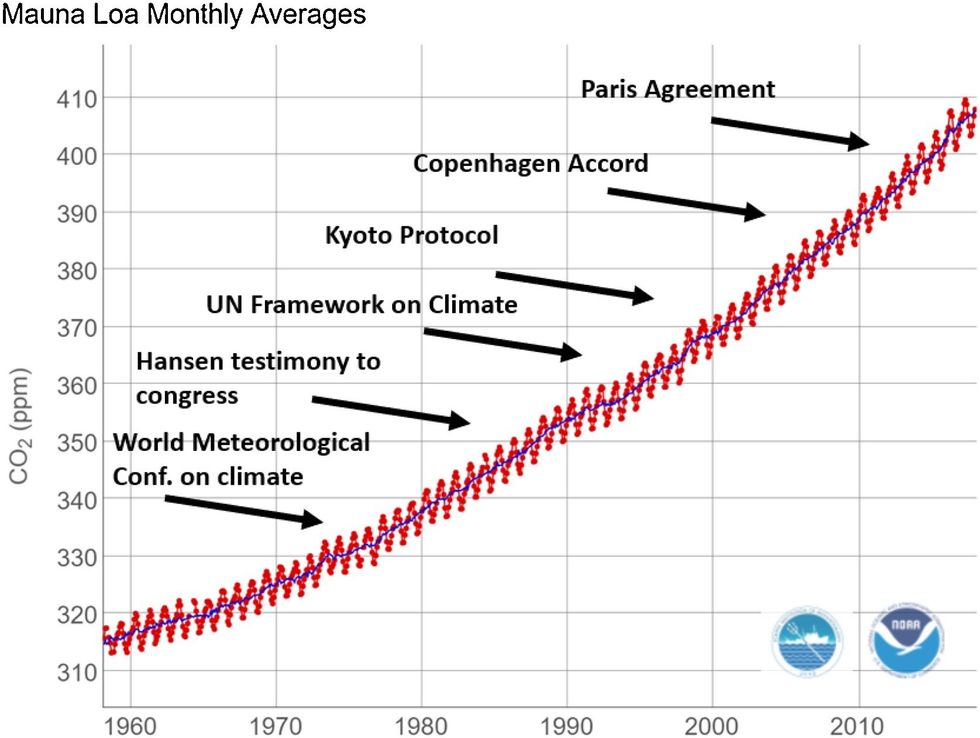
COP28 is already shaping up to be the biggest COP-OUT of them all. Taking the dressed up climate pageant to a new level of absurdity, the COP28 conference being held in Dubai, United Arab Emirates, from November 30 to December 12 is being chaired by—get this—an oil baron. The president of COP28 is Sultan Al Jaber, CEO of the Abu Dhabi National Oil Company. Lest you think the Biden administration truly gets that we’re in a climate emergency, John Kerry, Biden’s Special Presidential Envoy for Climate, publicly praised Al Jaber’s appointment as “a terrific choice,” as if the idea of an oil baron presiding over international climate talks wasn’t preposterous on its face.
In a July TED Talk, former Vice President Al Gore described how the fossil fuel industry has “brazenly seized control of the COP process, especially this year’s COP in Dubai,” reminding us that fossil fuel companies had more delegates at COP27 “than the combined delegations from the 10 most climate-impacted countries.” Then Gore shared this:
And now this year’s host, which is a petrostate, has appointed the president of COP28, in spite of the fact that he has a blatant conflict of interest, he’s the CEO of the Abu Dhabi National Oil Company... Their emissions are larger than those of ExxonMobil, and they have no credible plan whatsoever to reduce them. So this is the person in charge of the COP. He’s a nice guy. He’s a smart guy. But a conflict of interest is a conflict of interest.
There should be a worldwide outcry demanding that Al Jaber step down over this clear conflict of interest.
I don’t deny that vital strategic initiatives get hammered out at these U.N. conferences. The governments of the Global North, for instance, have a moral obligation to support serious climate financing for the Global South, which despite having done the least to contribute to climate breakdown is bearing the brunt of some of its most lethal impacts. So I respect the decision of those civil society leaders who feel compelled to attend and participate. But let’s not pretend that the incremental UNFCCC approach has a snowball’s chance in hell of actually saving civilization and the living world from collapse.
We need to stop thinking things will get better with the next COP-OUT, when things just keep getting worse. The hostile takeover of the international climate negotiations by fossil fuel industry arsonists is an unconscionable betrayal of our children’s trust and of all generations to come. Big Oil has not only been lying to the public for decades, it is knowingly perpetrating ecocide and crimes against humanity.
When the world is on fire, you don’t invite the arsonists to the negotiating table to argue for their right to toss on more fuel. You arrest the arsonists and mobilize firefighters to contain the worldfire. I don’t have a ready answer to what is the best alternative to the U.N. process, but when what you’re doing isn’t working, it’s time to try something else.
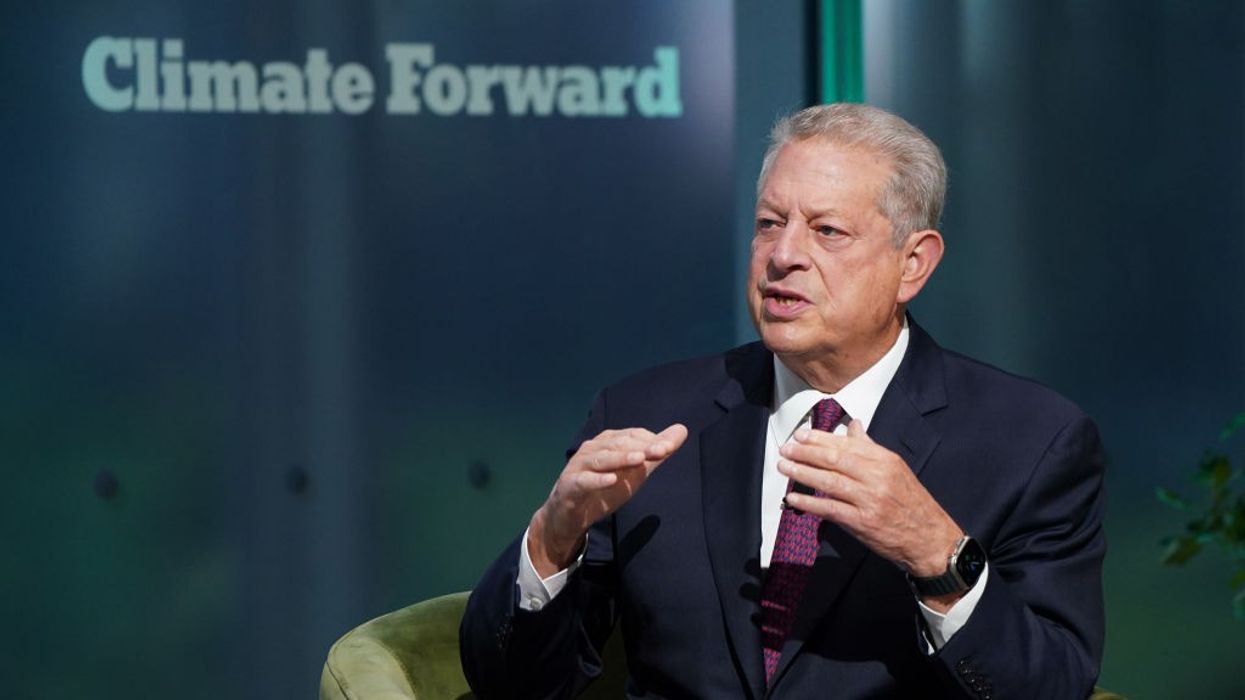
At an event coinciding with the U.N. General Assembly in New York, Gore said he used to believe the sector sincerely wanted to be part of the solution to the climate crisis, but now he thinks it's clear they are not.
Former U.S. Vice President Al Gore, a long-time climate activist, had harsh words for the fossil fuel industry on Thursday.
"Many of the largest companies have engaged in massive fraud," he said at The New York Times' Climate Forward event, as the Independent reported. "For some decades now, they've followed the playbook of the tobacco industry, using these very sophisticated, lavishly financed strategies for deceiving people."
Gore, who won the Nobel Peace Prize in 2007, criticized the industry for using their influence to lobby against effective climate action.
"The climate crisis is a fossil fuel crisis."
"The fossil fuel companies, given their record today, are far more effective at capturing politicians than they are at capturing emissions," he said.
Now, he warned, the sector had set its sights on the United Nations COP28 climate change conference in the United Arab Emirates with the appointment of the UAE's state oil company CEO Sultan Ahmed Al Jaber to lead the talks.
"That's just, like, taking the disguise off," Gore said, as The New York Times reported. "They've been trying to capture this process for a long time."
Gore's remarks reflect a recent shift in the tone of his climate advocacy. In a TED Talk filmed in July and released in August, Gore made many of the same arguments about fossil fuel lobbying and Al Jaber's appointment.
"The climate crisis is a fossil fuel crisis," he said. "The solutions are going to come from a discussion and collaboration about phasing out fossil fuels."
After listening to the talk, journalist Emily Atkin wrote in her newsletter Heated:
With this new talk, it's become clear that the man who made An Inconvenient Truth famous is no longer primarily focused on convincing people that the climate crisis is real or dangerous. He's turned a corner, and is now focused on convincing people that if they truly care about solving the climate crisis, they must turn their ire toward the fossil fuel industry—and boot them from the negotiating table before it's too late.
Gore acknowledged the shift in his thinking himself on Thursday.
"I was one of many who felt for a long time that the fossil fuel companies, or at least many of them, were sincere in saying that they wanted to be a meaningful part of bringing solutions to this crisis," Gore said, as The Independent reported. "But I think that it's now clear they are not. Fossil fuel industry speaks with forked tongue."
While he acknowledged that it was not fair to expect the industry to solve a crisis its business model encouraged it to perpetuate, "it's more than fair to ask them to get out of the way, and stop blocking the efforts of everybody else to solve this crisis," he said. "I think it's time to call them out."
Gore's remarks came as world leaders and climate activists and experts gathered in New York for the U.N. General Assembly and Secretary-General António Guterres' Climate Ambition Summit, held the day before.
He is also not the only prominent mainstream climate voice to have turned on the fossil fuel sector.
Former Executive Secretary of the U.N. Framework Convention on Climate Change Christiana Figueres, who helped negotiate the Paris agreement, said that she did not think the industry should be invited to COP28.
"If they are going to be there only to be obstructors, and only to put spanners into the system, they should not be there," she said at a conference Thursday organized by Covering Climate Now, as The Guardian reported.
Her remarks echoed an opinion piece she wrote for Al Jazeera in July, in which she said she was wrong to believe that the sector could be part of the solution.
"My patience ran out, and I say this with sadness," she said Thursday.
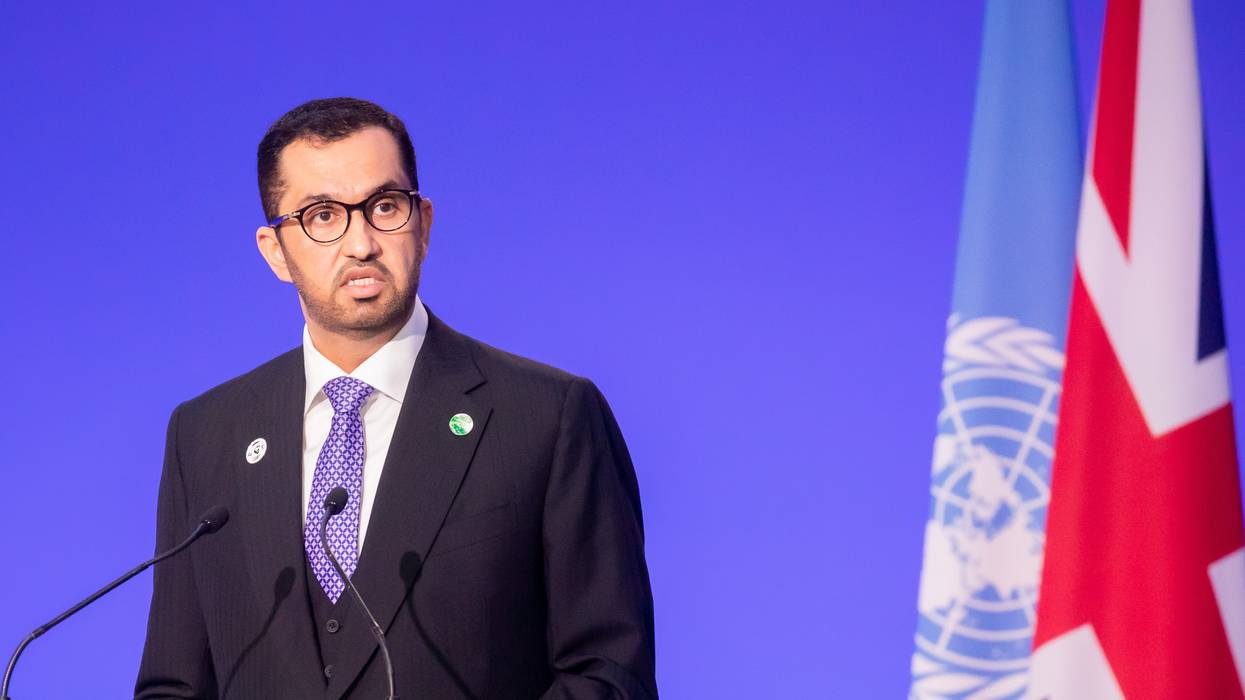
"This is what happens when a petrostate and an oil executive lead global climate talks," said one critic.
With six months to go until the 2023 United Nations Climate Change Conference, or COP28, is set to take place in Dubai, comments by the designated president of the summit about his approach to mitigating the climate crisis are already setting off alarm bells with critics including former United Nations climate chief Christiana Figueres.
As The Guardian reported Tuesday, Figueres addressed in a recent episode of her podcast, "Outrage and Optimism," a speech given earlier this month by Sultan al-Jaber, the CEO of Abu Dhabi National Oil Company (ADNOC), whose appointment as president of COP28 sparked outrage among climate campaigners in January.
In comments Figueres described as "very worrisome," al-Jaber said at the Petersburg Climate Dialogue in Berlin that policymakers should focus on drawing down "fossil fuel emissions"—but not the extraction of fossil fuels themselves.
"We must be laser focused on phasing out fossil fuel emissions, while phasing up viable, affordable zero carbon alternatives," said al-Jaber, adding that "smart government regulation to... make carbon capture commercially viable" is needed.
Figueres, former executive secretary of the U.N. Framework Convention on Climate Change, said al-Jaber was suggesting COP28 will support carbon capture and storage (CCS) technology—an unproven method of removing carbon emissions from smokestacks at power plants, which has failed in at least two high-profile projects in the United States and which climate campaigners say only serves as a distraction from genuine solutions to the climate emergency–eliminating the extraction of fossil fuels and transitioning to renewable energy.
"He is trying to say: 'Look, those of us who are producers of fossil fuels will be responsible for our emissions through enhanced carbon capture and storage. And we, or the COP presidency, will also support the zero carbon alternatives,'" said Figueres.
She added that dozens of countries have pushed for far-reaching commitments at previous global climate summits, with small island nations on the frontlines of the climate crisis joined by several countries in the Global North at last year's COP27 in unsuccessfully pushing for an agreement that called for a "phase-out" of fossil fuels instead of a "phase-down."
Al-Jaber's endorsement of a position embraced by fossil fuel companies like the one he heads is "very dangerous," said Figueres. "I just don't see most countries, and certainly not the vulnerable countries, being willing to support the COP president on this because it is a direct threat to their survival."
Instead of investing in CCS—which companies have poured billions of dollars into over the last several years with no success stories to show for it, as U.S. watchdog Food & Water Watch said this week—scientists have warned that policymakers must slash carbon emissions by 45% by 2030 in order to limit global heating to 1.5°C.
"We do not have CCS commercially available and viable over the next five to seven years," Figueres said. "It's just not going to happen."
While CCS costs an estimated $50 to $200 per tonne of carbon dioxide, according to the Intergovernmental Panel on Climate Change, energy experts agreed in a U.N. report released in 2021 that investing in renewable energy sources would save $55 billion in a year.
As one European official told Climate Home News this month, CCS is currently a "luxury technology" that is currently being promoted mainly by "fossil exporting countries," while renewable energy sources "are the most affordable and readily available mitigation technologies."
Al-Jaber has been joined by United Arab Emirates Environment Minister Mariam bint Mohammed Almheiri in attempting to tamp down expectations that COP28 will yield far-reaching action to draw down the use of fossil fuels, as scientists have demanded.
In February, Almheiri said at the Munich Security Conference that "we need the oil and gas sector to be with us," while saying the industry should "phase out oil and gas in a just way."
Journalist Khaled Diab said after al-Jaber's comments this month that "this is what happens when a petrostate and an oil executive lead global climate talks."
"When you are the president of the COP," said Figueres, "you cannot put forward the position of the country that you're coming from."

"Appointing a petrol company executive as president of COP28 is an effrontery several orders of magnitude beyond anything that happened before in the history of the U.N. climate process."
A global network of more than 450 climate justice organizations said Thursday that the upcoming COP28 talks in United Arab Emirates will—like the United Nations climate conferences before it—end in failure as long as the fossil fuel industry is allowed to influence and dictate the terms of the event.
The Kick Big Polluters Out network raised particular concern over the UAE's recent appointment of Sultan Al Jaber, head of the country's state-owned Abu Dhabi National Oil Company (ADNOC), to preside over the end-of-year talks—a decision that climate campaigners said throws the integrity and seriousness of COP28 into further question.
"There is no honor in appointing a fossil fuel executive who profits immensely off of fueling the climate crisis to oversee the global response to climate change," the network wrote in a letter to U.N. Secretary-General António Guterres, U.N. Framework Convention on Climate Change (UNFCCC) executive secretary Simon Stiell, and all parties to the UNFCCC.
"That such a move could ever be seen to be legitimate amidst an intensifying climate crisis where millions of lives and ecosystems are on the line exemplifies just how insidious Big Polluters' stranglehold over climate policy is," continued the letter, which was spearheaded by four UNFCCC constituencies representing millions of people. "No COP overseen by a fossil fuel executive can be seen as legitimate. COP presidencies must be free and independent of fossil fuel influence. It's time for the UNFCCC to deliver the long overdue equitable phaseout of fossil fuels."
The letter comes days after Politico reported that the U.N. is "querying the presidency of this year's COP28 climate talks over its ties" to ADNOC, the 12th-largest oil company in the world by production.
"The main COP28 team is using two stories of an 11-floor office building in Abu Dhabi also used by the Ministry of Industry and Advanced Technology located next to ADNOC's headquarters," Politico noted. "That prompted the secretariat of the United Nations Framework Convention on Climate Change to send a series of questions to the presidency of the climate talks enquiring about whether the presidency will be independent of the oil company."
According to the outlet, which cited an unnamed source with knowledge of the matter, the questions raised by the U.N. "include whether there is a firewall between the two institutions; whether ADNOC has access to COP28 meetings and strategic documents; if the staff working on the climate conference are relying on the oil giant's IT systems; if part of the work will be devoted to protecting ADNOC's interests; and whether the climate team is being paid by the oil company."
"Polluters have a role to play: Stop polluting. They cannot be placed on a leadership pedestal."
Rejecting pressure to rescind his appointment, the UAE has said Al Jaber will stay on as head of ADNOC as he presides over COP28, a striking conflict of interest given the oil giant's financial interest in limiting the scope of climate action.
John Kerry, the United States' special presidential envoy for climate, praised the selection of Al Jaber to oversee COP28, calling the oil company executive a "terrific environmentalist."
The UAE, one of the world's biggest oil producers, has ratified the Paris climate accord, but experts say its policies are
way out of alignment with the agreement's critical 1.5°C warming limit.
Cansın Leylim Ilgaz, associate director of global campaigns at 350.org, said Thursday that "letting petrostates host the U.N. climate talks is bad enough, but appointing a petrol company executive as president of COP28 is an effrontery several orders of magnitude beyond anything that happened before in the history of the U.N. climate process."
"Attempts to sugarcoat this scandalous decision only serve to undermine the huge efforts of everyone working to limit global heating," Ilgaz added. "This brazen attempt of the dying fossil fuel industry to predetermine the outcome of COP28 will not stand."
But the Kick Big Polluters Out network stressed in its letter that the problem of fossil fuel influence on U.N. climate talks runs much deeper than Al Jaber.
"Fossil fuel interests overrun the UNFCCC and threaten its credibility," the network wrote. "At COP27 last November, more than 630 fossil fuel lobbyists registered to attend the climate negotiations. The UAE, now hosting COP28, had more fossil fuel lobbyists on its delegation than any other country. The grim reality is that this appointment represents a tipping point in which the UNFCCC is rapidly losing any legitimacy and credibility."
To succeed at delivering "the needed climate equity and action to end the era of fossil fuels, and to rapidly and justly transition to a new global system," the network said the UNFCCC must agree to four demands:
1. Big Polluters cannot write the rules. Big Polluters must not be allowed to unduly influence climate policymaking. This allows them to continue to weaken and undermine the global response to climate change, and it’s why we are on the brink of extinction. The UNFCCC must urgently establish an Accountability Framework, including a regime-wide conflict-of-interest policy, that systematically ends this corporate capture.
2. No more Big Polluters bankrolling climate action. No Big Polluter partnership or sponsorships of climate talks or climate action. Not now. Not ever. Major polluters must not be allowed to greenwash themselves and literally buy their way out of culpability for a crisis they have caused. The UNFCCC will always fail to deliver so long as this is deemed acceptable.
3. Polluters out and People in. While civil society has always participated in the COP process, governments have made it more difficult each time for non-governmental organizations and climate justice movements to have their voices heard. We need
equitable, meaningful inclusion of civil society. Climate action must center the leadership and lived experience of the people, especially those on the frontlines of the climate crisis. With frontline communities in the lead, we must end the funding and validation of dangerous distractions and false solutions that promote Big Polluters' profits, enable their abuses, and guarantee decades more of fossil fuel use.
4. Reset the system to protect people and the planet, not Big Polluters. Big Polluters are destroying life as we know it. It's time to build a new way of living and collaborating that works for people, not polluters, and that restores, rather than destroys, nature. We
need real, just, accountable, gender-responsive, community-led, nature-restoring, and proven and transformative solutions to be implemented rapidly and justly. We need a total and equitable transition off of fossil fuels. We need real solutions that center the rights of Indigenous peoples, local communities, women, workers, and the protection of those speaking up for justice. We need an end to the impunity of corporate abuses