
SUBSCRIBE TO OUR FREE NEWSLETTER
Daily news & progressive opinion—funded by the people, not the corporations—delivered straight to your inbox.
5
#000000
#FFFFFF
To donate by check, phone, or other method, see our More Ways to Give page.


Daily news & progressive opinion—funded by the people, not the corporations—delivered straight to your inbox.
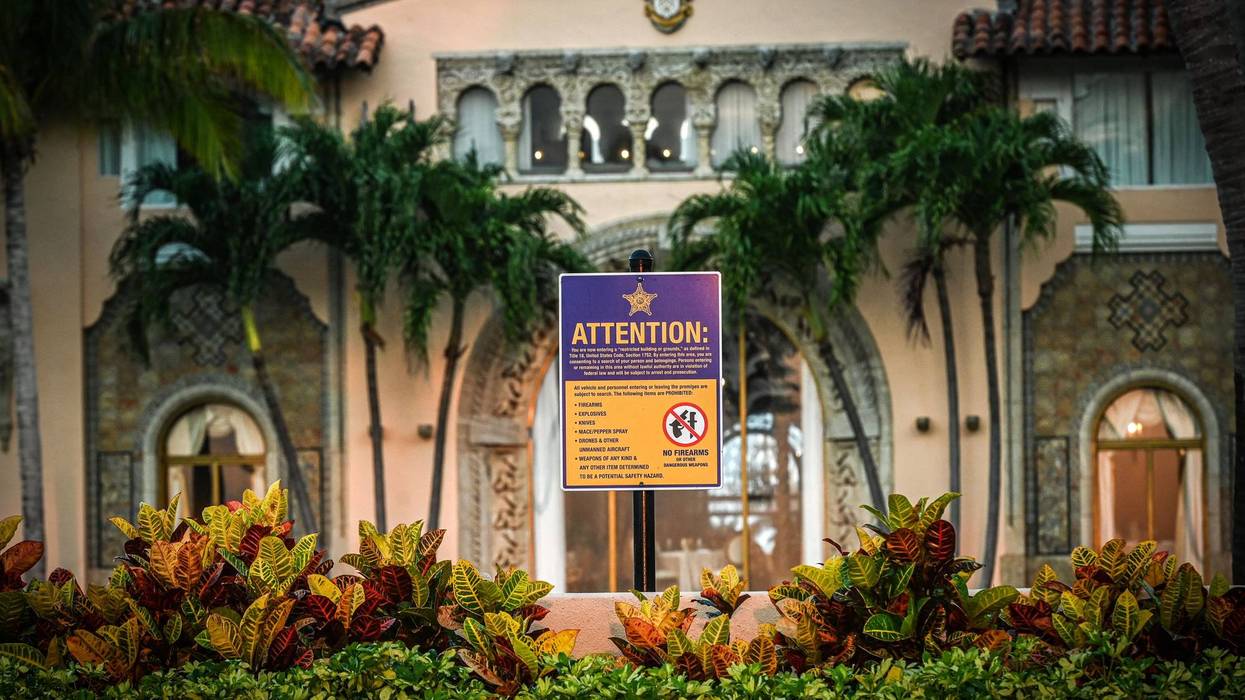
"The individual was observed by the north gate of the Mar-a-Lago property carrying what appeared to be a shotgun and a fuel can," according to US Secret Service.
This is a developing story… Please check back for updates…
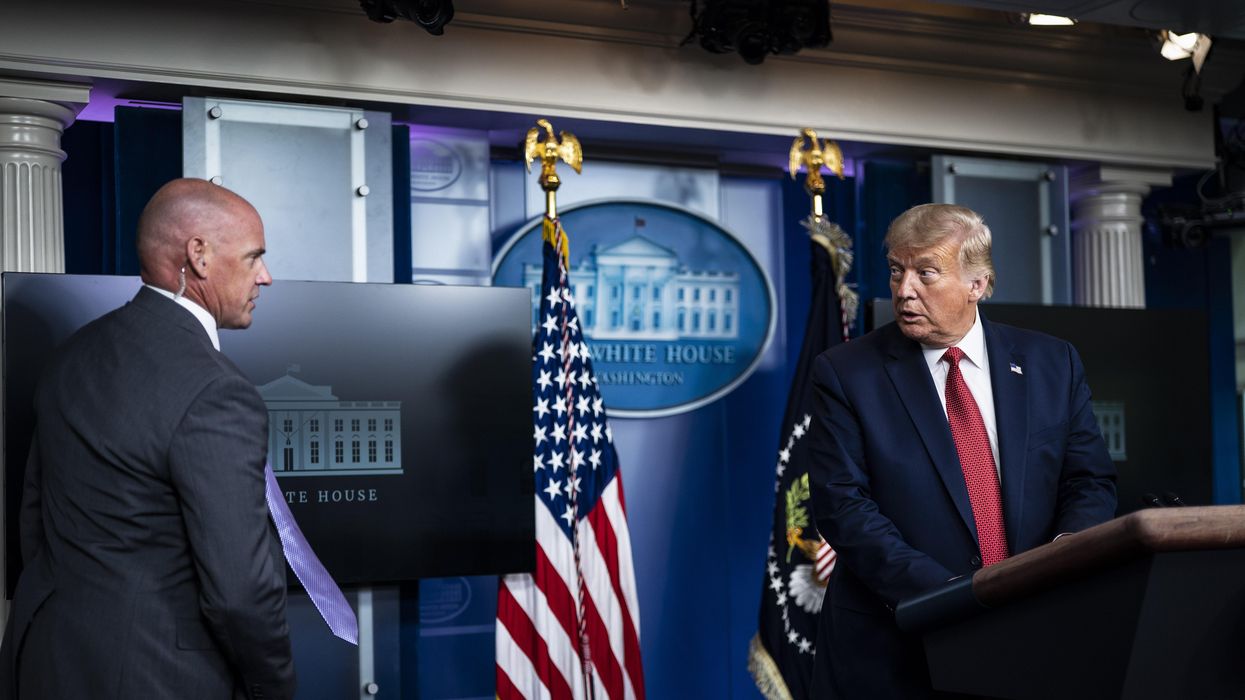
The US Secret Service announced Sunday that its agents fatally shot a man armed with a shotgun overnight at President Donald Trump's Mar-a-Lago Club in Palm Beach, Florida, while the president and first lady were at the White House.
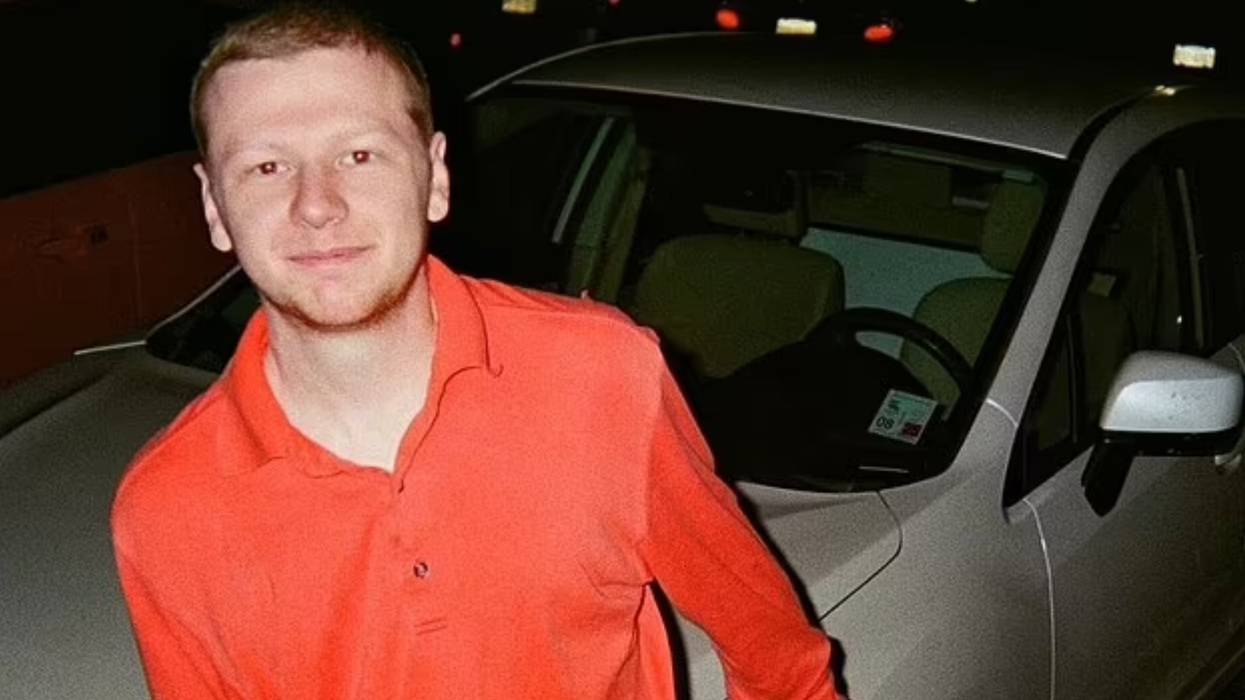
Secret Service spokesperson Anthony said the suspect is from North Carolina and was recently reported missing by his family. Citing a person familiar with the matter, the Associated Press reported that investigators have identified him as 21-year-old Austin Tucker Martin.
A statement posted on social media by Guglielmi says:
On February 22, around 1:30 am, a male in his early 20s was shot by US Secret Service agents and a deputy from the Palm Beach County Sheriff's Office (PBSO) following an unauthorized entry into the secure perimeter at Mar-a-Lago.
The individual, whose identity is being withheld pending notification of next of kin, was pronounced deceased. The individual was observed by the north gate of the Mar-a-Lago property carrying what appeared to be a shotgun and a fuel can.
US Secret Service agents and a PBSO deputy confronted the individual and shots were fired by law enforcement during the encounter. No US Secret Service or PBSO personnel were injured. There were no Secret Service protectees present at the location at the time of the incident.
The incident, including the individual's background, actions, potential motive, and the use of force, is under investigation by the FBI, the US Secret Service, and the Palm Beach County Sheriff's Office. In accordance with agency policy, the involved Secret Service agents will be placed on routine administrative leave pending the outcome of the investigation.
During a press conference, Palm Beach County Sheriff Rick Bradshaw said that the suspect, a white man, "was ordered to drop those two pieces of equipment that he had with them, at which time he put down the gas can, raised the shotgun to a shooting position. At that point in time, the deputy and the two Secret Service agents fired their weapons and neutralized the threat."
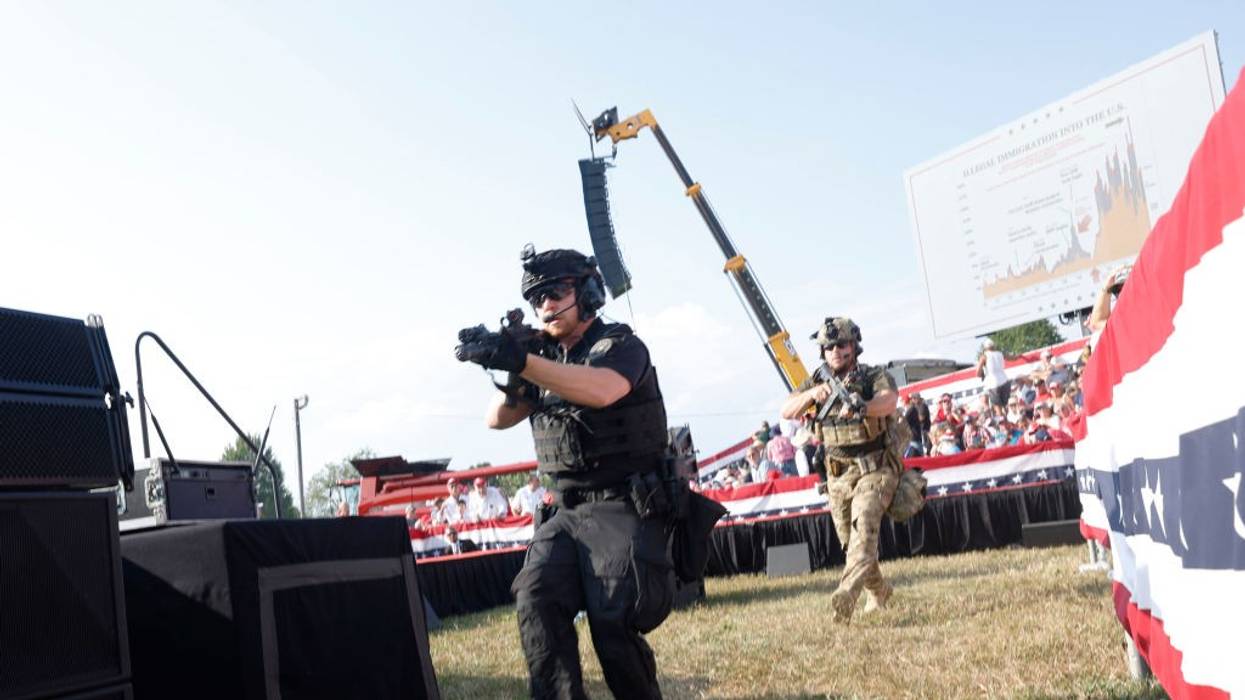
Trump has faced multiple security incidents during his two terms and three campaigns, including an assassination attempt during a July 2024 rally in Butler, Pennsylvania, and another the following September at Trump International Golf Club in West Palm Beach, Florida.
"The safety of our public officials should never be subject to erratic, vindictive political impulses," said a spokesman for California Gov. Gavin Newsom.
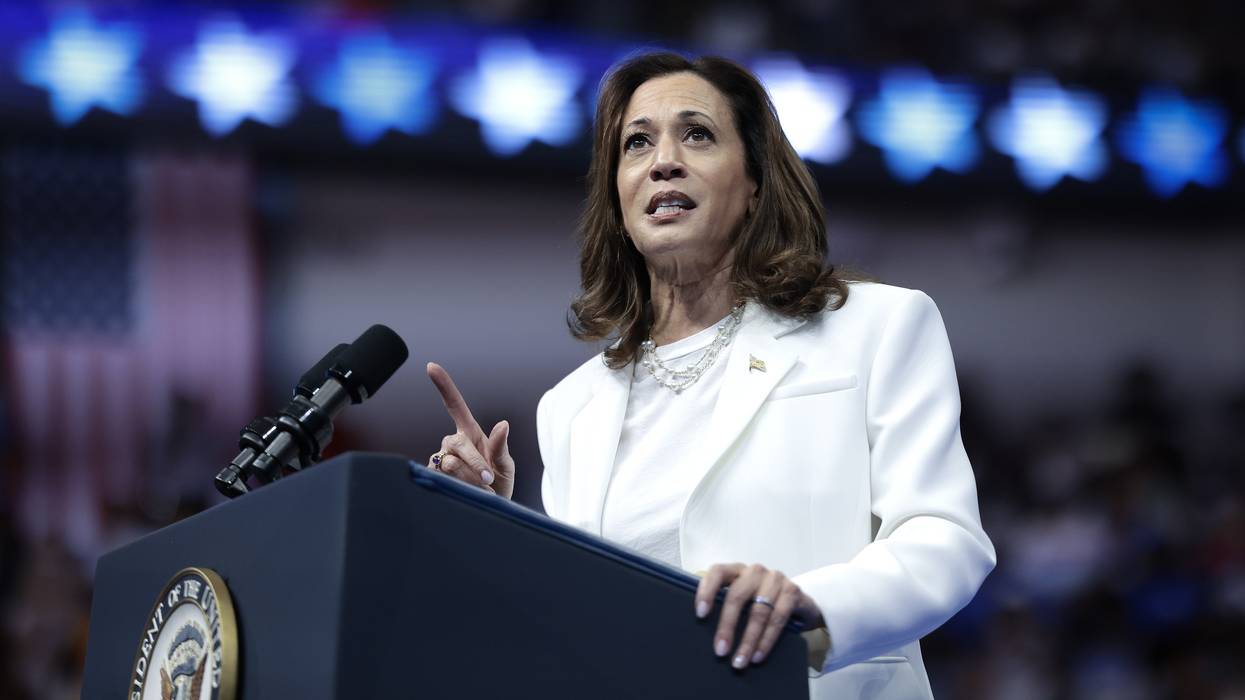
US President Donald Trump has canceled extended Secret Service protection for former Vice President Kamala Harris just as she was scheduled to go on a multi-city book tour.
CNN reported on Friday that Trump this week sent a letter to the Department of Homeland Security that simply read, "You are hereby authorized to discontinue any security-related procedures previously authorized by executive memorandum, beyond those required by law, for the following individual, effective September 1, 2025: Former Vice President Kamala D. Harris."
As CNN explained, former vice presidents are entitled by federal law to six months of Secret Service protection after leaving office.
However, former President Joe Biden late in his term signed a directive that extended Harris' protection past the standard six-month window. The reason for the extension—its existence not reported publicly until Trump moved to revoke it—has not been made clear.
Harris last year was the Democratic Party's presidential nominee after then-President Joe Biden decided against running for a second term.
As California is Harris' home state, both California Gov. Gavin Newsom and Los Angeles Mayor Karen Bass are aware of and have been discussing Harris' security situation, and CNN noted she could get added protection in the future from the Los Angeles Police Department or potentially another state agency.
In a statement given to CNN, Bass delivered a scathing denunciation of the president for revoking his former rival's Secret Service protection.
"This is another act of revenge following a long list of political retaliation in the form of firings, the revoking of security clearances and more," she said. "This puts the former Vice President in danger and I look forward to working with the Governor to make sure Vice President Harris is safe in Los Angeles."
Bob Salladay, a spokesman for Newsom, also ripped the president for his actions.
"The safety of our public officials should never be subject to erratic, vindictive political impulses," he said.
Harris is scheduled to go on tour starting next month in New York to promote her book "107 Days," which reflects on her failed 2024 presidential campaign.
"I know this feels like a bad dream," said one Democratic senator. "It isn't."
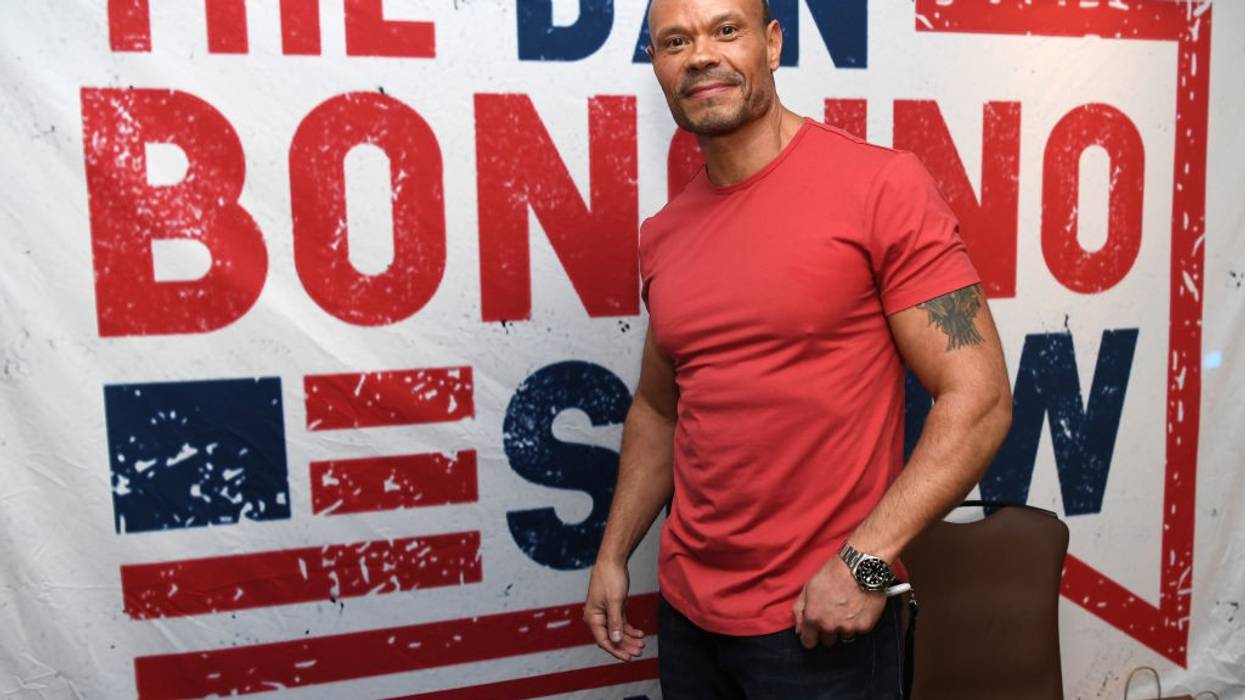
In a move cheered by the MAGA faithful but derided by critics, FBI Director Kash Patel picked Dan Bongino—a former New York City police officer and Secret Service agent turned Fox News and podcast host known for spreading right-wing conspiracy theories—as the agency's deputy director.
In what he called "great news for Law Enforcement and American Justice," U.S. President Donald Trump took to his Truth Social site to announce Patel's selection of Bongino for the number two FBI post.
On Monday, Bongino said in a statement: "My career has always been about service. I'm here to work. I'm here to lead. And I'm here to ensure that America's law enforcement institutions uphold the values and integrity they were built upon."
Patel congratulated Bongino, whom he called a "warrior."
"With Pam Bondi as our new attorney general, we are assembling a team focused on restoring public trust, upholding the rule of law, and ensuring justice is served," Patel said on Monday.
The Bulwark reported Monday that the FBI Agents Association issued a memo implying that Patel broke a commitment he made to appoint "an on-board, active special agent" as deputy director, "as has been the case for 117 years."
Critics lambasted Patel's pick, with progressive podcast host David Paskman
writing on the Bluesky social media site, "We're so screwed."
Adam Goldman and Devlin Barrett wrote in The New York Times: "The combination of Mr. Patel and Mr. Bongino will represent the least experienced leadership pair in the bureau's history. It is also all but certain to prompt concerns about how the men, who have freely peddled misinformation and embraced partisan politics, will run an agency typically insulated from White House interference."
Some critics expressed fears that Trump will use Patel and Bongino to attack political opponents.
Others called Bongino a "grifter."
Bongino worked as a New York police officer from 1995-99 and as a Secret Service agent from 1999-2011, leaving the agency to run for U.S. Senate—the first of three unsuccessful political campaigns.
After failing in politics, Bongino became a popular conspiracy theorist on social media and right-wing talk radio. In addition to hosting his own Fox News program from 2021-23 and a podcast with millions of listeners, he has frequently appeared on Alex Jones' Infowars fake news program. He also hosted a show on the National Rifle Association's defunct online video channel.
Bongino is the author of more than half a dozen books, some of them promoting conspiracy theories about the 2016 and 2020 presidential elections. He quickly became one of the most strident purveyors of Trump's "Big Lie" that the 2020 election was stolen by the so-called "deep state" and Democrats.
Since then, Bongino has used his platforms to amplify conspiracy theories and lies about topics including the January 6, 2021 U.S. Capitol insurrection and the Covid-19 pandemic. He was banned from both YouTube and Google's ad service for spreading pandemic-related misinformation. In 2020, The New York Times included him on its list of "misinformation superspreaders."
At times, Bongino seemed to relish his notoriety, once explaining that "my entire life right now is about owning the libs."
Last year, the purportedly non-political appointee ripped "scumbag commie libs," the "biggest pussies I've ever seen," in a vague threat posted on Elon Musk's social media site X.
Kimberly Cheatle said in an email to colleagues that the agency "fell short" of its mission to protect U.S. leaders.
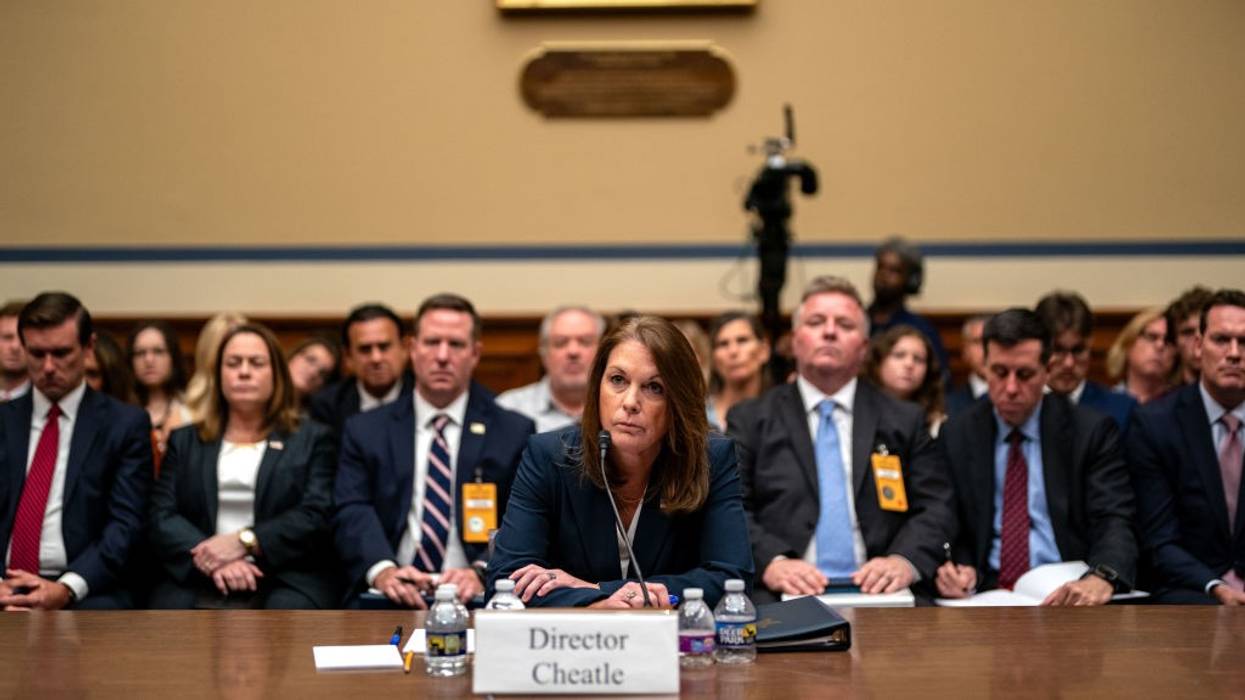
United States Secret Service Director Kimberly Cheatle resigned Tuesday following the attempted assassination of former President Donald Trump at a Pennsylvania campaign rally and intense bipartisan grilling by members of a congressional committee.
The New York Times reported that Cheatle—who led the Secret Service since September 2022—said in an internal email that the agency "fell short" of its mission to protect Trump, the Republican presidential nominee who was shot in the ear while speaking at a July 13 rally in Butler, Pennsylvania.
"In light of recent events, it is with a heavy heart that I have made the difficult decision to step down as your director," Cheatle wrote.
Calls for Cheatle's resignation mounted following her Monday testimony before the House Oversight and Accountability Committee, during which she acknowledged that "we failed" in "the Secret Service's solemn mission... to protect our nation's leaders."
Following the hearing, Rep. James Comer (R-Ky.), who chairs the committee, and Rep. Jamie Raskin (D-Md.), the ranking member, issued a joint letter accusing Cheatle of failing "to provide answers to basic questions regarding that stunning operational failure" and calling on her to resign "as a first step to allowing new leadership to swiftly address this crisis and rebuild the trust of a truly concerned Congress and the American people."
In her resignation email, Cheatle told colleagues, "I do not want my calls for resignation to be a distraction from the great work each and every one of you do towards our vital mission."
Responding to Cheatle's resignation, Raskin said that "yesterday's Oversight Committee hearing identified two urgent priorities in the wake of the assassination attempt against former President Donald Trump and the accompanying mass shooting. The first was the need for Director Cheatle to step down... We accomplished that today."
"The other urgent need was to ban assault weapons to protect the rest of us from mass shootings like the one that took place in Butler," he added. "As I made clear during yesterday's hearing, a weapon that can be used to commit a mass shooting at an event under the full protection of the Secret Service and state and local police is a danger to schoolchildren; Walmart shoppers; and congregants in church, synagogue, and mosque services."
Twenty-year-old Thomas Matthew Crooks used a legally purchased AR-15-style semiautomatic rifle to shoot Trump before he was killed by a Secret Service sniper. A rally attendee, Corey Comperatore, was fatally shot, and two other men were seriously injured by gunfire.
"As a weapon of war, the AR-15 has no legitimate place in our society," Raskin argued. "Congress must act now."
A few thoughts on how the assassination attempt on Trump unleashed an orgy of Democratic platitudes.
The U.S. political system runs on the fuel of euphemism—the ability to conceal nefarious aspirations beneath the facade of idealistic slogans. Consider the U.S. Department of Corporate Violence (USDOCV) which, oddly, we have renamed the U.S. Department of Defense (USDOD). I use the word, renamed rather loosely, for The Department of Corporate Violence always required a pseudonym.
The public never became privy to the relationship between corporate greed and U.S. military adventure—at least not without some poking around beneath the surface. President Dwight Eisenhower warned us about the military industrial complex—an informal term that comes precariously close to letting the secret out of the bag.
Until 1949, the federal agency responsible for the U.S. military was simply called The Department of War—a rather nondescript, generic title that tells us nothing about intent. But with the advent of the Cold War and the new mandate to unleash military might against leftist regimes in every corner of the globe, our military needed a brand new identity. In 1949, just in time for decades of war in Southeast Asia, we decided to call our military The Department of Defense. This made it clear that bombing, defoliating and reducing civilian populations to ash thousands of miles from U.S. borders—in Korea, Vietnam, Laos and Cambodia—were acts of "defense." The word defense had to go through conceptual contortions to befuddle the U.S. masses, but that is the nature of euphemistic language.
Why do we hear from politicians and media that they are shocked and horrified that someone took a shot at Donald Trump?
Many have ventured to assert that the U.S. is the most violent, militaristic nation in human history, both in terms of our astronomical military budget and our almost subliminal bombardment with pro-military, pro-police propaganda. It is easier in the U.S. to procure a firearm than it is to get a decent haircut or a high quality slice of pizza, and we shoot one another with such casual predictability that a mass shooting passes out of the news cycle faster than a celebrity divorce.
So why do we hear from politicians and media that they are shocked and horrified that someone took a shot at Donald Trump? We have been told, in the last few days, that "violence has no place in American life." It can't be just the usual embarrassment that U.S. leaders have about their blood-soaked deeds. I can count at least six Democrats who said the exact same lin—Biden, Obama, Schumer and three others whose names I have forgotten. Maybe it's a hundred Democrats who said this. We all lose track. "Violence has no place in American life."
Say what? Violence has such an enormous role in American existence that our government spends $3.1 billion annually to protect politicians from the armed-to-the-teeth citizens who despise them. That is right—the Secret Service budget is almost a third of the money allotted to the Environmental Protection Agency. The EPA, that Trump threatens to dismantle entirely, is responsible for putting up some sort of feeble resistance to the sixth extinction.
It is easier in the U.S. to procure a firearm than it is to get a decent haircut or a high quality slice of pizza, and we shoot one another with such casual predictability that a mass shooting passes out of the news cycle faster than a celebrity divorce.
Apparently, the $3.1 billion needed to protect our elected leaders from the AR-15 wielding hordes that dream of blowing their brains out is not enough. All it took was one distracted agent with his eyes on his Smart Phone—watching that Post Malone and Morgan Wallen video on YouTube, perhaps—and now the Secret Service budget might need more of your tax money than we use to keep a small percentage of our leaking neurotoxins away from your drinking water.
Out of slavish respect for our wounded former guy who takes offense at this point, the Democrats and the press are cautiously avoiding the elephant in the room: unregulated access to military grade weapons. These same Democrats are also falling all over themselves to proclaim their agonized grief over the shooting. After all, the rhetorical excesses—comparing Trump to Hitler just because Julius Streicher's words pour out of Trump's throat—was bound to encourage violence in an otherwise peace-loving country.
I have always suspected that the Republicans control the American narrative and the Democrats lip sync to the latest MAGA tunes. That is why Biden initiated an almost exact replica of MAGA's murderous immigration plans. The Democrats will crawl on their knees to prove that they have no ill intent toward Trump. Expect to hear many confessions of just how joyful they are about Trump's survival.
The issue is not to tamp down the rhetorical bile and show mutual respect. It is way too fucking late for that. We have two genocidal parties that both cater to corporations and engage in nasty political theater to amuse their bases, and we also have a pissed off, disempowered populace beleaguered by neurotoxins, and heavily armed. Too many Democrats, and even a few Republicans, are beseeching us to take the discourse "down a notch." That is like telling a heroin addict, shaking with cravings, to "just say no."
Nothing brings America together like a bipartisan orgy of military spending.
The flash flood of Democratic platitudes on behalf of civility and the parallel gushers of concern for Trump's welfare are a collective prostration to MAGA narratives. The Democrats are beside themselves with guilt for calling Trump a fascist or a Nazi wannabe. The Republicans accuse the Democrats of fomenting violence and the Democrats swear allegiance to the principles of Gandhi. In truth, violence and militarism are the true balm to heal our divided nation. Both parties love cops, guns and fighter planes. Nothing brings America together like a bipartisan orgy of military spending.
If you take away political drama, our entire system of governance would be naked and ashamed. The answer is to just spend more on Secret Service protection. Put an entire army battalion phalanx around Trump—and Biden too. The Secret Service budget is already the size of the entire NBA payroll. But we always have unlimited funding for police and military, so it should not be a problem. We never have enough money in America for housing, medical care, mental health or environmental cleanup, but a united Republican/Democratic lovefest can conjure money out of your taxes for enough nuclear warheads to obliterate the Milky Way.
As the U.S. descends into fascism there will be a lot of guns and police around. We better get used to it.
"Many of us like to ask ourselves, 'What would I do if I was alive during slavery? Or the Jim Crow South? Or apartheid? What would I do if my country was committing genocide?' The answer is, you're doing it."
"My name is Aaron Bushnell, I am an active-duty member of the United States Air Force, and I will no longer be complicit in genocide. I'm about to engage in an extreme act of protest, but compared to what people have been experiencing in Palestine at the hands of their colonizers, it's not extreme at all."
That's how the 25-year-old from San Antonio introduced himself—and bade farewell—to the world in a livestream video of his Sunday afternoon walk to the Israeli Embassy in Washington, D.C. Arriving outside the front gate, Bushnell set down his phone, took eight paces, turned to face the camera, doused himself in an unknown accelerant, donned his service cap, and set himself alight. He repeatedly screamed "Free Palestine" as he burned.
Uniformed Secret Service officers arrived on the scene even before Bushnell was able to ignite the fire. They repeatedly ordered him to "get on the ground."
"Get on the ground, you fucker," someone—presumably an officer—can be heard saying in the video as Bushnell screams and writhes in agony. He managed one final, garbled, yet unmistakable "free Palestine" as his body was engulfed in flames.
Note: The following video contains blurred graphic images that some readers may find disturbing.
Nearly two-and-a-half minutes into the video, an officer in a white shirt rushes in with an extinguisher while an officer points his pistol at Bushnell's burning body.
"I don't need guns," implored the man in the white shirt, "I need fire extinguishers."
NPR reported Bushnell was rushed to a hospital in critical condition. He died Sunday evening.
Bushnell left a final message on social media early Sunday morning.
"Many of us like to ask ourselves, 'What would I do if I was alive during slavery? Or the Jim Crow South? Or apartheid? What would I do if my country was committing genocide?'" he wrote in his first Facebook post in nearly six years. "The answer is, you're doing it. Right now."
Some observers criticized U.S. corporate media outlets for publishing articles with headlines omitting the words "Gaza," "Palestine," or "genocide."
Others took aim at reports attributing Bushnell's act to mental health issues.
"They will try to spin-doctor it as mental health issues, but he was rational and clear about his political reasoning, which resonates with [the] majority of the world," Syracuse University professor Farhana Sultana said on social media. "May his sacrifice not be in vain. Indeed. it was legitimate moral outrage and courage against the holocaust and barbarity in Palestine with U.S. full participation. May his sacrifice not be in vain, may his last words on this earth ring true. #FreePalestine."
CounterPunch editor Joshua Frank wrote: "Please, stop saying Aaron Bushnell was mentally ill. The real mental illness is witnessing a genocide taking place and not doing a thing to stop it."
More than 100,000 Palestinians—mostly women and children—have been killed or wounded by Israeli bombs and bullets since the October 7 attacks on Israel. Around 90% of Gaza's 2.3 million people have been forcibly displaced, and at least hundreds of thousands of Gazans are on the brink of starvation.
The U.S. government backs Israel with nearly $4 billion in annual military aid and diplomatic support including three vetoes of United Nations Security Council cease-fire resolutions. The Biden administration is seeking an additional $14.3 billion in armed assistance for Israel, and has twice sidestepped Congress to fast-track emergency military aid.
Last month, The Intercept reported that documents obtained through a Freedom of Information Act request suggested that the Biden administration deployed a U.S. Air Force team to Israel to assist the Israel Defense Forces with targeting intelligence.
Bushnell's death is the second reported U.S. self-immolation since the start of the Gaza genocide. On December 1, a woman—whose identity and outcome remain unknown—carrying a Palestinian flag was hospitalized in critical condition after setting herself alight outside the Israeli consulate in Atlanta.
Police called it an "act of extreme political protest." Israeli Consul-General Anat Sultan-Dadon called it an act of "hate and incitement toward Israel."
People have set themselves on fire as an act of political protest for many centuries. Following the examples of Vietnamese Buddhist monks and nuns who self-immolated in 1963 to protest persecution by the U.S.-backed Ngô Đình Diệm dictatorship, at least half a dozen Americans burned themselves to death to protest the Vietnam War. Americans also self-immolated over the 1991 and 2003 invasions of Iraq, the climate emergency, alleged corruption at the U.S. Department of Veterans Affairs, and other reasons.
In December 2010, the self-immolation of Tunisian street vendor Mohamed Bouazizi was a major catalyst for the Arab Spring uprising that swept across North Africa and the Middle East.
The late Vietnamese Buddhist monk, peace activist, and author Thích Nhất Hạnh explained in a letter to the Rev. Martin Luther King Jr. that the monks and nuns who self-immolated were not committing suicide. Rather, their self-sacrifices were aimed "at moving the hearts of the oppressors, and at calling the attention of the world to the suffering endured."
"It is done," he explained, "to wake us up."
The 988 Suicide & Crisis Lifeline—which offers 24/7, free, and confidential support—can be reached by calling or texting 988, or through chat at 988lifeline.org.
The Department of Homeland Security Office of Inspector General has opened a criminal investigation into the Secret Service's destruction of text messages sent the day of and before the January 6, 2021 assault on the U.S. Capitol.
"This is to notify you that the Department of Homeland Security Office of Inspector General has an ongoing investigation into the facts and circumstances surrounding the collection and preservation of evidence by the United States Secret Service as it relates to the events of January 6, 2021," DHS Deputy Inspector General Gladys Ayala wrote in a letter to Secret Service Director James Murray on Wednesday night.
"To ensure the integrity of our investigation, the USSS must not engage in any further investigative activities regarding the collection and preservation of the evidence referenced above," the deputy inspector general continued. "This includes immediately refraining from interviewing potential witnesses, collecting devices, or taking any other action that would interfere with an ongoing criminal investigation."
Citizens for Responsibility and Ethics in Washington, which filed a complaint earlier this week asking the U.S. Justice Department to launch "an immediate and full investigation into whether Secret Service employees willfully destroyed federal records," welcomed news of the inspector general's criminal probe.
While the Secret Service has claimed that texts from last January 5 and 6 were erased as "part of a device replacement program," the inspector general has emphasized that the messages were deleted after DHS oversight officials requested them to aid their assessment of the deadly insurrection incited by former President Donald Trump.
The Secret Service acknowledged its receipt of the inspector general's letter, which comes as the House committee investigating the January 6 attack is attempting to recover the agency's missing electronic communications--with limited success so far.
"We have informed the January 6th select committee of the inspector general's request and will conduct a thorough legal review to ensure we are fully cooperative with all oversight efforts and that they do not conflict with each other," the Secret Service said in a statement.
A Secret Service official said the letter "raises some legal complexities," NBC News reported Thursday after speaking with two unnamed sources.
While the inspector general has asked the Secret Service to cease all internal inquires amid the watchdog's criminal probe, the agency also faces a subpoena from the House January 6 committee and a request for information from the National Archives.
According to CNN, which reviewed the letter: "The inspector general wrote that the Secret Service should explain what interviews had already been conducted related to the text messages, along with the 'scope off the questioning, and what, if any, warnings were given to the witness(es).' The inspector general told the Secret Service to respond by Monday."
The results of the inspector general's probe could be referred to federal prosecutors, the outlet noted. The Justice Department declined to comment on the letter's reference to an "ongoing criminal investigation."
The January 6 panel is set to hold a public hearing Thursday at 8:00 pm ET.
Washington Post political reporter John Wagner (6/19/16) reported on Bernie Sanders' continuing Secret Service detail, throwing in a too-clever-by-half talking point that has since gone viral. In "An Expensive Reminder That Sanders Still Hasn't Dropped Out: His Secret Service Detail," Wagner used an eight-year-old stat to provide urgency to his general thesis that Sanders' quixotic campaign is draining us, the good American "taxpayer" of resources:
Such round-the-clock protection can cost taxpayers more than $38,000 a day.
Over the next 48 hours, this tidbit quickly spread across several outlets, providing a good clickbait-friendly fable of Sanders' egoism run expensively amok:
The Washington Post's Philip Bump and David Weigel both used the same "Sanders is costing the taxpayer $38,000 per day" framing in their respective tweets boosting the story.
The cynicism of the talking point reached a depressing low with this tweet from Clinton surrogate and actress Debra Messing:
How does Messing propose that the Secret Service and Department of Homeland Security, given Sanders' authorization to stop protecting him, turn the resulting savings into cash for the purposes of "donating to Orlando families"? She, of course, won't be proposing any such process, because this talking point is based on shallow moralizing, not on an honest assessment of the costs of Sanders' continuing his campaign. Even without the exploitation of the Orlando attack, it's a talking point that doesn't make any sense.
The number the Post reported was frequently used by then-Secret Service Director Mark Sullivan in 2008. From CBS News (4/4/08):
The Secret Service is spending about $38,000 per candidate per day, Sullivan said, and at the height of campaign season later this year expects to spend $44,000 per candidate each day. The agency has protected candidates at more than 1,000 campaign venues and has put 550,000 people through magnetometers and metal detectors, he said.
Notice Sullivan isn't saying the Secret Service is spending $38,000 per candidate in addition to what they would spend anyway. He's only saying it's what they spent per candidate. This, one can assume, includes fixed costs, like labor and infrastructure. Clearly, protecting Sanders also has other costs above fixed ones--like overtime, per diems, travel--but without any context or knowledge of what the $38,000 is about, it's a useless number. Wagner is taking a one-off McStat without explaining how it was arrived at, and using it to mean something much more specific and consequential.
The sleight-of-hand comes from taking a specific budget item and assuming that if it weren't there, the associated costs would disappear rather than be displaced. Wagner does this by saying, "Protection can cost taxpayers more than $38,000 a day," which gives the reader the impression that if Sanders dropped out, "taxpayers" would magically get back $38,000.
Does anyone think the Secret Service is going to fire the exact number of agents assigned to Sanders the day he drops out? Does anyone think the additional vehicles and equipment needed will quickly be pawned off and the money transferred over to Johnny Taxpayer? Does anyone repeating this talking point think that if the Sanders campaign had ended one week ago the US federal government would somehow be $166,000 richer?
Of course not, because anyone understanding how federal budgets work knows that budgets are based on approximates, not line items picked on an as-needed basis. So, even if the claim is true as such--even if the $38,000 is about monies needed beyond the Secret Service's normal course of operation--it still doesn't make any sense. Until the Secret Service asks Congress for additional funds, there is no money being added or taken from their actual budget, and thus no money being added or taken away from "the taxpayer."
The framing ignores this and uses a Grover Norquist-like gimmick of isolating one-off costs as something being taken away from the "taxpayer"--a term with considerable right-wing baggage and whose uniform adoption here by journalists belies their ostensibly neutral motives.
When FAIR contacted the Secret Service for comment on the $38,000 figure, a spokesperson told us, just as they told the Post, that they "do not comment on the details of protection."
This messaging trick has been used against Clinton, too, with stories such as "Investigating Hillary Clinton's Emails Costs As Much As $13,000 A Day" (Vocativ, 3/29/16). In this case, a price tag is presented as though the FBI agents working her case would otherwise be fired if they weren't kept busy with the email probe. But the FBI, like the Secret Service, doesn't have 100 percent labor liquidity, rendering these types of cartoon breakdowns at best misleading and at worst demagogic.
The convergence of Tuesday night's broadcast interruption during the first game of the World Series - caused by an electronics failure and power outage -- and Wednesday night's Republican presidential debate brings to mind one of the most memorable TV snafus in history: the 27-minute loss of audio during the first presidential debate between incumbent Republican President Gerald Ford and Democratic challenger Jimmy Carter.
I was in Philadelphia that night, September 23, 1976, working as the publicist for what was then called The MacNeil/Lehrer Report, now the PBS Newshour (in those days, I also worked as the publicist for Bill Moyers Journal).
Robert MacNeil and Jim Lehrer broadcast special debate coverage from the studio of Philadelphia's public television station WHYY ("Wider Horizons for You and Yours"). This space was the original home of Dick Clark and American Bandstand during the fifties and early sixties. I shuttled back and forth between the station and the Walnut Street Theatre where the actual debate was being held - a space in the basement had been reserved for the national press corps and I was busy handing out news releases touting the MacNeil/Lehrer coverage, which would feature the first instant poll of how the candidates had performed that night. Although now a thread-worn feature of all debate coverage, our survey was a newfangled notion back then.
This was the first presidential debate between the two major parties had been held since the famous Kennedy-Nixon confrontations of 1960. In the election years since, either one or both party candidates have refused to participate, or equal time rules for third-party and independent candidates have been a problem. But as the front page of the September 3, 1976, edition of The New York Times reported, the FCC had decided "to allow stations to carry debates without having to offer equal time to candidates who were excluded so long as the stations broadcast the debates in their entirety and took no part in organizing them."
This is where the League of Women Voters came in. The nonpartisan, non-profit, good government group became the official organizer of the '76 debates, and the networks were invited to cover them. That's how the equal time rules were circumvented, although there were legal challenges almost to the last minute.
The league's producer was a public television executive named Jim Karayn, and its TV director was Jack Sameth, who had also worked as a director and executive producer for Bill Moyers. Because I knew both of them, I had free rein to scoot in and out of the theater without interference from the Secret Service or other security. These were simpler times.
Interest was high that night, but the big event failed to deliver any drama until more than an hour into the debate, when the sound suddenly disappeared just minutes before the conclusion. Informed that the nation wasn't hearing what they had to say, the two men stopped and awkwardly stood behind their podiums, not uttering a word.
I had to return to the studio, and by the time I arrived, the audio was still out and would continue for nearly half an hour. MacNeil and Lehrer bravely soldiered on and vamped their way through the long minutes. A sign language interpreter signed everything they had to say, although because she was superimposed against the TV image of a mute Carter and Ford, it seemed more than a little odd.
Years later, Carter told Jim Lehrer, "I watched that tape afterward, and it was embarrassing that President Ford and I stood there almost like robots. We didn't move around; we didn't walk over and shake hands with each other. We just stood there." Ford added, "I suspect both of us would have liked to sit down and relax while the technicians were fixing the system, but I think both of us were hesitant to make any gesture that might look like we weren't physically or mentally able to handle a problem like this."
Ultimately, sound was restored, although many claimed those 27 minutes were the finest in presidential debates. Journalist Sander Vanocur later described the incident as "an unnatural act between two consenting candidates."
And the cause of the screw-up? The failure of a tiny electrolytic capacitor in the amplifier system costs about twenty-five cents to a dollar.
Two more Carter-Ford debates followed. In the second, President Ford prematurely liberated Poland from the Soviet Union, and in the third, Jimmy Carter discussed the lust in his heart he had revealed during a Playboy magazine interview.
But at that first big showdown nearly 40 years ago, silence made the headlines.
Save
For reasons that remain unclear, the Internal Revenue Service (IRS) has been in possession of the controversial cell phone spying devices known as Stingrays, the Guardian exclusively reported on Monday.
Invoices obtained following a request under the Freedom of Information Act show purchases made in 2009 and 2012 by the federal tax agency with Harris Corporation, one of a number of companies that manufacture the devices.
The ACLU, which has called for stricter oversight of the technology, describes Stingrays--also known as "cell site simulators" or "IMSI catchers"--as "invasive cell phone surveillance devices that mimic cell phone towers and send out signals to trick cell phones in the area into transmitting their locations and identifying information. When used to track a suspect's cell phone, they also gather information about the phones of countless bystanders who happen to be nearby."
Stingrays require only a low-level court order called a PEN register to grant permission for their use.
"Immense secrecy has so far surrounded these devices, but a picture is slowly emerging which shows widespread use," write Guardian reporters Nicky Woolf and William Green. "Various revelations by the American Civil Liberties Union and news outlets, including the Guardian, had shown that at least 12 federal agencies are already known to have these devices, including the National Security Agency and the Federal Bureau of Investigation. The IRS makes 13."
The Guardian adds that the devices are also used by local and, in some cases, state police departments across at least 20 states. The ACLU provides a map here.
Just last week, Homeland Security Assistant Secretary Seth M. Stodder explained to a U.S. House subcommittee that the Secret Service, too, can employ Stingrays without a warrant if there's believed to be a nonspecific threat to the president or another protected person.
While no one from the agency responded to a request for comment, a former IRS employee suggested to the Guardian that such widespread adoption across law enforcement agencies may explain why the IRS would find itself utilizing such technology:
[Mark Matthews, a former deputy commissioner for services and enforcement at the agency who now works for the law firm Caplin and Drysdale] said the IRS on its own usually uses gentler investigation tactics. But increasingly, investigating agents from the agency are brought on board for joint operations with the FBI and other agencies when the latter need financial expertise to look at, for example, money laundering from drug organizations.
From these joint operations, he said, "the IRS had moved to drug work and had learned a lot of aggressive techniques in the money laundering and drug world, and these bad habits were leaking over into the tax world, which was supposed to be their real mission."
Nate Wessler, a staff attorney with the speech, privacy, and technology project at the ACLU, told the Guardian: "The info showing that they are using Stingrays is generally consistent with the kinds of investigative tactics that they are engaging in, and it shows the wide proliferation of this very invasive surveillance technology."
"It's used by dozens, perhaps hundreds, of local law enforcement, used by the usual suspects at the federal level," Wessler added, "and if the IRS is using it, it shows just how far these devices have spread."