

SUBSCRIBE TO OUR FREE NEWSLETTER
Daily news & progressive opinion—funded by the people, not the corporations—delivered straight to your inbox.
5
#000000
#FFFFFF
To donate by check, phone, or other method, see our More Ways to Give page.
Daily news & progressive opinion—funded by the people, not the corporations—delivered straight to your inbox.
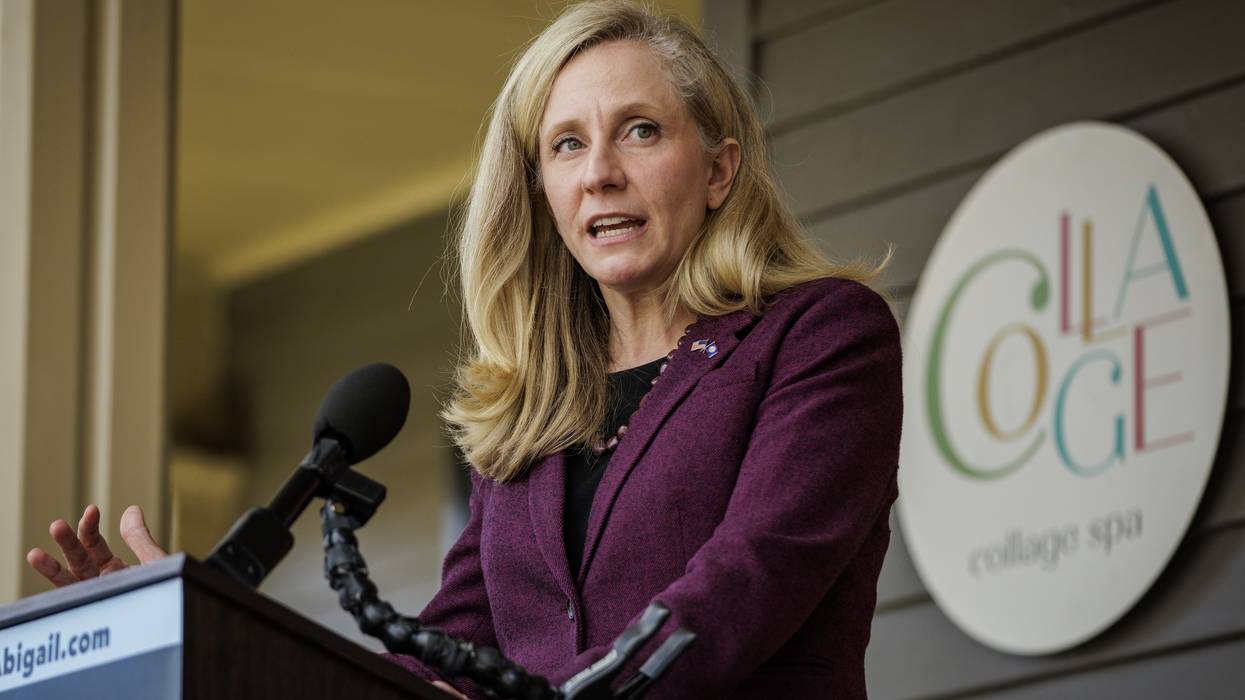
“The governor’s decision leaves the commonwealth exactly where we have been since 2021: with an unchecked illicit market hurting our communities, harming our youth, and putting adults at risk," said one critic.
Criminal justice reform and cannabis legalization advocates led condemnation of Democratic Virginia Gov. Abigail Spanberger's Tuesday veto of legislation that would have established a retail market for the sale of recreational-use marijuana, which has been legal in the state for five years.
In 2021, Virginia became the then-16th state to pass an adult-use marijuana legalization law, with sales set to begin in 2024. However, former Republican Gov. Glenn Youngkin repeatedly vetoed the legislation, which would establish the framework for regulating and taxing the plant's recreational use.
Today, while adults can legally consume cannabis recreationally, cannabis sales in Virginia are still restricted to medical use, and patients must travel to one of the five licensed providers in the commonwealth.
In March, Virginia lawmakers passed a package of bills to legalize recreational cannabis sales to people age 21 and older via a regulated market, place oversight of such sales under the Virginia Cannabis Control Authority, increase the public possession limit from one ounce to 2.5 ounces, allow delivery sales, establish new state and local cannabis taxes, and set January 1, 2027 as the launch date for sales.
Spanberger—who had campaigned on a promise to sign legislation establishing recreational cannabis sales—proposed amendments to the bill that were rejected by the General Assembly.
“I support the intent of many of the bills I am vetoing," she explained in a statement. "However, it is my responsibility as governor to make sure all new laws can be successfully implemented and protect against unintended consequences that harm Virginians."
"I look forward to continuing to work with bill patrons, state and local leaders, and advocates on legislation addressing these issues in the future," the governor said.
Marijuana Moment reported that Spangberger sought to delay the start of sales by six months, increase taxes, and institute new criminal penalties for cannabis consumers.
“Once again, Virginia’s efforts to establish a safe, regulated, and equitable adult-use cannabis marketplace has been halted despite years of work, public input, and broad recognition that the status quo is failing Virginians," state Sen. Lashrecse Aird (D-63), who sponsored one of the bills, said in a statement Tuesday.
“The governor’s decision leaves the commonwealth exactly where we have been since 2021: with an unchecked illicit market hurting our communities, harming our youth, and putting adults at risk," she added.
Del. Paul Krizek (D-16), who sponsored the House of Delegates version of the sales bill, said, “Five years ago, Virginia legalized cannabis in recognition that the War on Drugs has caused disproportionate harm to Black families and communities."
“The question now is whether Virginia will continue allowing an unregulated illegal market to thrive, or finally establish a safe, transparent system that protects consumers, keeps products away from children, and keeps our commitment to ending racially discriminatory marijuana policing in Virginia," he added.
JM Pedini, development director for the advocacy group National Organization for the Reform of Marijuana Laws and executive director for Virginia NORML, told Marijuana Moment that Spanberger's veto is “a profound disappointment to the many Virginia voters who believed her when she said on the campaign trail that she supported establishing a regulated adult-use cannabis market.”
“It is also a slap in the face to the years of serious work undertaken by lawmakers, policy experts, advocates, public health stakeholders, and regulators who spent more than half a decade researching, debating, and carefully crafting this legislation,” Pedini added. “Rather than build upon that work, the governor dismissed it in favor of out-of-touch proposals to recriminalize cannabis consumers that lawmakers rightly rejected.”
It was stupid when Youngkin stood in the way of a regulated market for LEGAL recreational adult-use marijuana--not just for the important safety aspects of taking it off the black market, but also for the $ Virginia misses out on every day without. It is just as stupid now.
— VAPLAN (@vaplan.bsky.social) May 19, 2026 at 2:26 PM
Chelsea Higgs Wise, executive director of the Richmond-based nonprofit Marijuana Justice, said in a statement that "for five years, Virginia has been stuck in a limbo where adults can legally possess, share, and grow cannabis, but there is still no regulated way to purchase it."
"By rejecting the retail bill," Wise added, "the governor has chosen to extend that chaos rather than move us toward a transparent, accountable retail system that centers public health, public safety, and justice."
Twenty-four states have legalized recreational marijuana, while 16 states allow medical use of the plant. Last month, the US Department of Justice began reclassifying cannabis from Schedule I—a category that includes dangerous drugs like heroin, LSD, and MDMA to Schedule III, which includes codeine, ketamine, anabolic steroids, and testosterone.
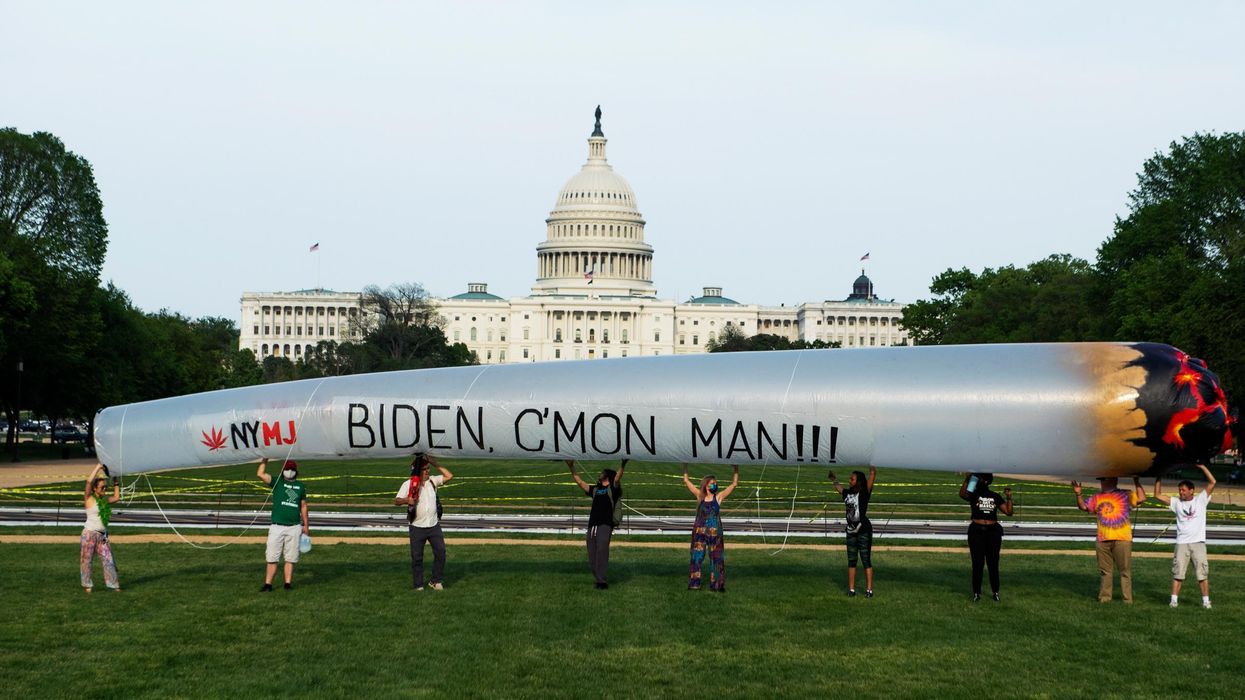
Sen. Cory Booker urged fellow lawmakers to "follow the lead of states around the country and legalize cannabis for adult use and create a comprehensive taxation and regulatory scheme."
U.S. marijuana legalization advocates greeted Tuesday's news that the Drug Enforcement Administration is proposing rescheduling cannabis to a less restrictive class by calling on President Joe Biden to fully deschedule the plant, which is approved for recreational or medicinal use in the vast majority of states.
The Associated Press reported the DEA is proposing rescheduling marijuana from Schedule I—which includes heroin, MDMA, and LSD—to Schedule III, a far less restrictive class that includes ketamine, anabolic steroids, testosterone, and over-the-counter products containing less than 90 milligrams of codeine per dose. According to the DEA, Schedule I drugs have "no currently accepted medical use and a high potential for abuse."
While it would not legalize cannabis for recreational use, the DEA proposal—which is subject to review by the White House Office of Management and Budget—would affirm medicinal marijuana and recognize that the plant has a lower potential for abuse than other widely used recreational drugs.
The Drug Policy Alliance (DPA)—which works to end the failed 53-year War on Drugs—warned that "under this proposed shift, marijuana criminalization would continue at the federal level and most penalties, including those for simple possession, would continue as long as marijuana remains anywhere on the Controlled Substances Act (CSA)."
While running for president in 2020, Biden repeatedly vowed to decriminalize marijuana and expunge the criminal records of people convicted of cannabis possession. In 2022 the president issued a "full, complete, and unconditional pardon to all current United States citizens and lawful permanent residents" convicted of simple federal marijuana possession—a move that affected thousands of people but excluded those who are in the United States without authorization.
The following year, Health and Human Services (HHS) Secretary Xavier Becerraconfirmed that his department would recommend rescheduling cannabis to Schedule III.
Sen. Cory Booker (D-N.J.) on Tuesday urged Congress to "follow the lead of states around the country and legalize cannabis for adult use and create a comprehensive taxation and regulatory scheme."
"Thousands of people remain in prisons around the country for marijuana-related crimes. Thousands of people continue to bear the devastating collateral consequences that come with a criminal record," the senator continued. "Legal marijuana businesses, especially those in communities hardest hit by the War on Drugs, still have to navigate a convoluted patchwork of state laws and regulatory schemes."
"I hope that my colleagues on both sides of the aisle, especially those who represent constituents benefiting from medical or adult-use programs, join me to pass federal legislation to fix these problems," Booker added.
Senate Majority Leader Chuck Schumer (D-N.Y.) said that "it is great news that DEA is finally recognizing that restrictive and draconian cannabis laws need to change to catch up to what science and the majority of Americans have said loud and clear."
"While this rescheduling announcement is a historic step forward, I remain strongly committed to continuing to work on legislation like the SAFER Banking Act as well as the Cannabis Administration and Opportunity Act, which federally deschedules cannabis by removing it from the Controlled Substances Act," he added.
Booker and Schumer were among the 21 senators who last week sent a letter to U.S. Attorney General Merrick Garland and DEA Administrator Anne Milgram noting that it's been 18 months since Biden ordered HHS October to review cannabis scheduling and eight months since the agency's rescheduling recommendation.
"While we understand that the DEA may be navigating internal disagreement on this matter, it is critical that the agency swiftly correct marijuana's misguided placement in Schedule I," the letter states.
Legalization advocates, meanwhile, pushed the Biden administration to go much further, as 24 states plus the District of Columbia have approved adult-use recreational marijuana and 38 states have legalized medicinal cannabis.
"Supporting federal marijuana decriminalization means supporting the removal of marijuana from the Controlled Substances Act, not changing its scheduling," DPA director of drug markets and legal regulation Cat Packer said in a statement. "We all deserve a federal framework for marijuana that upholds the health, well-being, and safety of our communities—particularly Black communities who have borne the brunt of our country's racist enforcement of marijuana laws."
"Rescheduling marijuana is not a policy solution for federal marijuana criminalization or its harms, and it won't address the disproportionate impact that it has had on Black and Brown communities," Packer added.
Dasheeda Dawson, chair of the Cannabis Regulators of Color Coalition and founder of Cannabis NYC, said: "The time for descheduling cannabis is not just a matter of policy; it's an imperative for justice and equity. Rescheduling would undermine the hard-fought progress made by cannabis equity and policy reform leaders like the Cannabis Regulators of Color Coalition, jeopardizing the livelihoods and futures of those entrepreneurs and communities disproportionately affected by past criminalization."
"We cannot afford to backtrack on our commitment to repair the harm inflicted by outdated policies," Dawson added. "Descheduling is not just about legality; it's about rectifying historic injustices and ensuring a fair and inclusive future for all."
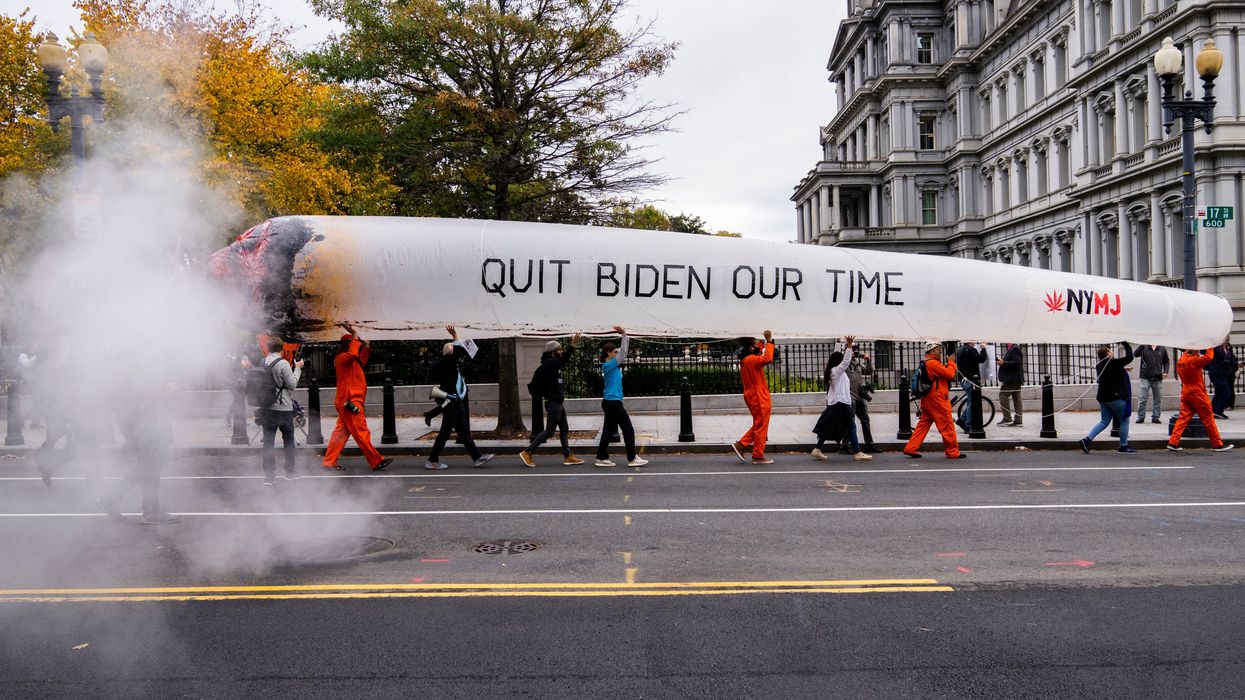
"As more states have adopted legalization, public support for this policy has risen dramatically," said one campaigner. "Voters prefer legalization and regulation over the failed policy of marijuana prohibition."
A record 7 in 10 voting-age Americans think marijuana should be legal, according to Gallup polling published Wednesday, a day after voters in Ohio made it the 24th state to legalize adult recreational use of the plant.
After holding steady at 68% for three straight years, Gallup found that support for legalization rose to 70%, with 29% of respondents saying cannabis should not be legal and 1% undecided. That's a 12% increase in support from 2013 levels and a 36% rise from 2003. In 1969, when Gallup first asked Americans if marijuana should be legal, only 12% said "yes."
"There's no 'buyer's remorse' among the public when it comes to legalizing cannabis," Paul Armentano, deputy director at the National Organization for the Reform of Marijuana Laws (NORML), said in a statement. "As more states have adopted legalization, public support for this policy has risen dramatically. That's because these policies are largely working as intended and because voters prefer legalization and regulation over the failed policy of marijuana prohibition."
According to Gallup:
For the second straight year, majority support for legalization is found among all major subgroups, including by age, political party, and ideology. Self-identified conservatives were the last major subgroup to express majority support, reaching 51% in 2022. Republicans first gave marijuana majority-level backing in 2017.
As of today, support for legal marijuana use is highest among self-identified liberals (91%) and Democrats (87%) and lowest among conservatives (52%) and Republicans (55%). Support is inversely correlated with age, reaching 79% among 18- to 34-year-olds. However, even among the oldest age group, nearly two-thirds (64%) are in favor.
This widespread support for legal marijuana was evident on Tuesday as nearly 57% of voters in Ohio—a state that voted for former President Donald Trump in the last two elections and has a Republican governor—approved the legalization and regulation of marijuana for people age 21 and older, who are also allowed to grow up to six cannabis plants per person and 12 plants per residence. The measure imposes a 10% tax on cannabis sales.
"Marijuana is no longer a controversial issue," Tom Haren, spokesperson for the Coalition to Regulate Marijuana Like Alcohol, told Marijuana Moment. "Ohioans demonstrated this by passing State Issue 2 in a landslide."
Marijuana Policy Project interim executive director Matthew Schweich told MJBizDaily that the Ohio vote "shows that a cannabis legalization campaign can win anytime and anywhere."
"To achieve victory in a nonpresidential year in a red state shows just how strong public support for legalization has become," he added.
The rise in support for legal marijuana parallels "the rise in Americans' self-reported use of the drug," Gallup said, citing a July survey. "The percentage saying they personally smoke marijuana has risen 10 points to 17% since 2013, and the percentage who have ever tried it has increased 12 points to 50%."
Despite state-level gains—only 10 states have not legalized marijuana for recreational or medical use—cannabis remains strictly prohibited at the federal level, where the U.S. Drug Enforcement Administration (DEA) lists the plant as a Schedule I controlled substance.
Schedule I drugs, the DEA explains, have "no currently accepted medical use and a high potential for abuse," and in addition to cannabis include heroin, LSD, MDMA, and peyote. Far more dangerous substances than marijuana—including cocaine, methamphetamine, and fentanyl—are classified as Schedule II.
After granting a mass pardon last year to U.S. citizens and permanent residents convicted of simple federal marijuana possession, President Joe Biden ordered Attorney General Merrick Garland and Health and Human Services Secretary Xavier Becerra to initiate a review which resulted in an August recommendation by HHS to reclassify cannabis as Schedule III. Such a move would place the plant in the same category as codeine, ketamine, testosterone, and anabolic steroids.
"Just as it is intellectually dishonest to categorize cannabis in the same placement as heroin, it is equally disingenuous to treat cannabis in the same manner as anabolic steroids," Armentano said at the time. "The majority of Americans believe that cannabis ought to be legal and that its hazards to health are less significant than those associated with federally descheduled substances like alcohol and tobacco."
"Like those latter substances, we have long argued the cannabis plant should be removed from the Controlled Substances Act altogether," he added, "thereby proving state governments—rather than the federal government—the ability to regulate marijuana in the manner they see fit without violating federal law."
In the Democrat-controlled U.S. Senate, the bipartisan Secure and Fair Enforcement Regulation (SAFER) Banking Act—which would legally protect banks and credit unions that serve cannabis businesses—was approved by the Banking Committee in September.
Last week, a bipartisan group of U.S. House lawmakers reintroduced H.B. 6028, the States Reform Act, legislation led by Rep. Nancy Mace (R-S.C.) that would remove cannabis from the Controlled Substances Act, facilitate the expungement of certain marijuana-related offenses, and provide regulatory oversight for state-legal marijuana markets.
However, Republicans control the lower chamber, and new House Speaker Mike Johnson (R-La.) is a Christian fundamentalist who opposes marijuana on religious grounds. In recent years, Johnson has voted against legislation that would end federal prohibition, allow banks to work with state-legal cannabis businesses, and fund medical marijuana research.
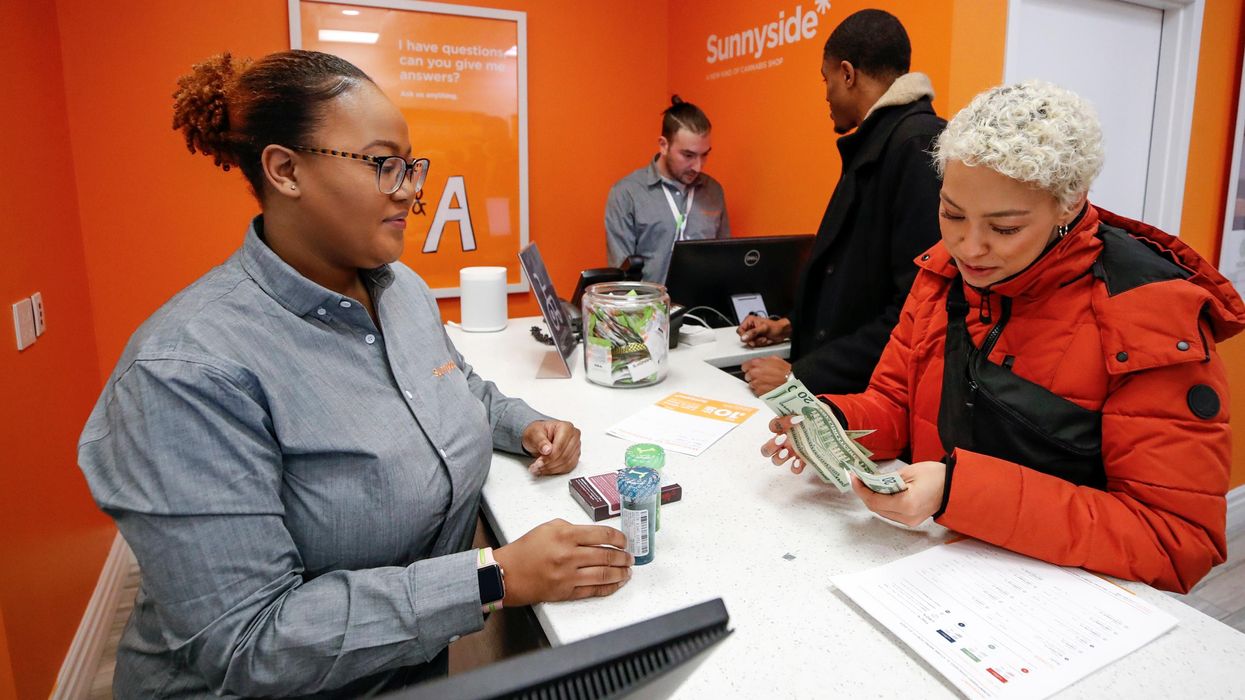
"We've got momentum on our side," said Sen. Jeff Merkley. "Let's get this done to protect our legal cannabis businesses!"
The U.S. Senate Banking Committee on Wednesday brought major federal marijuana banking legislation closer to becoming law than ever, approving a bipartisan bill that advocates say is essential to the safety of legal recreational and medical marijuana businesses across the United States.
The committee voted 14-9 in favor of passing the Secure and Fair Enforcement Regulation (SAFER) Banking Act, which would legally protect banks and credit unions that provide services to cannabis operations and prohibit federal regulators from ordering financial institutions to close a business' account based on "reputational risk."
An earlier version of the bill passed in the U.S. House numerous times but was never advanced in the Senate under either Democratic or Republican control.
"We've got momentum on our side to finally pass the SAFER Banking Act," said Sen. Jeff Merkley (D-Ore.), who is sponsoring the legislation along with Senate Majority Leader Chuck Schumer (D-N.Y.) and Sens. Steve Daines (R-Mont.), Cynthia Lummis (R-Wyo.), and Kyrsten Sinema (I-Ariz.). "Let's get this done to protect our legal cannabis businesses!"
Only 12% of all U.S. banks and 5% of credit unions provide banking services to marijuana-related businesses, according to the U.S. Department of Treasury.
As Common Dreams reported, Mastercard announced in July that it would no longer offer services in the cannabis industry because marijuana is still criminalized at the federal level—even though annual national sales in the sector are projected to reach $57 billion by 2030 in states where cannabis is currently legalized.
NORML, which has advocated for marijuana decriminalization since 1970, noted on Wednesday that more than 70% of cannabis businesses report that a "lack of access to banking or investment capital" is their top challenge.
Without access to banking services, businesses are forced to make sales only in cash, which Merkley said is "an open invitation to robberies, muggings, money laundering, and organized crime."
"Forcing legal businesses to operate in all-cash is dangerous for our communities," said the senator.
NORML political director Morgan Fox called the newly advanced legislation "an improved version of the SAFE Banking Act."
"It allows state-licensed cannabis businesses to more easily access financial services, such as opening a simple bank account, and it provides entrepreneurs with greater access to lending and other services that are available to other legal businesses," said Fox.
Schumer called the passage of the bill out of the committee "a huge step," and said he is also working to include amendments to expunge people's marijuana-related criminal offenses in the final bill.
"Now is the time," said the senator.
"The goal of any federal cannabis policy reform ought to be to address the existing, untenable chasm between federal marijuana policy and the cannabis laws of the majority of U.S. states," said NORML's deputy director.
Cannabis reform advocates and industry representatives on Wednesday renewed demands for legalizing marijuana at the federal level as U.S. Health and Human Services Secretary Xavier Becerra confirmed his department's rescheduling recommendation.
Marijuana is currently a Schedule I drug—the most restricted category under the Controlled Substance Act (CSA)—but President Joe Biden ordered Becerra and Attorney General Merrick Garland to initiate a review last October, when he issued a mass pardon for simple federal cannabis possession.
Bloomberg initially reported Wednesday that a Department of Health and Human Services (HHS) official on Tuesday wrote to Drug Enforcement Administration (DEA) chief Anne Milgram to recommend reclassifying cannabis Schedule III, a development Becerra confirmed on social media at 4:20 pm ET.
"Following the data and science, HHS has expeditiously responded to President Biden's directive to HHS Secretary Becerra and provided its scheduling recommendation for marijuana to the DEA on August 29, 2023," an HHS spokesperson told Marijuana Moment. "This administrative process was completed in less than 11 months, reflecting this department's collaboration and leadership to ensure that a comprehensive scientific evaluation be completed and shared expeditiously."
A DEA spokesperson confirmed to the outlet that it received the HHS letter and said: "DEA has the final authority to schedule or reschedule a drug under the Controlled Substances Act. DEA will now initiate its review."
Asked about Bloomberg's reporting on Wednesday, White House Press Secretary Karine Jean-Pierre stressed to reporters that Biden requested the scheduling review, "it's going to be an independent process," and "it's going to be guided by evidence." She declined to comment regarding Biden's position on decriminalization.
NORML declared in an email that "rescheduling is not enough," and in response to the letter, deputy director Paul Armentano said that "it will be very interesting to see how DEA responds to this recommendation, given the agency's historic opposition to any potential change in cannabis' categorization under federal law. Further, for decades, the agency has utilized its own five-factor criteria for assessing cannabis' placement in the CSA—criteria that as recently as 2016, the agency claimed that cannabis failed to meet. Since the agency has final say over any rescheduling decision, it is safe to say that this process still remains far from over."
Armentano argued that "the goal of any federal cannabis policy reform ought to be to address the existing, untenable chasm between federal marijuana policy and the cannabis laws of the majority of U.S. states," and rescheduling "fails to adequately address this conflict."
"Just as it is intellectually dishonest to categorize cannabis in the same placement as heroin, it is equally disingenuous to treat cannabis in the same manner as anabolic steroids," he added. "The majority of Americans believe that cannabis ought to be legal and that its hazards to health are less significant than those associated with federally descheduled substances like alcohol and tobacco. Like those latter substances, we have long argued the cannabis plant should be removed from the Controlled Substances Act altogether, thereby proving state governments—rather than the federal government—the ability to regulate marijuana in the manner they see fit without violating federal law."
Medicinal use of cannabis is allowed by 38 states, three U.S. territories, and the District of Columbia while recreational adult use is permitted in 23 states, two territories, and D.C., according to the National Conference of State Legislatures.
Under the HHS plan, "state medical and adult-use marijuana programs will still remain federally illegal, meaning patients, consumers, and workers would remain subject to federal arrest; noncitizens would remain subject to deportation simply for possessing marijuana or working in the industry; and federal marijuana arrests and prosecutions will continue, previous arrests will not be expunged, and thousands will remain incarcerated in federal prison for marijuana violations," emphasized Cat Packer, director of drug markets and legal regulation at the Drug Policy Alliance.
"It also means that federal benefits, such as housing and nutritional assistance, will still be denied to certain people with previous marijuana convictions and the federal government will continue to be unable to foster a fair business environment that allows small and minority-owned marijuana businesses to compete with large corporate marijuana operators," noted Packer, urging the president to "limit the harms of marijuana criminalization" and work with Congress to pass the Cannabis Administration and Opportunity Act (CAOA).
U.S. Senate Majority Leader Chuck Schumer (D-N.Y.)—an advocate of federally legalizing cannabis and an original CAOA co-sponsor—said in a statement that "HHS has done the right thing and DEA should now quickly follow through on this important step to greatly reduce the harm caused by draconian marijuana laws."
"While this is a step forward, there is still much more that needs to be done legislatively to end the federal prohibition on cannabis and roll back the War on Drugs," Schumer added. "I am committed to continuing to work in Congress to pass important marijuana legislation and criminal justice reform."
U.S. Cannabis Council "enthusiastically" welcomed the HHS recommendation, saying on social media: "We believe that rescheduling to Schedule III will mark the most significant federal cannabis reform in modern history. President Biden is effectively declaring an end to [former President Richard] Nixon's failed war on cannabis and placing the nation on a trajectory to end prohibition."
While recognizing the range of benefits from the potential rescheduling—from making research easier to tax deductions for businesses—the industry group also emphasized its commitment to full cannabis legalization at the federal level.
National Cannabis Industry Association CEO Aaron Smith said that "moving cannabis to schedule III could have some limited benefit but does nothing to align federal law with the 38 U.S. states which have already effectively regulated cannabis for medical or adult use. The only way to fully resolve the myriad of issues stemming from the federal conflict with state law is to remove cannabis from the Controlled Substances Act and regulate the product in a manner similar to alcohol."
This post has been updated with comment from the Drug Policy Alliance.

Despite high hopes for the Democrat-controlled Congress and White House, negotiators on Capitol Hill yet again failed to deliver even modest cannabis reforms in the 4,155-page omnibus government spending legislation released early Tuesday.
" Marijuana businesses, the hundreds of thousands of people they employ, and the millions of Americans that patronize them will continue to be at a higher risk of robbery."
Marijuana legalization advocates and members of states' legal industries had hoped that the package--which congressional leaders intend to send to President Joe Biden's desk this week--would include the Secure and Fair Enforcement (SAFE) Banking Act.
While dozens of states now allow adults to grow, sell, and use medicinal or recreational marijuana, because it remains illegal at the federal level, many cannabis companies struggle to access financial services--meaning they often operate as cash-only businesses, making them targets for theft. Sponsors of the SAFE Banking Act aimed to address this issue.
"The SAFE Banking Act seeks to harmonize federal and state law by prohibiting federal regulators from taking punitive measures against depository institutions that provide banking services to legitimate cannabis-related businesses and ancillary businesses (e.g. electricians, plumbers, landlords, etc.) that serve them," explained the office of Rep. Ed Perlmutter (D-Colo.), who led the bill with Sen. Jeff Merkley (D-Ore.).
The Democrat-held House has repeatedly passed the bipartisan SAFE Banking Act, only for it to stall in the divided Senate. Following last month's midterm elections, Republicans are set to take control of the House in early January, quashing hopes of any marijuana reforms in the next two years.
Although the upper chamber could schedule a vote on the SAFE Banking Act as a standalone bill before the GOP seizes the House, Senate Majority Leader Chuck Schumer (D-N.Y.)--an advocate of broader cannabis reform--so far has not done so, and did not even directly address the exclusion of the legislation in his remarks about the nearly $1.7 trillion package on Tuesday.
"The omnibus is the last thing we have to do to close out a very successful 117th Congress, and we've taken another step, a major step, towards reaching the goal line," he said. "From start to finish--from top to bottom--this omnibus is bold, generous, far-reaching, and ambitious."
"It's not everything we would've wanted, of course," Schumer acknowledged. "When you're dealing in a bipartisan, bicameral way, you have to sit down and get it done and that means each side has to concede some things, but it is something that we can be very proud of--all of us. Now we must get this done before Friday, well before that if possible."
Erik Altieri, executive director of the advocacy group NORML, said that "Democrats have promised action on cannabis consistently for the last two years, yet leadership consistently failed to prioritize and advance marijuana reform legislation, including legislation to provide clarity to banks and to provide grant funding for state-level expungements efforts, despite having several opportunities to do so. Democrats' failure and the GOP's continued resistance to any progress is out of step with voters' opinion, is bad politics, and most importantly, it is bad public policy."
"Until congressional action is taken, state-licensed marijuana businesses, the hundreds of thousands of people they employ, and the millions of Americans that patronize them will continue to be at a higher risk of robbery due to the cash-heavy nature of this industry created by outdated federal laws," Altieri added. "Furthermore, smaller entrepreneurs who seek to enter this industry will continue to struggle to compete against larger, more well-capitalized interests."
Amid reporting of the bill's death Monday, Marijuana Business Daily pointed out that it "comes at a time when capital markets have dried up and both sales and wholesale prices are dropping fast in legacy states including Colorado and California--where lax enforcement also allows rampant illicit-market competition to flourish, choking out legitimate businesses."
MarketWatch reported that "cannabis stocks ended sharply lower Monday on reports the measure would not be included" in the omnibus package.
Members and supporters of states' legal industries echoed NORML's warnings about not passing a financial services bill.
"We are deeply disappointed in leadership on both sides of the aisle and the lack of action on SAFE Banking over the past two years," said Kim Rivers, CEO of Trulieve, a vertically integrated cannabis company that operates in multiple states. "The 425,000 employees working in the legal cannabis industry will continue to face undue risk of robberies and economic harm."
Calling the banking bill's exclusion "incredibly disappointing" and "a win for the illegal market," Boris Jordan, co-founder and executive chair of the multistate operator Curaleaf Holdings, also warned that "the entire industry will suffer as a result of this failure."
Khadijah Tribble, CEO of the U.S. Cannabis Council (USCC) and a leader at Curaleaf, said that "in failing to enact the SAFE Banking Act, the Senate missed an opportunity to pass one of the rare pieces of legislation that has the support of both Republicans and Democrats, along with the majority of the American people. Not only did the Senate squander a chance to score a bipartisan victory this year, its inaction threatens public safety and undermines the progress states are making in mending the racial inequities of the War on Drugs."
"To say that we are disappointed is an understatement. But to assume the Senate's inertia around cannabis banking reform dooms the entire cannabis industry discounts all of the headway we made this year," Tribble continued. "From the Biden administration announcing that it will conduct an official regulatory review of whether cannabis should be criminalized at all to the first standalone cannabis-related bill being signed into law to fund important research--2022 will still mark the turning point in our fight to legalize cannabis."
Tribble and others pledged to continue the movement to end cannabis prohibition.
Minority Cannabis Business Association board president Kaliko Castille said Monday that "while we are disappointed that the Senate was unable to pass this critical piece of legislation before the end of this Congress, we remain hopeful that the work we have been doing with our allies on the Hill to improve the final package will pay off when Congress reconvenes in 2023."
In a Tuesday opinion piece for USA Today, Robert L. Johnson, founder of Black Entertainment Television and the RLJ Companies, emphasized that the banking bill "would create more opportunities for small and minority-owned cannabis businesses to have a fair chance to compete."
"For years, racial and social inequities related to the criminalization of marijuana have unfairly targeted the Black community," he wrote. "Without question, the lack of access to capital and capital formation are the principal factors holding back opportunities for minority businesses and, consequently, wealth and job creation within the minority communities they serve."
Jim Hagedorn, whose Hawthorne Gardening Company is a supplier to the cannabis and indoor growing industries, noted Tuesday that "some critics have said that the SAFE Banking Act shouldn't pass because it is too small a step in the broader cannabis debate. On the contrary, it's an important step. While it won't solve every issue... it is the best opportunity to level the financial playing field for legitimate and regulated business."
Hagedorn stressed that "small cannabis startups aspiring to compete with more established firms have no access to reasonably priced capital to expand. To stay afloat, they often are forced to sell equity stakes, pay unreasonable interest rates and fall victim to predatory lenders. SAFE Banking will help fix that."
There are some GOP members of Congress who back certain reform efforts--such as Sen. Steve Daines (R-Mont.), the lead Repbulican sponsor of the SAFE Banking Act, who was outraged by the exclusion.
"The failure to pass my bipartisan 'SAFE Banking Act' means communities in Montana and across our country will remain vulnerable to crime where legal businesses are forced to operate in all-cash," he said. "This bill to promote public safety would have been well-positioned to pass had it gone through the regular committee process--as I called for more than a year ago. Our small businesses, law enforcement, and communities deserve better."
However, key Republicans--including Senate Minority Leader Mitch McConnell (R-Ky.) as well as Sens. John Cornyn (R-Texas) and Chuck Grassley (R-Iowa)--are major obstacles to passing any marijuana reforms, especially a federal legalization measure that would include social justice provisions.
McConnell had bristled at the possible inclusion of the SAFE Banking Act and potentially other marijuana-related measures in the latest National Defense Authorization Act (NDAA), and celebrated on the Senate floor after it was left out--along with issuing a warning about the omnibus package.
"While action on SAFE Banking may no longer be possible in 2022, you better believe I'm going to keep fighting in the new Congress."
"This NDAA is not getting dragged down by unrelated liberal nonsense. Good, smart policies were kept in, and unrelated nonsense, like easier financing for illegal drugs, was kept out," McConnell said earlier this month. "Now, that same lesson must carry over into our subsequent conversations about government funding."
Still, Senate Finance Committee Chair Ron Wyden (D-Ore.) vowed Tuesday to keep up the fight. He said in a statement that "I am frustrated and disappointed that after coming so close to meaningful cannabis reform this Congress, the Republican leader and a handful of Republican senators thwarted our efforts to improve public safety. Because when you are forcing businesses to operate as cash only, it is a public safety issue."
"While action on SAFE Banking may no longer be possible in 2022, you better believe I'm going to keep fighting in the new Congress to bring common sense to the federal treatment of cannabis and begin to repair the harms done by the failed War on Drugs," added Wyden.
BOWL PAC founding organizer Justin Strekal also called out the GOP minority leader, who "chose to put prohibition over people and continues to stand in front of history screaming 'STOP,'" but added that "while we did not win this time around, if enough Senate Republicans would be willing to defy McConnell in a standalone package that contains narrow provisions such as expungements, banking, small business fairness, and veterans, then legislative victory can still be achieved in the 118th Senate."
After the spending bill was unveiled Tuesday, Marijuana Moment highlighted that the exclusion of the banking legislation wasn't the only disappointing development.
"Adding insult to injury, the large-scale spending legislation continues the policy of preventing the District of Columbia from spending its own local tax dollars to legalize adult-use cannabis sales," the outlet noted, "despite the fact that earlier versions of spending bills that advanced in the House and Senate earlier this year did not contain the rider."
This piece has been updated with comment from BOWL PAC.

Cannabis policy reform campaigners across the United States on Thursday celebrated Senate Democrats' long-awaited introduction of legislation to legalize marijuana nationwide and begin addressing the harms of the decadeslong war on drugs.
"The CAOA would help fuel job growth and increase opportunity for communities most harmed by our country's criminalization of marijuana."
The Marijuana Justice Coalition, convened by the Drug Policy Alliance (DPA), praised the effort that the trio behind the Cannabis Administration and Opportunity Act (CAOA)--Senate Majority Leader Chuck Schumer (D-N.Y.) and Sens. Cory Booker (D-N.Y.) and Ron Wyden (D-Ore.)--put into developing it.
"As a diverse coalition of organizations, we have worked diligently to ensure that issues ranging from criminal justice to immigrant rights to workers' rights and economic justice are included in the bill," the coalition said. "We look forward to going through the proposal with a fine-tooth comb to ensure that the legislative text will best address the decades of harm prohibition has inflicted on people of color and marginalized communities."
Maritza Perez, director of DPA's Office of Federal Affairs, declared that "the significance of this bill finally being introduced in the Senate cannot be understated."
Building on the House-approved Marijuana Opportunity Reinvestment and Expungement Act, the CAOA "would not only deschedule marijuana at the federal level, but it also begins to repair the extensive economic and societal tolls that have been caused by prohibition," Perez noted.
Specifically, as Akua Amaning, director of criminal justice reform at the Center for American Progress, explained, the bill would "correct decades of harms by facilitating the expungement and resentencing of nonviolent federal marijuana convictions."
ACLU senior policy counsel Aamra Ahmad said that "if you want to know what systemic racism is, look no further than the war on drugs and marijuana enforcement--a Black person is 3.64 times more likely to be arrested for marijuana possession than a white person, even though Black and white people use marijuana at similar rates. As a result, people of color are unevenly bearing the burdens of having a marijuana conviction, including difficulty securing housing, employment, education, and public benefits."
Amaning pointed out that "by reinvesting tax revenue from marijuana businesses into the communities most affected by the war on drugs, the CAOA would help fuel job growth and increase opportunity for communities most harmed by our country's criminalization of marijuana."
Sirine Shebaya, executive director of the National Immigration Project, emphasized that the drug war has also "had devastating consequences for immigrant communities."
"Beyond the already harsh criminal consequences of marijuana convictions," Shebaya said, "immigrants are additionally punished through draconian penalties including detention, deportation, and family separation--even in states where marijuana use has been decriminalized."
While several U.S. states and territories have decriminalized and even legalized adult medicinal and recreational use of marijuana, advocates have continued to push for federal legislation--and urged members of Congress to learn from previous local efforts.
"Like Senate Majority Leader Schumer, we believe that federal marijuana legalization should provide opportunities for small and minority-owned businesses, not Big Tobacco and the other 'big boys,'" said Shaleen Title, founder of the Parabola Center.
"However, as state after state has demonstrated, it takes more than just a commitment to equitably implement a framework for legal cannabis. It takes attention to detail, evaluation of evidence, and a willingness to make course corrections," Title added.
Marijuana Moment reported Thursday that the CAOA was formally introduced just over a year after Senate Democrats unveiled a draft version and now "incorporates significant feedback received through more than 1,800 comments."
As the outlet detailed:
[The] main thrust of the now-filed 296-page legalization bill closely resembles that of the earlier version, which weighed in at a mere 163 pages--though the senators highlighted a number of changes, which generally expand on the draft.
For example, there are revisions concerning cannabis industry workers' rights, a federal responsibility to set an impaired driving standard, banking access, expungements, and penalties for possessing or distributing large quantities of marijuana without a federal permit.
The bill would also create a new federal definition for hemp that would increase the permissible THC by dry weight to 0.7% from the current 0.3%, but also make it so all THC isomers would be included in that total, not just delta-9 THC.
Speaking on the Senate floor Thursday, Schumer said that "I am proud to be the first majority leader ever to say that it is time to end the federal prohibition on cannabis, and this bill provides the best framework for updating our cannabis laws and reversing decades of harm inflicted by the war on drugs."
"I've had many productive conversations with my Republican and Democratic colleagues about cannabis reform and I look forward to working with members from both sides of the aisle to secure support for this bill," he continued, outlining the CAOA's key provisions and stressing that "this is the beginning of the legislative process, not the end."
NORML political director Morgan Fox said that "the official introduction of this bill to finally end the policy nightmare of federal marijuana prohibition is the culmination of unprecedented leadership in the Senate and engagement with stakeholders across the political spectrum."
"We look forward to working with lawmakers to move this legislation toward passage and eagerly anticipate engaging in substantive conversations on all aspects of federal marijuana law with Senate members. These conversations and hearings are long overdue," Fox added, noting public support for reform. "Now is the time to figure out how to do that in a way that effectively addresses the damage done to marginalized communities and creates equitable opportunities in the burgeoning cannabis industry."

Drug policy reform advocates and progressive lawmakers on Friday celebrated the U.S. House of Representatives' approval of a bill to decriminalize marijuana nationwide, expunge federal cannabis convictions and arrests, and provide resources for communities targeted by the war on drugs.
"Now, it's up to the Senate to finish the job."
"We did it," said Rep. Barbara Lee (D-Calif.) after announcing the 220-204 vote, which was mostly along party lines, with just three Republicans joining all but two Democrats in supporting the Marijuana Opportunity Reinvestment and Expungement (MORE) Act (H.R. 3617).
Lee had joined with Reps. Earl Blumenauer (D-Ore.), Sheila Jackson Lee (D-Texas), Hakeem Jeffries (D-N.Y.), Nydia Velazquez (D-N.Y.), and Jerry Nadler (D-N.Y.)--chair of the House Judiciary Committee and the MORE Act's lead sponsor--to introduce the measure. All six lawmakers are members of the Congressional Progressive Caucus (CPC).
"Today, the House of Representatives advances a key progressive priority to end one of the most unjust vestiges of the racist war on drugs with the passage of the MORE Act," said Rep. Pramila Jayapal (D-Wash.), chair of the CPC, following the vote. "The House passage of this comprehensive bill is a victory for racial, economic, and criminal justice."
Noting that "studies show a Black person is 3.64 times more likely to be arrested for marijuana possession than a white person, even though Black and white people use marijuana at similar rates," Jayapal highlighted:
Not only does the MORE Act decriminalize marijuana, but it also takes on mass incarceration by eliminating criminal penalties for an individual who manufactures, distributes, or possesses marijuana, and establishing a process to expunge marijuana-related convictions. And it works to address the generational denial of economic opportunity that has resulted from the targeting of Black and Brown people through marijuana criminalization by prohibiting the denial of federal public benefits and of immigration protections based on marijuana conduct, and establishing a trust fund for individuals and businesses in impacted communities.
"The Progressive Caucus joins our colleagues in Congress, advocates across the country, and the overwhelming majority of Americans who support decriminalizing marijuana in celebrating today's vote," she added, "and we will continue to work for the MORE Act to become law."
Maritza Perez, director of the Office of National Affairs at the Drug Policy Alliance (DPA), was among the advocates welcoming the development, declaring that "thanks to the House's leadership, today we are one step closer to seeking justice for the countless communities that have been devastated as a result of cruel and racially targeted marijuana prohibition."
"Though it will not erase the pain millions of people have experienced; restore the economic, educational, and career opportunities they have been robbed of; or give them back the time they have lost with their families, passage of the MORE Act does provide hope that a better future lies ahead--one where arrest records are wiped clean, new opportunities to take part in the legal marijuana industry exist, and desperately needed resources are redirected back into the communities that have been most harmed," Perez added.
While thanking the sponsors and Democratic leaders who have fought for the bill, she emphasized that "now, it's up to the Senate to finish the job--it must begin to deliver on long-overdue justice to end the status quo of racist and counterproductive enforcement. With more than two-thirds of Americans in favor of reform, it should be a swift and easy choice."
NORML political director Morgan Fox also applauded the vote, calling it "a clear indicator that Congress is finally listening to the vast majority of voters who are sick and tired of our failed marijuana criminalization policies and the damage they continue to inflict in communities across the nation every day."
"It is long overdue that we stop punishing adults for using a substance that is objectively safer than alcohol, and that we work to address the disparate negative impacts that prohibition has inflicted on our most vulnerable individuals and marginalized communities for nearly a century," said Fox.
"The time has come for federal lawmakers to put aside partisan differences and recognize that state-level legalization policies are publicly popular, successful, and are in the best interests of our country," he added. "Now that the House has once again supported sensible and comprehensive cannabis policy reform, we strongly urge the Senate to move forward on this issue without delay."
The MORE Act faces an uphill battle in the evenly split Senate, where the filibuster enables the GOP to block many bills and at least two Democrats--Sens. Joe Manchin of West Virginia and Jeanne Shaheen of New Hampshire--"have expressed skepticism about the proposal," as The Hill noted Friday.
Meanwhile, as Marijuana Moment reported:
Advocates and stakeholders are eagerly awaiting the formal introduction of a separate Senate legalization bill that's being finalized by Majority Leader Chuck Schumer (D-N.Y.) and colleagues. Schumer recently said the plan is to file that bill--the Cannabis Administration & Opportunity Act (CAOA)--in April.
Also in Congress, a separate bill to tax and regulate marijuana is... in play this session. Rep. Nancy Mace (R-S.C.) is sponsoring that legislation, and she said in a recent interview that she's received assurances from Democratic leaders that her States Reform Act will receive a hearing following the MORE Act floor vote.
Speaking on the House floor Friday about how the MORE Act "would set a new path forward and would begin to correct some of the injustices of the last 50 years," Nadler also pointed out that the measure reflects what a clear majority of Americans want.
Nadler explained that in recent years, dozens of states "have legalized medical cannabis" while "19 states and the District of Columbia have legalized cannabis for adult recreational use."
According to the National Conference of State Legislatures, "37 states, four territories, and the District of Columbia allow the medical use of cannabis products."
Since Colorado and Washington legalized adult recreational use of marijuana in 2012, 17 states, two territories, and D.C. have followed suit--moves that have mostly held up over the past decade. The exception is South Dakota: Voters approved a constitutional amendment in 2020 but the state Supreme Court struck it down last year.
Nadler said that "if states are the laboratories of democracy, it is long past time for the federal government to recognize that legalization has been a resounding success and that the conflict with federal law has become untenable."
"Criminal penalties for marijuana offenses, and the resulting collateral consequences, are unjust and harmful to our society," he added. "The MORE Act comprehensively addresses these injustices, and I urge all my colleagues to support this legislation."
This post has been updated to clarify how many regions have legalized medical and recreational cannabis.

Drug war foes welcomed the introduction Thursday in the U.S. House of Representatives of a bipartisan bill to help states expunge cannabis convictions by reducing costs and red tape through a new federal program.
"There is no justification for continuing to prevent tens of millions of Americans from fully participating in their community and workforce simply because they bear the burden of a past marijuana conviction."
Reps. Dave Joyce (R-Ohio) and Alexandria Ocasio-Cortez (D-N.Y.) teamed up to introduce the Harnessing Opportunities by Pursuing Expungement (HOPE) Act. If passed, the measure would create a new federal initiative--the State Expungement Opportunity Grant Program--through which the U.S. attorney general could dispense funds to state and local governments "to reduce the financial and administrative burden of expunging convictions for cannabis offenses that are available to individuals who have been convicted," according to Ocasio-Cortez's office.
"Goes to show that lawmakers don't have to agree on everything to find common ground on solutions to the challenges facing everyday Americans," tweeted Joyce, who earlier this year co-sponsored the first GOP-led legislation to federally decriminalize cannabis.
"Having been both a public defender and a prosecutor, I have seen firsthand how cannabis law violations can foreclose a lifetime of opportunities ranging from employment to education to housing," he continued. The collateral damage caused by these missed opportunities is woefully underestimated and has impacted entire families, communities, and regional economies."
"By helping states establish and improve expungement programs for minor cannabis offenses, the HOPE Act will pave the way for expanded economic opportunities to thrive alongside effective investments to redress the consequences of the War on Drugs," Joyce added.
Ocasio-Cortez said in a statement that "as we continue to advocate for the decriminalization and legalization of marijuana, this bipartisan bill will provide localities the resources they need to expunge drug charges that continue to hold back Americans, disproportionately people of color, from employment, housing, and other opportunity."
State Expungement Opportunity Grant Program funding could be used for:
Cannabis legalization advocates welcomed the new bill.
"This bipartisan effort represents the growing consensus to reform marijuana policies in a manner that addresses the harms inflicted by prohibition," said Justin Strekal, political director of the National Organization for the Reform of Marijuana Laws (NORML). "There is no justification for continuing to prevent tens of millions of Americans from fully participating in their community and workforce simply because they bear the burden of a past marijuana conviction."
Maritza Perez, national affairs director for the Drug Policy Alliance, noted that "at this point, most Americans live in a state that has legalized marijuana to some extent."
"This bill will provide immediate relief to countless individuals who are still suffering the consequences of the war on drugs," she contended. "An expungement will allow greater employment, education, and housing opportunities, among other life-changing freedoms. The Drug Policy Alliance is proud to support this bill."
According to NORML:
Legislatures in over a dozen states have enacted laws explicitly facilitating the expungement of low-level cannabis convictions. State officials have vacated an estimated 2.2 million marijuana-related convictions under these laws over the past two years.
According to the FBI's Uniform Crime Report, over 350,000 Americans were arrested by state and local law enforcement for marijuana crimes in 2020. Ninety-one percent of those arrested were charged with simple possession. Since 2010, state and local police have arrested an estimated 7.3 million Americans for violating marijuana laws.
"Ultimately, efforts to provide necessary relief to those who carry the scarlet letter of a marijuana conviction must be carried out primarily by state and local officials," asserted Strekal. "Having this federal incentive available will go a long way toward empowering local leaders and citizens to take these steps to address the past injustices brought about by the failed policy of marijuana prohibition, and will also move us closer toward embracing more reasonable cannabis policies."

Drug war abolitionists on Wednesday applauded the introduction by three Democratic senators of proposed legislation that would decriminalize marijuana at the federal level while allowing states to decide their own cannabis laws.
"In 2019 there were more marijuana arrests than all other violent crime arrests combined, and the majority of those were for simple possession. This is a grievous reality; lives are being destroyed every single day."
--Sen. Cory Booker
Senate Majority Leader Chuck Schumer (D-N.Y.), Senate Finance Committee Chair Ron Wyden (D-Ore.), and Sen. Cory Booker (D-N.J.) held a Wednesday afternoon press conference to introduce a discussion draft (pdf) of the Cannabis Administration and Opportunity Act.
"Today is a big day in the Senate," Schumer said to start the conference. "For the first time... we are joining together to release draft legislation to end the federal prohibition on cannabis. This is monumental, because at long last, we are taking steps in the Senate to right the wrongs of the failed War on Drugs."
"I will use my clout as majority leader to make this a priority in the Senate," vowed Schumer. "The War on Drugs has been a war on people--particularly people of color. The Cannabis Administration and Opportunity Act would help put an end to the unfair targeting and treatment of communities of color by removing cannabis from the federal list of controlled substances."
Wyden called the proposed legislation "common sense."
"The current cannabis prohibition, a pillar in the failed War on Drugs, has been devastating for millions of Americans who seek only common sense and fairness from their government," he said. "It defies common sense that small businesses now living in areas where cannabis is legal cannot deduct their business expenses or access the banking system."
Booker, who called it "a historic day," noted that "in 2019 there were more marijuana arrests than all other violent crime arrests combined, and the majority of those were for simple possession. This is a grievous reality; lives are being destroyed every single day."
"We have our precious resources being used to lock up majority Black and Brown people for doing things that presidents and senators and congresspeople have done," added Booker. "This bill is urgent. This bill is long past due. And I am proud that today we are making history."
Marijuana legalization advocates welcomed the proposed legislation.
Maritza Perez, director of the office of national affairs at the Drug Policy Alliance, said in a statement that "we have been clear from day one that any federal marijuana reform bill must be equally comprehensive to the devastation that has been caused by prohibition, particularly in Black, Latinx, and Indigenous communities."
"We are grateful to see Sens. Booker, Wyden, and Schumer heeding that call by including language directly from the MORE Act--centering social equity, reparative justice, and reinvestment--that we championed in the House, in the Senate bill, and we look forward to working with them to make marijuana justice a reality this session," said Perez, referring to the Marijuana Opportunity Reinvestment and Expungement Act, introduced by House Democrats in May.
Perez continued:
However, work remains to ensure justice does not fall short. To our dismay, the Senate draft contains exclusionary language that ended up getting added to the House-passed MORE Act last year that would continue to subject federal employees to drug testing and deny certain individuals--who have already paid the highest price--the opportunity to expunge their records.
In order for this bill to truly end marijuana prohibition in a comprehensive way and begin to repair the egregious harms of the past, we cannot continue to make room for some to be left out because of laws that were unjust and racist to begin with. We call on the House to remove exclusionary language from the MORE Act and swiftly pass the bill and implore the Senate to also remove this language ahead of bill introduction.
Steve Hawkins, executive director of the Marijuana Policy Project, called Wednesday's press conference a "historic moment," telling Cannabis Wire that this is "the first time the U.S. Senate has brought forth a bill that might give a clear road map towards legalization."
The senators' discussion draft states that proposed legislation is aimed at "empowering states to implement their own cannabis laws."
"By ending the failed federal prohibition of cannabis, the Cannabis Administration and Opportunity Act will ensure that Americans--especially Black and Brown Americans--no longer have to fear arrest or be barred from public housing or federal financial aid for higher education for using cannabis in states where it's legal," it says. "State-compliant cannabis businesses will finally be treated like other businesses and allowed access to essential financial services, like bank accounts and loans. Medical research will no longer be stifled."
Asked during the press conference if instead of trying to pass such a sweeping bill, the senators might attempt to limit the legislation's scope to cannabis banking reform, Schumer replied that "we need a broad, comprehensive bill."
Booker responded to the question by saying, "To do it just so that some people can get rich, and not do something about the people who are languishing with criminal convictions, not do something on restorative justice, not do something to make sure that the business opportunities that are created are [on] a fair playing field... I will lay myself down to do everything I can to stop an easy banking bill that's going to allow all these corporations to make a lot more money off of this as opposed to focusing on the restorative justice aspects."
The proposed legislation also includes restorative measures "to lift up people and communities who were unfairly targeted in the War on Drugs," including automatic expungement of federal nonviolent marijuana crimes, and allows people currently incarcerated in federal prisons for such offenses to petition courts for possible resentencing.
The bill also establishes an "Opportunity Trust Fund" funded by a proposed federal cannabis tax "to reinvest in the communities most impacted by the failed War on Drugs, as well as helping to level the playing field for entrepreneurs of color who continue to face barriers of access to the industry."
Furthermore, the bill would end discrimination in federal public benefits for medical cannabis patients and recreational users alike.
Erik Altieri, executive director of the National Organization for the Reform of Marijuana Laws (NORML), said in a statement that "the days of federal prohibition are numbered. These actions by Senate Majority Leader Schumer and Sens. Booker and Wyden reflect the fact that the supermajority of Americans are demanding that Congress take action to end the cruel and senseless policy of federal prohibition."
"It is time for legislators to comport federal law with the laws of the growing number of states that have legalized the plant," said Altieri, "and it is time for lawmakers to facilitate a federal structure that allows for cannabis commerce so that responsible consumers can obtain high-quality, low-cost cannabis grown right here in America without fear of arrest and incarceration."