

SUBSCRIBE TO OUR FREE NEWSLETTER
Daily news & progressive opinion—funded by the people, not the corporations—delivered straight to your inbox.
5
#000000
#FFFFFF
To donate by check, phone, or other method, see our More Ways to Give page.
Daily news & progressive opinion—funded by the people, not the corporations—delivered straight to your inbox.
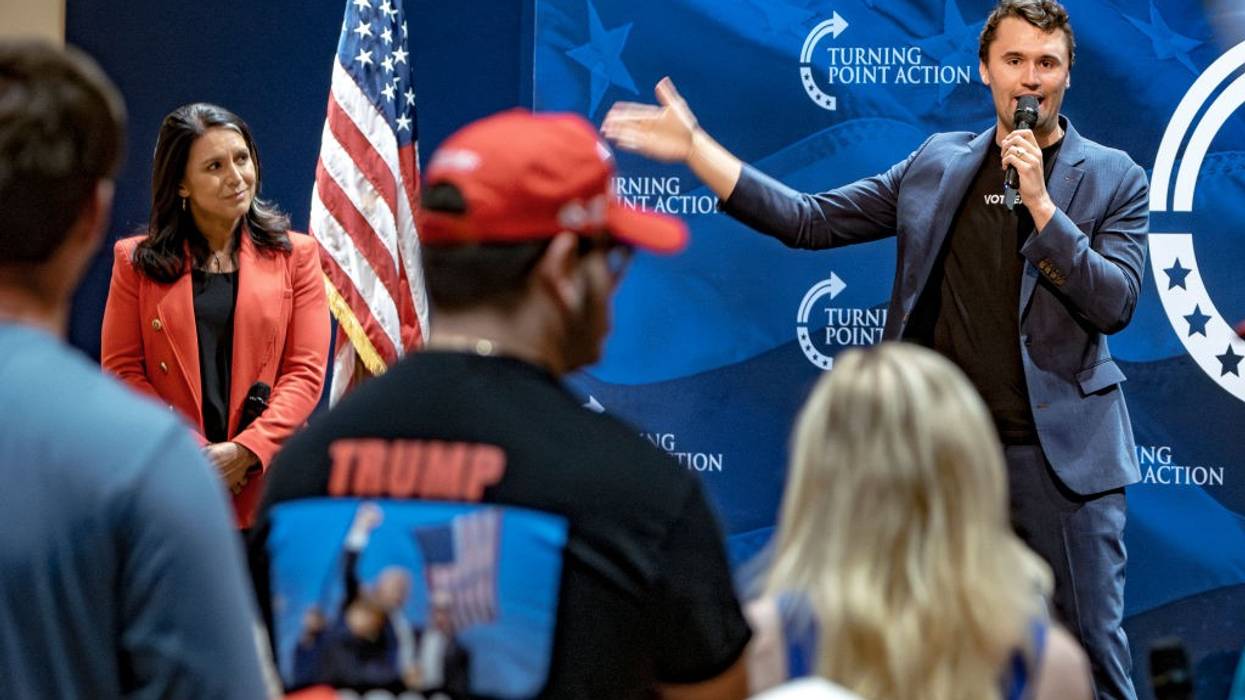
In our collective shock at yet another shooting, we must not make a critical error: conflating condemnation of political violence with endorsement of Kirk's approach to political engagement.
On the same day Charlie Kirk was killed, there was yet another school shooting in Colorado in which two young people were critically injured. Two weeks before, there was a mass shooting at a Catholic church in Minnesota where two children were killed and 21 other people were injured. Yet Kirk's murder is the only instance of gun violence over this period that has been treated as a national tragedy deserving of prolonged mourning and wall-to-wall media coverage. US President Donald Trump refused to allow flags to fly at half-mast on his inauguration to honor Jimmy Carter but demanded that on September 11, the anniversary of the attack on New York City, flags be lowered for Charlie Kirk.
Political violence is never acceptable, and as researcher Erika Chenoweth has demonstrated, it is not an effective way to enact social change. While Kirk's death represents a dangerous escalation in our national discourse that further threatens our fragile democratic foundations, how we talk about it will determine whether we move toward our shared humanity or whether we reinforce the dehumanizing context that Kirk himself, along with Trump, contributed to creating.
In our collective shock at yet another shooting, we must not make a critical error: conflating condemnation of political violence with endorsement of Kirk's approach to political engagement. As voices across the political spectrum, including that of Ezra Klein, have rushed to characterize Kirk as someone who was "practicing politics in exactly the right way," we risk elevating a model of engagement that was antithetical to the kind of meaningful dialogue our democracy desperately needs right now.
As an educator who has spent years understanding and facilitating genuine political dialogue, I feel compelled to speak up. We stand at a crossroads where our response to this moment will shape how we understand political engagement going forward. We can choose to learn from this moment—to honestly name political polarization as an urgent crisis requiring our collective attention, and to truthfully acknowledge how Trump, his MAGA movement, and weaponized social media have directly fueled this polarization. Or we can miss this crucial opportunity for thoughtful national reflection and make the devastating mistake of holding up Kirk's methods as an example to follow.
Extensive research in psychology has given us clear insights into what constitutes meaningful political dialogue. Patricia Gurin, Biren Nagda, and Ximena Zúñiga's groundbreaking work on intergroup dialogue shows that structured conversations across differences can foster insight into others' worldviews, increase empathy, and motivate collaborative action toward equity and justice.
In my classroom, if someone acted the way Kirk did with students, I would feel obligated to redirect the conversation back to our class agreements about respectful dialogue,
Dr. Tania Israel, whose research forms the foundation for meaningful cross-political conversation, emphasizes that true dialogue requires active listening, "listening to understand instead of listening to respond." It involves creating space for elaboration through open-ended questions, demonstrating genuine curiosity about different perspectives, and building the kind of connection that allows people to share their stories and values authentically.
This is not what Kirk practiced. What Kirk did on college campuses was not dialogue, it was performance art designed for viral content and ideological point scoring. His social media accounts documented a consistent pattern of cruel, confrontational bullying that prioritized entertainment value over genuine understanding.
An examination of Kirk's campus appearances reveals a pattern that consistently violated the basic principles of respectful dialogue. Faculty members who witnessed his events noted that Kirk routinely interrupted students, mocked young people for entertainment value, and engaged in what can only be described as organized bullying. His "prove me wrong" format was designed not to genuinely engage with differing viewpoints, but to create gotcha moments that would play well on social media. Like Trump, he was first and foremost a social media influencer.
In my classroom, if someone acted the way Kirk did with students, I would feel obligated to redirect the conversation back to our class agreements about respectful dialogue, agreements that establish ground rules ensuring no one's humanity is denied and no one's reality is erased. Kirk's approach consistently violated these basic principles of respectful discourse.
Students at California State University, Northridge recognized this when they organized against his appearance on their campus, noting that Kirk had routinely engaged in antisemitic conspiracy theories, racist rhetoric against civil rights, and discriminatory language targeting LGBTQ+ students. These weren't political differences; they were fundamental violations of the respect required for genuine dialogue.
As journalist Maria Ressa reminds us, good journalism requires a courageous commitment to facts and ethical standards in the face of disinformation. Its central mission is to hold power accountable and serve as a bulwark against democracy's erosion. Yet in the aftermath of Kirk's death, much of our media has failed this test by creating a false equivalence between condemning political violence and celebrating Kirk's methods.
How can we discuss the conditions that led to political violence while celebrating someone whose entire approach was designed to demean and dehumanize his political opponents?
Columnist Jamelle Bouie captured the essence of this problem: "That the Trump administration and the MAGA movement are less interested in deliberation and governance than they are in domination and obedience should shape and structure our sense of this political moment." When one faction's explicit goal is to curb the rights of opponents and force them into political inequality, calls for dialogue that deny that reality are harmful.
Kirk was not engaged in the kind of good-faith dialogue that democracy requires. He was, as Bouie notes, part of a movement more interested in domination than deliberation. His campus appearances were not exercises in democratic engagement, and no, he was not practicing politics the right way. Kirk’s campus appearances were trolling operations designed to humiliate and dehumanize students who disagreed with him.
As we grapple with the epidemic of gun violence, school shootings, and the dismantling of democratic norms, we cannot afford to elevate models of engagement that contributed to these problems. How can we address the tragedy of bullying in schools—which then contributes to school shootings—while simultaneously holding up someone who made his career bullying college students? How can we discuss the conditions that led to political violence while celebrating someone whose entire approach was designed to demean and dehumanize his political opponents?
My friend recently told me that "a neighborhood is resistance." This resonated deeply because it speaks to the patient, relationship-building work that real democratic engagement requires. Kirk's approach was the opposite—designed to break down communities and relationships for entertainment value. He dehumanized students to generate viral content, endearing himself to Trump and the MAGA movement that thrives on such cruelty.
We all want to talk to each other. We see this in our neighborhoods—we nod to one another, notice when someone hasn't been around, look out for each other. This fundamental human desire for connection is precisely why we must distinguish between genuine dialogue and its performative imitations. True dialogue, as Dr. Israel's research demonstrates, requires communication strategies that emphasize active listening, acknowledge differences while finding common ground, and approach disagreement with intellectual humility rather than ideological dominance—the opposite of what Kirk's social media documented from his campus visits.
Political violence is never acceptable and will not move us toward justice. And importantly, a majority of political violence is perpetrated by the right-wing extremists and Trump’s MAGA movement has contributed to the conditions of this violence. Such violence reflects the brokenness of our system and the urgent need for repair. But we must not respond to this tragedy by celebrating Kirk's mockery of political engagement. There should be no statues erected in his honor on college campuses, no elevation of his name alongside figures like Martin Luther King Jr. who actually advanced democratic discourse. Kirk's methods were not a model for democratic engagement, they were part of the problem that contributed to our current crisis.
The memory we should be blessing is not that of viral confrontations and campus trolling, but of the patient, respectful work of building bridges across difference.
If we truly want to honor democratic dialogue in the wake of this tragedy, we must commit to the harder work of genuine conversation—the kind that builds understanding rather than scoring points, that creates community rather than destroying it, and that treats our political opponents as fellow human beings rather than targets for entertainment. This stands in stark contrast to Kirk's approach, which was designed precisely to bolster his influence within the Trump ecosystem through cruelty and division.
A free society depends on our ability to engage across difference without fear of violence. But it also depends on our commitment to engagement that is grounded in respect, curiosity, and genuine democratic values. In this moment of national reckoning, we must choose models that build democracy rather than undermine it.
The memory we should be blessing is not that of viral confrontations and campus trolling, but of the patient, respectful work of building bridges across difference. That is the dialogue our democracy needs, and it's the opposite of what Charlie Kirk practiced.
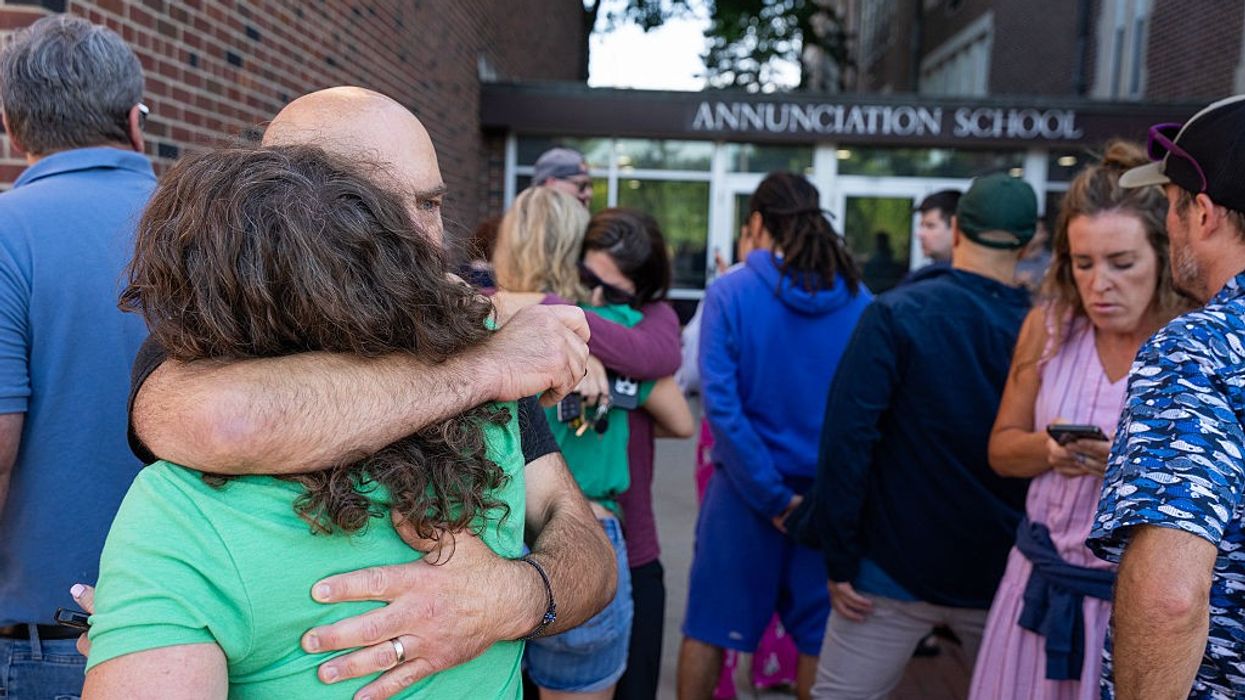
"Trump will send the military into DC to pick up litter and arrest homeless people, but won't do a damn thing to end the gun violence epidemic killing our kids," said one healthcare advocate.
Another horrific mass shooting that left multiple children dead and injured has once again ignited a wave of fury at Republican lawmakers who refuse to take action to stop gun violence.
Two children—ages 8 and 10—were killed when a shooter fired through the windows of a church at the Annunciation Catholic School in Minneapolis on Wednesday morning. Another 17 people, including 14 more children, were also injured in the attack before the shooter died of a self-inflicted gunshot wound.
Minneapolis police say the shooter carried out the attack, which is now being investigated as an act of domestic terrorism, using three weapons: a rifle, a shotgun, and a pistol.
According to the Gun Violence Archive, not even eight months into 2025, there have already been 286 mass shootings—defined as cases in which four or more people are shot or killed—in the United States just this year, averaging more than one per day.
Gun violence is the number-one killer of children in the US, causing more deaths each year than car accidents, poisonings, and cancer. The victims of the shooting in Minneapolis join the more than 800 children killed and more than 2,200 injured by firearms this year.
Like dozens of mass shootings before it, Wednesday's deadly attack has stoked calls in Minnesota and around the country from Democratic lawmakers and gun control advocates for stricter gun laws, which have been repeatedly shot down by Republicans in Congress.
"We need better laws on the books nationally," said Minnesota's Democratic senator, Amy Klobuchar. "When you have so much access to guns right now and so many guns out there on the streets, you're going to continue to see these kinds of mass shootings."
"Don't just say this is about thoughts and prayers right now," said Minneapolis Mayor Jacob Frey. "These kids were literally praying. It was the first week of school. They were in a church."
"They should be able to go to school or church in peace without the fear or risk of violence, and their parents should have the same kind of assurance," Frey said. "These are the sort of basic assurances that every family should have every step of the day, regardless of where they are in our country."
Congress has not passed a significant piece of gun legislation since 2022, when it passed the Bipartisan Safer Communities Act in the wake of the horrific school shooting in Uvalde, Texas.
That law, which was supported by just 15 Republicans, introduced some modest reforms—including extended background checks for firearm purchasers under 21, funding for state red flag laws, and the closure of gun purchasing loopholes.
However, then-Senate Majority Leader Mitch McConnell (R-Ky.) only agreed to negotiate the bill if Democrats abandoned more ambitious reforms, such as bans on high-capacity magazines and universal background checks.
Since its passage, even this watered-down piece of legislation has been fought aggressively by Republican lawmakers backed by the gun industry's lobbying arm, the National Rifle Association, who have attempted to have it repealed.
Earlier this year, President Donald Trump ordered Attorney General Pam Bondi to present an action plan to reverse any law that the Department of Justice determines has "impinged on the Second Amendment rights of our citizens."
Through executive orders, Trump has rolled back efforts under the Biden administration to regulate ghost guns and enhance background checks.
The administration has also choked off more than $800 million in grants to local gun violence prevention groups and pushed for "concealed carry reciprocity" legislation, which would require all states to honor concealed carry permits issued by other states.
Instead of stricter gun control measures, Trump has personally advocated for schools to arm teachers and focus on improving mental healthcare—even as he's rolled back rules ensuring Americans have access to that care.
"Until we have more elected officials willing to place gun safety over allegiance to the gun lobby, more and more families will face unbearable suffering from random acts of violence," said Rep. Lloyd Doggett (D-Texas) on Wednesday. "Congress could—and should—pass stricter gun safety laws, but continues to cave to the gun lobby."
Rep. Pramila Jayapal (D-Wash.) added: "The United States continues to be the only country where school shootings are a regular occurrence. We must stop this epidemic of gun violence and finally put the lives of our kids first."
Other advocates noted the contrast between Trump's response to the imaginary "crime wave" in Washington, DC, where he has initiated a militarized takeover, and his lack of interest in fighting America's endless wave of gun violence.
"Guns are the leading cause of death for kids in the US," said Melanie D'Arrigo, the executive director of the Campaign for New York Health. "Trump will send the military into DC to pick up litter and arrest homeless people, but won't do a damn thing to end the gun violence epidemic killing our kids."
Charles Idelson, a former communications director for National Nurses United, said: "If Trump wants to pretend he is 'fighting crimes,' stop protecting the pro-gun violence cabal."
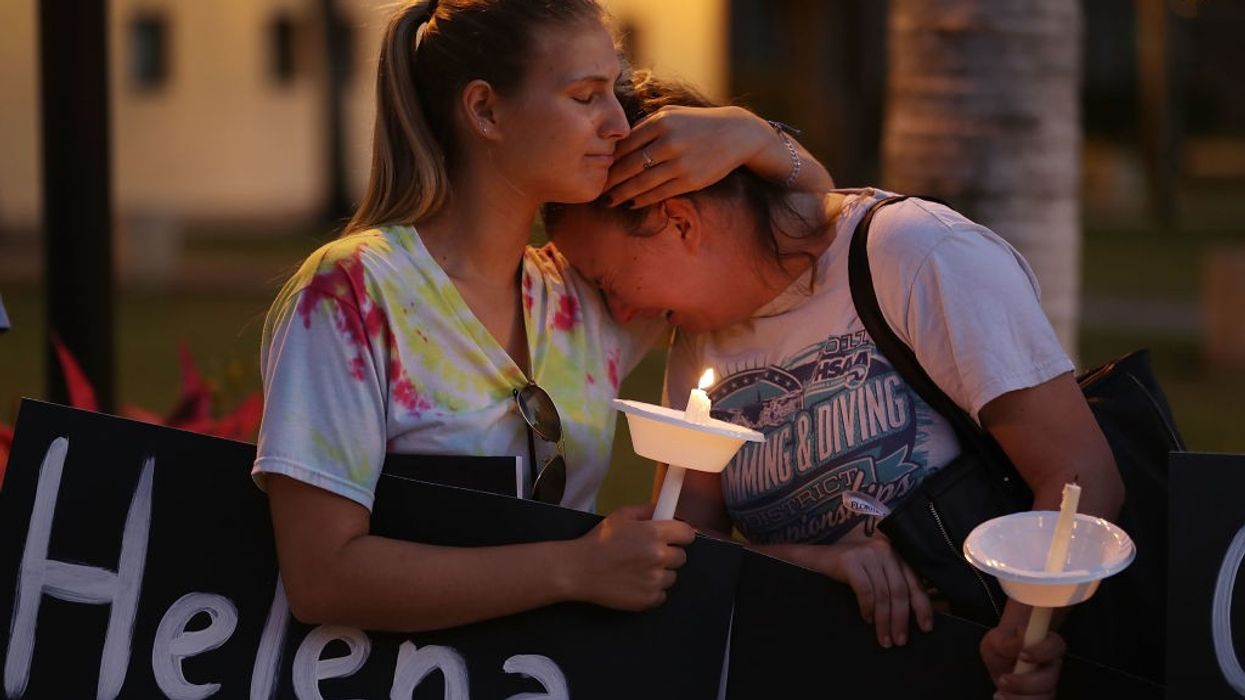
"Remember the next time that a mass shooting happens," said one gun control advocate, "Trump did everything in his power to enable it, not prevent it."
An executive order issued Friday by President Donald Trump that aims to rollback gun control measures instituted by his predecessor received a swift rebuke from critics who said the order should be seen as a giveaway to the profit-hungry gun industry at the expense of a society ruthlessly harmed by gun violence year after year after year.
Trump's order tasks U.S. Attorney General Pam Bondi with conducting a sweeping review of the policies and positions of the previous administration and Justice Department as it relates to gun policies, including any executive orders issued by President Joe Biden during his term and the DOJ's positions taken on "all ongoing and potential litigation" related to firearms.
"On the chopping block," reports The Trace, "are several high-profile attempts by [Biden] to reduce gun violence, including regulations on ghost guns, expanded background checks on gun sales, and tougher regulatory oversight of lawbreaking gun dealers."
"Trump's priorities couldn't be more clear. Spoiler: it's not protecting kids."
According to the outlet, which focuses on the nation's gun violence crisis:
While most of Biden’s policies have taken effect, lawsuits against them are ongoing. In his executive order, Trump directed the attorney general to also review the Justice Department’s decision to defend those regulations, as well as all other gun-related litigation in which the government is involved. From age limits on firearm sales to the ban on gun possession by people convicted of felonies, federal gun laws have been under constant threat in the courts since a 2022 Supreme Court decision dramatically expanded gun rights.
If the Justice Department declines to defend the current federal laws in court, it would significantly raise the chances of them being ruled unconstitutional.
Gun control advocates widely rebuked the executive order, warning that Trump's reversal of the minimal amount of progress Biden was able to make was an endorsement of more death, pain, and suffering for the American people, including children, who too often find themselves at the deadly end of a gun's barrel.
"Trump's priorities couldn't be more clear. Spoiler: it's not protecting kids," said Natalie Fall, March For Our Lives executive director. "Gun deaths finally went down last year, and Trump just moved to undo the rules and laws that helped make that happen."
Trump's right-wing MAGA movement, she continued, "loves to rage about 'keeping kids safe,' but it’s all a smokescreen. They don’t care about what is actually killing and maiming thousands of American kids every year: gun violence. He is going to get Americans killed in his thirst for vengeance and eagerness to please the gun lobby and rally armed extremists. Remember, the next time that a mass shooting happens, Trump did everything in his power to enable it, not prevent it."
Hudson Munoz, executive director of the advocacy group Guns Down America, shared similar sentiments and said the president's latest order "is as reckless as it is predictable."
Not for the first time, he argued, Trump is "proving that he cares more about appeasing the gun industry than protecting the American people. This order is downright dangerous. His incompetence and Attorney General Pam Bondi's blind loyalty to the Trump agenda will lead to more violence while a few shareholders and gun industry executives line their pockets."
Referencing public polls, Munoz said more than 70% of people in the U.S. approve of common-sense gun safety laws that Trump and the gun lobby are attempting to destroy.
"Make no mistake, this executive order is about business," he said. "Trump is working to unleash more guns into American public life to boost the profits of gun manufacturers. This order leaves Americans to foot the bill with more gun deaths, more taxpayer dollars spent on emergency responses, and more families shattered by violence—while a handful of businesses cash in."
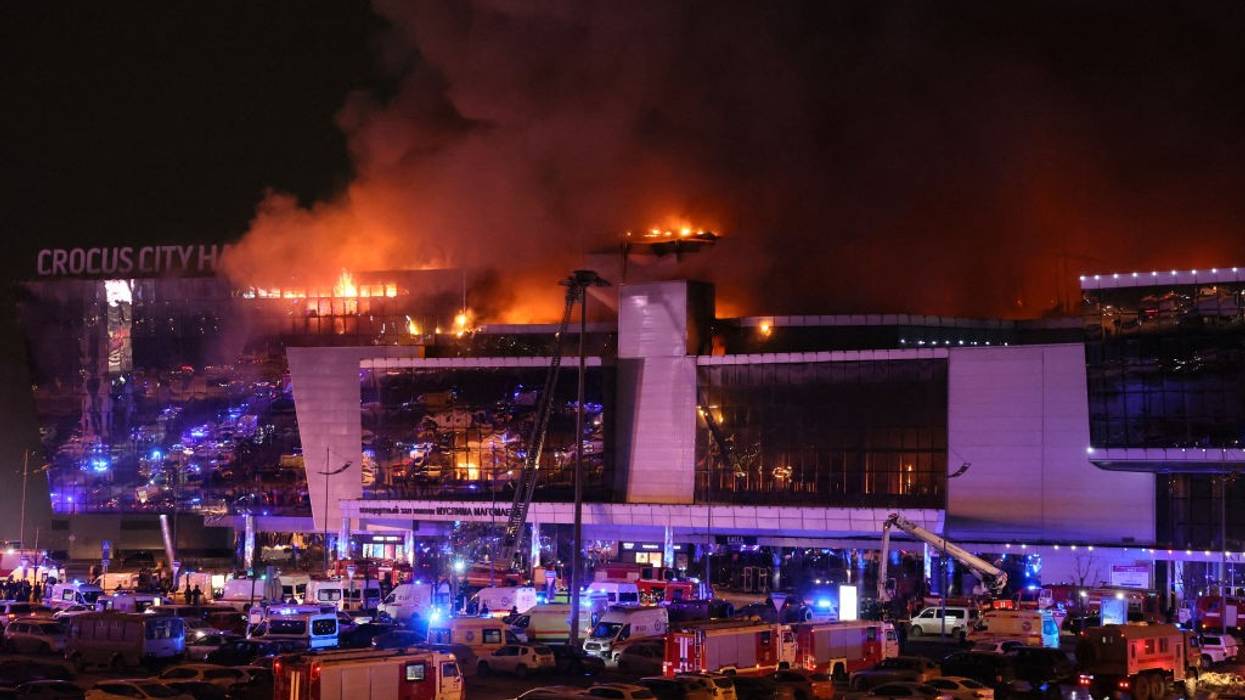
While the attack comes over two years into Russia's war on Ukraine, an adviser for the Ukrainian president said the neighboring nation "certainly has nothing to do with the shooting/explosions in the Crocus City Hall."
UPDATE:
Russia's Investigative Committee announced Saturday that the death toll has increased to 133 and said in a statement that "unfortunately, the number of victims could increase."
Eleven people were detained, including four who were directly involved in the attack, according to a statement from the Russian Federal Security Service, or FSB.
EARLIER:
The Islamic State claimed responsibility for an attack in which at least dozens of people were killed and wounded when individuals reportedly armed with automatic weapons opened fire at Crocus City Hall, a concert venue in suburban Moscow, Russia.
"According to preliminary data, as a result of the terrorist attack at the Crocus City Hall building 40 people were killed and over 100 were injured," Russia's Federal Security Service (FSB) said in a statement reported by TASS.
Citing eyewitnesses, the Russian news agency reported that the group of unidentified men "armed with assault rifles went on a shooting spree in the lobby and then inside the concert hall just before a concert by the rock band Picnic."
As The Moscow Times detailed:
According to a journalist who was at Crocus City Hall during the attack, a grenade or an incendiary bomb was thrown after the shooting broke out and caused a fire.
"People in the hall were lying down on the floor to escape from the shooting, lying between 15 and 20 minutes, after which they began to crawl out. Many managed to get out," the unnamed journalist was quoted as saying by RIA Novosti.
The attack comes on the heels of Russian President Vladimir Putin's contested reelection and over two years into Russia's invasion of Ukraine, which has received weapons support from around the world, including the United States.
In a lengthy social media post, Mykhailo Podolyak, an adviser to Ukrainian President Volodymyr Zelenskyy, said that "Ukraine certainly has nothing to do with the shooting/explosions in the Crocus City Hall."
"There is not the slightest doubt that the events in the Moscow suburbs will contribute to a sharp increase in military propaganda, accelerated militarization, expanded mobilization, and, ultimately, the scaling up of the war," Podolyak added. "And also to justify manifest genocidal strikes against the civilian population of Ukraine."
According to The Guardian, John Kirby, the White House national security spokesperson, told reporters that "there's no indication at this time that Ukraine, or Ukrainians were involved in the shooting... We're taking a look at it, but I would disabuse you at this early hour of any connection to Ukraine."
Asked whether the attack signals cracks in Putin's regime, Kirby said that "there are people in Moscow and in Russia that object to the way Mr. Putin is governing the country, but I don't think we, at this early hour, can make a link between the shopping mall attack and political motivations. I think... we just need more time and we need to learn more information."

The author and one of the state's most famous residents said the culprit is clear: "It’s the rapid-fire killing machines, people.... Stop electing apologists for murder."
With a massive manhunt still underway Thursday morning in the state of Maine for the suspect behind the massacre in the city of Lewiston that left 18 people dead and at least 13 wounded, defenders of stronger gun control laws lashed out at political leaders who have failed to back or impose assault weapons bans or other measures despite the nation's epidemic of mass killings.
Schools were closed across the state Thursday and a shelter-in-place order remained in effect for a large region surrounding Lewiston in central and southern Maine as police looked for Robert Card, aged 40, announced overnight as the person of interest in shootings in two separate locations.
Among the critics aiming their ire at political failures was author and longtime Maine resident Stephen King. "The shootings occurred less than 50 miles from where I live. I went to high school in Lisbon," King tweeted early Thursday, including a reference to the small town where an automobile believed to belong to Card was found by law enforcement after the shootings.
"It’s the rapid-fire killing machines, people," King said. "This is madness in the name of freedom. Stop electing apologists for murder."
The gunman who carried out Thursday night's shooting at the Sparetime Recreation bowling alley and Schemengees Bar & Grille was shown in security camera footage released by law enforcement to be carrying a long gun which some experts identified as an AR-15-style semiautomatic assault rifle.
Scott Sweetow, a former member of the FBI's Terrorist Explosive Device Analytical Center, said in an interview with NBC10 in Boston that the gunman in the footage was "kitted out to kill people."
"THIS DOES NOT HAPPEN IN OTHER COUNTRIES," tweeted King in a separate post.
Former Congresswoman Gabrielle Giffords, founder of the gun violence prevention organization GIFFORDS, called the events in Lewiston another "senseless act of gun violence" that exposes the failures of the nation's elected leaders.
"It doesn't have to be this way and it shouldn’t be this way," Giffords said. "Entire communities shouldn’t have to live in fear of an active shooting. My heart breaks for the Lewiston community, the victims, and the survivors. Earlier this week, I visited Uvalde and met with the families and survivors of that mass shooting. I'm angry that yet another community has to experience this pain. Our leaders must act."

Following yet another horrific school massacre--in which the lives of numerous children, teachers, and their families in Uvalde, Texas were destroyed by an 18-year-old wielding a pair of AR-15s--legal experts are warning that the U.S. Supreme Court's right-wing majority is likely to soon make the nation's gun violence crisis even worse.
At issue is the high court's looming decision in New York State Rifle & Pistol Association v. Bruen.
"The next-day ramifications of striking down this gun law would be greater than the next-day ramifications for any other Second Amendment case that the Supreme Court has decided."
The court's reactionary justices, most of whom were appointed by Republican presidents who lost the popular vote, are "potentially poised to take down one of the nation's oldest and most restrictive gun-control laws this summer," the Washington Post reported last week. That could "unravel laws across the nation restricting who can carry guns in public," further increasing the presence of firearms in a country that has more guns--now the leading cause of death among children in the U.S.--than people.
"The Supreme Court's conservative supermajority is about to dramatically expand the scope of the Second Amendment and prohibit us from protecting our communities by enacting gun safety laws through the democratic process," journalist Mark Joseph Stern warned soon after Tuesday's killing spree at Robb Elementary School.
That atrocity was one of more than 3,500 mass shootings in the U.S. since 26 people, including 20 kids under the age of seven, were slaughtered at Sandy Hook Elementary School in Newtown, Connecticut in late 2012. Less than a week ago, an 18-year-old white supremacist murdered 10 Black people at a Buffalo supermarket.
As journalist Joe Patrice noted earlier this week when writing about New York State Rifle & Pistol Association v. Bruen, "Oral argument made clear that the majority of the Supreme Court will yet again obliterate even the mildest of gun regulations in service of its gun lobby masters."
"Despite knowing exactly how this is going to turn out, the Supreme Court is likely to sit on this opinion now," wrote Patrice. "We could have seen it as early as Tuesday, but the conservative majority that brands itself as 'just calling balls and strikes' is sufficiently cowardly that it won't risk declaring a concealed carry free-for-all one week after a school massacre."
The Post-Standard, a Syracuse-based newspaper, recently explained how the most consequential Second Amendment case in over a decade started after a pair of applications for concealed carry permits were denied in upstate New York:
A lawsuit filed by two Rensselaer County men challenges the state's requirement that gun owners must have a justifiable reason--referred to as "proper cause"--to get a concealed carry permit. Permit applicants must now state why they have a need to carry a gun in public. For example, it could be because they have been threatened or their job places them in danger.
The Rensselaer County men are making the case that applicants should not have to give a reason for why they want to carry a concealed gun in public. They argue they have that right under the Second Amendment.
In a brief for the court, the U.S. Justice Department wrote that "the Second Amendment protects an individual right to keep and bear arms, but that right is not absolute."
Journalist Jay Michaelson, meanwhile, shed light on the right's "preposterous misreading of the Second Amendment, funded largely by gun manufacturers," in a Rolling Stone essay published this week:
Contrary to what you may have been led to believe, until 2008, no federal court had held that the Second Amendment conveyed a right to own a gun. On the contrary, the Supreme Court clearly said that it didn't.
[...]
And what had once been a fringe view rejected by the Supreme Court--that the Second Amendment gave individuals a right to own guns--gradually became Republican Party gospel when the fringe took over the party. Former Chief Justice Warren Burger (a conservative appointed by Richard Nixon) described it as "a fraud on the American public."
When the high court hands down its decision in New York State Rifle & Pistol Association v. Bruen, the right-wing majority will pretend that "it is applying neutral historical and factual principles, when it will in truth be distorting the history and original meaning of constitutional language to achieve a partisan political outcome that is disfavored by vast majorities of Americans," Stern and Dahlia Lithwick wrote this week in Slate. "That is because what majorities of Americans actually want doesn't matter to them."
The high court's decision will reverberate far beyond New York. Seven other states--including California, Connecticut, Deleware, Hawaii, Maryland, Massachusetts, and New Jersey--plus Washington, D.C. and several big cities have similar laws restricting concealed carry permits. The eight states have a combined population of 80 million people, roughly one-fourth of the national total.
The Post-Standard noted that the court's decision comes in the wake of "40 years of state-level legislative rollbacks of concealed carry regulation in the United States. Since 1981, the number of states with a law similar to New York has decreased by more than two-thirds, according to a review of state-level gun laws by SUNY Cortland professor Robert J. Spitzer."
Eric Ruben, a Second Amendment expert and assistant law professor at Southern Methodist University, told the newspaper that "the next-day ramifications of striking down this gun law would be greater than the next-day ramifications for any other Second Amendment case that the Supreme Court has decided."
Highlighting the broad implications of the case for gun regulations in general, Susan Liebell, a professor at St. Joseph's University, predicted that "we will see more states' laws struck down."
According to The Post-Standard:
She and Ruben said striking down the law could invite legal challenges to New York's SAFE Act, which broadened the definition of assault weapons, required background checks for ammunition sales, forced gun owners to report when their guns were lost or stolen within a day, and required mental health professionals to report patients to police if they believe the patient is likely to harm others.
Ruben said other laws that could come under attack place restrictions on magazine capacity, impose zoning requirements for shooting ranges, and limit the possession of firearms by those who have been deemed mentally ill or have past convictions.
As Lithwick and Stern pointed out, "The court may not actually be able to find a politically convenient moment to hand down this opinion; between a Buffalo gun massacre, Orange County church murders, and a massacre of Texas schoolchildren on Tuesday, it's clear that there will always be another mass shooting immediately before, or on, Supreme Court opinion days."
"The justices themselves won't face the lethal consequences of their own Second Amendment rulings," Lithwick and Stern wrote. "Justice Antonin Scalia's reasoning from D.C. v. Heller preemptively upholding 'laws forbidding the carrying of firearms' in 'government buildings' will stand, although it represented dicta and not official doctrine. And Republican senators won't face the lethal consequences of their failures to act after Columbine, after Sandy Hook, after Parkland, and after today."
The pair continued: "The judiciary will uphold the prohibition on guns in the halls of the Congress and the Supreme Court. Indeed, the NRA just announced that guns will be banned during Donald Trump's speech at Friday's NRA conference."
"We know what is required to fix this mess," wrote Lithwick and Stern. "End the filibuster. Expand the Supreme Court. Admit new states. Shift political power away from the rural whites who hold a disproportionate amount of it and toward the multiracial urban centers that make up a majority of the country. Create the truly representative democracy that people have been denied for far too long."
"Until then, we will be at the mercy of conservative jurists and lawmakers making choices that kill us and our families," they added. "That they can still exempt themselves from these ravages isn't a coincidence. It's both evidence of the crime and proof that, as long as they're in charge, the killing will never stop."

Another mass gun murder just happened in America, the seventh in 7 days, and already "Second Amendment legislators" are offering the 2021 version of thoughts and prayers. Lauren Boebert just tweeted, "May God be with them." Standing in front of her wall of assault weapons, most likely.
And, of course, today on rightwing talk radio and Fox News they've already begun lengthy bloviation about the Second Amendment. So, let's just clear a few things up.
The real reason the Second Amendment was ratified, and why it says "State" instead of "Country" (the Framers knew the difference--see the 10th Amendment), was to preserve the slave patrol militias in the southern states, an action necessary to get Virginia's vote to ratify the Constitution.
It had nothing whatsoever to do with making sure mass murderers could shoot up public venues and schools. Founders including Patrick Henry, George Mason, and James Madison were totally clear on that, and we all should be too.
In today's America, you have the "right" to a gun, but no "right" to healthcare or education. In every other developed country in the world, the reality is the exact opposite.
In the beginning, there were the militias. In the South they were called "slave patrols," and were regulated by the states.
In Georgia, for example, a generation before the American Revolution, laws were passed in 1755 and 1757 that required all plantation owners or their male white employees to be members of the Georgia Militia, and for those armed militia members to make monthly inspections of the quarters of all slaves in the state. The law defined which counties had which armed militias and required armed militia members to keep a keen eye out for slaves who may be planning uprisings.
As Dr. Carl T. Bogus wrote for the University of California Law Review in 1998, "The Georgia statutes required patrols, under the direction of commissioned militia officers, to examine every plantation each month and authorized them to search 'all Negro Houses for offensive Weapons and Ammunition' and to apprehend and give twenty lashes to any slave found outside plantation grounds."
It's the answer to the question raised by the character played by Leonardo DiCaprio in Django Unchained when he asks, "Why don't they just rise up and kill the whites?" It was a largely rhetorical question, because every southerner of the era knew the answer: Well-regulated militias kept enslaved people in chains.
Sally E. Haden, in her brilliant and essential book Slave Patrols: Law and Violence in Virginia and the Carolinas, notes that, "Although eligibility for the Militia seemed all-encompassing, not every middle-aged white male Virginian or Carolinian became a slave patroller." There were exemptions so "men in critical professions" like judges, legislators and students could stay at their work. Generally, though, she documents how most southern men between ages 18 and 45--including physicians and ministers--had to serve on slave patrol in the militia at one time or another in their lives.
And slave rebellions were keeping the slave patrols busy.
By the time the Constitution was ratified, hundreds of substantial slave uprisings had occurred across the South. Blacks outnumbered whites in large areas, and the state militias were used to both prevent and to put down uprisings by enslaved men and women. As I detail in my book The Hidden History of Guns and the Second Amendment, slavery can only exist in a police state, which the South had become by the early 1700s, and the enforcement of that police state was the explicit job of the militias.
Southerners worried that if the anti-slavery folks in the North could figure out a way to disband--or even move out of the state--those southern militias, the police state of the South would collapse. And, similarly, if the North were to invite into military service enslaved men from the South, then they could be emancipated, which would collapse the institution of slavery, along with the southern economic and social "ways of life."
These two possibilities worried southerners like slaveholder James Monroe, George Mason (who owned over 300 enslaved humans) and the southern Christian evangelical, Patrick "Give Me Liberty Or Give Me Death" Henry (Virginia's largest slaveholder).
Their main concern was that Article 1, Section 8 of the newly-proposed Constitution, which gave the federal government the power to raise and supervise an army, could also allow that federal army to subsume their state militias and change them from slavery-enforcing institutions into something that could even, one day, free their enslaved men, women and children.
This was not an imagined threat. Famously, 12 years earlier, during the lead-up to the Revolutionary War, Lord Dunsmore offered freedom to slaves who could escape and join his forces. "Liberty to Slaves" was stitched onto their jacket pocket flaps. During the War, British General Henry Clinton extended the practice in 1779. And numerous freed slaves served in General Washington's army.
Thus, southern legislators and plantation owners lived not just in fear of their own slaves rebelling, but also in fear that their slaves could be emancipated through the newly-forming United States offering them military service.
At the ratifying convention in Virginia in 1788, Henry laid it out:
"Let me here call your attention to that part [Article 1, Section 8 of the proposed Constitution] which gives the Congress power to provide for organizing, arming, and disciplining the militia, and for governing such part of them as may be employed in the service of the United States. . . .
"By this, sir, you see that their control over our last and best defence is unlimited. If they neglect or refuse to discipline or arm our militia, they will be useless: the states can do neither ... this power being exclusively given to Congress. The power of appointing officers over men not disciplined or armed is ridiculous; so that this pretended little remains of power left to the states may, at the pleasure of Congress, be rendered nugatory."
George Mason expressed a similar fear:
"The militia may be here destroyed by that method which has been practised in other parts of the world before; that is, by rendering them useless, by disarming them. Under various pretences, Congress may neglect to provide for arming and disciplining the militia; and the state governments cannot do it, for Congress has an exclusive right to arm them [under this proposed Constitution]..."
Henry then bluntly laid it out:
"If the country be invaded, a state may go to war, but cannot suppress [slave] insurrections [under this new Constitution]. If there should happen an insurrection of slaves, the country cannot be said to be invaded. They cannot, therefore, suppress it without the interposition of Congress . . . . Congress, and Congress only [under this new Constitution], can call forth the militia."
And why was that such a concern for Patrick Henry?
"In this state," he said, "there are 236,000 Blacks, and there are many in several other states. But there are few or none in the Northern States. ... May Congress not say, that every Black man must fight? Did we not see a little of this last war? We were not so hard pushed as to make emancipation general; but acts of Assembly passed that every slave who would go to the army should be free."
Patrick Henry was also convinced that the power over the various state militias given the federal government in the new Constitution could be used to strip the slave states of their slave-patrol militias. He knew the majority attitude in the North opposed slavery, and he worried they'd use the new Constitution they were then debating ratifying to free the South's slaves (a process then called "Manumission").
The abolitionists would, he was certain, use that power (and, ironically, this is pretty much what Abraham Lincoln ended up doing):
"[T]hey will search that paper [the Constitution], and see if they have power of manumission," said Henry. "And have they not, sir? Have they not power to provide for the 'general defence and welfare'? May they not think that these call for the abolition of slavery? May they not pronounce all slaves free, and will they not be warranted by that power?
"This is no ambiguous implication or logical deduction. The paper [the Constitution] speaks to the point: they have the power in clear, unequivocal terms, and will clearly and certainly exercise it."
He added: "This is a local [Southern] matter, and I can see no propriety in subjecting it to Congress."
James Madison, the "Father of the Constitution" and a slaveholder himself, basically called Patrick Henry paranoid.
"I was struck with surprise," Madison said, "when I heard him express himself alarmed with respect to the emancipation of slaves. . . . There is no power to warrant it, in that paper [the Constitution]. If there be, I know it not."
But the southern slavemasters' fears wouldn't go away.
Patrick Henry even argued that southerner's "property" (enslaved humans) would be lost under the new Constitution, and the resulting slave uprising would be less than peaceful or tranquil:
"In this situation," Henry said to Madison, "I see a great deal of the property of the people of Virginia in jeopardy, and their peace and tranquility gone."
So Madison, who had (at Jefferson's insistence) already begun to prepare proposed amendments to the Constitution, changed his first draft of one that addressed the militia issue to make sure it was unambiguous that the southern states could maintain their slave patrol militias.
His first draft for what became the Second Amendment had said: "The right of the people to keep and bear arms shall not be infringed; a well armed, and well regulated militia being the best security of a free country [emphasis mine]: but no person religiously scrupulous of bearing arms, shall be compelled to render military service in person."
But Henry, Mason and others wanted southern states to preserve their slave-patrol militias independent of the federal government. So Madison changed the word "country" to the word "state," and redrafted the Second Amendment into today's form:
"A well regulated Militia, being necessary to the security of a free State [emphasis mine], the right of the people to keep and bear Arms, shall not be infringed."
Little did Madison realize that one day in the future weapons-manufacturing corporations would use his slave patrol militia amendment to protect their "right" to manufacture and sell assault weapons used to murder people in schools, theaters and stores, and use the profits to own their own political party.
In today's America, you have the "right" to a gun, but no "right" to healthcare or education. In every other developed country in the world, the reality is the exact opposite.
Pointing out how ludicrous this has become, David Sirota (and colleagues) writes in his Daily Poster newsletter today: "Last week, the National Rifle Association publicly celebrated its success in striking down an assault weapons ban in Boulder, Colorado. Five days later, Boulder was the scene of a mass shooting, reportedly with the same kind of weapon that the city tried to ban."
The Second Amendment was never meant to make it easier for mass shooters to get assault weapons, and America needs rational gun policy to join the other civilized nations of this planet who aren't the victims of daily mass killings.
It's long past time to overturn Heller, which Ruth Bader Ginsberg repeatedly argued the Court should do, and abolish today's bizarre interpretation of the 2nd Amendment.
This post originally appeared at hartmannreport.com, but is published here with permission of the author.
In a failure reminiscent of previous attempts to tighten gun laws following a mass shooting, the U.S. Senate on Monday night roundly rejected four measures to enact stricter gun control laws in the wake of last week's massacre in Orlando, Florida.
"Democrats and Republicans had put forth competing amendments to both strengthen background checks and prevent suspected terrorists from purchasing firearms," the Guardian reported. "But all four bills fell short of the 60 votes needed to clear a procedural hurdle in the Senate, in a near replica of a vote held in December when a pair of shooters killed 14 people and wounded 22 more in San Bernardino, California."
Sen. Elizabeth Warren (D.-Mass.) decried the vote in a Tweet:
The much-publicized Democratic-led filibuster in the Senate last week, which pushed for measures that critics derided as "not going far enough," resulted in an agreement to vote on new gun control legislation.
The Hill reports that many were pessimistic about the proposals' chances of success from the start:
All four measures--two dealt with background checks and two sought to prevent people on terrorist watchlists from buying guns--were expected to fail.
All four required 60 votes to move forward, and Republicans and Democrats offered dueling amendments on both issues. The National Rifle Association opposed the two Democratic measures.
The climactic vote was on a measure sponsored by Sen. Dianne Feinstein (D-Calif.) that would have prohibited people on terrorist watchlists from buying guns or explosives. It failed 47-53.
Before the vote, Sen. Bernie Sanders (I-Vt.) characterized the vote as a "no-brainer."
"Frankly, these Democratic amendments are no-brainers," Sanders wrote. "It is incomprehensible to me, and I believe to the vast majority of Americans, as to why Republicans would oppose them."
None of the measures were the ban on assault weapons sales that "so many are calling for," as Common Dreams reported.
Hillary Clinton released a statement that simply read, "Enough," and then proceeded to list the names of the 49 victims of the Orlando shooting, the Hill reported.
"Sen. Feinstein's and Sen. Murphy's proposals are commonsense," Sanders added. "In light of the terrible tragedies that have taken place in Orlando and other cities, it's not very hard to understand that terrorists or potential terrorists, criminals, and the dangerously mentally ill should not have access to guns. We have got to do everything we can to stop guns from falling into the hands of people who should not have them."
"What am I going to tell 49 grieving families?" asked Florida Sen. Bill Nelson after the measures were voted down, according to the Guardian. "What am I going to tell the families of those who are still in the hospital fighting for their lives?"
"That could have been me."
Those are the words that play repeatedly in my mind as I see the continued coverage of the tragedy at Pulse Nightclub in Orlando. For young Black and Latino gay, bisexual, and same-gender loving men like me, the club is our place to gather as a community, and last Sunday, its sanctity was violated with the same violence we experience by unapologetically living our lives outside its doors.
The club is our safe space. It is there that we can escape the very real danger that LGBT Black and Latino folks face for being who we are around our families and in our neighborhoods. The club gives us space away from the violence that persists in our heteronormative culture, and on Sunday morning, that safety, as illusory as it might have been, vanished with the lives of 49 young queer Black and Latino people and the injuries of 53 others.
The fact that this tragedy was at a gay club, on a night that appreciated a predominantly Latino community matters. It matters because, in those moments, behind those walls, we are able to dance and love without being afraid of physical violence and verbal abuse. We are able to be who we are for those few hours, before returning to our daily lives that force us to edit ourselves for survival.
We must remember and uplift the stories of those affected because our stories are not often told: stories of brilliance, creativity, and perseverance in the face of daily adversity. Stories that ended much too soon, due to violence and hate fueled by the rhetoric many have endured because of who they are and whom they love.
Where I live, there are very few places where I can feel affirmed in the intersections of my queerness and Blackness -- spaces that offer the opportunity to hold both identities, without choosing one over the other are few and far between. Coming out at 16, I had the privilege of finding an LGBT serving youth center, a place where I found a community and a support system that many young people desire but cannot find.
We are able to be who we are for those few hours, before returning to our daily lives that force us to edit ourselves for survival.
When I turned 18, I entered my first club, joined by other LGBT young people who stayed there from 10 p.m. to 2 a.m., because they did not have an affirming home to go to for the night. When the club ended, they walked around until either school started or their service agency reopened in the morning.
Moving to New York, I find that despite the many events that happen for LGBT people of color, I can always count on the club as a consistent space to be myself. There I can dance and socialize without the fear of being harmed. For my gender-nonconforming peers, there they can be who they are without apology.
In this Pride month, as we mourn those we lost, we must remain mindful that the spectrum of violence that affects LGBT Black and Latino people remains. Some will try to understand the motives of the shooter, but we must not let the lives of those harmed be overshadowed. We must march louder, love harder, and rebuild those spaces that allow us to be ourselves while continuing to make every space a safe one.
Another week, another series of school and university shootings in the US, and another chance to hear phrases such as "active shooter" and "campus lockdown" repeated over and over by police, school administrators, and journalists. These phrases - chilling in their clinicalness - are not only stark examples of the militarization of the language of everyday life but also reminders of how the language used to describe actual US military aggression has been influenced by the neutral, image-conscious world of public relations.
What makes expressions such as "active shooter" and "campus lockdown" so disturbing is not just the regularity with which they are now uttered and written but the huge disconnect between their militaristic tone and the contexts of their use. These are phrases you would associate with war, not university campuses dedicated to the enlightenment of our youngest residents. There is a particular macabre horror in places of learning being converted into battlefields. That horror is only intensified when the words used to describe it are so brazenly militaristic. "Active shooter," in particular, is both striking and absurd. If there are "active shooters," are there also "inactive shooters"? Are we all potentially active shooters in the making?
But, such is the nature of a culture of violence. And if the first casualty of war is truth, the second might be language.
We are surrounded by phrases devised to convert the grotesque and unpalatable into the everyday and banal. When the US recently bombed a hospital in Afghanistan, the scores of dead innocent civilians were not described as such; they were "collateral damage." When young men and women are killed by allies on the battlefield, it isn't negligence; it is death by "friendly fire." When terrorist suspects were hunted down by the CIA and flown to secret locations in countries with more flexible attitudes towards human rights, it wasn't state-sanctioned kidnapping; it was "extraordinary rendition." And, when we waterboarded suspects - in violation of our own constitution and international law - it wasn't torture; it was "enhanced interrogation."
In addition to banality is militarism. Residents of the US have been engaged in numerous wars over the years: the War on Drugs, the War on Crime, and the War on Terror (to take but three examples). As these terms are sexy and emotive, the media were more than willing to latch on to them. The problem is that they say little or nothing about who the wars were against, what they would cost, how long they would last, what tools we would use to fight, and to what extent our rights would be curtailed during the conflicts. These titles also served another important function: forced compliance. War is a black-and-white thing. It is Good versus Evil. Are you against the War on Drugs? Then you support drug dealers. Are you critical of the War on Terror? Then you side with radical, anti-democratic extremists. Even our policies had titles that made them impossible to oppose. Are you against the Patriot Act? Well, you know what that means.
When journalists uncritically parrot all of these terms as if they are neutral and unproblematic, then they participate in the mainstreaming of an ultimately destructive worldview. While it is simple to dismiss words as just that - words - we should recall how language was weaponized in the hours and days after September 11, 2001. The groundwork for war was as much rhetorical as it was military.
What we have witnessed over the past decade in the US is a perverse switch: Everyday life is now saturated with the aggressive language of warfare, while the lords of war have absorbed the language of the every day in an attempt to manage and sanitize our image. As the US struggles to come to terms with an epidemic of mass shootings, one place to begin is the rejection of any language that resigns us to accept the inevitability and normalcy of violence and, in addition, any language that, in a cynical, Orwellian fashion, airbrushes the victims of aggression from our national history.