
SUBSCRIBE TO OUR FREE NEWSLETTER
Daily news & progressive opinion—funded by the people, not the corporations—delivered straight to your inbox.
5
#000000
#FFFFFF
To donate by check, phone, or other method, see our More Ways to Give page.


Daily news & progressive opinion—funded by the people, not the corporations—delivered straight to your inbox.
The Palestinian presidency said the decision—which comes as more and more nations formally recognize Palestine's statehood—"stands in clear contradiction to international law and the UN Headquarters Agreement."
The Trump administration said Friday that Secretary of State Marco Rubio "is denying and revoking visas from members of the Palestine Liberation Organization and the Palestinian Authority" ahead of next month's United Nations General Assembly in New York.
The US State Department said Friday that "the Trump administration has been clear: It is in our national security interests to hold the PLO and PA accountable for not complying with their commitments, and for undermining the prospects for peace."
"Before the PLO and PA can be considered partners for peace, they must consistently repudiate terrorism—including the October 7 massacre—and end incitement to terrorism in education, as required by US law and as promised by the PLO," the statement continues.
No US administration in modern times has ever demanded that Israel repudiate its generations-long illegal occupation and settler colonization of Palestine, its ongoing genocide in Gaza, or any other violation of international law or human rights.
"The PA must also end its attempts to bypass negotiations through international lawfare campaigns, including appeals to the [International Criminal Court] and [International Court of Justice], and efforts to secure the unilateral recognition of a conjectural Palestinian state," the State Department added. "Both steps materially contributed to Hamas' refusal to release its hostages, and to the breakdown of the Gaza ceasefire talks."
The ICC last year issued arrest warrants for Israeli Prime Minister Benjamin Netanyahu and former Defense Minister Yoav Gallant for alleged war crimes and crimes against humanity in Gaza, including murder and the forced starvation of Palestinians that is driving a famine that has killed at least hundreds of Palestinians and is starving hundreds of thousands more. The ICJ is currently weighing a genocide case against Israel filed by South Africa—not the PA.
As for ceasefire talks, Matthew Miller, who served as a State Department spokesperson during the Biden administration, recently admitted that Israel habitually torpedoed ceasefire agreements each time they were nearing a conclusion in what he called a sustained effort to "try and sabotage" a deal. Miller repeatedly stood at his podium and told reporters that Hamas was to blame for thwarting a truce.
Miller added that Netanyahu openly admitted to US officials that he wanted to continue the Gaza war for "decades."
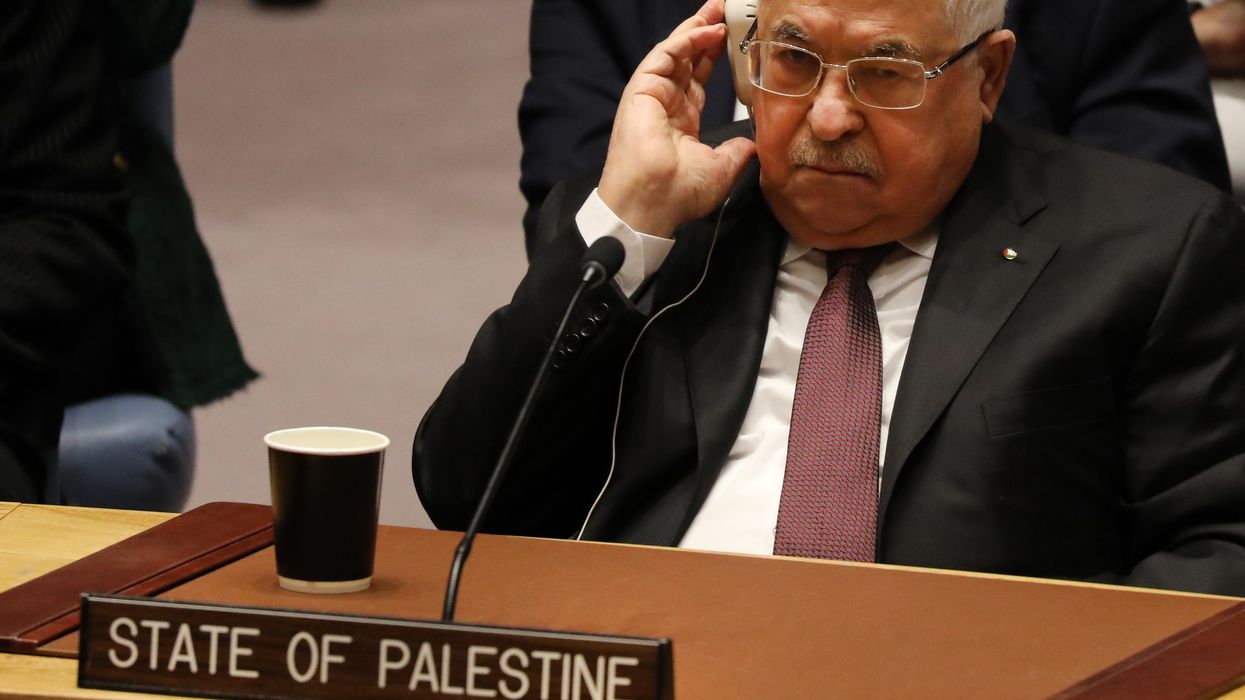
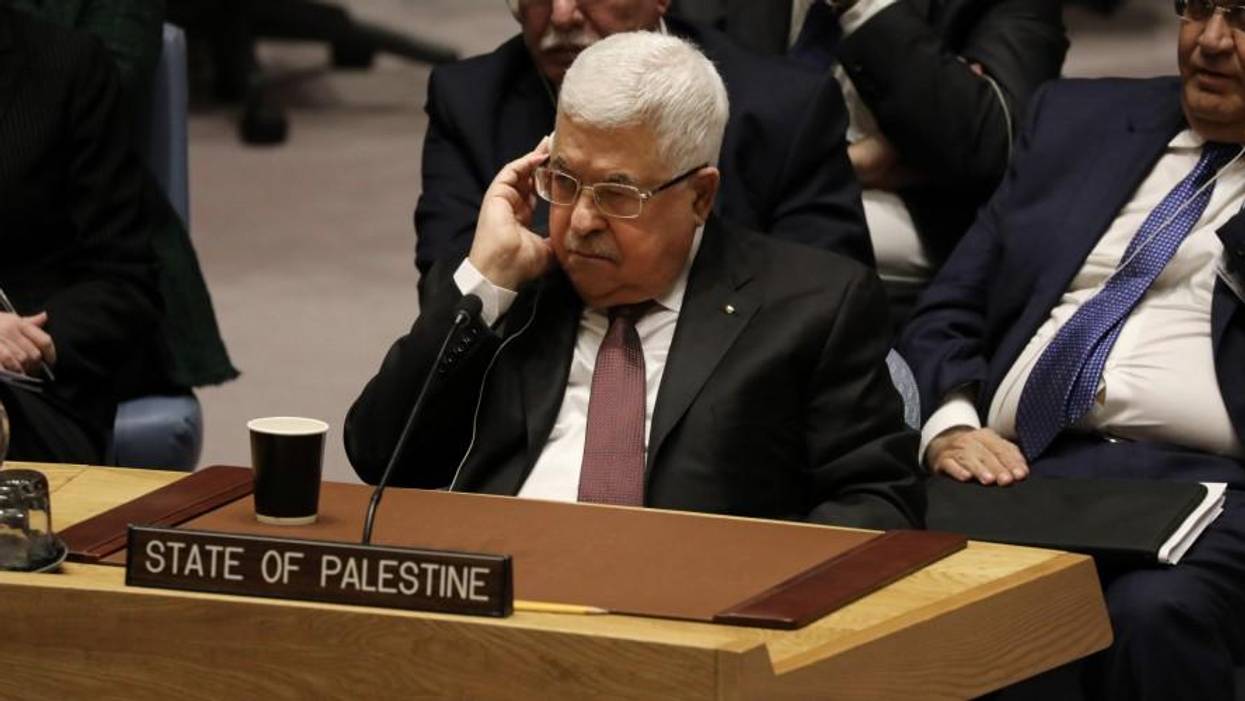
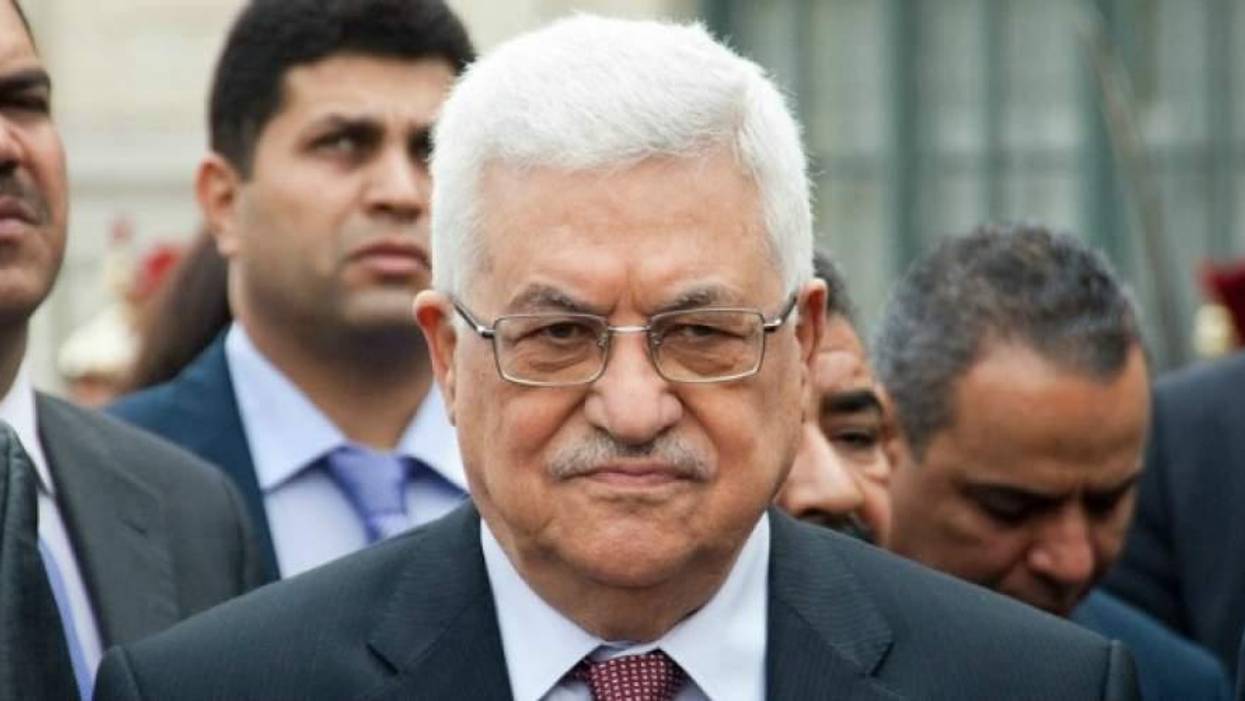
It is not clear which Palestinian officials will have their visas denied or revoked. The office of Palestinian Authority President Mahmoud Abbas said in a statement responding to the US announcement that "this decision stands in clear contradiction to international law and the UN Headquarters Agreement—which effectively shields UN member-state officials from US immigration policies—particularly since the state of Palestine is an observer member of the United Nations."
This isn't the first time the US has blocked Palestinian officials from attending a General Assembly. In 1998, the Regan administration denied then-PLO Chair Yasser Arafat a visa and the General Assembly was convened in Geneva instead of New York. There have already been numerous calls to relocate this year's General Assembly to the Swiss city following the US move.
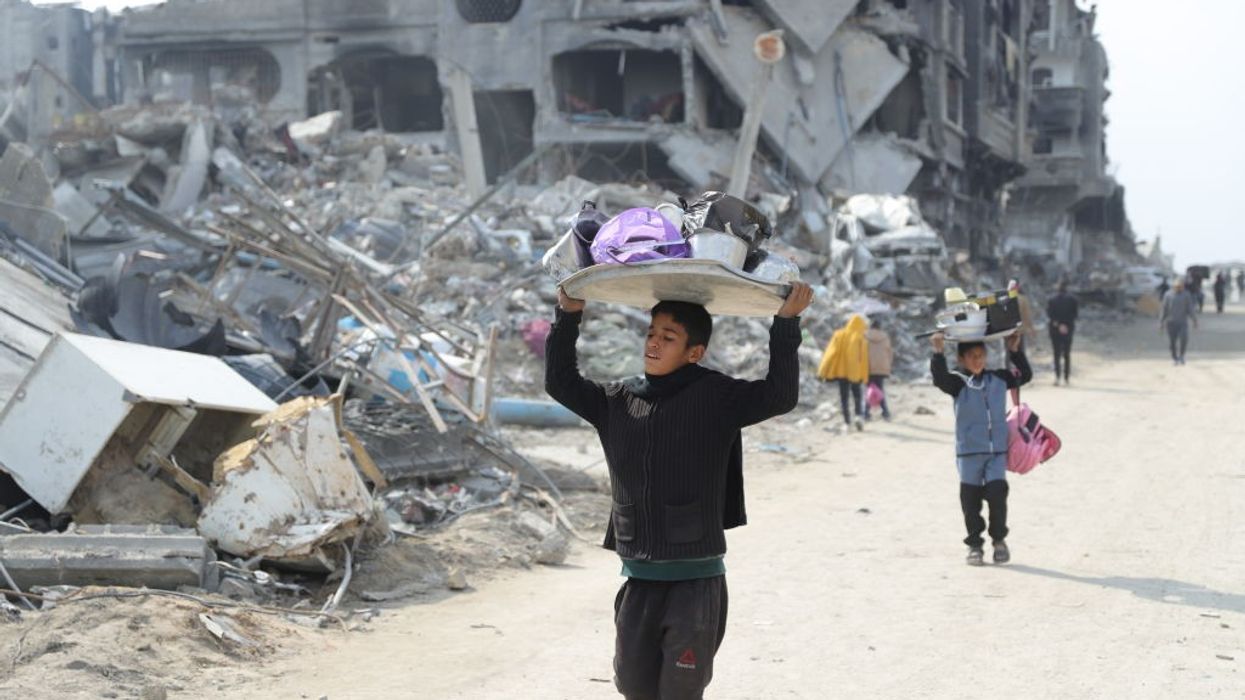
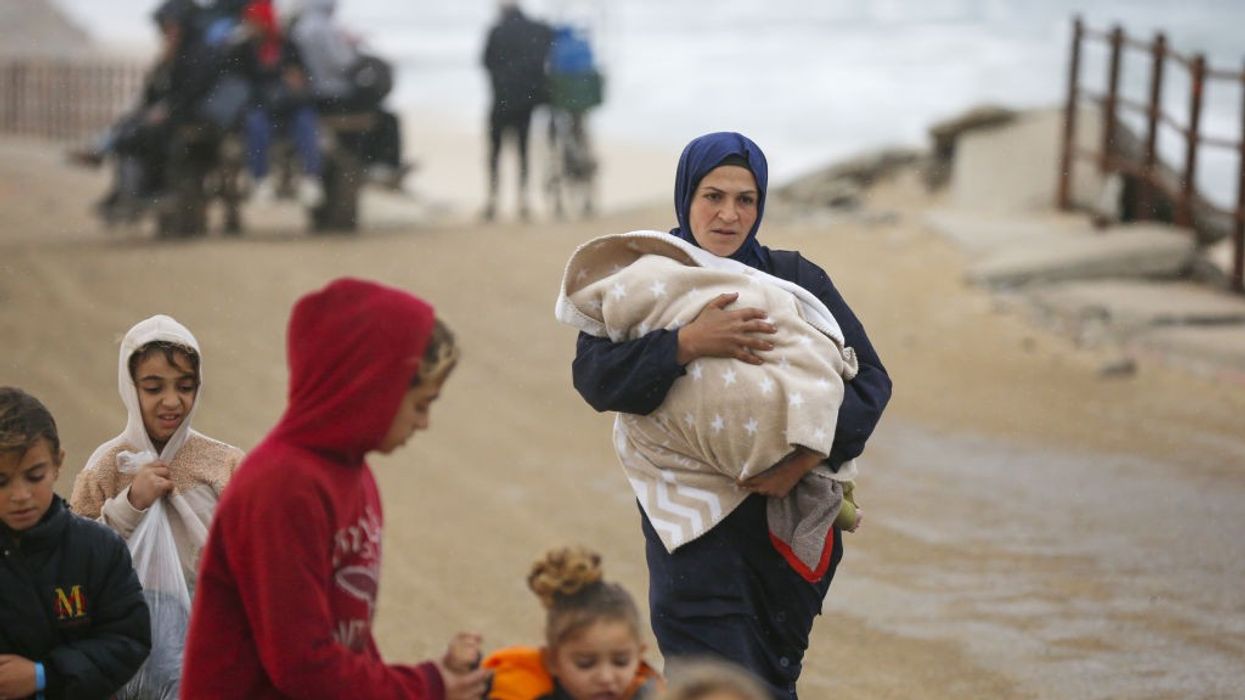
The US announcement comes as more and more countries formally recognize Palestinian statehood or move to do so amid Israel's genocidal assault, siege, and famine in Gaza, which, combined, have left more than 230,000 Palestinians dead, maimed, or missing and the strip in ruins.
Approximately 150 of the UN's 193 member states have officially recognized Palestine. Since October 2023, countries including Australia, Belgium, Canada, France, Malta, Portugal, Slovenia, the United Kingdom, Ireland, Norway, and Spain have either recognized Palestine or announced their intent to do so.
"This is our homeland," said one Gaza City resident. "Neither I, my children, nor my grandchildren will ever leave it."
Palestinians reacted with derision and defiance to U.S. President Donald Trump's Tuesday call for the ethnic cleansing and American takeover of the Gaza Strip.
Speaking alongside Israeli Prime Minister Benjamin Netanyahu—a fugitive from the International Criminal Court—at the White House in Washington, D.C., Trump said the U.S. will "take over" the strip.
"We'll own it," he said, adding that U.S. developers will "level it out" and build the "Riviera of the Middle East" after Palestinians—"all of them"—leave Palestine's coastal enclave. Asked if his plan involved sending U.S. troops to Gaza, Trump replied, "If it's necessary, we'll do that."
Forced removal of people by an occupying power is a war crime according to Article 49 of the Fourth Geneva Convention, under which Israel's apartheid settlements in the occupied West Bank and East Jerusalem are also illegal. Leaders of Egypt and Jordan, where Trump has proposed sending Gazans, vehemently oppose the plan.
While far-right figures in the United States and Israel—which would not exist in its current form without the ethnic cleansing of around 1 million Palestinians in 1947-48 and 1967—were thrilled by Trump's comments, Palestinians decried what one forcibly displaced Gaza City resident called the Republican's "delusional" plan.
"We will not allow the rights of our people, for which we have struggled for decades, to be infringed upon," Palestinian National Authority President Mahmoud Abbas said in a statement. "These calls represent a serious violation of international law, and peace and stability in the region will not be achieved without the establishment of the Palestinian state."
Abbas added that Gaza "is an integral part of the Palestinian land" and that "the legitimate Palestinian rights are non-negotiable."
Hamas—which governs Gaza despite the 15-month Israeli bombardment, invasion, and siege that obliterated the strip and killed tens of thousands of its people—blasted Trump's proposal as "a crime against humanity and a reinforcement of the law of the jungle at the international level."
Hamas spokesperson Sami Abu Zuhri told Reuters that Trump's plan is "ridiculous and absurd," warning that "any ideas of this kind are capable of igniting the region."
Um Tamer Jamal, a 65-year-old mother of six from Gaza, told Reuters that "we will not leave our areas."
"We have brought our kids up teaching them that they can't leave their home and they can't allow a second Nakba," she added, referring to the 1947-48 expulsion of over 750,000 Palestinians—sometimes via massacres, death march, and other acts of ethnic cleansing—to make way for Jewish settlement in the new state of Israel.
Reuters also interviewed Samir Abu Basel, a 40-year-old father of five in Gaza City, who said that "Trump can go to hell, with his ideas, with his money, and with his beliefs. We are going nowhere. We are not some of his assets."
Nizar Noman, a 64-year-old Gaza City resident still waiting to return to what's left of his home, told Middle East Eye that "President Trump is delusional to think that the people of Gaza can leave, even if it is a mess as he described."
"He now cares about the people in Gaza and thinks about our future?" he asked. "Where was he when we were being killed by Israeli missiles funded by American taxes?"
"As I belong to my homeland, my homeland belongs to me," Noman added. "I regret the day I left my house and went to the south. I now prefer to die under the rubble of my home than leave it again, even for another city in Palestine. This is our homeland. Neither I, my children, nor my grandchildren will ever leave it."
Zaid Ali, a 42-year-old northern Gaza resident, told Middle East Eye: "My family and I have been steadfast in northern Gaza. We never even thought about leaving."
Ali said he and his five brothers could not convince their 85-year-old father to flee Gaza, even after Israeli airstrikes killed three of his grandchildren.
"He witnessed the Nakba and left his home once as a child when they were forcibly displaced from Haifa," Ali explained. "He would never repeat his father's mistake... For him, Trump's words are a joke."
Diaspora Palestinians also condemned Trump's proposal.
The Westland, Michigan-based American Federation of Ramallah Palestine—one of the oldest Palestinian American advocacy groups—said in a statement that "President Trump's suggestion to ethnically cleanse Gaza is not only unacceptable and criminal, but also morally bankrupt, contemptible, and repugnant."
"We should aspire for peace, equality, and humanity, rather than this mere suggestion of displacing an already traumatized community" the group added. "It reveals the moral depravity of our country's leadership."
"The expulsion of the Palestinian civilian population from Gaza would not only be unacceptable and contrary to international law," said Germany's foreign minister. "It would also lead to new suffering and new hatred."
U.S. President Donald Trump's call on Tuesday for the ethnic cleansing of Gaza with American military force drew near-universal condemnation from the international community, with political leaders, United Nations officials, and human rights groups denouncing the outrageous proposal as inhumane and blatantly unlawful.
"Any forcible transfer in or deportation of people from occupied territory is strictly prohibited," Volker Türk, the U.N. high commissioner for human rights, said in a statement following Trump's remarks alongside Israeli Prime Minister Benjamin Netanyahu, who is facing an International Criminal Court arrest warrant after presiding over a 15-month-long, U.S.-backed decimation of the Gaza Strip.
U.S. allies and adversaries, including in the Middle East, swiftly rejected Trump's call for American ownership of Gaza and the total removal of the Palestinian population. Hamas, the Palestinian Authority, Palestinian Islamic Jihad, Palestine's envoy to the U.N., Saudi Arabia, Egypt, and ordinary Palestinians in Gaza were among those who dismissed the U.S. president's proposal as unconscionable.
"These calls represent a serious violation of international law," said Palestinian President Mahmoud Abbas. "Peace and stability will not be achieved in the region without establishing a Palestinian state with Jerusalem as its capital on the borders of 1967, based on the two-state solution."
European nations also sharply criticized Trump's proposal, with France's foreign ministry expressing "opposition to any forced displacement of Gaza's Palestinian population, which would constitute a serious violation of international law, an attack on the legitimate aspirations of Palestinians, and also a major obstacle to the two-state solution and a factor of major destabilization for our close partners, Egypt and Jordan, and the whole region."
German Foreign Minister Annalena Baerbock said that "the expulsion of the Palestinian civilian population from Gaza would not only be unacceptable and contrary to international law."
"It would also lead to new suffering and new hatred," she warned.
"Once again, the man who claimed to be the peace candidate is showing himself to be nothing more than the War Profiteer President."
Trump's call for a U.S. takeover of the Gaza Strip came days after the president said he wants to "just clean out" the Palestinian enclave by forcibly displacing the territory's population, which is living under a fragile cease-fire agreement and in the process of returning to homes left in utter ruins by Israeli and American bombs.
Francesca Albanese, the U.N. special rapporteur for the occupied Palestinian territories, said at a press conference on Tuesday that Trump's proposal is "completely irresponsible." Even the act of floating ethnic cleansing in Gaza amounts to "incitement to commit forced displacement, which is an international crime," said Albanese.
"The international community is made up of 193 states," she added, "and this is the time to give the U.S. what it has been looking for: isolation."
U.S. human rights and anti-war organizations joined the chorus slamming Trump's proposal, with Amnesty International USA executive director Paul O'Brien writing on social media that "removing all Palestinians from Gaza is tantamount to destroying them as a people."
Sara Haghdoosti, executive director of Win Without War, said in a statement late Tuesday that "forcibly removing Palestinians from Gaza is ethnic cleansing."
"It is obviously illegal, deeply morally wrong, and incredibly dangerous," said Haghdoosti. "People in Palestine, Israel, Lebanon, and beyond need a real end to the war, not permanent forced displacement. Instead, tonight President Trump proposed to send U.S. armed forces to Gaza to kick Palestinians out and act as security guards for [Jared] Kushner and friends as they cash in on what Trump called 'the Riviera of the Middle East.'"
"Once again," Haghdoosti added, "the man who claimed to be the peace candidate is showing himself to be nothing more than the War Profiteer President."
Al-Quds [Jerusalem] reports that Palestinians in the West Bank greeted President Mahmoud Abbas's UN speech, in which he pledged to take Israel to the International Criminal Court if its squatter-settlements weren't withdrawn within a year, with widespread acclaim.
The International Criminal Court decided in March of this year that it has jurisdiction over the Palestinian West Bank and Gaza because the Palestine Authority has invited it to consider rights abuses there. Palestine is a signatory to the Statute of Rome, which established the ICC at the Hague in the late 1990s, and member states can ask the court to take up cases. Palestine was able to become a signatory because it was granted the status of non-member observer state at the UN by the General Assembly in 2012. This is the same status enjoyed by the Vatican.
Fatah greeted the speech as "an historic document" from the Palestinians to the world. Muhammad Gharib saw it as a gauntlet thrown down to international institutions demanding that they abide by their own principles and resolutions and that they cease their double standard when it comes to Palestine.
The Palestine National Council said that Friday's speech before the UN General Assembly returned the Palestinian cause to its roots in that it focused on the creation of a Palestinian state in accordance with UN General Assembly resolution 181, which called for partition of British Mandate Palestine into Jewish and Palestinian states, and resolution 194, which called for the return of Palestinian refugees to Palestine. The chair of the PNC, Salim Zanoun, underlined that the plan would require the unity of the various Palestinian parties and factions.
He pointed out the Abbas's speech put the onus on international bodies, including the UN, to be responsible about the establishment of a Palestinian state with genuine sovereignty.
Israeli Prime Minister Naftali Bennett says he will not allow a Palestinian state to be formed, in stark contrast to the Biden administration's stated support for a two-state solution. Despite Israeli attempts to depict the Palestinians as unwilling to negotiate, it seems clear that the road block is the Israeli government, which has put out of bounds the very goal of any negotiations before they could start.
Israel seized the Palestinian Territories by main force in 1967 and has egregiously violated international law by illegally annexing some of them and by flooding hundreds of thousands of its own citizens into the Palestinian West Bank, stealing land owned by Palestinian families on which to settle these squatters. Its occupation has a shape incompatible with the Hague Regulations of 1907 and the Fourth Geneva Convention on Occupied territories of 1949, and so is itself illegal.
The Fatah Youth Movement said it would attempt to implement Abbas's speech by improving communication among Palestinian youth and confronting the Israeli Occupation's creeping annexation of Palestinian-owned land.
The Palestinian Democratic Union (FIDA) praised the speech as a road map for Palestine in the coming phase. It also called for new Palestinian elections.
Russia's Sputnik news service reports that political scientist and Palestine Authority adviser on international relations Osama Shaath said that Abbas's speech placed a burden on the international community. He underlined Abbas's "demand to hold an international peace conference under international auspices and under international supervision to implement United Nations resolutions, especially Resolution No. 2334."
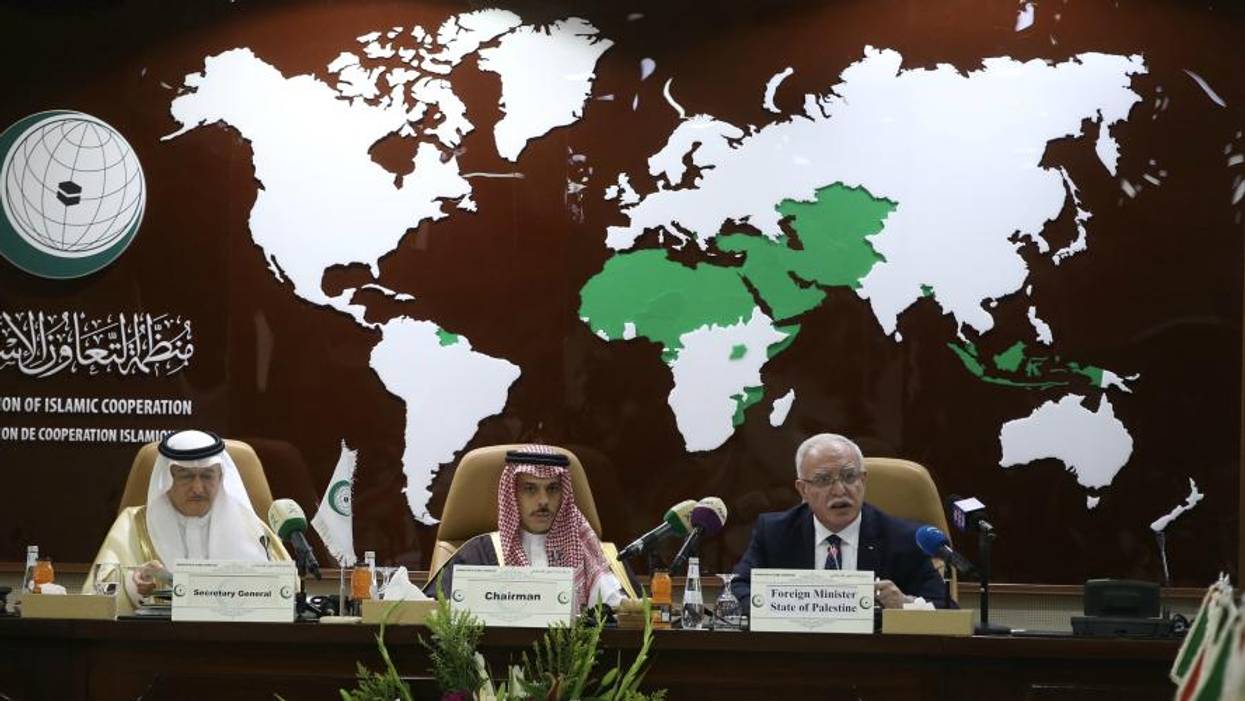
Joining global critics of a plan that President Donald Trump unveiled last week to address the decades-long Israel-Palestine conflict, the Organization of Islamic Cooperation on Monday rejected the "biased" proposal and urged members states not to cooperate with U.S. efforts to enforce it.
At a meeting in Jeddah, Saudi Arabia, the OIC executive committee adopted a resolution which decried Trump's so-called "Deal of the Century," reaffirmed support for the Palestinian people and the Palestine Liberation Organization headed by Mahmoud Abbas, and emphasized that "peace and security in the Middle East region, as a strategic option, will only be achieved with the end of the Israeli occupation."
The 57-member body of Muslim-majority countries declared that Trump's plan "lacks the minimum requirements of justice and destroys the foundations of peace, including the agreed legal and international terms of reference for a peaceful solution and the need to respect and recognize the inalienable rights of the Palestinian people, including the right to national independence and of Palestine refugees to return."
The resolution expressed "regret at the biased approach of the 'plan' that fully adopts the Israeli narrative and endorses the annexation of vast areas of the occupied land of the State of Palestine, under the pretext of security for Israel, the illegal occupying power, in flagrant violation of the principles of international law, the inadmissibility of the acquisition of territory by force, the United Nations Charter, and relevant international resolutions."
According to the resolution, Israel is "responsible for the deterioration of the situation on the ground because of its denial of relevant agreements, its defiance of international legitimacy and the continuation of the policies of colonization, annexation, settlement expansion, discrimination and ethnic cleansing, which have been perpetrated against the Palestinian people in the occupied Palestinian territory, including East Jerusalem."
Along with warning Israel against making any further moves "to consolidate its colonial occupation in the territory of the State of Palestine," the OIC called on the international community to reject and confront "any action or proposal that is inconsistent with international law and relevant United Nations resolutions."
The resolution came just two days after the Arab League also rejected Trump's proposal, concluding that "it does not meet the minimum rights and aspirations of Palestinian people," and vowed to not cooperate with the U.S. efforts to implement the plan.
Abbas, the Palestinian Authority president, announced at the Arab League meeting that in the wake of the plan's unveiling, "we've informed the Israeli side ... that there will be no relations at all with them and the United States including security ties." The Palestinian leader has declined to communicate with Trump by phone or letter.
Other critics of the proposal--which Trump introduced at the White House week with Israeli Prime Minister Benjamin Netanyahu by his side--have denounced it as an "annexation plan." Last week, Rep. Ilhan Omar (D-Minn.) called it "shameful and disingenuous" while Sen. Bernie Sanders (I-Vt.), a 2020 White House hopeful, warned that the plan "will only perpetuate the conflict."
The OIC resolution also came as Agence-France Presse reported that the United States requested a closed-door United Nations Security Council meeting Thursday for a presentation by Jared Kushner, Trump's son-in-law and senior adviser, who oversaw the development of the administration's plan.
That meeting would occur just days before Abbas is set to arrive at the U.N. on Feb. 11 "to express opposition to the U.S. plan and to demand adherence to international law," AFP noted. "On the occasion of Abbas' visit, the Palestinians have indicated they plan to submit a draft resolution to the Security Council, through Tunisia, a non-permanent member of the council."
The Palestinian Authority, which governs the occupied West Bank, announced on Saturday that it would act immediately to cut ties with the U.S. after President Donald Trump unveiled a so-called peace plan that effectively allows Israel carte blanche to continue the occupation and theft of Palestinian land.
"We've informed the Israeli side ... that there will be no relations at all with them and the United States including security ties," Authority president Mahmoud Abbas told members of the Arab League in an emergency meeting called to assess options for the Palestinian people.
According to Reuters reporting:
The Arab League foreign ministers meeting in Cairo said the plan would not lead to a comprehensive and just peace, and that the League would not cooperate with the United States in implementing it.
The ministers affirmed Palestinian rights to create a future state based on the land captured and occupied by Israel in the 1967 Middle East war, with East Jerusalem as capital, the final communique said.
Foreign ministers from Egypt, Saudi Arabia, Jordan, Iraq, Lebanon, among others, said there could be no peace without recognizing Palestinian rights and a comprehensive solution.
Abbas also said he had refused to look at the plan or talk to Trump on the phone about it to avoid giving the U.S. president the ability to claim Abbas had been consulted.
"Trump asked that I speak to him by phone but I said 'no,' and that he wants to send me a letter," said Abbas, "so I refused to receive it."
As Common Dreams reported, the plan was panned by progressives, with Sen. Bernie Sanders (I-Vt.), a frontrunner for the 2020 Democratic presidential nomination, becoming the first major party top contender to call an end to the Israeli occupation."
"Trump's so-called 'peace deal' doesn't come close, and will only perpetuate the conflict," said Sanders. "It is unacceptable."
Those who are still hoping that the new American agenda on Palestine and Israel is temporary, or reversible, should abandon this false hope. Washington's complete adoption of Israel's messianic, extremist policies regarding Occupied Palestine has been a long time in the making. And it is here to stay.
Despite the unmistakable clarity in the American political discourse regarding Palestine, the Palestinian Authority (PA) is still trapped in a 25-year long, ineffectual political paradigm. Unable to move past their disproportionate reliance on American validation, and lacking any real strategic vision of their own, PA President Mahmoud Abbas and his men are operating within a cliches-centered trajectory of a 'negotiated peace' - a discourse that was, itself, invented and championed by Washington and its allies.
Newly-appointed (not elected) Palestinian Prime Minister, Mohammad Shtayyeh, conveyed this very sentiment in his June 24 interview with CNN's Christiane Amanpour. "If you look at the literature, if you look at the statements, our President has been working by the book," he said.
What book was Shtayyeh referring to? Certainly not the book of international and humanitarian law, which has devised a clear path aimed at achieving Palestinian freedom, rights and territorial sovereignty.
It is, rather, a book that is written by Washington, from which brazen pro-Israel agenda has preceded the Donald Trump administration by decades.
This is, in fact, the core ailment of Palestinian politics, as practiced by the PA. Throughout the years, the PA has received hundreds of millions in American funds, in exchange for sidelining the UN in favor of a complete American hegemony over the so-called 'peace process'. Abbas' recent attempts at reviving the role of the UN and its affiliated institutions is a belated attempt at correcting a historical mistake.
What will it take for Shtayyeh, and his boss in Ramallah, to abandon the American option and, instead, to develop a rounded strategy that is founded on national unity, democratic representation and international solidarity? Much precious time has been lost subscribing to the one-sided American book, which has no room for a Palestinian discourse of national liberation, unconditional freedom and basic human rights.
While Trump's advisor and son-in-law, Jared Kushner, was referring to Palestinians as "hysterical and erratic," following the two-day Bahrain economic conference (June 25-26), US Middle East 'peace envoy', Jason Greenblatt, was challenging the very terminology used by the entire international community regarding the illegal Israeli Jewish colonies in Occupied Palestine.
"People (should) stop pretending (that) settlements, or what I prefer to call 'neighborhoods and cities,' are the reason for the lack of peace," the American envoy told participants at the 'Israel Hayom Forum for US-Israeli Relations'."
For the record, the widely-circulated rightwing Israeli newspaper, 'Israel Hayom' which sponsored the conference, is financed by pro-Israel American casino mogul, Sheldon Adelson. The latter is known to be the primary advocate behind Trump's misguided policies in Palestine, including Washington's recognition of Occupied Palestinian East Jerusalem as part of Israel's capital.
Greenblatt is but one of several unabashedly pro-Israel American politicians, who have taken the already biased US foreign policy to a whole new low. This clique also includes former US ambassador to the UN, Nikki Haley, and Washington's Ambassador to Israel, David Friedman.
In an interview, also with 'Israel Hayom' on June 11, Haley tried to assure Israelis that "Israel should not be worried," about having to make any political concessions in exchange for Trump's recognition of Jerusalem as Israel's capital or of Israel's sovereignty over the occupied Syrian Golan Heights.
"Through the Middle East plan (so-called 'Deal of the Century'), one of the main goals that Jared Kushner and Jason Greenblatt focused on was to not hurt the national security interests of Israel," Haley said. "They understand the importance of security; they understand the importance of keeping Israel safe."
While Haley's, Kushner's and Greenblatt's statements can be viewed as part of the ever-skewed, pro-Israel language emanating from Washington, one must not be too hasty. The fact is, Washington has now fully embraced the Zionist Israeli discourse without the slightest attempt at playing the role of the impartial arbitrator.
It is as if Haley, et al are now members of the Israeli Prime Minister, Benjamin Netanyahu's rightwing Likud party.
But no one represents this blatant American realignment into the Israeli camp better than Ambassador Friedman, who has, in an interview with the New York Times, on June 8, backed any future Israeli annexation of parts of the Occupied West Bank.
A few weeks later, in a disturbing and highly symbolic gesture, the American Ambassador carried a sledgehammer and broke open a tunnel that snakes underneath the East Jerusalem Palestinian neighborhood of Silwan. The tunnel, part of Israel's expansionistic policy in Occupied Jerusalem, has already damaged the foundation of over 80 Palestinian homes.
The determined and gratified look on Friedman's face spoke volumes about the 'hysterical, erratic' and extremist US foreign policy under Trump.
So what hope is left for the PA in Ramallah, now that Washington has taken all the political, financial and every other practical step to sideline Palestinians, to marginalize their rights and push them into submission? And what good will appealing to American sensibilities through CNN and any other platform do, considering that Washington's strategy is deeply entrenched and irrevocable?
Much can be said about Palestinian failure to change course when it became repeatedly clear since the signing of the Oslo Accord in 1993, that Washington has no interest in pressuring Israel to end illegal settlement construction and to respect international law. Worse, while Washington paid lip service to 'peace', it supported the Israeli war machine, military occupation and settlement construction with billions of dollars.
While it is good that the PA is finally waking up to the fact that subscribing to Washington's foreign policy book is a historic mistake, mere awareness is simply not enough.
It is time for the Palestinians to write their own book, one that is guided by the concept of national liberation, not endless negotiations; one that is predicated on unity, not mortifying factionalism; one that appeals to the whole global community, not to American handouts.
The economic proposal purportedly designed to help foment Israeli-Palestinian peace and made public over the weekend by Jared Kushner, top advisor and son-in-law to President Donald Trump, fell predictably flat as Palestinians rejected it immediately as not tethered to reality and an insult to those who continue to struggle while living under the U.S.-backed military occupation of the Israelis.
Part of what has become know as Kushner's "Deal of the Century" proposal to end the Israel-Palestine conflict, it was treated as largely unserious by Palestinians and those who advocate for their liberation.
According to Reuters:
The "peace to prosperity" plan, set to be presented by White House senior adviser Jared Kushner at an international conference in Bahrain next week, includes 179 infrastructure and business projects, according to details of the plan and interviews with U.S. officials. The approach towards reviving the moribund Israeli-Palestinian peace process was criticized by the Palestinians on Saturday.
The ambitious economic revival plan, the product of two years of work by Kushner and other aides, would take place only if a political solution to the region's long-running problems is reached.
More than half of the $50 billion would be spent in the economically troubled Palestinian territories over 10 years while the rest would be split between Egypt, Lebanon and Jordan. Some of the projects would be in Egypt's Sinai peninsula, where investments could benefit Palestinians living in adjacent Gaza, a crowded and impoverished coastal enclave.
The answer from Palestinians--abrupt and dismissive--was emphatic: the proposal is a nonstarter.
" Palestine is not for sale," said the Hamas government in Gaza in response.
In an interview on Al-Jazeera, Palestinian rights activist Ali Abunimah, co-founder and editor of the Electric Intifada, was incredulous and said Kushner--who has a "real credibility problem" to begin with--"can't tell us he cares about ending poverty for Palestinians while inflicting more poverty on them."
As opposed to something that anyone who has seriously studied the issue would dare present as a serious solution, Abunimah characterized it as nothing more than "slick marketing" and the "repackaging of recycled and hollow slogans that fail to address the root problem: Israeli occupation, settler-colonialism and apartheid."
Watch:
Hanan Ashrawi, a member of the Palestine Liberation Organization's (PLO) Executive Committee, echoed others in the Palestine Authority who said that it makes no sense to talk about economic investments until the political crisis at the heart of Israel's illegal occupation of Palestinian lands is ended.
"First lift the siege of Gaza, stop the Israeli theft of our land, resources and funds, give us our freedom of movement and control over our borders, airspace, territorial waters etc.," Ashrawi said on Saturday. "Then watch us build a vibrant prosperous economy as a free and sovereign people."
Palestinian Authority President Mahmoud Abbas said the same as he rejected the proposal on Saturday. "The economic situation should not be discussed before the political one," Abbas said. "As long as there is no political solution, we do not deal with any economic solution."
The International Conference on Palestine held in Istanbul between April 27-29 brought together many speakers and hundreds of academics, journalists, activists and students from Turkey and all over the world.
The Conference was a rare opportunity aimed at articulating a discourse of international solidarity that is both inclusive and forward thinking.
There was near consensus that the Boycott, Divestment and Sanctions (BDS) movement must be supported, that Donald Trump's so-called 'Deal of the Century' must be defeated and that normalization must be shunned.
For the one state solution to become the overriding objective of the pro-Palestine movement worldwide, the call has to come from a Palestinian leadership that reflects the true aspirations of the Palestinian people.
When it came to articulating the objectives of the Palestinian struggle, however, the narrative became indecisive and unclear. Although none of the speakers made a case for a two-state solution, our call for a one democratic state from Istanbul - or any other place outside Palestine - seemed partially irrelevant. For the one state solution to become the overriding objective of the pro-Palestine movement worldwide, the call has to come from a Palestinian leadership that reflects the true aspirations of the Palestinian people.
One speaker after the other called for Palestinian unity, imploring Palestinians for guidance and for articulating a national discourse. Many in the audience concurred with that assessment as well. One audience member even blurted out the cliched question: "Where is the Palestinian Mandela?" Luckily, the grandson of Nelson Mandela, Zwelivelile "Mandla" Mandela, was himself a speaker. He answered forcefully that Mandela was only the face of the movement, which encompassed millions of ordinary men and women, whose struggles and sacrifices ultimately defeated apartheid.
Following my speech at the Conference, I met with several freed Palestinian prisoners as part of my research for my forthcoming book on the subject.
Some of the freed prisoners identified as Hamas and others as Fatah. Their narrative seemed largely free from the disgraced factional language we are bombarded with in the media, but also liberated from the dry and detached narratives of politics and academia.
"When Israel placed Gaza under siege and denied us family visitations, our Fatah brothers always came to our help," a freed Hamas prisoner told me. "And whenever Israeli prison authorities mistreated any of our brothers from any factions, including Fatah, we all resisted together."
A freed Fatah prisoner told me that when Hamas and Fatah fought in Gaza in the summer of 2007, the prisoners suffered most. "We suffered because we felt that the people who should be fighting for our freedom, were fighting each other. We felt betrayed by everyone."
To effectuate disunity, Israeli authorities relocated Hamas and Fatah prisoners into separate wards and prisons. They wanted to sever any communication between the prisoners' leadership and to block any attempts at finding common ground for national unity.
The Israeli decision was not random. A year earlier, in May 2006, the leadership of the prisoners met in a prison cell to discuss the conflict between Hamas, which had won the legislative elections in the Occupied Territories, and the PA's main party, Fatah.
These leaders included Marwan Barghouthi of Fatah, Abdel Khaleq al-Natshe from Hamas and representatives from other major Palestinian groups. The outcome was the National Conciliation Document, arguably the most important Palestinian initiative in decades.
What became known as the Prisoner's Document was significant because it was not some self-serving political compromise achieved in a luxurious hotel in some Arab capital, but a genuine articulation of national Palestinian priorities, presented by the most respected and honored sector in Palestinian society.
Israel immediately denounced the document.
Instead of engaging all factions in a national dialogue around the document, PA President, Mahmoud Abbas, gave rival factions an ultimatum to either accept or reject the document in full. The spirit of the unity in the prisoners' initiative was betrayed by Abbas and the warring factions. Eventually, Fatah and Hamas fought their own tragic war in Gaza the following year.
On speaking to the prisoners after listening to the discourse of academics, politicians and activists, I was able to decipher a disconnection between the Palestinian narrative on the ground and our own perception of this narrative from outside.
The prisoners display unity in their narrative, a clear sense of purpose, and determination to carry on with their resistance. While it is true that they all identified as members in one political group or another, I am yet to interview a single prisoner who placed factional interests above national interest. This should not come as a surprise. Indeed, these men and women have been detained, tortured and have endured many years in prison for being Palestinian resisters, regardless of their ideological and factional leanings.
The myth of the disunited and dysfunctional Palestinian is very much an Israeli invention that precedes the inception of Hamas, and even Fatah. This Zionist notion, which has been embraced by the current Israeli Prime Minister, Benjamin Netanyahu, argues that 'Israel has no peace partner'. Despite the hemorrhaging concessions by the Palestinian Authority in Ramallah, this claim has remained a fixture in Israeli politics to this day.
Political unity aside, the Palestinian people perceive 'unity' in a whole different political context than that of Israel and, frankly, many of us outside Palestine.
'Al-Wihda al-Wataniya' or national unity is a generational quest around a set of principles, including resistance, as a strategy for the liberation of Palestine, Right of Return for refugees, and self-determination for the Palestinian people as the ultimate goals. It is around this idea of unity that the leadership of Palestinian prisoners drafted their document in 2006, in the hope of averting a factional clash and keeping the struggle centered on resistance against Israeli occupation.
The ongoing Great March of Return in Gaza is another daily example of the kind of unity the Palestinian people are striving for. Despite heavy losses, thousands of protesters insist on their unity while demanding their freedom, Right of Return and an end to the Israeli siege.
For us to claim that Palestinians are not united because Fatah and Hamas cannot find common ground is simply unjustified. National unity and political unity between factions are two different issues.
It is important that we do not make the mistake of confusing the Palestinian people with factions, national unity around resistance and rights with political arrangements between political groups.
As far as vision and strategy are concerned, perhaps it is time to read the prisoners' National Conciliation Document'. It was written by the Nelson Mandelas of Palestine, thousands of whom remain in Israeli prisons to this day.
With Israeli Prime Minister Benjamin Netanyahu reportedly poised to win reelection by a razor-thin margin after a campaign filled with overt anti-Arab racism, voter suppression tactics, and extremist promises--such as his last-minute vow to annex the West Bank--Palestinian officials decried the election outcome as a vote to "entrench and expand apartheid."
"The extremist and militaristic agenda, led by Benjamin Netanyahu, has been emboldened by the Trump administration's reckless policies and blind support."
--Hanan Ashrawi
"Regrettably, Israelis overwhelmingly voted for candidates that are unequivocally committed to entrenching the status quo of oppression, occupation, annexation, and dispossession in Palestine and escalating the assault on Palestinian national and human rights," Hanan Ashrawi, a member of the executive committee of the Palestine Liberation Organization (PLO), said in a statement Wednesday.
"They have chosen an overwhelmingly right-wing, xenophobic, and anti-Palestinian parliament to represent them," Ashrawi added. "The extremist and militaristic agenda, led by Benjamin Netanyahu, has been emboldened by the Trump administration's reckless policies and blind support."
Speaking anonymously to the Associated Press, an aide to Palestinian president Mahmoud Abbas echoed Ashrawi's assessment, saying the election outcome is a victory for the "extreme right-wing camp" in Israel.
As AP reported, Netanyahu's right-wing Likud party tied his opponent Benny Gantz's centrist Kahol Lavan party, with each winning 35 seats.
"Together with his current Jewish ultra-Orthodox and nationalist partners, Netanyahu seemed to have a clear path toward building a coalition government that has a majority in the 120-seat parliament," according to AP.
Netanyahu's apparent victory with over 97 percent of the votes counted came amid "historically low" Arab voter turnout, as the Likud party reportedly paid to place 1,200 hidden cameras at polling stations in Arab communities, sparking a swift legal complaint.
"The Palestinian people will overcome this dark and highly dangerous chapter and remain deeply rooted in our homeland," Ashrawi concluded. "We are a resilient people and we will persist and forge alliances with like-minded and responsible international actors to create a counterbalance to the dangerous and reckless agenda and its adherence among other racist and fundamentalist governments, particularly in Israel."