

SUBSCRIBE TO OUR FREE NEWSLETTER
Daily news & progressive opinion—funded by the people, not the corporations—delivered straight to your inbox.
5
#000000
#FFFFFF
To donate by check, phone, or other method, see our More Ways to Give page.
Daily news & progressive opinion—funded by the people, not the corporations—delivered straight to your inbox.
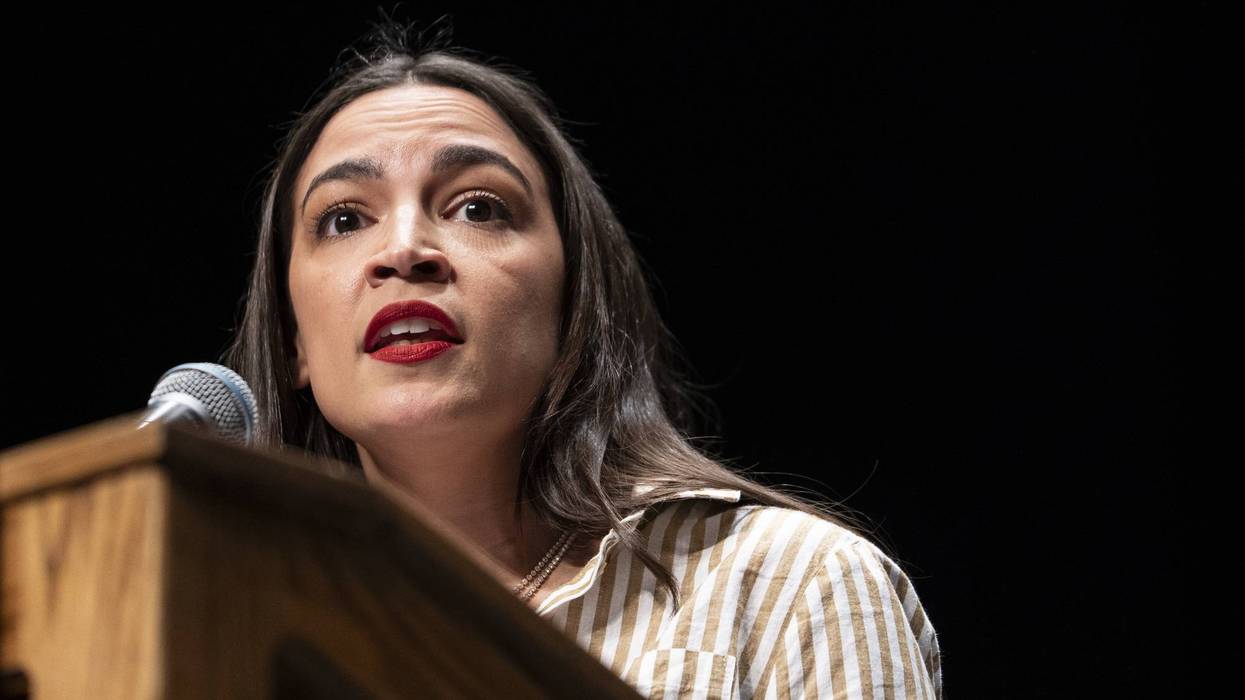
"I go after what I want, but maybe that’s what they don’t like," said the congresswoman.
It's been five days since US Rep. Alexandria Ocasio-Cortez, a potential 2028 presidential contender, went public with her decision to freeze her eggs.
But the response from right-wing influencers and operatives has already given her an opportunity to turn the discussion of her fertility into one that addresses Republican policies driving the affordability crisis, questions how committed the right really is to "freedom," and points out conservatives' hypocrisy when they urge women to "have babies younger"—while applying little of the same pressure to young men.
Ocasio-Cortez (D-NY) announced her decision to freeze her eggs last Sunday with the first in a series of Instagram videos in which her nearly 10 million followers have been able to follow along as she injects hormones and attends ultrasound appointments in preparation for the procedure—all while appearing on news programs to discuss foreign and domestic policy and talking to her followers about the side effects as well as the cost of fertility preservation treatment.
"I want you all to see that, because women can do anything,” Ocasio-Cortez, often known as AOC, told her followers. “And I think it’s badass that I’m going to be, you know, giving myself shots in the greenroom, get my glam on, roll out, talk about international events, domestic policy, elections, pop out, live my life, do my thing.”
Right-wing commentators who have bemoaned low birth rates and attacked liberal women for buying "into the feminist lie and spend[ing] their childbearing years climbing the career ladder," as podcaster Katie Miller said, immediately pounced on AOC's decision.
Allie Beth Stuckey, a popular right-wing podcaster and author of the books Toxic Empathy and You're Not Enough (And That's Okay), the latter of which warned against "the toxic culture of self-love," responded to the 36-year-old progressive congresswoman's videos with a list of reasons she should have already had children. She accused AOC of being "selfish and irresponsible" for potentially becoming a mother after 40 and said she was "glamorizing the lie that women can have it all."
Miller, the wife of President Donald Trump's homeland security adviser, Stephen Miller, allowed that "we should celebrate" a woman's efforts to have children in the future, but said that “more women should get married and have babies younger," while a spokesperson for Turning Point USA, the right-wing group founded by the late Charlie Kirk, said AOC's fertility decisions were a "cautionary tale" for women.
Meanwhile, conspiracy theorist Laura Loomer, who is said to have considerable influence in the White House, announced that AOC had "failed as a woman" and had “wasted her entire 30s living with a man pretending to be engaged when she could have gotten married and had a baby." (It was reported this week that AOC's long-term relationship had ended.)
Some conservatives questioned whether attacking the popular, social media-savvy lawmaker over her desire to have children was a wise move for the MAGA movement, with one former Office of the Director of National Intelligence official, Alexa Henning, telling The Times in the UK that "dunking on AOC for freezing her eggs is not a winning message with women voters."
On Thursday evening, Ocasio-Cortez suggested Henning was right to be concerned, as she posted her latest Instagram video on the topic.
She said she has found "the freak-out" around her egg-freezing process to be "pretty funny," because "my choice is a threat to them."
"Despite the rhetoric they use and the bald eagles that they plaster all over the place, they actually really do not believe in a free country," said AOC. "Very aggressively do not believe in a free country, because they attack everyone who exercises their freedom to choose all sorts of lives... They attack those who choose the life that they don't lead or a life that they don't approve of."
"And people say you’re peddling this 'dangerous lie that women can have it all.' You know, maybe in life you can’t have everything, but here’s the secret: You can have a hell of a lot. And I am very grateful for my life. I go after what I want, but maybe that’s what they don’t like either," she continued, before shrugging: "Too bad for them."
AOC: I also find the freakout around it pretty funny as well. I’m not gonna lie. A commentator that was like, “What she’s doing is peddling the dangerous lie that women can have it all.” Can you believe that?
What I find funny is that my choice is a threat to them. Despite the… pic.twitter.com/rwpPL8YH0F
— Acyn (@Acyn) August 14, 2026
She emphasized that the procedure "is not a guarantee" that she'll be able to use the eggs to have children later in life, but said the process had relieved "a certain amount of anxiety or stress that can come with feeling like you are in a race against biology that men simply don't have to engage in."
She then took aim at commentators like Stuckey and Miller for directing their pronatalist pressure campaigns disproportionately at young women.
"In straight relationships, who are you supposed to be having babies with?" said AOC. "They aren't pressuring men to be ready to have a baby young, as the way that they are pressuring women to have a baby when they're young."
AOC: For all of these right-wing people who are harping about women having to and needing to have families at a young age—and again, if that’s your choice, that’s amazing—but they are doing nothing to make sure that men in their culture respect and value women.
In fact, many of… pic.twitter.com/ox70tJzth1
— Acyn (@Acyn) August 14, 2026
The congresswoman then suggested that while Erika Kirk, Charlie Kirk's widow and now the CEO of Turning Point USA, recently told a crowd of young college graduates to "have more kids than you can afford," financial concerns may play a role in falling birthrates and delayed parenthood. Housing unaffordability has soared to record highs in recent years, while Trump's tariff policies and war in Iran have contributed to rising costs for groceries, gas, and other essentials. Republicans have also attacked government healthcare programs including Medicaid and Affordable Care Act subsidies, and about a third of Americans reported cutting back on spending in order to afford healthcare last year.
"The basics are more expensive than they've ever been," said Ocasio-Cortez. "For a lot of people, we would have kids at a much younger age if the conditions were right, if women got paid equally, and if people in general were paid enough and things were affordable enough that you feel like you could comfortably provide for a child."
With her series of videos, said Amanda Litman, executive director of the political action committee Run for Something, AOC had opened up "a larger conversation on women, ambition, family, gender politics, and so much more."
Journalist Zaid Jilani suggested right-wing commentators had fallen into a trap: "Intentionally or unintentionally she got the Republicans to act really weird."
The response from influential commentators on the right "is why her allies think she could run for the White House," wrote Katy Balls, Washington editor for The Times. "Her ability to set the terms of debate and trigger the right just as Trump does the left."
When powerful men and women with microphones and platforms tell the public that Muslim Americans are enemies, invaders, and less than human, some people listen. Some people act. Two teenagers in San Diego just did.
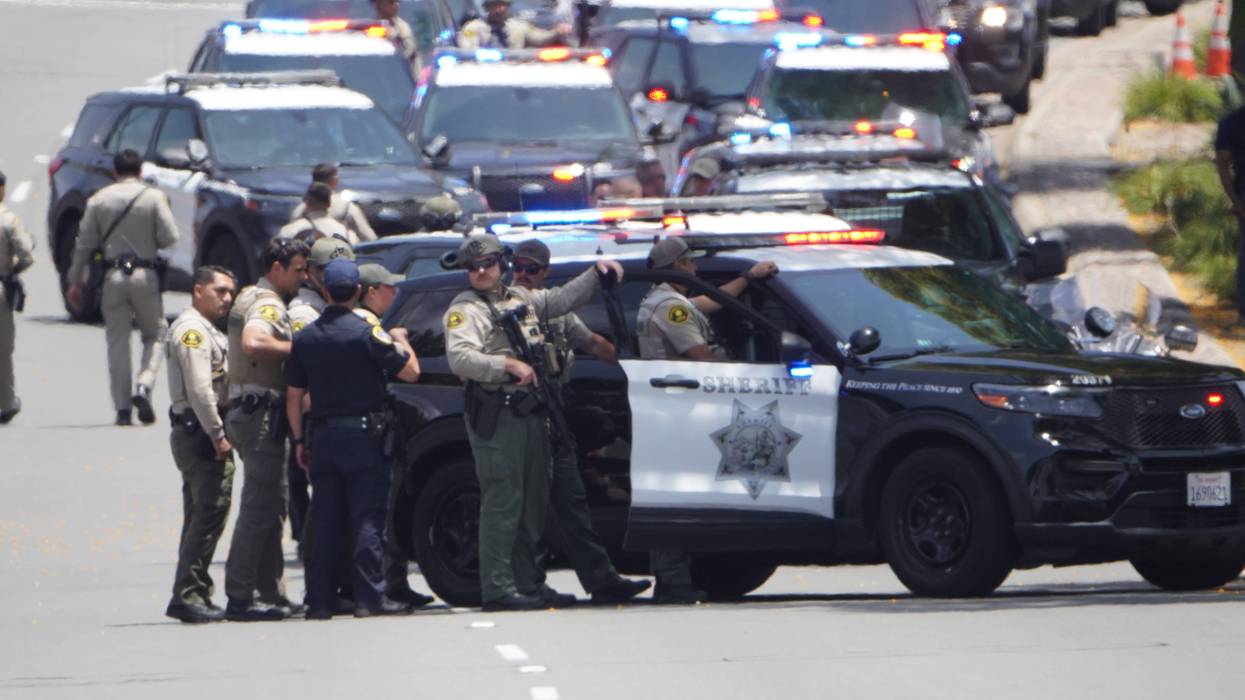
A hate crime had struck close to home. On the TV screen, more than four dozen police cars, blue lights swirling in a cold, mechanical rhythm. The news ticker crawled across the bottom of the TV screen, sanitizing horror into a newsbreak: police responding to an "incident" in San Diego's Clairemont Mesa neighborhood. An incident. I didn't think much of it at first. Then my phone rang. A friend. I couldn't bring myself to answer. Moments later, a text came through, cryptic, short and to the point: "Check on the Imam, shooting at the Islamic Center."
The world stopped.
I scrolled through my contacts, found the number, and dialed. My heart hammered against my chest with every ring. Then his voice. I closed my eyes. "We are okay. The school children are safe. We evacuated the mosque," Imam Taha said.
I let out a breath I did not know I had been holding. But okay, I would learn in the minutes and hours that followed, that was not the whole story. Three men who had been okay that morning would never be okay again.
The politicians who run their election campaigns casting American Muslims as enemies owe this community more than thoughts and prayers.
Under the steady and visionary leadership of Imam Taha Hassane, the Islamic Center of San Diego has grown into far more than a place of worship. It is a living, breathing hub of culture and education, a place where faith leaders of every denomination and neighbors of every background have always found an open door and a welcoming table. It is, in the truest sense of the word, a community, one that has spent decades building bridges in a city that repaid the generosity with bullets.
In less than 10 minutes, hate stole the life of three human beings. Amin Abdullah, who welcomed you with a curious smile when you came in, a father and a husband. Mansour Kaziha, a husband, father, and grandfather who greeted his community every day from behind the mosque store counter. And Nader Awad, who, as bullets tore through the air around him, ran into the fire to save others. Three men. Three families shattered. A community in mourning.
This hate crime did not occur in isolation. It comes amid an unprecedented and metastasizing culture of Islamophobia in the United States, where politicians have discovered that Muslim hate is a reliable path to election and commentators have built empires of followers on the broken backs of a vilified community. The names attached to this campaign are not fringe figures shouting into the void from dark corners of the internet. They are sitting senators. Elected congressmen. A president of the United States and his closest advisers. They speak from podiums, not podcasts, and have press secretaries, not anonymous accounts. And they have never—not once—been made to answer for what their words have unleashed.
As a presidential candidate, Donald Trump claimed that “Islam hates us." His close associate Laura Loomer wasted no time making the blood of victims useful to her agenda. Hours after the shooting, questioned the shooting calling it “The mosque that was 'supposedly' shot up today… people who attend this mosque want us all to be killed." Three men were murdered, and she called the victims a threat.
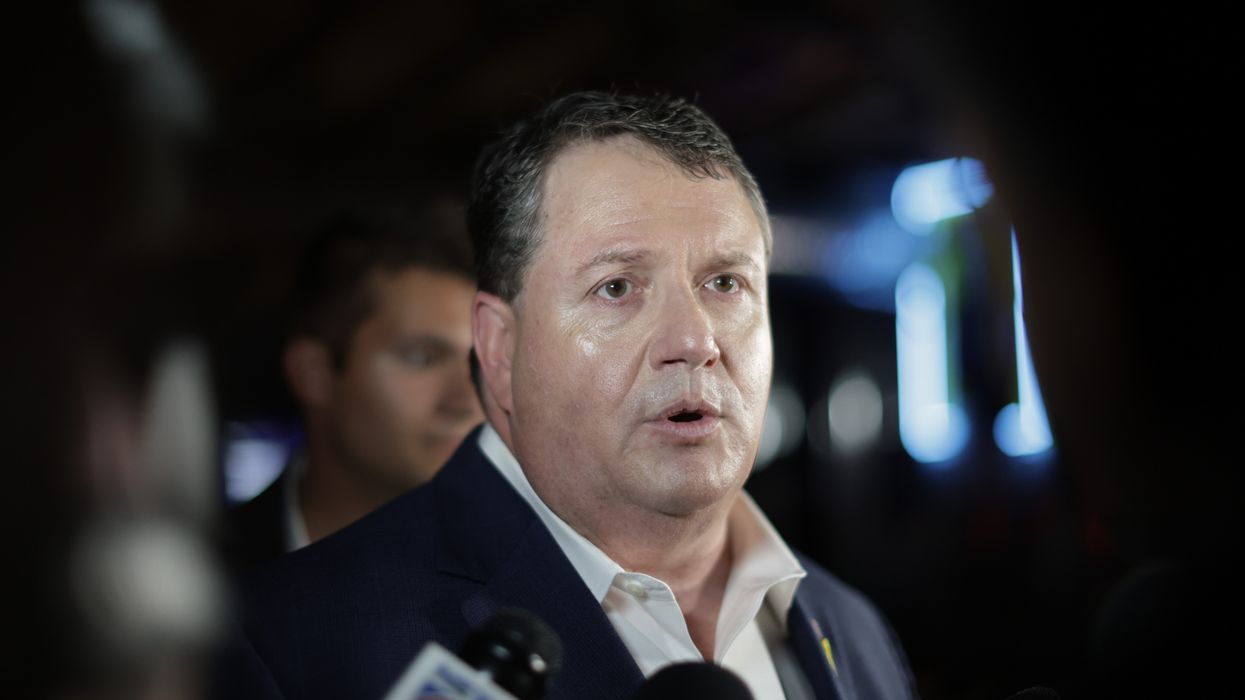
Sen. Tommy Tuberville (R-Ala.) says of Islam, “The enemy is inside the gates.” Sen. Ted Cruz (R-Texas) wants Big Brother to monitor Muslim neighborhoods. Congressman Randy Fine (R-Fla.) is the most explicit in spewing hate, declaring, “We need more Islamophobia, not less.”
Imagine the cry if another congressman said we need more Jewish hate.
A Washington Post investigation found that since the beginning of 2025, more than 100 members of Congress have mentioned Muslims or Islam in social media posts, with two-thirds of those posts referencing radical Islam, Sharia law, extremism, or terrorism. According to the Council on American-Islamic Relations, these statements have amplified Islamophobia and created an environment that fosters discrimination against Muslims. Hate and Islamophobia appear to be a winning election strategy for Republican candidates in November.
When powerful men and women with microphones and platforms tell the public that Muslim Americans are enemies, invaders, and less than human, some people listen. Some people act. Two teenagers in San Diego just did.
I will say something that many might find abhorrent, but that I believe with every fiber of my being: The murderers Cain Clark and Caleb Vazquez were also victims. Not of the same order as Amin, Mansour, and Nader, for nothing diminishes what was taken from those three men, their families, and community. But victims, nonetheless. Victims of a political and media ecosystem that fed them a steady dose of dehumanization, paranoia, and hatred of Muslims. They were radicalized by adults who knew exactly what they were doing but faced no accountability for it. Trump, Loomer, Tuberville, Fine, and many others did not pull the trigger, but they loaded the gun with the bullets of hate and pointed it at a place of worship. The blood of five people—including those two teenagers—is on their hands.
The failure is not at the federal level only. In the City of San Diego, Mayor Tod Gloria's performance of solidarity rings hollow against his record of deliberate exclusion. His administration refused to call for even a symbolic ceasefire as genocide unfolded in Gaza. He declined to meet with Muslim and Arab community leaders, fearing the political cost for acknowledging Palestinian life. Most recently, his City Council moved to adopt the International Holocaust Remembrance Alliance definition of antisemitism, a Zionist tool to silence voices critical of Israel’s malevolent policies. Every one of these decisions sent a message to San Diego's Muslim community: We don’t value you unless you’re dead, and your lives are worth less than the political comfort of those in power. That message was heard far beyond City Hall.
That dismissal, that deliberate erasure was incubated, fertilized, watered, and brought to lethal bloom by years of sanctioned dehumanization of Muslim Americans and sent a signal to every hateful actor watching: This community is fair game.
San Diego Mayor Gloria, who dismissed our cries in life, has no standing to console us in death. The politicians who run their election campaigns casting American Muslims as enemies owe this community more than thoughts and prayers.
The blood in San Diego does not belong only to two lost teenagers. It belongs to everyone who fed them, directly or indirectly, the ideology of Muslim hate.
Every American should recognize these increasingly unhinged attacks for what they are: Cynical attempts to protect Israel from criticism by frightening the American public.
Sharia law is taking over America, from Dearborn to New York City. So is the Muslim Brotherhood. And they are doing so with help from the communist left.
These claims should sound familiar to anyone who has kept track of the rhetoric coming from the Israeli government's supporters over the past few months. From politicians like Texas Gov. Greg Abbott and Rep. Randy Fine (R-Fla.) to keyboard warriors like Laura Loomer and Eyal Yakoby, some of Israel's biggest cheerleaders keep finding new ways to manufacture hysteria about Islam and Muslims.
What's behind this sudden and seemingly coordinated attempt to resurrect conspiracy theories about Muslims that were debunked years ago?
It’s certainly not because anyone truly believes that 6 million Americans are trying to somehow impose Islamic law on 300 million Americans. The real reason is simple: Gaza.
The real threat to our nation is not Muslims in Dearborn or Dallas—it’s corrupt politicians who put Israel first, waste taxpayer dollars on genocide, and try to distract Americans with lies and fear.
DropSite News recently revealed that the Israeli Foreign Ministry is conducting a global survey of the United States and European nations to gauge Western attitudes towards Israel.
The preliminary results show widespread opposition to the Israeli government because of its genocide in Gaza. But the results also show that support for Israel rebounded by 20 points when the pollster stoked fears of “Radical Islam” and “Jihadism.”
Cue the sudden surge in anti-Muslim rhetoric across the pro-Israel ecosphere.
To be clear, this strategy is nothing new.
For years, pro-Israel foundations played a major role in funding anti-Muslim hate groups like ACT for America, the Middle East Forum, and the Investigative Project on Terrorism, all of which are also led by anti-Palestinian extremists.
These groups and their funders have long feared the American Muslim community’s growing population, increased political activism, and consistent support for Palestinian human rights.
Because a thriving and politically impactful American Muslim community might one day reorient US foreign policy on Israel in a more just direction, American Muslims had to be smeared and silenced.
History is now repeating itself amid the Gaza genocide.
Texas Gov. Abbott just responded to manufactured controversy about a Muslim-led real estate project by signing a law that supposedly "bans sharia" (it doesn't) and Rep. Fine has introduced a bill to ban sharia across the country (it won't). Their political stunts replicate an unconstitutional attempt to ban sharia that swept through red states in the early 2010s.
Although anti-sharia hysteria eventually fizzled out, its proponents never gave up their other goal: painting American Muslims and their institutions as puppets of foreign boogeymen.
Israel's supporters in Congress have spent years pushing to declare the Muslim Brotherhood a terrorist group so that the government can then use that designation to launch witch hunts into American Muslim groups falsely accused of being tied to the Egyptian organization.
The first bill that attempted to do so was introduced in 2014 by pro-Israel hawk former Rep. Michele Bachmann (R-Minn.) with the backing of Frank Gaffney, who is also the founder of pro-Israel (and anti-Muslim) Center for Security Policy. The bill failed. The same fate befell other versions of the legislation pushed by Sen. Ted Cruz (R-Texas), who reintroduced his latest “modernized” bill in 2025.
In recent weeks, Laura Loomer has been using her apparent influence over the Trump administration to demand that the State Department unilaterally designate the Brotherhood as a terrorist group.
So has Eyal Yakoby, an Israeli-American college student who has become one of the Gaza genocide's most prolific defenders on social media. Between September 21 and 29, Yakoby has posted "Ban the Muslim Brotherhood!" at least 12 different times.
Nearly every other post in Yakoby's Twitter feed also hypes the supposed global threat of Muslims, from Dearborn to the United Kingdom to Nigeria. Yakoby even earned a community note for falsely blaming seasonal wildfires in Syria on Muslims "lighting Christian villages" on fire.
Another prominent pro-Israel figure pushing such hysteria is Amy Mekelburg, who has manufactured several controversies about the imaginary threat of sharia law taking over Texas, of all places.
Another odd talking point Israel's supporters have pushed in recent months is the claim that American conservatives critical of Israel, like Tucker Carlson and Candace Owens, have been bribed by—you guessed it—Muslims.
Every American should recognize these increasingly unhinged attacks for what they are: Cynical attempts to protect Israel from criticism by frightening the American public, keeping political conservatives in line, and silencing American Muslims.
The real threat to our nation is not Muslims in Dearborn or Dallas—it’s corrupt politicians who put Israel first, waste taxpayer dollars on genocide, and try to distract Americans with lies and fear.
They've done it before, and now they're doing it again. No one should fall for it this time.
One rights advocate noted that the creator of the flag the president said he'd consider banning recently left the US due to fears of persecution under the Trump administration.
After false claims spread last week that a transgender person was behind the fatal shooting of right-wing activist Charlie Kirk, US President Donald Trump and his allies are continuing to push the erroneous narrative that the transgender community is a danger to the American public.
Trump on Monday said that he'd consider banning LGBTQ pride flags as his political allies ratcheted up dehumanizing rhetoric.
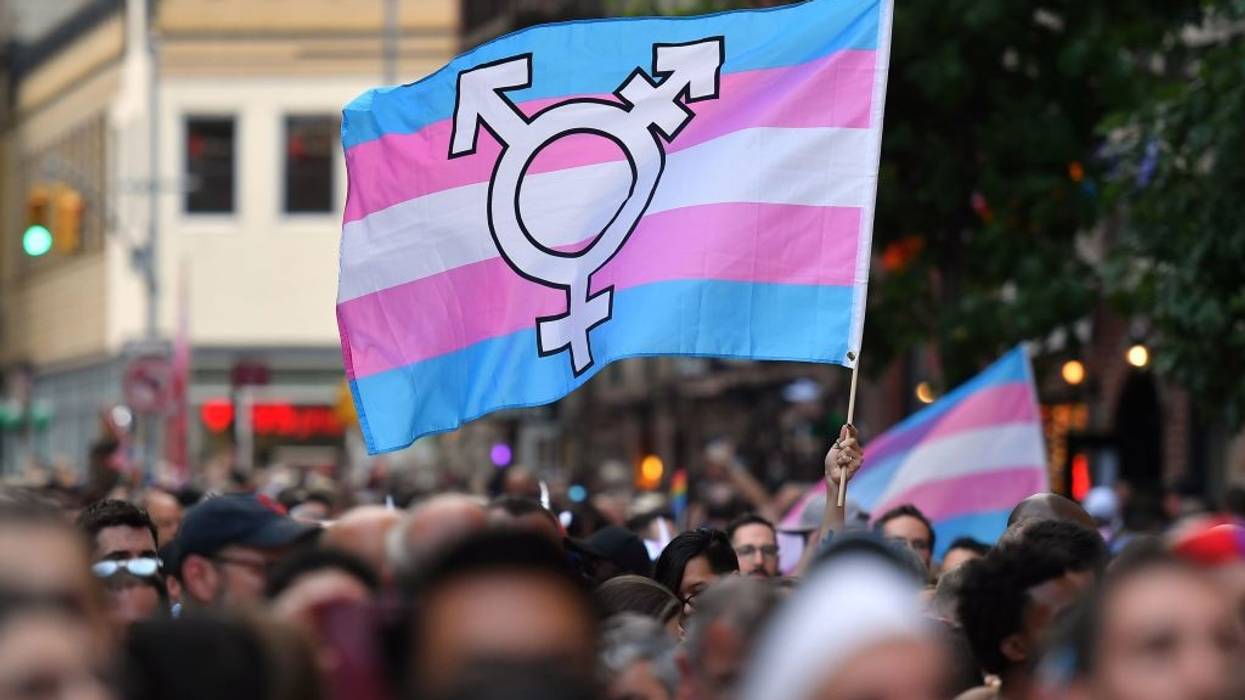
During an exchange in the Oval Office, Real America's Voice correspondent Brian Glenn showed Trump a photo of a trans flag currently on display in Washington, DC, and claimed that "a lot of people are very threatened" by it.
"Would you be opposed to taking this flag down, up and down the streets of DC?" Glenn asked.
"Well, I wouldn't be," Trump replied. "Then they'll sue and they'll get freedom of speech stuff, you know, so that'll happen. But I would have no problem with it."
Trump then pivoted to saying that he wanted anyone who burned an American flag to "go to jail immediately."
The day after the president signaled his support for banning transgender pride flags, Rep. Ronny Jackson (R-Texas) likened the transgender rights movement to a “cancer” and suggested detaining all transgender people in the United States.
In an interview with Newsmax, Jackson baselessly said that transgender women "have an underlying level of aggressiveness" and suggested they be forcibly committed to mental institutions.
"We have to treat these people," he said. "We have to get them off the streets, and we have to get them off the internet, and we can't let them communicate with each other. I'm all about free speech, but this is a virus, this is a cancer that's spreading across this country."
In response to Trump's attack on the transgender flag, ACLU communications strategist Gillian Branstetter pointed out that the transgender activist who created the symbol, Monica Helms, recently left the US "for fear of her safety as a trans person under Trump."
After the assassination of Kirk—who also falsely connected transgender people to mass shootings with no evidence—right-wing commentators quickly reacted by claiming the attacker was transgender and federal agents reported early on in their investigation that symbols of "transgender ideology" were found at the crime scene—a claim that was amplified by the Wall Street Journal.
In reality, mass shootings carried out by transgender individuals represent a minuscule fraction of the total number of mass shootings carried out in the US, and there is no evidence that transgender people are disproportionately likely to engage in acts of violence.
Laura Loomer, once a fringe far-right internet commentator and conspiracy theorist who is now an influential informal adviser to the president, has also been ramping up attacks against the transgender movement, and she even went so far this week as to demand that gender-affirming care be completely banned by executive order.
"It’s time to designate the transgender movement as a terrorist movement," she wrote in a social media post. "Trans people are a threat to society. We can’t allow them to continue killing people. They need to be socially ostracized and the president should make medical transitioning ILLEGAL in our country."
Conservative attacks on the transgender movement have persisted in the wake of the murder of right-wing activist Charlie Kirk, despite the fact that the alleged killer, Tyler Robinson, was not himself transgender.
Evidence released by prosecutors on Tuesday showed that Robinson's transgender partner refused Robinson's request to delete incriminating text messages the two had exchanged. The partner subsequently shared these messages with law enforcement.
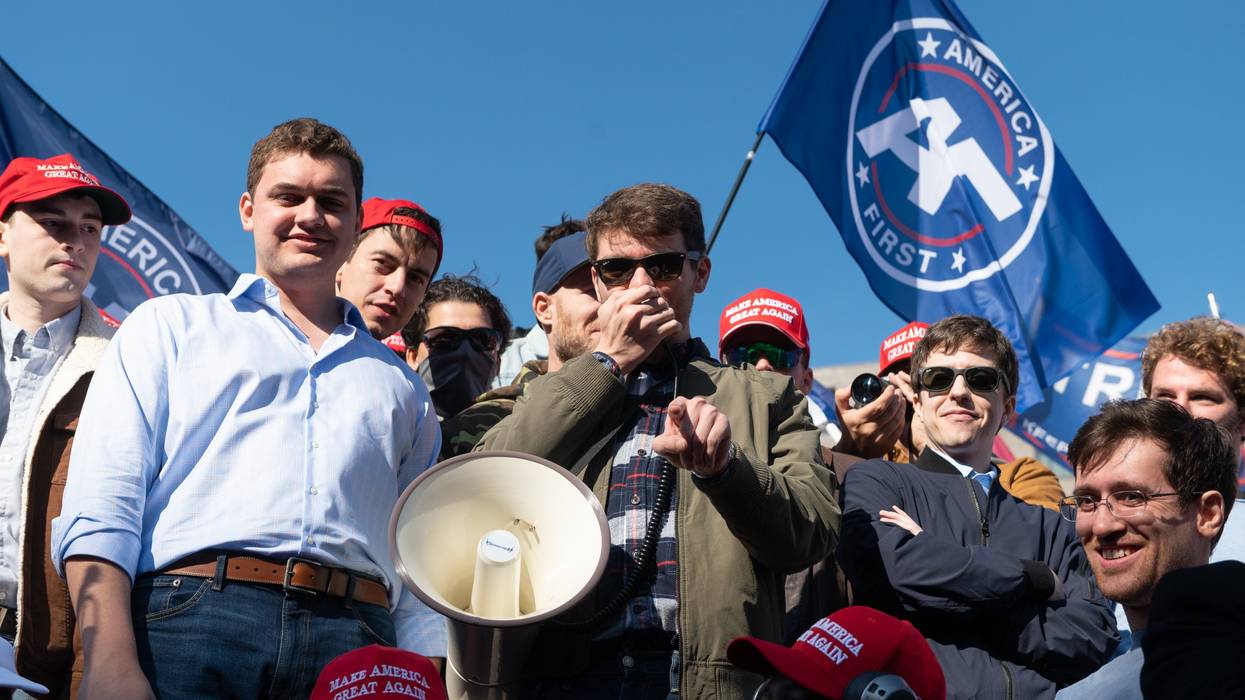
How social media turned a handful of young provocateurs into the far right’s national vanguard.
Through the late 2010s, pundits hailed Gen Z as America’s most progressive young cohort. Yet, the truth is more complicated: While many young voters voice support for climate action, racial justice, and reproductive rights, their overall partisan tilt is far less lopsided than early headlines implied. Support for Democrats among under-30 voters has softened since 2020, and young men in particular are drifting rightward on issues like gender equality and LGBTQ+ rights.
That gap between reputation and reality is, in part, due to a rising cadre of young conservatives who are more radical, more visible, and better organized than their progressive peers. From Nick Fuentes to Laura Loomer to the late Charlie Kirk, the figures shaping the far-right agenda have been startlingly young. Why, then, are some of the movement’s most prominent figures in their late 20s and early 30s? How did a political current once defined by veteran politicians and talk-radio personalities come to be led by live-streamers and college-circuit activists?
Consider Fuentes. Only 28, yet he commands a national audience of more than 700,000 followers. He has a dedicated fanbase, connections to GOP congressmen, and once had a private dinner with US President Donald Trump. And Fuentes is not an outlier. From political candidates to campus organizers, the far-right’s most prominent figures are getting younger—and more extreme.
The explanation lies in the internet’s ecosystem. Figures like Mike Cernovich and Jack Posobiec were among the first to show how provocation and relentless online promotion could transform fringe ideas into mass influence. In the years since, news has gone largely digital, with about 86% of Americans getting at least some of their news on phones or computers. The overwhelming bulk of political information now flows through a dense lattice of live-streams, podcasts, and Discord servers, all spaces young people navigate with native ease.
For ambitious young people, each viral provocation can bring a surge of followers and donations, turning radicalism into a fast track to high-profile visibility.
In this landscape, digital platforms have dismantled traditional barriers to political power. Two decades ago, a young ideologue needed gatekeepers—local radio, party donors, sympathetic editors—to build a following. Today, a ring light and an algorithm are enough. YouTube, Twitch, TikTok, and X provide inexpensive infrastructure and frictionless amplification, allowing individuals to raise money, mobilize supporters, and establish a brand long before institutions can react.
Why is this dynamic propelling the far-right in particular? Without much formal representation in elected office, these ideas circulate almost entirely online, where scarcity makes them more alluring. And algorithms reward outrage, propelling the sharpest sound bites and most incendiary claims to the top of every feed. For ambitious young people, each viral provocation can bring a surge of followers and donations, turning radicalism into a fast track to high-profile visibility.
Conservative legacy media compounds the effect. Figures who achieve algorithmic virality are quickly booked on cable programs and high-profile podcasts, which confer legitimacy and feed the next surge of online attention. The result is a self-reinforcing loop: Digital notoriety leads to mainstream exposure, which drives further radical content.
The American left lacks a parallel generation of online, movement-building leaders. Progressive lawmakers such as Sen. Bernie Sanders (I-Vt.) and Rep. Alexandria Ocasio-Cortez (D-N.Y.) have national profiles, but their influence depends on elected office and formal party structures rather than on a grassroots, youth-led network. Yes, young progressives such as Dean Withers and Matt Bernstein have built impressive reputations as digital advocates for progressive causes. But they operate largely as individual voices, not as architects of a nationwide, highly-branded youth movement comparable to Kirk's Turning Point USA or Fuentes' America First movement. Comparable grassroots movements on the left, like the emerging 50501, lack visible leaders capable of unifying and sustaining a broad, youth-driven base.
This distinction matters. Without a cohesive, youth-led movement, progressives struggle to match the visibility and narrative power of their far-right counterparts. Every far-right provocation arrives with a spokesperson and a polished national platform, while the left relies on a handful of elected officials and scattered digital voices. The absence of equally prominent, institutionally supported young progressives cedes narrative ground, and gives rising alt-right leaders disproportionate space to break out online.
Addressing this imbalance will not turn on deplatforming extremist voices alone; the internet’s architecture makes that a game of whac-a-mole. Nor will it come solely from established progressive leaders. It requires cultivating and sustaining a cohort of young progressives who can operate effectively online and build movements without succumbing to social media's darkest ideologies. It also requires a cultural shift on the left: valuing charismatic leadership as a complement—not a substitute—for collective action.
Gen Z was supposed to guarantee a progressive future. Instead, many of its most visible political entrepreneurs are on the far-right. Unless progressives move beyond supporting individual creators and intentionally develop their own social movements, the loudest young voices shaping America’s political future will continue to belong to its most far-right fringes.
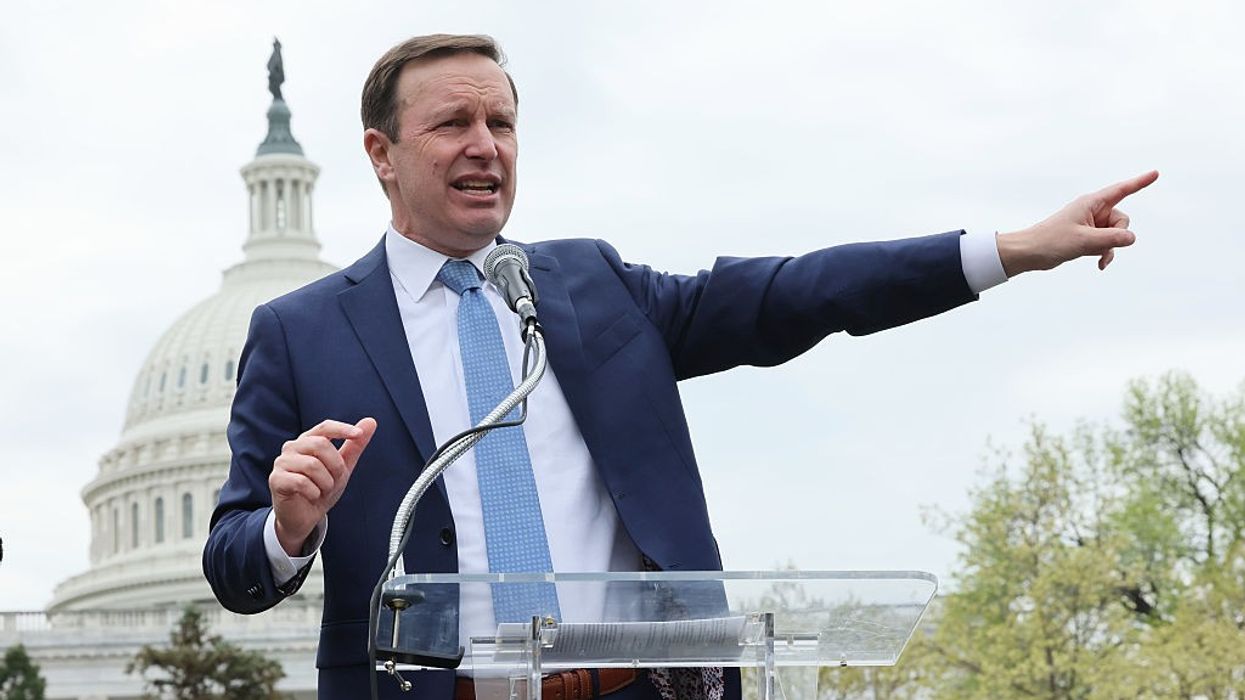
"I hope I'm wrong. But we need to be prepared if I'm right," warned Sen. Chris Murphy.
A Democratic US senator over the weekend issued an ominous warning about Republicans using the murder of Charlie Kirk as a pretense to clamp down on political speech.
In a lengthy social media post on Sunday, Sen. Chris Murphy (D-Conn.) outlined how President Donald Trump and his allies look set to wage a campaign of retribution against political adversaries by framing them as accomplices in Kirk's murder.
"Pay attention," he began. "Something dark might be coming. The murder of Charlie Kirk could have united Americans to confront political violence. Instead, Trump and his anti-democratic radicals look to be readying a campaign to destroy dissent."
Murphy then contrasted the recent statements by Republican Utah Gov. Spencer Cox, who accurately stated that political violence is not confined to a single political ideology, with those of Trump and his allies, who have said such violence is only a problem on the left.
Murphy highlighted a statement from Trump ally and informal adviser Laura Loomer, who said that she wanted "Trump to be the 'dictator' the left thinks he is" and that she wanted "the right to be as devoted to locking up and silencing our violent political enemies as they pretend we are."
He then pointed to Trump saying that progressive billionaire financier George Soros should face racketeering charges even though there is no evidence linking Soros to Kirk's murder or any other kind of political violence.
"The Trump/Loomer/Miller narrative that Dems are cheering Kirk's murder or that left groups are fomenting violence is also made up," he added. "There are always going to be online trolls, but Dem leaders are united (as opposed to Trump who continues to cheer the January 6 violence)."
Murphy claimed that the president and his allies have long been seeking a "pretext to destroy their opposition" and that Kirk's murder gave them an opening.
"That's why it was so important for Trump sycophants to take over the DoJ and FBI, so that if a pretext arose, Trump could orchestrate a dizzying campaign to shut down political opposition groups and lock up or harass its leaders," he said. "This is what could be coming—now."
Early in his second term, the president fired FBI prosecutors who were involved in an earlier political violence case—the prosecution of people involved in the violent attack on the US Capitol on January 6, 2021 by Trump supporters who aimed to stop the certification of the 2020 election.
A top ethics official and a lawyer who spoke out against the president’s anti-immigration policy are among those who have been fired from the DOJ.
Murphy ended his post with a call for action from supporters.
"I hope I'm wrong. But we need to be prepared if I'm right," he said. "That means everyone who cares about democracy has to join the fight—right now. Join a mobilization or protest group. Start showing up to actions more. Write a check to a progressive media operation."
One day after Murphy's warning, columnist Karen Attiah announced that she had been fired from the Washington Post over social media posts in the wake of Kirk's death that were critical of his legacy but in no way endorsed or celebrated any form of political violence.
"The Post accused my measured Bluesky posts of being 'unacceptable,' 'gross misconduct,' and of endangering the physical safety of colleagues—charges without evidence, which I reject completely as false," she explained. "They rushed to fire me without even a conversation. This was not only a hasty overreach, but a violation of the very standards of journalistic fairness and rigor the Post claims to uphold."
Attiah only directly referenced Kirk once in her posts and said she had condemned the deadly attack on him “without engaging in excessive, false mourning for a man who routinely attacked Black women as a group, put academics in danger by putting them on watch lists, claimed falsely that Black people were better off in the era of Jim Crow, said that the Civil Rights Act was a mistake, and favorably reviewed a book that called liberals 'Unhumans.'"
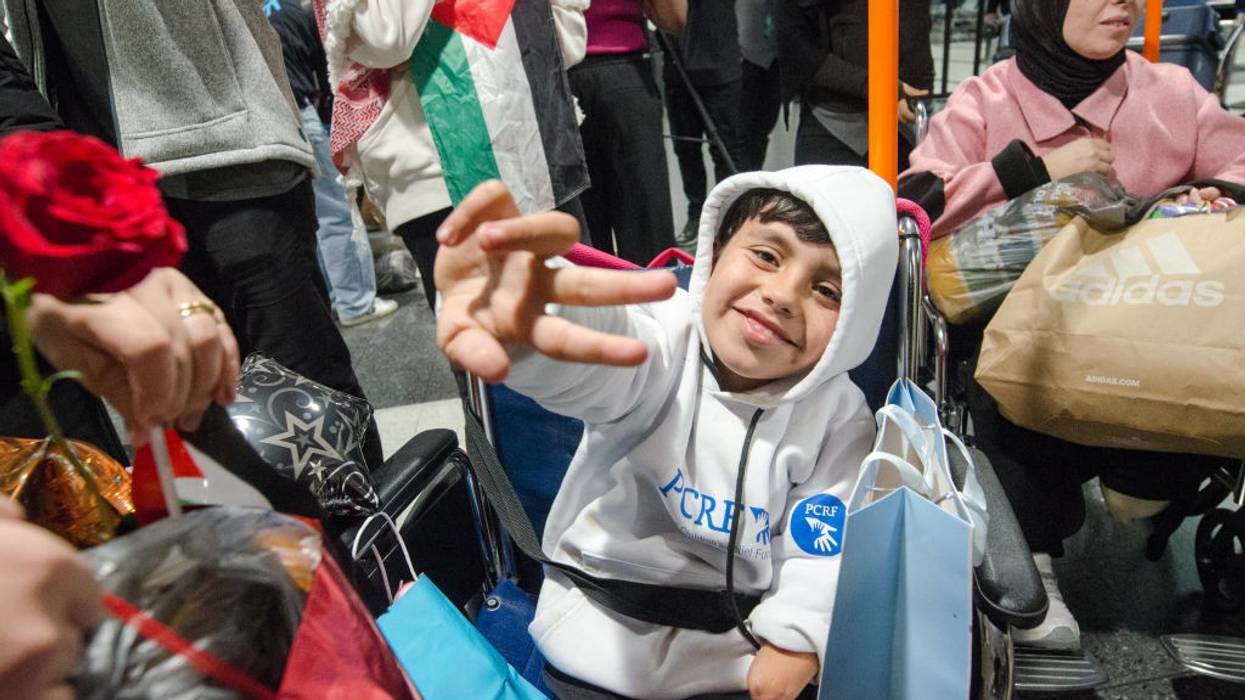
This is Muslim Ban 2.0: treating every Palestinian from Gaza as a threat, as if even wounded children were anything other than victims of Israeli genocide.
Farah doesn’t know me. I was just one of 100 people who gathered at San Francisco International Airport when she arrived last year. I work for the Council on American-Islamic Relations, and we had invited the media to cover her story. HEAL Palestine, a humanitarian nonprofit, had arranged for her medical treatment in the Bay Area after she lost her eye and leg in an Israeli bombing in Gaza.
Now, the State Department has announced it is blocking new visas for Palestinians from Gaza. On X, the department stated: “All visitor visas for individuals from Gaza are being stopped while we conduct a full and thorough review of the process and procedures used to issue a small number of temporary medical-humanitarian visas in recent days.”
In plain terms, this means slamming the door on children like Farah and others I’ve seen arrive in the Bay Area. Ahmed came through San Francisco carrying his own war injuries and trauma, clinging to the hope that here, at least, he could heal. Just weeks ago, three more children made it through: Layan, 14, burned and struck by shrapnel when her school was bombed. Anas, 8, who lost his father in an airstrike that crushed his leg. Ghazal, 6, wounded when an Israeli bomb exploded while her family was displaced in Rafah.
These are the children that Laura Loomer and Rep. Randy Fine (R-Fla.) call “terrorists.” Loomer posted videos of some of the most recent arrivals and demanded that the State Department ban entry to “Islamic invaders.” That’s not just cruelty—it’s Islamophobia, plain and simple.
The same government that funds and arms Israel’s bombardment of Gaza is now moving to stop even the few wounded children who might otherwise reach safety and care.
And it worked. The State Department’s move to stop visas for Gazans echoes the same fearmongering behind US President Donald Trump’s Muslim Ban. This is Muslim Ban 2.0: treating every Palestinian from Gaza as a threat, as if even wounded children were anything other than victims of Israeli genocide.
That is what dehumanization looks like: You stop seeing children as children. You don’t see the burns on their skin, the missing limbs, the trauma etched into their faces. You don’t see the mothers and fathers carrying them through bombed-out streets, desperate just to keep them alive.
The same government that funds and arms Israel’s bombardment of Gaza is now moving to stop even the few wounded children who might otherwise reach safety and care. The cruelty is staggering.
When Layan, Anas, and Ghazal arrived at the San Francisco airport, I saw Farah again—this time with her prosthetic eye and leg. She cried as she welcomed the newcomers.
These children are our shared responsibility, and to deny that is to deny our own humanity. James Baldwin understood this truth when he wrote: “The children are always ours, every single one of them, all over the globe; and I am beginning to suspect that whoever is incapable of recognizing this may be incapable of morality.”
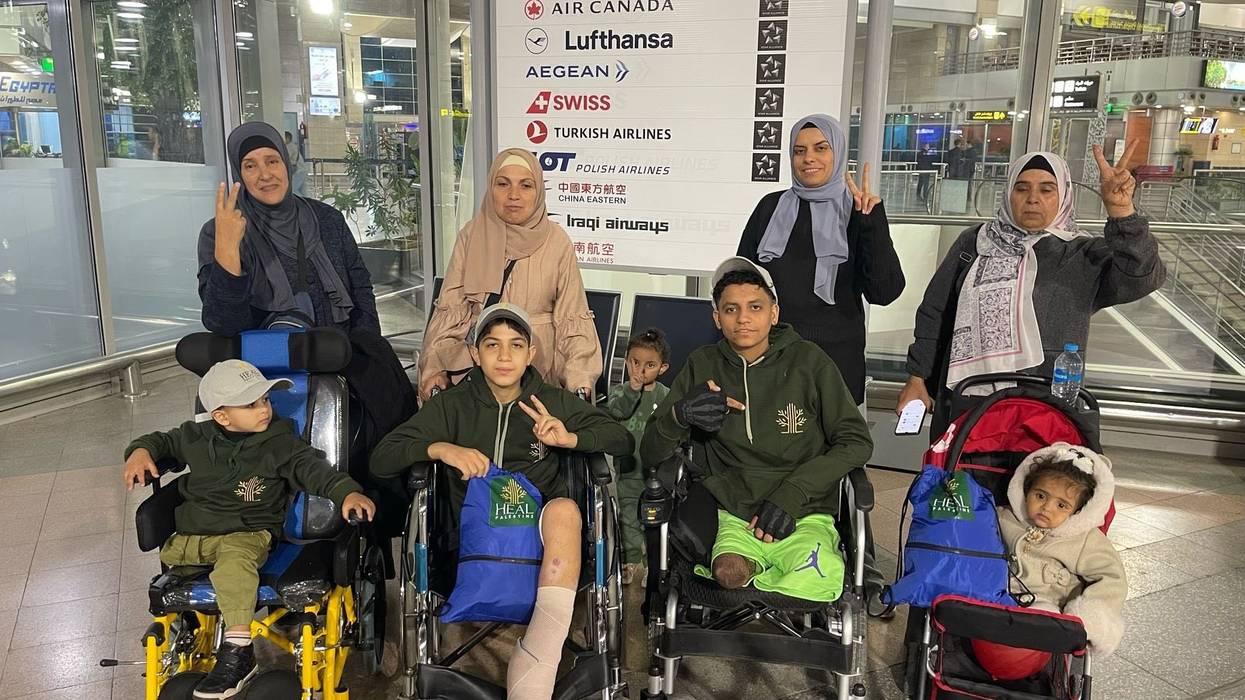
"This goes far beyond 'wrong side of history,'" said journalist Ryan Grim.
The US State Department announced Saturday that it would halt the issuing of visas to children from Gaza in urgent need of medical care.
The decision came after a frenzied campaign by the racist online provocateur and close Trump confidante Laura Loomer, who raged over the weekend about the arrival of badly injured Palestinian children in Houston and San Francisco earlier this month.
The arrival of these children had been arranged by the US nonprofit group HEAL Palestine, which has helped at least 63 children "receive lifesaving surgeries, prosthetics, and rehabilitative care in the US."
In what she claimed was an "exclusive" report, Loomer—who has described herself as a "Proud Islamophobe," and as "pro-white nationalism"—shared a video posted by HEAL Palestine of children on crutches and wheelchairs arriving with their families at a US airport.
She falsely claimed that the children's shouts of joy were "jihadi chants" and that they were "doing the HAMAS terror whistle" and referred to the children as "Islamic invaders from an Islamic terror hot zone."
Loomer tagged Secretary of State Marco Rubio and the State Department in another post: "How did Palestinians get Visas under the Trump administration to get into the United States? Did @StateDept approve this? How did they get out of Gaza? Is @SecRubio aware of this?"
The day after Loomer's tirade began, the State Department announced that "all visitor visas for individuals from Gaza are being stopped while we conduct a full and thorough review of the process and procedures used to issue a small number of temporary medical-humanitarian visas in recent days."
HEAL Palestine issued a statement Sunday saying it was "distressed" by the State Department's decision. Contrary to claims by Loomer that the children would become "like leeches on welfare," HEAL clarified that the children in the country were here "on temporary visas for essential medical treatment not available at home."
"After their treatment is complete," the organization said, "the children and any accompanying family members return to the Middle East."
Rhana Natour, the director and producer of All That Remains—a documentary for Al Jazeera's Fault Lines on a 13-year-old Palestinian girl who traveled to the US to receive treatment after losing her leg in an Israeli airstrike—told Drop Site News that the humanitarian visas canceled by the State Department are granted "exclusively to burned and disabled children and their parents."
(Video: Al Jazeera English)
Loomer took credit for the department's cancellation of the visas, thanking Rubio and calling it "fantastic news."
"Hopefully, all GAZANS will be added to President Trump's travel ban," Loomer wrote. "There are doctors in other countries. The US is not the world's hospital!"
In response, the X account for Drop Site, which has frequently highlighted the work of HEAL Palestine, responded to Loomer, saying that "Your taxes aren't funding the care for these Palestinian children," and that their treatment was being funded entirely through private support from donors.
"The only role of US tax dollars in the picture," Drop Site said, "is the costly review the State Department will now be forced to conduct because of a deranged racist's ravings to block children from lifesaving treatment."
Loomer later suggested that the wounded Palestinian children were being treated "for free," at the expense of US taxpayers, while "US Veterans are homeless on the street, unable to get healthcare."
Journalist Ryan Grim, Drop Site's co-founder, responded: "Trump slashed Medicaid, slashed the [Department of Veterans Affairs], slashed [Affordable Care Act] exchange subsidies, and increased the military budget to over a trillion dollars but Loomer wants people to think that the reason they don't have healthcare is that a Palestinian child got treated thanks to donations from people heartbroken at what Israel is doing to children."
"The trillion dollars being spent to blow the arms and legs off of children is the problem," Grim continued. "Not the children themselves."
In July, the UN Children's Fund (UNICEF) reported that since October 2023, at least 17,000 children have been killed and 33,000 injured across Gaza, many of them attacked by Israeli forces "as they [lined] up for lifesaving humanitarian aid."
The UN reported Friday that "10 children were losing one or both legs every day," making Gaza "home to the largest group of child amputees in modern history."
Despite having no formal position, Loomer is one of the most influential figures in the Trump administration—reportedly having spearheaded the hiring and firing of aides for key roles, including in the National Security Council.
Loomer has said that the US is a "Judeo-Christian ethnostate" being "destroyed" by immigration, and—following the opening of Trump's immigrant detention camp "Alligator Alcatraz"—joked that the "alligators are guaranteed at least 65 million meals," a number referring to the total population of Latinos in the United States.
Following news of the State Department's decision to cancel visas for injured Palestinians, Grim wrote that it "looks like [Loomer] is also setting visa policy."
"So we want to arm Israel to the teeth, allow them to block food and medical aid from getting into Gaza, and also condemn those facing medical emergencies to death," he said. "This goes far beyond 'wrong side of history.'"
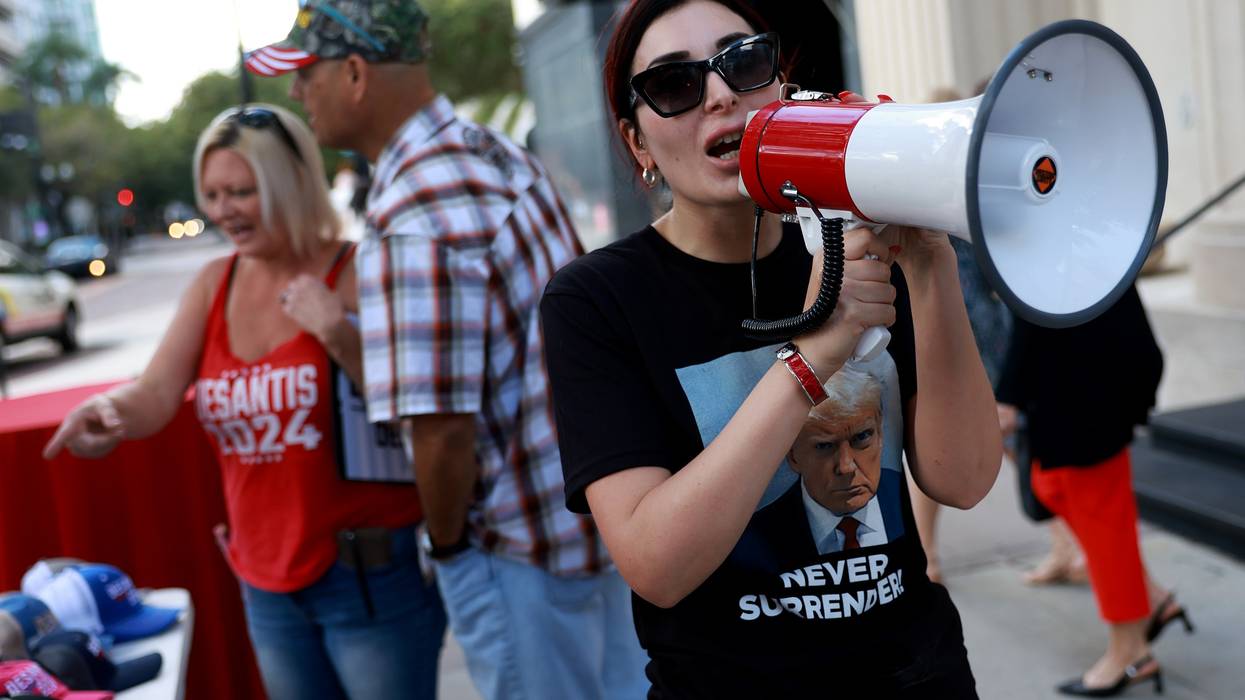
Meet the influential right-wing conspiracy theorist who has U.S. President Donald Trump’s ear.
Laura Loomer is 31 years old and a graduate of Barry University, a private Catholic university. A former commentator on Alex Jones’s Infowars and a far-right conspiracy theorist, she has 1.5 million followers on X. Loomer traffics in anti-Muslim and anti-immigrant rhetoric. She has called herself a “proud Islamophobe” and “pro-white nationalism.”
And she has U.S. President Donald Trump’s ear.
In 2020, Loomer was the Republican nominee for Congress from the Florida district where Mar-a-Lago is located. She campaigned almost exclusively on her allegiance to Trump who, along with Roger Stone, supported her candidacy. Loomer lost the election, as well as her bid to become the party’s nominee again in 2022.
During the 2024 campaign, Loomer said on X that if Vice President Kamala Harris—whose mother was born in India—won the election, “the White House will smell like curry.” Those comments drew the condemnation of even Rep. Marjorie Taylor Greene (R-Ga.) and Sen. Lindsey Graham (R-S.C.), who called her “toxic.”
“Getting Loomered” means targeting someone to determine the sufficiency of the person’s loyalty to Trump and his agenda.
A fervent Trump supporter during the 2024 Republican primaries, she claimed without evidence that Republican Florida Gov. Ron DeSantis exaggerated his wife’s bout with breast cancer to gain sympathy votes during his presidential campaign. Her conspiracy theories range from school shootings to election fraud. She shared a video on X stating that the 9/11 attacks were an “inside job.”
According to Sen. Thom Tillis (R-N.C.), “Laura Loomer is a crazy conspiracy theorist who regularly utters disgusting garbage intended to divide Republicans.”
Trump aides have tried to limit Loomer’s access to the president—with mixed results. In 2024, She accompanied Trump during appearances commemorating 9/11 in New York and Pennsylvania and traveled on his plane to Iowa where Trump told the audience, “You want her on your side.”
Trump’s top advisers have learned the price of not being on Loomer’s side. In March 2025, she started her own research firm— Loomered Strategies—to provide high-level opposition research and vetting for hire. “Getting Loomered” means targeting someone to determine the sufficiency of the person’s loyalty to Trump and his agenda.
According to Trump, “She’s a strong person. She’s got strong opinions…”
On April 2, she “Loomered” the National Security Council (NSC). Meeting with Trump in the Oval Office, she attacked the character and loyalty of several NSC officials and named the people he should fire. Michael Waltz, who headed the agency, joined the meeting late and briefly tried to defend some of his people. But Trump immediately fired six of her targets.
Waltz and his deputy, Alex Wong, managed to survive Loomer’s onslaught that day, but not for long. Less than a month later, Trump announced Waltz’s termination. The intervening revelation of his inadvertent inclusion of The Atlantic’s editor Jeffrey Goldberg on a sensitive group chat on the Signal app had made him vulnerable in any event.
But Wong was out too. Loomer had speculated that Wong’s family was part of a conspiracy and that he had added Goldberg to the Signal chat “on purpose as part of a foreign opp to embarrass the Trump administration on behalf of China.” Wong’s father is of Taiwanese descent, and Loomer had referred to Wong’s wife Candice as a “Chinese woman.” Candice Wong had clerked for U.S. Supreme Court Justice Brett Kavanaugh, was a career prosecutor, and served as a Justice Department official during Trump’s first term.
Three weeks later, Loomer went after an assistant U.S. attorney in Los Angeles, Adam Schleifer, who had unsuccessfully run for Congress as a Democrat in 2020. She posted on social media that Schleifer was a “Biden holdover” and a “Trump hater” who should be fired. An hour later, Schleifer received a one-sentence email terminating his employment. In a highly unusual action, the message came directly from the White House on behalf of the president personally. It gave no reason for Schleifer’s dismissal.
Loomer has also attacked the National Intelligence Council, an elite internal think tank that reports to the director of national intelligence, Tulsi Gabbard. Previously, the White House had asked the council to assess the link between the Venezuelan government and the notorious Tren de Aragua gang. Without such a link, Trump could not rely on the Alien Enemies Act of 1798 to deprive the gang’s members of due process before deporting them.
On February 26, senior analyst at the council Michael Collins reported the intelligence community’s consensus that the Venezuelan government did not control the gang. But on March 15, Trump signed a proclamation invoking the Alien Enemies Act based on purportedly factual findings that contradicted the report.
With a presidential inner circle that includes Laura Loomer, we’re all in deep trouble.
When Collins’ report became public and revealed Trump’s lie, Loomer blasted the council as “career anti-Trump bureaucrats” who “need to be replaced if they want to promote open borders.” In the same post, she pasted images of Collins’s LinkedIn profile and an article about the council’s memo. Three weeks later, Gabbard fired Collins.
Meanwhile, federal courts have blocked Trump’s use of the Alien Enemies Act in every district where he has tried to invoke it. The courts have found that the act’s predicate—that the Venezuelan gang is engaged in either a “war,” “invasion,” or a “predatory incursion” of the United States—does not exist.
At a Mar-a-Lago press conference in April 2024, Trump praised Loomer as “a woman of courage,” he said, “You don’t want to be Loomered. If you’re Loomered, you’re in deep trouble.”
With a presidential inner circle that includes Laura Loomer, we’re all in deep trouble.
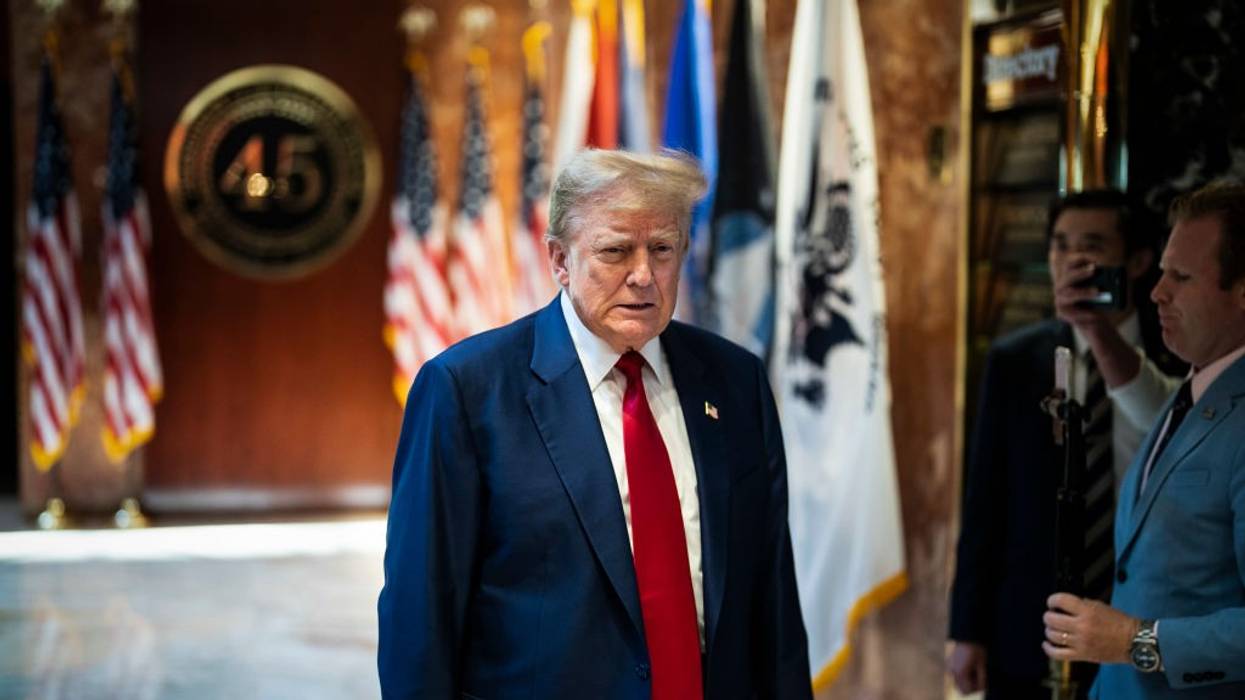
The Biden campaign called the felonious former president's threat to jail Jill Biden and Hillary Clinton the "latest proof that he will do anything to regain power, preserve his own freedom, and seek revenge."
U.S. President Joe Biden's reelection campaign on Wednesday slammed an "unhinged" threat by former President Donald Trump—the presumptive 2024 Republican nominee—to imprison political opponents including the president, First Lady Jill Biden, and former Secretary of State Hillary Clinton.
In a Tuesday Newsmax interview, Trump said that it is "very possible" that Democrats could face prosecution if he returns to the White House next January.
Claiming his conviction in New York state last month on 34 felony charges related to the falsification of business records to cover up hush money payments during the 2016 campaign was political persecution by Democrats, Trump said, "Does that mean the next president does it to them?"
"And wouldn't it be really bad like, as an example, Hillary with the hammering of her cellphones and all of the things she did, but wouldn't it be terrible to throw the president's wife and the former secretary of state—you think of it, the former secretary of state, but the president, the president's wife, into jail?" he asked.
Trump, while arguing he didn’t jail Hillary Clinton because it would’ve set a bad precedent, alludes he may need to jail political opponents:
“Wouldn't it be terrible to throw the president's wife…into jail? ... It's very possible that it's going to have to happen to them.” pic.twitter.com/OZKFBpp0jL
— The Recount (@therecount) June 5, 2024
"Wouldn't that be a terrible thing? But they want to do it. So, you know, it's like it's, it's a terrible, terrible path that they're leading us to," Trump added. "And it's very possible that it's gonna have to happen to them."
Earlier this week, Trump denied ever calling for Clinton to be locked up, a claim belied by the many times he repeated his "lock her up" mantra during and after the 2016 campaign, when she was the Democratic nominee.
Responding to the Newsmax interview, Biden campaign spokesperson James Singer said, "Reeling and increasingly unhinged from his own felony convictions, Trump raising plans to jail his political opponents is just the latest proof that he will do anything to regain power, preserve his own freedom, and seek revenge on anyone who opposes him."
Trump still faces 54 federal and state criminal charges across three cases related to his alleged mishandling of classified documents and attempts to subvert the 2020 presidential election, including by fomenting the January 6, 2021 Capitol insurrection.
"Trump is pledging to rule as a dictator on 'day one,' punish his enemies, embrace violence done on his behalf, and warns of a 'bloodbath' if he loses," Singer added. "The warning signs are clear for all to see. Trump is a danger to our Constitution, a threat to our democracy, and so consumed by his own failed, diminished state he has gone off the deep end."
Trump has reportedly also sought advice about how he could jail journalists if he is reelected.
Trump's threat to jail his foes is relatively tame in comparison with what some of his prominent supporters want to do to Democrats. Laura Loomer, a far-right anti-Muslim activist, said following Trump's conviction that "we actually used to have... punishment for treason in this country."
"Should Democrats be in jail? No question. When Donald Trump gets elected, should he start locking them up? No question. Should there be lists of Democrats who need to go to jail? One hundred percent," Loomer—who came close to winning her 2022 congressional race—said during the "Timcast IRL" podcast.
"Not just jail, they should get the death penalty," she added.
Loomer's "Timcast IRL" episode was subsequently removed from the podcast's website and social media platforms.