

SUBSCRIBE TO OUR FREE NEWSLETTER
Daily news & progressive opinion—funded by the people, not the corporations—delivered straight to your inbox.
5
#000000
#FFFFFF
To donate by check, phone, or other method, see our More Ways to Give page.
Daily news & progressive opinion—funded by the people, not the corporations—delivered straight to your inbox.
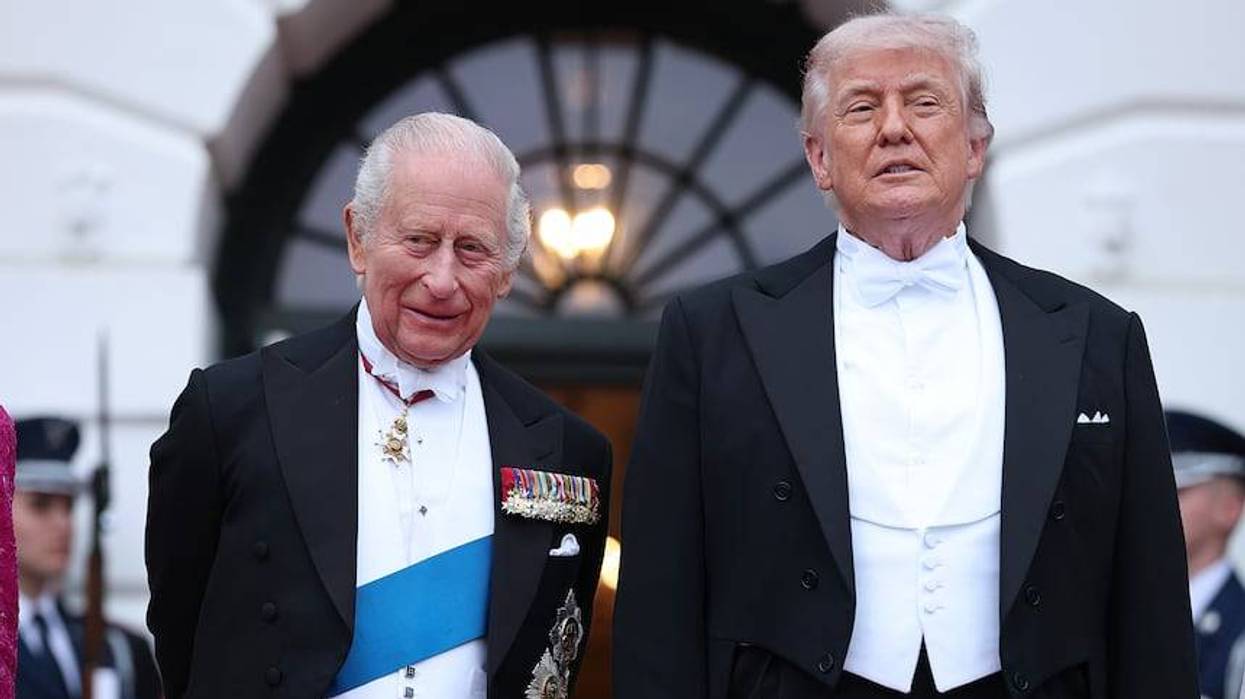
If we’re serious about addressing protections for misconduct and abuses of power, ending these special rights—originally justified as a divine right—should be our top priority.
On three major occasions in President Trump’s second term, his opponents, including many elected officials, have taken to the streets under the banner of “No Kings.” And yet just this week, King Charles III spoke before our joint houses of Congress, where his comments about governmental checks and balances drew a standing ovation from everyone there.
A contradiction lies here, between our history and our perception of it. The truth is, the law that made kings untouchable—that “the king can do no wrong”—has never gone away in the United States. Instead, it multiplied. Today we call it “sovereign immunity.”
The Declaration of Independence blamed the King for its grievances, claiming his actions showed an “absolute Despotism” and “absolute Tyranny over these States.” But the taxes it complained about came from Parliament, which in 1688 had subordinated the King’s political role to itself and its Prime Minister. True, the monarch retained a total legislative veto (among other powers), but it last invoked that power in 1708. Colonial complaints about the King not recognizing colonial legislatures suggest the opposite of the grievance—a monarchical commitment against tyranny, by declining to override and usurp Parliament’s powers via royal whim.
Describing the 1789 Constitution, Alexander Hamilton wrote that, except for a few important “particulars, the power of the President will resemble equally that of the king of Great Britain.” Some changes shed the aristocracy; others infused more checks and balances, like making the veto power conditional. As for the right of kings, Hamilton argued that the impeachment power of Congress addressed it, because an impeached president would be subject to prosecution “in the ordinary course of law.” Unfortunately for us, history did not walk that line.
The 1789 Constitution also split sovereign power between federal and state governments. These twin powers then pulled a trick: they successfully argued that the special right of kings had transferred to them. Courts applied this special right to political subdivisions, like counties and municipalities, and to those who act on their behalf, like legislators, judges, clerks, bureaucrats, and police. Tocqueville thought these subdivisions “mitigat[ed] tyranny,” viewing “townships, municipal bodies, and counties” as “concealed break-waters, which check or part the tide of popular excitement.” But by permitting them sovereign immunity, the opposite happened: our myriad government bodies (sometimes four or five to a person) now each hold the right of kings. Instead of ridding ourselves of kingly power, we multiplied it.
Courts continue to expand these special powers. In 2024, the right-wing majority of the US Supreme Court confirmed that presidential immunity insulates the officeholder from criminal responsibility, so long as the alleged acts happened while carrying out official duties. Last March, the Court expanded the immunity available to law enforcement. Now, police officers have immunity from suit for any constitutional violation not explicitly addressed by an appellate or high court. And a federal appeals court recently held that governments have no general duty to compensate a bystander when law enforcement destroys their property in the course of their duties. If police break down your door, in error or not, you must pay for the fix.
We don't need courts to tell us these things. We see government officials acting above the law every day, even in incidents as small as police ignoring parking rules or blaring through stoplights into oncoming traffic, just to then turn their lights off. Rules for thee, but not for me. While we still have the right of kings, we don't have to keep it.
If we’re serious about addressing protections for misconduct and abuses of power, ending these special rights—originally justified as a divine right—should be our top priority. We have the tools to do it. Governments may waive and disclaim their special rights through legislation, and many have done that in limited doses. We should move forward to end the special right altogether, which we can accomplish through legislation at local, state, and federal levels. For a sound first step, Congress could reintroduce and pass the Ending Qualified Immunity Act, which would strip these special rights from law enforcement in civil-rights cases.
And most fundamentally, we should recognize that we have not ended the rule of kings just yet. Abuses of power and protection against accountability under the rule of law aren’t of a bygone era, and the monarchy didn't take its special rights with it when it left. Sadly, the powers of kings and queens were left behind, written into our laws under a different name.

"No one is above the law, not even royalty,” the family said in a statement. “For survivors everywhere, Virginia did this for you.”
Andrew Mountbatten-Windsor, the one-time Duke of York, was arrested in the UK on Thursday after facing scrutiny over his ties to late billionaire sex offender Jeffrey Epstein.
News of the arrest first came when the Thames Valley Police Department announced that it had "opened an investigation into an offense of misconduct in public office" and had arrested "a man in his sixties from Norfolk."
King Charles III subsequently released a statement confirming that Mountbatten-Windsor, who is the king's younger brother, had been taken into custody.
"I have learned with the deepest concern the news about Andrew Mountbatten-Windsor and suspicion of misconduct in public office," said the king. "What now follows is the full, fair, and proper process by which this issue is investigated in the appropriate manner and by the appropriate authorities."
King Charles emphasized that investigators "have our full and wholehearted support and cooperation," while adding "the law must take its course."
The family of the late Virginia Giuffre, who accused Mountbatten-Windsor of sexually assaulting her when she was 17 years old and who died by suicide last year, released a statement expressing relief at the former prince's arrest.
"At last," the family wrote. "Today, our broken hearts have been lifted at the news that no one is above the law, not even royalty. On behalf of our sister, Virginia Roberts Giuffre, we extend our gratitude to the UK’s Thames Valley Police for their investigation and arrest of Andrew Mountbatten-Windsor."
"He was never a prince," the family added. "For survivors everywhere, Virginia did this for you."
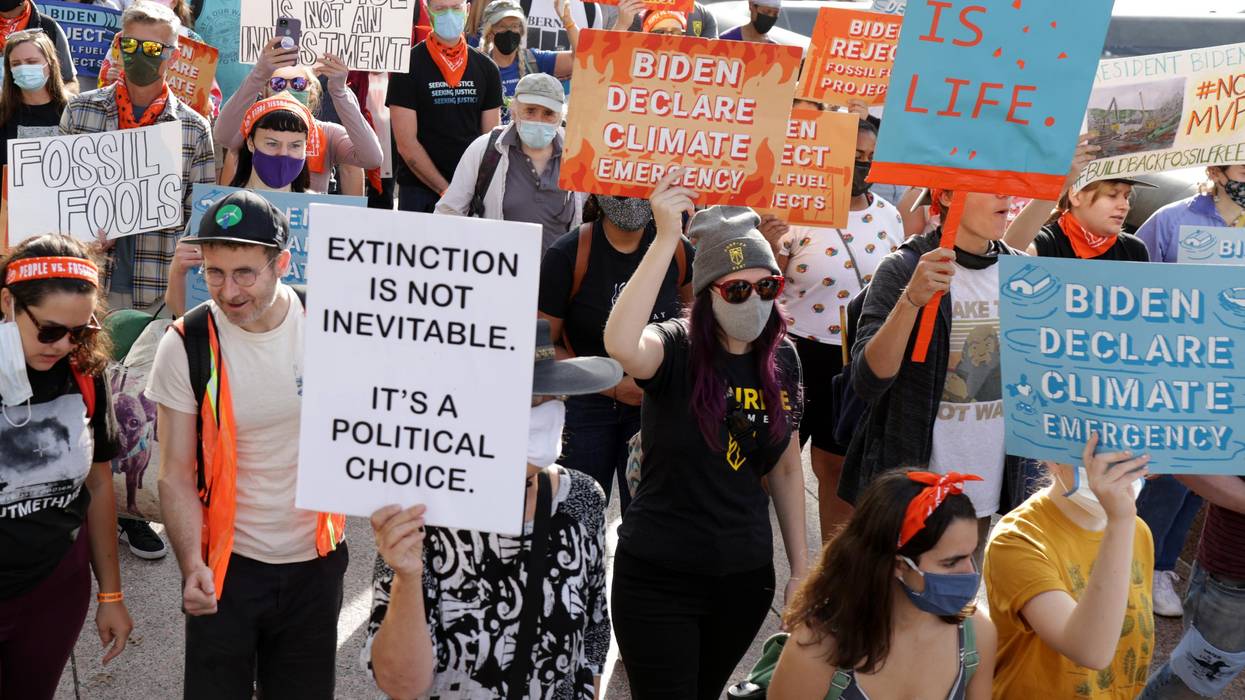
One campaigner said political leaders must "use every tool in their power to abate the emergency that's no longer at our doorstep anymore, but that has a foot in the door and is already affecting people right now."
As record temperatures, deadly flooding, and other extreme weather driven by human-caused global heating hammer at least millions of people around the world, activists this week are once again imploring U.S. President Joe Biden to declare a climate emergency.
Over the past week, the planet endured record-breaking average global temperatures, prompting United Nations Secretary-General António Guterres to declare that "climate change is out of control."
Devastating monsoons in India, deadly downpours in Japan, flash floods in Spain, and torrential rains and flooding in the northeastern United States also underscored what climate scientists have long warned are the increasingly severe consequences of a warming planet.
"Now would be another perfect moment for President Biden to declare a climate emergency."
Meanwhile, tens of millions of people in the United States are bracing for an imminent heat dome expected to bring triple-digit temperatures to much of the southern part of the country this week.
The extreme weather chaos around the world has activists sounding the alarm and demanding the Biden administration issue a climate emergency declaration.
"It's terrifying to think that we're already here," John Paul Mejia, national spokesperson for the youth-led Sunrise Movement, told Supercreator Daily on Monday.
"And I think that that puts a lot of urgency to the political leaders of this moment who are endowed with a responsibility to use every tool in their power to abate the emergency that's no longer at our doorstep anymore, but that has a foot in the door and is already affecting people right now," Mejia added.
Jamie Henn, director of Fossil Free Media, tweeted Monday that "now would be another perfect moment for President Biden to declare a climate emergency."
Noting the current chaos, Henn added that "we need political leaders to speak to the urgency of this crisis."
The Congressional Progressive Caucus (CPC) is asking Biden to invoke the Defense Production Act and the Trade Expansion Act to boost domestic production of affordable renewable power and clean energy exports. The CPC also calls on the president to reinstate the ban on crude oil exports that was lifted by Congress and then-President Barack Obama in 2015.
A year ago, amid a previous record-shattering heatwave, Biden—who during his 2020 presidential campaign said that climate change was the "number one issue facing humanity"—reportedly considered making a historic declaration.
"This is an emergency, and I will look at it that way," the president said last July.
Congressional Republicans, meanwhile, are trying to preemptively block Biden from declaring a climate emergency. Late last month, Sen. Shelley Moore Capito (R-W.Va.)—a fossil fuel investor who has received more than $1.4 million in industry campaign contributions—introduced legislation that would "prohibit the president from using the three primary statutory authorities available (the National Emergencies Act, the Stafford Act, and section 319 of the Public Health Service Act) to declare a national emergency solely on the basis of climate change."
According to Climate Mobilization, an environmental advocacy coalition, nearly 200 U.S. cities, counties, and other jurisdictions have declared climate emergencies over the past five years.
On Monday, Biden met with U.K. King Charles III in London's Windsor Castle, where they reportedly discussed the climate emergency and "engaged with a group of leading philanthropists and investors focused on mobilizing finance to address the climate crisis," according to the White House.
The renewed demands for Biden to declare a climate emergency come as new research published Monday revealed that last year's historically hot summer killed more than 61,000 people across Europe.

'The press, which defends freedom of the press, does nothing to free this citizen.'
Brazil's President Luiz Inacio “Lula” da Silva has called for freedom for Julian Assange and denounced the lack of concerted efforts to free the journalist.
Lula spoke to a group of reporters in London Saturday while in town to attend the coronation of King Charles III.
Assange, the WikiLeaks founder, has spent four years in Britain’s Belmarsh Prison while fighting extradition to the United States.
“It is an embarrassment that a journalist who denounced trickery by one state against another is arrested, condemned to die in jail and we do nothing to free him. It’s a crazy thing,” Lula told reporters. “We talk about freedom of expression; the guy is in prison because he denounced wrongdoing. And the press doesn’t do anything in defense of this journalist. I can’t understand it.”
“I think there must be a movement of world press in his defense. Not in regard to his person, but to defend the right to denounce,” Lula told the reporters. “The guy didn’t denounce anything vulgar. He denounced that a state was spying on others, and that became a crime against the journalist. The press, which defends freedom of the press, does nothing to free this citizen. It’s sad, but it’s true.”
Also, Australian Prime Minister Anthony Albanese said on Friday he too was frustrated over the continued detention of Julian Assange: "enough is enough."
"I know it's frustrating, I share the frustration," Albanese told the Australian Broadcasting Corp. from London for the coronation of King Charles III.
"I can't do more than make very clear what my position is, and the U.S. administration is certainly very aware of what the Australian government's position is. There is nothing to be served by his ongoing incarceration."
"Enough is enough, this needs to be brought to a conclusion, it needs to be worked through," said Albanese.
Assange has battled for years to avoid being sent to the U.S., where the journalist faces 17 charges of espionage because of WikiLeaks’ publication of a trove of classified documents in 2010.
US prosecutors allege he published 700,000 secret classified documents which exposed the United States government and its wrongdoings in Iraq and Afghanistan. Wikileaks received the documents from Chelsea Manning.
Albanese said Australians cannot understand why the US would free the source who leaked the documents, Chelsea Manning, while Assange still faces life in prison.
President Joe Biden has been accused of hypocrisy for demanding the release of journalists around the world, while he actively seeks the extradition of Assange to face American espionage charges.
Assange faces a sentence of up to 175 years in a maximum security prison if extradited to the United States.

'We're now living in a dystopian nightmare'
Thousands of King Charles III's subjects protested against the monarchy Saturday in London — and heavy-handed police detained many of them for "suspicion of breaching the peace."
Earlier this week, the Metropolitan Police tweeted that they would have an “extremely low tolerance” of those seeking to “undermine” King Charles III's coronation day.
“A significant police operation is underway in central London,” the Metropolitan Police said in a statement Saturday. “The individuals have been held on suspicion of breaching the peace.”
At around 7 a.m. police stopped six of the anti-monarchy group Republic’s organizers and told them they were detaining and searching them, Republic director Harry Stratton told CNN at the protest. The group had been walking behind a rental van containing hundreds of placards. “They didn’t say why they were arresting them. They didn’t tell them or us where they were taking them. It really is like something out of a police state,” Stratton said.
Among those arrested ahead of a protest in London’s Trafalgar Square was Graham Smith, chief executive of Republic.
“This morning, Graham Smith and five members of our team were arrested. Hundreds of placards were seized,” Republic tweeted. “Is this democracy?”
Protesters say police warned them not to chant ‘anything that may be deemed offensive.’
The Metropolitan Police said those arrested were being “held on suspicion of conspiracy to cause public nuisance.”
Just Stop Oil reported that around 20 of its climate demonstrators had been arrested, with photos showing a man wearing a T-shirt with the group’s name being detained in Whitehall. “He was arrested along with 20 others,” Just Stop Oil tweeted. “Free speech is a core British value – and we have just lost it. No supporters of Just Stop Oil arrested in the crowd had glue, paint or any plans to disrupt the coronation. We are living in a dystopian nightmare.”
Human Rights Watch's UK director Yasmine Ahmed said in a statement: "The reports of people being arrested for peacefully protesting the coronation are incredibly alarming. This is something you would expect to see in Moscow not London.
"Peaceful protests allow individuals to hold those in power to account, something the UK government seems increasingly averse to.”
Sacha Deshmukh, Amnesty International UK’s chief executive, said: “We need to see what details emerge around these incidents but merely being in possession of a megaphone or carrying placards should never be grounds for a police arrest.
“Peaceful protest is clearly protected under international human rights law and it’s been worrying to see the police this week making numerous statements about their ‘low tolerance’ for disruption at the coronation. The coronation shouldn’t become yet another excuse for undermining people’s basic human rights in this country and we’re awaiting more details over these concerning reports of arrests.”
“We’ve recently had the introduction of extremely draconian legislation outlawing ‘disruptive’ or ‘noisy’ protests, which has given the police excessive – and highly subjective – powers and seriously damaged people’s right of free speech and public assembly.
“The coronation shouldn’t become yet another excuse for undermining people’s basic human rights in this country.”
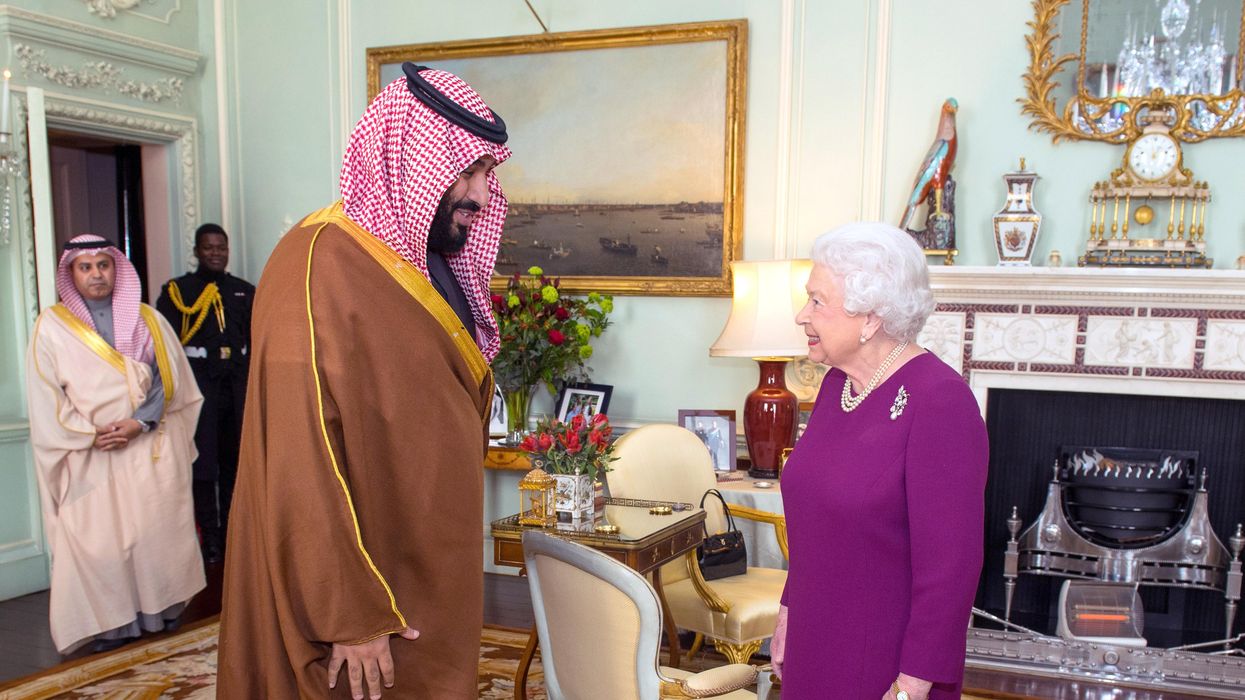
ollowing the death of Queen Elizabeth, no one in the established media is taking any chances with the public mood. Public affection for the late queen is not in doubt, and yet BBC journalists are whipping up paroxysms of grief that wouldn't be out of place in North Korea.
The BBC's Johnny Diamond and Nicholas Witchell have wrung out every possible emotive line about the queen's selfless devotion to service and the nation's unending sorrow. Yet an objective view of her reign must separate her personal qualities from the role the monarchy has played in the service of Britain's imperial interests, machinations and crimes over the last 70 years.
The examples are too numerous to list, but in every major crisis since the queen was crowned, amid a period of troubled decolonisation, the monarchy played its part.
Britain's close ties to the shah of Iran prior to and following a British and US-backed coup in 1953 is a perfect illustration of the way the monarch functioned to legitimise neocolonial policies through direct relations with pro-western dictators. Shah Pahlavi ruled with a brutal secret police and was put into power because his elected prime minister had nationalised Iran's oil industry - a highly strategic part of Britain's Middle East imperial possessions.
Once safely installed, the oil profits flowed once more. The queen received the shah as an official guest in 1959 and made a state visit to Iran as the shah's guest in 1961. Further mutual visits followed, and relations were extremely cordial.
Of course the queen did not author the 1953 coup - that was Prime Minister Winston Churchill and US President Eisenhower - but she helped strengthen relations with Iran over the decades by forming a personal relationship with the shah and his wife, until he was overthrown in the revolution of 1979.
Britain attempted to continue its imperial influence across the Middle East through the support for the royal regimes that it put in place and supported in Egypt, Iraq, Jordan, Libya and the Gulf emirates. In the post-war period of anti-colonial revolt, several of these monarchs were overthrown to the great chagrin of Britain.
In the case of Libya, King Idris, formerly the leader of the Sanussi tribe and emir of Cyrenaica, was awarded the Grand Cross of the British Empire for his support in the defeat of German and Italian forces in North Africa during World War II.
The queen's cousin Earl Mountbatten (who oversaw the precipitous and disastrous partition of India in 1947) was a close friend of Idris and used to visit him in Libya and stay at his royal palace. In return Idris supported the UK and France during the attack on Egypt in 1956, and provided the US with a major airbase near Tripoli, home to 4,600 Americans. All of this was lost in Muammar Gaddafi's coup of 1969.
The British policy of installing and supporting monarchies across the Middle East sits oddly with the UK's proclaimed support for democracy, when no democratic or constitutional reform has taken place in most of these UK-backed regimes. The British royal family plays an essential role in maintaining an autocratic model of diplomacy and personal relations with regimes including Saudi Arabia, the UAE and Oman.
These regimes support western economic interests across the Middle East, while also pouring billions into the British economy, pumping up invisible earnings and buying up luxury property and Premier League football clubs.
The queen's love of horses was shared with her good friend Sheikh Mohammed bin Rashid Al Maktoum, the emir of Dubai, who notoriously kidnapped two of his daughters, one in the middle of the English countryside in 2000, the other in the Indian Ocean in 2018. It was reported that the queen would no longer be seen in public with the emir following the recent court case confirming the kidnappings.
Much is made of the non-political nature of the monarch and the way the queen stayed out of politics and kept her views to herself. But no matter her discretion, her role was hardly non-political. The queen was the head of state and the commander-in-chief of the British Armed Forces. All soldiers had to swear an oath of loyalty to her before deployment to Afghanistan, Iraq and elsewhere. These wars have left devastation and hundreds of thousands dead.
As the queen said in her broadcast to the armed forces in 2009 as Britain's iniquitous role in the Iraq war came to an end: "Wherever you are deployed in the world, you should be assured that I and the whole nation are deeply thankful for the part you play in helping to maintain peace around the globe."
Her grandson Prince Harry is only the latest royal who served during a war where British forces have been accused of war crimes; the deaths of scores of civilians in night raids, executed in a macabre game of body counts that was covered up at the highest levels of the army, according to a recent BBC investigation.
The Duke of Sussex served in the British Army for 10 years and was deployed to Afghanistan twice during Nato's 20-year intervention in the country, first in 2007 on the frontline as a forward air controller, and then again as a copilot gunner with the 662 Squadron, part of the army's Attack Helicopter Force.
His father, King Charles, has visited the Gulf region many times, enabling the continued sale of British weapons to the Saudi regime in its bloody war in Yemen that has seen thousands killed in air strikes. This aspect of the royal family's function within the British state is currently being airbrushed.
Many have praised the role of the queen in transitioning the UK to a post-colonial power through her role as head of the Commonwealth. But more critical voices have raised the question of the way in which Britain withdrew from its colonies and dealt with the legacy of empire during the queen's reign.
The sense of criminals fleeing a crime scene is hard to avoid: mass burning of colonial files began in India and, from the early 1960s, the British government engaged in Operation Legacy, destroying countless records of the British colonial regimes. As a commentator wrote on Twitter: "Now is the time to discuss this kind of detail because [the queen's] death is being used to push a sanitised history of her reign."
For the duration of the period of mourning that is now being enforced nationwide, criticism of the monarchy by the 22 percent who support a republic is being treated as a form of dissidence, with protests against the royal family shut down by the police. The truth is support for the monarchy has declined significantly in recent years, and the debate about its role domestically as the pinnacle of a semi-feudal system of land ownership and class hierarchy will not go away.
The queen will be mourned by the millions who loved her, but as Charles becomes king, a reckoning must be made with the monarchy's role in preserving a corrupt authoritarian system across swathes of the Middle East.

Free expression advocates in the United Kingdom are warning that law enforcement agents in the country appear ready to eliminate Britons' right to free speech as several arrests have been reported at events taking place during the 10-day nationwide mourning period following Queen Elizabeth II's death.
"As precious, if not more precious than the monarchy, is the real beautiful web of freedoms and civil liberties that we've built up here over centuries, and we'd be very wrong to begin to sacrifice those in this kind of moment."
Critics of the monarchy have been arrested, detained, forced to leave public areas, and intimidated by police officers in Scotland and London as Queen Elizabeth's coffin has traveled across the U.K., along with members of the royal family including King Charles III.
The first arrest was reportedly made in Oxford, where Symon Hill asked, "Who elected him?" as a proclamation officially naming Charles as his mother's successor was read. Hill reported that police officers placed him in handcuffs and eventually told him he'd been arrested under the "Police, Crime, Sentencing & Courts Act 2022," which has been condemned by rights advocates.
Hill wrote that he was never "given a clear answer as to why I had been arrested," but was told his comments in Oxford could have led to "harassment or distress."
Ruth Smeeth of the Index on Censorship called arrests like Hill's "deeply concerning" and warned that the queen's death may be "used, by accident or design, to erode in any way the freedom of expression that citizens of this country enjoy."
"The fundamental right to freedom of expression, including the right to protest, is something to be protected regardless of circumstance," Smeeth told Bloomberg.
A demonstrator holding a handmade sign reading, "Not My King" was also filmed being led away by police from the Palace of Westminster in London on Monday, and climate campaigner and lawyer Paul Powlesland reported that he attracted negative attention from a police officer when he held up a blank sheet of paper in Parliament Square.
The officer warned Powlesland that if he wrote "Not My King" on the paper, he would be arrested under the Public Order Act "because someone might be offended."
"I believe actually as precious, if not more precious than the monarchy, is the real beautiful web of freedoms and civil liberties that we've built up here over centuries, and we'd be very wrong to begin to sacrifice those in this kind of moment," Powlesland told "Good Morning Britain" on Tuesday, adding that he protested only to make a statement about freedom of speech, but the police response to critics of the monarchy this week has pushed him to adopt an anti-monarchist view.
Member of Parliament and former Labour Party leader Jeremy Corbyn called the arrest of anti-monarchy protesters "wrong, anti-democratic and an abuse of the law," while Zarah Sultana, another Labour MP, expressed shock that Britons' right to speak out against the monarchy is being debated.
In Edinburgh, a 22-year-old student named Mariangela was arrested after holding up a sign that read, "Fuck imperialism. Abolish monarchy" outside St. Giles Cathedral, where the queen's coffin lay before being taken to London.
Mariangela told openDemocracy that she was detained in a cell for nine hours and that the officers who were arrested later expressed "doubts over whether the arrest was lawful." She was nevertheless charged with "behavior likely to cause a reasonable person to suffer fear or alarm" under Scotland's Criminal Justice and Licensing Act 2010 and ordered to appear in court on September 30.
Police Scotland's actions were "clearly a violation of freedom of speech, which is supposed to be enshrined in the laws of the United Kingdom," she told openDemocracy. "If I'm not allowed to express my opinion, I don't see how that law is being observed."
Also in Edinburgh, videos posted on social media appeared to show a protester being removed from a crowd by officers and arrested after shouting, "You're a sick old man" at Prince Andrew. The prince has been accused of raping Virginia Giuffre, a woman who was allegedly sex-trafficked by financier Jeffrey Epstein. He has denied the accusation but paid a settlement to Giuffre earlier this year.
"Protest is not a gift from the state, it is a fundamental right," Jodie Beck, policy and campaigns officer at civil liberties group Liberty, told Bloomberg. "Being able to choose what, how, and when we protest is a vital part of a healthy and functioning democracy."
"Whoever you are, whatever your cause, it is vital you are able to stand up for what you believe in without facing the risk of criminalization," Beck added. "It is very worrying to see the police enforcing their broad powers in such a heavy-handed and punitive way to clamp down on free speech and expression."
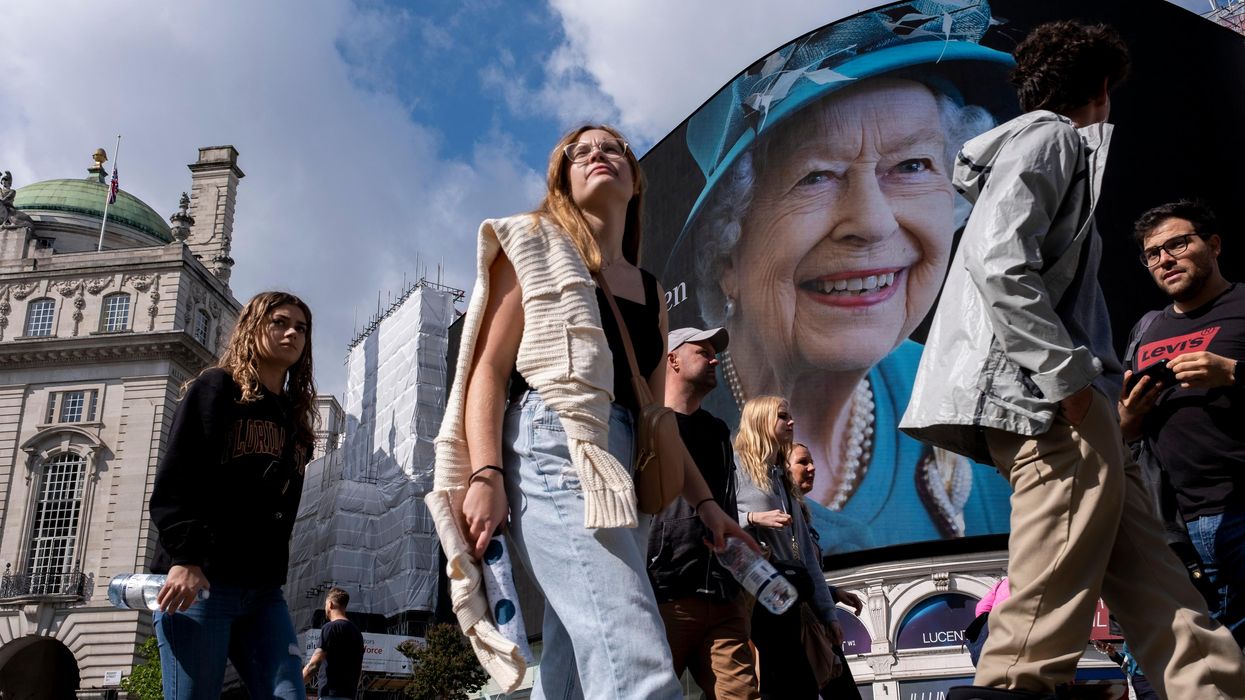
Every human death is a loss. But Queen Elizabeth lived a long and, from most accounts, good life. The people close to her have lost a mother, a friend, a real person. They shouldn't be dismissed. Neither should the British citizens who mourn her. The grief people feel for a public figure is real, even if what they're really mourning are the passing days of their lives.
I wish we lived in a world where it wasn't necessary to put this particular death into perspective, but we don't. Shortly before her death, the Queen met with the new prime minister of Great Britain. Liz Truss was chosen for that position by the less than 200,000 dues-paying members of the Conservative Party, some 0.3 percent of the British electorate. That's right: a handful of party stalwarts, predominately white, male, and older, paid for the privilege of choosing the country's leader. They call that "democracy."
The grief people feel for a public figure is real, even if what they're really mourning are the passing days of their lives.
Truss is a hard-right extremist in the Trump mold, a pro-fossil-fuel extremist who has already begun filling sensitive environmentally-related positions with climate deniers like Jacob Rees-Mogg. As a result, more people will die. More than half of Britons think she will be a "poor" or "terrible" Prime Minister, and they're sure to be right.
It didn't have to be this way. Not so long ago, the British social welfare state was an example for the world to follow. Its dismantlement began under Margaret Thatcher and was carried on by the Bill Clinton-like "New Labour" leadership of Tony Blair in the 1990s. Once back in office, the Conservatives stepped up that effort with ferocious abandon. Post-industrial Britain is reeling from the upward transfer of wealth now, just like its breakaway American colony. Special relationship, indeed.
A New York Times article remarked in passing that the Queen's family "is known for its longevity," noting that Elizabeth's mother died in 2002 at the age of 101. That's not just good genes. The House of Windsor receives the best medical care imaginable, is fed a steady and healthy diet, and is housed in comfort. Those comforts, promised to everyone by the British social welfare state, have an enormous impact on longevity. A report from the King's Fund notes that in 2018-20, males in the poorest 10 percent of areas in England died almost a decade earlier than males in the 10 percent wealthiest areas, with an 8-year difference among females. Each of these deaths is a tragedy, too.
What's more, as in the US, conservative mismanagement of the Covid-19 pandemic took many more lives than necessary in Great Britain, made worse by the ongoing evisceration of the NHS. At least 168,000 excess deaths in Britain have been estimated since the pandemic began. (The population of Great Britain is roughly one-fifth that of the United States; Americans should multiply these numbers by five to get a visceral sense of their impact.)
Most of these unremarked deaths occurred in considerably less comfortable places than Balmoral. A recent study showed that 90,000 Britons die in a state of poverty every year. More than one in four working-age women die impoverished, a number that climbs substantially among minorities.
The war in Ukraine has resulted in energy shortages which have hit the British population especially hard. As the Associated Press reports, "A cost-of-living crisis in Britain is about to get worse, with millions of people paying about 80% more a year on their household energy bills starting in October ... people will pay 3,549 pounds ($4,188) a year for heating and electricity."
Those shortages haven't hit everybody hard. They've opened the floodgates for energy company profiteering, with Bloomberg reporting that "UK gas producers and electricity generators may make excess profits totaling as much as PS170 billion ($199 billion) over the next two years."
Liz Truss's preferred "solution" is to use government funds to cap out-of-pocket consumer costs at $2,800 US per households. That's still very expensive for many Britons. Her proposal also represents an enormous transfer of wealth from the British public sector--that is, the British people--to the same energy companies that have been scooping up public wealth since the war began. The obvious solution, a windfall profits tax on those companies, is not on the table.
This entire crisis could have been avoided Thatcher had not sold off the publicly-owned British energy sector to private interests in the 1980s. That dismantlement of public resources is directly responsible for the current immiseration of the British people.
It is this crisis that led to the bizarre spectacle of a British morning news program's "spin-the-wheel" contest for struggling listeners: we'll give you 1,000 pounds or pay your energy bill for four months, whichever the wheel decides. As the Washington Post reports:
Viewers of British TV show, "This Morning," watched as the wheel spun, eventually coming to a stop. "It's your energy bill!" host Phillip Schofield shrieked. The caller expressed relief at his prize, which would cover the costs of his bill for four months. "Oh my god, thank you," the winner said.
The Post says that people called the show "tone deaf," "distasteful" and "dystopian," while Russian television gloated. It's another flicker of flame from Britain's burning social contract.
Great Britain hasn't just lost a monarch. The British social welfare state, once a shining beacon for Western democracies, is also dying. On a human level, every death is an occasion for mourning. But who mourns the needlessly dead or the system that could have saved them? If people could learn to care half as much about every victim of poverty or inadequate healthcare as they do about one person, we might yet build a just society.
They will play "God Save the Queen" and "God Save the King" many times in the days to come. But who will save the people?
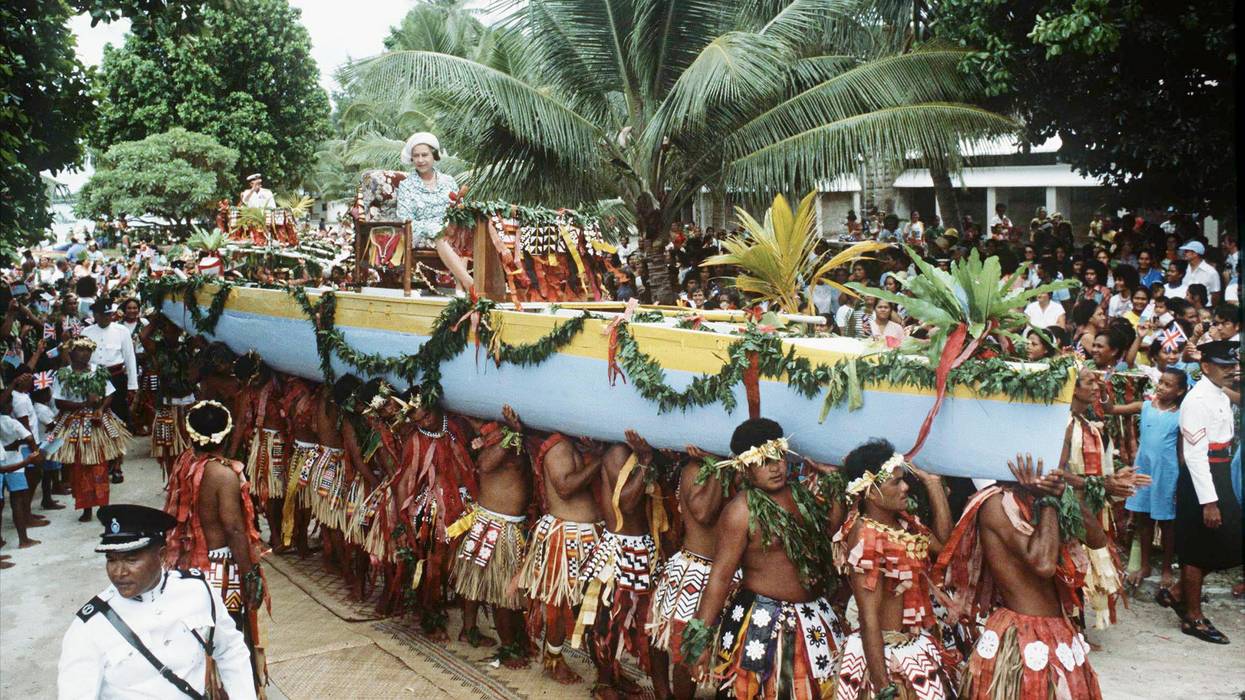
As millions of Britons and admirers the world over mourned Queen Elizabeth II's death Thursday, others--especially in nations formerly colonized by the British Empire--voiced reminders of the "horrendous cruelties" perpetrated against them during the monarch's reign.
"Her legacy is colonialism, slavery, racism, loot, and plundering."
"We do not mourn the death of Elizabeth, because to us her death is a reminder of a very tragic period in this country and Africa's history," declared Julius Malema, head of the left-wing Economic Freedom Fighters party in South Africa.
"Elizabeth ascended to the throne in 1952, reigning for 70 years as a head of an institution built up, sustained, and living off a brutal legacy of dehumanization of millions of people across the world," he continued.
"During her 70-year reign as queen, she never once acknowledged the atrocities that her family inflicted on native people that Britain invaded across the world," Malema noted. "She willingly benefited from the wealth that was attained from the exploitation and murder of millions of people across the world."
"The British royal family stands on the shoulders of millions of slaves who were shipped away from the continent to serve the interests of racist white capital accumulation, at the center of which lies the British royal family," Malema added.
Larry Madowo, a CNN International correspondent from Kenya, said during a Thursday broadcast that "the fairytale is that Queen Elizabeth went up the treetops here in Kenya a princess and came down a queen because it's when she was here in Kenya that she learned that her dad had died and she was to be the queen."
"But that also was the start of the eight years after that, that the... British colonial government cracked down brutally on the Mau Mau rebellion against the colonial administration," he continued. "They herded more than a million people into concentration camps, where they were tortured and dehumanized."
In addition to rampant torture--including the systemic castration of suspected rebels and sympathizers, often with pliers--British forces and their local allies massacred unarmed civilians, disappeared their children, sadistically raped women, and clubbed prisoners to death.
"And so," added Madowo, "across the African continent, there have been people who are saying, 'I will not mourn for Queen Elizabeth, because my ancestors suffered great atrocities under her people that she never fully acknowledged that."
Indeed, instead of apologizing for its crimes and compensating its victims, the British government launched Operation Legacy, a massive effort to erase evidence of colonial crimes during the period of rapid decolonization in the 1950s-'70s.
"If the queen had apologized for slavery, colonialism, and neocolonialism and urged the Crown to offer reparations for the millions of lives taken in her/their names, then perhaps I would do the human thing and feel bad," tweeted Cornell University professor Mukoma wa Ngugi. "As a Kenyan, I feel nothing. This theater is absurd."
Aldani Marki, an activist with the Organization of Solidarity with the Yemeni Struggle, asserted that "Queen Elizabeth is a colonizer and has blood on her hands."
"In 1963 the Yemeni people rebelled against British colonialism. In turn the Queen ordered her troops to violently suppress any and all dissent as fiercely as possible," he tweeted. "The main punitive measure of Queen Elizabeth's Aden colony was forced deportations of native Yemenis into Yemen's desert heartland."
"This is Queen Elizabeth's legacy," Marki continued. "A legacy of colonial violence and plunder. A legacy of racial segregation and institutionalized racism."
"The queen's England is today waging another war against Yemen together with the U.S., Saudi Arabia, and the UAE," he added.
Melissa Murray, a Jamaican-American professor at New York University School of Law, said that the queen's death "will accelerate debates about colonialism, reparations, and the future of the Commonwealth" as "the residue of colonialism shadows day-to-day life in Jamaica and other parts of the Caribbean."
Numerous observers noted how the British Empire plundered around $45 trillion from India over two centuries of colonialism that resulted in millions of deaths, and how the Kohinoor--one of the largest cut diamonds in the world, with an estimated value of $200 million--was stolen from India to be set in the queen mother's crown.
"Why are Indians mourning the death of Queen Elizabeth II?" asked Indian economist Manisha Kadyan on Twitter. "Her legacy is colonialism, slavery, racism, loot, and plundering. Despite having chances, she never apologized for [the] bloody history of her family. She reduced everything to a 'difficult past episode' on her visit to India. Evil."
An Indian historian tweeted, "there are only 22 countries that Britain never invaded throughout history."
"British ships transported a total of three million Africans to the New World as slaves," he wrote. "An empire that brought misery and famine to Asia and Africa. No tears for the queen. No tears for the British monarchy."
Negative reaction to the queen's passing was not limited to the Global South. Despite the historic reconciliation between Ireland and Britain this century, there were celebrations in Dublin--as a crowd singing "Lizzie's in a Box" at a Celtic FC football match attests--and among the Irish diaspora.
"I'm Irish," tweeted MSNBC contributor Katelyn Burns, "hating the queen is a family matter."
Welsh leftists got in on the action too. The Welsh Underground Network tweeted a litany of reasons why "we will not mourn."
"We will not mourn for royals who oversaw the protection of known child molesters in the family," the group said.
"We will not mourn for royals who oversaw the active destruction of the Welsh language, and the Welsh culture," the separatists added.
Summing up the sentiments of many denizens of the Global South and decolonization defenders worldwide, Assal Rad, research director at the National Iranian American Council, tweeted, "If you have more sympathy for colonizers and oppressors than the people they oppress, you may need to evaluate your priorities."
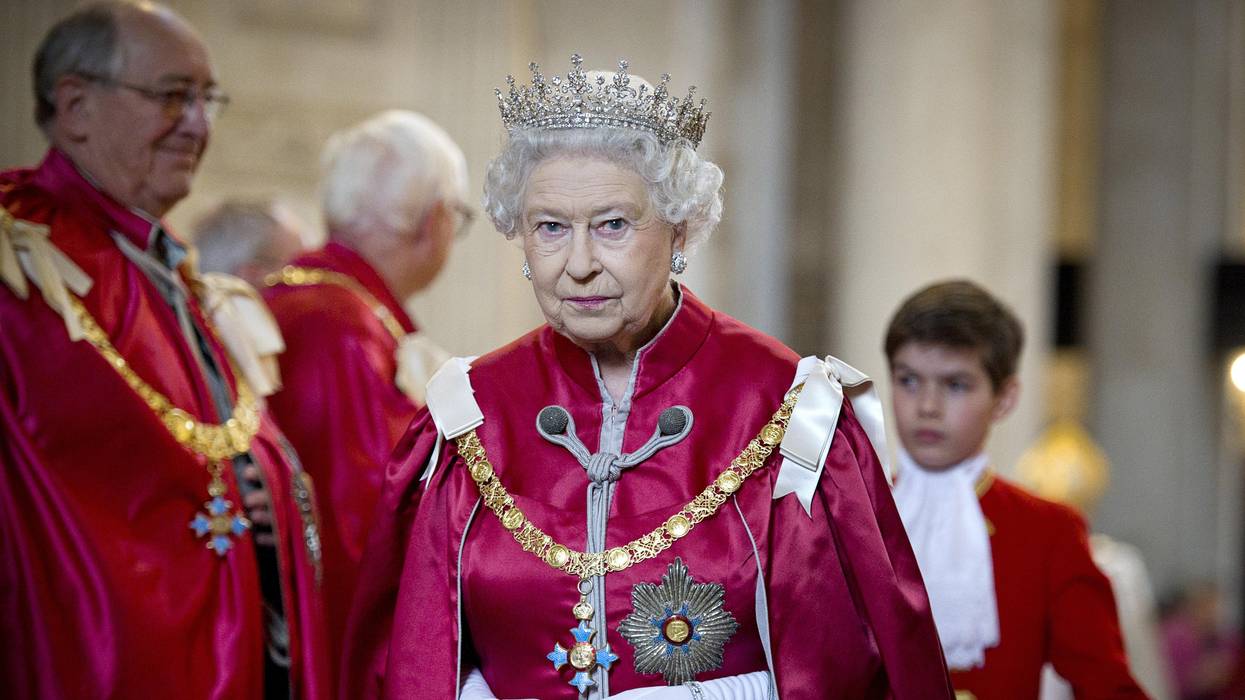
Queen Elizabeth II of England died on Thursday at the age of 96 after serving as the nation's monarch for nearly 70 years.
The Royal Family made the announcement on social media and with a public statement.
"The Queen died peacefully at Balmoral this afternoon," the statement read, referring to the Queen's residence in Scotland.
The Queen was coronated on June 2, 1953 and ruled uninterrupted ever since, the longest reign of any monarch in the nation's history. Her son--Charles, the Prince of Wales--now succeeds his mother by becoming king.
"The King and the Queen Consort," said the Royal Family's statement, referring to Charles and is wife Camilla, "will remain at Balmoral this evening and will return to London tomorrow."