

SUBSCRIBE TO OUR FREE NEWSLETTER
Daily news & progressive opinion—funded by the people, not the corporations—delivered straight to your inbox.
5
#000000
#FFFFFF
To donate by check, phone, or other method, see our More Ways to Give page.
Daily news & progressive opinion—funded by the people, not the corporations—delivered straight to your inbox.
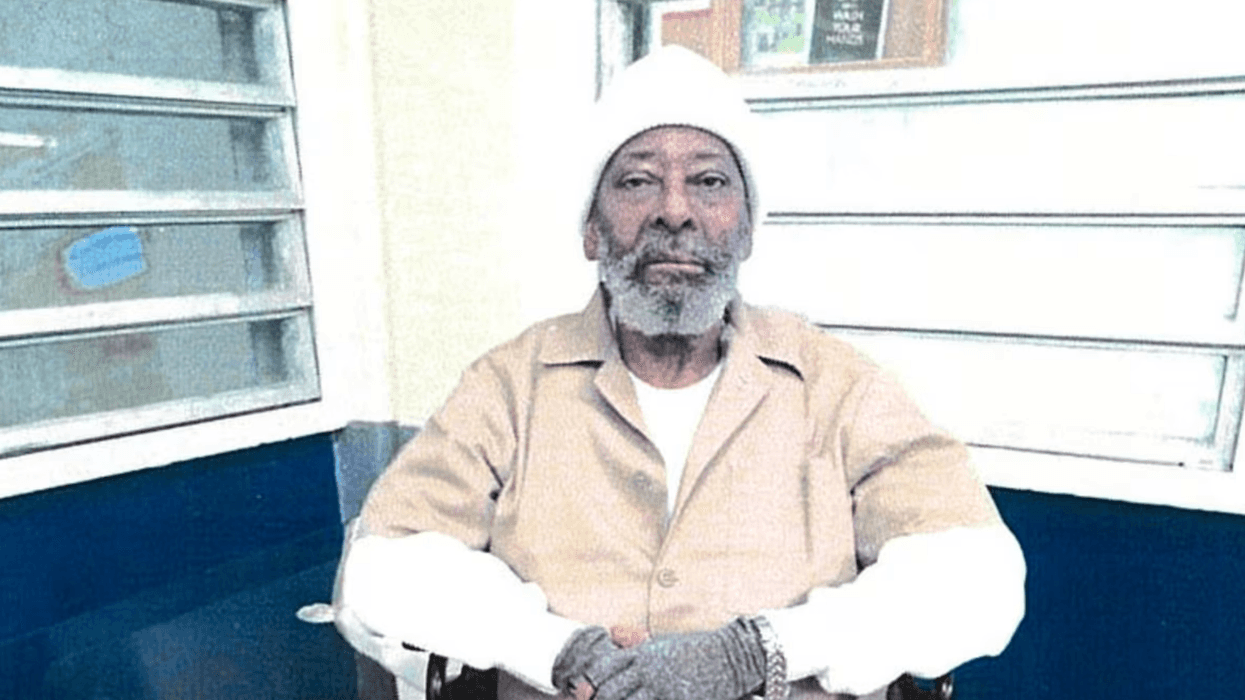
"The state was set to execute Sonny for a crime he didn't commit, but tens of thousands of people nationwide demanded justice—and our voices were heard," said the ACLU.
Amid nationwide public outcry, Republican Alabama Gov. Kay Ivey—a staunch supporter of capital punishment—on Tuesday spared a death row inmate who did not kill the man for whose murder he was sentenced to die and was scheduled for execution on Thursday.
“I firmly believe that the death penalty is just punishment for society’s most heinous offenders, as shown by the 25 executions I have presided over as governor," Ivey said in a statement. "In order to ensure the continued viability of the death penalty, however, I also believe that a government’s most consequential action must be administered fairly and proportionately."
"Doug Battle was brutally murdered by Derrick DeBruce while shopping in an auto parts store. But DeBruce was ultimately sentenced to life without parole," the governor continued. "Charles Burton did not shoot the victim, did not direct the triggerman to shoot the victim, and had already left the store by the time the shooting occurred. Yet Mr. Burton was set to be executed while DeBruce was allowed to live out his life in prison."
"I cannot proceed in good conscience with the execution of Mr. Burton under such disparate circumstances," Ivey added. "I believe it would be unjust for one participant in this crime to be executed while the participant who pulled the trigger was not. To be clear, Mr. Burton will not be eligible for parole and will rightfully spend the remainder of his life behind bars for his role in the robbery that led to the murder of Doug Battle. He will now receive the same punishment as the triggerman."
Burton—who is 75 years old and goes by the name Sonny—has been on Alabama’s death row since 1992, a year after Battle's murder.
"I didn’t kill no one, true enough, but I made a mistake by being part of the crime,” Burton told CNN in an interview last week, anticipating his execution. “I made a mistake, and it seems like all my friends have forgave me. I hope that my friends will remember me and remember that I was a real friend, a good friend.”
While Republican Alabama Attorney General Steve Marshall condemned Ivey for sparing a "murderer," both death penalty supporters and opponents welcomed the commutation.
BREAKING: Alabama Governor Kay Ivey commuted the death sentence of Sonny Burton.The state was set to execute Sonny for a crime he didn't commit, but tens of thousands of people nationwide demanded justice — and our voices were heard.
— ACLU (@aclu.org) March 10, 2026 at 9:18 AM
“It’s absolutely not fair. You don’t execute someone who did not pull the trigger,” Priscilla Townsend, one of three jurors in Burton's trial who asked Ivey for clemency, told the Associated Press, adding that she supports executing "the worst of the worst."
Tori Battle, Doug Battle's daughter, had also pleaded for clemency for Burton.
"No one from the state has ever sat with me to explain why Alabama believes it must execute a man who did not kill my father," Battle wrote in an article published last December in the Montgomery Advertiser. "My love for my father does not require another death, especially one that defies reason."
Laura Burton, executive director of the US Campaign to End the Death Penalty, said in a statement Tuesday: "We are grateful that Gov. Ivey recognized that Charles 'Sonny' Burton should not be executed. The death penalty process is deeply flawed when someone who was not present for the killing faces execution, while the person who committed the murder does not. It is uplifting to see that more and more governors across the ideological spectrum are recognizing problems with death penalty cases."
Last November, Oklahoma Gov. Kevin Still—also a staunch death penalty advocate—granted clemency to Tremane Wood with just minutes to spare before his scheduled execution for a murder his late brother confessed to committing.
Last year, Ivey also commuted the death sentence of Robin “Rocky” Myers to life in prison without parole, citing serious doubts about his guilt.
There are still 155 people on Alabama's death row, according to the state Department of Corrections. The state has executed five people since the beginning of 2025—one by lethal injection and four by nitrogen gas, a method rejected by veterinarians for euthanizing animals and condemned by United Nations human rights experts as possible torture.
Demetrius Minor, executive director of the death penalty abolition group Conservatives Concerned, said Tuesday that “we want to thank Gov. Ivey for granting clemency for Charles 'Sonny' Burton."
"This brings tremendous relief to his family and so many across the country," Minor added. "Conservatives know that government power can be abused and should not be used to execute someone who was not in the building when the murder was committed. Gov. Ivey acted on these conservative principles."
As faith leaders, we walk alongside families in their pain, and we know this truth intimately: More death does not heal trauma. It only deepens it. As people of faith, we believe this moment calls for mercy.
As people of faith, a Muslim Imam, a Jewish Rabbi, a Protestant Pastor, and a Catholic Archbishop, we come from different traditions, yet we arrive at the same moral truth: The power to take a life must be exercised with profound humility, restraint, and reverence for human dignity. When irreversible harm is at stake, mercy is not weakness; it is moral strength. Across our faith traditions, we are taught that justice is not simply punishment. Justice divorced from mercy ceases to be just at all.
Our faiths teach that judgment ultimately belongs to God. Our responsibility is to protect life whenever possible, to act with compassion toward victims, and to refrain from violence when it is no longer necessary to protect society. Compassion for those who grieve is essential, as is humility about the limits of human judgment. God is God, and we are not.
Doug Battle’s life was taken, and that loss is permanent and devastating. We hold his family and loved ones in prayer, and we do not minimize their grief or the harm caused. Faith does not ask us to forget the victim, nor does it excuse the wrongdoing that led to this tragedy. Rather, it calls us to confront suffering truthfully to honor the life that was lost while resisting the belief that another death can restore what has been taken.
When those most deeply affected by violence, particularly a victim’s own family, call for mercy, faith asks us to listen with care. In this case, the victim’s daughter has publicly urged the governor to choose clemency, and 6 of the 8 original jurors, who once bore the responsibility of this decision, now support mercy in the form of clemency for Sonny Burton. Extreme punishment does not heal loss. It compounds it.
A system that knows when not to kill demonstrates wisdom, not weakness.
While Sonny Burton bears responsibility for his actions, faith traditions consistently teach that punishment must be proportionate to culpability. Capital punishment has long been understood, even by its supporters, as reserved for the most extreme acts of intent and responsibility.
Burton’s case brings this teaching into sharp focus. He did not pull the trigger that took a life, yet he faces execution while the state agreed to resentence the triggerman to life without parole and he later died in prison. In moments like this, faith calls us to examine not only what the law permits, but what conscience requires.
Clemency in such circumstances is not a failure of justice. It is a humane expression of justice, one that recognizes accountability while refusing to impose irreversible punishment where moral certainty is absent. Exercising restraint in such moments can strengthen, rather than weaken, public trust. A system that knows when not to kill demonstrates wisdom, not weakness.
In a situation such as this, where a non-shooter still faces death while the State resentenced the shooter to life without parole, prudence calls for restraint. This is not about being “soft on crime.” It is about being faithful to a vision of justice that is humane, measured, and worthy of public trust.
As faith leaders, we walk alongside families in their pain, and we know this truth intimately: More death does not heal trauma. It only deepens it. As people of faith, we believe this moment calls for mercy.
Governor Ivey, as people of faith, we respectfully ask you to choose humility over finality and mercy over irreversible harm. Clemency for Sonny Burton would not deny justice; it would affirm the sacred value of life.
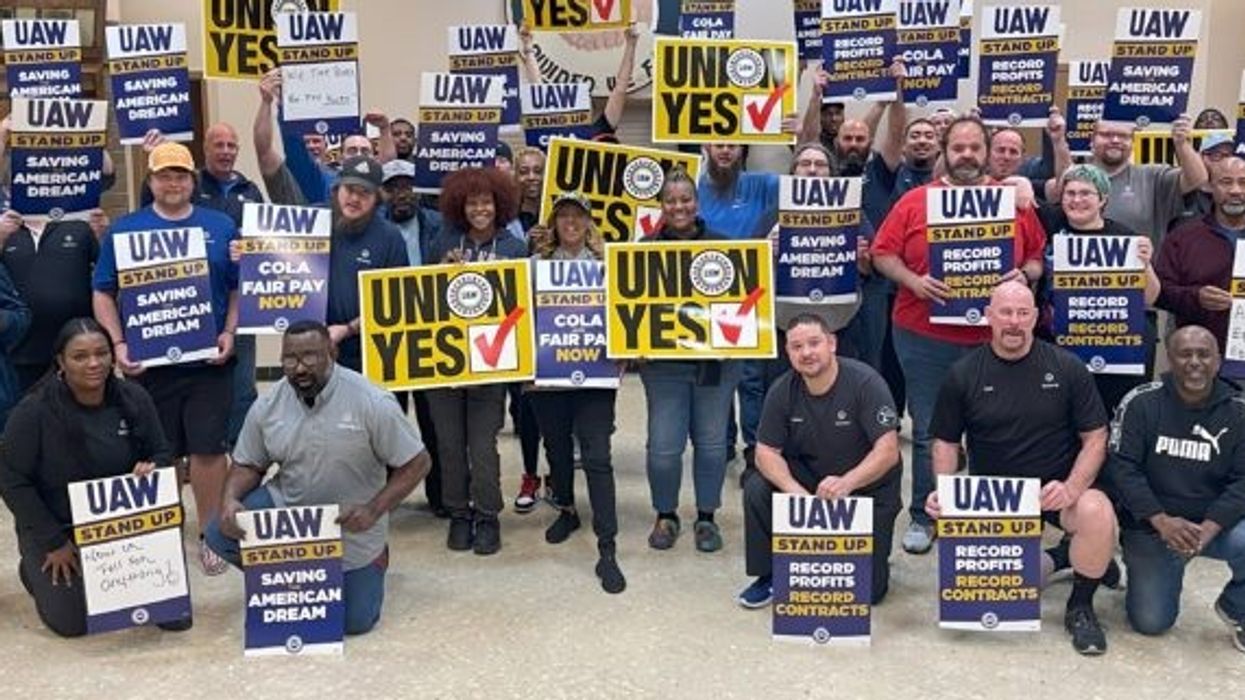
If roughly 5,000 Alabama Mercedes workers vote to unionize in the coming weeks, the ripple effects could empower workers nationwide.
The United Auto Workers recently scored the largest union victory in decades in the South. Their success at a Tennessee Volkswagen plant could be a turning point for labor in a region long known for governmental hostility to unions.
The next test will be a UAW election scheduled for the week of May 13 at a Mercedes-Benz factory in Alabama, a state that has attracted so much auto investment it has earned the nickname “the Detroit of the South.”
If the roughly 5,000 Mercedes workers vote to unionize, the ripple effects could empower workers nationwide.
We need a New South economic structure based on fairness and equity.
For decades, Southern states have pursued “low-road” development strategies, luring investors with massive public subsidies and repressive labor policies. This has pitted workers across the country against each other, undercutting everyone’s ability to secure fair compensation.
Alabama has spent $1.6 billion to woo Mercedes, along with Toyota, Hyundai, and Honda. All these foreign companies’ operations in the South are non-union, in contrast to the unionized Big Three of Ford, GM, and Stellantis.
This foreign investment has created thousands of Alabama jobs—but with weak worker protections, the state remains one of the nation’s poorest. And while these companies have enjoyed rising corporate profits, they have left workers behind.
An in-depth report by the nonprofit group Alabama Arise found that inflation-adjusted average pay for the state’s autoworkers has dropped by 11% over the past 20 years to $64,682. Meanwhile, CEO pay stands at $13.9 million at Mercedes and $6.9 million at Toyota.
The foreign-owned firms’ payrolls also reflect Alabama’s long history of racial discrimination, with Black and Latino workers earning substantially less than their white counterparts. By contrast, the Economic Policy Institute has found that union workers make 10.1% more on average than non-union workers.
The benefits are even greater for workers of color. Unionized Black workers make 13.1% more than non-union Black workers in comparable jobs—and Latino union members make 18.8% more than non-union Latino workers.
Equitable pay practices boost local economies by putting more money in workers’ pockets for groceries, housing, and other goods and services from local businesses. And that’s good for families of every color.
But Alabama Governor Kay Ivey doesn’t see things that way. Before the UAW vote in Tennessee, she joined GOP governors from Georgia, Mississippi, South Carolina, Tennessee, and Texas to discourage VW workers from voting yes with unfounded threats of mass layoffs.
When 73% of those autoworkers voted for the UAW, it was a strong rebuke of the region’s low-road, anti-worker model. So corporate lobbyists in the region have enlisted state legislators and cabinet officials in a sustained campaign to blunt organizing momentum.
How will the election turn out in Alabama?
A new poll indicates that 52% of residents in this deep-red state support the autoworkers’ union drive, while just 21% are opposed. This echoes a 2022 poll commissioned by the Institute for Policy Studies in Jefferson County, Alabama, where workers were attempting to unionize an Amazon warehouse in Bessemer. That survey showed nearly two-thirds support.
While the Alabama Amazon campaign fell short in the face of aggressive anti-union tactics, increased public approval of unions is a testament to many years of community and labor organizing.
The fact that a large majority of workers at the Mercedes-Benz plant signed petitions earlier this year in support of the election is encouraging. We need a New South economic structure based on fairness and equity. Organized labor is an essential partner in that mission.
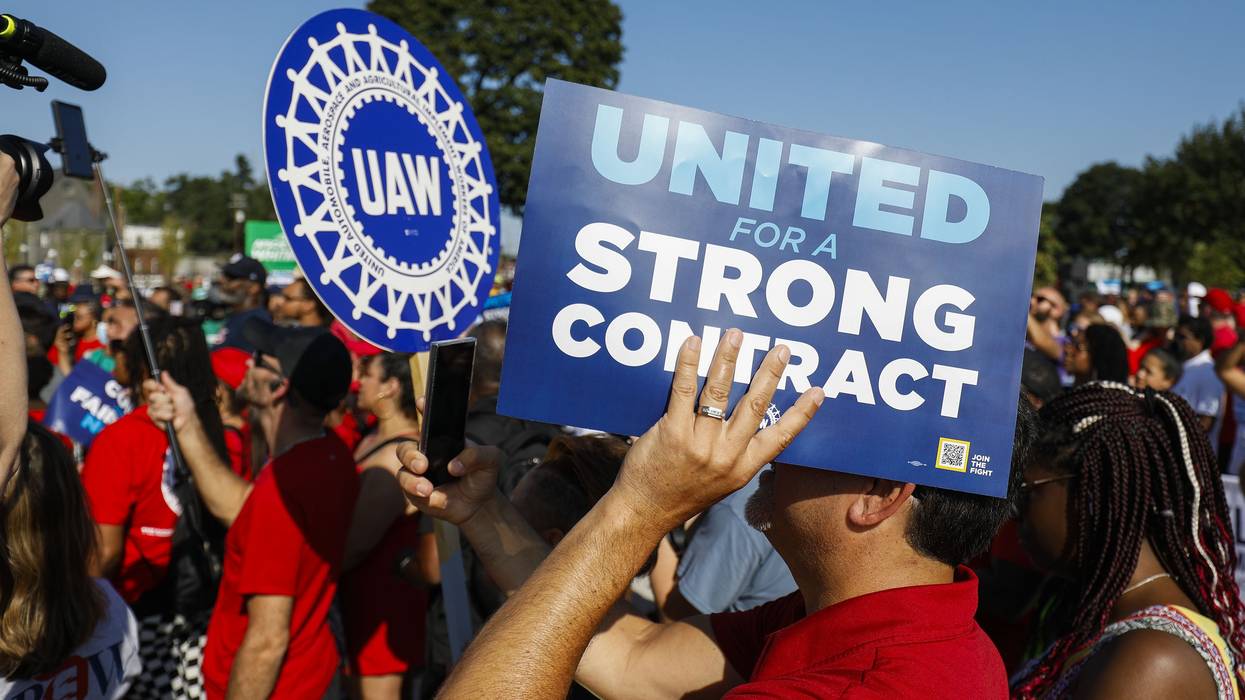
"We are standing up for every worker in Alabama," said one employee. "We're going to turn things around with this vote. We're going to end the Alabama discount."
The alleged illegal union-busting that Mercedes-Benz autoworkers in Vance, Alabama accused the car company of in a complaint to the National Labor Relations Board has not weakened the resolve of pro-union employees, a supermajority of whom now support a union election, according to the United Auto Workers.
The union announced Friday that more than 5,000 workers at the company's nonunion plant have filed a petition with the NLRB in favor of an election, with the workers aiming for a vote by early May.
"It's time for change at Mercedes," said the UAW. "It's time for justice in Alabama. It's time for Mercedes workers to stand up. That's why Mercedes workers have filed for their vote to join the UAW, and to win a better life."
The announcement comes weeks after Volkswagen employees in Chattanooga, Tennessee filed for a union election that's expected to be held April 17-19.
Both union votes are the result of aggressive campaigning by the UAW, including union president Shawn Fain, in the wake of a historic "stand-up strike" that pushed the Big Three automakers to agree to new contracts for about 150,000 workers late last year.
After the victory, Fain announced the launch of the largest union organizing drive in U.S. history, aiming to welcome 150,000 workers at nonunion auto plants into the UAW.
Over 10,000 autoworkers in recent months have signed union cards, and the UAW said Friday that employees at more than two dozen facilities are also organizing.
Mercedes' two U.S. plants in Alabama and South Carolina are its only facilities in the world where workers are not represented by a union. Workers in Vance say they want better healthcare, retirement security, safety protocols, and paid sick days.
Jeremy Kimbrell, a measurement machine operator at Mercedes, said the union vote is part of an effort to ensure carmakers no longer view Alabama as a state where workers can be compensated unfairly.
"We are standing up for every worker in Alabama," said Kimbrell. "At Mercedes, at Hyundai, and at hundreds of other companies, Alabama workers have made billions of dollars for executives and shareholders, but we haven't gotten our fair share. We're going to turn things around with this vote. We're going to end the Alabama discount."
Moesha Chandler, an assembly team member, said her job has given her "serious problems with my shoulders and hands."
"We are voting for safer jobs at Mercedes," said Chandler. "When you're still in your 20s and your body is breaking down, that's not right. By winning our union, we'll have the power to make the work safer and more sustainable.
The UAW celebrated the news out of Vance by releasing a video showing a recent rally where Fain encouraged workers to support the union effort.
"You gotta believe you can win, that this job can be better, that your life will be better, and that those things are worth fighting for," Fain told the Mercedes workers. "That's why we stand up."
The growing pro-union movement across the South represents "huge stakes," said Lauren Kaori Gurley, a labor reporter for The Washington Post. The UAW has faced resistance from right-wing politicians across the South for decades as it has attempted to unionize factories.
Alabama Gov. Kay Ivey, a Republican, said Thursday that the UAW's efforts are a "threat from Detroit" that "has no interest in seeing the people of Alabama succeed."
Ivey's comments indicated that the governor "thinks so little of Alabama workers, that we're only good for cheap labor," Kimbrell told AL.com.
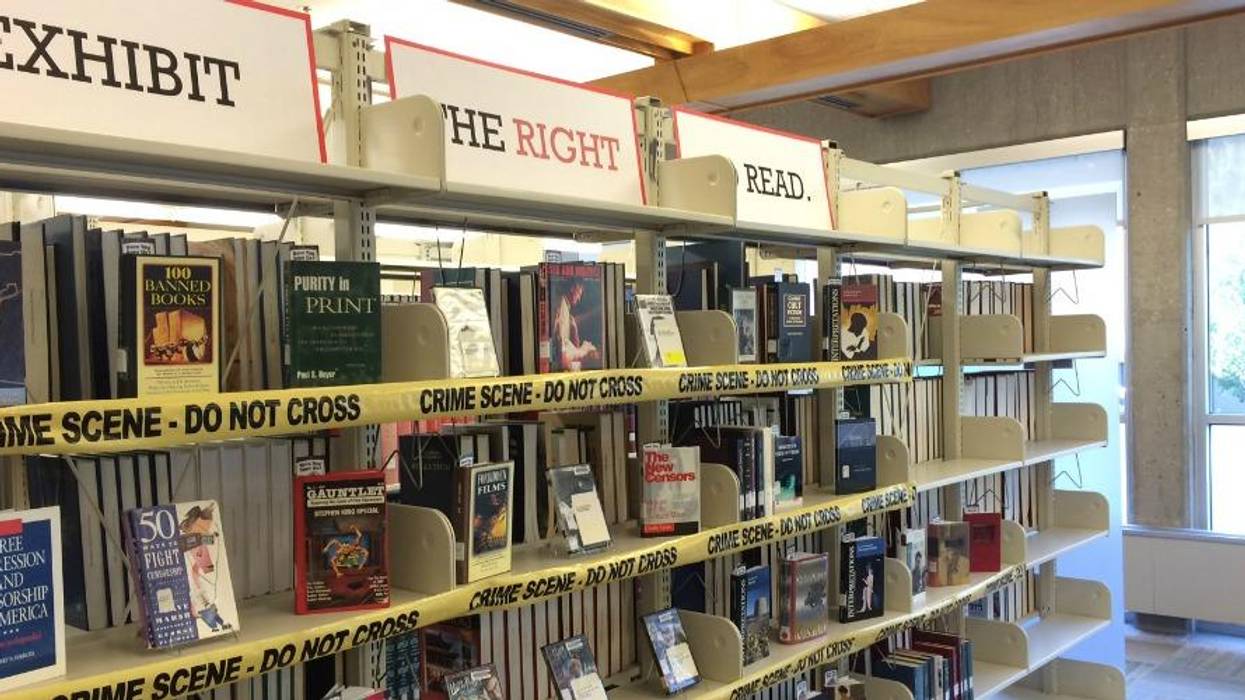
"Not only is this wrong, it's also unconstitutional. You are not protecting children; you are protecting extremists who are trying to dismantle the very foundations of my country."
The Alabama Library Association and other critics on Wednesday called out the state's Republican policymakers for pushing a new bill that opponents warn will unfairly jail librarians and have a chilling impact on collections.
House Bill 385, introduced Tuesday by state Rep. Arnold Mooney (R-43) and 30 other legislators, says that "under existing law, certain obscenity laws do not apply to public libraries, public school libraries, college libraries, or university libraries, or the employees or agents of any such libraries."
"This bill would provide that these criminal obscenity laws do not apply to college or university libraries or their employees or agents, but do apply to public libraries, public school libraries, and their employees or agents," the legislation continues.
H.B. 385 would also add the following language to the definition of sexual conduct: "Any sexual or gender-oriented material that knowingly exposes minors to persons who are dressed in sexually revealing, exaggerated, or provocative clothing or costumes, or are stripping, or engaged in lewd or lascivious dancing, presentations, or activities in K-12 public schools, public libraries, and other public places where minors are expected and are known to be present without parental consent."
"This bill is government overreach, robs parents of their rights, and would have a chilling effect on free speech by potentially incarcerating librarians because particular books are available, including even the Bible."
Matthew Layne, president of the Alabama Library Association, declared that "the message is clear—don't arrest Alabama librarians and stop turning our libraries into political battlefields. Montgomery politicians are now seeking to criminalize librarians simply for doing their jobs."
"Under H.B. 385, public and school librarians could be penalized or even arrested by prosecutors eager to follow the demands of Alabama Republican Chair John Wahl, an Alabama Public Library Service Board member, who's willing to jail librarians for having books he considers unacceptable," Layne said. "This bill is government overreach, robs parents of their rights, and would have a chilling effect on free speech by potentially incarcerating librarians because particular books are available, including even the Bible."
EveryLibrary, which says it is "the nation's first and only political action committee for libraries," has created a webpage where Alabama residents can send a pre-written message to their state representatives, urging them to oppose H.B. 385.
"I am one of your constituents and I want to know why Alabama lawmakers think jailing librarians and chilling free speech is a winnable argument," the message begins. Under H.B., 385, public and school libraries would be stripped [of] their obscenity exemption as extremists try to penalize them for having LGBTQ-affirming content, claiming sexually explicit material is available to children."
"That is false but unsurprising since Clean Up Alabama and Moms for Liberty signaled this as their master plan from the very beginning," the message continues, noting right-wing groups that have spearheaded national book-banning efforts in recent years.
PEN America found that from July 2021 to June 2023, there were at least 5,894 instances of book bans across 41 states and 247 public school districts. The group said last year that "Florida and Texas have continued to lead the country in number of bans, but the crisis has spread to 41 states."
EveryLibrary's message to Alabama lawmakers points out that a federal judge last year blocked enforcement of a similar Arkansas law criminalizing librarians and booksellers who provide minors with materials deemed "harmful" as the legal challenge moves through the courts.
"Stripping public and school libraries is a brazen attempt to chill free speech and deprive tax-paying American citizens like me of my right to choose reading material for my children, and academic freedom and privacy for minors, who enjoy a measure of First Amendment rights," the message argues. "It also gives the most extremist parents, politicians, and school administrators undue power to restrict my access to information."
"Not only is this wrong, it's also unconstitutional," the message adds. "You are not protecting children; you are protecting extremists who are trying to dismantle the very foundations of my country."
The introduction of H.B. 385 comes as Alabama residents are already outraged by public library policy changes proposed by Republican Gov. Kay Ivey.
As AL.com reported last week: "According to the Alabama Public Library Service, Alabamians had submitted 416 public comments as of Monday, and 399 are opposed to adopting the administrative code changes Ivey proposed after fears of 'inappropriate content' for children sparked a wave of book challenges statewide. The public comment period ends April 29."
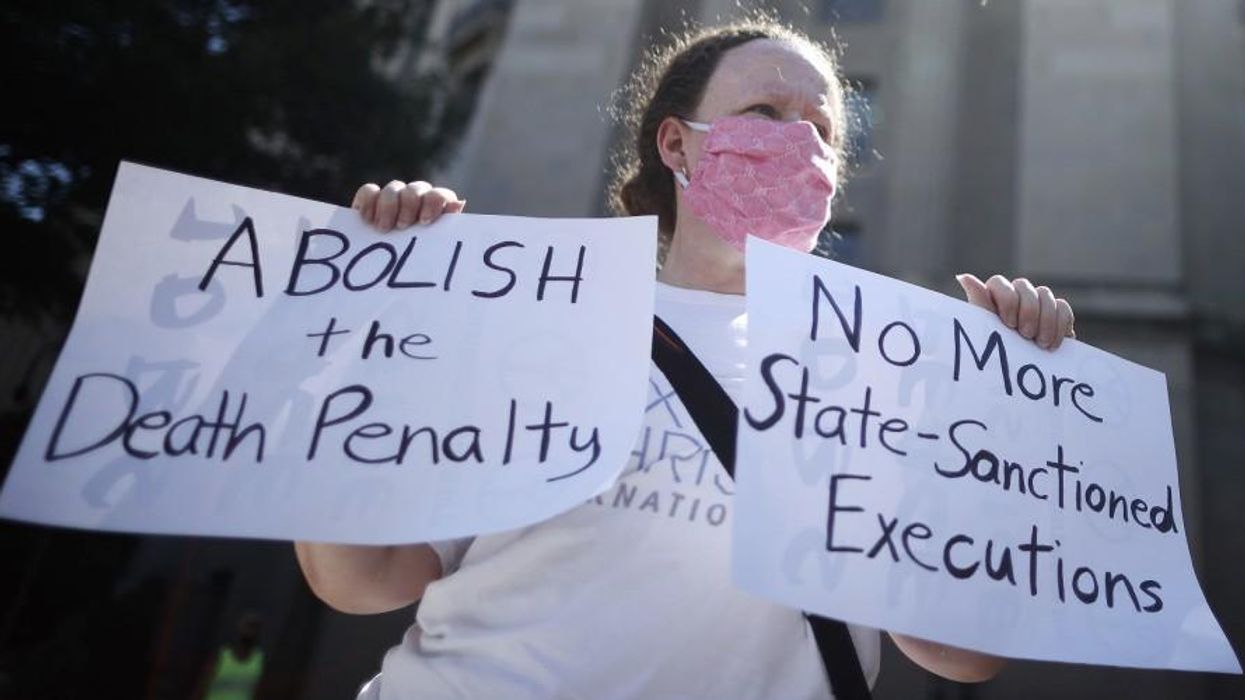
"The death penalty is the ultimate cruel, inhuman, and degrading punishment, and we urge Alabama Gov. Kay Ivey to use her clemency power to stop the execution of Kenneth Smith before it's too late," said one group.
The U.S. Supreme Court on Wednesday denied an application to stop the execution of a man on Alabama's death row who is set to become the first person in the country to be killed with nitrogen gas in a method rejected by veterinarians for euthanizing animals and condemned by United Nations human rights experts as possible torture.
The justices rejected assertions by lawyers representing 58-year-old Kenneth Smith—who was convicted and sentenced to death for the 1988 murder of Elizabeth Sennett—that execution by the untested method of suffocation with nitrogen gas violates the U.S. Constitution's prohibition of "cruel and unusual punishment."
The attorneys' argument was based largely on the fact that Smith survived a botched attempt to execute him by lethal injection in November 2022.
Smith's petition for a writ of certiorari asked: "Does a second attempt to execute a condemned person following a single, cruelly willful attempt to execute that same person violate the prohibition against cruel and unusual punishments under the Eighth and 14th amendments to the United States Constitution?"
A separate challenge by Smith to the use of nitrogen gas in his execution is pending before the 11th U.S. Circuit Court of Appeals.
Two other states, Mississippi and Oklahoma, have approved the use of nitrogen gas for executions. States have scrambled to find alternative means of killing condemned inmates after the European Union banned the sale and export of lethal injection drugs in 2011.
Earlier this month, Ravina Shamdasani, a spokesperson for the United Nations Office of the High Commissioner for Human Rights, warned that the U.S. may be violating the Covenant on Civil and Political Rights and the Convention Against Torture and Other Cruel, Inhuman, or Degrading Treatment or Punishment by allowing Smith's execution by nitrogen asphyxia.
Shamdasani noted that the American Veterinary Medical Association recommends sedating animals before euthanizing them with nitrogen—a step that is not included in Alabama's protocol.
In addition to concerns over the method of Smith's impending execution, advocates have also pointed to flaws in his sentencing process. The jury that convicted him in 1996 voted 11-1 to recommend a sentence of life imprisonment without the possibility of parole, but a judge invoked a since-outlawed rule to override the jurors.
Rights groups urged Alabama's Republican governor to halt Smith's execution—a move she declined in 2022.
"The death penalty is the ultimate cruel, inhuman, and degrading punishment, and we urge Alabama Gov. Kay Ivey to use her clemency power to stop the execution of Kenneth Smith before it's too late," Amnesty International implored Wednesday.
Abraham Bonowitz, co-founder of the abolitionist group Death Penalty Action, called Wednesday "a shameful day for our country."
"The discussion that is missing in all of this hubbub around nitrogen hypoxia is the mental torture of a second execution attempt," he added. "That, and the fact that if Kenny Smith were on trial today, he could not be sentenced to death at all because his jury was not unanimous regarding his sentence. Jury overrides were outlawed in Alabama in 2017. Alabama's capital punishment system as a whole is broken and cannot be trusted to get it right."
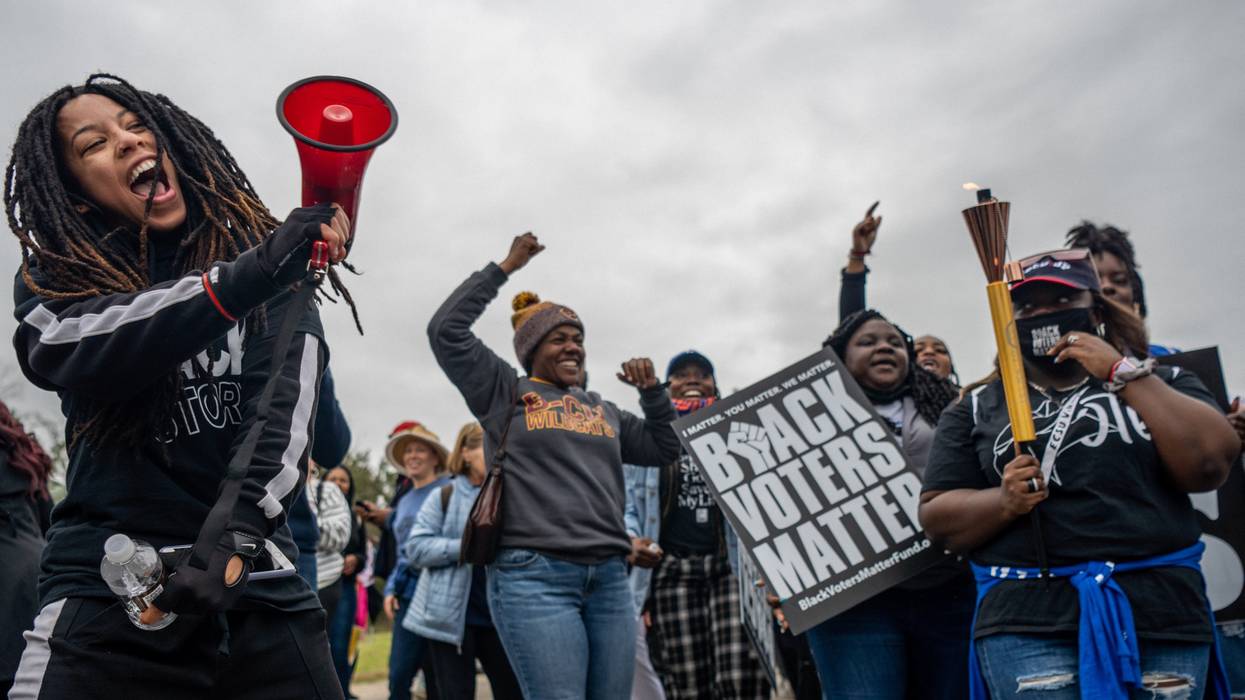
"Today's order means for the first time, Black voters in two congressional districts will have an opportunity to elect a candidate of their choice," said the head of the state's ACLU branch.
Following a U.S. Supreme Court ruling and Alabama Republicans' open defiance of a federal tribunal's order to reconfigure the state's racially gerrymandered congressional districts, a three-judge panel on Thursday adopted a new map that will be used in the 2024 elections.
Proponents hailed the ruling by U.S. Circuit Judge Stanley Marcus, District Judge Anna Manasco, and District Judge Terry Moore as a win for democracy. The move creates a second "opportunity district" where voters will have a fighting chance to elect a second Black member of Congress for the first time since Reconstruction.
"Today's order means for the first time, Black voters in two congressional districts will have an opportunity to elect a candidate of their choice," JaTaune Bosby Gilchrist, executive director of the ACLU of Alabama—which represented plaintiffs in the case—said in a statement.
"It is unfortunate that federal courts were forced to put in place a congressional map that state lawmakers refused to admit is the right thing to do, but we are thankful for their intervention," she added. "Our democracy is strongest when we make it possible for every vote to be counted. Putting in place fair voting maps moves us closer to that reality."
U.S. Rep. Terri Sewell (D-Ala.)
said: "While we celebrate this historic victory, the continued resistance that we face from state officials should not be lost on anyone. This long and arduous battle over Alabama's congressional map serves as a solemn reminder that efforts to deny fair representation to Black and minority voters are still alive and well."
Alabama state Sen. Merika Coleman (D-19) said that "today, we celebrate a victory for voting rights for all Alabamians."
"For two years, we have fought vigorously to end racial gerrymandering in Alabama and we are pleased with this landmark decision," she added. "Not only will this positively affect Alabama, but it will also help remedy the racial gerrymandering that is occurring throughout our nation. Fair maps ensure that no matter what your race, ethnicity, or political leaning, your vote counts."
While the new map does not include a second majority-Black district, it does create one in which 48.7% of voting-age residents are Black. The special master tasked with creating three map options asserted that the candidate preferred by a majority of Black voters has won 16 of the prior 17 elections in the district.
In 2022, a federal district court ordered Alabama's Republican-controlled legislature to draw a new congressional map after one approved by lawmakers and GOP Gov. Kay Ivey was found to dilute Black voting power because it contained just one majority African-American district. The court—which ruled that the GOP map violated Section 2 of the Voting Rights Act and the 14th Amendment—ordered the state to create two Black "opportunity districts."
The state appealed to the U.S. Supreme Court, which in June ruled 5-4 in Allen v. Milligan—with right-wing Justices John Roberts and Brett Kavanaugh joining their three liberal colleagues in the majority—to affirm the district court's ruling.
Following Allen v. Milligan, Ivey held a special legislative session to create a new map, which she approved in July, declaring that state lawmakers know "our people and our districts better than the federal courts or activist groups."
Despite the courts' rulings, Alabama Republicans' new map—the Livingston Congressional Plan 3—still did not contain a second majority Black district. The map's sponsor, state Sen. Steve Livingston (R-8), said then-U.S. House Speaker Kevin McCarthy (R-Calif.) told him that he was "interested in keeping my majority."
A federal tribunal consisting of two appointees of former President Donald Trump and one appointee of former President Ronald Reagan then blocked the new map, declaring that "we are deeply troubled that the state enacted a map that the state readily admits does not provide the remedy we said federal law requires."
Alabama then requested—and was denied—another Supreme Court intervention. A special master tasked by the district court subsequently submitted three new possible maps, or remedial plans, for consideration. Marcus, Manasco, and Moore selected Remedial Plan 3.
Similar challenges to GOP-draw, racially rigged congressional maps are playing out in
Georgia, Florida, and Louisiana.
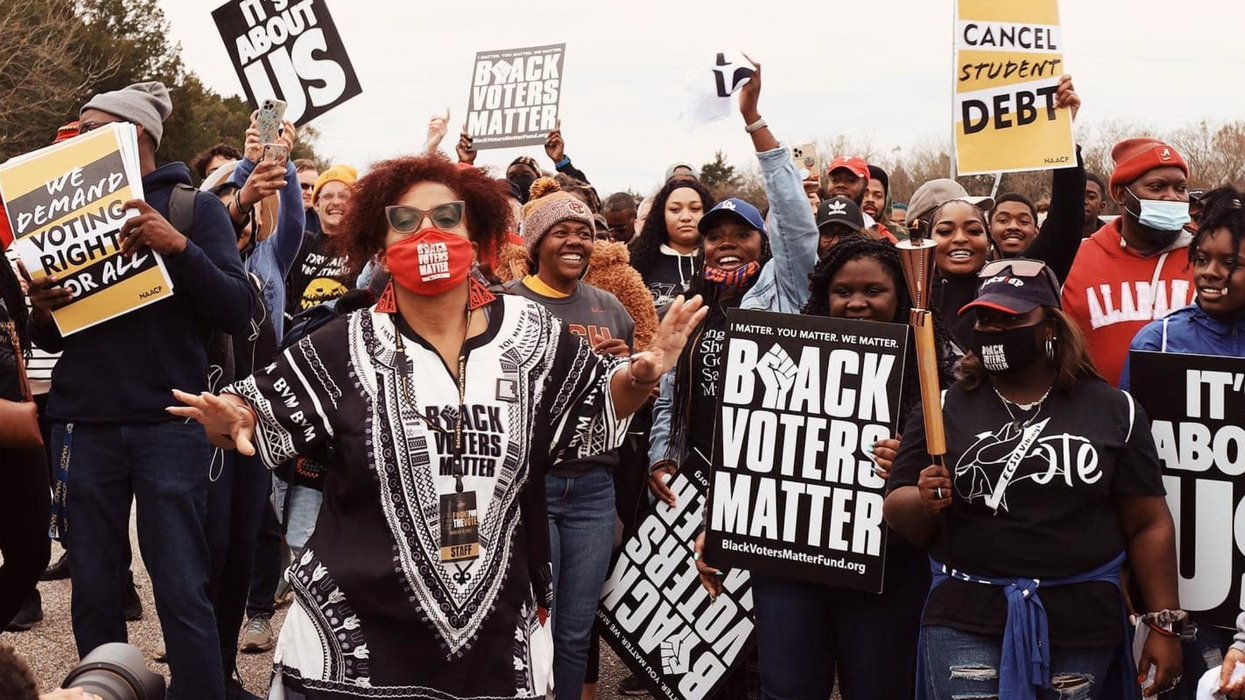
As the Alabama ACLU noted, the state must now create a second district "where Black voters have an opportunity to elect a candidate of their choice by the 2024 elections."
In a ruling hailed by civil rights defenders as a "win for Black voters," the U.S. Supreme Court on Tuesday
declined to intervene in a case in which Alabama Republicans are openly defying a federal court's order to redraw the state's racially gerrymandered congressional map.
Evan Milligan, the lead plaintiff in the case, applauded Tuesday's ruling—in which no justices publicly dissented—as a "victory for all Alabamians" and "definitely a really positive step."
The state's Republican policymakers "basically said if you were Black in Alabama, your vote would count for less," Milligan told The Associated Press. "It was our duty and honor to challenge that."
U.S. Rep. Terri Sewell (D-Ala.) described the decision as "another big win for Alabama's Black voters."
Sherrilyn Ifill, the former head of the NAACP Legal Defense Fund (LDF), called the ruling "huge."
"I am darned near tearful with pride," she wrote on social media. "It takes so much to litigate these cases—often before hostile courts, with opposition that is unprincipled, and with naysayers all around."
The Brennan Center for Justice's Michael Li said in a statement that "after a string of remarkable victories, Black voters in Alabama are closer than ever to winning relief from discriminatory maps."
A 2022 order by a federal district court ruled that a new congressional map approved by Alabama's GOP-controlled Legislature and Republican Gov. Kay Ivey after the 2020 census diluted Black voting power because it contained just one majority African-American district. The court—which found that the maps violated Section 2 of the Voting Rights Act and the 14th Amendment—ordered the state to create a new plan with two Black "opportunity districts."
Alabama appealed to the U.S. Supreme Court, which in June ruled 5-4 in Allen v. Milligan—with right-wing Justices John Roberts and Brett Kavanaugh surprising many observers by joining their three liberal colleagues in the majority—to affirm the lower court's decision.
In response to Allen v. Milligan, Ivey convened a special legislative session to make a new map, which she approved in July, declaring that state lawmakers know "our people and our districts better than the federal courts or activist groups."
Despite court orders, Alabama Republicans' new congressional map—the Livingston Congressional Plan 3—lacked a second majority Black district. The map's sponsor, state Sen. Steve Livingston (R-8), said U.S. House Speaker Kevin McCarthy (R-Calif.) told him that he was "interested in keeping my majority."
A federal three-judge panel consisting of two appointees of former President Donald Trump and one appointee of former President Ronald Reagan subsequently blocked the new map, writing that "we are deeply troubled that the state enacted a map that the state readily admits does not provide the remedy we said federal law requires."
On Monday, a special master appointed by the district court submitted three proposals for a new congressional map in Alabama. One of them will be chosen as the state's map for the 2024 elections. A three-judge panel has tentatively scheduled an October 3 hearing to consider the maps.
LDF president and director-counsel Janai Nelson said on social media that "all maps proposed by the special master would allow Black Alabamians the opportunity to elect a candidate of their choice in two congressional districts in the state."
Tuesday's ruling follows the Supreme Court's June decision to allow the redrawing of Louisiana's racially gerrymandered congressional map—a move that will add a second majority-Black district in the Southern state where 1 in 3 residents are African-American.
The ruling also comes amid a battle over Florida's congressional map, drawn by the office of Republican Gov. Ron DeSantis—a 2024 presidential candidate—and approved last year by the state's GOP-controlled Legislature. Earlier this month, a state judge ruled that the redistricting plan is an unconstitutional dilution of Black voters' ability to vote for the legislator of their choice and ordered the map redrawn.
The case will now head to the Florida Supreme Court, where a majority of justices are DeSantis appointees.

"There's no humane method of execution," said one human rights group.
The three liberal justices on the U.S. Supreme Court said the right-wing majority was allowing Alabama to use a death row inmate as a "guinea pig" early Friday when the court denied an emergency request to halt James Barber's execution, making him the first person killed by the state since Gov. Kay Ivey suspended capital punishment last year.
Barber, age 64, was pronounced dead just before 2:00 am local time on Friday at the William C. Holman Correctional Facility in Atmore, Alabama, less than two hours after the Supreme Court denied the stay of execution.
Lawyers for Barber, who was convicted of murdering 75-year-old Dorothy Epps in 2001, argued that the inmate's rights under the Eighth Amendment—which forbids cruel and unusual punishment—would be violated if he was put to death via lethal injection in Alabama, where several executions were botched before Ivey halted the death penalty and ordered a review.
The program was suspended following outcry over the executions of Doyle Lee Hamm, who was punctured with needles for two-and-a-half hours as executioners struggled to access a vein in 2018, and Joe Nathan James Jr., whose execution last year took more than three hours.
Two more executions last year were cancelled in the state after prison officials could not access veins.
The "top-to-bottom" review ordered by Ivey, a Republican, resulted in a change in the personnel who work in the death chamber at Holman and an extension of the time given for killing an inmate—neither of which "constitute[s] serious efforts to fix [Alabama's] pattern of botched execution after botched execution," said lawyers for Barber.
In a dissent authored by Justice Sonia Sotomayor and signed by Justices Elena Kagan and Ketanji Brown Jackson, the court's liberals said the Eighth Amendment "demands more than the state's word that this time will be different."
"The court should not allow Alabama to test the efficacy of its internal review by using Barber as its 'guinea pig'," wrote Sotomayor, adding that the conservative justices were allowing Ivey's government "to experiment again with human life."
The human rights organization Reprieve said the state "shouldn't be resuming executions, it should be ending them once and for all."
Judge Jill Pryor of the 11th Circuit Court of Appeals also accused the Alabama Department of Corrections (ADOC) of using Barber "as its guinea pig" in a dissent on Wednesday as the court handed down a 2-1 ruling allowing the state to execute the man.
Pryor noted that Ivey's review was "conducted entirely internally, entirely outside the scope of any court's or the public's scrutiny, and without saying what went wrong or what it fixed as a result."
"Three botched executions in a row are three too many," Pryor wrote. "Each time, ADOC has insisted that the courts should trust it to get it right, only to fail again."
"Mr. Barber has raised a serious and substantial Eighth Amendment claim that the pattern will continue to repeat itself," Pryor added.
The ACLU of Alabama pointed out that Barber was sentenced to death by a non-unanimous jury, a practice permitted only in Alabama and Florida.
"That alone should be reason to question his death sentence," said the group.
Barber was the 15th person executed in the U.S. this year, according to the Death Penalty Information Center.

"Fascists," was the one-word response from one critic of Republican Gov. Kay Ivey's administration in Alabama.
The state of Alabama's top early education official was forced out Friday by Gov. Kay Ivey over a teacher resource guide—one that promotes inclusion of various kinds of families and acknowledges the reality of racism in the nation's history—the Republican leader denounced as too "woke."
After an apparent refusal to denounce the book or accept its removal, Barbara Cooper, head of the Alabama Department of Early Education, was compelled to tender her resignation, which Ivey accepted.
The text in question is a widely-used resource guide for early childhood educators that informs teachers that the "early education system is not immune" from the forces of "systemic and institutional racism" embedded in the history and development of the United States.
The book, according to a review of its contents by the Associated Press, also urges inclusion and understanding for young children coming into education programs from all kinds of different families.
"Early childhood programs also serve and welcome families that represent many compositions. Children from all families (e.g., single parent, grandparent-led, foster, LGBTQIA+) need to hear and see messages that promote equality, dignity, and worth," states the resource guide.
A spokesperson for Ivey's office, Gina Maiola, identified the book as the National Association for the Education of Young Children (NAEYC) Developmentally Appropriate Practice Book, 4th edition and told reporters that copies of the text had been removed from all classrooms in the state.
Maiola said the book's glossary "includes equally disturbing concepts that the Ivey Administration and the people of Alabama in no way, shape or form believe should be used to influence school children, let alone four-year-olds."
The NAEYC, a national accrediting board that supplies materials and performs reviews for educational institutions and teachers nationwide, states on its website that the organization "promotes high-quality early learning for all children, birth through age 8, by connecting practice, policy, and research."
According to AP:
The book is a guide for early childhood educators. It is not a curriculum taught to children.
The governor's office, in a press release, cited two examples from the book—one discussing white privilege and that "the United States is built on systemic and structural racism" and another that Ivey's office claimed teaches LGBTQ+ inclusion to 4-year-olds. Those sections, according to a copy of the 881-page book obtained by The Associated Press, discuss combating bias and making sure that all children feel welcome.
On Friday evening, the NAEYC sent a statement to AL.com in response to the ouster of Cooper, who happens to sit on the group's national governing board, and about the resource guide itself.
"For nearly four decades, and in partnership with hundreds of thousands of families and educators, Developmentally Appropriate Practice has served as the foundation for high-quality early childhood education across all states and communities," NAEYC said in the statement.
"While not a curriculum, it is a responsive, educator-developed, educator-informed, and research-based resource that has been honed over multiple generations to support teachers in helping all children thrive and reach their full potential," the group continued. "Building on the good work that is happening in states and communities, NAEYC looks forward to continuing its partnership with families, educators, and policymakers to further our shared goals of offering joyful learning environments that see, support, and reflect all children and their families."
Megan Carolan, an early childhood researcher, responded to the story online by saying Cooper's ouster was "massively concerning and, I suspect it echoes what many teachers and districts have had to navigate locally."
"This book was a NAEYC-developed resource used as a guide, not curriculum," Carolan added. And while Alabama ranks poorly in public education performance overall, she remarked that the state "is commonly hailed as a success in early childhood education."