

SUBSCRIBE TO OUR FREE NEWSLETTER
Daily news & progressive opinion—funded by the people, not the corporations—delivered straight to your inbox.
5
#000000
#FFFFFF
To donate by check, phone, or other method, see our More Ways to Give page.
Daily news & progressive opinion—funded by the people, not the corporations—delivered straight to your inbox.
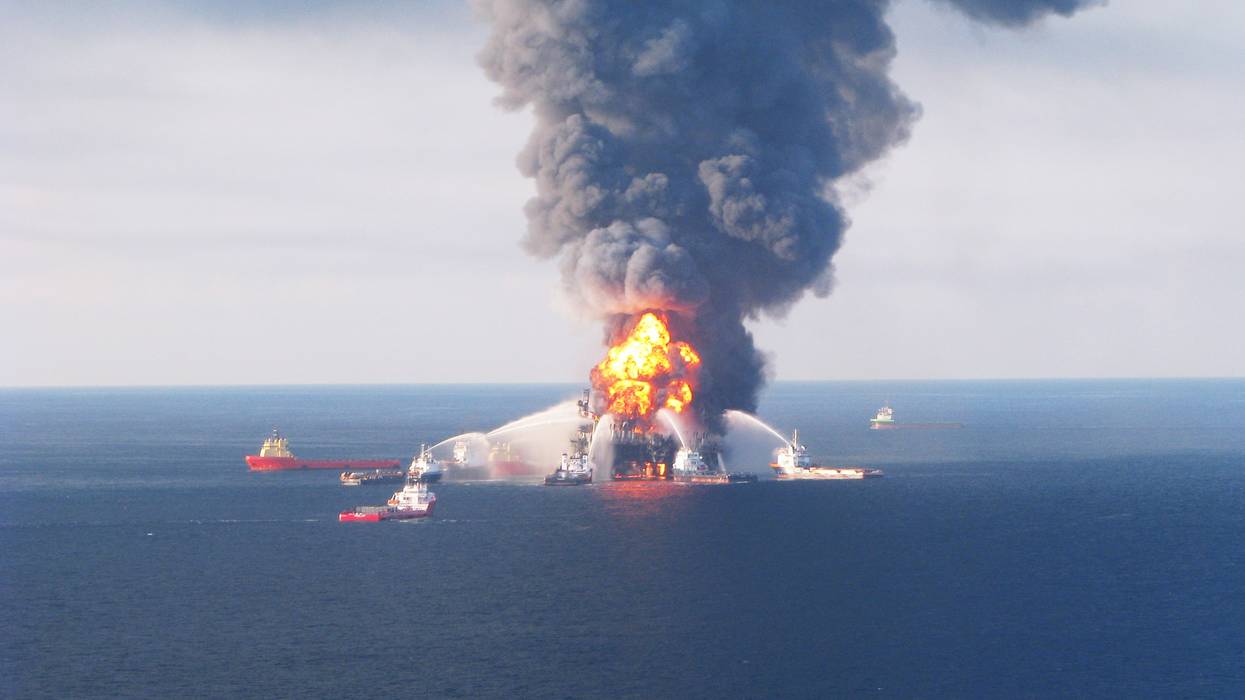
By allowing an industry tax toward oil spill prevention and response to expire, GOP leaders are exposing the nation to the unnecessary risk of continued oil pollution, including major disasters like Exxon Valdez and Deepwater Horizon.
As Congress recesses this week without reauthorizing the Affordable Care Act subsidies needed by millions of Americans, it also quietly gave the oil industry a multimillion dollar tax break by allowing the 9 cent-per-barrel oil tax (on domestic and imported oil) into the federal Oil Spill Liability Trust Fund to expire as well on December 31. The OSLTF, administered by the Coast Guard’s National Pollution Funds Center, is the nation’s central financial instrument for oil spill prevention and response, earning about $500 million per year from the nominal excise oil tax—about 0.1% of annual US oil industry revenue.
In our current political climate prioritizing industry over public interest, many feared that Congress and the Trump administration might simply allow the oil spill tax to expire, as a “Return on Investment” for industry contributions made to their political campaigns. Congress did just that. As they increase costs for millions of Americans, the Republican congress and administration are decreasing costs for some of the richest companies in the world.
For decades, Congress and the administration have remained stubbornly resistant to using the OSLTF to fund necessary oil spill prevention measures across the nation, and as tax revenue and spill damage recoveries continued to be collected, the fund balance has now grown to over $10 billion. Since the fund’s use for a single oil spill is limited to $1.5 billion, we have long proposed that a substantial portion of the remaining balance be used to better prevent oil pollution across the nation. Instead of just leaving all of this money in the bank, it should be put to work, while saving enough (perhaps $5 billion) for conventional oil spill response activities.
A transcendent lesson learned in all major oil spills around the world is that once oil is spilled, there is precious little that can be done to limit environmental damage. Historically, an average of 2-6% of total spill volume is actually recovered in major marine oil spills (Deepwater Horizon was about 4%, Exxon Valdez about 8%). These multibillion dollar spill responses may look good for oil company and government public relations, but they are virtually irrelevant in limiting environmental harm. Prevention is key to environmental protection.
As a fundamental cause of the 1989 Exxon Valdez and the 2010 Deepwater Horizon disasters was inadequate government oversight, expanding drilling while cutting oversight is as reckless as it gets.
Spill prevention measures across the nation in need of more funding include enhanced Vessel Traffic Systems, escort-rescue tugs to prevent groundings and collisions of tankers and cargo ships in dangerous passages (e.g. the March 2024 cargo ship Dali collision with the Francis Scott Key bridge in Baltimore Harbor), enhanced inspection of oil and liquefied natural gas tankers, and so on. However, the federal government has resisted using the fund for such preventive measures.
With the OSLTF tax expiration approaching this summer, we proposed that the fund’s 9 cent-per-barrel tax on domestic and imported crude oil (less than 0.2% of today’s crude oil price, or less than one cent-per-gallon of gasoline) be fully reauthorized, and that the fund’s use for many oil spill prevention measures be significantly expanded. Congress and the administration were unresponsive, raising suspicions that they intended to allow the oil tax to expire, which they just did.
One proposed use for the fund is to safely cap and decommission the millions of derelict, abandoned oil and gas wells across the nation, both onshore and offshore. Regarding these orphaned and abandoned oil wells, a 2021 scientific paper found that, of the 4,700,000 historic and active oil and gas wells across the US, only 1 in 3 (1,500,000) are considered safely plugged. Leakage from improperly abandoned oil and gas wells causes groundwater and air pollution, ecological damage, risk of explosions, and damage to human health.
Costs for well decommissioning and abandonment have been estimated to range from $10,000-$50,000 to plug old, shallow wells; $300,000 for newer, deeper wells; and up to $1 million for more complex wells. In a 2015 study, the Government Accountability Office (GAO) estimated the cost to securely decommission the thousands of deepwater oil and gas wells in the US Gulf of Mexico (two-thirds of the 5,000 wells in the Gulf of Mexico are in deep water) at $38.2 billion. The GAO study reported that, of the $38.2 billion in decommissioning liabilities, $2.3 billion were not covered by existing financial assurances; and of the remaining $35.9 billion in decommissioning liabilities, the federal government held $2.9 billion in bonds and other assurances, while waiving the remaining $33 billion for companies that passed a “financial strength test.” The GAO expressed concern about such extensive waivers of financial assurances, as this exposes the federal government to substantial future costs.
Clearly, abandoned oil and gas wells present enormous oil pollution risk, public safety hazard, and substantial government financial liability that we as a nation have ignored for too long. We have to do better, and using the OSLTF for this purpose would clearly be in the national interest.
Further, while the Trump administration recently proposed opening virtually the entire US Outer Continental Shelf (more than 1 billion acres of the nation's offshore waters) to oil and gas drilling, it slashed the budget for the Department of Interior’s Bureau of Safety and Environmental Enforcement (BSEE) by roughly 35%, from $220 million to just $143 million. As a fundamental cause of the 1989 Exxon Valdez and the 2010 Deepwater Horizon disasters was inadequate government oversight, expanding drilling while cutting oversight is as reckless as it gets. Thus, an important use for the federal oil spill fund should be to expand BSEE's budget, as it is largely focused on preventing catastrophic oil spills from the nation's several thousand offshore oil rigs. There are countless other cost-effective pollution prevention measures as well that need OSLTF funding.
But with Congress and the Trump administration ignoring these real funding needs, and allowing the oil tax to expire (as a gift to their oil industry contributors), the nation remains exposed to unnecessary risk of continued oil pollution, including small chronic releases, as well as major disasters like the Exxon Valdez and Deepwater Horizon. So much for “government efficiency.” Hopefully Congress will come to its senses in 2026, and fix what it just broke.
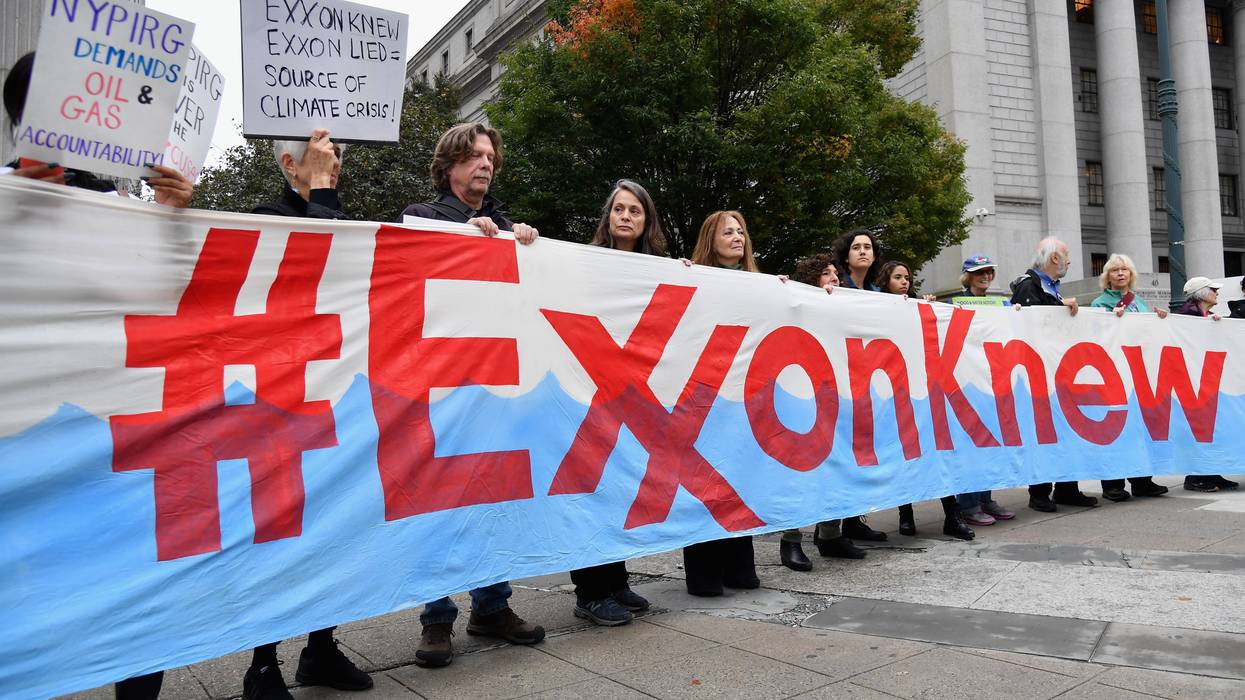
"Do you have any idea how easy it is to get you off our backs with a little bullsh*t about your responsibilities to the planet?"
A new parody ExxonMobil advertisement released Tuesday by a group founded by Adam McKay—the Academy Award-winning writer and director of the blockbuster doomsday climate comedy Don't Look Up—mocks humanity for letting Big Oil get away with causing one of the biggest existential threats of all time.
"There's a world we all want to live in again. A world where the air is pure and crisp and clean and fills your lungs with joy. A world where you can drink water from any river or creek and your house will still be there tomorrow if it rains," the narrator of Yellow Dot Studio's latest parody video says in the two-minute clip. "Here at Exxon, we believe in that world, and we're working hard to make sure that our customers believe that we believe in that world."
"We understand the road has been bumpy, and we haven't always done the best we could," he says over footage of the Exxon Valdez disaster, in which more than 10 million gallons of crude oil were spilled in Alaska's Prince William Sound in 1989.
Wow, this new Exxon ad is surprisingly candid. pic.twitter.com/FYEf2GNdGE
— Yellow Dot Studios (@weareyellowdot) July 9, 2024
The voice-over continues:
Sure, our own scientists accurately predicted climate change 60 years ago. But we didn't want you to know about it. That's why we spent billions on ads and media manipulation covering it up, then we rigged the government so leaders in both parties would do our bidding, and yes, we did everything in our power to block clean energy tech so we could keep force-feeding you oil via expanding global infrastructure, monstrous vehicles, and disposable plastics and chemicals that don't go away. Ever.
The video follows the recent conclusion of a bicameral Senate investigation into Big Oil's decades of spreading climate disinformation and obstructing a green transition—after which lawmakers called on the U.S. Department of Justice to investigate fossil fuel giants. There is also a nascent movement urging state and local prosecutors to go after the oil and gas industry for climate-related deaths.
"And yes, every now and then you squawk about how evil we are, but then we drop gas prices a nickel and you shut right back up," the narrator says. "Do you have any idea how easy it is to get you off our backs with a little bullshit about your responsibilities to the planet? About your carbon footprint? Pretending plastic recycling actually makes a difference?"
"You're letting us get away with it, you dumb bitches" he adds mockingly. "All of our tricks worked. The world is a burning, out-of-control charnel house. The last generation to die of old age has already been born, and you still let oil executives freely show their face in public."
"We're just one company but you're 7 billion people," the video concludes. "Get off your asses and do something, you fucking peasants!"
Royal Dutch Shell must pay for the lives and livelihoods destroyed by the decades-long deluge of oil spilled from its pipelines in the Niger Delta, two lawsuits filed in London on Tuesday charged.
"Shell has an appalling record of obfuscation and misinformation with regard to its dealings in the Niger Delta," said Peter Frankental, director of Amnesty International's UK Economic Affairs Programme.
Shell's pipelines traverse the fragile Niger Delta ecosystem--and humanitarian groups last year drew attention to the company's decades-long efforts to cover up, rather than fix, its myriad pipeline failures.
The two latest cases were filed on behalf of the Bille and Ogale communities in the Ogoniland region. The British firm behind the lawsuits, Leigh Day, charged that Shell's pipeline infrastructure is in such bad shape that continual oil spills "caused, and continue to cause, long-term contamination of the land, swamps, groundwater and waterways" in the Ogale community.
It also claimed that pipeline breakages have destroyed the livelihood of the 13,000 residents of Bille, who traditionally fish to sustain themselves, and that the spills have grown so extensive that residents "have even been forced to stack sandbags outside their homes to try to prevent oil entering their properties."
This week's lawsuits follow an unprecedented PS55 million ($77.4 million) settlement Shell paid out in 2015 to residents of the region's Bodo community for spills that occurred in 2008.
"In papers filed in the UK court prior to [the 2015] settlement," Amnesty International wrote in a recent briefing (pdf), "Shell admitted that its previous and often repeated assertions regarding the volume of oil spilled and area affected were substantially incorrect."
"Court documents also revealed that internal emails and reports showed that senior Shell employees had expressed concern as far back as in 2001 of the need to replace oil pipelines in the Niger Delta," the humanitarian group wrote, "describing some sections as containing 'major risk and hazard.'"
Amnesty International's briefing warns investors of the UN-declared "public health emergency" created in the region by decades of spills and negligence, pointing out the company's liability in claims such as the suits filed this week and laying out a case for divestment from Shell.
The Niger Delta "has endured the equivalent of the Exxon Valdez spill every year for 50 years by some estimates. The oil pours out nearly every week, and some swamps are long since lifeless," the New York Times reported back in 2010.
A Times editorial from 2014 details the darkest moments of Shell's 60-year presence in the region, a legacy the newspaper's editorial board characterizes as "devastating":
Shell discovered oil in Nigeria in 1956, and, ever since then, the people of Ogoniland have suffered from air, land and water pollution. The United Nations study found cancer-causing benzene present in drinking water at 900 times the World Health Organization guidelines. Shell stopped drilling in Ogoniland in 1993 after local protests, but its pipelines still cross the region. The 1995 sham trial and execution of celebrated activist Ken Saro-Wiwa and eight others who had protested oil exploitation in Ogoniland remains one of the darkest blots on Nigeria's history.
"We hope that the Bodo case and this new lawsuit will spur Shell on to accept its responsibilities by cleaning up the oil spills," Frankental said, "and compensating those in the Niger Delta whose lives have been devastated by them."
When Hurricane Katrina hit the U.S. Gulf Coast 10 years ago, it set off a disaster of many parts -- and one of those parts was an oil spill catastrophe.
When Hurricane Katrina hit the U.S. Gulf Coast 10 years ago, it set off a disaster of many parts -- and one of those parts was an oil spill catastrophe.
In fact, Katrina turned out to be the worst U.S. oil spill disaster since the 1989 Exxon Valdez tanker spill in Alaska. The storm resulted in an estimated 8 million gallons of oil spilling onto the ground and into waterways from Louisiana to Alabama. Both of those incidents have since been surpassed by the 2010 BP spill in the Gulf, which affected some of the same areas as the Katrina spill.
The Katrina oil disaster offers important lessons for residents of the Atlantic Coast -- another hurricane-vulnerable region that may soon be opened to offshore drilling. Federal regulators are now considering whether to include an area 50 miles off the coast from Virginia to Georgia in the 2017-2022 Outer Continental Shelf drilling lease plan.
Katrina made its initial landfall in southeastern Louisiana in Plaquemines Parish, a center of the oil industry, as a Category 3 storm with sustained winds of 125 miles per hour. The two single largest spills resulting from the storm occurred in Plaquemines: one involving storage tanks at the Bass Enterprises site in Cox Bay that dumped 3.78 million gallons of oil into the environment, and another from Chevron's Empire terminal in Buras that released 1.4 million gallons.
There were also spills in more populous parts of the state, including an incident involving a ruptured storage tank at the Murphy Oil refinery in St. Bernard Parish just east of New Orleans that spilled about 1 million gallons of oil, affecting as many as 10,000 homes in the surrounding neighborhoods.
In 2006, the U.S. Minerals Management Service (MMS), since reorganized into the Bureau of Ocean Energy Management, issued a report on damage to oil and gas infrastructure resulting from Katrina as well as Hurricane Rita, which made landfall on Sept. 24, 2005 as a Category 3 storm along the Texas-Louisiana border. MMS found that together the two storms damaged a total of 457 pipelines, 101 of those major lines of 10 inches or more in diameter, and destroyed 113 offshore drilling platforms. A 2007 study for MMS reported that the storms also resulted in about 750,000 gallons of petroleum products spilling from offshore platforms, rigs and pipelines.
President George W. Bush's White House acknowledged the enormity of the Katrina oil disaster in the official administration report on the storm, "The Federal Response to Hurricane Katrina: Lessons Learned":
Much more than any other hurricane, Katrina's wrath went far beyond wind and water damage. In fact, Hurricane Katrina caused at least ten oil spills, releasing the same quantity of oil as some of the worst oil spills in U.S. history.
In the years since Katrina, however, politicians friendly with the oil and gas industry have tried to erase the reality of the storm's impact on the Gulf's energy infrastructure and the resulting pollution. That effort to rewrite history intensified in 2008 after President Bush, a former Texas oilman, reversed decades of presidential policy by proposing to expand offshore drilling to new areas, including the Atlantic Coast.
Louisiana Gov. Bobby Jindal, now running for the Republican nomination for president, told Fox News in the wake of Bush's drilling announcement, "That's one of the great unwritten success stories, after Katrina and Rita, these awful storms, no major spills." Around the same time, former Arkansas Gov. Mike Huckabee, also currently running for the GOP presidential nomination, said that "not one drop of oil was spilled off of those rigs out in the Gulf of Mexico" when Katrina hit.
North Carolina Gov. Pat McCrory -- who's now leading the charge for Atlantic oil and gas drilling as chair of the industry-managed Outer Continental Shelf Governors Coalition, despite strong opposition in coastal communities -- also weighed in during his unsuccessful 2008 gubernatorial run, claiming that "we didn't have one oil spill due to Katrina."
Minor storms, major spills
The claims of politicians aside, Hurricane Katrina showed that when major hurricanes hit oil-producing regions, they can cause major oil spills. But another lesson storm-prone Gulf Coast communities have learned over the years is that even minor hurricanes can lead to significant spills and pollution.
Consider Hurricane Isaac. On Aug. 28, 2012, the relatively mild Category 1 storm made landfall in southeastern Louisiana at the mouth of the Mississippi River. A year later, the Gulf Monitoring Consortium (GMC) -- an alliance of environmental advocacy groups launched to collect, share, and publish data on pollution in the region -- released a report examining Isaac's impacts.
"Despite the relatively unremarkable nature of the storm, GMC documented numerous examples of pollution from infrastructure failures at fossil fuel transport, storage, and refining facilities during and after the storm," the report stated. "These failures included inadequate levees which allowed contaminated water to spill into surrounding wetlands, waterways, and communities; insufficient storage capacity to handle stormwater and/or wastewater during predictable high-rain events; tanks and railroad tanker cars shifted or upset by the storm and floodwaters, and other weaknesses."
Among the spills related to Isaac that GMC documented:
* The Marathon refinery in Garyville, Louisiana, dumped 12.6 million gallons of untreated stormwater runoff from its process areas into Lake Maurepas.
* Oil wastewater overflowed the collection system at the Phillips 66 refinery in Belle Chasse, Louisiana, which is located on the Mississippi River.
* Though the Valero refinery in St. Charles Parish shut down before the storm, it still experienced a spill of 47 gallons of slop oil, including 7.8 pounds of cancer-causing benzene.
* Satellite images and flyovers taken after the storm documented an oil slick from a closed Chevron offshore well as well as oil leaks at other offshore sites and from oil production and storage facilities.
"In the immediate aftermath of Hurricane Isaac, it became crystal clear that companies are not taking the action necessary to safeguard their facilities," Jonathan Henderson of the Gulf Restoration Network, a GMC member, said at the time.
Besides causing acute oil-spill crises, hurricanes can also lead to chronic leaks -- a lesson learned from the ongoing Taylor Energy oil leak a few miles off the Louisiana coast.
When Hurricane Ivan moved through the Gulf of Mexico as a Category 3 storm in September 2004, it triggered an undersea landslide that toppled an oil platform formerly operated by Taylor Energy. The New Orleans-based company has attempted to halt the leak, but it continues 11 years later.
SkyTruth, an environmental watchdog group based in West Virginia, has used satellite images and pollution reports to estimate that between 300,000 and 1.4 million gallons of oil have spilled into the Gulf from the Taylor Energy site, and the leak shows no signs of tapering off. Federal officials have said they think it will continue for another century until the reservoir is empty.
SkyTruth President John Amos, a geologist, has called the Taylor leak "a dirty little secret in plain sight."
Oil and land loss
Polluting spills are not the only hazards created when the oil industry and hurricanes mix: The combination also drives coastal land loss, making inland communities more vulnerable to storm damage.
One of the reasons Hurricane Katrina was so destructive, causing damages estimated at $108 billion, was that the flooding and storm surges it brought were made worse by the loss of protective coastal wetlands to open waters. Since the 1930s, Louisiana has lost nearly 1,900 square miles of coastal lands -- an area about the size of Delaware. The state's land continues to disappear into the Gulf of Mexico at a rapid pace, with an area about the size of a football field lost every hour.
Louisiana is losing land so rapidly in large part because of oil and gas industry activity: the tens of thousands of wells drilled and thousands of miles of pipelines laid and canals carved into coastal wetlands (see U.S. Geological Survey photo of the Louisiana coast above). Every cut made in the wetlands allows the Gulf's saltwater to intrude, which in turn kills soil-anchoring plants and trees, allowing more land to slip away.
The oil and gas industry itself has acknowledged causing 36 percent of all wetlands loss in southeastern Louisiana, with other estimates putting that figure as high as 59 percent. However, the industry is fighting local governments' efforts to make it pay for restoration, which could leave taxpayers to foot the bill.
Also contributing to land loss are levees, which starve coastal lands of fresh sediment and natural land subsidence. In addition, rising seas are becoming an increasingly important factor in coastal land loss -- especially under an energy policy that encourages burning oil and gas. At the same time, the global warming exacerbated by burning fossil fuels is contributing to more intense hurricanes.
The area of the Atlantic Coast from Virginia to Georgia where drilling has been proposed is already extremely vulnerable to hurricanes and sea-level rise. North Carolina is among the most hurricane-prone states in the nation, having experienced 46 hurricanes in the period from 1851 to 2004 -- the fourth-most after Florida, Texas and Louisiana. In that same period South Carolina was hit by 31 hurricanes, Georgia by 20 and Virginia by 12.
Meanwhile, scientists have identified a "hotspot" of accelerated sea-level rise on the Atlantic Coast from North Carolina's Outer Banks to Massachusetts, where seas are rising three to four times as fast as they are globally. Norfolk, Virginia already experiences street flooding during ordinary high tides. Recent studies have found that North Carolina's Outer Banks face a sea-level rise of nearly 5.5 inches over the next 30 years, while an earlier study found the ocean off the state's coast would rise 39 inches in the next century. And in South Carolina's Lowcountry, up to five feet of sea level rise are expected by 2100, while Charleston is already experiencing more frequent flooding.
Atlantic Coast communities face a perilous future from a warming climate, rising seas and more destructive hurricanes. Adding oil to the mix will heighten the dangers they face, as Hurricane Katrina showed.
America awoke the morning of April 21 to learn that BP's well, the Deepwater Horizon, had blown out in the Gulf of Mexico and was on fire. Eleven men were dead. BP began dumping dispersants (toxic chemicals that sink oil) into the Gulf and lies into the media.
I had left Alaska on February 10 for another round of national talks on the democracy crisis and how we can take back our government... from the corporations. My phone went berserk with media requests. Lisa Marie, my assistant and friend, asked when I was going down to the Gulf. "I'm not," I said. She knew better.
For both of us, it was deja vu. During the Exxon Valdez oil spill 21 years earlier in Alaska, Lisa Marie had worked with traumatized children and families. She worked for several years as a board member and volunteer for the Cordova Family Resource Center. With my doctorate in marine pollution, I became a spokesperson for the commercial fishing industry, testifying in the state legislature and Congress for stronger spill prevention measures and working to ban dispersants, and then starting the Copper River Watershed Project to help the community recover from long-term socioeconomic impacts. Lisa Marie knew I needed time to process my own memories that surged afresh with BP's blowout, the inept government-industry response, and the lies.
It took me a week to come out of my foxhole. I thought about all the mistakes our community had made after the Exxon-Valdez spill, of all that we'd learned during our decades of fighting. All of the communities in the Gulf will make the same mistakes, I thought glumly... unless someone warns them. Suddenly I realized that someone was me.
On May 3, Lisa Marie and I flew to New Orleans. She had a return ticket; I did not. Before the flight, a black limousine took me to a studio in Denver for an interview with Amy Goodman on Democracy Now!; a black limousine picked us up in New Orleans for an interview with Anderson Cooper on AC 360. The pace didn't slow down for five months.
From May through early October, I drove back and forth across the Gulf, giving community talks and workshops that evolved with the needs:
Shared Exxon Valdez stories and encouraged people to come up with a Plan B-how they could help themselves instead of waiting for BP or the federal government to make them whole as Exxon had promised, but failed, to do in Alaska.
In the town of Jean Lafitte, one Cajun fisherman stopped me mid-talk and begged, "Miss Riki, c-a-a-a-a-lm down!" A week later, my southern hosts had figured out how to "handle" me: "Miss Riki, she's high-strung. You gotta sit 'er down and feed 'er!" That worked.
Ordinary folks across the Gulf are turning to covert operations, grabbing cameras to document and report oil sightings and dispersant use in coastal seas.
Encouraged people to take air and water quality samples to document the damage from the spill and the threat to human health (the federal agencies' sampling programs found nothing to support the outbreak of respiratory illnesses and skin "rashes" that residents were experiencing). We amassed documentation of "disappeared" evidence.
A security guard in Florida hid behind bushes to take photos of BP-contracted Waste Management employees dumping wildlife carcasses in a dumpster. She sent the photos from her cell phone. "You can see the bush in the picture!" says Lisa Marie.
Encouraged people to take blood samples to link their illnesses with the high levels of oil and dispersants they were finding in their air and water. They tested outdoor swimming pools, rain, bayous, and beach sand.
Following massive use of oil dispersants in heavily populated coastal areas, dealt with extremely sick (and now dying) people. (The federal government and BP still deny this occurred, though federal investigators now have documentation. I believe the spraying was done to keep up appearances that the oil was "gone"-conveniently in time for mid-term elections.) Found medical doctors to properly diagnose and treat people as doctors in the Gulf were diagnosing anything but chemical illnesses. Encouraged those challenging re-opening of commercial fisheries, as they were still finding lots of evidence of oil and dispersants.
In Bayou La Batre, Alabama, two state officials tried to convince an audience of fishermen that it was okay to fish in coastal waters. Finally, one exasperated fellow boomed into the microphone, "I am a coon ass, not a dumb ass!"
Same as August.
In Louisiana, folks are calling the renamed Mineral Management Services, an agency captured by the oil industry it is charged with regulating, "Bummer"-for Bureau of Ocean Energy Management, Regulation, and Enforcement (BOEMRE). It fits. BP and the Coast Guard call the oil that still washes ashore "algae." It's not. The new joke in Louisiana is to go to BP stations and ask them to fill up and check the "algae."
In mid-October, I resumed the national tour that was interrupted in April, finally finding my way home on December 6 after being gone for 290 days! Cordovans showered me with thank-yous, hugs, and "'atta girls." It felt great.
Now I'm back in the Gulf. There's a lot on my list, from continuing the work of banning dispersants to finding a university that will partner with community organizations to conduct a 20-year study on the health impacts of the spill on Gulf residents.
The story isn't over. Indeed, this story has the potential to unite Americans in a serious commitment to transition off fossil fuels , starting with a permanent ban on deepwater offshore drilling. It's also an opportunity to confront the dangerous expansion of corporate power -for the people I've met here, watching the government protect BP instead of them has been more instructive than anything I could tell them.
It's not too late to make sure the outcome of this spill is not, as it was twenty years ago, a return to "oil business as usual."
PENSACOLA BEACH, Florida -- When Ryan Heffernan, a volunteer with Emerald Coastkeeper, noticed a bag of oily debris floating off in Santa Rosa Sound, she ran up to BP's HazMat-trained workers to ask if they would retrieve it.
"No, ma'am," one replied politely. "We can't go in the ocean. It's contaminated."
Ryan waded in and retrieved the bag. That was Wednesday, June 23, the first day visible oil hit Pensacola Beach. Ryan had been swimming off the beach the day before, as she said, "to get in my last swim before the oil hit." The trouble is that not all of the oil coming ashore is visible. Dispersed oil - tiny bubbles of oil encased in chemical dispersants - are in the water column. On Thursday Ryan was treated at a local doctor's office for skin rash on her legs.
Three days later on Pensacola Beach, I watched BP's HazMat-trained workers shovel surface oiled sand and oily debris into bags early in the morning. The workers followed the waterline like shorebirds, scurrying up the beach in front of breaking waves and moving back down with receding waters.
The late morning sun retired the workers to the shade of their tents and the job of "observing," while it brought out throngs of beach-goers -- children, parents, grandparents -- who happily plunged into the "contaminated" ocean without a second thought.
I was astounded. Why did people think the ocean was safe for swimming?
There were five HazMat tents, four front-loaders, and at least two dozen HazMat workers on the beach. HazMat workers wore yellow over-boots duct-taped to their long pants' legs to minimize risk of contact with the water. The white surf popped with visible black tar balls as it rolled towards the beach. Waves left an oily signature of tar balls on the beach, melting in the sun. The treads of my Chacos weighed down with oily sand despite trying to avoid the mess. Most people were barefoot. Hotels set up oil cleaning stations on their premises - and signs saying the water advisory (put in place after Ryan's incident) had been lifted.
What's wrong with this picture?
Lots. For starters, Ryan's story from Pensacola Beach is not an isolated incident. I have received emails and heard personal stories from Louisiana to Florida of people who have developed skin rashes and blisters from going in the ocean. People describe stings by "invisible jellyfish." Turtle patrol volunteers who walk beaches daily write of blisters and bronchitis. And then there are individuals like Sheri Allen who took her dog for a walk on a beach in Mobile Bay in May.
Sheri wrote me that her "arms and legs were burning, even after the shower. The following morning ... (there were) ... small blood blisters. By evening the blisters had begun to welt. By the fourth day, the areas had got larger and swollen." She went to see a doctor but the sores remain and they have begun to scar her arms and legs. For several days after Sherri's incident, her husband found fish kills on the beach.
William Rea, MD, who founded the Environmental Health Center-Dallas, treated a number of sick Exxon Valdez cleanup workers. He once told me, "When you have sick people and sick animals, and they are sick because of the same chemical, that's the strongest evidence possible that that chemical is a problem."
It's not just skin rashes and blisters. At community forums, I commonly hear from adults and children with persistent coughs, stuffy sinuses, headaches, burning eyes, sore throats, ear bleeds, and fatigue. These symptoms are consistent across the four Gulf states that I have visited. Further, the symptoms of respiratory problems, central nervous system distress, and skin irritation are consistent with overexposure to crude oil through the two primary routes of exposure: inhalation and skin contact.
Most distressing to me are stories about sick children. "Dose plus host makes the poison," I learned in toxicology. A small child is at risk of breathing a higher dose of contaminants per body weight than an adult. Children, pregnant women, people with compromised or stressed immune systems like cancer survivors and asthma sufferers, and African Americans are more at risk from oil and chemical exposure - the latter because they are prone to sickle cell anemia and 2-butoxyethanol can cause, or worsen, blood disorders.
Public officials have failed to sound an alarm about the public health threat because three federal agencies - DHHS, EPA, and OSHA - cannot find any unsafe levels of oil in air or water. Perhaps the federal air and water standards are not stringent enough to protect the public from oil pollution. Our federal laws are outdated and do not protect us from the toxic threat from oil - now widely recognized in the scientific and medical community.
BP is still in the dark ages on oil toxicity. BP officials stress that, by the time oil gets to shore, it is "weathered" and missing the highly volatile compounds like the carcinogenic benzene, among others. BP fails to mention the threat from dispersed oil, ultrafine particles (PAHs), and chemical dispersants, which include industrial solvents and proprietary compounds, many hazardous to humans.
If oil was so nontoxic, then why are the spill response workers giving hazardous waste training? Our federal government should stop pretending that everything is okay. What isn't safe for workers isn't safe for the general public either.
Ryan's rash was getting better until she sat on Pensacola Beach to watch fireworks on July 4. The next day her skin erupted in fiery red burns. She is worried about her health. So are many other people along the Gulf.
Perhaps it is time for the government to protect public health first and BP's profit second.
Click here to see Riki Ott's photos.
Riki Ott, PhD, is a marine toxicologist from Alaska, volunteering in the Gulf. She has written two books on surviving the Exxon Valdez oil spill - Sound Truth and Corporate Myths on biological impact of oil to people and wildlife, and Not One Drop on emotional impact of disaster trauma and litigation to people and community. www.rikiott.com. Ott is working with Emerald Coastkeeper and others to petition the EPA to delist toxic chemical products in oil spill response.
GRAND BAYOU, Louisiana -- The federal agencies delegated with protecting the environment, worker safety, and public health are in hot water in the small coastal communities across Louisiana, Mississippi, and Alabama.
Fishermen responders who are working BP's Deepwater Horizon giant uncontrolled slick in the Gulf are reporting bad headaches, hacking coughs, stuffy sinuses, sore throats, and other symptoms. The Material Safety Data Sheets for crude oil and the chemical products being used to disperse and break up the slick -- underwater and on the surface -- list these very illnesses as symptoms of overexposure to volatile organic carbons (VOCs), hydrogen sulfide, and other chemicals boiling off the slick.
When the fishermen come home, they find their families hacking, snuffling, and complaining of sore throats and headaches, too. There is a good reason for the outbreak of illnesses sweeping across this area.
Last weekend, the U.S. Environmental Protection Agency (EPA) posted its air quality monitoring data from the greater Venice, Louisiana, area. The data showed federal standards were being exceeded by 100- to 1,000-fold for VOCs, and hydrogen sulfide, among others--and that was on shore. These high levels could certainly explain the illnesses and were certainly a cause for alarm in the coastal communities.
I wrote an article based on EPA's information. So did chemist Wilma Subra with the Louisiana Environmental Action Network (LEAN). Baton Rouge-based LEAN is an advocate of public health and worker safety, and a trusted source of information on chemicals, exposure, and safety monitoring throughout this region.
Two days after the EPA posted its air quality monitoring data, most of it vanished from its website--except for the data showing the very highest level of airborne chemicals. Subra reports that she had a conference call with EPA officials yesterday and those officials confirmed that the higher levels they initially reported had remained on the site and were accurate.
"The detection levels on the instrumentation used by the EPA were not accurate enough to report airborne chemicals at lower levels," explains Subra. "So the EPA removed the data showing low levels from their website. But the EPA maintained the higher levels--those concentrations of 5 to 10 parts per billion, the concentration where you start getting acute health impacts."
This raises serious concerns for people in and around the coastal city of Venice, Louisiana, where the data were collected. And concentrations of oil and chemical dispersants are expected to be much, much higher offshore above the slick. How high? Five oil rigs have been shut down in the Gulf near BP's blowout allegedly because of concerns about fire. However, many of the fishermen in this area also work on the rigs. And the fishermen know the oil workers coming in from the rigs are suffering identical symptoms to the fishermen and their families.
But oilmen and fishermen are not being treated the same by BP and other oil companies operating in the Gulf. Oilmen are being evacuated because of high concentrations of dangerous chemicals, according to the fishermen, not fire danger. Meanwhile, fishermen responders are not even being provided with respirators for cleanup work - much less being protected from "fire danger."
As someone who witnessed the Exxon Valdez disaster, I saw this same charade unfold 20 years ago in Prince William Sound-and the result was literally thousands of sick cleanup workers who thought they had "the Valdez Crud," or simple colds and flu. Instead Exxon likely dismissed injured workers - and its own responsibility/liability to take care of these people - using an exemption for reporting "colds and flu" in hazardous waste cleanup regulations. 29 CFR (1904.5(b)(2)(viii)
The response to the BP leak is starting to look an awful lot like what happened during the Exxon Valdez cleanup. BP is not a self-regulated company, but it sure is acting like one.
The federal agencies responsible for monitoring public health and worker safety need to take aggressive action to prevent human tragedy. EPA should do continuous monitoring of air quality across the oil-impacted Gulf states--rather than only in communities where the oil is coming ashore--and EPA should post all the data it collects. It is public information and the people have a right to know about a toxic menace in their communities. If air quality continues to exceed public safety standards, the federal government has an obligation to act to evacuate people-just as it would in response to a hurricane, except at BP's expense.
Further, the U.S. Occupational Health and Safety Act (OSHA) officials should be monitoring BP's worker-safety program. OSHA has a responsibility to order BP to take steps to figure out why workers are getting sick and to order BP to take immediate preventative action. This is all supposed to be part of BP's worker-safety program and it's up to the federal government to make sure BP's plan works in practice as stated on paper.
The current situation is a disaster in the making. Fishermen who ask BP for respirators jeopardize their cleanup jobs. So, they've stopped asking. Fishermen are aware that only three workers need to request a Health Hazard Evaluation for the federal government to take action. But no one has stepped up because fisheries have closed and spill response might be the only job they have--even if it might cost them their health or life, as happened to Exxon Valdez workers.
Americans need to demand that Congress authorize the National Institute of Occupational Health and Safety to conduct a Health Hazard Evaluation of the Gulf situation. Failure to have our regulatory agencies act immediately to protect people's health in impacted coastal communities is a crime our country cannot afford to commit.
In the southern marshes and swamplands of Louisiana, local fishermen refer to BP as "Bayou Polluter"-and that was before the April 20 blowout of the Deepwater Horizon oil rig operated by the oil giant. Fishermen say BP spills oil every year and they point out marshes still dead from dispersants that were sprayed there.
If President Obama has a say, BP will stand for "Better Pay" for the environmental and economic damages that will stem from the uncontrolled leak, likely at 20,000 barrels (840,000 gallons) a day, according to satellite imagery.
In the Exxon Valdez spill, people counted on the oil company to respond to and clean up the mess, and we counted on Congress and the legal system to hold the oil industry accountable for damages to the environment and local communities and economies. In hindsight, these turned out to be bad ideas-for reasons I've recounted in two books. Exxon dodged penalties through long court battles, systematically underestimating the scope of the spill, and leveraging the costs of clean-up to avoid fines and penalties. The company even wrote off the cost of clean-up as a business expense. Where's the deterrent in that?
Let's not make the same mistakes again. BP's leak from the rig blowout is so catastrophic and so out of control that the situation calls for all hands on deck-for immediate response, for dealing with the spill's long-term ramifications, and for preventing another disaster of this magnitude.
What can impacted communities, governments, and states do to monitor, cleanup, and restore marshes and beaches?
What can local impacted communities, governments, and states do to protect public health and worker safety?
What can people do to help? Lots. The Obama Administration, Congress, and the states need to hear from all of us.
Wainwright, Alaska - "We'll have to give you an Eskimo name if you like our food!" Kenneth "Kenny" Tagarook teased as he sliced another piece of frozen raw caribou meat for me with his ulu - a hand-sized, flat piece of metal with a small handle opposite the sharp, curved edge.
Kenny and his wife Ann are Inupiat ("In-OU-pe-at" or "Eskimo"). They are hosting me and Kenny's cousin Rosemary Ahtuangaruak during our visit in Wainwright. The village of 520 mostly Inupiat people lies along Alaska's North Slope over 200 miles above the Arctic Circle.
The site was settled by Kenny's ancestors over 100 years ago as Olgoonik, an Inupiaq name for "where the land slopes to the sea." The landmark bluff overlooking the Chukchi Sea is nearly indistinguishable now as the sea ice is packed in successive ridges that press firmly against the shore. Earlier, the biting cold (-39 with wind chill) had shortened our walk along the bluff.
"Did you try the bearded seal?" Rosemary asked. I picked up a marble-sized bit of dark brown meat, dried and frozen. Rich opaque oil coated my fingers. The seal meat was dense and delicious. "I love our food," said Rosemary, her black eyes sparkling and her mouth full.
The food is part of the culture and the culture is why Rosemary and I are visiting Wainwright and other Inupiat villages along the Arctic Ocean. Wainwright has been spared the oil and gas development - and cultural impacts - of villages to the east near Prudhoe Bay.
But that may soon change. Forty million acres of the Chukchi Sea may soon be leased to oil and gas development along with another 33 million acres of the neighboring Beaufort Sea. Together, these lease sales open the entire Arctic Ocean to oil and gas development.
The Chukchi Sea teems with sea life. In spring and fall, bowhead and beluga whales migrate along the coast. The vast ocean is a rich feeding area for gray, humpback, and fin whales, walrus and ringed, bearded, and spotted seals. Millions of migratory birds from across the U.S., central and South America, and even Antarctica rear their young in the brief Arctic summer. The Chukchi and Beaufort Seas support 20 percent of the world's polar bears.
The Inupiat people lovingly refer to the ocean as "our garden." But there are problems in the "garden" in the Beaufort Sea to the east.
Rosemary lives in Nuiqsut ("new-WICK-sit"), a village over 600 miles to the east of Wainwright and near Prudhoe Bay. The ever-expanding oilfields with their associated airplane and helicopter traffic, airports, roads, pipelines, gravel mines, noise, and flares have altered the landscape and the ways the animals use the land. Seismic tests push migratory caribou farther south, away from Nuiqsut, and migratory bowhead whales further north, out to sea. Causeways and gravel islands divert migratory fish away from the coast. Loss of traditional foods means loss of a way of life - and loss of a human right to protect a culture.
Kenny and Ann worry about what is happening in Nuiqsut at the northern end of the Trans-Alaska Pipeline - and what happened in Prince William Sound at the southern end of the pipeline. Oil from the Exxon Valdez is still buried on the beaches of the Sound and most of the wildlife injured by the spill 20 years ago still has not fully recovered.
Twenty years without traditional foods is unthinkable to Inupiat people like Kenny and Ann, yet Wainwright is slated to become the next Nuiqsut - an industrial complex - and oil spills come oil development.
Large-scale industrial development is simply not compatible with large-scale wilderness and the Inupiat culture. We can have one or the other, but not both in the same place. Interior Secretary Ken Salazar recently indicated that the offshore oil-drilling plan left by the Bush administration will likely be scrapped. The plan opens the entire Atlantic and Pacific coasts for drilling, Salazar observed.
Let us not forget that it also opens the entire Arctic coast to drilling.
Salazar said, "There are places that are appropriate for exploration and development and there are place that are not."
Surely the Arctic Ocean is a place where oil and gas development are not appropriate. Exxon managed to recover only 3 to 11 percent of the 11 to 38 million gallons of oil that spilled in Prince William Sound. The Arctic Ocean is an even less forgiving environment with its four months of darkness, sea ice, bitter temperatures, and storms. There is no proven technology to clean up or recover spilled oil in broken ice. None. Dispersants don't work in cold water with Prudhoe Bay crude.
What is at stake is a culture that has survived for over ten thousand years in one of the harshest environments on the planet. The culture has survived because the people could live off the land and sea. Take away the food and the people will vanish from the land.
Why should the Inupiat way of life be sacrificed for our oil dependency? The Arctic should be off limits to oil and gas development.