

SUBSCRIBE TO OUR FREE NEWSLETTER
Daily news & progressive opinion—funded by the people, not the corporations—delivered straight to your inbox.
5
#000000
#FFFFFF
To donate by check, phone, or other method, see our More Ways to Give page.
Daily news & progressive opinion—funded by the people, not the corporations—delivered straight to your inbox.
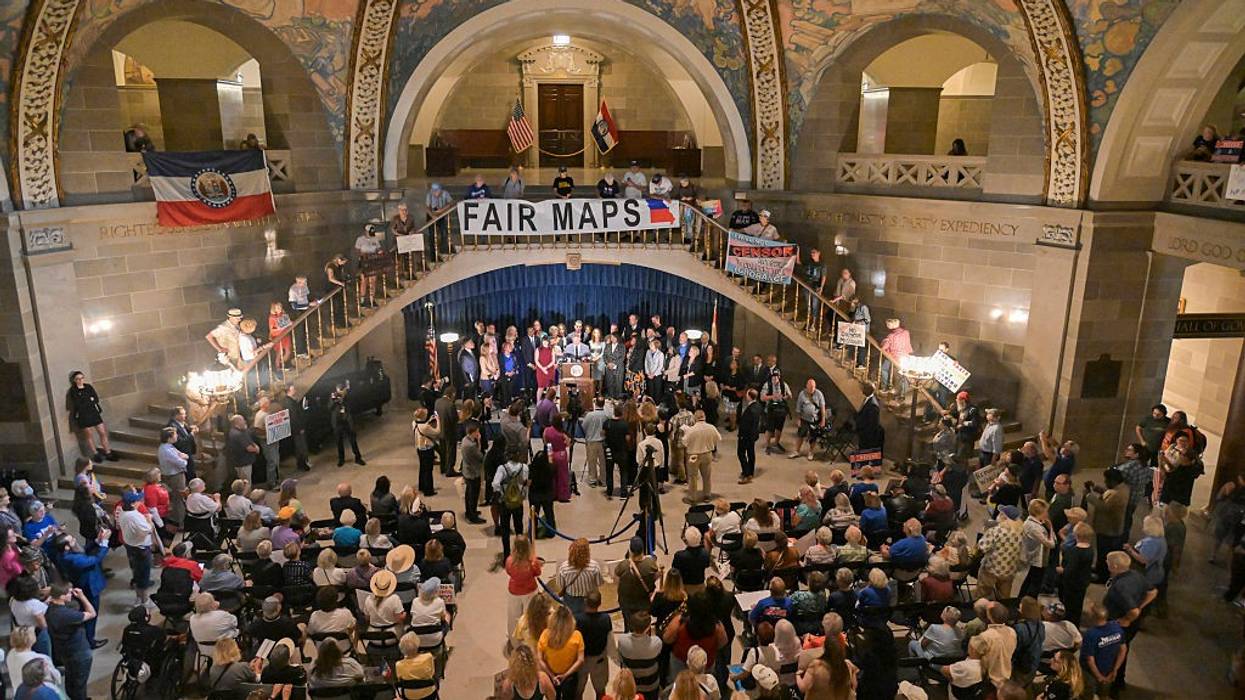
"If our communities are needlessly split by these new lines, we would no longer see our strong values reflected in the priorities of our congressional representatives," said plaintiff Terrence Wise.
Missouri voters sued on Friday after GOP state legislators sent a new congressional map, rigged for Republicans at the request of US President Donald Trump, to Gov. Mike Kehoe's desk.
Republicans' pending map for the 2026 midterm elections targets the 5th Congressional District, currently represented by Democratic Rep. Emanuel Cleaver. Voters from the district, including Missouri Workers Center leader Terrence Wise, launched the legal challenge, represented by the Campaign Legal Center along with the state and national ACLU.
"Kansas City has been home for me my entire adult life," said Wise. "Voting is an important tool in our toolbox, so that we have the freedom to make our voices heard through a member of Congress who understands Kansas City's history of racial and economic segregation along the Troost Divide, and represents our needs. If our communities are needlessly split by these new lines, we would no longer see our strong values reflected in the priorities of our congressional representatives."
Marc Elias, the founder of Democracy Docket and an elections attorney for Democrats, also repeatedly vowed this week that "if and when the GOP enacts this map, Missouri will be sued."
"Missouri Republicans have ignored the demands of their constituents in order to follow the demands of a power-hungry administration in Washington."
The governor called a special session for the map after Texas Republicans successfully redrew their congressional districts to appease Trump last month. Kehoe said on social media Friday that "the Missouri FIRST Map has officially passed the Missouri Senate and is now headed to my desk, where we will review the legislation and sign it into law soon."
Former US Attorney General Eric Holder Jr., who now leads the National Democratic Redistricting Committee, warned in a statement that "Missouri is now poised to join North Carolina and Texas as among the most egregiously gerrymandered states in the nation. Missouri Republicans have ignored the demands of their constituents in order to follow the demands of a power-hungry administration in Washington."
"Missouri Republicans rejected a similar gerrymander just three years ago," Holder pointed out. "But now they have caved to anti-democracy politicians and powerful special interests in Washington who ordered them to rig the map. These same forces ripped away healthcare from millions of Americans and handed out a tax cut to the very wealthy."
"Republicans in Congress and the White House are terrified of a system where both parties can compete for the House majority, and instead seek a system that shields them from accountability at the ballot box," he added. "Missourians will not have fair and effective representation under this new, truly shameful gerrymander. It is not only legally indefensible, it is also morally wrong."
As The Kansas City Star reported, Democrats, who hold just 10 of the Missouri Senate's 34 seats, "attempted to block the legislation from coming to a vote through multiple filibusters," but "Republicans deployed a series of rarely used procedural maneuvers to shut down the filibusters and force a vote," ultimately passing the House-approved bill 21-11 on Friday.
"What we're seeing in Jefferson City isn't just a gerrymander, it's a dangerous precedent," said Missouri state Rep. Ray Reed (D-83), who engaged in a sit-in at the House to protest the bill. "Our institutions only work when we respect the process. Skipping debate, shutting out voices, and following orders from Donald Trump undermines the very foundation of our democracy."
Cleaver said in a Friday statement that he was "deeply disappointed" with the state Legislature, and he knows "the people of Missouri share in that disappointment."
"Despite tens of thousands of Missourians taking the time to call their state lawmakers and travel to Jefferson City to voice their opposition," Cleaver said, "Republicans in the Missouri Legislature followed the marching orders dictated by power brokers in DC and took the unprecedented step of enacting mid-decade redistricting without an updated census."
"I want to be very clear to those who are frustrated by today's outcome: This fight is far from over," he added. "Together, in the courts and in the streets, we will continue pushing to ensure the law is upheld, justice prevails, and this unconstitutional gerrymander is defeated."
In addition to court challenges, the new congressional map is also the target of People NOT Politicians, a group behind a ballot measure that aims to overturn it.
"This is nothing less than an unconstitutional power grab—a blatant attempt to rig the 2026 elections before a single vote is cast," Elsa Rainey, a spokesperson for the group, said after the Senate vote. "It violates Missouri law, slices apart communities, and strikes at the core of our democratic system."
During Kehoe's special session, Missouri Republicans also passed an attack on citizen initiative petitions that, if approved by voters, will make it harder to pass future amendments to the state constitution—an effort inspired by GOP anger over progressive victories at the ballot box on abortion rights, Medicaid, and recreational marijuana.
"By calling this special session and targeting citizens' right to access the ballot measure process, Missouri's governor and his allies in the state Legislature are joining a growing national movement dedicated to silencing citizens and undermining our democracy," said Kelly Hall, executive director of the Fairness Project.
The Fairness Project, which advocates for passing progressive policy via direct democracy, earlier this week published a report detailing how "extremist" legislators across the United States are ramping up efforts to dismantle the ballot measure process.
"Sadly, what we are seeing in Missouri is nothing new, but we as Americans should all be horrified by what is happening in Jefferson City and condemn the attempts by this governor and his allies in the Legislature to further erode our cherished democracy," Hall said Friday. "With this special session, extremist politicians in Missouri have declared war on direct democracy and vowed to silence the very citizens they have sworn to represent."
"It is no small thing to overturn the results of an election in a democracy by throwing out ballots that were legally cast consistent with all election laws in effect on the day of the election," one dissenting justice said.
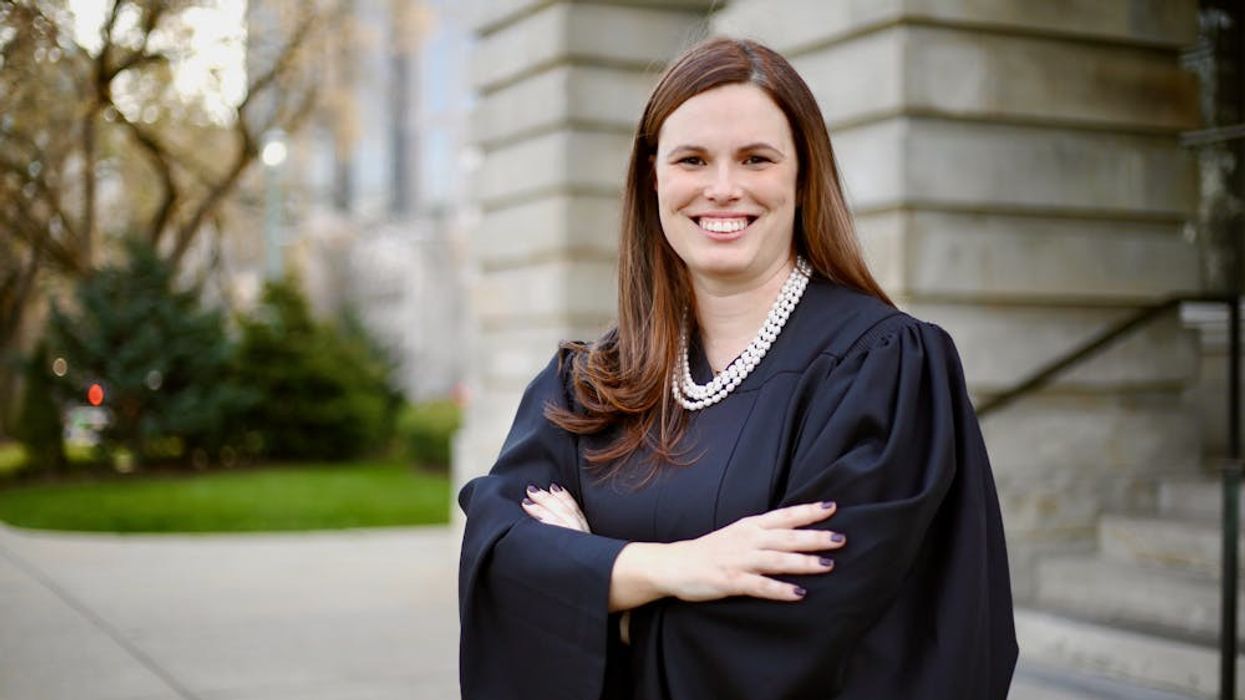
In what North Carolina Gov. Josh Stein called a "dark day" for the state, the North Carolina Supreme Court on Friday delivered a partial victory to Republican Judge Jefferson Griffin, who is challenging some 65,000 votes in his bid to overturn the narrow win of his Democratic opponent and incumbent state Supreme Court Justice Allison Riggs.
The Supreme Court, ruling 4-2, partially overturned an appeals court decision earlier this month that gave all the challenged voters 15 days to affirm their identities. Instead, the state's highest court ruled that around 60,000 ballots with registration inconsistencies would not be challenged, but approximately 5,000 overseas or military voters would have to verify their identities within 30 days. Riggs said she would challenge the ruling in federal court, and asked the court to temporarily block the order.
"I'm the proud daughter of a 30-year military veteran who was deployed overseas, and it is unacceptable that the court is choosing to selectively disenfranchise North Carolinians serving our country, here and overseas," Riggs said in a statement. "While I'm gratified to see the Court of Appeals reversed on the erroneous decision to potentially disenfranchise the more than 60,000 North Carolinians whose registration my opponent has recklessly challenged, I will not waiver in my fight to protect the fundamental freedoms for which our military service members and their families have sacrificed so much."
"This shocking decision abandons the judiciary's most basic role, to protect the rights of the people, and sanctions an outright attempt to steal an election."
Riggs won the November contest to remain on the state Supreme Court by 734 votes, but Griffin has challenged several thousand votes, predominantly on two grounds: Around 60,000 of the challenged votes are from in-state voters whose driver's license or social security numbers were missing from a state database of registered voters, while another approximately 2,000 to 7,000 are overseas or military voters who did not show ID when voting absentee. A significant number of the votes he challenged belonged to people living in Democratic-leaning counties.
The state Supreme Court on Friday ruled that the 60,000 in-state voters should not be challenged because their rights should not be denied due to “mistakes made by negligent election officials in registering citizens who are otherwise eligible to vote," as The New York Times reported.
However, the court allowed the challenge to the overseas votes to stand, even though overseas voters have never before been required to show ID since a state-voter ID law went into effect.
"Republicans are surgically targeting military voters from six counties and forcing them to re-prove themselves or be disenfranchised," Anderson Clayton, the chairwoman of the North Carolina Democratic Party, said in a statement reported by the Times.
Finally, the court also allowed the votes of nearly 300 voters who had never lived in North Carolina—often the children of North Carolina residents who turned 18 while living abroad—to be tossed.
If the state Supreme Court's ruling stands and the military and overseas votes are rejected, Griffin has said he expects it will be enough to tip the election in his favor, WRAL News reported.
The two dissenting justices vehemently condemned the majority decision.
"It is no small thing to overturn the results of an election in a democracy by throwing out ballots that were legally cast consistent with all election laws in effect on the day of the election," Democratic Justice Anita Earls wrote. "Some would call it stealing the election, others might call it a bloodless coup, but by whatever name, no amount of smoke and mirrors makes it legitimate."
Justice Richard Dietz, a Republican, broke with his party and agreed that the court should not alter election laws after the fact. He also criticized his colleagues for not hearing arguments before making their decision.
"By every measure, this is the most impactful election-related court decision our state has seen in decades," Dietz wrote. "It cries out for our full review and for a decisive rejection of this sort of post hoc judicial tampering in election results."
State and national Democratic Party leaders also spoke out against the court's decision.
"Today is a dark day for our courts and our state," North Carolina Gov. Josh Stein wrote on social media. "The North Carolina Supreme Court ruled that certain active duty military voters serving our nation must jump through hoops that other voters don't. All voters have a constitutional right to be treated equally under the law—it is foundational to our democracy. It's unconscionable, and this decision cannot stand."
Former Attorney General Eric Holder called the ruling "both a disgrace and legacy defining for those who put their names behind it."
"This shocking decision abandons the judiciary's most basic role, to protect the rights of the people, and sanctions an outright attempt to steal an election," he said in a statement. "The North Carolina Supreme Court's Republican majority has, for naked partisan reasons, cherrypicked whose votes count and whose do not. It is the height of political arrogance to tell military members who serve and sacrifice for our country, and other voters, that their votes and those of their family members are questionable."
Democratic National Committee (DNC) Chair Ken Martin said: "Jefferson Griffin doesn't get to pick and choose whose votes count in an election—no politician does. The men and women serving in our military will not allow their voices to be silenced by a desperate loser like Griffin."
"The nation is watching North Carolina," Martin continued. "Meanwhile, the DNC and Democrats across this country stand ready to marshal resources and manpower to ensure every vote cast in this election is counted. The people's voices will be heard, and Justice Allison Riggs will take her rightful place on the North Carolina Supreme Court."
"The world is watching Tennessee," the lawyers wrote, adding that any retributive action would be unconstitutional and "require redress."
Ahead of the Nashville Metropolitan Council voting Monday to reappoint Tennessee Rep. Justin Jones to the state House of Representatives, attorneys for him and ousted Rep. Justin Pearson warned Republican legislators not to further retaliate against the pair.
The letter from the six attorneys, including former U.S. Attorney General Eric Holder, to Tennessee House Speaker Cameron Sexton (R-25) came after Republicans in the chamber voted last Thursday to expel Jones (D-52) and Pearson (D-86) over their protest in support of gun control after the Covenant School shooting in Nashville.
The missive also follows Pearson saying in a televised interview that he has "heard that people in the state Legislature and in Nashville are actually threatening our Shelby County commissioners to not reappoint me, or they're going to take away funding that's in the government's budget for projects that the mayor and others have asked for."
The GOP state lawmakers expelled Jones and Pearson "not for any criminal or unethical act, but for merely exercising their constitutional rights," the Democrats' lawyers wrote. "In so acting, the House Republicans not only wrongfully stripped these representatives of their rights as duly-elected legislators but also disenfranchised the voters they were elected to represent."
"Their partisan expulsion was extraordinary, illegal, and without any historical or legal precedent," the attorneys continued. "The House must not now compound its errors by further retributive actions."
Should the Metro Nashville Council and Shelby County Commission vote to reinstate Jones and Pearson, the letter states, "such reappointment must lead to the full and immediate restoration of their rights as members of the House."
They "should be promptly sworn back in as members of the General Assembly and granted the same benefits, rights, duties, and liberties as any other member," the letter asserts. "That includes, but is not limited to, returning their parking and badge access to the state Capitol, which was cut off before their expulsion, restoring their benefits, including healthcare, which was immediately cut off upon expulsion, returning their status on committees, and being allowed to, in all manners, conduct legislative business the same as any other member."
"The world is watching Tennessee," the letter declares. "Any partisan retributive action, such as the discriminatory treatment of elected officials, or threats or actions to withhold funding for government programs, would constitute further unconstitutional action that would require redress."
In a statement Monday evening, Tennessee House Majority Leader William Lamberth (R-44) and Republican Caucus Chairman Jeremy Faison (R-11) said that "should any expelled member be reappointed, we will welcome them. Like everyone else, they are expected to follow the rules of the House as well as state law."
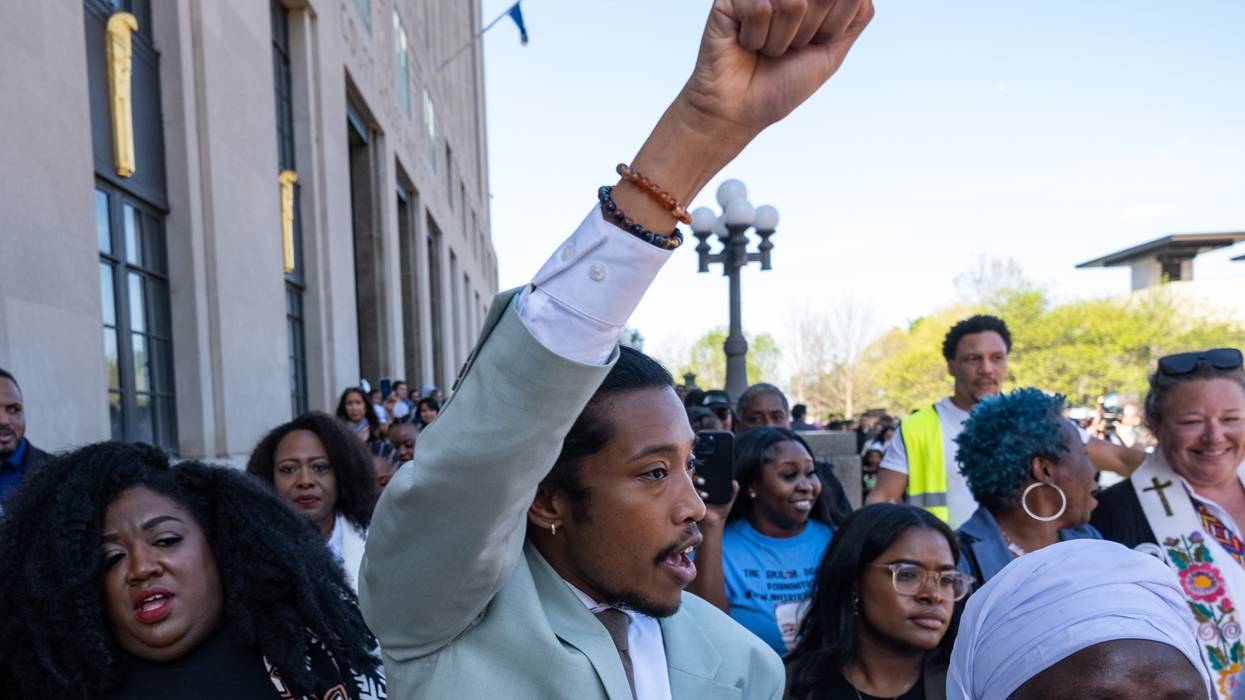
Jones returned to the House for Monday's evening session, fist raised.

After President Donald Trump suggested in an interview published Thursday night by the New York Post that he is open to pardoning Edward Snowden, civil liberties advocates issued a fresh wave of calls urging the president to follow through and allow the American whistleblower to return to the United States.
The U.S.-based Freedom of the Press Foundation--for which Snowden serves as board president--tweeted a link to the Post report along with a "long and varied" list of individuals who have demanded a presidential pardon for Snowden, the NSA whistleblower who famously exposed U.S. government mass surveillance by leaking classified materials in 2013.
The ACLU on Friday also responded to the report on Twitter, sharing a Los Angeles Times op-ed from September 2016 that was authored by the group's executive director Anthony Romero. He argued that "cases like Edward Snowden's are precisely the reason the president's constitutional pardon power exists."
According to the Post, Trump polled his aides in the Oval Office on Thursday about whether he should allow Snowden to return from Russia--where the former intelligence contractor has lived in exile since 2013--without the risk of being imprisoned in the U.S., and the president said he was open to it.
"There are a lot of people that think that he is not being treated fairly. I mean, I hear that," Trump said of Snowden. As the Post reported:
Trump's comments reflect a remarkable softening in his views about the man he once deemed a "traitor" worthy of execution. Republican lawmakers and the Justice Department's inspector general recently highlighted misuse of the Foreign Intelligence Surveillance Act and the secret FISA court to surveil former Trump adviser Carter Page.
"Snowden is one of the people they talk about. They talk about numerous people, but he is certainly one of the people that they do talk about," Trump said on Thursday, before turning to his aides. "I guess the DOJ is looking to extradite him right now? ...It's certainly something I could look at. Many people are on his side, I will say that. I don't know him, never met him. But many people are on his side."
"How do you feel about that, Snowden? Haven't heard the name in a long time," Trump reportedly asked his staff. "I've heard it both ways. From traitor to he's being, you know, persecuted. I've heard it both ways."
Snowden pointed out in a Friday tweet that "the last time we heard a White House considering a pardon was 2016, when the very same attorney general who once charged me conceded that, on balance, my work in exposing the NSA's unconstitutional system of mass surveillance had been 'a public service.'"
That comment came from Eric Holder during a May 2016 interview with David Alexrod. Holder, who also called Snowden's actions "inappropriate and illegal," ran the Justice Department under President Barack Obama in 2013, when Snowden was charged with theft of government property and violating the Espionage Act.
Journalist Matt Taibbi tweeted in response to Snowden that the fact that the whistleblower "has been in permanent exile while the creators/defenders of the illegal surveillance program he exposed have not only gone unpunished, but have been feted and given high-profile media jobs, is an ongoing outrage."
Even some right-wing politicians joined the calls for Trump to pardon Snowden. Michigan Congressman Justin Amash--who became an Independent and then a Libertarian after leaving the Republican Party last summer--tweeted his support for the whistleblower Friday:
Rep. Thomas Massie (R-Ky.) also said in a series of tweets Friday that the president should pardon Snowden--prompting a response from Cenk Uyger of The Young Turks: "Wow. I agree. Do you believe in miracles?"
The Intercept's Glenn Greenwald, who was was among the first journalists to report on leaked documents from Snowden, wrote in a long thread of tweets Friday that Trump talking about a pardon for Snowden and Massie expressing his support for one "should not obscure that this is not a right-wing view."
Greenwald also shared the ideologically diverse list of signatories to the Stand with Snowden pledge and said it is "good to see" that Trump is "now open to the view of the ACLU and the New York Times, among others, that Snowden is a heroic whistleblower."

Pro-democracy advocates on Saturday vowed to ensure all Wisconsin voters are permitted to vote in the 2020 election after a state judge ordered more than 200,000 voters to be purged from the rolls.
The state had sent letters to 234,000 people who were believed to have moved, who were told they would be removed from voting lists if they did not respond within 30 days--but that the purge would not take place until 2021.
Conservative group Wisconsin Institute for Law & Liberty filed a lawsuit, saying the voters should be removed from the rolls before the next general election.
According to the Milwaukee Journal-Sentinel, 55% of the voters who were sent letters were in districts which Hillary Clinton won in 2016, including many in the state's two largest cities and in college towns.
Former Attorney General Eric Holder said the right-wing effort to create confusion among likely-Democratic voters in a state where President Donald Trump won by less than 23,000 votes in 2016 was "expected unfairness" from the conservative group.
Ben Wikler, chair of the Wisconsin Democratic Party, called the purge a "product of a right-wing legal and political strategy to prevent eligible voters from voting."
"It should be a concern to anyone who believes in the core idea of democracy," Wikler said, but he noted on Twitter that voters whose names are removed from rolls can still re-register in the state, including on Election Day. He called on voting rights advocates to help make sure purged voters get to the polls in 2020.
"Now our job is to organize harder than they can suppress," Wikler said.
The League of Women Voters and election officials said they would fight the judge's decision in court.

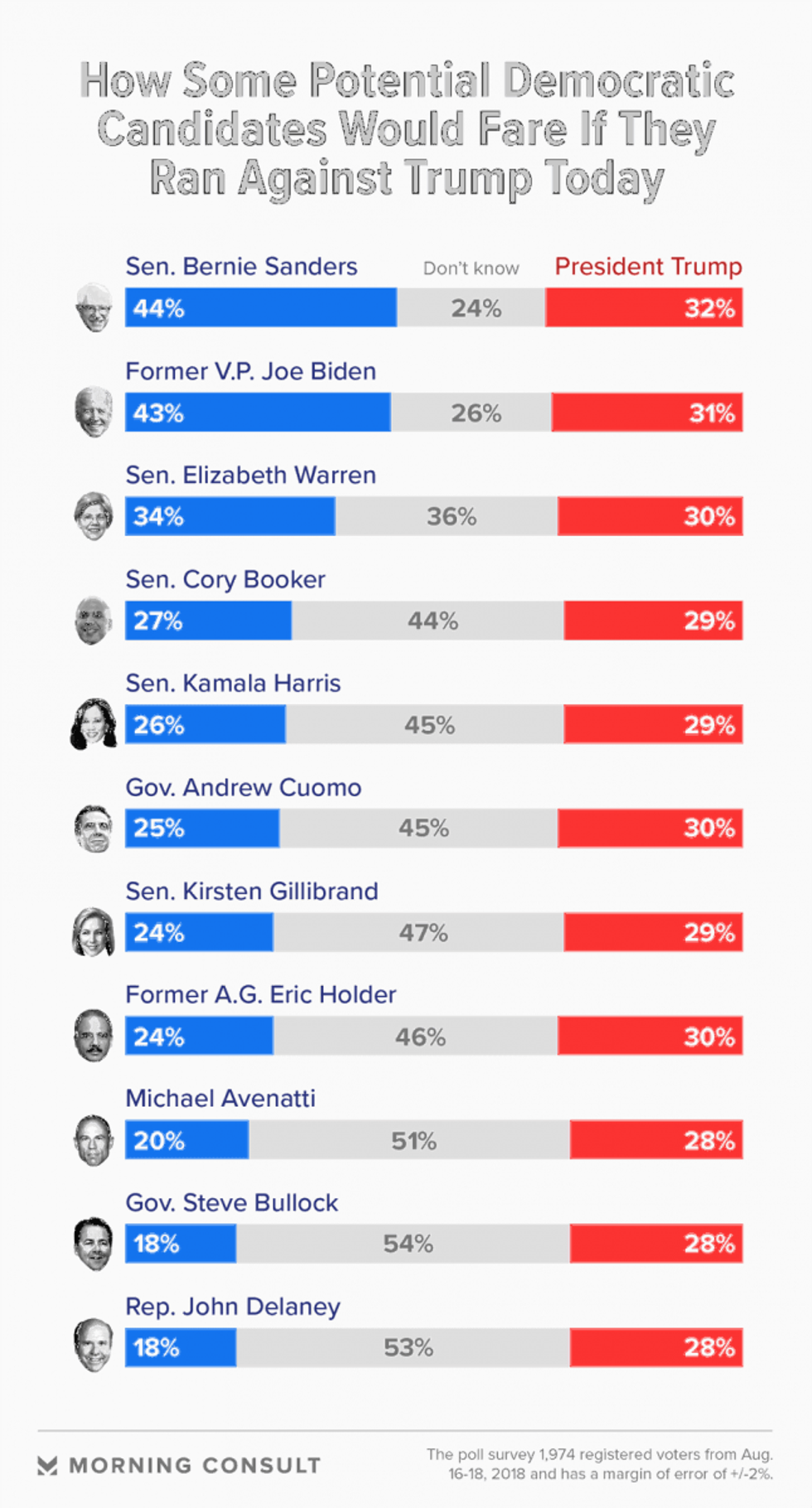
Polling results released Wednesday by Politico/Morning Consult show that Sen. Bernie Sanders (I-Vt.), who is widely speculated to make another run for the Oval Office in 2020, would beat President Donald Trump by double digits.
In a face-off between Sanders and Trump, the senator garnered a 12-point lead, with 44 percent of respondents favoring Sanders, 32 percent who said they would vote to re-elect the president, and 24 percent who didn't know or had no opinion.
Sanders has repeatedly insisted to journalists that he is currently focused on serving in the Senate and his re-election, though he reportedly has been quietly considering a 2020 bid for months and has declined multiple opportunities to rule out a run.
"What I have said time and time again, my focus right now is on 2018 and to do everything that I can to end one-party rule of the House and the Senate," Sanders told Stephen Colbert last week. "We're working really, really hard on that, but it is too early to be talking about 2020."
While the Vermont senator was the most popular Democratic contender among the 11 included on the poll, former Vice President Joe Biden ranked second, beating Trump 43 to 31 percent. Biden, who has led the pack in some previous polling, said last month that he will make a decision about running by next January and encouraged other 2020 hopefuls to do the same.
This latest poll was conducted Aug. 16-18, before Trump's longtime personal attorney Michael Cohen pleaded guilty to campaign finance violations that implicate the president; former Trump campaign manager Paul Manafort was convicted for bank and tax fraud felonies; and Rep. Duncan Hunter (R-Calif.), the second congressman to back Trump's 2016 run, was indicted for allegedly spending campaign funds on everything from family vacations to videos games.
Just hours before those damning developments for Trump associates and supporters on Tuesday, Sen. Elizabeth Warren (D-Mass.), another potential 2020 contender, unveiled sweeping new anti-corruption legislation. Though Warren's lead over Trump was slimmer than that of Sanders or Biden, she still led the president 34 to 30 percent, with the remaining 36 percent of respondents undecided.
The other eight potential Democratic candidates included in the poll--Sens. Cory Booker (N.J.), Kirsten Gillibrand (N.Y.), and Kamala Harris (Calif.); New York Gov. Andrew Cuomo; Montana Gov. Steve Bullock; Rep. John Delaney (Md.); former Attorney General Eric Holder; and Michael Avenatti, Stormy Daniels' attorney--trailed Trump to varying degrees:
Edward Snowden's lawyer is renewing a push for the famous NSA whistleblower's clemency from the White House before President Barack Obama leaves office in January.
He is unlikely to receive a more receptive hearing from Hillary Clinton, who has said he shouldn't be allowed to return without "facing the music."
--New York Magazine
"We're going to make a very strong case between now and the end of this administration that this is one of those rare cases for which the pardon power exists," said Ben Wizner, head of the ACLU's Speech, Privacy, and Technology Project and Snowden's legal advocate.
"It's not for when somebody didn't break the law. It's for when they did, and there are extraordinary reasons for not enforcing the law against the person," Wizner said.
Wizner discussed his plans with the journalist Andrew Rice for a New York Magazine cover story about Snowden. Although Snowden admits that "much of Washington remains hostile to him," according to Rice's article, he "is optimistic that he will find a way out, somehow."
Rice continues:
Maybe some Scandinavian country will offer him asylum. Maybe he can work out some kind of deal--whether outright clemency or a plea bargain--with the Justice Department. Wizner has been working with Plato Cacheris, a well-connected Washington defense attorney, but so far, there have been no official signals that the Justice Department would be willing to offer the kind of lenient terms Snowden would accept. And a window may be closing. He is unlikely to receive a more receptive hearing from Hillary Clinton, who has said he shouldn't be allowed to return without "facing the music." As for Donald Trump: He has called Snowden a "total traitor" and suggested he should be executed. "If I'm president," he predicted last year, "Putin says, 'Hey, boom--you're gone.'"
The latest news isn't good for Snowden: on Monday, Norway announced that it was dismissing a lawsuit from Snowden's lawyers seeking safe passage for the whistleblower to receive a free speech award in the country.
The U.S. government filed espionage charges against Snowden in response to his 2013 leaks, and he faces extradition if he travels outside of Russia.
"Oslo District Court has decided that Edward Snowden's lawsuit against the State regarding extradition should be dismissed," the court said in a statement.
Rice reports that Snowden told him "he would return [to the U.S.] and face the Espionage Act charges if he could argue to a jury that he acted in the public interest, but the law does not currently allow such a defense."
"These people have been thinking about the law for so long that they have forgotten that the system is actually about justice," Snowden said. "They want to throw somebody in prison for the rest of his life for what even people around the White House now are recognizing our country needed to talk about."
Indeed, only last month, former U.S. Attorney General Eric Holder admitted that Snowden "actually performed a public service by raising the debate that we engaged in."
In response, Snowden tweeted:
Public anger over the 2008 financial crisis is still widespread
Bart Naylor likes to joke that when he accepted a job as a Wall Street lobbyist, he assumed he'd be making a big fat salary.
Seven-digit paychecks have indeed become the norm. The three top lobbyists for the Securities Industry and Financial Markets Association, for example, each made in excess of $1 million in 2014. The head of the Financial Services Roundtable made more than $2.4 million.
But Naylor's job happens to be to lobby against Wall Street's narrow interests, not for them. This sort of public interest work makes for a more modest paycheck - and a pretty lonely career in Washington.
Wall Street firms and their trade associations boast an army of about 3,000 lobbyists. Naylor estimates that as Public Citizen's Financial Policy Advocate, he is one of only about a dozen people regularly walking the halls of Congress and the regulatory agencies to inject public interest into the Wall Street reform fight.
In his new 80-page report "Too Big," Naylor provides a vital tool for building a much stronger public interest army for taking on the big banks.
The Dodd-Frank legislation made some progress in reining in Wall Street recklessness and greed, but much work remains to be done. And it's especially galling that after taxpayers forked out massive bailouts in 2008, our biggest banks are even bigger today than before the crisis, leaving us once again on the hook for possible future bailouts.
Public Citizen's goal, Naylor explains, is to "bring sanity to this madness of size."
He asserts that the mega-banks are not only too big to fail, they're too big to jail, too big to manage, and too big to regulate. For each of these four problems, the report lays out an array of legislative, regulatory, and private-sector reform options.
These recommendations begin with practical steps for breaking up the "too big to fail" banks by limiting both their size and their risky activities. This slimming effect would also help with the "too big to jail" problem.
Public Citizen aims to bring sanity to this madness of size.
Former Attorney General Eric Holder, the report reminds us, once defended his decision not to prosecute executives of mega-bank HSBC for engaging in massive money laundering on the grounds that the firm had become "so large" a criminal case could endanger the world economy.
Beyond the obvious need to end bankers' "above the law" status, Naylor makes a strong case for financial executives having "skin in the game" when it comes to financial penalties for misconduct. As it is now, shareholders pay for these fines - not senior executives. Public Citizen wants some of executives' pay to be held in a pot that can be tapped for paying penalties for misconduct during their watch -- an idea supported by New York Fed President William Dudley and even the Heritage Foundation.
What we've learned in this presidential primary season is that public anger over the 2008 financial crisis is still widespread. The new Public Citizen report will help channel this anger into pressure to transform our financial system so that it supports good jobs and stable communities.
Public Citizen is also part of a growing Take on Wall Street Campaign that has brought together labor, consumer, faith, anti-poverty, and other groups around a five-point reform agenda, including breaking up the big banks.
The public interest side will never have as many high-paid Washington lobbyists as the Wall Street forces. But we can still build a powerful movement for change.
"Too Big" will be available on the Public Citizen web site on June 22.
Though he acknowledged that Edward Snowden did indeed perform a "public service" by starting a national conversation about government surveillance, former Attorney General Eric Holder still insists that the NSA whistleblower should be prosecuted for supposedly "harming American interests."
"We can certainly argue about the way in which Snowden did what he did, but I think that he actually performed a public service by raising the debate that we engaged in and by the changes that we made," Holder told David Axelrod in an interview on CNN's "The Axe Files," which was published on Monday.
Nonetheless, Holder, who oversaw the U.S. Department of Justice in 2013 when Snowden's revelations were first made public, said that leaking government surveillance practices to media outlets was "inappropriate and illegal" and claimed that as a result "agents were put at risk, relationships with other countries were harmed, our ability to keep the American people safe was compromised."
Thus, Holder argued that Snowden, who has spent the last few years exiled in Russia, should return to the U.S. to face prosecution.
"I think that he's got to make a decision," he continued. "He's broken the law in my view. He needs to get lawyers, come on back, and decide, see what he wants to do: Go to trial, try to cut a deal. I think there has to be a consequence for what he has done."
"But," Holder added, "I think in deciding what an appropriate sentence should be, I think a judge could take into account the usefulness of having had that national debate."
Holder's comments come one week after a former Department of Defense official revealed that the Pentagon has deliberately harassed and silenced whistleblowers who attempted to raise concerns through the proper channels--information which, for many, validated Snowden's decision to go public with his leak.
Many advocates said Holder's remarks were "hypocritical" given the extreme number of whistleblowers that were prosecuted during his tenure. Among them, Thomas Drake--a former NSA employee who in 2010 was charged with violating the Espionage Act--wrote: "So there IS a public interest defense for Snowden? Holder's hypocrisy. Tell that to [whistleblowers] charged w/ espionage!"
Former Obama administration attorney general Eric Holder is prominently featured in a Hillary Clinton campaign ad running in South Carolina. "If you want to make sure Republicans don't take us backward, help Hillary move us forward," Holder says.
Meanwhile, in his post-public service life as a partner with white-collar defense firm Covington & Burling, Holder is upholding his Justice Department's tradition of negotiating lower fines for corporate offenses, albeit from the other side of the negotiating table.
The Associated Press reports that Holder, whose Justice Department prosecuted no major executive for the fraud that led to the 2008 financial crisis, is representing South African telecommunications conglomerate MTN in a $3.9 billion dispute with the country of Nigeria.
Read the full article at The Intercept.