
SUBSCRIBE TO OUR FREE NEWSLETTER
Daily news & progressive opinion—funded by the people, not the corporations—delivered straight to your inbox.
5
#000000
#FFFFFF
To donate by check, phone, or other method, see our More Ways to Give page.


Daily news & progressive opinion—funded by the people, not the corporations—delivered straight to your inbox.
The question is no longer whether the United States should move toward legalization, but why federal law still treats a mainstream industry as a crime.
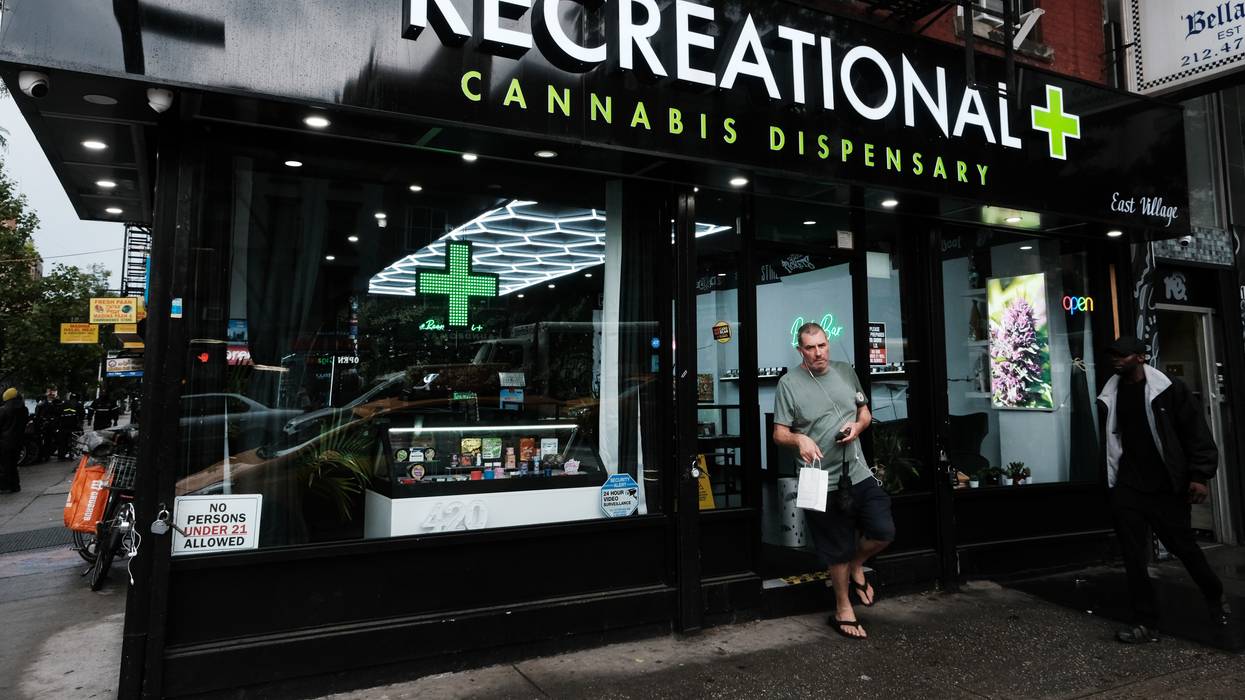
This fall, the Drug Enforcement Administration is anticipated to decide whether to reclassify cannabis at the federal level. Nearly 90% of Americans support cannabis legalization, 47 states have legalized it for medical use, and over 20 allow for recreational use. The question is no longer whether the United States should move toward legalization, but why federal law still treats a mainstream industry as a crime.
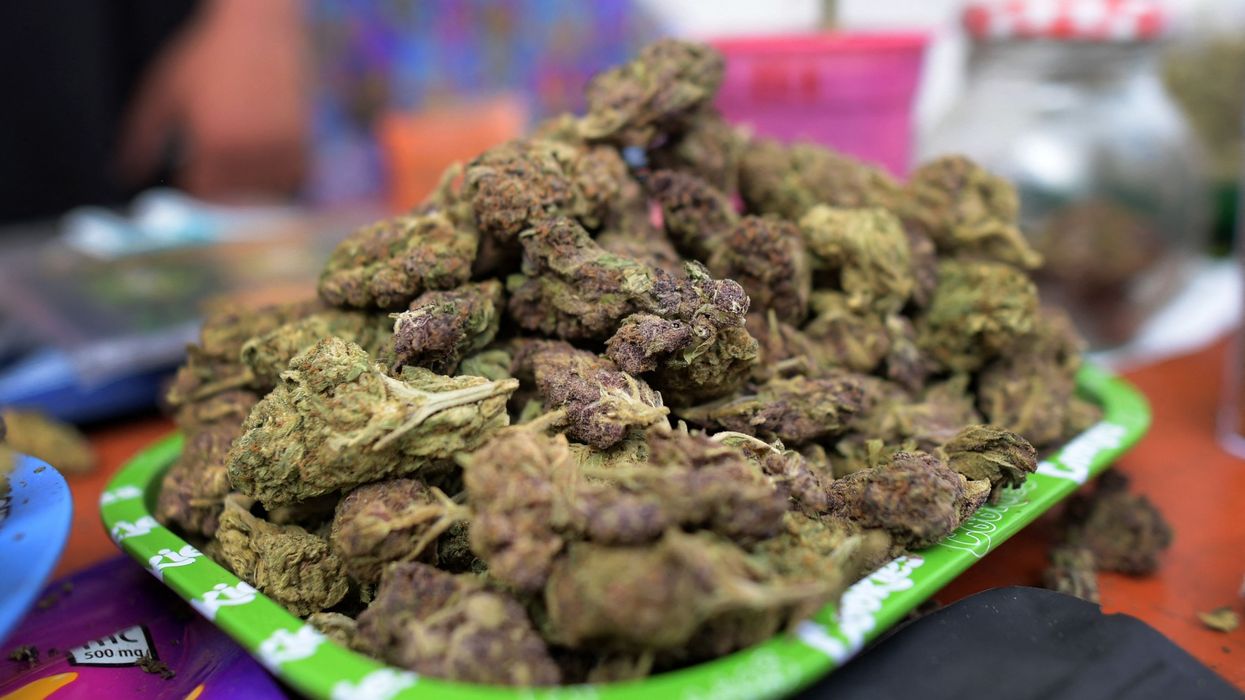
In 2024, Americans spent just as much on cannabis as they did on beer. The US legal cannabis market is worth more than $35 billion and expanding quickly. Yet, under federal law, cannabis is still a Schedule I drug, grouped alongside heroin and considered to have “no medical use.” It’s a Nixon-era relic that has remained unchanged since 1971—by those outdated standards, cocaine and crystal meth are classified as less harmful Schedule II substances. That classification is not only outdated, but it also creates an untenable mismatch between federal policy and economic reality.
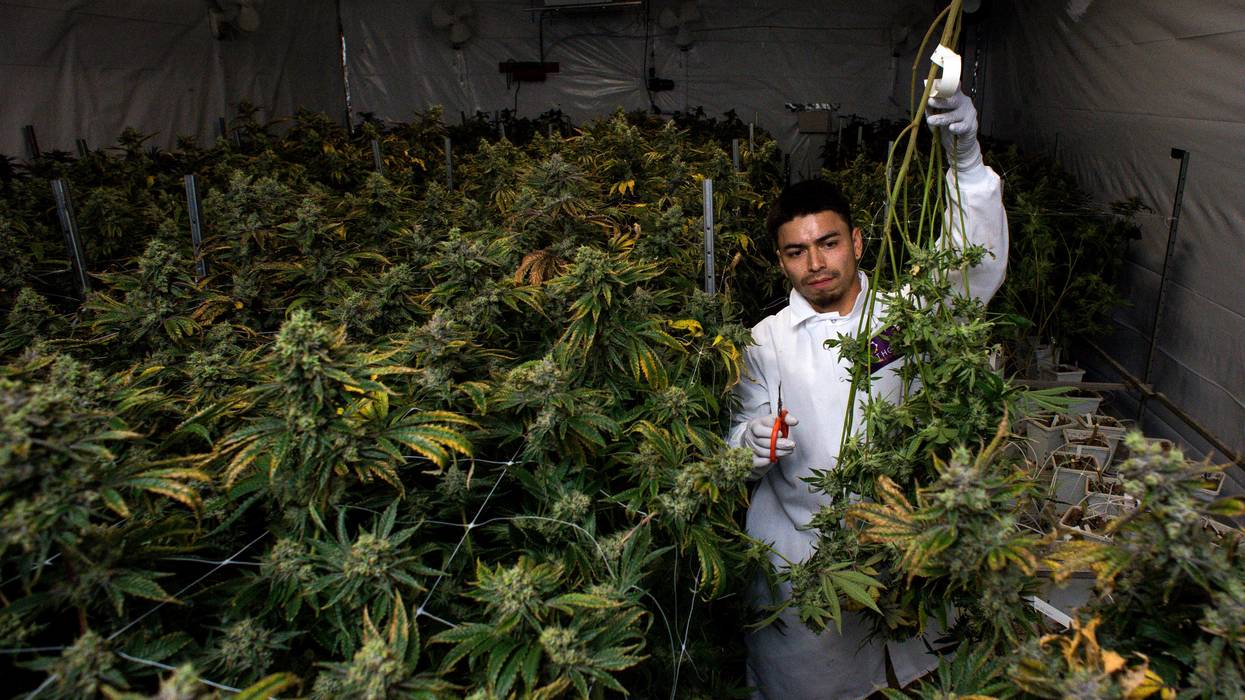
Today, cannabis is one of the fastest-growing industries in America, employing nearly 500,000 people—more than the beverage and tobacco manufacturing industries combined—and generating billions in annual tax revenue. Federal legalization would strengthen an already significant engine of economic growth. The cannabis industry added roughly $115 billion to the US economy in 2024 alone and is expected to reach $45 billion in legal sales by 2025. It is one of the few sectors that is both labor-intensive and domestically produced—every gram sold is grown, tested, packaged, and distributed in the US.
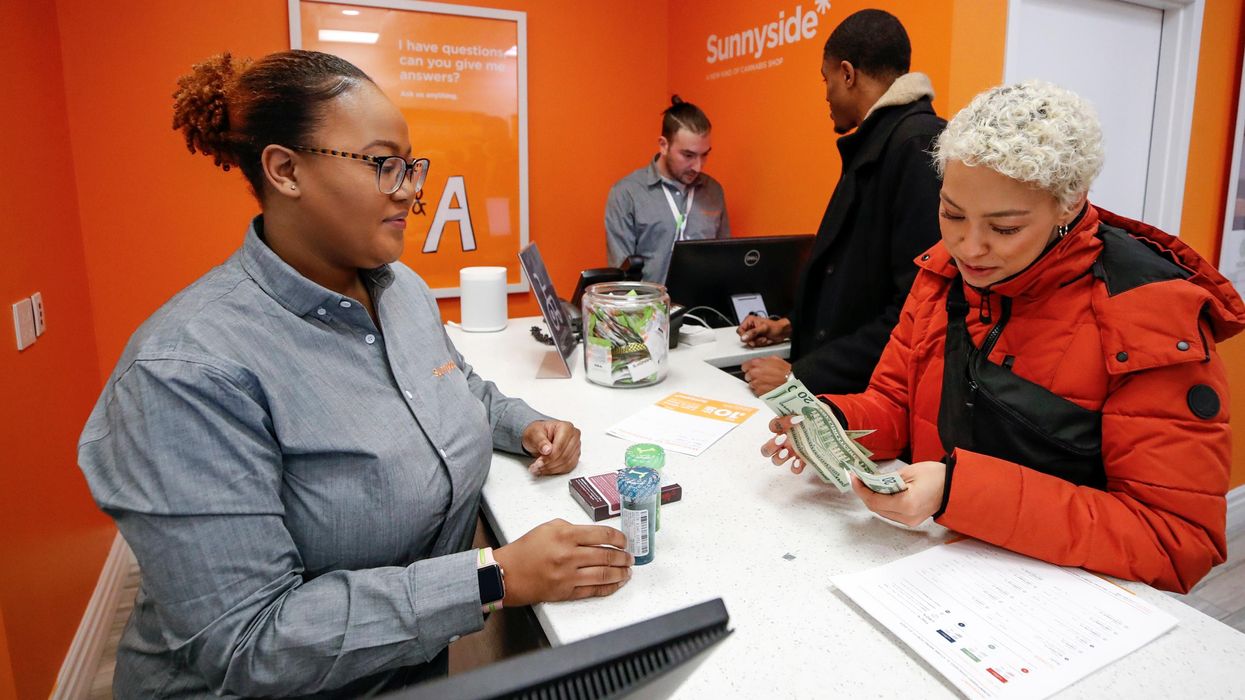
All of this growth has happened without access to the basic tools every other sector relies on: banking, capital markets, credit cards, and institutional investment. Because cannabis remains federally illegal, businesses can’t take out conventional bank loans, list on US stock exchanges, or process credit card payments. Dispensaries operate as cash-only businesses, creating daily security risks for employees and customers. Entrepreneurs cannot access Small Business Administration loans or standard insurance. Even employees, founders and executives in the cannabis industry often struggle to qualify for personal mortgage loans due to the industry they work in.
Rescheduling would not be radical. It would be a recognition of the obvious: Cannabis is already part of American life and the American economy.
The result is a thriving yet hobbled industry, competing on an uneven playing field. Legal operators are forced to navigate a different set of regulations, packaging requirements, and facilities for every state where they conduct business, while the illicit market still accounts for an estimated $50 billion in unregulated sales each year and has no problem selling cannabis to the American youth. The DEA’s forthcoming decision offers an opportunity to modernize this system before it calcifies further.
The cultural and economic shifts are here to stay. Cannabis is mainstream. It’s integral to how Americans relax, socialize, and take care of themselves. It’s in our music, our fashion, our film, and our homes. What’s missing is a legal, regulatory, and financial framework at the federal level that reflects reality.
The public health case is equally clear. Consistent national standards would strengthen consumer safety and transparency, closing the gap between legal and illicit markets. Rescheduling would also remove barriers to research and innovation. The current classification makes it nearly impossible for US scientists to study cannabis at scale, leaving critical medical discoveries to foreign and underfunded research programs.
In a country where millions of adults use cannabis for anxiety, pain, and sleep, and where opioid dependency remains a public health crisis, the restriction is not just outdated, but negligent.
A recent study published by the American Journal of Health Economics found that states with legal cannabis programs reduced opioid prescriptions by up to 22%. The American Medical Association also found that cannabis helps cancer patients reduce opioid use throughout their treatments.
Legalization would also improve public safety. With access to banking, dispensaries could move away from cash-heavy operations that make them frequent targets for robbery. National standards for labeling, potency, and contaminants would protect consumers and build trust. And as we’ve already seen in legal states, underage use declines when cannabis is regulated.
Rescheduling would not be radical. It would be a recognition of the obvious: Cannabis is already part of American life and the American economy. In 2023, the Department of Health and Human Services formally recommended to the DEA that cannabis be rescheduled—a historic acknowledgment that federal law is out of step with science, public opinion, and economic reality. Even the Supreme Court has noted the “contradictory and unstable” relationship between federal and state cannabis laws.
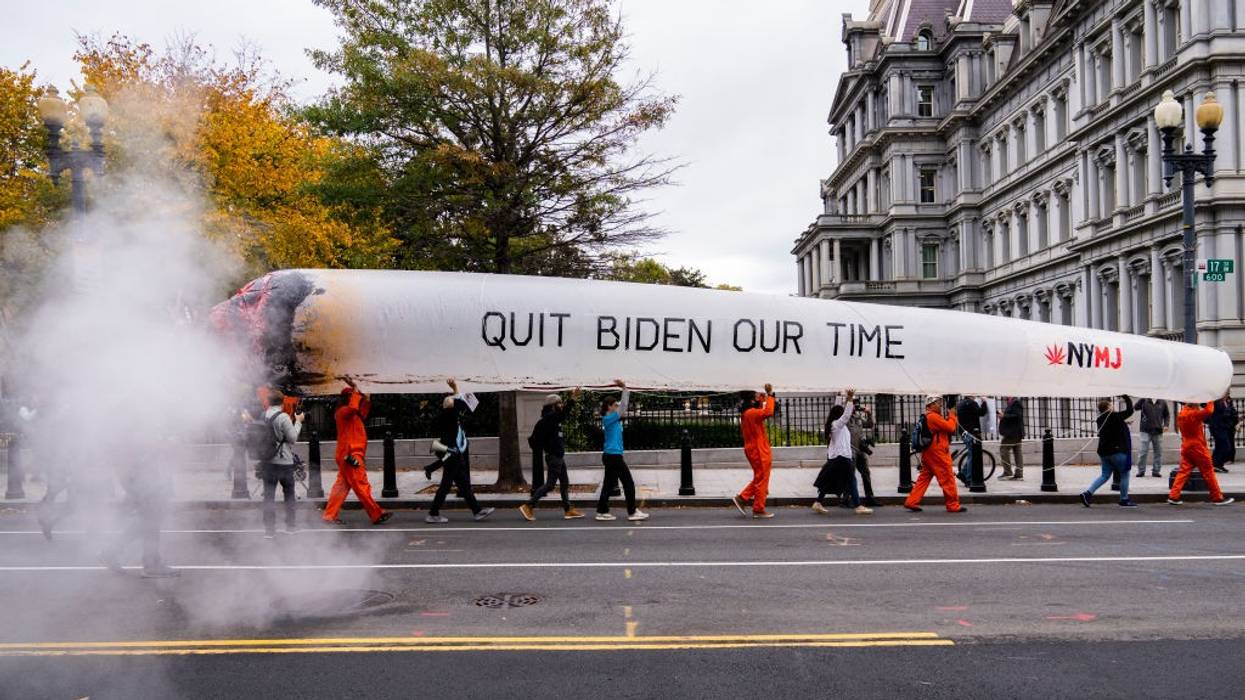
This is one of the few policy issues with broad bipartisan support. Former President Joe Biden campaigned on rescheduling cannabis in 2020. So did President Donald Trump in 2024. With the DEA’s decision imminent, the window for meaningful modernization has never been clearer.
The cultural reality is undeniable. The economic opportunity is massive. The public mandate is clear. The question is no longer whether cannabis belongs in American life—it already does. The question is when federal law will finally catch up.
It’s time for Washington to finish what the majority of states have already started: Bring cannabis policy into alignment with science, economics, and public consensus.
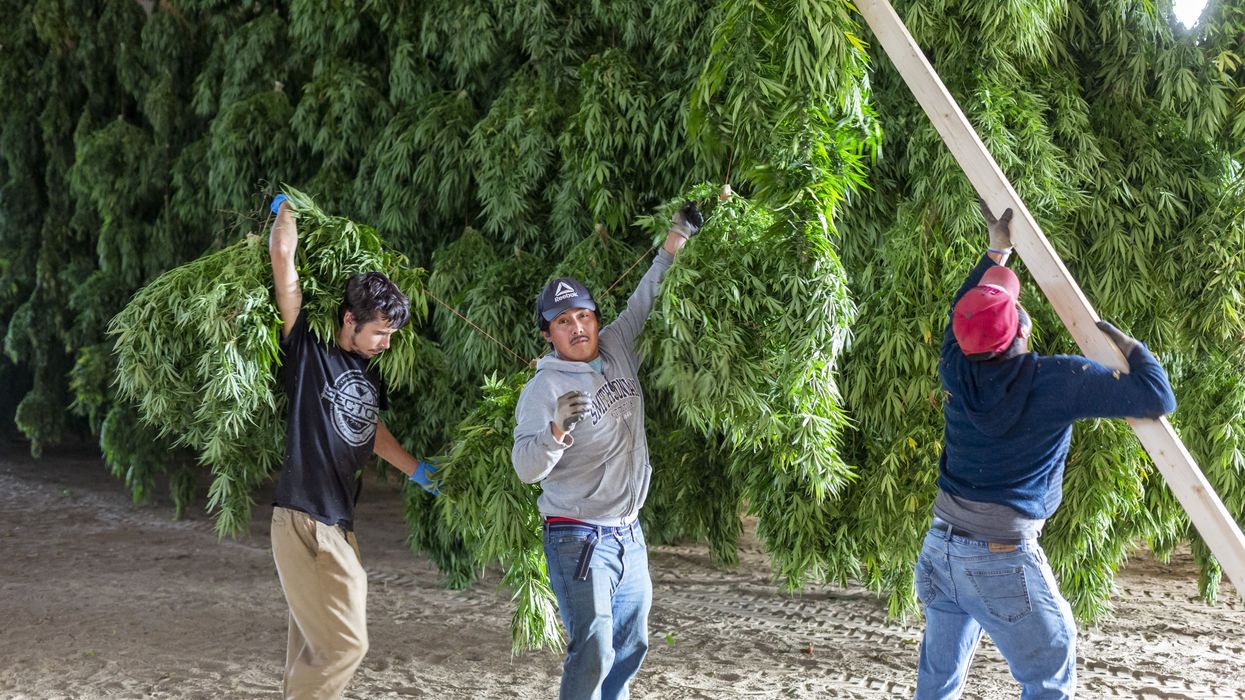
"Recriminalizing hemp will force American farms and businesses to close and disrupt the well-being of countless Americans who depend on hemp," warned one critic.
Advocates for hemp on Wednesday decried a provision of the Republican government funding law signed by President Donald Trump that tightens restrictions on the versatile plant—a move critics say will devastate a $30 billion industry.
The new restrictions set a stricter limit on the amount of tetrahydrocannabinol (THC)—the psychoactive chemical in cannabis—in order to close a loophole that allowed for the sale of unregulated food and beverages containing intoxicating hemp-derived compounds.
Twenty-two Democratic senators—including advocates for legal recreational or medical marijuana—joined almost all Republicans in voting against an amendment introduced by Sen. Rand Paul (R-Ky.) to strip out the restrictions from the final bill. Sen. Ted Cruz of Texas was the only other Republican to back Paul's effort.
"Our industry is being used as a pawn as leaders work to reopen the government," Jonathan Miller, general counsel for the US Hemp Roundtable, an industry group, warned ahead of the vote. "Recriminalizing hemp will force American farms and businesses to close and disrupt the well-being of countless Americans who depend on hemp."
Hemp—which is used in a wide range of products from clothing to construction materials to fuel, food, and biodegradable plastics—was legalized under the 2018 farm bill signed by President Donald Trump during his first term.
But lawmakers including Sen. Mitch McConnell (R-Ky.)—who backed the 2018 legislation—argued that cannabis companies are exploiting a loophole in the farm bill to legally manufacture products with enough THC to get consumers high.
Paul, however, ripped the provision, arguing in a Thursday Courier Journal opinion piece that it "destroys the livelihood of hemp farmers."
"This could not come at a worse time for our farmers," Paul wrote. "Costs have increased while prices for crops have declined. Farm bankruptcies are rising."
"For many farmers, planting hemp offered them a lifeline," he continued. "Hemp can be used for textiles, rope, insulation, composite wood, paper, grain, and in CBD products, and growing hemp helped farmers to mitigate the loses they’ve endured during this season of hardship."
Paul noted that "the provision that was inserted into the government funding bill makes illegal any hemp product that contains more than 0.4 milligrams of THC per container."
"That would be nearly 100% of hemp products currently sold," he said. "This is so low that it takes away any of the benefit of the current products intended to manage pain or other conditions."
Charles and Linda Gill have grown hemp on their family farm in Bowdoinham, Maine since the plant was legalized in 2018.
“We are not in the business of these intoxicating hemp products on the market, which are the ones that are screwing it up for everybody,” Charles Gill told Maine Morning Star's Emma Davis on Wednesday. “They’re abusing the system.”
“All our current products would be banned,” Gill said of the new restrictions. “It would pretty much put us out of business.”
Hemp defenders vowed to contest the new law.
"The fight isn't over," Hemp Industry & Farmers of America executive director Brian Swensen said on X after the law's passage.
"In 2018, President Trump and Congress legalized hemp, delivering more jobs and opportunities to American farmers and small businesses," Swensen said, adding that the restrictions "will devastate American farmers, business owners, veterans, and seniors."
"The hemp ban will also open up dangerous black markets for hemp and allow China to take over the entire hemp market," he added, claiming "it kills over 325,000 American jobs and destroys the industry."
"ICE was conducting a raid using disproportionate displays of force against local farmworkers and our agricultural community," said U.S. Rep. Salud Carbajal, who was denied entry to one farm where he was attempting to provide oversight.
Federal immigration agents were met with a strong show of resistance Thursday when they raided two farms in Southern California—with hundreds of community members protesting the arrests of migrants at the facilities growing cannabis and vegetables.
Los Angeles-based independent journalist Mel Buer reported that hundreds of community members gathered to protest the raid by Immigration and Customs Enforcement (ICE) at Glass House Farms' facility in Camarillo, Ventura County, and supporters dropped "hundreds of pounds of water, food, and masks."
Local news outlet KTLA reported that "dozens of farmworkers were detained" in the raids at Glass House Farms' properties in Camarillo and Carpinteria.
Federal law enforcement first arrived in Camarillo at about 11:00 am, and the situation escalated as a crowd of community members gathered.
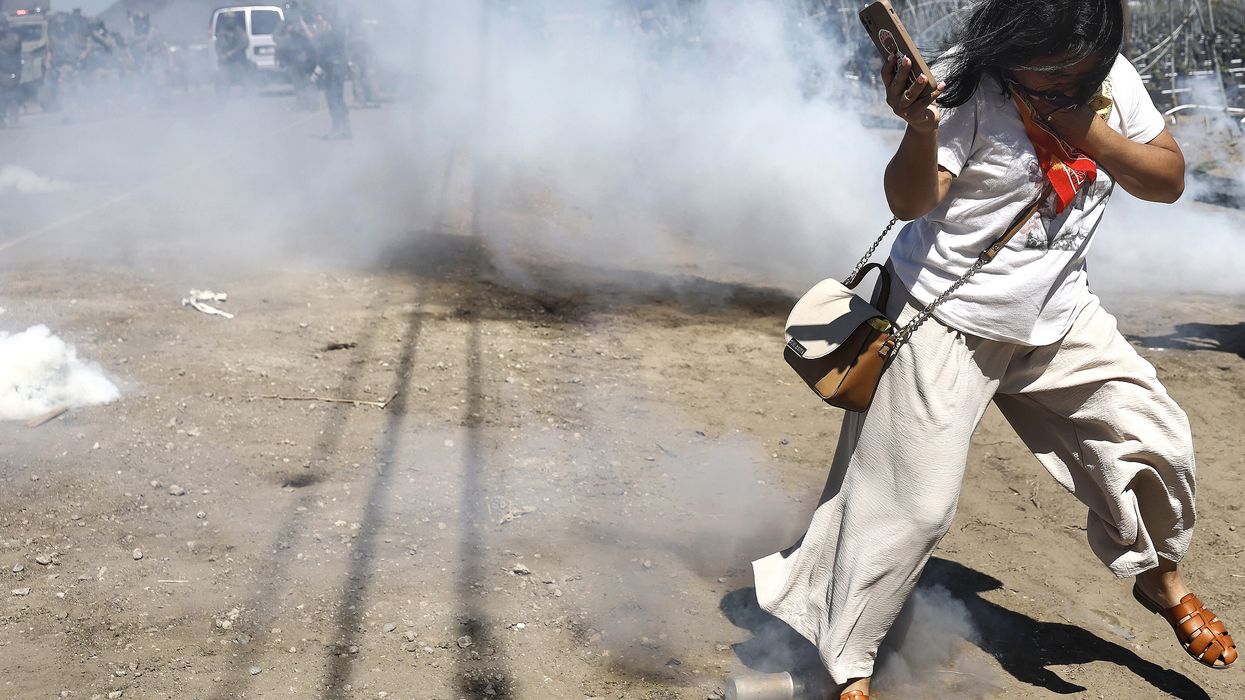
The federal agents first deployed tear gas into the crowd early Thursday afternoon.
Ventura County District 5 Supervisor Vianey Lopez told KTLA that as the federal agents used force on the protesters, she saw two government vans, each carrying about 15 people, leaving the farm.
"It is an ongoing situation that is very concerning for the safety of those showing up with anger and disappointment at what is happening to hardworking people in our community," Lopez said.
The immigration enforcement agents were joined by National Guard troops in military vehicles later that afternoon in Camarillo, according to The Guardian, as other federal agents carried out a simultaneous raid in Carpinteria, about 50 miles northwest in Santa Barbara County.
Carpinteria City Council members Julia Mayer and Mónica Solórzano were among a large crowd of community members who gathered to protest the raid, and they told the Santa Barbara Independent that federal officers "pushed us as a group into the ground" and threw at least one smoke grenade, causing Solórzano to injure her arm.
U.S. Rep. Salud Carbajal (D-Calif.), who represents Santa Barbara County and part of Ventura County, released a statement condemning the ICE raid and saying he had been "denied entry and not allowed to pass" when he attempted to "conduct oversight" over the raid targeting his constituents in Carpinteria.
"ICE was conducting a raid using disproportionate displays of force against local farmworkers and our agricultural community," said Carbajal. "There's been a troubling lack of transparency from ICE since the Trump administration started, and I won't stop asking questions on behalf of my constituents."
Carbajal is now one of several Democratic elected officials who have been denied the ability to oversee ICE operations. Rep. LaMonica McIver (D-N.J.) pleaded not guilty last month to forcibly interfering with federal officers—charges that stemmed from her attempt to conduct congressional oversight at an ICE detention center in Newark, New Jersey.
"These militarized ICE raids are not how you keep our communities safe. This kind of chaos only traumatizes families and tears communities apart. They are also a gross misuse of limited resources and a betrayal of the values that define us as Americans," said Carbajal, who noted that the identities of those detained in the raids had not been made clear.
In Camarillo, a resident named Judith Ramos told The Guardian that she had learned from her father, who worked in Glass House Farms' tomato fields, that "immigration was outside his job" on Thursday morning.
Ramos, a 22-year-old certified nurse assistant with two younger siblings, said her father told her "to take care of everything" if he was detained by ICE.
She was sprayed with a chemical substance when she arrived at the farm and joined the crowd of protesters, and told The Guardian that she did not know where her father was.
Gov. Gavin Newsom, a Democrat who has clashed with President Donald Trump and filed a lawsuit against the administration last month over its federalization of the California National Guard to respond to protests against immigration raids in Los Angeles, posted a video showing children running from the federal agents.
"Trump calls me 'Newscum,'" said the governor, "but he's the real scum."