

SUBSCRIBE TO OUR FREE NEWSLETTER
Daily news & progressive opinion—funded by the people, not the corporations—delivered straight to your inbox.
5
#000000
#FFFFFF
To donate by check, phone, or other method, see our More Ways to Give page.
Daily news & progressive opinion—funded by the people, not the corporations—delivered straight to your inbox.
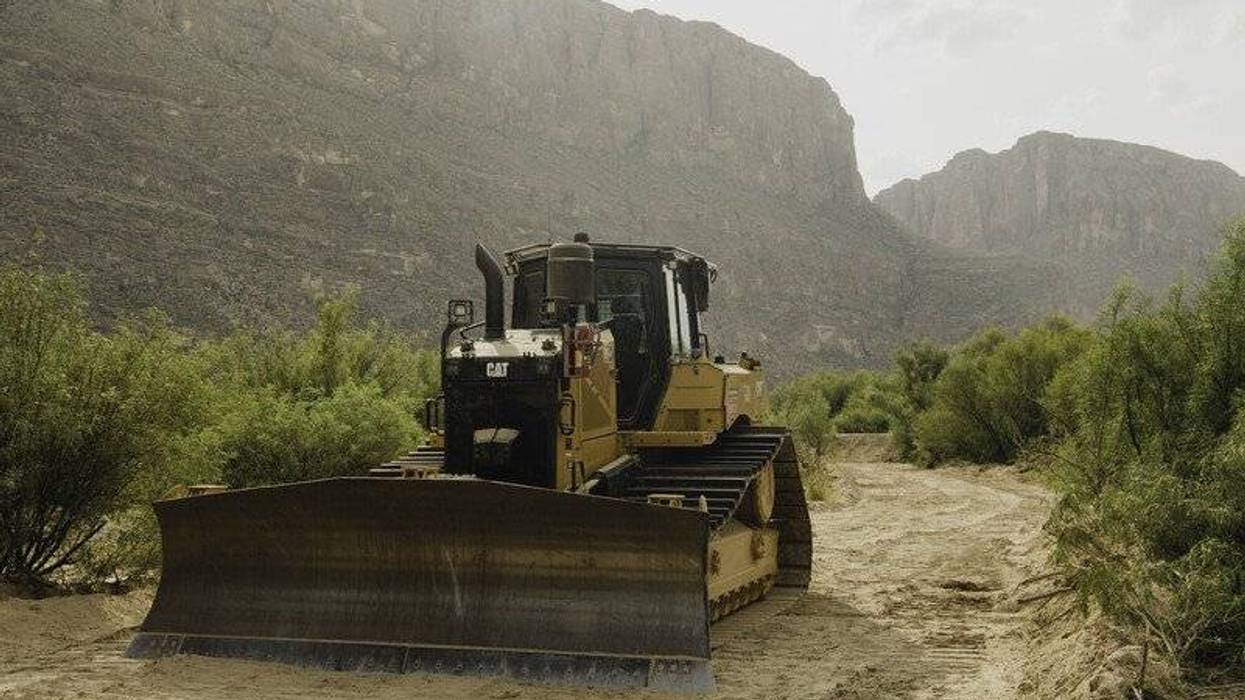
"State leadership should be stopping this purely political stunt destroying Big Bend," said one lawmaker of Republican officials. "They don’t have the courage to stand up to Trump."
The arrival of bulldozers at Big Bend National Park along the US-Mexico border in Texas to clear native vegetation for an access road for President Donald Trump's border wall was more than enough to send outrage through the state Democratic Party and advocacy groups last week—but on Monday one lawmaker directed her ire at Republican officials who have done nothing to stop the destruction of one of Texas' most prized landmarks.
"This is devastating to watch. State leadership should be stopping this purely political stunt destroying Big Bend. They don’t have the courage to stand up to Trump," said state Rep. Vikki Goodwin (D-47), who is running for lieutenant governor.
She demanded to know whether Republican Gov. Greg Abbott and his government are "fine" with the plan to build 175 miles of the border wall across Big Bend and the Black Gap Wildlife Management Area as well as over 200 miles of patrol roads in the region, following the US Department of Homeland Security's (DHS) unprecedented waiving of dozens of environmental laws earlier this year.
"If not, stop it from continuing," said Goodwin.
The state representative was joined by US Rep. Veronica Escobar (D-Texas) in calling out Republicans in the state who have taken no action to stop the bulldozing of a national park which supports thousands of jobs, generated $63.7 million in total economic output in 2024, and is not even a region where a border wall would fulfill Trump's stated goal: stopping unauthorized crossings from Mexico.
"Ken Paxton, the Texas attorney general, could sue the federal government to stop this," said Escobar on Sunday. "Greg Abbott, the Texas governor, could fight the federal government to stop this. But neither one is truly willing to fight for the people of Texas."
The state AG is running for US Senate, while the governor is seeking another term. Escobar said that Paxton and Abbott's Democratic opponents in the November elections—state Reps. James Talarico (D-50) and Gina Hinojosa (D-49)—would take action to stop the construction of the border wall.
"When I’m governor, I will defend our sovereignty, our land, and our inheritance," said Hinojosa last week. "Gov. Abbott is either too weak to defend Texas and stop this, or he just doesn’t care."
As the Center for Biological Diversity (CBD) noted last week, the Big Bend Sector covers more than a quarter of the US-Mexico border, but no unauthorized vehicle crossings have ever been documented in the mountainous region. In 2025, 1.3% of all border apprehensions took place in the area, and in the national park itself, apprehensions accounted for 0.045% of the national total.
"This absurd project is despised by everyone in West Texas," said Laiken Jordahl, a southwest conservation advocate for CBD, on Saturday. "When will Texas leadership step in?"
All five sheriffs in the Big Bend border region oppose the building of the border well, while county judges in all 14 of the state's border counties have spoken out against the project and seven former superintendents of the national park wrote to DHS in June, asking them reject waivers of laws including the National Park Service Organic Act, the Endangered Species Act, and the National Wild and Scenic Rivers Act.
As Common Dreams reported in June, the environmental laws were waived as planning documents showed miles of planned barriers to stop vehicles from crossing the border at Big Bend, as well as patrol roads cutting through the park. For some of the construction, such as in remote areas like Mariscal Mountain, extensive dynamite blasting will be required, according to CBD.
In May, DHS awarded a $1.7 billion contract to Southwest Valley Constructors, a subsidiary of Kiewit, as well as contracts to North Dakota-based Fisher Sand & Gravel and Montana-based Barnard Construction.
The chairman of the latter company, Tim Barnard, has contributed millions of dollars to Republican candidates, including $1 million to Trump, High Country News reported in June. Barnard's largest contract was awarded without competitive bidding.
"We don't need to give billions of our tax dollars to out-of-state vendors," said Talarico on Sunday. "We don't need to desecrate this sacred land. We don't need this useless, disgraceful, corrupt Big Bend border wall."
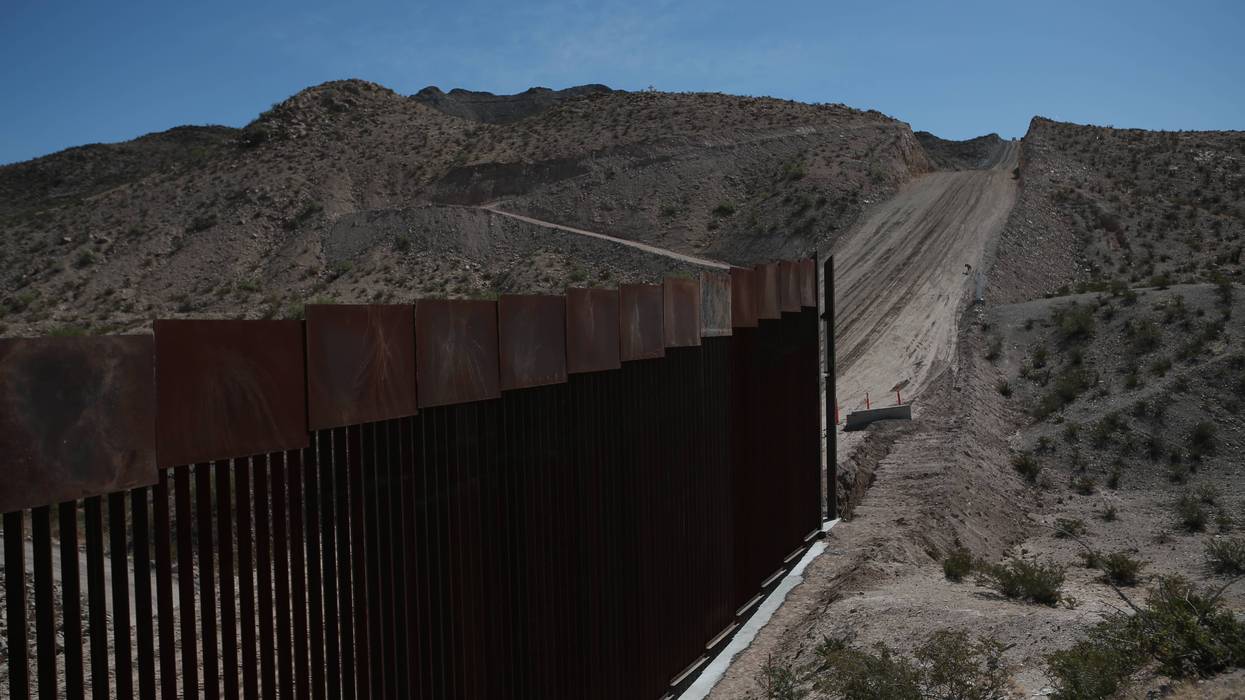
As it devastates borderland communities and wildlife, the wall stands for shutting out complex things, possibly complexity itself. It represents Trump’s promise to his base that their worldview will be fulfilled.
A leading preoccupation of the first Trump administration has all but slipped from view. Except when ostensible conservatives speak out against it, the major media have scarcely breathed a word on the subject. But it’s still there, 30 feet tall, aspirationally 1,952 miles long, obliterating habitats, dividing families, and sucking down public funds faster than a carrier-based air squadron.
The media’s lack of attention is understandable. All-too-real wars of choice and metaphorical wars against science, universities, and the environment have dominated our airtime and the headlines. The rise of a new medievalism in medicine and the abrogation of international trade and security agreements have also won attention. Add to all of that a federal paramilitary kidnapping people, even from what still passes for the halls of justice, while murdering the occasional protester, and one’s journalistic cup runneth over.
The meta story of the US government’s comprehensive abandonment of its Enlightenment heritage needs telling, too. Goodbye to empiricism and the troublesome scientific discourse it produces. Goodbye as well to empiricism’s political collaterals, including the “created equal” credo of the Declaration of Independence, which the current regime finds distinctly irritating. There is simply too much to report on as the new monarchy, as if in a sped-up nature film, blossoms flowerlike, its palace under renovation, the king’s signature being prepared to grace the currency, and myriad kickback mechanisms whirring like gold-plated turbines to enrich an aristocracy of tech bros and oil emirs.
So, dear reader, it’s not just logical but inevitable that Donald Trump’s border wall, a major story during his first administration, has essentially fallen out of the news. Rest assured, though, that the world’s least pragmatic and most performative construction project continues to prosper.
Modern border management relies on three tools: human patrols, remote detection backed by quick response teams, and the construction of physical obstacles. Smart gatekeepers coordinate those tools to maximize effectiveness and minimize cost. But there’s no need for thrift in Trumpworld. The One Big Beautiful Bill Act, or OBBBA, which Trump signed into law last July 4, negated all need for fiscal restraint. Among other things, it appropriated $46.55 billion for border wall construction, $7.8 billion for US Customs and Border Protection (CBP) agents and their vehicles, $6.2 billion for high-tech border surveillance, and a hefty $10 billion for anything else border-related. The total: $70.55 billion. Those funds will be available through Fiscal Year 2029. By comparison, the government will spend about $10 billion less over that same period to fund the entire Department of the Interior, which manages half a billion acres of surface land as well as the continental shelf and vast subsurface mineral deposits.
Such border largesse means that the Department of Homeland Security (DHS) can go all out on all three tactical approaches at the US-Mexico border—patrol, surveillance, and a wall—simultaneously, without troubling to eliminate redundancies, tailor tactics to the environment, or streamline coordination. Daddy has proudly given DHS his credit card.
In addition to bifurcating the wildlife habitat and scarring a gemlike landscape, the wall builders will extract large amounts of groundwater to make concrete for the wall’s foundation, almost certainly desiccating wetlands that are hotspots of biodiversity.
In a victory-lap cabinet meeting four days after enacting the OBBBA, Trump told Kristi Noem, then still his DHS secretary, “You’re loaded up on the border.” He essentially admitted that the bill’s munificence demonstrated power, not budgetary acumen, simultaneously adding, “We had zero [migrants] come in last month, so I am not sure how much of it we want to spend. You may actually think about saving a lot of money because the wall is largely built.” The president then continued with fact-free claims that the migrant population abounded with murderers and mental defectives.
Notwithstanding Trump’s comments, DHS administrators and the contractors who are their most immediate constituents show no sign of leaving money on the table. At the border, their blank-check funding meets a matching regulatory void—the most extensive waiver of laws and regulations in American history. In addition to suspending laws intended to protect the environment, wildlife, national parks, national wildlife refuges, lands sacred to Native Americans, and historic and cultural sites, the Trump administration has also waived more than 60 contracting and procurement regulations. In the name of a national emergency, which is no emergency at all—illegal border crossings (as measured by apprehensions) have indeed plunged—the president has stripped the playing field of all boundaries and opened the door to cronyism and corruption.
Under showers of money and in the absence of restraint, a single border wall is no longer viewed as adequate. Double-walling has become the norm and certain select areas now boast triple walls. With no cap on costs, whole mountaintops, rugged and unvisited, have been sheared apart to make way for the standard 30-foot-tall, steel-bollard wall, even at costs exceeding $41 million per mile, or almost $8,000 per foot. Meanwhile, the Border Patrol’s terminally bored agents (giving new meaning to bored-er) sit behind the wall in white trucks, looking at their phones and incubating their hemorrhoids.
It’s easy to think of the mostly arid US-Mexico border zone as empty, but biologically it’s a busy place. The grasslands of the San Rafael Valley in Arizona, for instance, are home to 17 threatened and endangered species. For years, existing vehicle barriers, bolstered by remote detection technology, have allowed jaguars, ocelots, mountain lions, mule deer, and other wildlife to move back and forth across the valley’s 30 miles of border and disperse according to their ancient ways. A network of 60 remote cameras along that stretch, monitored by the Sky Island Alliance, recorded just one possible migrant per camera every 20 months. Besides being easily patrolled, the valley is also heart-stoppingly beautiful. Nonetheless, DHS intends to double wall all of it. In addition to bifurcating the wildlife habitat and scarring a gemlike landscape, the wall builders will extract large amounts of groundwater to make concrete for the wall’s foundation, almost certainly desiccating wetlands that are hotspots of biodiversity. And for nothing, save symbolism, bragging rights, and contractor profits.
No detail illuminates the mentality behind border enforcement better than this: In cooperation with US Customs and Border Protection, military elements at Fort Huachuca, Arizona are now engaged in “the largest Concertina wire (C-wire) emplacement in US territorial history.” “C-wire,” or “razor wire,” is designed to lacerate any flesh, human or animal, that comes in contact with it. Fort Huachuca soldiers are deploying 43,000 rolls of it, the largest single purchase ever.
Usually C-wire is used atop a wall or fence to prevent people from climbing over. Ominously, it’s now being spread on the ground, sometimes in areas where there is no wall, but also in front of the wall and between double walls—a policy of pure viciousness, not necessity. Someone should explain this deployment to the bighorn sheep of California’s Jacumba Mountains, which are now separated from their key Mexican waterhole by thickets of the nasty stuff, which will become ever more camouflaged and treacherous as grass and brush grow through it.
For treachery, however, it’s hard to top CBP’s plans to “secure” 536 miles of the border in Texas by mooring a chain of cylindrical buoys, linked end to end, down the middle of the Rio Grande. Once in place, the array will look like an orange sausage, five feet in diameter, floating on the river. The anchors and mooring lines, of course, will be invisible. What could possibly go wrong?
This ill-conceived plan offers a retro-snapshot of American life before the National Environmental Policy Act (NEPA) became law in 1970, back when strip mines and other land-wrecking ventures could be launched with no evaluation of their impact, no public involvement, and no second opinions as to their necessity. The waiver of NEPA and every other environmental constraint means that no modeling of the “Buoy Wall’s” hydrodynamics (that is, its reaction to flooding), if any exists, has been made public.
The Rio Grande International Study Center in Laredo, Texas, however, commissioned its own study. The results are unequivocal. The Buoy Wall will be a debris trap during floods, as when a hurricane lodges over the region. It will redirect flows of water and raise water levels, especially in places where it’s paired with river-crowding segments of the wall. And if a section of buoys should break loose from the sandy, unstable riverbed, the likelihood of disaster will soar.
Geomorphologist Mark Tompkins, who authored the report, concludes, “Failures will cause catastrophic flooding, damage, and destruction to property, and risks to the health and safety of people near the river corridor.” Thousands of people living adjacent to the river in Laredo and other communities in both Mexico and the US will be put at risk.
Walls have their place. They can be effective in urban areas. But DHS startled more than a few onlookers with plans to build a wall among the cliffs and arid wildlands of Big Bend National Park. Even the sheriffs of West Texas, one of the reddest regions in the country, got riled up. Although DHS may yet fall back to a more sensible “detection technology” alternative for the national park, it has failed to communicate a clear decision, while nearby private lands and Big Bend Ranch State Park remain at risk.
Even worse uncertainty may be brewing in Arizona, where the lands of the Tohono O’odham people, whose presence predates the border by many centuries, are spread on either side of the line. The tribe’s exemplary cooperation with border authorities includes tribal enforcement teams that have helped keep illegal crossings at a historic low. But the rigid minds and hungry contractors of the “CBP industrial complex” remain unsatisfied. The agency’s “smart wall map” indicates that it aims to build a double wall across the Tohono O’odham reservation, splitting apart families, clans, and longstanding webs of relationship.
And then there’s the unhappy Roman Catholic Diocese of Las Cruces, which serves Sunland Park, New Mexico. Walls have long separated El Paso and Sunland Park from the Mexican city of Ciudad Juárez. However, there is an unwalled gap at Monte Cristo Rey, a steep-sided peak long considered impractical for barrier construction. Not now, though. Blasting for the Border Wall began on Cristo Rey in March, in time to appall the thousands of Holy Week pilgrims who visit the statue of Christ the King on the mountain’s summit.
The land available to CBP, however, is not sufficient to finish the job on Cristo Rey, and the adjacent landowner, the Catholic Church, refuses to sell. CBP claims it may assert the right of eminent domain, while the church has said it will fight, although its best tool for resistance, the Religious Freedom Restoration Act, has predictably been among the many laws waived by DHS.
On a recent trip to the border, I visited one of the most exquisite places in the entire Southwest. To get to it, I drove 40 miles on dirt roads across broken, arroyo-carved desert. The Border Wall was almost always in sight.
Apart from the roadway itself, the commonest evidence of a human presence were signs at the approach to each arroyo: DO NOT ENTER WHEN FLOODED, which is good advice in an area where flash floods from local thunderstorms can sweep away a heavy truck. All the arroyos that the road crosses are also crossed by the Border Wall. Floods pile tons of debris against the wall, and sometimes the accumulated weight is enough to push the structure down. CBP continues to experiment with designs for swinging water gates, but a durable solution remains unproven.
Between a pair of “lay-bys”—bulldozed flats where the wall contractor has assembled fleets of eighteen-wheelers, excavators, scrapers, dumpers, pickups, bulldozers, loaders, and cement trucks—I veered down a rough track to a steel gate and let myself in. A little way beyond that, I stopped my car beside a lazy creek at the bottom of a canyon. White-barked sycamores and cottonwoods, just coming into leaf, towered overhead. Amid their shadows, the air smelled of duff and wet sand. The birds were not just singing, they were yelling. When I opened a birding app on my phone, the bird-call IDs scrolled by like movie credits.
From concertina wire to counter-functional buoys, from mountain blasting to free-wheeling billion-dollar contracts, the mindset behind the wall is the same as that which spawned the Iran war. Both are exercises in unchecked power.
The canyon has a perfectly good name, but I’ll call it Paradox Canyon in recognition of the contrast between the vigorous life it contains and the brutalist-walled horizon looming above it. During the first Trump administration, the nearest mountain peak was cleaved open like a watermelon, leaving the landscape not just scarred but grotesquely amputated.
The current contractor, Fisher Industries, is no stranger to disassembling and rearranging mountains. Besides installing the standard bollard wall, Fisher is pouring a concrete patrol road at the foot of the wall, portions of which, rising above Paradox Canyon, are so steep that, absent the paving, no wheeled vehicle can climb it.
The next mountain, however, is too steep even for a patrol road. The previous contractor’s employees dubbed the peak “Widow Maker,” and the zigzag scars of switchbacks and ledges by which they gained access to the path of the wall make it easy to understand why.
Fisher is the largest player in the wall-building business. Based in North Dakota, it was the contractor for “We Build the Wall,” a crowd-funded enterprise that got its promoters, including Steve Bannon, a longtime Trump ally, convicted for fraud. “We Build the Wall” funded Fisher to build 3.5 miles of wall on private land beside the Rio Grande near Mission, Texas. The Department of Justice and the International Boundary Waters Commission subsequently sued Fisher for shoddy work and violation of the boundary treaty with Mexico. The suit has since been settled, with Fisher having agreed to make immediate repairs and carry out future repairs subject to the forfeit of a $3-million bond.
The Paradox Canyon rancher whom I came to visit is philosophical about the wall. The assault on his land began at the end of Trump I and, after a Biden-era pause, has resumed at full strength. The “shock and awe” accompanying Trump’s resumption of office, he says, left no room for negotiating a more sensible path forward. He believes that the symbolism of the wall is its real power, as it channels the fears of the MAGA faithful. The wall, he says, stands for more than shutting out migrants and narcos. It stands for shutting out other complex things, possibly complexity itself. It represents Trump’s promise to his base that their worldview will be fulfilled.
My rancher friend feels that his present task is to weather the storm of wall building and await a time when wiser heads prevail, when the rush to spend and build might yield to thoughtful redesign, when gaps for wildlife might be installed and properly monitored, and when the wall’s proponents and its enemies might find a “third path.”
Meanwhile, the excavators, scrapers, bulldozers, and haulers carry on. From concertina wire to counter-functional buoys, from mountain blasting to free-wheeling billion-dollar contracts, the mindset behind the wall is the same as that which spawned the Iran war. Both are exercises in unchecked power. Both were conceived with disdain for the complexities of the real world. Both serve rhetorical as much as tangible purposes.
The war with Iran has confounded Trump’s expectation of a quick victory. Thousands of gravestones will be its monument. The Border Wall, in its own slow way, will provide another sort of monument. It won’t be the graves of those who died crossing it or flanking it by sea, for they will rarely be marked at all. And it won’t be the local extinctions of plants or animals, for they will simply vanish. It will instead be a tottering, linear, soulless version of Stonehenge—think of it as America’s Steelhenge—built on sand and made of haste, fear, and avarice.
It will memorialize Trump’s success in making America less and less great.

Construction crews are creating what will be the longest unbroken stretch of border wall in an area of Arizona that serves as a critical wildlife corridor.
Across the world, efforts to reintroduce imperiled animals to their natural habitats have gained momentum, but in the Madrean Sky Islands of Arizona, jaguars are doing it on their own.
Less than a month ago, Chris Schnaufer, a citizen scientist volunteer with the University of Arizona Wild Cat Research and Conservation Center, and another volunteer, were checking one of their remote trail cameras. Schnaufer, a long-distance hiker, often got the center’s toughest assignments, and both men were tired when they reached the mountain camera site. They replaced batteries and collected the SD card and hiked back to the trailhead. That night, at home, Schnaufer scrolled through the images of deer, bear, bobcats, mountain lions, foxes, owls, skunks, and a coatimundi. And then, there it was, in the semidarkness of early morning, the striking image of a jaguar drinking from a waterhole. The photos showed its muscular shoulder and its distinctive inky-black rosettes.
When the University of Arizona Wild Cat Research and Conservation Center released the photographs of the jaguar roaming the rugged mountains of southern Arizona, it confirmed that it was a never-before-recorded big cat. Jaguars have their own unique markings, as singular as a human’s fingerprint, and this was one new to the center’s database. Though it has not yet identified its sex, the center is calling it Jaguar No. 5, dubbed Cinco, the fifth jaguar to be photographed in the Sky Islands since 2011, the second one discovered since 2023, and the ninth one spotted in the US since 1996.
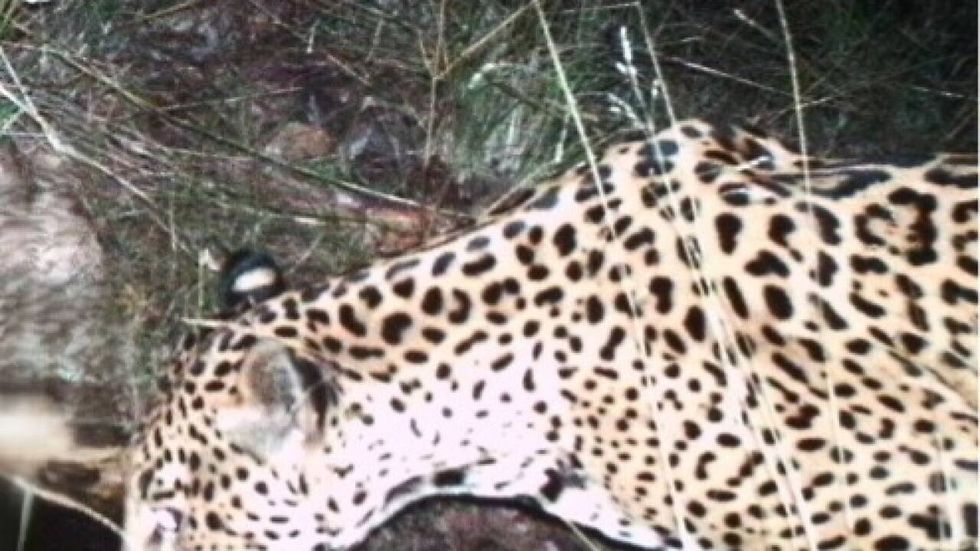 Jaguar No. 5. (Photo by UA Wild Cat Research and Conservation Center)
When the photos were made public, and news agencies across the country buzzed with excitement about the future of the state’s wild jaguar population, Schnaufer still felt the existential thrill of knowing he had been hiking in jaguar country.
Three-quarters of a century ago, Aldo Leopold penned his essay “The Green Lagoons,” which chronicles a 1923 canoeing adventure in the Delta region of the Colorado River. He and his brother Carl hoped to “find sign of the… the great mottled jaguar, el tigre.” They “saw neither hide nor hair of him, but his personality pervaded the wilderness.”
While I was researching my book, Heart of the Jaguar, and backpacking sections of the Sky Islands, three jaguars called the Sky Islands home—Cochise, Sombra, and O:ṣhad Ñu:kudam. I never saw so much as a track, but what mattered most to me was what the presence of a big, spotted cat prowling the mountains of southern Arizona implied: a kind of wildness.
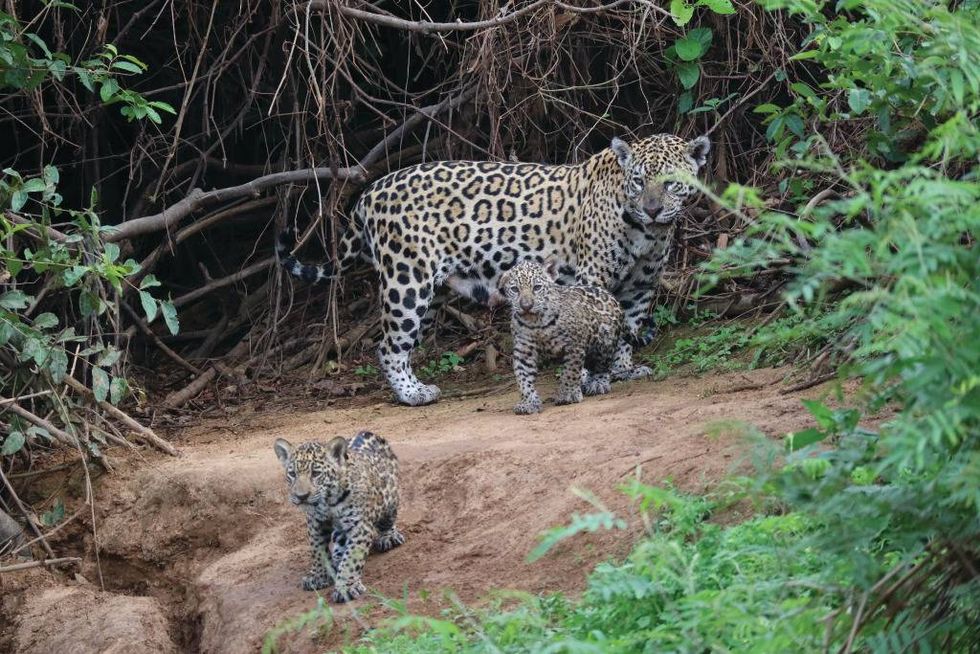 A jaguar and cubs are seen in Corixo Negro, Encontro das Aguas State Park. (Photo by April Kelly)
The Sky Islands, situated at the northern edge of a 5,000-mile jaguar range that extends as far south as Argentina, are indeed wild. More than a century ago, they were prime jaguar habitat. Some biologists and conservationists, including Susan Malusa, director of the Wild Cat Research and Conservation Center for the last 13 years, think they still are. “The picture of Jaguar No. 5 is a moment in time,” Malusa says. “But it’s part of a greater story, and that story is that the Sky Islands are part of the jaguar’s historical range. Jaguars wouldn’t be coming here if they weren’t finding what they need.”
The entire jaguar range is based on the principle of connection. Alan Rabinowitz, the celebrated zoologist and co-founder of Panthera, the global wild cat conservation organization, (who passed away in 2018), envisioned the jaguar realm as a mammal’s circulatory system. The core areas of jaguar production are its heart; the corridors linking them are its veins and arteries. A functioning system would nurture the species, while at the same time allowing nomadic, individual cats the freedom to spread their genetics across the corridor.
Susan Malusa believes it could be just a matter of time before other jaguars cross over from Mexico into the United States. “The cats are coming,” she says. “This is our chance to get it right; we have an obligation. Essentially, our job is not to screw it up.”
But screwing it up is exactly what we are doing. Currently, construction crews are dynamiting huge swaths of the unspoiled Coronado National Memorial and building hulking, 30-foot walls in the San Rafael Valley, creating what will be the longest unbroken stretch of border wall in an area of Arizona that serves as a critical wildlife corridor.
The Trump administration, which is not known for its love of wild places, waived the Endangered Species Act, the National Environmental Policy Act, and a host of other laws, to build a wall that will stop jaguars and dozens of other species in their tracks. And southern Arizona will be poorer for it. Apex predators like jaguars maintain ecosystem health, balance prey populations, and sustain biodiversity. They also change the spirit of the land. They contribute to what Aldo Leopold described as a “vast pulsing harmony.” And when they are gone, a “glory has departed.”
But perhaps in spite of the obstacles in their path, that glory is beginning to come back, as exemplified by Jaguar No.5.
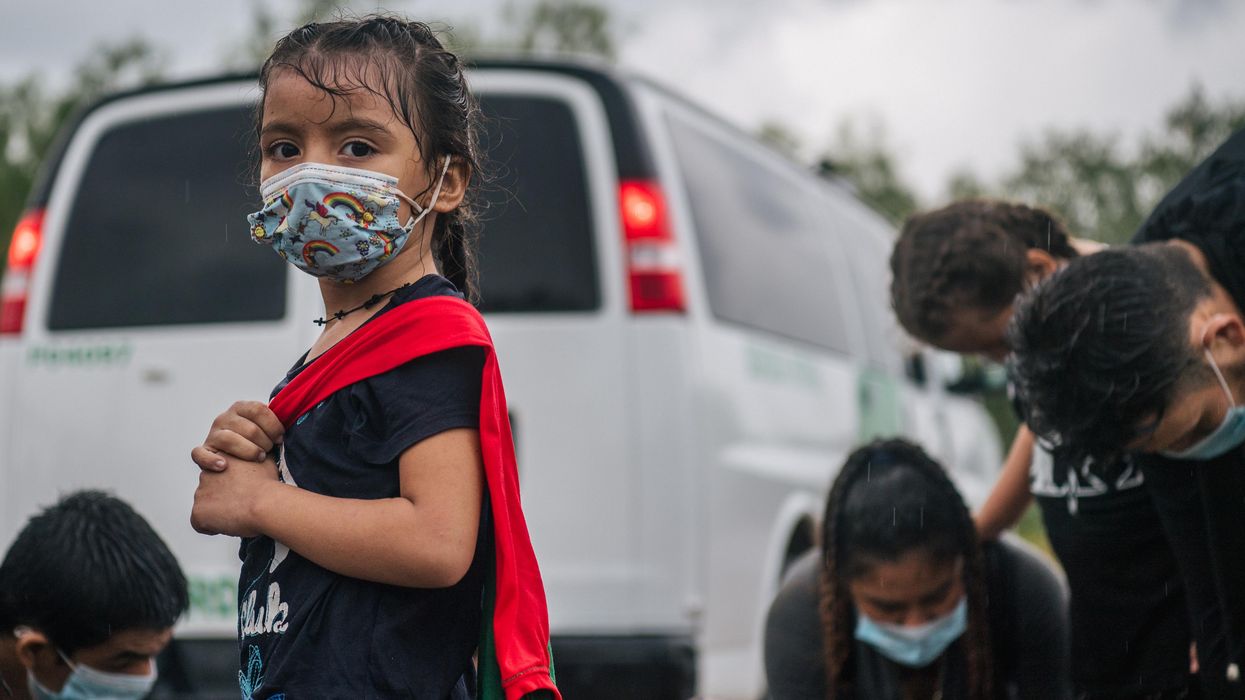
Biden once seemed to understand that punitive measures were not going to make either immigrants or U.S. citizens safer, or make our immigration system more orderly. He must rediscover those commitments and stop playing politics with people's lives.
When President Biden was campaigning in 2020, he pledged to strengthen our country by supporting and welcoming immigrants. Early in his presidency, he began taking steps in that direction.
On his first day in office, Biden proclaimed an end to his predecessor’s “Muslim ban,” which summarily banned migration from several Muslim-majority countries. And In February 2021, Biden introduced an executive order aimed at reversing some of the Trump administration’s damage to our immigration system, from family separations to backlogs in our asylum system.
“Securing our borders does not require us to ignore the humanity of those who seek to cross them,” Biden said at the time. “Nor is the United States safer when resources that should be invested in policies targeting actual threats, such as drug cartels and human traffickers, are squandered on efforts to stymie legitimate asylum seekers.”
Biden seemed to understand that being “tough” does not mean you have to support cruel and ineffective policies. Unfortunately, as immigration has become a more polarizing topic, the administration has backed away from this more humane approach.
Instead, in many ways Biden has actually continued down Trump’s path on immigration.
For example, the Trump administration enforced a rule called Title 42 during the height of the COVID pandemic, which severely limited entry into the United States—supposedly to protect public health. Biden continued to implement that policy for years, even without the flimsy public health justification.
The bipartisan Senate border bill Biden recently endorsed includes funding for a border wall he once promised not to fund — along with new restrictions on asylum and a measure that would authorize the president to shut the border down completely. Biden is also considering using the same authority the Trump administration invoked in its Muslim ban to restrict asylum access.
A few weeks ago, Biden and Trump separately visited the U.S.-Mexico border. Instead of proposing actual solutions to support our immigration system, Biden uplifted the failed Senate bill—and even went so far as to invite Trump to “join him” in working to it.
During his State of the Union address in March, Biden had the opportunity to distinguish himself from Trump. Instead, his speech demonstrated a strong disconnect between his rhetoric and actions.
Biden said he would not demonize immigrants, but in the same speech used the offensive term “illegal immigrant.” No human being is “illegal.” Continuing to echo that language is dehumanizing and puts immigrant communities at risk of violence. (Biden later said he regretted using the term, but did not apologize for using it.)
Biden said he would not separate families, but his current and proposed immigration policies have separated and continue to separate families. He said he would not ban people from the country because of their faith, but his proposed action would make asylum harder for nearly everyone regardless of their faith.
Invoking his Irish heritage, Biden has alluded to the Great Famine in Ireland to sympathize with immigrants looking for a better life in the United States. But families seeking shelter today from similar hardship would have extreme difficulty getting into the country under the policies he wants to implement.
Biden once understood that punitive measures were not going to make either immigrants or U.S. citizens safer, or make our immigration system more orderly. He understood that we’d need to create pathways to legislation and citizenship, honor our responsibility to offer refuge to asylum seekers, and live up to our American values.
If Biden’s sincere about finding real solutions, he needs to remember those commitments. It’s time to stop playing politics with immigrants’ lives.
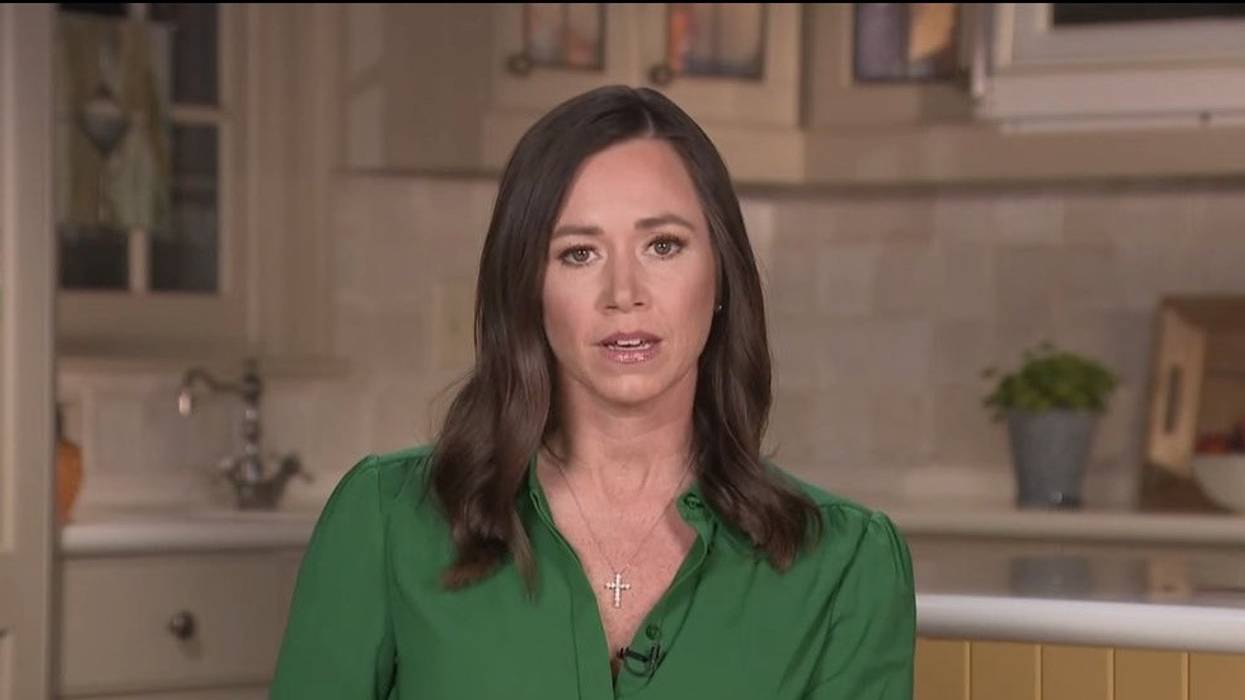
"This is worth every minute," said one person who watched the 7-minute take down.
A freelance journalist is receiving widespread praise for his "must-see" critique of a story told by Alabama's Republican Senator Katie Britt during her official Republican Party response to President Joe Biden's State of the Union on Thursday night.
In the 7-minute and 23-second video posted to TikTok on Friday, reporter and book author Jonathan M. Katz deconstructs a key portion of Britt's speech, remarks overall that were widely panned as a "creepy" representation of the far-right, xenophobic, Christian nationalism that has found a home in Donald Trump's GOP.
The specific claim in question centers on Britt's telling of a story about a 12-year-old girl who suffered sexual violence, including rape, at the hands of drug cartels—but the details of the horrifying story, according to the facts established by Katz, reveal a clear effort to deceive those watching her speech.
"Holy moly... Jonathan Katz exposes Katie Britt as a lying sack of shit."
In the video, Katz says the facts he was able to determine about Britt's claims—which she delivered to millions of American viewers on Thursday night as the response was featured live on Fox News and countless live streams across the internet—was "beyond misleading."
Watch:
@katzonearth This isn’t going to make her like TikTok more. #katiebritt #sotu #stateoftheunion #lies #politicians #biden2024 #trump2024 #immigration #traffickingawarenes #mexico #bordersecurity #fyp ♬ original sound - Jonathan M. Katz
"Holy moly. This is worth every minute," said writer Nick Knudsen after watching the video. "Jonathan Katz exposes Katie Britt as a lying sack of shit."
Because the woman he identified as the source of the story, a Mexican activist named Karla Jacinto Romero, has retold her personal history repeatedly in public, including in front of Congress, for years and explained that events described took place in Mexico between 2004 and 2008 when she was a child and George W. Bush was president, Katz slammed Britt for making it seem "as if this woman had confided something in her and as if she was describing actions that had taken place on or even near the U.S.-Mexico border during Joe Biden's presidency," which just isn't true based on the record.
"I don't know even know what to say," Katz remarks in the video, "except that it is just fundamentally dishonest."
The gut-wrenching story that Britt told to fearmonger over Biden's border policy and denigrate immigrants and asylum-seekers to right-wing voters and unsuspecting viewers, explains Katz, "didn't happen in the United States" and "it's not an example of something that happened recently and is not even an example of something that happened on the border, and certainly not something that happened under Joe Biden."
But why would she do that? "It's very clear to me," says Katz, that Britt was "trying to create an association in the people's mind between Joe Biden, the border, Mexicans... or people of Latin descent, and sexual violence. That's what she's going for and she's doing it on the basis of what you can only say is just an out and out lie."
Katz said Friday he reached out to Britt's office for some kind of explanation but had yet to hear back. He said he would update his post if he learned more from the Senator or her office, "But for now it just looks like she got on national television and lied about something really horrific and really important for her own personal and her party's political gain."
The Washington Post later confirmed with Sean Ross, a spokesperson in Britt's office, that the women referred to during Thursday night's speech was Karla Jacinto Romero, but disputed anything about the senator's language was misleading.
But many who had watched Katz's seemed much more convinced of his case and others condemned Britt for exploiting Romero's story for cynical and deceptive political gain.
Josh Marshall, editor-in-chief of TalkingPointsMemo, congratulated Katz on the "amazing" piece and said the video revealed that Britt is "not only an emotionally disregulated freak, but a big fat liar."
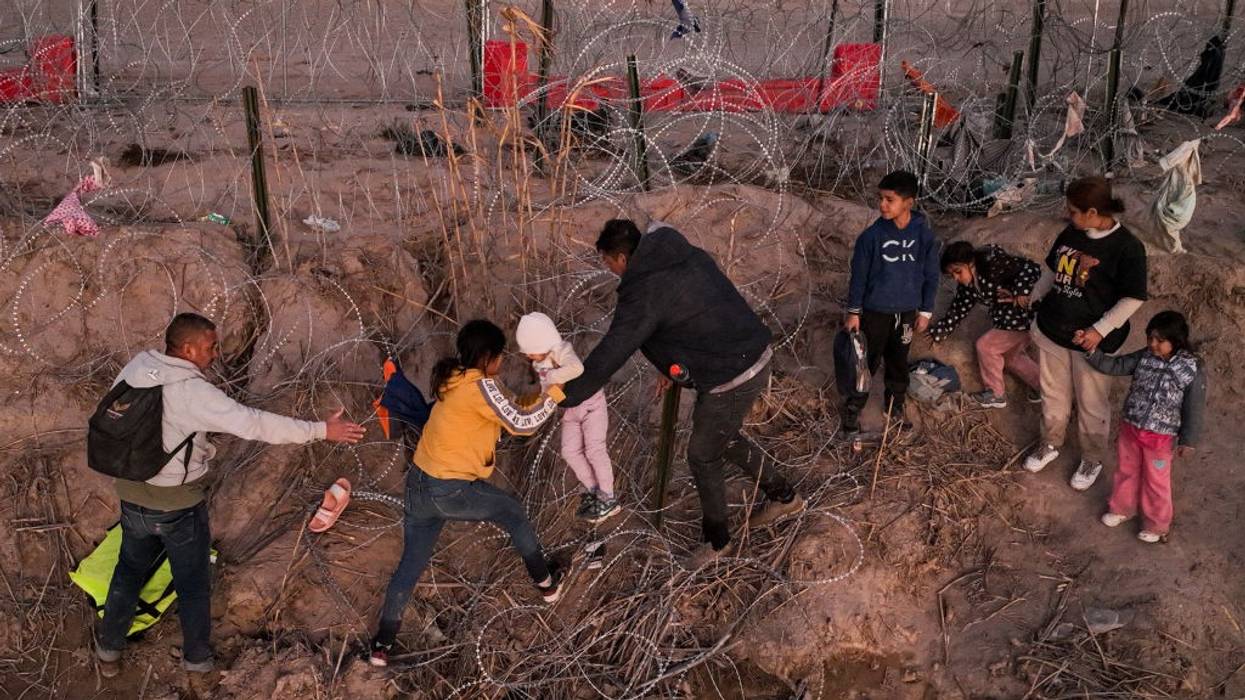
A real solution to immigration would be to embrace the fact that immigration makes us stronger. It’s time to think bigger than cruelty at the border and the Senate’s most recent, doomed plan.
Immigrants are good for this country. They work critical jobs, pay taxes, build businesses and introduce many of our favorite foods and cultural innovations (donuts, anyone?). But for decades, powerful players have chosen the self-serving politics of division over sensible immigration policies.
The immigrant experience is essential to the American story. Our communities comprise those who came here to seek safety, work, study and join their families. They make the United States the strong, diverse nation that it is.
Immigrants were more likely to be essential workers during the pandemic, and there’s no shortage of crucial roles for them in the future. As the population ages, more of us will need things like home healthcare — a workforce that’s one-fourth immigrant and needs to grow fast to meet the need.
We should embrace the vitality and diversity that immigration can bring [and]0 refuse to be divided by those who want to scare us...
In fact, experts say that limiting immigration could cost our country $7 trillion in the years to come. That’s the projected economic benefit of recent arrivals over the next decade, the Congressional Budget Office estimates.
We need immigration. And many of us know this, with 68 percent of Americans saying immigration is good for the country. Yet, over the last few decades, our government has made it much harder and more punitive for immigrants to claim their rights to a dignified future.
Detention centers, deportations and walls are deadly, and inhumane, and tear families apart. We spend untold billions on these cruelties — more than double what we spent 20 years ago. And they don’t make it any less likely that some people will need to leave their home countries for freedom, safety or opportunity.
Yet, we continue responding to the “problem” of people seeking refuge here by doubling down on these false solutions. All of us — new immigrants and descendants of old ones — are stuck in this policy limbo because of powerful people who benefit from dividing us and preventing real solutions.
From politicians who win office with anti-immigrant campaigns to White supremacists who peddle racist conspiracy theories and corporations that rely on undocumented workers to keep wages low and deny workers’ rights, these people stoke fear about immigrants to divide us for their own gain. In reality, immigrants commit fewer crimes, pay more taxes and do critical jobs that most Americans don’t want.
The border policy proposal recently brought up by the Senate isn’t a real solution. It’s a threat. The so-called “border compromise” would have gutted the asylum system, ramped up mass surveillance and enforcement, and built a pointless and harmful border wall. It completely ignored the fact that the border region comprises communities that are safe to live in and help local economies thrive.
That proposal isn’t the best we can do. A real solution to immigration would be to embrace the fact that immigration makes us stronger. It would open up pathways to legalization and citizenship for immigrants who have been contributing to this country for years and for many of those who are making the trip now.
Our government must also address the real reasons that scores of people are leaving their homes in the first place — including U.S. economic sanctions that are strangling their home economies, our outsourced war on drugs that can make migrants’ home communities unlivable, and climate change-driven weather events that send millions fleeing.
Congress has made real progress before, and it can do it again.
The 1986 immigration law signed by President Ronald Reagan granted legalization to millions of undocumented immigrants. President George W. Bush supported a proposal that would have led to legalization for millions more. Under President Barack Obama, the Senate passed a plan that would have opened the door to legalization for many of the current 11 million undocumented people living and working in the country.
It’s time to think bigger than the Senate’s most recent, doomed plan. Immigrants have always kept this country moving forward. We should embrace the vitality and diversity that immigration can bring, refuse to be divided by those who want to scare us, and enact some genuine immigration reform.

Why we must stop this horrific assault on immigrants and refugees seeking safety and a better life.
Remember when the previous administration tore babies and children from their families’ arms and locked them in little cages? Bad news: Republicans in Congress and far-right activists, including that former president, are heating up even worse anti-immigrant plans using language that sounds alarmingly like Hitler’s speeches in the early 1930s. They have made it clear they intend to wage war on immigrants.
Clearly, a backlash from MAGA-Republican extremists is spiraling out of control, and leading us down a path that puts democracy itself at risk. We must completely reframe the entire immigration discussion, dumping the failed narratives and policies from both parties that treat immigrants as criminals. Most immigrants attempt to come to the U.S. because their lives have become untenable in their home countries. (And this is often due to earlier US political interventions in those countries.) Why do we reward immigrants’ desire to work, contribute, and create better lives by throwing them in detention for months or even years, denying work permits, and engaging in open xenophobia and racism?
Let’s welcome immigrants instead of fearing them.
Our small affinity group, Jewish Activists for Immigration Justice of Western Massachusetts, traveled to the border in early 2020 and met with asylum-seekers and their advocates. We observed the infamous “tent courts” of the last administration, talked with Customs and Border Patrol (CBP) agents, and heard more heart-breaking stories than anyone ever should have to tell. For these reasons, and in thinking back to our own collective history (growing up under the shadow of the Holocaust and being the children, grandchildren, or great-grandchildren of immigrants–or immigrants ourselves, we feel both empathy and responsibility for our migrant friends on the border—and for migrants, long-time residents, and even citizens who are placed at risk by authoritarians gathering their strength and marshaling
Let’s welcome immigrants instead of fearing them. Immigrants from all countries should receive the same help and oversight we’ve offered to Ukrainians fleeing the Russian invasion. While it’s prudent to screen out criminals, the vast majority seeking refuge are NOT drug dealers or gang members, but hard-working people fleeing to save their lives and the lives of their families. The U.S. has welcomed Ukrainians fleeing conflict. Why can’t we extend the same protections and a pathway to permanent status to our Black and Brown neighbors on the southern border and Afghans who fled when the Taliban took over?
The US has a major shortage of workers for lower-wage and professional/medical jobs, many of which could be filled by immigrants. An immigrant-positive approach could help address US business’s crushing labor problem, and possibly prevent a repeat of the supply-chain failures during the early years of the pandemic.
Taxpayers pay huge sums for detention, deportation, and surveillance and are about to pay for a useless and environmentally destructive border wall. Meanwhile, businesses face an acute worker shortage. A more just immigration system would be a win-win for progressives, businesses, and especially those who are desperately seeking safety for themselves and their families. Our whole society is enriched by the talents, skills, and cultural contributions of immigrants when they are welcomed into our communities.
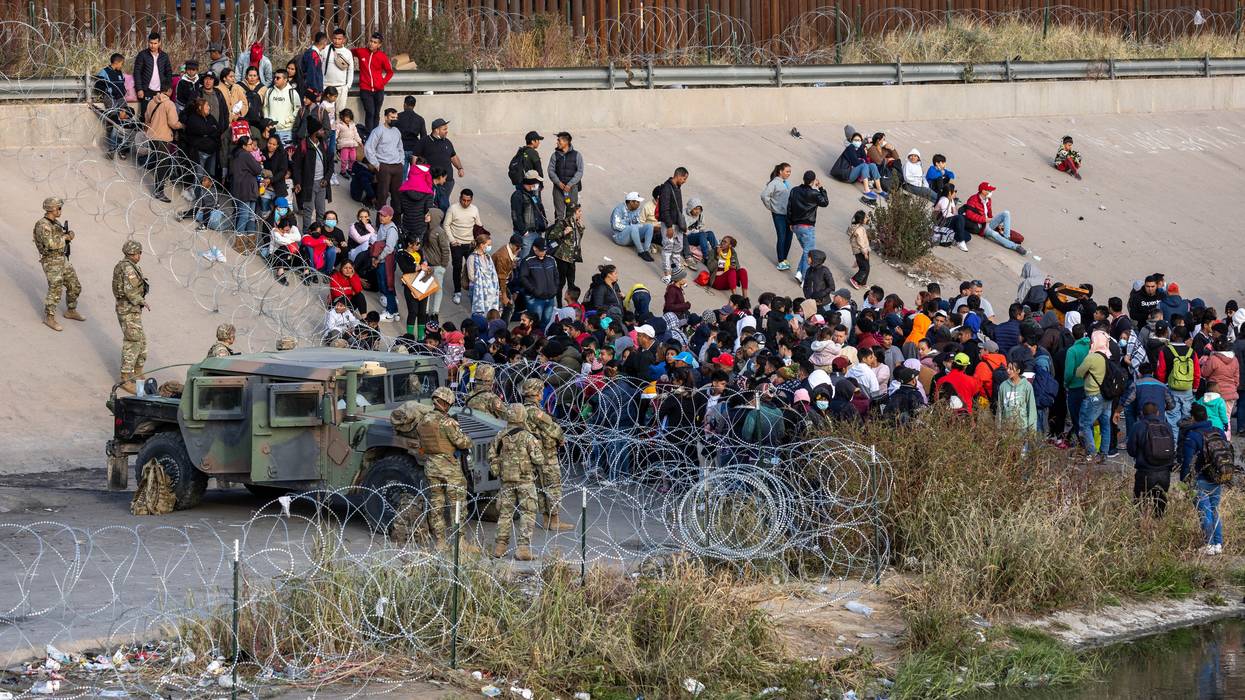
The all-too-profitable border apparatus is designed to make people suffer and let some die.
On September 23, at about 2:30 am, a Border Patrol surveillance camera captured two people crossing the international boundary between Mexico and the United States on the outskirts of Nogales, Arizona. A Border Patrol vehicle arrived quickly, but not before one of them had fled back into Mexico. When an armed agent stepped out, dressed in a forest-green uniform, he found a 16-year-old girl from Mexico softly crying, while holding her month-old baby swaddled in a blanket.
The agent commanded her to get in the vehicle. As they then drove to the Nogales Border Patrol station, the girl, he later reported, tried to speak to him in Spanish through the security partition that separated them. Her tiny daughter, she was telling him, was in distress. Cameras showed that the vehicle stopped for all of 10 seconds before continuing. The agent later claimed he couldn’t understand what she was saying and that he wanted to find a fluent Spanish speaker at the station. He didn’t realize, he insisted, that the infant was struggling to breathe, though the child soon died.
This hellish story of suffering at our border is but one of hundreds of similar tales of horror from 2023. They illustrate a fundamental truth about that border: It neither is, nor ever was, an “open” one in the Biden years, nor does the president faintly have an open-border policy, though prepare yourself to hear otherwise—over and over again—in Trumpublican campaign ads next year. They’ll repeat what party officials are already saying all too repetitively: that “President Biden’s radical open borders policies” have created “the worst border crisis in American history.” (While those are the exact words of House Oversight Committee chair James Comer, similar sentiments are already being offered by countless members of the GOP.)
Budgets and private-sector contracts tell an all-too-familiar story in which the border-enforcement apparatus only continues to grow ever larger, regardless of who’s president.
Comer’s claim is, of course, no less predictable than the hardships migrants like that girl are suffering as they try to reach this country. While such border narratives traffic in the unreal, what is real either isn’t effectively reported or gets lost amid all the politically motivated noise. Loud fantasies are expansively covered, while life-and-death stories, like those of that infant and her mother, are seldom reported and, if they are, quickly disappear.
Barely a week before that 16 year old was desperately trying to communicate to the agent in Spanish, the United Nations International Organization for Migration (IOM) labeled the U.S.-Mexico border the world’s “deadliest migration land route.” In 2022, a record 853 remains of dead border crossers were recovered (and this is the U.S. Border Patrol’s figure, which is even higher than the IOM’s), dwarfing the record of 568 set the previous year. Such numbers, the IOM stresses, are known to be distinct undercounts, leaving all too many families pining for lost loved ones.
But those border fatalities weren’t the only record breaker. Another was confirmed just a week after medical personnel at the Nogales station rushed to treat that girl’s baby. The number of border contracts issued to private industry also set a new record. Like those deaths, such contracts soared in fiscal year 2023 to $9.96 billion, instantly stripping the previous high, also set last year, of $7.5 billion.
And mind you, those gifts to industry were made from the highest budget ever (including in the Trump years) for border and immigration enforcement: $29.8 billion. So, don’t for a second think that the U.S. has an “open” border. In fact, it’s never been more fortified or—something few even bother to mention—more profitable, if you happen to be part of the border-industrial complex.
If you count all the contracts for private industry from U.S. Customs and Border Protection (CBP) and U.S. Immigration and Customs Enforcement (ICE) since Joe Biden took office—for, that is, 2021, 2022, and 2023—the number comes to $23.5 billion. And though you’d never guess it, given what we normally hear, that already beats Donald Trump’s total for his full four years in office, $20.9 billion. Or, to put the matter in a more historical perspective, private contracts for the Biden years already top the cumulative $22.5 billion spent in border and immigration enforcement budgets from 1975 to 1997. That’s 22 years if you weren’t counting.
In other words, it’s essentially guaranteed that the Biden administration will break all records for paying border contractors. And, in truth, if it weren’t for the “open borders” political mania of the moment, this wouldn’t be a surprise at all. Remember, while running for president in 2020, Biden received three times more campaign contributions than Trump from members of the top companies in the border industry. (The Donald talked a good game, of course, and received his share of the industry pie over the years, but that same border-industrial complex was right if it thought Biden would all too literally pay off for them.)
And keep in mind as well that Department of Homeland Security Secretary Alejandro Mayorkas represented some of the top border companies like Leidos and Northrop Grumman at a private law firm (where he earned $3.31 million) before joining the Biden administration. While the president has certainly traded in the hostile rhetoric associated with the bombastic Trump for a far more sterile and bureaucratic language, while adding in a healthy dose of the “humane,” budgets and private-sector contracts tell an all-too-familiar story in which the border-enforcement apparatus only continues to grow ever larger, regardless of who’s president.
One gets the impression that the border and immigration enforcement regime is its own civilization, with its own infrastructure and ever more expensive rhyme and reason.
As 2023 nears its end, there have simply never been as many opportunities to make a killing (figuratively as well as literally) by surveilling, arresting, caging, and expelling people from this country. In 2023, there were 8,033 such opportunities—and I’m speaking here about contracts in play—or about 22 contracts a day.
Among this year’s top border companies is Classic Air Charter, a former CIA contractor that is now getting $793 million to provide flights expelling people from the United States. Since Biden took office, deportation flights for Immigration and Customs Enforcement Air Operations have increased, as have the number of people detained, while private prison companies like CoreCivic and Geo Group continue to receive plenty of contracts to lock up migrants.
Among border contract stand-outs, Fisher Sand and Gravel was recently awarded $259.3 million for “border infrastructure,” presumably the same sort of border wall construction it did in the Trump years (for which it received $2 billion in contracts). That company also got one from the scandal-ridden, Steve-Bannon-led “We Build the Wall,” a private outfit that solicited donations to construct portions of Trump’s wall. And, mind you, that September contract for border infrastructure came just before the Biden administration announced that it would waive 26 laws protecting people and the planet, including the Clean Water Act and the Endangered Species Act, to put up a new section of border wall in Starr County, Texas.
In other words, just a glance at 2023 border contracts suggests that more walls, detention centers, and expulsion flights are coming. And don’t forget military monoliths like Lockheed Martin and Northrop Grumman that also command hefty contracts to maintain CBP’s fixed-wing aircraft; or San Diego-based General Atomics that continues to make money off the Predator B unmanned drones it began selling to CBP in the early 2000s. No wonder some people think our borderlands are under military occupation.
In short (or long), that list of contracts speaks to anything but a “radical open-border policy.” Funds are being handed out for “unaccompanied alien children and family units transportation,” data centers, medical staffing services, infrastructure construction (lots of it), “soft-sided facilities” (meaning tent detention camps), surveillance system upgrades, software support, “travelers processing vetting software,” a “low energy non-intrusive inspection system” (whatever that may mean), detention centers, radios, data and analytical support services, guard and transport services—the list only goes on and on and on. Reading through it, one gets the impression that the border and immigration enforcement regime is its own civilization, with its own infrastructure and ever more expensive rhyme and reason.
And that fortification process is only poised to become yet more intensive. In October, buried in an emergency supplemental funding request addressing “key national security priorities” (included military assistance to Ukraine and Israel), the Biden administration included a whopping $14 billion in supplemental funding for that border and immigration apparatus. Added to a 2024 budget, which, at $28.2 billion, represented a slight decrease from 2023, if passed by Congress, that addition will further “bolster our nation’s border enforcement,” paving the way for an even more profitable 2024 for those border companies and, if that account of the mother and her baby is any indication, more suffering and death.
Near where that 16-year-old mother had crossed into the United States stood a Remote Video Surveillance System, a tower that the Border Patrol possessed courtesy of the military monolith General Dynamics.
Keep in mind that there was a reason that mother and daughter crossed in such grim terrain, near but not into the city of Nogales. Thanks to those hundreds of billions of dollars spent building up the “infrastructure” of border enforcement year after year after year, it’s become essentially impossible for migrants to cross directly into most border cities, forcing them out to the desert or to the sea and to far greater personal danger.
Since 2008 (as far back as you can see contract records at USAspending.gov), CBP and ICE have issued 115,484 contracts worth $68.7 billion, while their cumulative budgets since the creation of the Department of Homeland Security in 2002 add up to about $400 billion. If Representative Comer’s investigative team went to the city of Nogales to investigate Biden’s “radical open borders policy,” they could walk right up to a 20-foot-high border wall draped from top to bottom with rows of coiling razor wire. There, they might even see shreds from clothes caught in their barbs and imagine that people were still crossing at that spot (though few are anymore).
Consider this amid all the Republican open-border charges: 1,421 remains of dead people were recovered along the border during Biden’s first two years in office, higher in other words than the 1,133 during Trump’s full four years.
They would also immediately see green-striped Border Patrol vehicles like the one that picked up that mother and infant “sitting on their Xs” (meaning in stationary position) right up against the border. They’ve been doing so since the deterrence strategy was first officially implemented 30 years ago. If you want to enter this country unauthorized, in other words, you’re likely to have to risk your life.
And so, to return to where I began, a little after 3 am, the agent, young woman, and baby arrived at the Nogales Border Patrol station. Another agent spoke with the mother and quickly escorted her and her child to the medical screening area. According to the mother, her daughter “was not breathing and almost looked dead.” Medical personnel rapidly began resuscitation efforts, using an automated external defibrator, but sadly to no avail.
That infant joined the hundreds of human beings who perished crossing the border this year, a number still being tallied, but that, according to the Washington Office on Latin America, had hit about 650 in August.
And remember what planet we’re now on: This summer, relentless, record-breaking heat was the reality in the Southwestern U.S. (At one point, Phoenix, Arizona, had a record-breaking 31 consecutive days above 110°F and hit that temperature on a record 55 days in all.) The impact of such heat, only likely to increase in the years to come, on border-crossers remains to be determined, but migrant deaths in the Border Patrol’s El Paso, Texas, sector recently reached 148, more than doubling from the year before.
Consider this amid all the Republican open-border charges: 1,421 remains of dead people were recovered along the border during Biden’s first two years in office, higher in other words than the 1,133 during Trump’s full four years. Imagine the national news stories, if the remains of nearly 1,500 hikers had been found in the Southwest during a two-year period (and many more had simply disappeared). But for migrants in those ever more profitable, ever deadlier borderlands, mum’s the word.
The details of that young mother’s desert border crossing are sparse. I don’t know how long she had been there, who the other person she was with might have been, if she had ever before tried to cross, where in Mexico she was from (though she was a Mexican citizen), or why she was leaving. According to Border Patrol interviewers, she had been with a group of migrants, but when she saw her baby laboring to breathe, she crossed ahead of them.
Once CBP’s medical staff realized the infant was in distress, they worked fast, but it was too late. The child died like 10,400 other migrants, if you count deaths from 1994-2022, according to sociologist and border scholar Timothy Dunn, who stresses that “many, many more were never found.”
With such figures in mind, it should become more difficult to ignore a simple reality: that the all-too-profitable border apparatus is designed to make people suffer and let some die. It may, in fact, be the world’s deadliest land border. That, however, is a “crisis” you’re not likely to hear much, if anything, about over the next year, even as candidates, officials, and congressional representatives like Comer continue to insist that we’re facing the “worst border crisis in American history” and a disastrously “open” border.

"Walls only serve to push migrants into more remote areas, increasing their chances of death," said the New York Democrat. "It is a cruel policy."
Congresswoman Alexandria Ocasio-Cortez has a sharp message for President Joe Biden on his administration's decision this week to waive federal protections that will allow for more speedy construction of a U.S.-Mexico border wall section first proposed by former president Donald Trump: Don't.
"The Biden administration was not required to waive several environmental laws to expedite the building of the border wall," Ocasio-Cortez said in a statement on Thursday. "The President needs to take responsibility for this decision and reverse course."
"A wall does nothing to deter people who are fleeing poverty and violence from coming to the United States. You do not risk your life or your children's lives going through the Darién Gap or traversing hundreds of miles of desert if you have any other options," added the New York Democrat. "Walls only serve to push migrants into more remote areas, increasing their chances of death. It is a cruel policy."
"The U.S. must take examining the root of migration more seriously, re-examine policy towards Latin America, and stop contributing to the destabilization that drives migration."
Biden unleashed fury from migrant rights advocates and human rights defenders on Wednesday after the Department of Homeland Security said it planned to enter a "notice of termination" into the Federal Register that would suspend regulations that govern such construction projects.
Laiken Jordahl, southwest conservation advocate for the Center for Biological Diversity, said it was "disheartening to see President Biden stoop to this level" in order to "build ineffective wildlife-killing border walls" that international advocates say also violate human rights.
Biden on Thursday argued from the Oval Office that he had no choice but to fast-track the construction.
"The money was appropriated for the border wall. I tried to get them to reappropriate, to redirect that money. They didn't. They wouldn't,” he said. "In the meantime, there's nothing under the law other than they have to use the money for what it was appropriated for. I can't stop that."
Asked by a reporter if he thought the border wall envisioned and partially built by Trump that now continues to be constructed by his administration is effective, Biden answered: "No."
Instead of increased militarization of the border and ever-larger border barriers, Ocasio-Cortez is in the camp who argue that to address concerns about migrant flows and refugee populations at the southern border, deeper dynamics must be addressed.
Instead of border reinforcements and the dehumanization of those seeking a better life in the U.S., she said, "the U.S. must take examining the root of migration more seriously, re-examine policy towards Latin America, and stop contributing to the destabilization that drives migration—as Senator Marco Rubio's Venezuela sanctions have done. We also have to finally invest in meaningful immigration reform."

"Every acre of habitat left in the Rio Grande Valley is irreplaceable," said one advocate. "We can't afford to lose more of it to a useless, medieval wall."
Environmental protection advocates and immigrant rights campaigners expressed horror Wednesday over a Department of Homeland Security plan entered into the Federal Register that will waive more than two dozen laws in order to expedite the construction of the U.S.-Mexico border wall.
The "notice of determination" was entered under Section 102 of the Illegal Immigration Reform and Immigration Responsibility Act, which was signed by former President Bill Clinton in 1996, and said Secretary of Homeland Security Alejandro Mayorkas "has determined, pursuant to law, that it is necessary to waive certain laws, regulations, and other legal requirements."
The 26 laws—which include the National Environmental Policy Act, the Endangered Species Act, the Migratory Bird Conservation Act, and the Native American Graves Protection and Repatriation Act—are being set aside "to ensure the expeditious construction of barriers and roads in the vicinity of the international land border in Starr County, Texas," the Federal Register said.
The waiver will allow construction through the Lower Rio Grande Valley National Wildlife Refuge and could threaten endangered species including ocelots, as well as the plant species Zapata bladderpod and prostrate milkweed, said the Center for Biological Diversity (CBD).
Voces Unidas Rio Grande Valley said it was "disappointed, but not surprised" by DHS's plan and noted that it will further limit the access to green spaces that area residents have.
Mayorkas' determination marks the first time the Biden administration has used its waiver authority under the REAL ID Act of 2005 to override federal laws.
The Trump and George W. Bush administrations
used the authority in all four states that border Mexico to build walls and roads that they claimed were "an impediment" to the construction. Environmental groups have long condemned the REAL ID Act and its waiver authority.
Laiken Jordahl, Southwest conservation advocate for CBD, said it was "disheartening to see President Biden stoop to this level" in order to "build ineffective wildlife-killing border walls" that international advocates say also violates human rights.
"Starr County is home to some of the most spectacular and biologically important habitat left in Texas and now bulldozers are preparing to rip right through it," said Jordahl. "This is a horrific step backwards for the borderlands."
The proposal is the Biden administration's latest escalation of its anti-immigration policies and follows an expansion of the Trump-era Title 42 policy and a rule barring entry into the U.S. for asylum seekers who can't prove they applied for asylum in another country.
"Every acre of habitat left in the Rio Grande Valley is irreplaceable," said Jordahl. "We can't afford to lose more of it to a useless, medieval wall that won't do a thing to stop immigration or smuggling. President Biden's cynical decision to destroy a wildlife refuge and seal the beautiful Rio Grande behind a grotesque border wall must be stopped."
The proposal was announced a month after the federal government's own watchdog, the Government Accountability Office, released a report saying that border wall construction under Trump damaged native plants, helped spread invasive species, disrupted migration patterns for endangered species, and destroyed Indigenous burial grounds and sacred sites.
"There's no end to this insanity,"
said historian Greg Grandin of Biden's plan to fast-track the wall's construction.