
SUBSCRIBE TO OUR FREE NEWSLETTER
Daily news & progressive opinion—funded by the people, not the corporations—delivered straight to your inbox.
5
#000000
#FFFFFF
To donate by check, phone, or other method, see our More Ways to Give page.


Daily news & progressive opinion—funded by the people, not the corporations—delivered straight to your inbox.
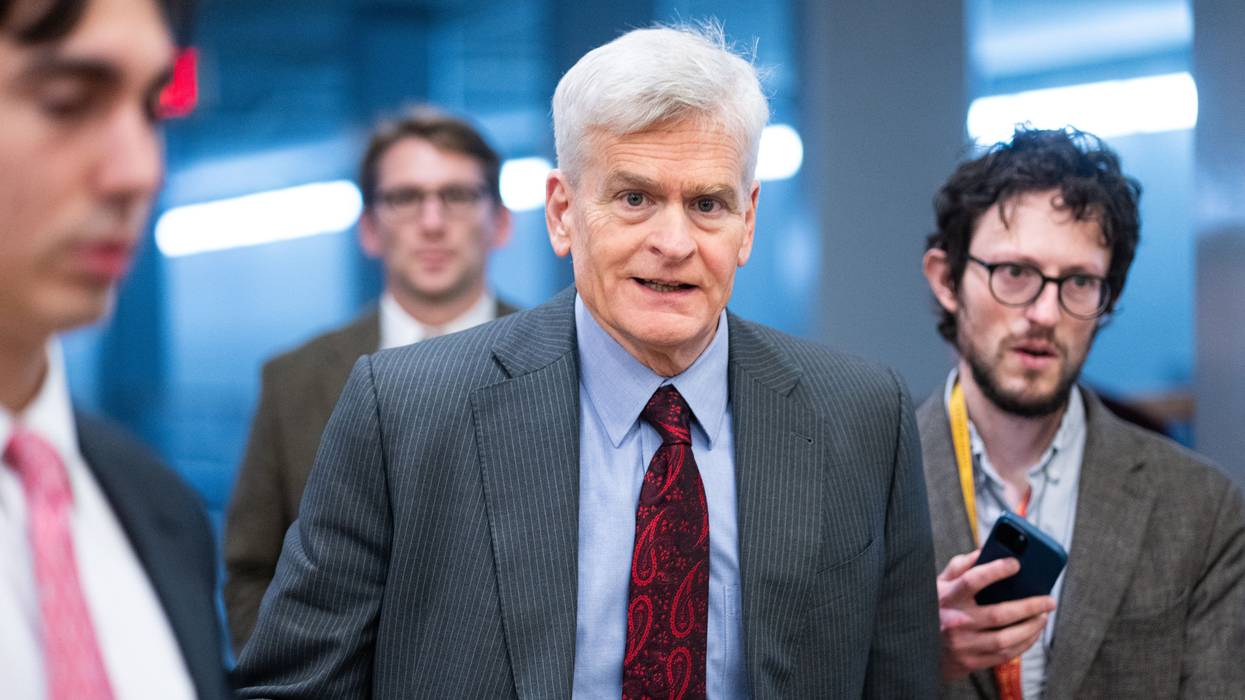
Republican Sen. Bill Cassidy, who lost reelection last month and said he would not be "bullied," switched his vote to no after the president berated him during a closed-door lunch hours earlier.
Two Senate Republicans who supported a previous resolution calling for an end to the US war on Iran changed their votes late Wednesday after President Donald Trump publicly and privately berated GOP lawmakers, calling them "losers" who provided "aid and comfort to the enemy."
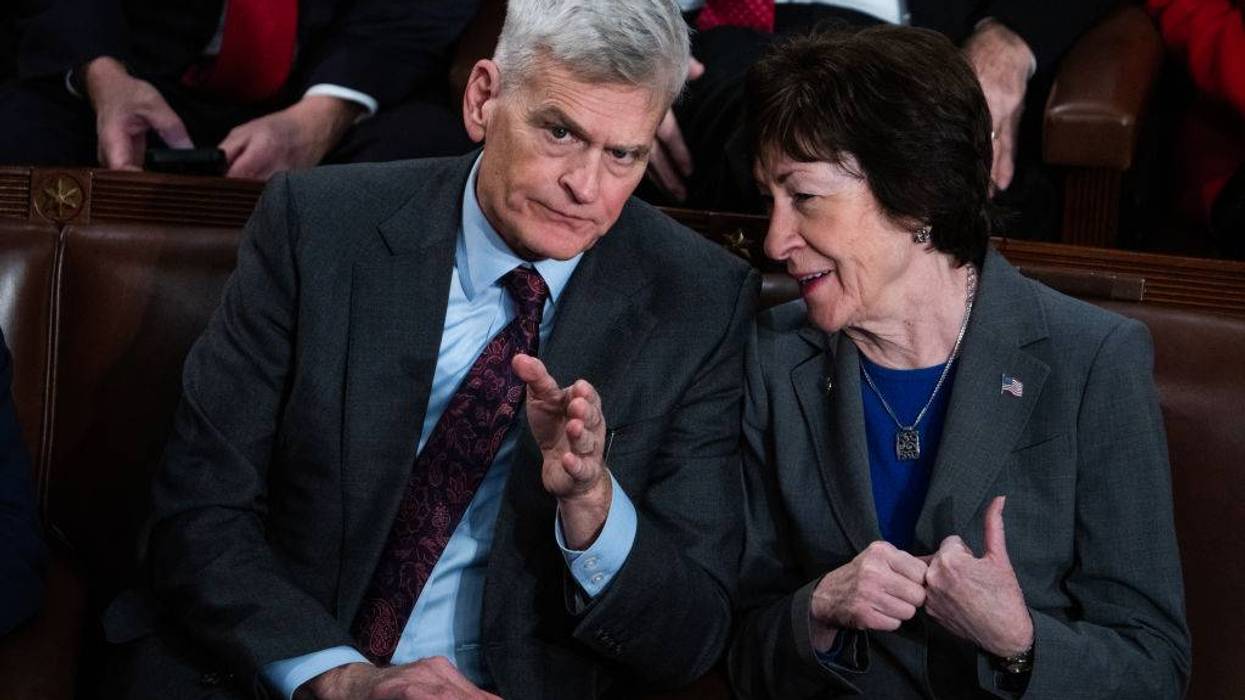
In Wednesday's procedural vote, Sen. Bill Cassidy (R-La.)—who reportedly got into a shouting match with Trump over the Iran war during a closed-door lunch hours earlier—sided with virtually every other Republican in opposing the war powers resolution, just a day after he supported a separate, symbolic resolution calling for the removal of US forces from the conflict. Sen. Rand Paul (R-Ky.) also switched, changing his vote to "present" at the urging of the president.
Senate Republicans forced late Wednesday's vote in a clear effort to placate Trump, who fumed at "Republican losers" who backed the symbolic war powers resolution that passed the upper chamber earlier this week. Sen. Tim Kaine (D-Va.), the lead sponsor of the resolution that Republicans blocked on Wednesday, said the vote was held to "appease [Trump's] temper tantrum."
"After both Republican-majority Houses took the historic step of voting that additional war against Iran is illegal without congressional authorization, President Trump came to the Capitol and tried to browbeat Republican senators for upholding their oaths of office," said Kaine. Wednesday's vote, the senator added, "does not undo the expressed position of Congress that further war against Iran is illegal unless Congress votes for it."
Trump, who has repeatedly threatened to resume attacks on Iran if negotiations collapse, celebrated Wednesday's vote in a late-night post on his social media platform, thanking Senate GOP leaders and highlighting that Cassidy and Paul changed their votes.
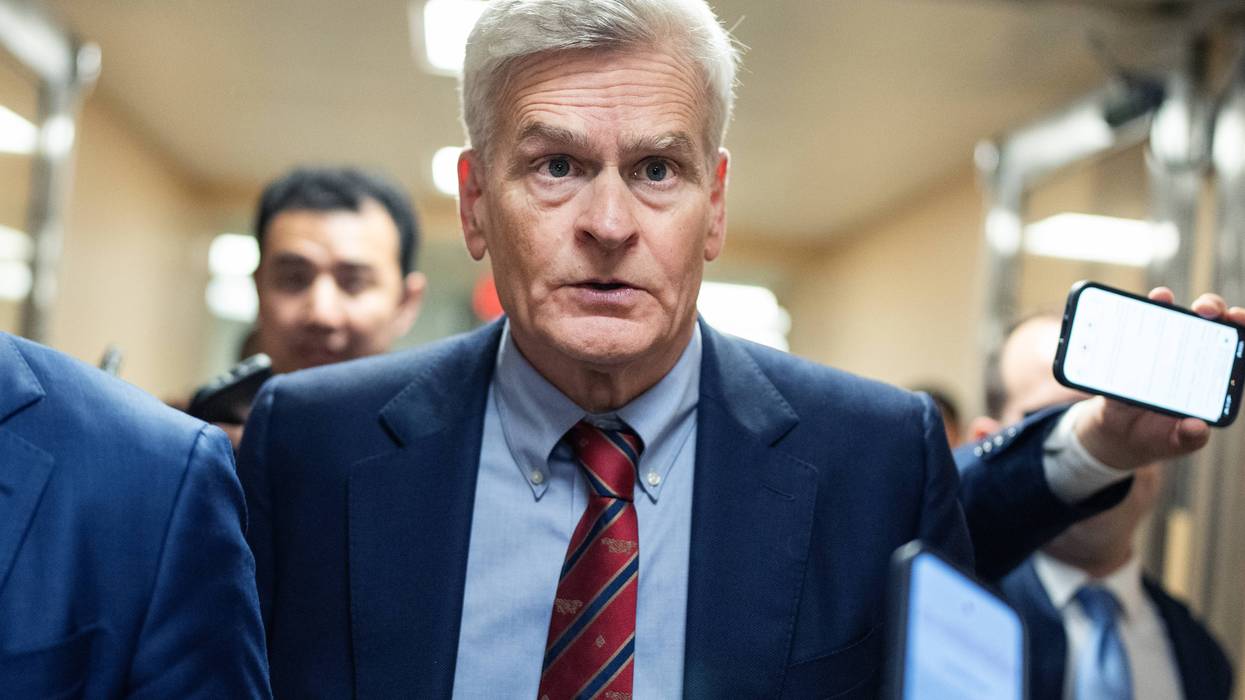
Cassidy, who lost reelection last month and insisted hours before the vote that he would not "be bullied" by the administration, subsequently thanked the White House for giving him a "thorough briefing" on Iran to "address many of my concerns." Trump reportedly called Cassidy a "lunatic" during Wednesday's private lunch.
"This president is telling the American people there’s no money for healthcare, housing, or childcare—but there should be endless taxpayer dollars to fund wars they don’t support."
Wednesday's vote came amid tenuous negotiations between the US and Iran on a diplomatic resolution to end the illegal war that Trump launched in late February, killing thousands of Iranians, throwing the global economy into chaos, and driving up prices at home.
On Wednesday, prior to the Senate war powers vote, the White House asked Congress to approve an $87.6 billion supplemental funding package that includes nearly $70 billion for military programs to address "operational costs incurred" during the war on Iran.
Rep. Brendan Boyle (D-Pa.), the top Democrat on the House Budget Committee, said in a statement that "the tens of billions in military spending requested by the Trump administration could be used to protect Americans’ healthcare, feed hungry children, and help working families afford everyday life."
"Instead, Trump wants taxpayers to continue footing the bill for his reckless war in Iran, which has sent the cost of gas and everyday goods skyrocketing, put our brave men and women in uniform at risk, and left the region no safer than before," Boyle added.
Senate Democrats' top appropriator, Patty Murray of Washington, said she would not "rubberstamp tens of billions more for this disastrous war of choice."
“This president is telling the American people there’s no money for healthcare, housing, or childcare—but there should be endless taxpayer dollars to fund wars they don’t support," said Murray.
"This is a major blow for the disastrous, backfiring war and sends a clear signal to President Trump: End the war, do not escalate it," said NIAC. "The hard work of pro-peace Americans is paying off."
After months of failed votes on Democratic war powers resolutions intended to end President Donald Trump's illegal assault on Iran, the US Senate finally advanced legislation to a final vote on Tuesday, when a fourth Republican broke ranks.
Sen. Bill Cassidy (R-La.) joined three other Republicans and all Democrats but one for the 50-47 vote on a motion to discharge Sen. Tim Kaine's (D-Va.) bill from committee. Cassidy's move notably came just days after he lost a primary race in which Trump backed one of his challengers—apparent retribution for the senator voting to convict Trump following his historic second impeachment.
"While I support the administration's efforts to dismantle Iran's nuclear program, the White House and Pentagon have left Congress in the dark on Operation Epic Fury," Cassidy said on social media Tuesday. "In Louisiana, I've heard from people, including President Trump's supporters, who are concerned about this war. Until the administration provides clarity, no congressional authorization or extension can be justified."
The US and Israel launched the operation on February 28, without authorization from Congress and in violation of the United Nations Charter. Faced with a key deadline under the War Powers Act earlier this month, the White House claimed the conflict had been "terminated" due to a ceasefire agreement reached hours after Trump's genocidal threat against Iran on April 7. However, the president has maintained a naval blockade, and Iran has continued to limit ship traffic through the Strait of Hormuz.
As with last week's vote on a war powers resolution from Sen. Jeff Merkley (D-Ore.), Sens. Susan Collins (R-Maine), Lisa Murkowski (R-Alaska), and Rand Paul (R-Ky.) backed the new motion, while Sen. John Fetterman (D-Pa.) voted with the GOP. A potential tie was avoided on Tuesday when Sens. John Cornyn (R-Texas), Thom Tillis (R-NC), and Tommy Tuberville (R-Ala.) did not participate.
The Associated Press noted that Kaine's bill "will get a vote on final passage, but the timing was not immediately clear," and if the three Republicans who were absent Tuesday maintain their stances on the war, the resolution could still ultimately be defeated.
Despite that uncertainty, congressional Democrats and other critics of the illegal assault welcomed the Tuesday vote that followed seven unsuccessful votes in the Senate and many more in the House of Representatives, where Republicans also have a narrow majority.
"This is a major blow for the disastrous, backfiring war and sends a clear signal to President Trump: End the war, do not escalate it," the National Iranian American Council (NIAC) declared on social media. "The hard work of pro-peace Americans is paying off."
NIAC president Jamal Abdi said that "it has taken 10 weeks and a dozen votes but Congress is finally coming in line with the vast majority of Americans who oppose the senseless war on Iran... There are strong odds it will pass in the Republican-controlled House later this week."
Senate Minority Leader Chuck Schumer (D-NY) said in a statement that "vote by vote, Democrats are breaking through Republicans' wall of silence on Trump’s illegal war."
"For more than 80 days, Trump has dragged America into a costly, chaotic conflict with no plan, no objective, and no legal authority," he continued. "Today proved our pressure is working: Republicans are starting to crack, and momentum is building to check him. We are not letting up."
According to The New York Times, Kaine similarly said that "the momentum is moving our way slowly."
While Trump would be able to veto a war powers resolution that reached his desk, Democrats have argued that passing one would make clear to him that his assault on Iran is unpopular. Kaine said that "what the president cares about is his own popularity, and when Congress, even including members of his own party, start to vote against him."
Kaine expects a final vote to come after the Memorial Day recess, and expressed hope that lawmakers returning to their state or districts will hear from frustrated constituents. He predicted that "people are going to hear an earful when they get home about gas prices," which have soared due to the Strait of Hormuz closure.
Alix Fraser, vice president of advocacy at the pro-democracy group Issue One, called Tuesday's vote "a significant step in the effort to reestablish one of Congress' most sacred roles—the constitutional right to send American men and women to war."
Fraser applauded "the senators who voted to reaffirm Congress's constitutional role in decisions of war and peace," recognizing by name the Republicans who had the "for having the courage to stand up for the American service members being asked to risk their lives, as well as for the American families already struggling with rising costs at home."
He also urged the House "to follow suit," emphasizing that "this is a pivotal moment for our democracy. We must decide whether future generations will inherit a system in which the representatives of the American people debate and authorize the most consequential decisions, like going to war—or whether we normalize a system where presidents can unilaterally lead the country into ill-defined and open-ended conflicts."
“Americans should remain concerned about the broader structural weaknesses that allowed the country to reach this point without meaningful congressional involvement from the outset," Fraser added. "The current war powers framework needs to be reformed to empower the legislative branch and follow the constitutional process that the framers intended."
The message is clear to every current or aspiring Republican politician: Be a toady to Trump, or you’re out.
On Saturday, Trump took revenge on Louisiana senator Bill Cassidy for Cassidy’s vote five years ago to convict Trump, in his second impeachment, for instigating an attack on the U.S. Capitol.
Cassidy thereby became the first GOP senator defeated by a Trump-endorsed candidate in a Republican primary. (Other Republican senators who have stood up to Trump — such as North Carolina’s Thom Tillis and Utah’s Mitt Romney — saw the writing on the wall and didn’t seek reelection.)
Trump’s purge of Cassidy comes in the wake of Trump’s purges of House Republicans who stood up to him, such as Wyoming’s Liz Cheney.
Trump’s next Republican target in the House is Kentucky representative Thomas Massie, who had the guts to oppose U.S. military involvement in Iran, demand release of the Epstein files, and criticize Trump’s spending bills for adding to the national debt. Massie appears likely to be defeated by a Trump-backed opponent in Tuesday’s Kentucky primary.
Trump has also purged state legislators who have refused to do his bidding, such as the seven Indiana Republicans who refused to redistrict the state as Trump demanded they do, and who Trump insured were defeated in their recent primaries.
The message is clear to every current or aspiring Republican politician: Be a toady to Trump, or you’re out.
In his concession speech Friday night, Cassidy stated the obvious reference to Trump:
“Our country is not about one individual. It is about the welfare of all Americans, and it is about our Constitution. And if someone doesn’t understand that and attempts to control others through using the levers of power, they’re about serving themselves. They’re not about serving us. And that person is not qualified to be a leader.”
Nicely put but sadly irrelevant because Trump — who’s clearly serving himself rather than the American public — now possesses all levers of power in the official Republican Party.
As Republican senator Lindsey Graham said yesterday on Meet the Press, “There’s no room in this party to destroy [Trump’s] agenda.”
Former generations of Republican politicians had principles, beliefs, ideals. They thought the federal government too large. Or believed it spent too much money. Or was too lenient on criminals. Or was too eager to support the civil rights of Black people. Or any number of issues with which Democrats disagreed.
Today’s Republican Party no longer has any purpose other than achieving whatever Trump wants, which is making Trump richer and more powerful. The GOP is now Trump’s; it is no longer America’s.
Today’s Republican voters, by contrast, are showing increasing frustration with Trump. Those who think of themselves as traditional Republicans don’t like Trump’s expansive use of federal power. Those who are fiscally conservative, like Thomas Massie, are upset by Trump’s wanton spending, tax cuts, and soaring debt. “America-first” Republican voters are concerned about Trump’s intrusions into Iran, Venezuela, Cuba, and elsewhere. And they want the rest of the Epstein files released.
Yet for elected Republicans, survival now depends on personal loyalty to Trump.
All of which raises a fundamental question: Has the official Republican Party — now nearly purged of anyone willing to reflect the concerns of Republican voters rather than Trump’s will — become complicit in Trump’s criminality? Is it aiding and abetting Trump’s lawlessness?
A case can be made that the official Republican Party is indeed complicit.
For Trump, the first and most basic sign of loyalty to him — and therefore survival as a politician in Trump’s Republican Party — is a willingness to publicly proclaim as truth what we know to be two big lies: that Trump won the 2020 election, and that he did not seek to overturn its results by illegal means. As a result, almost all congressional Republicans are now election deniers.
Trump has also made it clear that loyalty to him bars any criticism of his unlawful immigration dragnet, which has so far resulted in the murders of three U.S. citizens by ICE agents and the detention and deportation, without a hearing, of people suspected of being in the U.S. illegally.
To Trump, loyalty requires full support of his foreign policy — including the abduction of a foreign leader, an undeclared war with Iran, and the killing on the high seas of people only suspected of smuggling drugs, in violation of international law.
Loyalty also demands unquestioned support for other of his lawless acts — using the Justice Department to prosecute his political opponents, building a mammoth White House ballroom, issuing no-bid contracts to his friends, promoting his family’s businesses and implementing policies favorable to them, accepting gifts from foreign powers, and defying court orders.
Is it fair to conclude from all of this that today’s official Republican Party — the people who are in office because Trump has put them there, or who maintain their office because they back whatever Trump wants — has in effect become a criminal organization, analogous to the mafia or a drug cartel, whose members are blindly loyal to their criminal bosses?
Health and Human Services Secretary Robert F. Kennedy Jr. "must testify," and the CDC officials who were fired and resigned in protest also should be invited to do so, said the senator.
In the wake of a "Wednesday night massacre" at the US Centers for Disease Control and Prevention and related resignations, Sen. Bernie Sanders on Thursday called for an immediate congressional probe.
Just weeks after the Senate confirmed President Donald Trump's pick to lead the CDC, Dr. Susan Monarez, the director was forced out on Wednesday after reportedly clashing with Health and Human Services (HHS) Secretary Robert F. Kennedy Jr. Her ouster led to calls for firing Kennedy, four other officials resigning in protest, and a related walkout by agency staff.
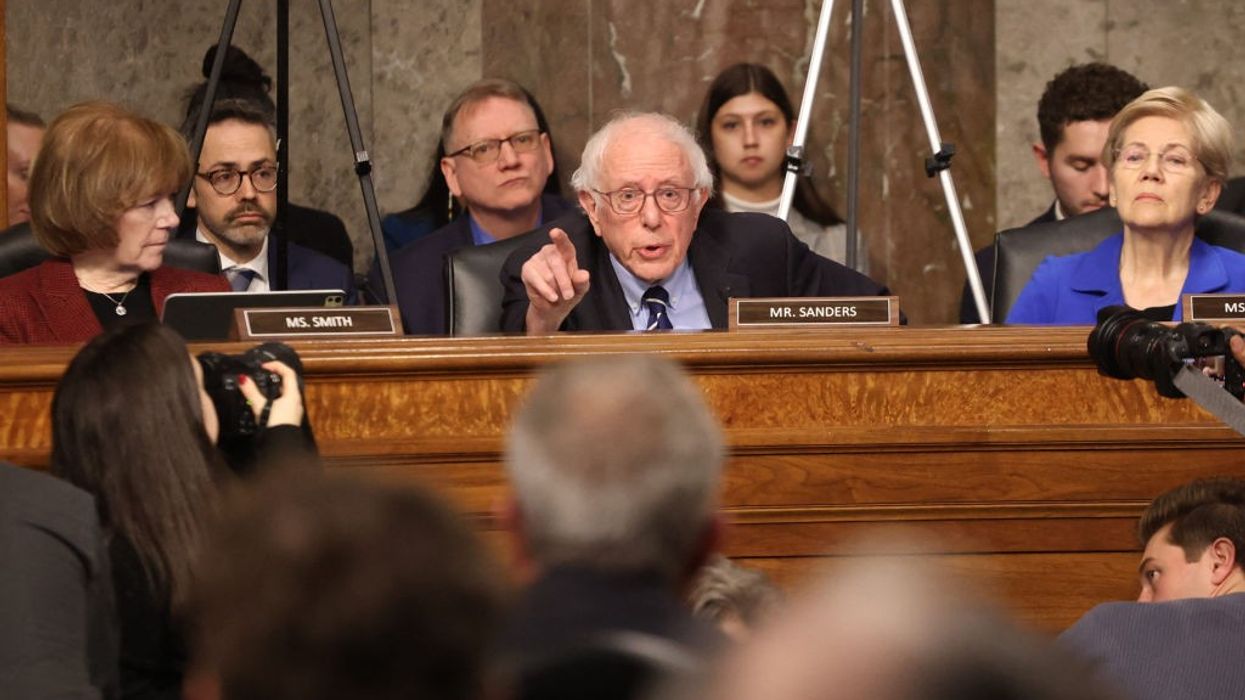
Sanders (I-Vt.) serves as ranking member of the Senate Health, Education, Labor, and Pensions (HELP) Committee, and in a letter, he asked Sen. Bill Cassidy (R-La.), the panel's chair and a physician, to "immediately" call a hearing.
"I am very disturbed that the Trump administration apparently made this reckless decision because Director Monarez refused to act as a rubber stamp to implement Secretary Kennedy's dangerous agenda to substantially limit the use of safe and effective vaccines and undermine the confidence that the American people have in scientific achievements that have saved millions of lives," Sanders wrote to Cassidy.
RFK Jr. is pushing out scientific leaders who refuse to act as a rubber stamp for his dangerous conspiracy theories and manipulate science. Today, I am calling for a bipartisan congressional investigation into the firing of CDC Director Dr. Monarez.
[image or embed]
— Senator Bernie Sanders (@sanders.senate.gov) August 28, 2025 at 1:30 PM
"We need leaders at the CDC and HHS who are committed to improving public health and have the courage to stand up for science," he argued, "not officials who have a history of spreading bogus conspiracy theories and disinformation that will endanger the lives of the American people and people throughout the world."
Sanders—who previously served as the panel's chair—asked Cassidy to launch a "bipartisan probe" and stressed that "as part of that investigation, Secretary Kennedy must testify at a hearing in the HELP Committee as soon as possible. We should also invite Dr. Monarez and the senior CDC officials who resigned to testify as well."
Noting that Cassidy on Wednesday "called for oversight of the firings and resignations at the agency," Sanders made the case that "as a start, the American people should hear directly from Secretary Kennedy and Dr. Monarez and every member of our committee should be able to ask questions and get honest answers from them."
The senator also took aim at the HHS chief, writing that "it is absolutely imperative that trust in vaccine science not be undermined. The well-being of millions of people are at stake. In just six months, Secretary Kennedy has completely upended the process for reviewing and recommending vaccines for the public."
"Enough is enough," he declared. "We have got to make it clear to Secretary Kennedy that his actions to double down on his war on science and disinformation campaign must end. Too many lives are at stake."
In a statement released later Thursday, after the walkout, Sanders applauded CDC workers "for standing up for science and protesting the reckless decision of Secretary Kennedy to push out leading scientists from the agency."
"Speaking up takes real courage," he said. "Now is the time for all of us—whether you are a Democrat, Republican, independent, progressive or conservative—to come together and say enough is enough. Vaccines are one of the greatest public health achievements of the 20th century. We will not stand by silently as Secretary Kennedy takes them away."
"Let us be clear: We are witnessing a full-blown war on science, on public health, and on truth itself," Sanders emphasized. "In just six months, Secretary Kennedy has dismantled the vaccine review process, narrowed access to life-saving Covid vaccines, and filled scientific advisory boards with conspiracy theorists and ideologues. "
Slamming the reported reasons for Monarez's ouster as "outrageous and unacceptable," the senator concluded that "history will not look kindly on those who stayed silent in the face of this assault on science. We have a moral responsibility to act now."
This article has been updated with Sen. Bernie Sanders' statement on the walkout at the Centers for Disease Control and Prevention.
"We need congress to intervene," said one of the CDC officials who stepped down this week.
Staff members at the Centers for Disease Control and Prevention headquarters in Atlanta, Georgia on Thursday staged a mass walkout in a show of support for three top officials who resigned in protest this week.
The three officials in question—Demetre Daskalakis, Daniel Jernigan, and Debra Houry—resigned on Wednesday night to protest the ouster of former Centers for Disease Control and Prevention (CDC) Director Susan Monarez, who had just been confirmed weeks ago by the US Senate.
All three officials came to the CDC headquarters to clear out their offices and, as they left the building on Thursday afternoon, were followed out by hundreds of workers who cheered them and thanked them for their work at the agency.
Marissa Sarbak, a reporter with NBC Atlanta, posted a video showing the crowds that had gathered to support the departing officials.
Hundreds of people have come out to Roybal campus to show solidarity and support for the CDC leaders that resigned today following CDC Director Susan Monarez’s firing. We’re expecting the leaders who resigned to walk out in a few minutes. @11AliveNews pic.twitter.com/ptMuWcQMnY
— Marissa Sarbak (@MarissaSarbak) August 28, 2025
Sam Stein, a journalist at The Bulwark, reported that Houry gave a short speech outside the building in which she warned that the agency was in danger of falling apart and that more resignations would be coming soon unless drastic changes were made.
"We need congress to intervene," she emphasized.
Jernigan, who until Wednesday has served as the director of the CDC's National Center for Emerging and Zoonotic Infectious Diseases, told The Washington Post that his "last straw" was being forced to work with David Geier, who has long pushed false theories linking childhood vaccinations to autism.
"The current administration has made it very difficult for me to stay," said Jernigan, who has nearly two decades of experience working at the CDC. "We have been asked to revise and to review and change studies that have been settled in the past, scientific findings that were there to help guide vaccine decisions."
Monarez was reportedly pushed out by Health Human Services (HHS) Secretary Robert F. Kennedy Jr., who, like Geier, has also in the past pushed conspiracy theories linking vaccines to autism.
Kennedy's decision to oust Monarez has drawn bipartisan concern. Sens. Patty Murray (D-Wash.) and Tina Smith (D-Minn.) have both called on President Donald Trump to fire Kennedy, while Sen. Bill Cassidy (R-La.) called for HHS to postpone its scheduled Advisory Committee on Immunization Practices meeting, given what he described as "serious allegations" that have been made by the resigned CDC officials.
Sen. Bernie Sanders, by contrast, argued that "we must cancel all medical debt" and "move to Medicare for All."
A Republican senator heavily bankrolled by the pharmaceutical industry spoke out Thursday against calls to cancel medical debt, arguing that wiping out a financial burden saddling 100 million Americans "is not a solution."
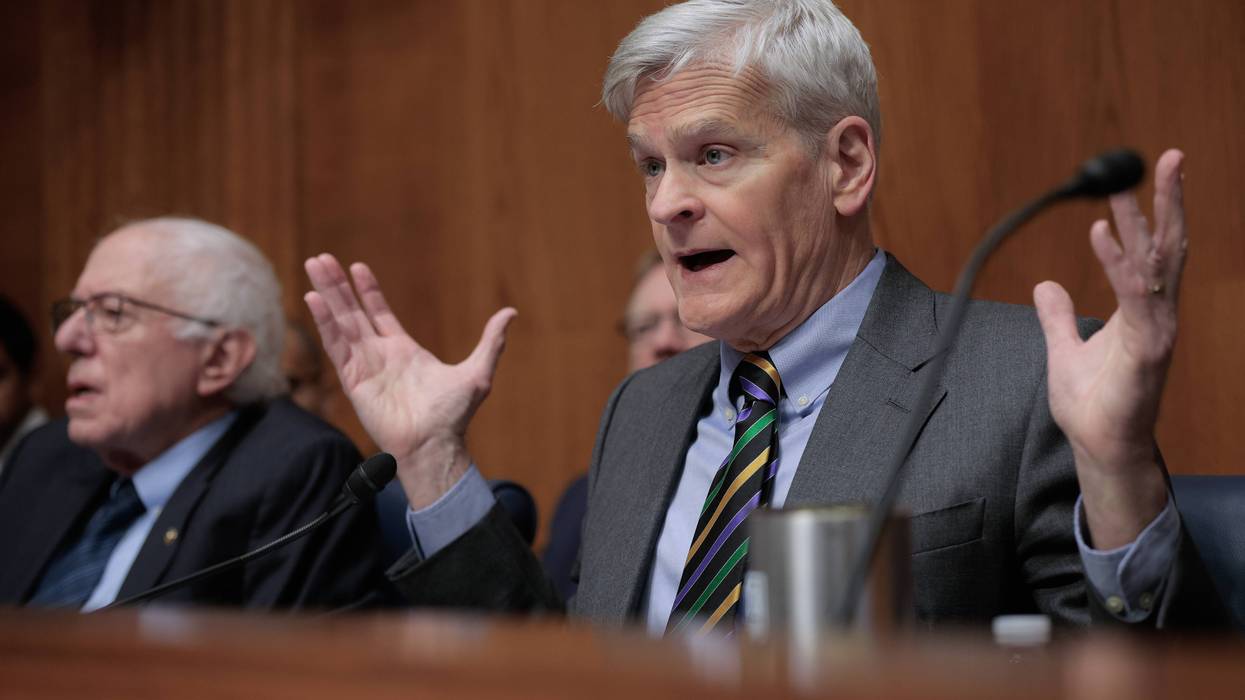
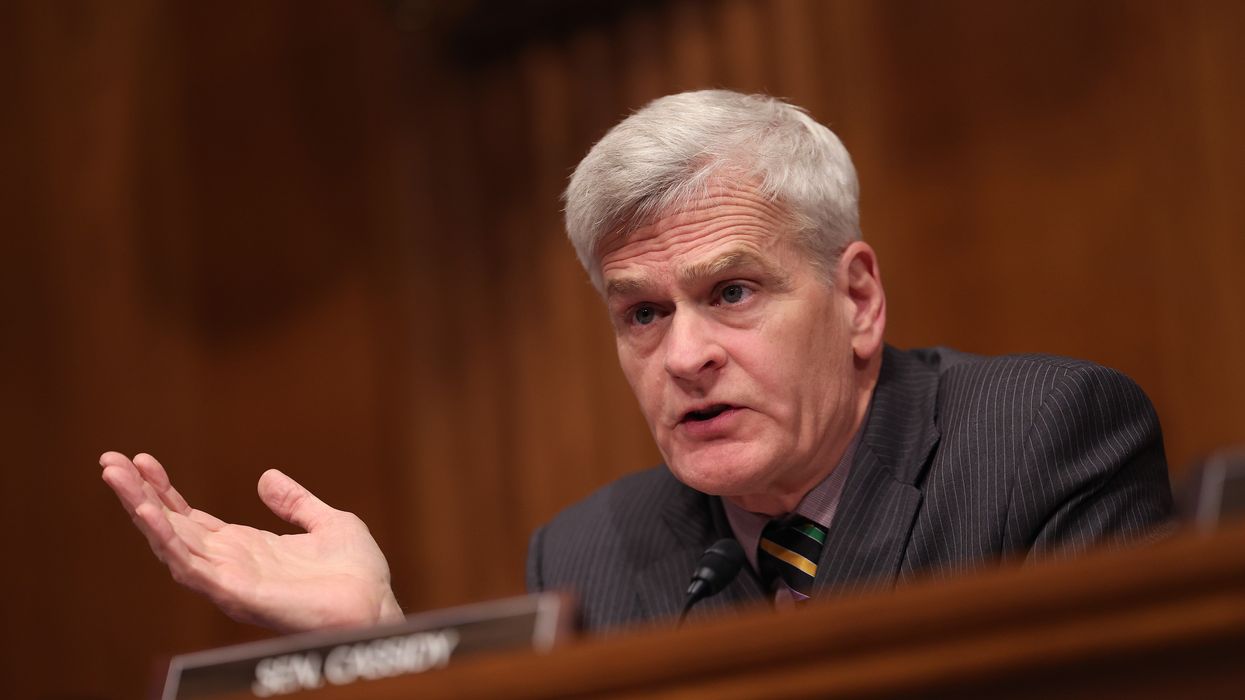
"One-time cancellation of medical debt... is a Band-Aid approach to a one-time problem that's gonna come back," Sen. Bill Cassidy (R-La.) said during a Senate Health, Education, Labor, and Pensions (HELP) Committee hearing on the nation's medical debt crisis.
After dismissing medical debt cancellation on the grounds that it would not address the "root causes" of the crisis, Cassidy—the ranking member of the Senate panel—proceeded to make clear that he opposes the kinds of transformational healthcare reforms that advocates say are necessary to eliminate the problem of medical debt for good.
"We may hear today about Medicare for All," Cassidy accurately predicted. "But I also say that a healthcare system in which you think it's free because the taxpayer is footing the bill—you've never seen how expensive something can be until you perceive that it is free."
Watch Cassidy's remarks:
Cassidy is a major recipient of campaign cash from the pharmaceutical industry, whose stranglehold on prescription drug prices has been a significant driver of medical debt in the U.S.
Over the course of his career, the Louisiana Republican has raked in over $1 million in donations from the pharmaceutical and health product industries, according to OpenSecrets.
STAT News reported last year that Cassidy reaped "a slew of campaign donations" from Big Pharma executives shortly after he officially became the top Republican on the Senate HELP Committee, which is chaired by Sen. Bernie Sanders (I-Vt.)—a leading supporter of canceling medical debt and enacting Medicare for All.
In May, Sanders and several Democratic allies introduced legislation that would eliminate all of the roughly $220 billion in outstanding U.S. medical debt.
Contrary to Cassidy's suggestion that the bill would do nothing to prevent the future accrual of medical debt, Sanders' legislation would "amend the Public Health Service Act, updating billing and debt collection requirements to limit the potential for future debt to be incurred," the senator's office noted in a summary.
Neale Mahoney, a medical debt expert at Stanford University, said in a statement after the bill was unveiled that the measure "cuts off medical debt at the source by requiring hospitals to uphold their obligation to provide charity care to eligible patients who cannot afford to pay and supports hospitals so they can forgive debt before it gets sold to debt collectors."
During his opening remarks at Thursday's hearing, Sanders called medical debt "one of the most outrageous and cruelest" aspects of the nation's "dysfunctional" healthcare system.
"Pharmaceutical companies and insurance companies charge the American people for the 'crime' of getting sick," said Sanders. "Let's be clear: The medical debt crisis our nation is experiencing is a uniquely American phenomenon—does not exist in other countries around the world."
"We are the only major country on Earth," the senator added, "where an emergency visit to a hospital can cause patients to lose their homes and their life savings."
1 out of 4 cancer patients in America either declared bankruptcy or lost their homes to eviction or foreclosure as a result of medical debt in 2022.
That is insane.
We must cancel all medical debt.
We must move to Medicare for All. pic.twitter.com/LSQoFyrCKm
— Bernie Sanders (@SenSanders) July 11, 2024
Recent polling found that a majority of Americans believe it is "extremely or very important" that the federal government act to provide relief for those with medical debt. The health policy organization KFF estimates that around 3 million U.S. adults have more than $10,000 in medical debt and 14 million owe more than $1,000.
Abdul El-Sayed, director of Wayne County, Michigan's Department of Health, Human, and Veteran Services and an outspoken Medicare for All supporter, said in his testimony at Thursday's hearing that a single-payer healthcare system would "address the porous nature of health insurance" and help prevent the accumulation of medical debt "by guaranteeing universal health insurance coverage from birth."
"One of the main drivers of costs in our current system is administrative overhead, higher in our country than in any other country in the world," said El-Sayed. "Much of that overhead is imposed by the complexity of billing multiple health insurers. With only one insurer that bears no profit motive, we could eliminate some of that cost burden—ultimately reducing the costs born on Americans that show up as medical debt."
"We condemn this move to block a plan that will provide significant financial relief to low-income borrowers and communities of color," said one advocate.
Just as the Biden administration announced this week that 4 million people have enrolled in its new income-driven repayment plan for student loan borrowers just two weeks after it was launched, Republican lawmakers in Congress announced plans to rip the debt relief away from Americans—saddling them with a continued financial burden that has left many working people unable to purchase homes, provide for a family, and save money.
Led by Sens. Bill Cassidy (R-La.), John Thune (R-S.D.), and John Cornyn (R-Texas), 17 Republican senators said Tuesday that they would use the Congressional Review Act (CRA), a tool members of Congress can invoke to overturn final rules set by federal agencies, to repeal the Saving on a Valuable Education (SAVE) plan.
The plan bases student debt monthly payments on borrowers' income and family size, allowing those who earn $15 per hour or less to avoid any monthly payment. An estimated 1 million people are expected to have no monthly payments under the plan and other borrowers are expected to save at least $1,000 per year compared with other income-driven repayment plans.
Education Secretary Miguel Cardona said Tuesday that Americans are submitting new applications for the SAVE plan each day "so that they, too, can take advantage of the most affordable student loan repayment plan in history."
"This is real money President [Joe] Biden is putting back into the pockets of working families," Cardona said last month when the program was launched. "And when borrowers struggle to make ends meet, we're not going to kick them while they're down."
But Republicans including Reps. Virginia Foxx (R-N.C.) and Lisa McClain (R-Mich.), who have introduced a companion bill to Cassidy's in the U.S. House, claim the program is "illegal" and will "leave mountains of debt at the feet of taxpayers while absolving millions of borrowers of their loans."
Jaylon Herbin, director of federal campaigns at the Center for Responsible Lending, said Wednesday that lawmakers should "oppose the CRAs to repeal SAVE."
"Senate Democrats will strongly oppose this Republican measure should it come to the floor for a vote, and we will stand with student loan borrowers as we continue to push for as much relief as possible."
"We condemn this move to block a plan that will provide significant financial relief to low-income borrowers and communities of color," said Herbin. "SAVE provides hope for borrowers as the administration continues to fight alongside advocacy groups to find other ways to achieve broad-based student loan relief. We continue to support President Biden in his quest to make our educational finance system fairer for all borrowers and oppose harmful legislation, such as these CRAs, that will set our already flawed student loan repayment system back to the pre-pandemic era."
Debt relief campaigners and legal experts have said for years that the Biden administration is legally able to wipe out student debt—going much further than the SAVE plan does—using the Higher Education Act of 1965, which allows the education secretary "to enforce, pay, compromise, waive, or release any right, title, claim, lien, or demand" related to federal student loans.
Republicans including Cassidy previously tried to block Biden's debt relief plan which would have canceled up to $20,000 in debt for some student loan borrowers, before the right-wing majority on the U.S. Supreme Court struck down the proposal.
The GOP announced its latest plan to stop borrowers from benefiting from the income-based repayment plan as the administration works on a broad relief plan under the Higher Education Act, and just days after interest on federal student loans began to accrue again following a pause that began during the coronavirus pandemic.
About half of student borrowers in a poll released by Life and My Finances said they would not be able to afford monthly payments when they resume next month.
While "Democrats work hard to find new ways to provide relief for borrowers in need," said Senate Majority Leader Chuck Schumer (D-N.Y.), "Republicans, instead of working with us to find a fix to our broken student loan system, immediately shoot them down."
"Republicans use the same old, tired excuse: that student loan relief only helps the few, the wealthy. That's utter nonsense," said Schumer. "President Biden's SAVE plan will benefit the Americans who need it most: working and middle-class families, students of color, community college students, and borrowers working in public service."
"Senate Democrats will strongly oppose this Republican measure should it come to the floor for a vote," he added, "and we will stand with student loan borrowers as we continue to push for as much relief as possible."
As residents of Louisiana this week struggle to recover from "one of the worst floods in modern history," there is a chance that federal aid may not be so forthcoming thanks to a trio of Bayou State Republicans, who back in 2013 voted against helping victims of another storm: Superstorm Sandy.
House majority whip Rep. Steve Scalise, Rep. John Fleming, and Sen. Bill Cassidy all cast their votes against the $50.5 billion relief package because of their dogmatic adherence to austerity economics. At the time, Scalise said, "Paying for disasters and being fiscally responsible are not mutually exclusive."
But, as Los Angeles Times columnist Michael Hiltzik and others noted this week, that decision may come to haunt them.
"No one is saying that the flood-stricken communities of Louisiana don't deserve all the assistance that the U.S. government can provide them," Hiltzik wrote. "But so did the residents of the Sandy zone. How do the lawmakers' 2013 votes to deny relief to those Northeast communities square with their demand for emergency flood assistance now?"
All three signed onto a letter sent to President Barack Obama earlier this month calling for a disaster declaration and requesting "that vital federal resources be made available in an expedited manner."
Though that aid has already been appropriated, the damages are extensive and will likely require supplemental funding from Congress.
"That extra money is going to be needed to cover costs that aren't met by insurance and to provide for other needs, such as providing vouchers to contractors who can gut houses," The Advocate's Jeff Adelson reports. "But its availability is dependent on the willingness of lawmakers to go along with the plan, something that's hardly a sure thing."
While it is too early to assess the total damage from the 1,000-year-flood, Nola.com reported Tuesday:
Gov. John Bel Edwards' office has estimated 60,646 houses were damaged and 30,000 people rescued; other people escaped on their own. The [Federal Emergency Management Agency (FEMA)] says 109,398 people or households have applied for housing help, and 25,000 National Flood Insurance Program claims have been filed.
In a Tuesday op-ed, Louisiana Public Service commissioner Foster Campbell, who is running to replace Republican Sen. David Vitter, pulled no punches in laying blame on the GOP lawmakers.
"[I]f Congress denies Louisiana the aid funds necessary for recovery, it will be because some of our own congressional delegation turned their backs on the victims of Sandy," Campbell said. "Our 'leaders' have forgotten that their actions have consequences beyond election day--they've abandoned common sense priorities for our people to promote the political message of the day."
Not only are Scalise, Fleming, and Cassidy purveyors of "extreme, tea party ideology,"--as Democratic Sen. Mary Landrieu, who lost to Cassidy in 2014, put it at the time--they are also, as Hiltzik wrote
climate change deniers, a sign that they're unable to process evidence in front of their own eyes. Fleming has claimed that evidence of climate change is the product of a "radical environmental agenda." Scalise has griped that it's an effort by radicals "to prop up wave after wave of job-killing regulations that are leading to skyrocketing food and energy costs." Cassidy in 2014 claimed that global temperatures had not risen in 15 years, which happened to be untrue. Remarkably, both Fleming and Cassidy are medical doctors.
As for how the Republicans reconcile their vote on the Sandy package with their current demands for assistance, T.J. Tatum, a spokesman for Scalise, told Hiltzig that the relief claims amount to "Apples and oranges."