

SUBSCRIBE TO OUR FREE NEWSLETTER
Daily news & progressive opinion—funded by the people, not the corporations—delivered straight to your inbox.
5
#000000
#FFFFFF
To donate by check, phone, or other method, see our More Ways to Give page.
Daily news & progressive opinion—funded by the people, not the corporations—delivered straight to your inbox.
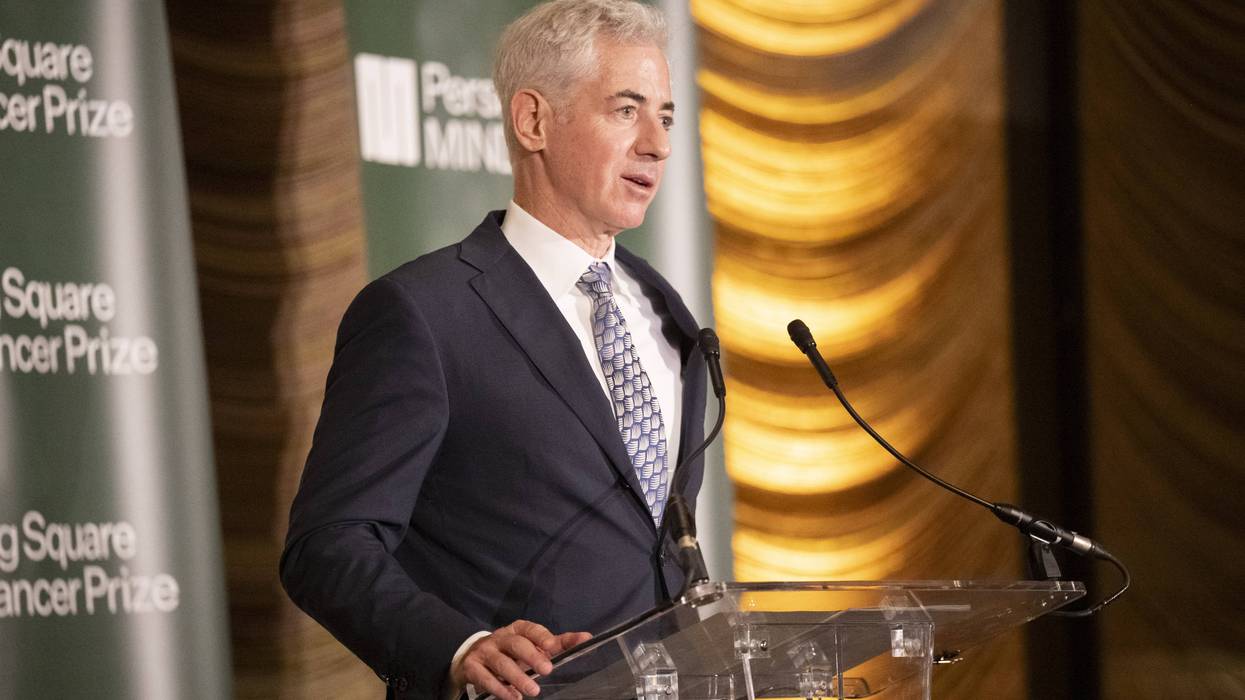
"Asking the handful of wealthiest Californians to contribute less than the annual appreciation on their fortunes to mitigate these crises is a small, reasonable, and administrable request," argued a group of experts.
Billionaire outrage against a proposed one-time wealth tax on the richest Californians reached a fever pitch in recent days as organizers began the process of gathering the hundreds of thousands of signatures needed to get the initiative on the November ballot.
Without providing specifics, billionaire Bay Area investor Chamath Palihapitiya claimed in a social media post that he knows people "with a collective net worth of $500 billion" who "scrambled and left California for good yesterday" to avoid the potential 5% wealth tax, which would apply to billionaires living in California as of January 1, 2026. (The evidence for significant billionaire tax avoidance via physical relocation is virtually nonexistent.)
Palihapitiya characterized the proposed ballot initiative, which is aimed at raising revenue to avert a healthcare crisis spurred by federal Medicaid cuts, as an "asset seizure tax."
Bill Ackman, a billionaire hedge fund manager who lives in New York, similarly described the proposed tax as "an expropriation of private property."
The Jeff Bezos-owned Washington Post, meanwhile, published a hostile editorial on Thursday denouncing the proposed tax and mocking its supporters, including Service Employees International Union-United Healthcare Workers West (SEIU-UHW).
"Many progressives think of taxation the way teenage boys think about cologne: If some is good, more must be great," the editorial reads. "California, already reeks of overtaxation, but it’s thinking about trying out its most potent scent yet: a wealth tax. Just a whiff has some of the state’s wealthiest residents fleeing."
The Wall Street Journal reported that "the firms of two high-profile California investors issued announcements on New Year’s Eve about establishing new offices out of state, without saying anything about the proposed Golden State tax."
"Tech investor Peter Thiel’s investment firm, Thiel Capital, said it signed a lease in December for office space in Miami," the newspaper added. "The office will 'complement Thiel Capital’s existing operations in Los Angeles,' the company said."
Supporters say the response from billionaires and other opponents of the proposed tax—including California Gov. Gavin Newsom, who is helping raise money to fight the initiative—badly misses the mark. According to organizers, most billionaires see larger capital gains increases in months than the amount they would pay if California voters approved the tax.
“Asking those who have benefited most from the economy to contribute more—particularly to stabilize healthcare systems under direct threat—is not radical. It is reasonable,” Suzanne Jimenez, the chief of staff of SEIU-UHW, told the Journal.
Earlier this week, as Common Dreams reported, US Sen. Bernie Sanders (I-Vt.) endorsed the proposed wealth tax, which proponents say would raise roughly $100 billion in revenue from around 200 California billionaires. Under the proposal, most of the resulting revenue would be allocated to a Billionaire Tax Health Account, while the rest would go toward an account to fund food assistance and education.
A new expert analysis of the proposal, authored by some of those involved in drafting the initiative, argues that the one-time tax is urgent because "decisions at the federal level have put—and will put—California's healthcare system, education system, and broader economy under severe stress."
"Asking the handful of wealthiest Californians to contribute less than the annual appreciation on their fortunes to mitigate these crises is a small, reasonable, and administrable request," the experts write. "And that is all that this ballot measure does."
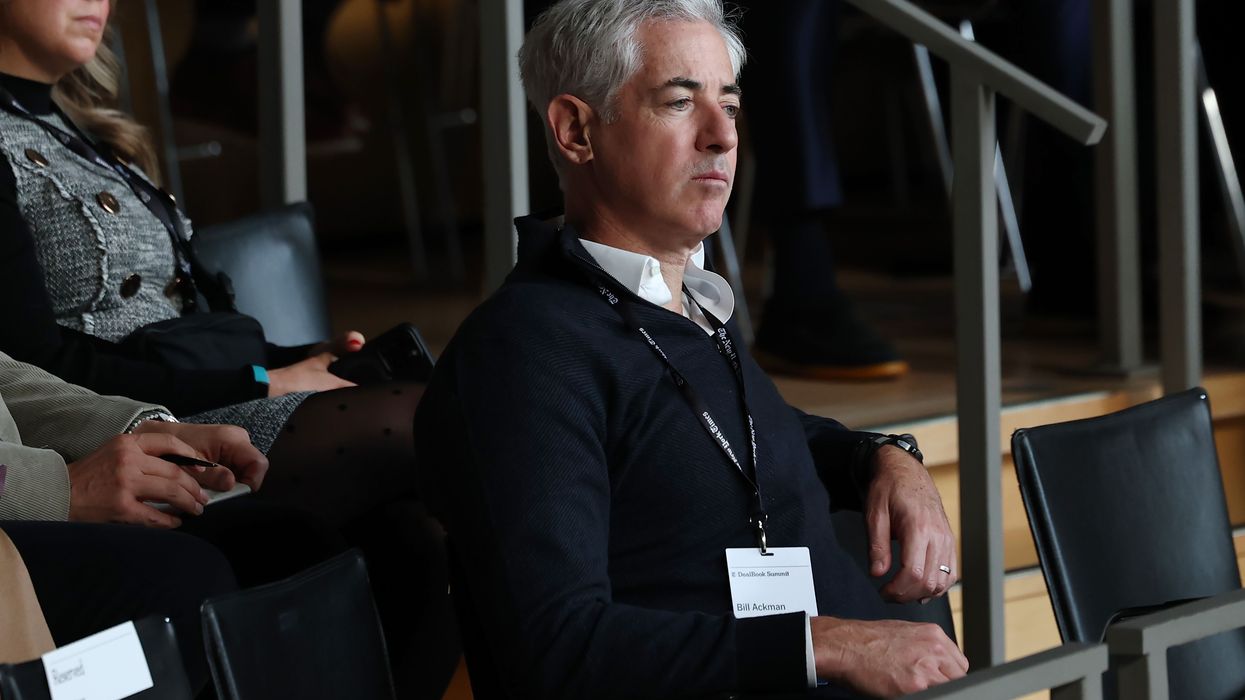
One social media user wrote that the hedge fund executive Bill Ackman "went from acting like Mamdani was going to import ISIS to extending a friendly handshake… in like six hours."
After his resounding election victory on Tuesday night, New York City Mayor-elect Zohran Mamdani's most prominent billionaire antagonist immediately pivoted to kiss the ring of the man he has spent the last more than half-year portraying as an existential threat to the city and the country.
Hedge fund manager Bill Ackman poured over $1.75 million into the mayor's race with a laser focus on stopping Mamdani, whom he often ambushed with several-thousand-word screeds on his X account, which boasts nearly 2 million followers. He accused Mamdani—a staunch critic of Israel—of "amplifying hate" against Jewish New Yorkers, while suggesting that his followers (which happened to include many Jewish New Yorkers) were "terror supporters."
Meanwhile, the billionaire suggested that the democratic socialist Mamdani's "affordability" centered agenda, which includes increasing taxes on corporations and the city's wealthiest residents to fund universal childcare, free buses, and a rent freeze for stabilized units, would make the city "much more dangerous and economically unviable," in part by causing an exodus of billionaires like himself.
In turn, Mamdani often invoked Ackman's name on the campaign trail, using him as the poster boy for the cossetted New York elite that was almost uniformly arrayed against his candidacy. In one exchange, Mamdani joked that Ackman was "spending more money against me than I would even tax him."
After Mamdani's convincing victory Tuesday night, fueled in large part by his dominant performance among the city's working-class voters, Ackman surprisingly did not respond with "the longest tweet in the history of tweets" to lament the result as some predicted. Instead, he came to the mayor-elect hat in hand.
"Congrats on the win," he told Mamdani on X. "Now you have a big responsibility. If I can help NYC, just let me know what I can do."
Many were quick to point out Ackman's near-immediate 180-degree turn from prophecizing doom to offering his help to the incoming mayor.
"This guy went from acting like Mamdani was going to import ISIS to extending a friendly handshake… in like six hours," noted one social media user.
But Mamdani graciously accepted the billionaire's congratulations when asked about them on Wednesday's "Good Morning America."
"I appreciated his words,” Mamdani said. "I think what I find is that there is a needed commitment from leaders of the city to speak and work with anyone who is committed to lowering the cost of living in the city—and that’s something that I will fulfill."
As Bloomberg and Forbes noted, Ackman was just one of many on Wall Street and from the broader finance world who came to kiss the ring.
Ralph Schlosstein, a co-founder of the investment fund BlackRock, Inc., pledged to work with Mamdani despite their different politics: "I do care deeply about the city, and I’m not going anywhere, whoever the mayor is. I’m going to do whatever I can to help him be successful," he said.
Another former BlackRock executive, Mark Kronfeld, said: "Is it a dystopian, post-apocalyptic environment because Mamdani has won? No."
Crypto billionaire Mike Novogratz even credited Mamdani with "tapping into a message that’s real: that we’ve got a tale of two cities in the Dickensian sense," and asked if the incoming mayor could "address the affordability issue in creative ways without driving business out."
But while Mamdani has left the door open to business, he has made it clear that he will not allow them to commandeer his work at City Hall.
After his victory, he called on his base of largely small-dollar donors to resume their financial support for him in order to fund "a transition that can meet the moment of preparing for January 1.”
He announced that this historic all-female transition team will include at least one renowned titan of economic populism, the trust-busting former Federal Trade Commission Chair Lina Khan, as well as other progressive city administrators with backgrounds in expanding the social safety net and public housing.
"I’m excited for the fact that it will be funded by the very people who brought us to this point," Mamdani said, "the working people who have been lost behind by the politics of the city."