
SUBSCRIBE TO OUR FREE NEWSLETTER
Daily news & progressive opinion—funded by the people, not the corporations—delivered straight to your inbox.
5
#000000
#FFFFFF
To donate by check, phone, or other method, see our More Ways to Give page.


Daily news & progressive opinion—funded by the people, not the corporations—delivered straight to your inbox.
"Postal customers should trust their gut when it comes to schemes to sell off or transfer the USPS," said the head of the American Postal Workers Union.
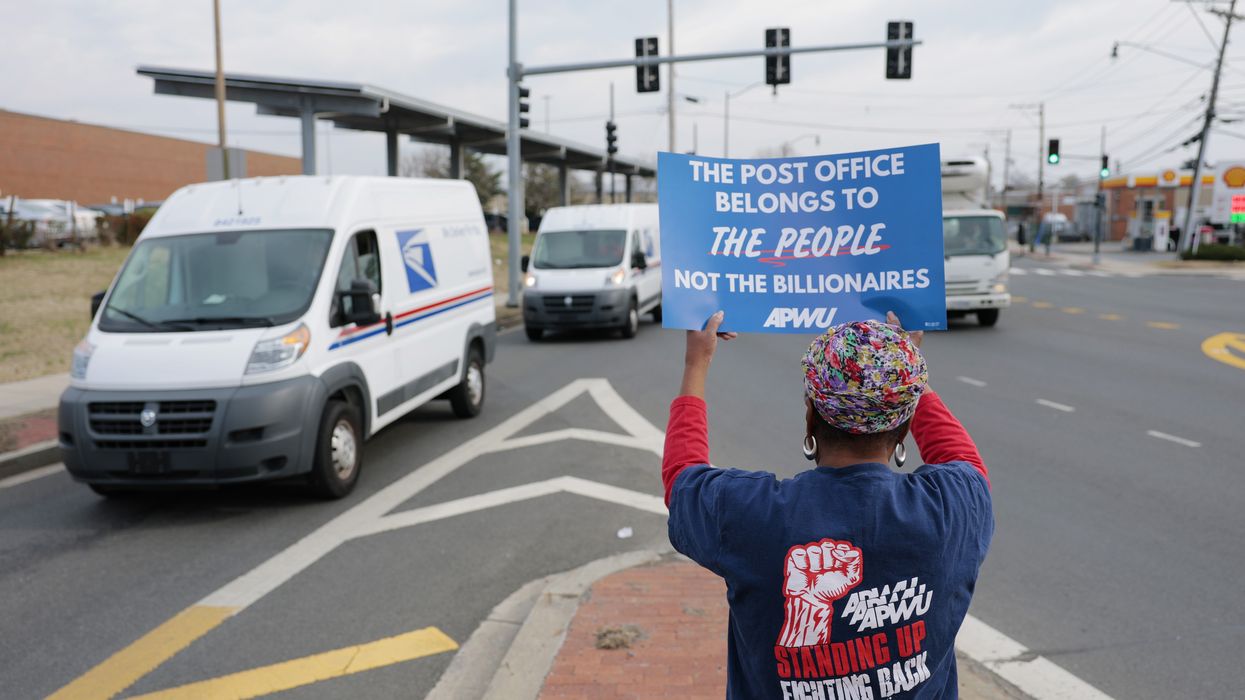
As the Trump administration signaled a potential step toward privatizing the U.S. Postal Service with the reported selection of a FedEx board member to serve as postmaster general, new polling on Thursday showed just how strongly the American public would oppose such a move.
The survey by Hart Research Associates and North Star Opinion Research, which was commissioned by the American Postal Workers Union, found that 60% of respondents were opposed to privatizing the postal service, while just 26% were in favor.
The opposition cut across ideological, geographic, and demographic divides, with people in all regions of the country saying they wanted to maintain the USPS as a public service by a margin of at least 29 points—and as many as 40 points in western states.
While rural voters supported President Donald Trump by a 23-point margin in the 2024 election, the research firms posited that the heavy reliance people in far-flung areas have on the USPS helped push rural respondents to say they oppose privatization, with 58% saying they were against it.
As Common Dreams reported last month, an analysis by the Institute for Policy Studies found that private mail carriers like FedEx and UPS already charge "remote surcharges" to 8% of all U.S. ZIP Codes—home to nearly 4 million people—because they are in mountain communities and other remote areas. While USPS has a universal service obligation, people in rural areas pay up to $15.50 for deliveries from private companies.
Fifty-six percent of Americans said privatization would result in higher prices for mailing packages and letters, while 17% said prices were likely to improve.
Without competition from USPS, private companies could impose additional charges for weekend deliveries, fuel, residential deliveries, and more.
"Postal customers should trust their gut when it comes to schemes to sell off or transfer the USPS," said APWU president Mark Dimondstein. "Plans to privatize the Post Office are about enriching Wall Street and not serving Main Street. Evidence shows that selling off the USPS would lead to higher prices for postal services as well as higher prices for shipping packages at FedEx and UPS."
On the House floor recently, U.S. Rep. Sarah McBride (D-Del.) warned that "corporations won't serve what isn't profitable."
"This isn't about efficiency," she said. "This is about dismantling public services so they can prove government doesn't work."
The poll was released two months after Wells Fargo presented a five-step plan for privatizing USPS to Wall Street investors, including raising USPS prices by as much as 140%, selling postal real estate to commercial bidders, and imposing mass layoffs on the service's 600,000 employees.
The bank said privatization would lead to the "harvesting," or closing, of neighborhood post offices across the country—something 72% of respondents opposed in Thursday's poll.
Trump ally Elon Musk also said in March that Amtrak and USPS were top targets for the so-called Department of Government Efficiency, which the president selected him to lead and which has pushed to dismantle numerous government agencies and laid off nearly 300,000 federal employees.
"I think logically we should privatize anything that can reasonably be privatized," Musk said. Trump has also expressed support for privatization.
Respondents to Thursday's poll expressed support for a number of steps that could strengthen the U.S. Postal Service's finances, including 77% who backed making office supplies available for purchase in post offices, 72% who supported the selling of hunting and fishing licenses, and 60% who supported making magazines and newspapers available for purchase.
"The survey results indicate that the outlook is good in our ongoing fight against privatizers trying to sell off our public Postal Service for profit," said the APWU. "We should remain steady in our message—the U.S. Mail Is Not for Sale!"
"The public Postal Service is a democratic right, and we won't back down in defending it...Together, we say: The U.S. Mail Is Not For Sale!" said the American Postal Workers Union.
Following reports that the Trump administration is interested in restructuring and perhaps even privatizing the U.S. Postal Service, unions representing postal workers are fighting back.
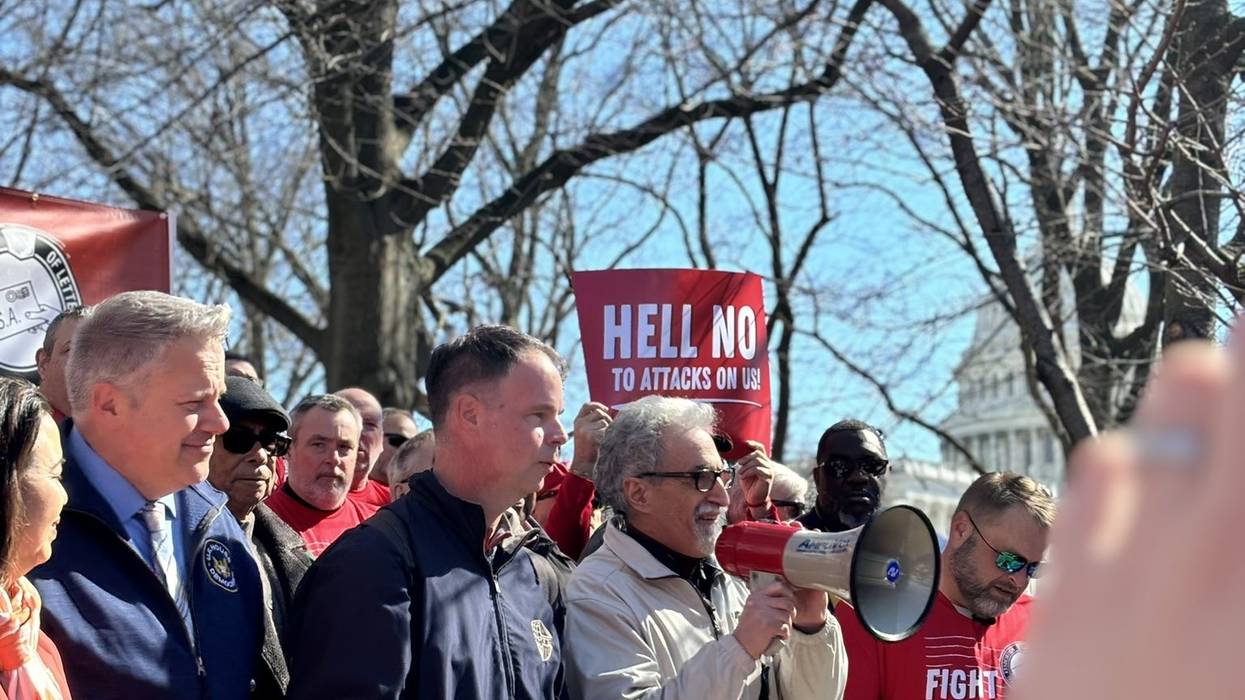
On March 20, postal workers who are represented by the American Postal Workers Union (APWU) and their allies will hold a day of action to resist "threats of privatization and political interference to the public Postal Service," according to the union's website. Locals around the country are participating.
Meanwhile, the National Association of Letter Carriers (NALC), which represents U.S. Postal Service employees who are city letter carriers, will host local rallies on March 23 at NALC branches to "fight like hell" against "dismantling" the widely cherished public delivery service.
On Tuesday, NALC also held an event in Atlantic City, New Jersey where workers rallied against changes to the Postal Service.
U.S. President Donald Trump is reportedly considering putting the Postal Service under the control of the Commerce Department. The agency, which is overseen by a bipartisan board of governors whose members appoint a postmaster general to run day-to-day operations, has functioned as an independent entity since the passage of the Postal Reorganization Act of 1970. Congress passed that law to make it freestanding and to shield it from "political tinkering," according to The Washington Post.
Also according to the Post, which cited postal experts, putting the Postal Service under the Commerce Department would likely violate federal law.
In December, the Post reported that Trump had designs to privatize the Postal Service.
Billionaire Elon Musk, who is playing a core role in the Trump administration's efforts to slash government, has also said the Postal Service should be privatized.
President of APWU, Mark Dimondstein, warned against privatization in a Q&A posted to the union's website on Monday.
"The USPS is owned by the people and exists to serve everyone with universal, affordable service; if privatized, it would exist to make maximum profit to enrich corporations, Wall Street, and billionaires," he said. "Privatization is bad for workers, bad for unions, and bad for the people. Prices go up and service goes down, while the bosses and billionaires like Elon Musk and Jeff Bezos laugh all the way to the bank."
"Let's be clear-eyed and ready for battle and declare 'The U.S. Mail Is Not for Sale!' Onward!" said Dimondstein.
According to materials distributed by NALC, "any effort to privatize or restructure USPS is a direct threat to: 640,000 postal employees, including 200,000 city letter carriers represented by NALC The universal service every American relies on Millions of households and businesses, especially in rural America."
This is not the first time that the Postal Service has been in the crosshairs of the Trump administration. Trump was interested in privatizing the Postal Service during his first term, but backed off the idea in the face of opposition.
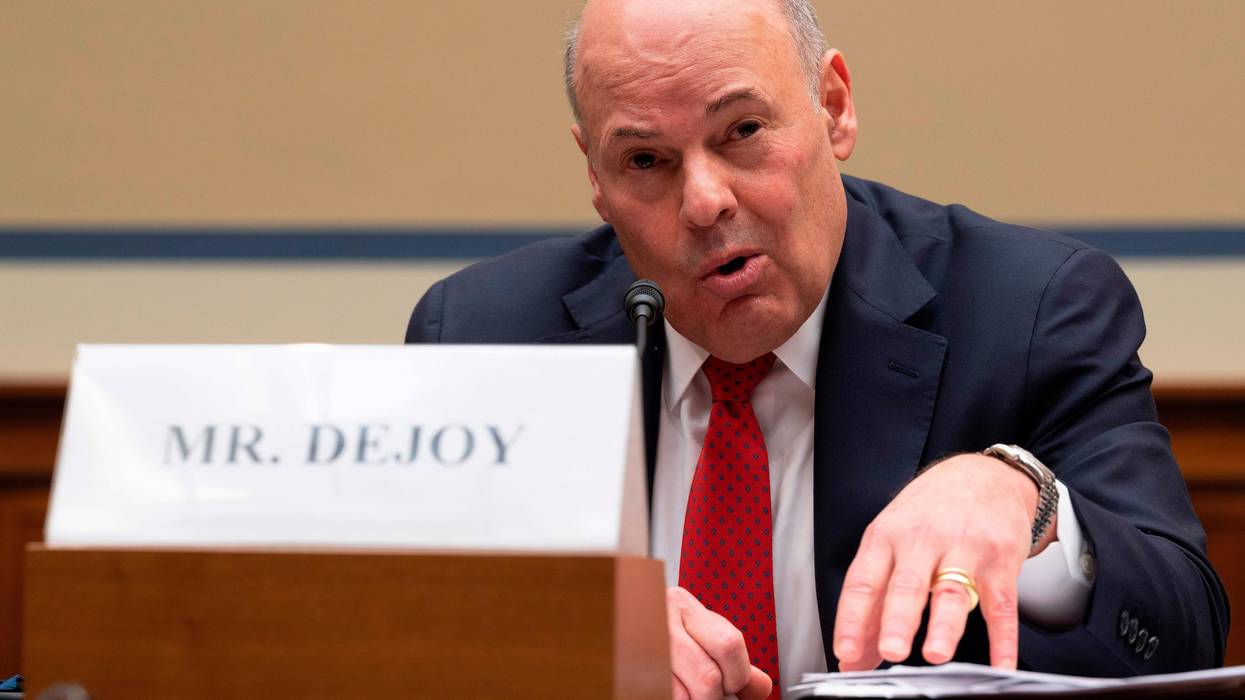
In April 2020, a Postal Service Board of Governors member resigned over the Trump administration's attempts to politicize the Postal Service. Louis DeJoy, a Trump campaign donor, was appointed Postmaster General in 2020. DeJoy recently announced he plans to retire soon.
"This is their end goal: the privatization of as much of the U.S. government as possible, enriching the rich and leaving everyone else worse off," warned one progressive.
Elon Musk sparked calls Thursday to fight what one union called an "illegal power grab" after the senior adviser to President Donald Trump and de facto head of the Department of Government Efficiency said that the United States Postal Service and Amtrak, the national passenger rail service, should be privatized.
"I think logically we should privatize anything that can reasonably be privatized," Musk—who is advising Trump on how to eviscerate federal agencies—said while appearing remotely at the Morgan Stanley Technology, Media, and Telecom Conference. "I think we should privatize the post office and Amtrak for example... We should privatize everything we possibly can."
"Basically, something's got to have some chance of going bankrupt, or there's not a good feedback loop for improvement," he opined.
The U.S. Postal Service (USPS) employs more than 600,000 people. Amtrak has more than 21,000 workers.
"Big banks are already drawing up plans for a fire sale of the most profitable parts of our postal network."
Musk called the state of Amtrak "kind of embarrassing" and contrasted the U.S. rail system with the networks of countries including China, where the central government has financed the construction of nearly 30,000 miles (48,200 km) of high-speed lines. The United States has less than 300 miles of high-speed rail.
"Amtrak is a sad situation," Musk asserted. "It's like, if you're coming from another country, please don't use our national rail. It can leave you with a very bad impression of America."
Responding to Musk's remarks, Progressive Mass political director Jonathan Cohn said on social media, "This is their end goal: the privatization of as much of the U.S. government as possible, enriching the rich and leaving everyone else worse off."
Like Musk, Trump has also expressed support for privatizing the USPS, a move recommended by his Office of Management and Budget during his first term. The president also sought to slash Amtrak's funding during his first administration.
Last month, reporting that Trump is seeking to place the USPS under the control of the Commerce Department—which is led by billionaire cryptocurrency banker Howard Lutnick—sparked outrage and allegations of illegality.
"White House sources recently briefed the media that they were planning an illegal power grab of our public Postal Service," the American Postal Workers Union (APWU) said in an email this week responding to ongoing attacks on the USPS. "Such a power grab could allow them to put into action our greatest fear. Stripping our services and selling off our USPS."
"Big banks are already drawing up plans for a fire sale of the most profitable parts of our postal network, raising shipping costs for the public, and leaving taxpayers on the hook to fund the rest," APWU added. "We can't allow this to happen!"
Last month, longtime Postmaster General Louis DeJoy signaled he would step down by asking the United States Postal Service Board of Governors to begin selecting his successor. DeJoy's tenure has been marred by allegations of criminal election obstruction, conflicts of interest, and other corruption. His Delivering for America, a 10-year austerity plan, has been condemned by some critics as a roadmap to privatization.
It's not just the USPS and Amtrak. Key members of the Trump administration and their oligarch allies are pursuing policies and actions opponents argue are ultimately aimed at privatizing a sweeping range of federal agencies and services, from
public education to veterans' healthcare to mortgage lending, Social Security, Medicare, and more.