

SUBSCRIBE TO OUR FREE NEWSLETTER
Daily news & progressive opinion—funded by the people, not the corporations—delivered straight to your inbox.
5
#000000
#FFFFFF
To donate by check, phone, or other method, see our More Ways to Give page.
Daily news & progressive opinion—funded by the people, not the corporations—delivered straight to your inbox.
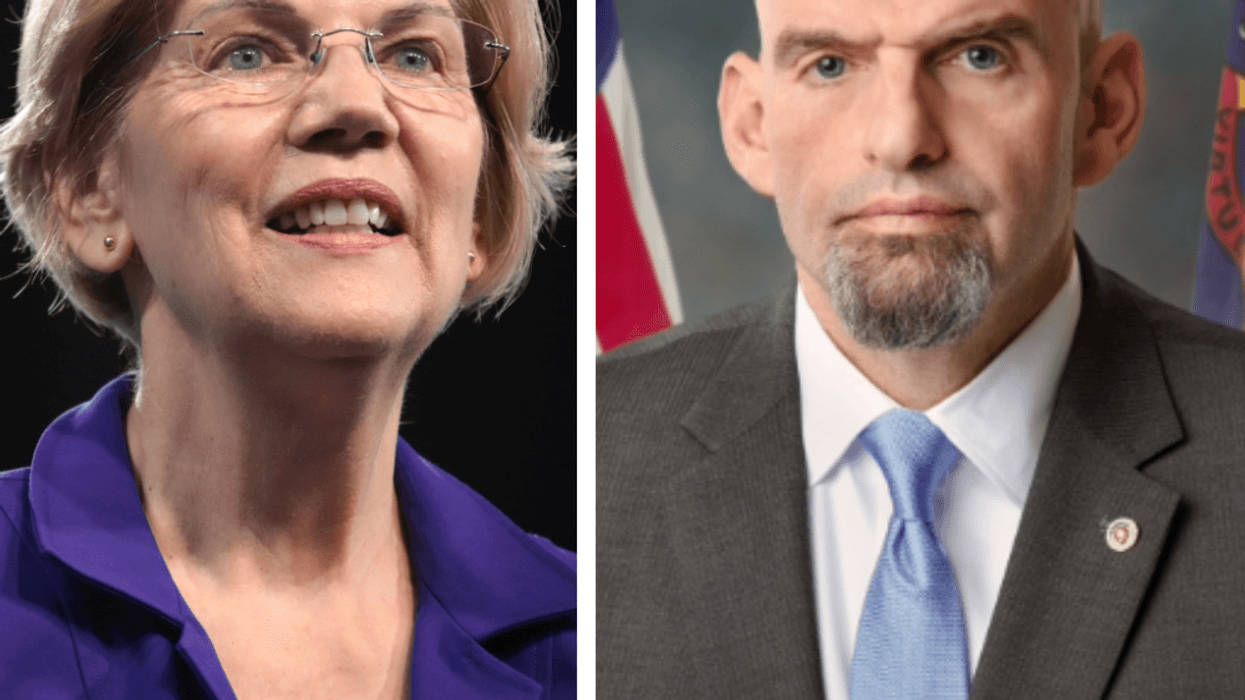
In contrast with Sen. John Fetterman's (D-Pa.) contrarian grandstanding, Sen. Elizabeth Warren (D-Mass.) has spent the last two years (and more) showing Democrats that it’s possible to reach across the aisle without losing your soul.
Democrats’ chances of taking back the Senate look better than ever, but even if November brings a blue wave, they will still not have control of the legislative and executive branches simultaneously until at least 2029.
The question facing Democratic lawmakers now is how they should conduct themselves during these wilderness years if they want to regain a trifecta in the next presidential election.
Voting down any idea the White House or GOP leadership propose without suggesting any alternative is a bad idea. More than three-quarters of Americans say they want more bipartisanship in Washington, and voters often punish opposition parties they view as do-nothing obstructionists.
Fetterman, take notes: When you vote with Republicans, do it to help working-class families buy homes, not to make sure gas prices keep going up.
But when we say Democrats should be more bipartisan, it’s important to specify what we mean. This moment has provided exemplars of two very different kinds of aisle crossing, which I’ll refer to as John Fetterman Bipartisanship and Elizabeth Warren Bipartisanship.
Sen. Fetterman’s (D-Pa.) bipartisanship is largely performative. He’s constantly appearing on Fox News to scold his fellow Democrats for calling President Donald Trump a fascist, denounce democratic socialism, defend Israel’s devastation of Gaza, or praise the giant monument to Trump’s ego that is the White House ballroom.
And when it’s not performative, it’s actively harmful. Fetterman voted to confirm disastrous Trump appointees like former Attorney General Pam Bondi and former Department of Homeland Security Secretary Kristi Noem—both of whom turned out to be too incompetent even for this administration. He voted against war powers resolutions that could have hastened the end of the costly and unnecessary conflict with Iran. He voted to end last year’s government shutdown, throwing away leverage Democrats could have used to keep healthcare affordable for millions of families. And he voted to keep funding Immigration and Customs Enforcement after agents murdered two Americans in the streets.
It’s a voting record defined by cruelty, contrarianism, and pettiness. In his home state of Pennsylvania, Republicans have rewarded him with a near 80% approval rating, and Trump is actively courting him to switch parties.
Whether he does or not, Fetterman has already betrayed the people who elected him and undermined the party whose donors and campaign arm spent over $100 million on his Senate race.
Thankfully, Fetterman Bipartisanship is not the only alternative to blind obstructionism. Sen. Elizabeth Warren (D-Mass.) has spent the last two years (and more) showing Democrats that it’s possible to reach across the aisle without losing your soul.
Last month, Warren signed a letter to the CEOs of Midwest Real Estate Data—a multiple listing service (MLS) that serves as a database for property listings in the Chicago area—and Compass, the country’s largest brokerage firm. The two had signed an agreement that hides certain listings from members of the public and makes them available only to brokers who pay a subscription fee. This practice, Warren warned, will create a “two-tiered housing market” that benefits insiders while driving up prices for regular people who have to compete for a smaller pool of homes.
Warren wasn’t the first to raise the alarm about this corrupt bargain. Rep. Scott Fitzgerald (R-Wis.) beat her to it by about two weeks. But instead of treating the MRED-Compass deal as a toxic GOP issue, Warren threw her weight behind the probe to stop corporate greed from making homeownership even more prohibitively expensive.
And speaking of affordable housing, she also co-sponsored the 21st Century ROAD to Housing Act—the most consequential federal housing legislation in 30 years. This bill cuts red tape to make home construction cheaper and easier, rewards jurisdictions that build more housing, and bans private equity from buying up homes that should go to families. And as an added bonus, Trump was too focused on disenfranchising minorities to be bothered to sign the thing. It became law without his signature, but his total lack of interest makes it easy for Democrats to claim the legislation as their win.
Fetterman, take notes: When you vote with Republicans, do it to help working-class families buy homes, not to make sure gas prices keep going up.
Warren also joined Sen. Josh Hawley (R-Mo.) to co-sponsor the Break Up Big Medicine Act and co-authored an op-ed with Sen. Bernie Moreno (R-Ohio) calling for a tax increase on the wealthy to save Social Security.
Even if these proposals never become law, they provide Democrats with a powerful argument for 2028: “We’ve been proposing solutions all along. We even tried to work with reasonable Republicans. It’s not our fault they failed, and if you vote for us, they won’t fail again.”
Calling Trump a Nazi or a threat to democracy is a great way to fire up the base, but independents are tired of hearing it. They want to know what Democrats will do to make their groceries, health insurance premiums, day care bills, mortgages, and gas station trips more affordable. We won’t win them over by parroting stale Fox News talking points, but if we can show that we care more about affordability than about partisan bickering, we might just pull it off.
"Doctors should be able to do what's best for their patients, not what's best for some wealthy investor."
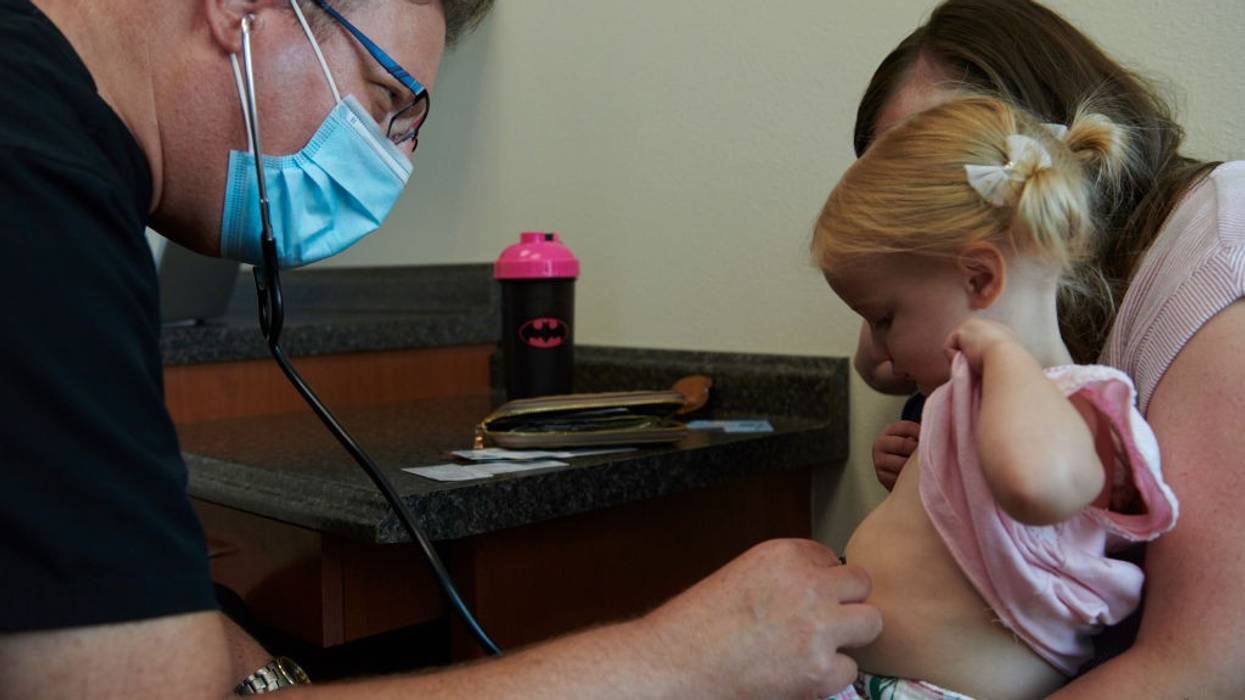
Thanks to legislation passed in Oregon last year, physicians in the state have stopped corporate takeovers of medical practices—and six Democratic members of Congress on Wednesday introduced a bill to replicate the state law nationwide, arguing, as Sen. Elizabeth Warren said, that "patients want to know that decisions about their health are being made by their doctors, not by Wall Street investors."
The Massachusetts Democrat was joined by Sens. Ron Wyden (D-Ore.) and Jeff Merkley (D-Ore.), along with Reps. Val Hoyle (D-Ore.), Alexandria Ocasio-Cortez (D-NY), and Suhas Subramanyam (D-Va.) in introducing the Stop Corporate Takeovers of Physicians Act.
The bill would ban the corporate practice of medicine by making it illegal for private equity funds, insurance companies, and other for-profit corporations to own or control medical practices—as is increasingly the case in the profit-driven US healthcare system.
Over 80% of doctors in the US are employed by corporate entities including private equity firms—up from 62% just seven years ago, according to the lawmakers.
Corporations have also exploited legal loopholes that allow them to take over medical practices, despite laws in over 30 states banning the corporate practice of medicine.
“Americans want medical decisions to stay between patients and their doctor, not dictated by corporate actors and private equity firms focused on maximizing profits,” said Wyden. “I’m proud of Oregon’s pioneering state law that has been used by doctors to protect their independence, and it’s time to take that model to the federal level. Corporate medicine is making healthcare more expensive for everyone, and safeguards must be put in place to ensure healthcare decisions stay in the hands of physicians.”
The legislation would:
"But these actors often challenge the autonomy of acquired physicians once in control," they said. "For example, corporate entities often assume control over clinical operations, management and staffing decisions, and billing and coding practices—all of which can exert pressure on physicians to change care delivery."
Such entities "often cut corners, leading to patients paying more for significantly worse care," said Ocasio-Cortez. “I’m proud to co-lead the Stop Corporate Takeovers of Physicians Act to get Wall Street out of Americans’ doctors’ offices."
Warren added that "doctors should be able to do what's best for their patients, not what's best for some wealthy investor."
BREAKING: Today, I'm introducing a bill to BAN corporate takeovers of your doctor's office.
Doctors should be able to care for their patients without greedy private equity investors getting in the way.
Let's get this done. pic.twitter.com/e3gdamIotQ
— Elizabeth Warren (@SenWarren) September 16, 2026
The legislation is supported by several medical associations as well as economic justice advocates.
"A prohibition is only as strong as its enforcement, and this bill backs its corporate practice of medicine (CPOM) prohibition with three enforcement paths: the Federal Trade Commission, state attorneys general suing on behalf of residents, and physicians themselves through a private right of action with treble damages. That layered enforcement, paired with mandatory divestment, is what gives this bill teeth that earlier CPOM laws have often lacked,” said Dr. Marco Fernandez, president of the Association for Independent Medicine.
Alex Lawson, executive director of Social Security Works, said that the "groundbreaking legislation is absolutely needed to give health providers and patients a fighting chance against corporate greed."
"Congress must stop private equity from ripping the copper wires out of American healthcare and put patients first," said Lawson. "Social Security Works is proud to endorse this legislation."
Charles Idelson, the former communications director of National Nurses United, which advocates for Medicare for All, said the bill "would help close some, though not all, of the worst profiteering in healthcare."
"Exploiting sickness to enrich wealthy executives," said Idelson, "is obscene."
"Trump and Republicans have spent years telling Americans that we cannot afford to help families here at home, but apparently they can find tens of billions of dollars... for a reckless war," said US Rep. Brendan Boyle.
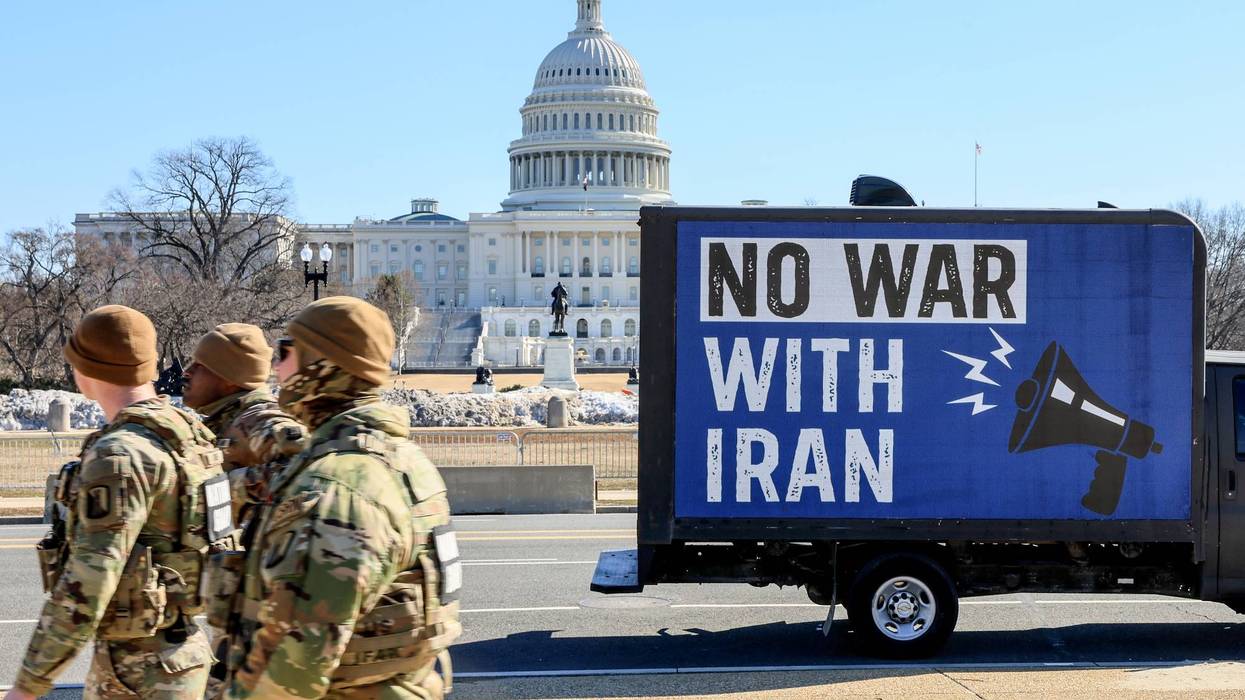
President Donald Trump's illegal war with Iran has already cost US taxpayers almost $40 billion, according to a report released Tuesday by the Congressional Budget Office.
In total, the CBO report estimates that, by the end of July, the US Department of Defense had already spent $38 billion in operational, logistical, and sustainment costs related to the war.
CBO said this estimate reflects "the costs of replacing expended munitions and equipment lost in battle, increased flying hours, other operations, and increased fuel costs" for the department, as well as the fact that "the initial, intense phase of the conflict lasted just over a month... and that relatively few US forces have been involved compared with the much larger and longer US operations."
The office pointed out that it had to rely on government databases and public reports for data because the Pentagon didn't comply with its requests for more information about the war.
The report finds that the Iran War has also drained the military of missile defense interceptors, noting that the conflict "will leave the United States with a reduced inventory of interceptors for several years."
CBO's analysis also tries to measure the macroeconomic impact of the war, and concludes that it has made goods more expensive for US consumers by drastically raising the price of energy.
"In CBO's assessment, the effects of those higher energy prices will put upward pressure on consumer prices," the report explains. "As a result, in the first quarter of 2027, inflation (measured year over year) in the price index for personal consumption expenditures (PCE) is now estimated to be 0.5 percentage points higher than... projected in February 2026."
According to the most recent estimate from Brown University’s Watson School for International Public Affairs, the Iran War has now cost nearly $107 billion in additional fuel expenses for the public, averaging more than $776 per US household.
Rep. Brendan Boyle (D-Pa.), who requested the CBO estimate as ranking member of the House Budget Committee, ripped the Trump administration for blowing billions of dollars on an illegal war while insisting on taking an ax to the federal safety net via steep cuts to Medicaid and the Supplemental Nutrition Assistance Program (SNAP).
"Donald Trump and Republicans have spent years telling Americans that we cannot afford to help families here at home," said Boyle, "but apparently they can find tens of billions of dollars, and potentially much more, for a reckless war that is leaving Americans to pay the price."
Sen. Elizabeth Warren (D-Mass.) wrote in a social media post that the CBO's estimate of the war's costs was likely "conservative" because it excludes "damage to US bases, destroyed munition supplies, and higher costs like gas and groceries."
"It may be the most brazen act of self-dealing our financial system has ever seen."
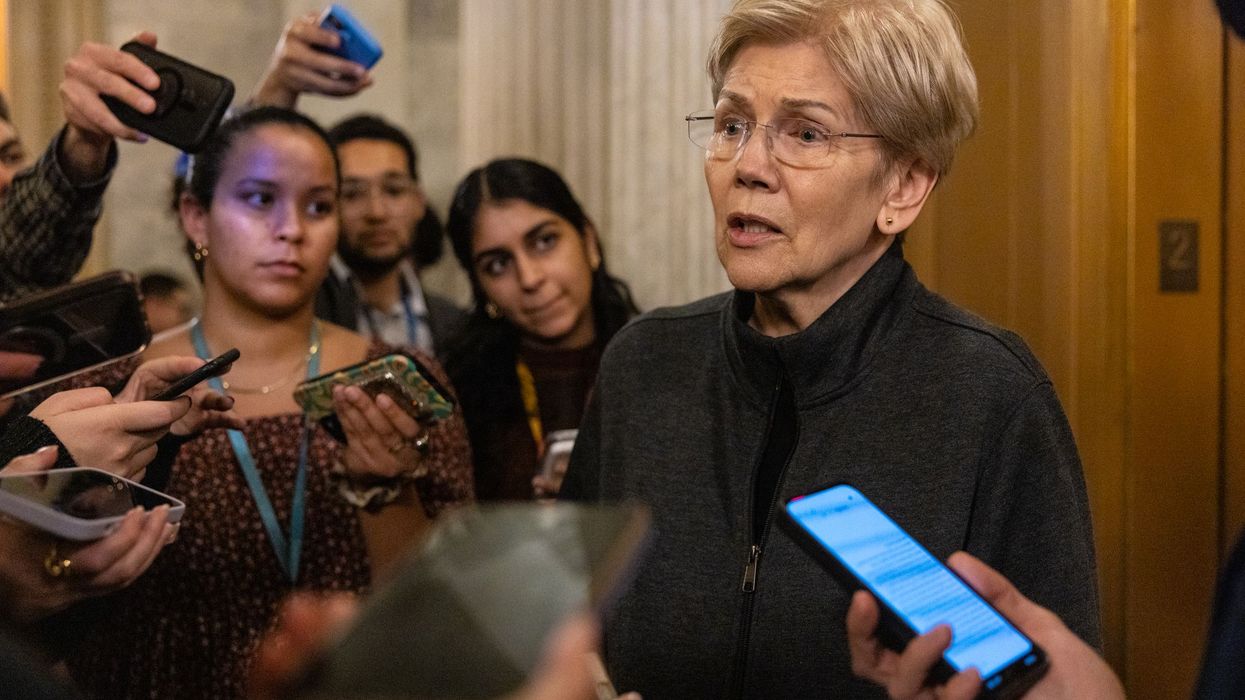
After President Donald Trump and the Republican Party revealed what they called their "last, best, and final offer" of ethics restrictions for cryptocurrency regulation, US Sen. Elizabeth Warren stood on the Senate floor Monday evening with a counteroffer: the Ending Presidential Corruption in Banking Act, whose passage she said was crucial for guarding against Trump using his very own crypto bank as a financial hub for his "web of corruption."
The GOP's "offer" on ethics pertains to the Digital Asset Market Clarity Act, also known as the Clarity Act, which would create a regulatory framework for the crypto market and which the Senate is expected to vote on Tuesday. The Republicans agreed to a proposal from Sens. Ruben Gallego (D-Ariz.) and Thom Tillis (R-NC), which would give state attorneys general the ability to sue if federal officials create or sponsor digital assets while holding office.
But, said Warren (D-Mass.), the proposal ensures the law "could never be enforced against Donald Trump because it gives his political appointees the power to turn off enforcement of these ethics provisions."
It also "contains major loopholes designed to allow President Trump to keep earning billions of dollars from his crypto businesses, including World Liberty Financial... and his new bank," said the senator.
Speaking for over 12 minutes on the Senate floor Monday evening, Warren pointed to the decision last month by the Office of the Comptroller of the Currency (OCC), whose leader was appointed by Trump, to grant approval for a federal bank charter for World Liberty Financial, a crypto investment fund that is owned in large part by the president himself and his family.
The Trump family owns 38.25% of the bank, while an investment fund backed by the national security adviser of the United Arab Emirates and the brother of UAE President Mohamed bin Zayed Al Nahyan owns 49% of the venture.
In January, Warren had called on the OCC to delay its review of World Liberty Financial's charter application until Trump divested from the venture.
"Donald Trump is now the first president in history to own and oversee his own bank. It may be the most brazen act of self-dealing our financial system has ever seen," said Warren. "With a bank charter, World Liberty will be able to operate nationwide, offer families and businesses financial products and services, and enjoy the credibility that comes with the federal government’s stamp of approval."
Trump is the first President in history to own and oversee his own bank.
We're live on the Senate floor to say enough is enough with Trump’s crypto corruption.
We need to pass the Ending Presidential Corruption in Banking Act now.https://t.co/wFurTSS0n1
— Elizabeth Warren (@SenWarren) September 14, 2026
But while the president is determined to have his family's crypto venture recognized as a bank—one whose USD1 stablecoin token sales earned Trump $527 million in proceeds last year, according to financial disclosures—the senator warned that World Liberty Financial's charter could "drive even greater profits for President Trump and his family" while serving as "a new vehicle for billionaires, corporations, and foreign countries to bribe him."
With his own bank, the president could charge transaction fees and generate interest by "investing the cash deposited with World Liberty in exchange for the USD1 stablecoin," said Warren, noting that a similar scenario played out last year during a trial run, before the company was granted preliminary approval for the bank charter.
"MGX, a UAE state-owned investment fund, made a $2 billion investment in the crypto exchange Binance," she said. "Instead of using a fiat currency like the US dollar or the UAE dirham to purchase stock in Binance, MGX paid Binance using USD1, cutting Trump into the deal."
Warren suggested sardonically that it was likely just "coincidental" that Trump pardoned the founder of Binance, who had pleaded guilty to failing to guard against money laundering.
Companies affiliated with World Liberty Financial have also reportedly sold millions of dollars in tokens that conducted business with hackers sponsored by North Korea and sanctioned money-laundering entities in Russia, and accepted $100 million from a businessman reportedly under investigation in the UK for money laundering.
"Now with Trump’s federal bank charter, we could see more and more of this," said Warren.
The top officials associated with the bank would also likely have led to the charter application being "flatly denied under any previous administration" due to a lack of competence and previous misconduct, said Warren, pointing to bank president Zachary Witkoff, the son of Middle East envoy Steve Witkoff, who "has never worked in a senior banking role."
Warren called on her colleagues to reject the Clarity Act and instead pass her bill in order to terminate "this corrupt bank charter."
"Unfortunately, my Republican colleagues want to move in the opposite direction," she said. "They seem intent on furthering President Trump’s corruption. Look no further than the Senate’s first order of business after August recess. Is it a bill to make life more affordable for American families? No. Is it a bill to end Trump’s dangerous war in Iran? No. It’s a bill that would juice the value of President Trump’s crypto empire, and reward the crypto billionaires who have facilitated his corruption."
"Instead of further enriching the president, Congress should curb his corruption," Warren added. "Let’s start by passing my bill, the Ending Presidential Corruption in Banking Act."
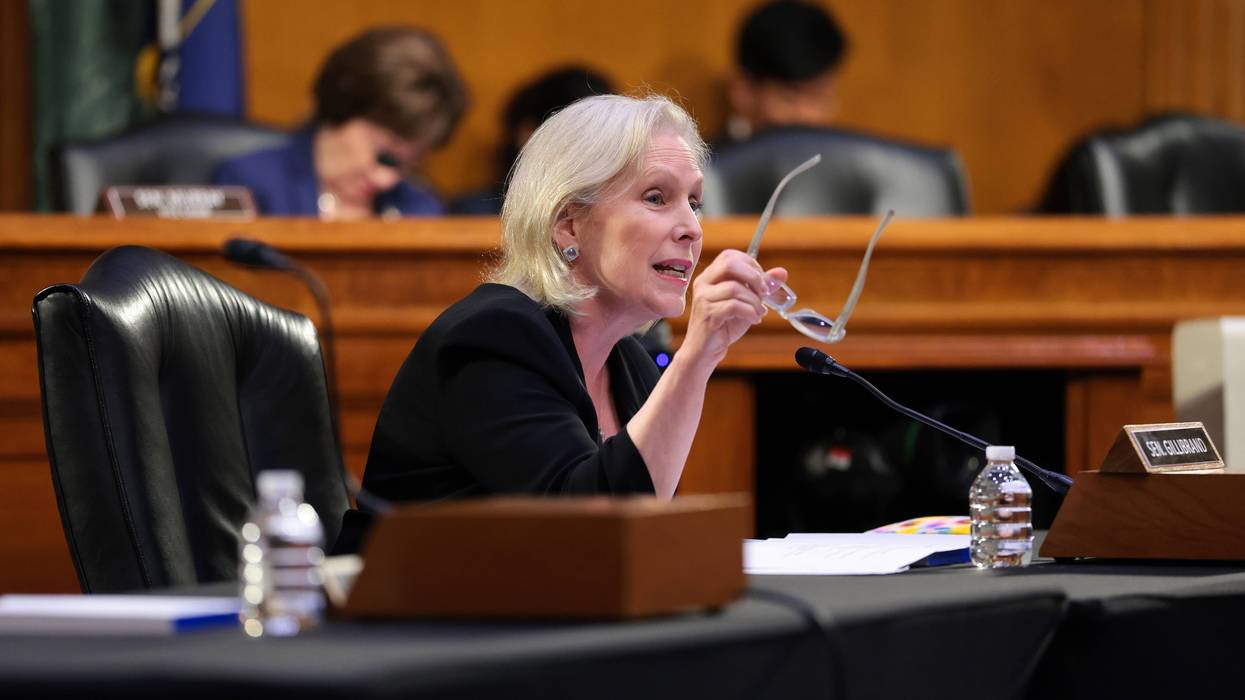
Crypto industry darling Sen. Kirsten Gillibrand is trying to bring Democrats on board despite warnings that a new version of the bill "still fails to address President Trump’s unprecedented profiteering."
Democrats in the US Senate may be on the verge of helping Republicans pass a cryptocurrency bill that could enable President Donald Trump's self-enrichment.
On Tuesday, the Senate will hold a key vote on whether to advance the Digital Asset Market Clarity Act, a bill drafted hand-in-glove by the crypto industry that fulfills many of its key objectives, amid a $190 million lobbying blitz.
The bill, commonly called the Clarity Act, establishes what would be considered the first federal regulatory framework for cryptocurrency, which is much looser than the rules that govern stocks and other securities, with fewer disclosure requirements and investor protections.
In May, Sen. Elizabeth Warren (D-Mass.), the top Democrat on the Senate Banking Committee, warned that this bill would help to "turbocharge" President Donald Trump's "crypto corruption."
"In just one year in office, the president and his family have raked in at least $1.4 billion in gains from crypto deals alone, and yet this bill stunningly includes zero provisions to prevent that," Warren said.
As Politico reported Monday, Sen. Kirsten Gillibrand (D-NY), one of Congress’ biggest crypto supporters, is privately urging others in her party to back the legislation and break the filibuster.
According to the Government Transparency Project, Gillibrand is Congress' top recipient of campaign donations from employees in the crypto sector. And as Andrew Perez noted on Tuesday for Zeteo, Gillibrand's 22-year-old son "recently received startup backing from a crypto billionaire."
Politico said there were about a dozen Democrats in the chamber who had "signaled openness" to voting for the legislation, though it did not specify who they were.
Two potentially worth watching are Sens. Ruben Gallego (D-Ariz.) and Angela Alsobrooks (D-Md.), the only two Democrats who voted to advance the initial, even less restrictive version of the bill out of the Senate Banking Committee.
Trump reported roughly $1.4 billion in crypto-related income in 2025, including hundreds of millions from his family's crypto exchange World Liberty Financial (WLF), which is funded by the United Arab Emirates' national security adviser, Tahnoun bin Zayed Al Nahyan, and from sales of his $TRUMP meme coin, a kind of digital collectible that Trump's own Securities and Exchange Commission has acknowledged typically has “no use."
Last month, WLF received preliminary approval from a Trump-appointed regulator to become a federally regulated bank, leading to warnings from anti-corruption watchdog groups that the institution could create a new vehicle for Trump to accept bribes from business interests and foreign governments seeking his favor.
The Trump family reportedly owns about a 38% stake in the holding company for the bank, while Al Nahyan, who is also the brother of the UAE's president, owns about 49% of the venture.
The Clarity Act will require 60 votes to advance in the Senate, meaning that seven Democrats will have to get on board, assuming all Republicans vote yes. Some have demanded that the bill address some of its shortcomings, including provisions that would allow Trump to continue profiting.
On Sunday, with the vote less than 48 hours away, Senate Republicans and the White House unveiled a new version of the bill that purports to do just that, which they described as a "final offer" to Democrats.
But Mark Hays, the associate director of crypto and fintech policy at Americans for Financial Reform, said these changes were mostly "window dressing."
Under the new version, he wrote on Monday, crypto would still have fewer guardrails than other investments, much of its activity would still escape oversight, regulators would still have too few tools to crack down on abuse, and crypto would still become much more intertwined with national banks, meaning that a crypto crash could wreak havoc across the economy.
Hays said the bill's new ethics language also "still fails to address President Trump’s unprecedented profiteering from corrupt and conflicted crypto ventures while in office," a predictable outcome since his own White House approved the language.
The bill prohibits state attorneys general from bringing ethics enforcement against public officials unless Trump administration officials approve. It also leaves the US attorney general, Todd Blanche—who has portrayed himself as Trump's personal lawyer—and an in-house ethics council as the sole arbiters of whether the president violated new rules.
And while the Clarity Act could eventually require Trump to put some of his assets in a blind trust, Hays noted that the provisions "exclude the lion’s share of the Trump family’s existing crypto enterprises, exclude his sons who operate these firms, and allow carve-outs that enable Trump’s branded crypto ventures to continue to generate profits."
Hays called the bill an attempt to “trick senators into voting for a giveaway to the crypto industry and crypto billionaires,” adding that “no one should be fooled” by the last-minute changes.
"It still fails to stop Trump’s crypto corruption; it still allows traffickers, rogue actors, and sanctions evaders to launder money with crypto; it still allows crypto platforms to unfairly gouge customers; and it still allows platforms to pay interest on stablecoins that will drain deposits from community banks," he said.
Sen. Mark Warner (D-Va.), who also sits on the Senate Banking Committee, has participated heavily in negotiations around the Clarity Act and has said he's not ruled out allowing it to advance. But on Monday, he told Semafor's Burgess Everett that while "there has been some movement," he didn't "think the ethics provision is near enough."
Warren made the case on the Senate floor Monday for her colleagues to vote against the bill, describing the new provisions as a "weak fig leaf that will do nothing to stop him from making his next $1.4 billion in crypto profits" and that would enable his effort to create a bank.
She called on Congress to instead pass her Ending Presidential Corruption in Banking Act, which would bar senior government officials from owning and controlling a bank while in office.

"The United States cannot keep bankrolling this violence and looking the other way—it’s time to end our complicity, once and for all," said US Sen. Bernie Sanders.
A group of Senate Democrats on Thursday announced plans to introduce a privileged resolution requiring the Trump administration to give Congress more information about violence carried out by extremist settlers in the Israeli-occupied West Bank.
Led by Sens. Chris Van Hollen (D-Md.), Tim Kaine (D-Va.), and Bernie Sanders (I-Vt.), who caucuses with Democrats, the lawmakers are demanding the US Department of State produce reports detailing investigations into the killings of nine US citizens at the hands of Israeli settlers in recent years, as well as assessments on the human rights impact of Israeli policies such as the detention of Palestinian children.
Van Hollen said the resolution was necessary because the Trump administration has done nothing to hold the Israeli government accountable for the deaths of US citizens.
"As we've seen violence rise in the West Bank, American citizens have been killed time and again, and they have received no justice and no accountability," said Van Hollen. "It’s past time we get answers on their deaths—and on the growing violent instability in the West Bank and the injustices facing Palestinian civilians on a daily basis."
Sanders accused the Israeli government of offering "impunity" to settlers who carry out "horrific violence" against Palestinian civilians regularly.
"Enough is enough," said Sanders. "The United States cannot keep bankrolling this violence and looking the other way—it’s time to end our complicity, once and for all."
Kaine described the Israeli government's "lack of response" to the settler violence as "unacceptable," saying it "threatens the long-term safety and security of the entire region."
"Friends need to listen to each other," said Kaine, "and my colleagues and I have repeatedly urged Israeli leaders to take firmer action to curtail illegal settlements in the West Bank, prosecute violent settlers, and protect Palestinian residents as well as American citizens living in or visiting the West Bank."
Sen. Elizabeth Warren (D-Mass.), who is also supporting the resolution, slammed the Trump White House's complicity in the Israeli settler attacks, nothing that the administration "has even gone so far as to reverse sanctions against individuals connected to this pattern of horrific violence."
"It's long past time for the US government to stand up for human rights," said Warren, "investigate this violence against Americans and Palestinian civilians, provide full information to Congress, and hold the perpetrators accountable."
By introducing the measure as a privileged resolution, the Democrats can force a vote on it on the floor of the US Senate if the chamber's Foreign Relations Committee fails to act on it within 10 days of its introduction.
Human rights organizations for months have been sounding the alarm about the situation in the West Bank, where Israeli settlers have routinely attacked Palestinians at their own homes.
An analysis published by the Carter Center last month found that "settler attacks are now the leading cause of Palestinian injuries in the West Bank," as "more than 3,200 Palestinians have been displaced by settler attacks and home demolitions this year—double the daily rate of the previous three years."
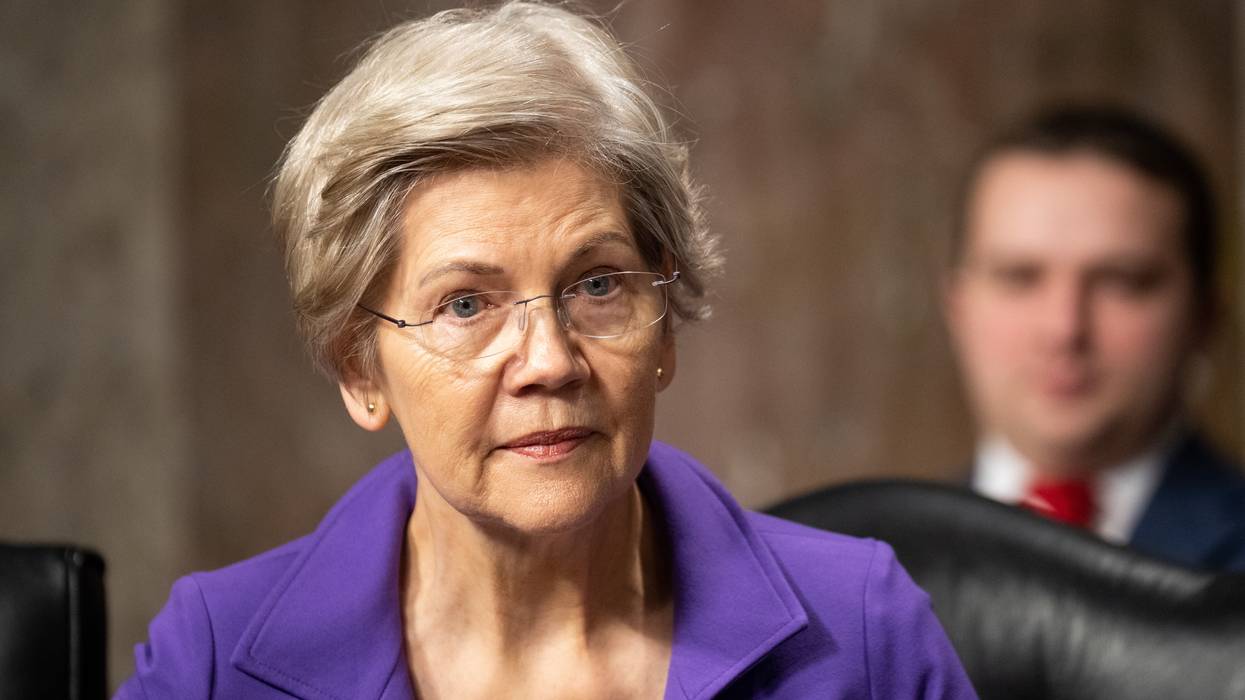
"Why should Americans believe this isn't just another Trump handout to fatten Big Pharma's pockets?"
Nearly two weeks after US Sen. Elizabeth Warren wrote to the Trump administration's top health official in her latest attempt to get answers on "secret pricing deals" with Big Pharma, the Massachusetts Democrat said Wednesday that she is still waiting for the White House to make the terms of the agreements public.
On social media, Warren noted that she asked Health and Human Services Secretary Robert F. Kennedy Jr. to publicize the deals for medicines listed on President Donald Trump's direct-to-consumer website, TrumpRx, at a hearing in April.
"Will you make the deals available to us so we can see them, a little transparency?" the senator had asked.
Kennedy replied that he would be "happy to make the deals available except for proprietary information and trade secrets."
But as the agreements have appeared to do little to reduce drug costs, Kennedy responded to Warren's request in writing without providing "copies of the questionable agreements" or answers to her questions about "unproven claims that the website is saving patients money," the senator noted.
Instead, Kennedy's response raised "fresh questions about whether the Trump administration’s savings estimates are reliable."
Months after her initial request, Warren said Wednesday, "still crickets."
"Why should Americans believe this isn't just another Trump handout to fatten Big Pharma's pockets?" she asked.
As Common Dreams reported last week, experts have pointed to the Biden administration's policy allowing Medicare to directly negotiate the prices of some drugs as the major driver of falling prescription prices, which dropped 3.1% over the past year.
But Trump has claimed that the "most favored nation" deals his administration negotiated with 17 pharmaceutical companies were behind the falling prices, despite the fact that just one aspect of his MFN policy—TrumpRx—has been enacted, and the website has only been found to deliver savings on one out of 54 listed medications.
"While TrumpRx has since added a wider selection of generic drugs and added some information about generic alternatives to select pages, not every brand drug on TrumpRx with an existing generic alternative has that alternative readily available on the site, and a recent analysis finds that the TrumpRx deals represent only around 12% of brand drugs made by participating Big Pharma companies," wrote Warren to Kennedy on August 13. "Thus, consumers still risk overpaying for branded drugs despite the availability of cheaper generics."
She added that the administration recently made the "unfounded claim that TrumpRx has already saved more than $700 million for American patients," while saving the average user of prescription medications only about $5.
"Your response to me raises questions about whether even that estimate was made up out of thin air," wrote Warren, noting that Kennedy had admitted TrumpRx “does not store any patient, health, or prescription information."
She emphasized that drug manufacturers who signed the MFN deals with Trump "have benefited from huge tariff exemptions for branded drugs and received vouchers to fast-track approvals for new products. That is on top of billion-dollar handouts President Trump and Republicans in Congress gave to the pharmaceutical industry last year in their tax law."
"This is a huge win for giant drug companies that will reap billions in additional revenues from higher prices abroad, while doing absolutely nothing to lower drug prices for Americans in need," wrote the senator. "Americans are paying more on everything from school supplies to furniture thanks to Trump’s across-the-board tariffs, and instead of negotiating deals to help workers and American families, he’s using that leverage to go to bat for Big Pharma."
"Americans deserve to know whether the deals the administration is cutting with Big Pharma will lower their prescription drug costs—or just further enrich big drug companies," said Warren. "Despite my request that you make the administration’s MFN deals with giant drug companies public, and your commitment to do so, you have yet to follow through."
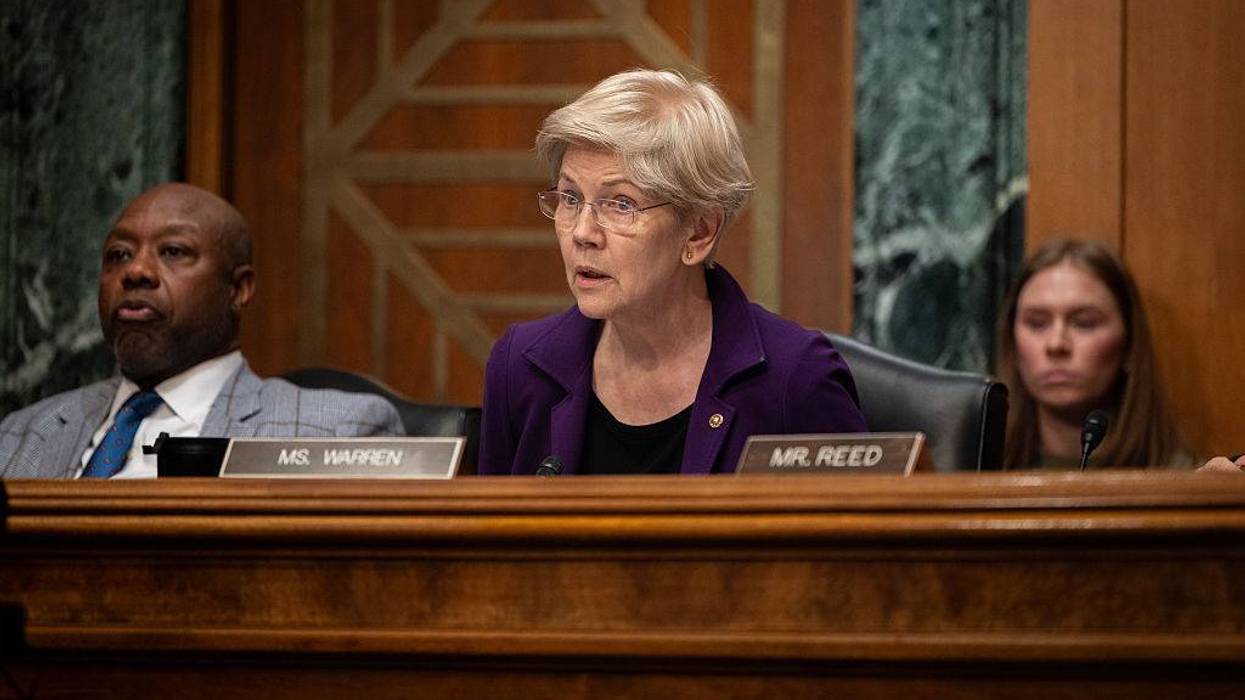
"Your stock trading in 2025—reportedly more than 14,000 stock trades worth up to $1.06 billion—was more than all 535 members of Congress last year combined."
Sen. Elizabeth Warren and Rep. Robert Garcia, the top Democrat on the House Oversight Committee, pressed President Donald Trump on Thursday for information on the "unprecedented" volume of stock trades he or his representatives executed during just the first three months of 2026.
In a letter to the president, Warren (D-Mass.) and Garcia (D-Calif.) noted that Trump reported more than 3,500 stock trades in the first quarter of the year, "made by you or someone on your behalf." The lawmakers pointed to one finance industry executive who expressed astonishment at the president's trades, saying, "In the 40-plus years of my time on Wall Street, this is an unusual amount of trading by any standards."
Trump's recent stock transactions have been publicly listed in disclosure reports released in May and June by the US Office of Government Ethics. The disclosures show that Trump reported more than 14,000 trades worth over $1 billion during his first year back in the White House.
"The sheer volume of this trading activity, and the timing of a number of transactions, raise questions about whether you are using your knowledge of government activities, your official authority, or the vast megaphone provided by the presidency to make investments or move markets to your personal benefit—and about whether you have been making decisions that boost your portfolio at the expense of taxpayers, the economy, and national security," Warren and Garcia wrote.
The lawmakers listed dozens of examples of stock trades that Trump executed prior to a "favorable official government announcement" or "favorable presidential statements."
"On March 2, 2026, you purchased up to $5 million of Apple stock," the Democrats wrote in their letter. "Just over one week later, on March 11, you purchased up to $500,000 of Apple stock. That same day, you singled out and promoted Apple, calling it a 'great company' and highlighting the company’s $650 billion investments in new plants across the country."
Warren and Garcia demanded that Trump answer a detailed list of questions pertaining to his suspiciously timed stock trades, including whether he personally directed them and the extend of his knowledge of the transactions.
"We all support a ban on members of Congress trading individual stocks in order to avoid conflicts of interest—or even the appearance of conflicts," the lawmakers wrote to Trump. "Your stock trading in 2025—reportedly more than 14,000 stock trades worth up to $1.06 billion—was more than all 535 members of Congress last year combined. Moreover, the value of virtually every one of the stocks you traded can be directly affected by your official actions and public statements."
Donald Trump reported more than 14,000 stock trades worth up to $1.06 BILLION in his first year back in office.
The President should be working for YOU—not his stock portfolio.
It’s time to BAN Congress, the Vice President, and the President from owning stocks. Period. https://t.co/SSCx7WYJ2M
— Elizabeth Warren (@SenWarren) August 13, 2026
Last week, the Groundwork Collaborative released a report warning that Trump's "blatant corruption is putting American retirement savings at risk."
"Markets only work when everyone plays by the same rules. Right now, the most consequential individual market participant in the country is also the person writing (and ignoring) the rules," the report noted. "President Trump has built a personal trading strategy around having the one advantage ordinary investors can never obtain: knowing what he’ll do next."
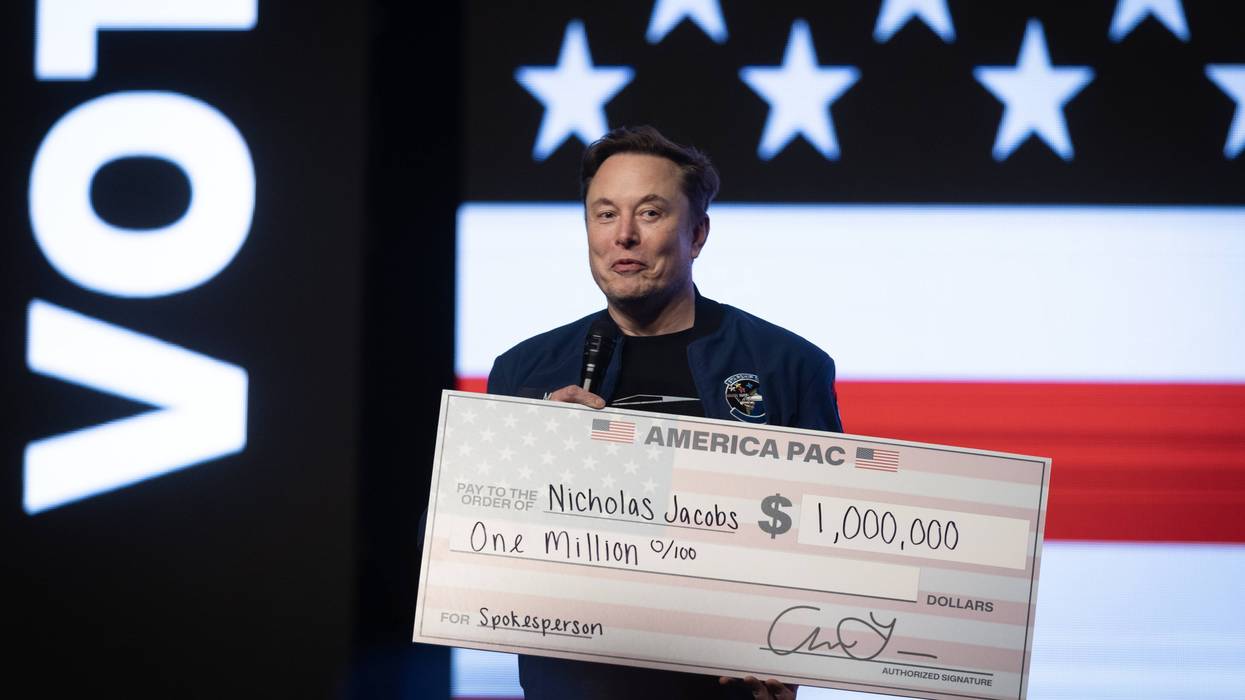
“Trump is making it easier for cartels, criminals, and US adversaries to abuse our financial system," said Sen. Andy Kim. "Because he’s in the pocket of billionaires like Elon Musk, who’d potentially benefit."
Critics are warning that the Trump administration just made financial crimes a lot easier to commit by permanently gutting a law that prevented criminals from using shell companies to obscure their activities. Elon Musk may benefit.
On Tuesday, the Treasury's Financial Crimes Enforcement Network (FinCEN) issued a final rule permanently exempting US individuals and companies from a section of the Corporate Transparency Act (CTA) requiring them to identify the true owners of opaque companies.
The law, which passed in 2020, was ironically introduced and championed by then-US Senator Marco Rubio (R-Fla.), who is now President Donald Trump’s secretary of state and national security adviser.
At the time, Rubio called the law—which he introduced with Sens. Ron Wyden (D-Ore.) and Sheldon Whitehouse (D-RI)—"the most significant anti-corruption and money laundering law in decades."
But Republicans have since pushed to repeal the legislation, which Sen. Tommy Tuberville (R-Ala.) referred to as "big government overreach."
With Republicans in Congress unable to muster the votes to reverse it legislatively, the Trump administration has effectively killed the law by weakening Treasury Department policy. In March 2025, Treasury adopted an interim rule exempting US companies from its requirements.
Plans for a rule change were announced by Treasury less than 24 hours after the SpaceX and Tesla CEO, Musk—who was then leading the so-called Department of Government Efficiency (DOGE)—commented on his social media platform X that he would “look into” the statute in response to a right-wing comedian who'd complained about it.
According to a May report by the nonpartisan Government Accountability Office, more than 99% of entities previously required to report under the law were now exempt. That exemption was made permanent this week.
Treasury Secretary Scott Bessent said it was "a victory for common sense and American small businesses" and called the reporting requirements "burdensome... for millions of law-abiding business owners without compromising our national security.”
Nelson Bunn, executive director of the National District Attorneys Association, said the exact opposite was true.
"By exempting domestic entities and owners from reporting, FinCEN has significantly hindered prosecutors’ ability to identify the bad actors from legitimate businesses when investigating US shell companies used by transnational cartels, human traffickers, and cyberscammers,” Bunn said. "Taking away this indispensable tool for law enforcement endangers American families and communities.”
The change is drawing outrage from Democrats and some Republicans. In a statement on Thursday, Whitehouse and Sen. Chuck Grassley (R-Iowa) said the rule change "undermines the clear intent of the law."
"The act gave the federal government needed tools to address criminal activity like human trafficking, terrorist financing, drug distribution, sanctions evasion, and more without unduly burdening legitimate commercial entities," they said. "This decision is an unfortunate one that fails to use all available tools to protect Americans and crack down on illicit financial schemes.”
Sen. Elizabeth Warren (D-Mass.), the ranking member of the Senate Banking, Housing, and Urban Affairs Committee, highlighted that the committee's previous oversight found the rollback would likely hamper efforts to stop a host of bad actors.
These included Chinese money-laundering networks that have been used to funnel proceeds to drug cartels, fraudsters using opaque ownership to rip off federal grants and benefits, and a Venezuelan national who allegedly used shell companies to hide over $1 billion in cryptocurrency transactions.
Rep. Don Beyer (D-Va.) said the law was “designed to stop criminals from laundering money, and Trump and Secretary Bessent are violating the Constitution to gut it,” and in doing so, “intentionally facilitating corruption and crime.”
In a letter sent to Bessent in March 2026, Warren and other Democratic lawmakers noted that Musk himself would be a direct beneficiary of the rule change, since he "uses a network of dozens of secretive companies—potentially the type of entities that, under the CTA, are required to report ownership information to the Treasury Department."
The New York Times found that in Texas alone, there are over 90 different companies and other legal entities tied to Musk, with others in California, Delaware, and Nevada, which he has used to buy property, structure business deals, hold assets, and pay for political activity—including more than $80 million in super political action committee spending to support Trump in 2024—without putting his own name on the transactions.
"Trump is making it easier for cartels, criminals, and US adversaries to abuse our financial system and harm Americans," said Sen. Andy Kim (D-NJ). "Why? Because he’s in the pocket of billionaires like Elon Musk, who’d potentially benefit from his shady and corrupt actions."
Warren said: "Secretary Bessent should reverse this decision. And he needs to testify in front of this Committee to explain why he’s putting American national security at risk.”

The gaudy gift came just weeks before Trump exempted Belgium’s diamond industry from his sweeping tariff regime, which the senators said “fit seamlessly” into a pattern of relief for those who give him gifts.
A pair of Democratic US senators has some questions for Belgium's diamond industry after it gave President Donald Trump what they said appears to be a "cartoonish bribe."
On Monday, Sens. Elizabeth Warren (D-Mass.) and Richard Blumenthal (D-Conn.) sent a letter inquiring about a "watch-sized, 18-karat gold ring encrusted with 321 diamonds and 75 gemstones" that the president had been gifted in late June by the Antwerp World Diamond Center (AWDC), a lobbying group for Belgian diamondmakers.
The custom ring, emblazoned with a gem-encrusted presidential seal, diamond emblems with the initial "T," and an interior engraving that reads "Crafted in Antwerp for Donald John Trump," is estimated to be worth $25,000-35,000.
“A very special thank you to my friends from Antwerp for the magnificent Freedom 250 ring,” Trump said in a video message during an event in Brussels upon receiving the gift at an event commemorating the 250th anniversary of the United States.
Just weeks later, the administration announced it was exempting European diamonds from Trump's sweeping tariff regime, which he was attempting to reinstate after the US Supreme Court had struck it down earlier this year.
After the diamond tariffs had been lifted, a press release from AWDC celebrated the decision, calling it a “significant boost” for Antwerp's diamond industry and “its international competitive position.”
According to the company, Antwerp exports about $2 billion worth of diamonds to the US each year. At 10%, that means importers would avoid paying about $200 million in tariffs annually under the exemption.
The senators noted that Isidore Mörsel, the president of the World Diamond Center, "explicitly linked the gift to trade issues" when presenting it to the US Ambassador to Belgium, Bill White, for delivery to Trump.
Mörsel said that AWDC commissioned the ring to "celebrate that enduring relationship" with the Antwerp diamond sector’s "most important trading partner for generations."
The senators said AWDC's public-private partnership with the Belgian government meant that Trump might be required to give up the ring under the Emoluments Clause of the US Constitution, which forbids federal officers from receiving gifts from foreign states without Congress' consent.
However, they said "presenting a gift of this magnitude could still play directly into President Trump’s well-established affinity for shiny gifts."
White House spokesperson Kush Desai has denied that the gift had any influence over Trump's decision, telling MS NOW that the administration "agreed to provide preferential tariff treatment for diamonds as part of our historic trade deal with the European Union that was signed last summer."
He added that “the only special interest guiding the Trump administration’s decision-making is the best interest of the American people.”
But the senators said the gift to Trump "fit seamlessly into [the] pattern" of executives appearing to use gifts and flattery to obtain lucrative tariff exemptions.
Apple CEO Tim Cook, who donated $1 million to the president’s inauguration committee, appeared to leverage his “very good relationship” with the President and a well-timed “24-karat” gold gift to secure exemptions from tariffs for various Apple products imported from China.
After Nvidia CEO Jensen Huang purchased a seat at President Trump’s Mar-a-Lago table for $1 million, the administration reversed course on implementing rules that would have prevented Nvidia from selling its most advanced chips to China.
And the administration slashed tariffs on Swiss imports from 39% to 15% just days after Swiss executives—including Rolex CEO Jean-Frédéric Dufour—presented President Trump with a personalized gold bar worth more than $130,000 and a luxury Rolex desk clock.
The senators said Antwerp's gift "raise[d] serious legal questions" under federal bribery law. They asked Mörsel and the jeweler who made the ring, David Gotlib, to provide details about the gift, including who funded it. They also requested information about any contact between the diamond lobbyists and White or other administration officials.