SUBSCRIBE TO OUR FREE NEWSLETTER
Daily news & progressive opinion—funded by the people, not the corporations—delivered straight to your inbox.
5
#000000
#FFFFFF
To donate by check, phone, or other method, see our More Ways to Give page.
Daily news & progressive opinion—funded by the people, not the corporations—delivered straight to your inbox.
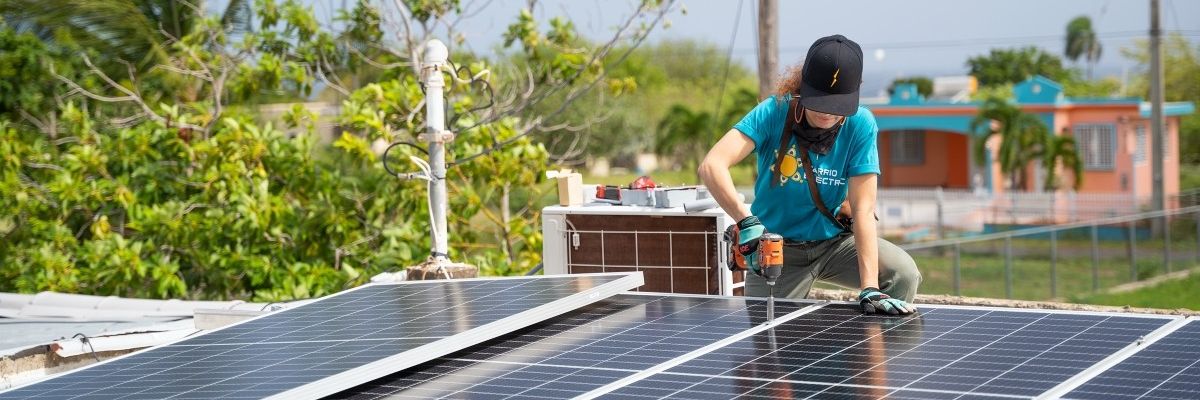
A member of Barrio Eléctrico—a Puerto Rican non-profit advocating affordable solar power for families—installs a photovoltaic panel on a rooftop in this undated photo.
Defending Law 10 is crucial for Puerto Rico’s energy independence and resilience.
Access to affordable, reliable energy is a fundamental right. It’s disheartening to see the Financial Oversight and Management Board oppose Law 10, which safeguards net metering and thus ensures that solar customers receive fair credit for the electricity they generate but do not use.
Law 10—passed earlier this year—extends Puerto Rico’s net metering program through 2031, thereby providing stability for homeowners and businesses who have invested in solar energy. By challenging Law 10, the FOMB risks disrupting this compensation system, which could drastically slow the growth of solar energy in Puerto Rico. This would be a setback not just for solar panel owners, but for everyone on the island who benefits from cleaner, more affordable energy.
Here’s how solar energy works: Homeowners with solar panels often produce more electricity than they consume. This surplus energy flows back into the grid, benefiting their neighbors. Net metering is a billing arrangement that ensures these homeowners receive fair credit for their excess electricity at the current rate. This credit system benefits all electricity users, even those who haven’t installed solar panels.
If the FOMB’s attack on Law 10 is successful, it could jeopardize net metering, leaving us stuck with an expensive, unreliable system that benefits outside interests at the expense of Puerto Rican families.
Increasing the amount of local solar energy in our electrical grid will lower costs for everyone and enhance the island’s energy independence. Currently, 94% of Puerto Rico’s electricity comes from expensive fossil fuels like oil, diesel, coal, and gas. This reliance means that 71% of the Puerto Rico Electric Power Authority (PREPA) budget is spent on importing these fuels.
In contrast, solar energy relies on abundant, free sunlight. It’s irrational to depend on costly foreign fuels when we have ample solar resources and the technology to store solar power. Additionally, our local workforce is ready to install these systems and reinvest the savings into our communities rather than sending money off the island.
Rooftop solar systems make our grid more reliable by reducing blackouts and producing energy exactly where it’s needed. Solar power is generated close to the point of consumption, which is especially important when the island’s power plants are struggling to meet demand. These systems are more reliable because they depend less on fragile transmission infrastructure and imported fuels.
According to a study by Gabel Associates, the social and direct benefits to the grid, and all customers, are four times greater than the value earned by solar energy owners through net metering. Solar power does more than provide affordable energy; it offers peace of mind and essential support to vulnerable communities.
This past May, I attended the opening of a solar resilience center at the Nuestra Señora del Carmen church in Cataño. This church supports many low-income families, providing meals, medicine, and shelter to the homeless. It relies on solar-charged batteries to maintain power during outages, cutting utility costs through net metering credits. These savings are used to further support the community.
Solar United Neighbors, the organization I represent, helped support this church’s solar project. With its solar and battery storage system, the church can maintain power even during grid outages. This is crucial for many, especially those who depend on electricity for medical equipment.
If the FOMB’s challenge to Law 10—which ensures fair net metering compensation—succeeds, then projects like this would face more obstacles. Individuals and organizations would also be hindered from recovering their investments in solar power and storage batteries while facing rising energy costs. It would also devastate the more than 10,000 Puerto Ricans who work in the solar industry. Similar changes in California led to a 22% reduction in the state’s solar workforce.
LUMA Energy, the company managing Puerto Rico’s electricity grid, has warned of upcoming energy bill increases, even as blackouts continue to plague the island. The current system is expensive, unreliable, and flawed. By undermining Law 10, the FOMB is attacking one of the few effective solutions that helps fix our broken system and creates economic opportunities for Puerto Ricans. This potential outcome is deeply troubling.
Hurricane Maria devastated our electrical grid, and we are now rebuilding a system that is resilient, affordable, and locally powered. Rooftop solar energy systems create jobs and ensure energy independence for all Puerto Ricans. If the FOMB’s attack on Law 10 is successful, it could jeopardize net metering, leaving us stuck with an expensive, unreliable system that benefits outside interests at the expense of Puerto Rican families.
Defending Law 10 is crucial not just for current solar users but also for the future of Puerto Rico’s energy independence. We urge Puerto Rico’s legislators to unite and defend the benefits of solar energy for everyone.
Dear Common Dreams reader, It’s been nearly 30 years since I co-founded Common Dreams with my late wife, Lina Newhouser. We had the radical notion that journalism should serve the public good, not corporate profits. It was clear to us from the outset what it would take to build such a project. No paid advertisements. No corporate sponsors. No millionaire publisher telling us what to think or do. Many people said we wouldn't last a year, but we proved those doubters wrong. Together with a tremendous team of journalists and dedicated staff, we built an independent media outlet free from the constraints of profits and corporate control. Our mission has always been simple: To inform. To inspire. To ignite change for the common good. Building Common Dreams was not easy. Our survival was never guaranteed. When you take on the most powerful forces—Wall Street greed, fossil fuel industry destruction, Big Tech lobbyists, and uber-rich oligarchs who have spent billions upon billions rigging the economy and democracy in their favor—the only bulwark you have is supporters who believe in your work. But here’s the urgent message from me today. It's never been this bad out there. And it's never been this hard to keep us going. At the very moment Common Dreams is most needed, the threats we face are intensifying. We need your support now more than ever. We don't accept corporate advertising and never will. We don't have a paywall because we don't think people should be blocked from critical news based on their ability to pay. Everything we do is funded by the donations of readers like you. When everyone does the little they can afford, we are strong. But if that support retreats or dries up, so do we. Will you donate now to make sure Common Dreams not only survives but thrives? —Craig Brown, Co-founder |
Access to affordable, reliable energy is a fundamental right. It’s disheartening to see the Financial Oversight and Management Board oppose Law 10, which safeguards net metering and thus ensures that solar customers receive fair credit for the electricity they generate but do not use.
Law 10—passed earlier this year—extends Puerto Rico’s net metering program through 2031, thereby providing stability for homeowners and businesses who have invested in solar energy. By challenging Law 10, the FOMB risks disrupting this compensation system, which could drastically slow the growth of solar energy in Puerto Rico. This would be a setback not just for solar panel owners, but for everyone on the island who benefits from cleaner, more affordable energy.
Here’s how solar energy works: Homeowners with solar panels often produce more electricity than they consume. This surplus energy flows back into the grid, benefiting their neighbors. Net metering is a billing arrangement that ensures these homeowners receive fair credit for their excess electricity at the current rate. This credit system benefits all electricity users, even those who haven’t installed solar panels.
If the FOMB’s attack on Law 10 is successful, it could jeopardize net metering, leaving us stuck with an expensive, unreliable system that benefits outside interests at the expense of Puerto Rican families.
Increasing the amount of local solar energy in our electrical grid will lower costs for everyone and enhance the island’s energy independence. Currently, 94% of Puerto Rico’s electricity comes from expensive fossil fuels like oil, diesel, coal, and gas. This reliance means that 71% of the Puerto Rico Electric Power Authority (PREPA) budget is spent on importing these fuels.
In contrast, solar energy relies on abundant, free sunlight. It’s irrational to depend on costly foreign fuels when we have ample solar resources and the technology to store solar power. Additionally, our local workforce is ready to install these systems and reinvest the savings into our communities rather than sending money off the island.
Rooftop solar systems make our grid more reliable by reducing blackouts and producing energy exactly where it’s needed. Solar power is generated close to the point of consumption, which is especially important when the island’s power plants are struggling to meet demand. These systems are more reliable because they depend less on fragile transmission infrastructure and imported fuels.
According to a study by Gabel Associates, the social and direct benefits to the grid, and all customers, are four times greater than the value earned by solar energy owners through net metering. Solar power does more than provide affordable energy; it offers peace of mind and essential support to vulnerable communities.
This past May, I attended the opening of a solar resilience center at the Nuestra Señora del Carmen church in Cataño. This church supports many low-income families, providing meals, medicine, and shelter to the homeless. It relies on solar-charged batteries to maintain power during outages, cutting utility costs through net metering credits. These savings are used to further support the community.
Solar United Neighbors, the organization I represent, helped support this church’s solar project. With its solar and battery storage system, the church can maintain power even during grid outages. This is crucial for many, especially those who depend on electricity for medical equipment.
If the FOMB’s challenge to Law 10—which ensures fair net metering compensation—succeeds, then projects like this would face more obstacles. Individuals and organizations would also be hindered from recovering their investments in solar power and storage batteries while facing rising energy costs. It would also devastate the more than 10,000 Puerto Ricans who work in the solar industry. Similar changes in California led to a 22% reduction in the state’s solar workforce.
LUMA Energy, the company managing Puerto Rico’s electricity grid, has warned of upcoming energy bill increases, even as blackouts continue to plague the island. The current system is expensive, unreliable, and flawed. By undermining Law 10, the FOMB is attacking one of the few effective solutions that helps fix our broken system and creates economic opportunities for Puerto Ricans. This potential outcome is deeply troubling.
Hurricane Maria devastated our electrical grid, and we are now rebuilding a system that is resilient, affordable, and locally powered. Rooftop solar energy systems create jobs and ensure energy independence for all Puerto Ricans. If the FOMB’s attack on Law 10 is successful, it could jeopardize net metering, leaving us stuck with an expensive, unreliable system that benefits outside interests at the expense of Puerto Rican families.
Defending Law 10 is crucial not just for current solar users but also for the future of Puerto Rico’s energy independence. We urge Puerto Rico’s legislators to unite and defend the benefits of solar energy for everyone.
Access to affordable, reliable energy is a fundamental right. It’s disheartening to see the Financial Oversight and Management Board oppose Law 10, which safeguards net metering and thus ensures that solar customers receive fair credit for the electricity they generate but do not use.
Law 10—passed earlier this year—extends Puerto Rico’s net metering program through 2031, thereby providing stability for homeowners and businesses who have invested in solar energy. By challenging Law 10, the FOMB risks disrupting this compensation system, which could drastically slow the growth of solar energy in Puerto Rico. This would be a setback not just for solar panel owners, but for everyone on the island who benefits from cleaner, more affordable energy.
Here’s how solar energy works: Homeowners with solar panels often produce more electricity than they consume. This surplus energy flows back into the grid, benefiting their neighbors. Net metering is a billing arrangement that ensures these homeowners receive fair credit for their excess electricity at the current rate. This credit system benefits all electricity users, even those who haven’t installed solar panels.
If the FOMB’s attack on Law 10 is successful, it could jeopardize net metering, leaving us stuck with an expensive, unreliable system that benefits outside interests at the expense of Puerto Rican families.
Increasing the amount of local solar energy in our electrical grid will lower costs for everyone and enhance the island’s energy independence. Currently, 94% of Puerto Rico’s electricity comes from expensive fossil fuels like oil, diesel, coal, and gas. This reliance means that 71% of the Puerto Rico Electric Power Authority (PREPA) budget is spent on importing these fuels.
In contrast, solar energy relies on abundant, free sunlight. It’s irrational to depend on costly foreign fuels when we have ample solar resources and the technology to store solar power. Additionally, our local workforce is ready to install these systems and reinvest the savings into our communities rather than sending money off the island.
Rooftop solar systems make our grid more reliable by reducing blackouts and producing energy exactly where it’s needed. Solar power is generated close to the point of consumption, which is especially important when the island’s power plants are struggling to meet demand. These systems are more reliable because they depend less on fragile transmission infrastructure and imported fuels.
According to a study by Gabel Associates, the social and direct benefits to the grid, and all customers, are four times greater than the value earned by solar energy owners through net metering. Solar power does more than provide affordable energy; it offers peace of mind and essential support to vulnerable communities.
This past May, I attended the opening of a solar resilience center at the Nuestra Señora del Carmen church in Cataño. This church supports many low-income families, providing meals, medicine, and shelter to the homeless. It relies on solar-charged batteries to maintain power during outages, cutting utility costs through net metering credits. These savings are used to further support the community.
Solar United Neighbors, the organization I represent, helped support this church’s solar project. With its solar and battery storage system, the church can maintain power even during grid outages. This is crucial for many, especially those who depend on electricity for medical equipment.
If the FOMB’s challenge to Law 10—which ensures fair net metering compensation—succeeds, then projects like this would face more obstacles. Individuals and organizations would also be hindered from recovering their investments in solar power and storage batteries while facing rising energy costs. It would also devastate the more than 10,000 Puerto Ricans who work in the solar industry. Similar changes in California led to a 22% reduction in the state’s solar workforce.
LUMA Energy, the company managing Puerto Rico’s electricity grid, has warned of upcoming energy bill increases, even as blackouts continue to plague the island. The current system is expensive, unreliable, and flawed. By undermining Law 10, the FOMB is attacking one of the few effective solutions that helps fix our broken system and creates economic opportunities for Puerto Ricans. This potential outcome is deeply troubling.
Hurricane Maria devastated our electrical grid, and we are now rebuilding a system that is resilient, affordable, and locally powered. Rooftop solar energy systems create jobs and ensure energy independence for all Puerto Ricans. If the FOMB’s attack on Law 10 is successful, it could jeopardize net metering, leaving us stuck with an expensive, unreliable system that benefits outside interests at the expense of Puerto Rican families.
Defending Law 10 is crucial not just for current solar users but also for the future of Puerto Rico’s energy independence. We urge Puerto Rico’s legislators to unite and defend the benefits of solar energy for everyone.