SUBSCRIBE TO OUR FREE NEWSLETTER
Daily news & progressive opinion—funded by the people, not the corporations—delivered straight to your inbox.
5
#000000
#FFFFFF
To donate by check, phone, or other method, see our More Ways to Give page.
Daily news & progressive opinion—funded by the people, not the corporations—delivered straight to your inbox.
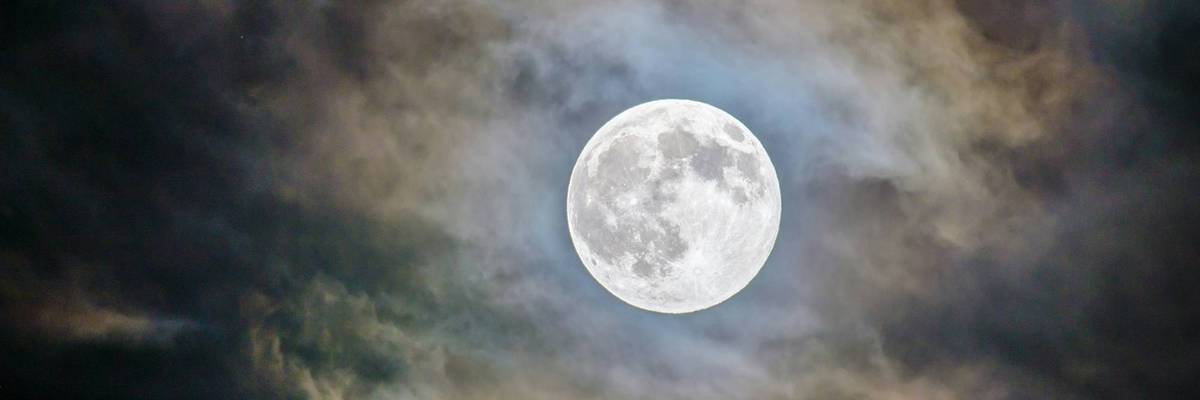
A full moon and gray clouds are seen during nighttime.
After my wife's death, nothing seemed equal to the grief I was feeling. My life was a shattered pane of glass. I needed something to hold myself together. This is when the Blue Pearl came to me.
“The Blue Pearl is the vehicle of the individual soul. It is in the Blue Pearl that the soul leaves the body after death and travels to different worlds. It is extremely fine and subtle, and it moves like lightning... The Blue Pearl is the size of a sesame seed, but in reality it is so vast that it contains the entire universe.”—Swami Muktananda, Meditate
I read Meditate in the mid-’90s, a few years before my wife’s death. After her death, nothing seemed equal to the grief I was feeling. My life was a shattered pane of glass. I needed something to hold myself together. This is when the Blue Pearl came to me, or so it seemed—not as an external truth but simply as God-knows-what, floating in my tears. I held it to my heart. Perhaps now it’s time to share “The Blue Pearl,” a poem I wrote in the midst of my grief, which put the grief into context.
A silver moon blesses
the Osco parking lot
as my wife lies sleeping
with terminal cancer.
This is her homecoming.
My breast pocket bulges
with prescription morphine
and I have just been accused
of stealing milk.
What I mean to say
is that life is good.
This is the secret of cancer,
that as it eats away
at the skin of the future,
it reveals, slowly,
in cold, hard luster,
beneath the ticking of days and hours,
the blue pearl,
our irreducible spirit
and connecting point to the stars.
It is the steady wonder
that life goes on.
It had been a bad week,
with Barbara’s lower GI
laid bare on Monday
to the surgeon’s disquieted eye:
Fifty liver lesions discouraged
an adventurous scalpel
from cutting a swath to the pancreas.
They sewed up the belly,
the soft belly I’d
gotten used to growing old
resting my head on,
and told her what happens
next is that you die.
This is the cancer
the saints get,
the ones too selfless
to endure the pain
of others.
On Tuesday they fed her
bile and comfort, salving
the desolate corpse of hope
with med school pity
and averted eyes.
And on Friday, after she’d begun
farting again and it was time
to go home, the season premiere of
“Sabrina the Teenage Witch”
wrenched our loving
family into three small
angry pieces.
The soft bondage of love,
souls in a crucible,
so lost together, our lives
cluttered with one another’s needs,
we make peace, then suddenly
kick out in frenzied yearning
for freedom and muddy
the elixir that cushions us: This
is a family, now strained
by death. Our daughter,
eleven, a trooper, a brave angel,
commutes willingly from school
to hospital, diagrams sentences
in Mom’s wheelchair,
parts the IV tubes to
give her kisses and eats
lime Jell-O all week;
she asks one thing only
that isn’t brave and chin-up,
to watch “Sabrina” at 7.
But Barbara cannot bear
another confined hour here
and so we snap
off the overhead box
and go, gracelessly,
at our sudden worst,
bleeding insults and disappointment
in the privacy
of our car ride home
to a new life.
And I understand that we need
a miracle but
the best I can offer
is my silence;
silence humbles me;
slowly I stop knowing
what to do.
I wait for the morphine
in fluorescent loneliness.
When my name is called
I heft as much of the future
as I am sure of—a sweating
gallon of milk for tomorrow’s
breakfast—upon the counter
and pay, thinking, this much
is done. But life
undoes me like a dirty bandage.
I’m challenged at the door,
humiliated for 30 seconds—
this is a neighborhood
where milk is stolen regularly,
perhaps—and finally,
the transaction verified,
I am released
to the moon
and my own soul.
In the lifeless parking lot
my wild heart,
so big and wanting
happiness, a cure for
cancer or just five years
five years to perfectly
love my wife, stops,
lets go of itself,
bears for an instant
the silver-streaked now
of truth,
now now only now
and always now
she is alive
and I am alive
and that’s my miracle
and it’s enough.
Dear Common Dreams reader, It’s been nearly 30 years since I co-founded Common Dreams with my late wife, Lina Newhouser. We had the radical notion that journalism should serve the public good, not corporate profits. It was clear to us from the outset what it would take to build such a project. No paid advertisements. No corporate sponsors. No millionaire publisher telling us what to think or do. Many people said we wouldn't last a year, but we proved those doubters wrong. Together with a tremendous team of journalists and dedicated staff, we built an independent media outlet free from the constraints of profits and corporate control. Our mission has always been simple: To inform. To inspire. To ignite change for the common good. Building Common Dreams was not easy. Our survival was never guaranteed. When you take on the most powerful forces—Wall Street greed, fossil fuel industry destruction, Big Tech lobbyists, and uber-rich oligarchs who have spent billions upon billions rigging the economy and democracy in their favor—the only bulwark you have is supporters who believe in your work. But here’s the urgent message from me today. It's never been this bad out there. And it's never been this hard to keep us going. At the very moment Common Dreams is most needed, the threats we face are intensifying. We need your support now more than ever. We don't accept corporate advertising and never will. We don't have a paywall because we don't think people should be blocked from critical news based on their ability to pay. Everything we do is funded by the donations of readers like you. When everyone does the little they can afford, we are strong. But if that support retreats or dries up, so do we. Will you donate now to make sure Common Dreams not only survives but thrives? —Craig Brown, Co-founder |
“The Blue Pearl is the vehicle of the individual soul. It is in the Blue Pearl that the soul leaves the body after death and travels to different worlds. It is extremely fine and subtle, and it moves like lightning... The Blue Pearl is the size of a sesame seed, but in reality it is so vast that it contains the entire universe.”—Swami Muktananda, Meditate
I read Meditate in the mid-’90s, a few years before my wife’s death. After her death, nothing seemed equal to the grief I was feeling. My life was a shattered pane of glass. I needed something to hold myself together. This is when the Blue Pearl came to me, or so it seemed—not as an external truth but simply as God-knows-what, floating in my tears. I held it to my heart. Perhaps now it’s time to share “The Blue Pearl,” a poem I wrote in the midst of my grief, which put the grief into context.
A silver moon blesses
the Osco parking lot
as my wife lies sleeping
with terminal cancer.
This is her homecoming.
My breast pocket bulges
with prescription morphine
and I have just been accused
of stealing milk.
What I mean to say
is that life is good.
This is the secret of cancer,
that as it eats away
at the skin of the future,
it reveals, slowly,
in cold, hard luster,
beneath the ticking of days and hours,
the blue pearl,
our irreducible spirit
and connecting point to the stars.
It is the steady wonder
that life goes on.
It had been a bad week,
with Barbara’s lower GI
laid bare on Monday
to the surgeon’s disquieted eye:
Fifty liver lesions discouraged
an adventurous scalpel
from cutting a swath to the pancreas.
They sewed up the belly,
the soft belly I’d
gotten used to growing old
resting my head on,
and told her what happens
next is that you die.
This is the cancer
the saints get,
the ones too selfless
to endure the pain
of others.
On Tuesday they fed her
bile and comfort, salving
the desolate corpse of hope
with med school pity
and averted eyes.
And on Friday, after she’d begun
farting again and it was time
to go home, the season premiere of
“Sabrina the Teenage Witch”
wrenched our loving
family into three small
angry pieces.
The soft bondage of love,
souls in a crucible,
so lost together, our lives
cluttered with one another’s needs,
we make peace, then suddenly
kick out in frenzied yearning
for freedom and muddy
the elixir that cushions us: This
is a family, now strained
by death. Our daughter,
eleven, a trooper, a brave angel,
commutes willingly from school
to hospital, diagrams sentences
in Mom’s wheelchair,
parts the IV tubes to
give her kisses and eats
lime Jell-O all week;
she asks one thing only
that isn’t brave and chin-up,
to watch “Sabrina” at 7.
But Barbara cannot bear
another confined hour here
and so we snap
off the overhead box
and go, gracelessly,
at our sudden worst,
bleeding insults and disappointment
in the privacy
of our car ride home
to a new life.
And I understand that we need
a miracle but
the best I can offer
is my silence;
silence humbles me;
slowly I stop knowing
what to do.
I wait for the morphine
in fluorescent loneliness.
When my name is called
I heft as much of the future
as I am sure of—a sweating
gallon of milk for tomorrow’s
breakfast—upon the counter
and pay, thinking, this much
is done. But life
undoes me like a dirty bandage.
I’m challenged at the door,
humiliated for 30 seconds—
this is a neighborhood
where milk is stolen regularly,
perhaps—and finally,
the transaction verified,
I am released
to the moon
and my own soul.
In the lifeless parking lot
my wild heart,
so big and wanting
happiness, a cure for
cancer or just five years
five years to perfectly
love my wife, stops,
lets go of itself,
bears for an instant
the silver-streaked now
of truth,
now now only now
and always now
she is alive
and I am alive
and that’s my miracle
and it’s enough.
“The Blue Pearl is the vehicle of the individual soul. It is in the Blue Pearl that the soul leaves the body after death and travels to different worlds. It is extremely fine and subtle, and it moves like lightning... The Blue Pearl is the size of a sesame seed, but in reality it is so vast that it contains the entire universe.”—Swami Muktananda, Meditate
I read Meditate in the mid-’90s, a few years before my wife’s death. After her death, nothing seemed equal to the grief I was feeling. My life was a shattered pane of glass. I needed something to hold myself together. This is when the Blue Pearl came to me, or so it seemed—not as an external truth but simply as God-knows-what, floating in my tears. I held it to my heart. Perhaps now it’s time to share “The Blue Pearl,” a poem I wrote in the midst of my grief, which put the grief into context.
A silver moon blesses
the Osco parking lot
as my wife lies sleeping
with terminal cancer.
This is her homecoming.
My breast pocket bulges
with prescription morphine
and I have just been accused
of stealing milk.
What I mean to say
is that life is good.
This is the secret of cancer,
that as it eats away
at the skin of the future,
it reveals, slowly,
in cold, hard luster,
beneath the ticking of days and hours,
the blue pearl,
our irreducible spirit
and connecting point to the stars.
It is the steady wonder
that life goes on.
It had been a bad week,
with Barbara’s lower GI
laid bare on Monday
to the surgeon’s disquieted eye:
Fifty liver lesions discouraged
an adventurous scalpel
from cutting a swath to the pancreas.
They sewed up the belly,
the soft belly I’d
gotten used to growing old
resting my head on,
and told her what happens
next is that you die.
This is the cancer
the saints get,
the ones too selfless
to endure the pain
of others.
On Tuesday they fed her
bile and comfort, salving
the desolate corpse of hope
with med school pity
and averted eyes.
And on Friday, after she’d begun
farting again and it was time
to go home, the season premiere of
“Sabrina the Teenage Witch”
wrenched our loving
family into three small
angry pieces.
The soft bondage of love,
souls in a crucible,
so lost together, our lives
cluttered with one another’s needs,
we make peace, then suddenly
kick out in frenzied yearning
for freedom and muddy
the elixir that cushions us: This
is a family, now strained
by death. Our daughter,
eleven, a trooper, a brave angel,
commutes willingly from school
to hospital, diagrams sentences
in Mom’s wheelchair,
parts the IV tubes to
give her kisses and eats
lime Jell-O all week;
she asks one thing only
that isn’t brave and chin-up,
to watch “Sabrina” at 7.
But Barbara cannot bear
another confined hour here
and so we snap
off the overhead box
and go, gracelessly,
at our sudden worst,
bleeding insults and disappointment
in the privacy
of our car ride home
to a new life.
And I understand that we need
a miracle but
the best I can offer
is my silence;
silence humbles me;
slowly I stop knowing
what to do.
I wait for the morphine
in fluorescent loneliness.
When my name is called
I heft as much of the future
as I am sure of—a sweating
gallon of milk for tomorrow’s
breakfast—upon the counter
and pay, thinking, this much
is done. But life
undoes me like a dirty bandage.
I’m challenged at the door,
humiliated for 30 seconds—
this is a neighborhood
where milk is stolen regularly,
perhaps—and finally,
the transaction verified,
I am released
to the moon
and my own soul.
In the lifeless parking lot
my wild heart,
so big and wanting
happiness, a cure for
cancer or just five years
five years to perfectly
love my wife, stops,
lets go of itself,
bears for an instant
the silver-streaked now
of truth,
now now only now
and always now
she is alive
and I am alive
and that’s my miracle
and it’s enough.