SUBSCRIBE TO OUR FREE NEWSLETTER
Daily news & progressive opinion—funded by the people, not the corporations—delivered straight to your inbox.
5
#000000
#FFFFFF
To donate by check, phone, or other method, see our More Ways to Give page.
Daily news & progressive opinion—funded by the people, not the corporations—delivered straight to your inbox.
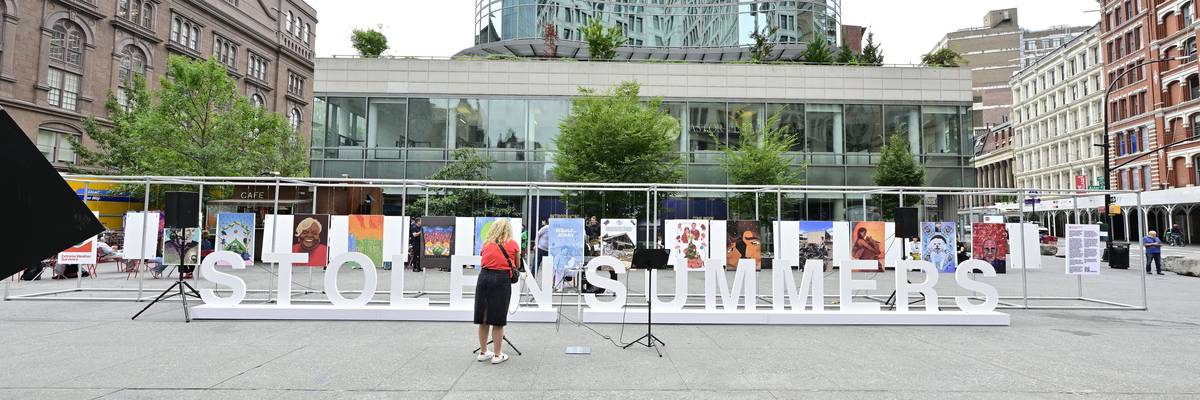
Atmosphere at the Extreme Weather Survivors Launch “Stolen Summers” Tour at New York Climate Week at Astor Place on September 22, 2025 in New York City.
The conversations I had suggested very few participants left New York Climate Week with a clear sense of New York State’s potential to lead on climate—and the extent to which we’re failing to meet the moment.
During the last week of September, as Climate Week turned New York City into a hub of panel discussions, protests, and policy announcements, I felt both inspired and unsettled. It is always energizing to watch tens of thousands of people come together from around the world to discuss solutions, progress, and roadblocks at every level of climate action—from households to national governments—alongside the global leaders convening at the United Nations at the same time.
But as I review what we’re doing here at home, in New York State, to respond to climate change, I’m impatient that we haven’t made more progress—and I’m determined to press our state to step up faster.
While the name “New York Climate Week” suggests a focus on climate action in, around, and by New York State, the topic of what exactly New York is doing to respond to the federal government’s assault on climate programs didn’t come up nearly enough. “States are the frontlines for climate action” was repeated over and over by speakers throughout the week, but the conversations I had suggested very few participants left New York Climate Week with a clear sense of New York State’s potential to lead on climate—and the extent to which we’re failing to meet the moment.
Once upon a time, our state was an early climate leader. In 2019, the organization I now lead, Environmental Advocates NY, worked with a coalition of legislators, partner organizations, labor unions, businesses, and then-Gov. Andrew Cuomo to enact the nation-leading Climate Leadership and Community Protection Act (CLCPA), laying the groundwork for slashing greenhouse gas emissions, building renewable energy, and centering equity in the process. Even as climate denier Donald Trump sat in the White House during his first term, they made history.
Leadership is not measured by the speeches we give or even the laws we pass, but by how we follow through and the impact of our legislation.
A single state might feel small, but what New York does is important. New Yorkers power the world’s eighth-largest economy, if we were a nation. Our government purchases, priorities, and preferences move markets and change corporate behavior. Our energy policy sets an example for the nation, and under the CLCPA we’ve seen real clean energy progress. The Empire Wind project, if it goes forward, will generate 800 megawatts of renewable energy in the current phase and another 1.2 gigawatts in later phases. By last year, solar capacity had reached 6 GW, on the way to our 2030 10 GW solar target. Funding is flowing to climate-resilient infrastructure, green jobs, and innovation.
But we can, and must, do even better.
Overall, we’re only about a quarter of the way to our legally mandated 2030 emissions reduction goals, and our current path won’t get us over the line. We’re approaching 30% renewable energy, which is progress, but we won’t reach our 70% 2030 target. We failed to pass corporate reporting mandates this year, and the state’s top politicians have ground progress to a halt on Cap-and-Invest, the law’s primary revenue generation program.
Every day we delay sets us back. And what’s worse, fossil fuel projects we’ve already rejected are coming back from the dead: Just last month, the environmentally dangerous NESE underwater pipeline moved closer to approval.
New pipelines lock us into a future we can’t afford, and will mean decades more dependence on oil and gas, at the very moment we should be accelerating our clean energy transition. Every dollar we spend expanding fossil fuel infrastructure is one we’re not spending to advance clean power, climate resilience, and real energy independence.
Leadership is not measured by the speeches we give or even the laws we pass, but by how we follow through and the impact of our legislation, by what we choose to build or not build, by what we invest in and what we avoid, by how we make sure everyone benefits from our resilient future.
The good news: We know what we must do.
During Climate Week, Gov. Kathy Hochul announced further details about the historic $1 billion commitment she’s made to the newly created Sustainable Future Fund, which will fund energy efficiency upgrades for homes and schools, clean transportation, new renewable generation, and more.
But the state still hasn’t implemented the much larger (and legally required) Cap-and-Invest program to generate revenue for climate investment. That needs to happen now. We need to redouble our commitment to the clean energy transition, modernize our electrical grid, help the communities carrying the heaviest climate impact burden, and—most importantly—draw a clear line against fossil fuel expansion.
The thousands of climate leaders who filled New York’s streets and stages last month all know that transformation is possible. Our state’s lawmakers and governors have backed them up with rhetoric. The outstanding question: Will New York ramp up our commitment to follow through, and lead?
Dear Common Dreams reader, It’s been nearly 30 years since I co-founded Common Dreams with my late wife, Lina Newhouser. We had the radical notion that journalism should serve the public good, not corporate profits. It was clear to us from the outset what it would take to build such a project. No paid advertisements. No corporate sponsors. No millionaire publisher telling us what to think or do. Many people said we wouldn't last a year, but we proved those doubters wrong. Together with a tremendous team of journalists and dedicated staff, we built an independent media outlet free from the constraints of profits and corporate control. Our mission has always been simple: To inform. To inspire. To ignite change for the common good. Building Common Dreams was not easy. Our survival was never guaranteed. When you take on the most powerful forces—Wall Street greed, fossil fuel industry destruction, Big Tech lobbyists, and uber-rich oligarchs who have spent billions upon billions rigging the economy and democracy in their favor—the only bulwark you have is supporters who believe in your work. But here’s the urgent message from me today. It's never been this bad out there. And it's never been this hard to keep us going. At the very moment Common Dreams is most needed, the threats we face are intensifying. We need your support now more than ever. We don't accept corporate advertising and never will. We don't have a paywall because we don't think people should be blocked from critical news based on their ability to pay. Everything we do is funded by the donations of readers like you. When everyone does the little they can afford, we are strong. But if that support retreats or dries up, so do we. Will you donate now to make sure Common Dreams not only survives but thrives? —Craig Brown, Co-founder |
During the last week of September, as Climate Week turned New York City into a hub of panel discussions, protests, and policy announcements, I felt both inspired and unsettled. It is always energizing to watch tens of thousands of people come together from around the world to discuss solutions, progress, and roadblocks at every level of climate action—from households to national governments—alongside the global leaders convening at the United Nations at the same time.
But as I review what we’re doing here at home, in New York State, to respond to climate change, I’m impatient that we haven’t made more progress—and I’m determined to press our state to step up faster.
While the name “New York Climate Week” suggests a focus on climate action in, around, and by New York State, the topic of what exactly New York is doing to respond to the federal government’s assault on climate programs didn’t come up nearly enough. “States are the frontlines for climate action” was repeated over and over by speakers throughout the week, but the conversations I had suggested very few participants left New York Climate Week with a clear sense of New York State’s potential to lead on climate—and the extent to which we’re failing to meet the moment.
Once upon a time, our state was an early climate leader. In 2019, the organization I now lead, Environmental Advocates NY, worked with a coalition of legislators, partner organizations, labor unions, businesses, and then-Gov. Andrew Cuomo to enact the nation-leading Climate Leadership and Community Protection Act (CLCPA), laying the groundwork for slashing greenhouse gas emissions, building renewable energy, and centering equity in the process. Even as climate denier Donald Trump sat in the White House during his first term, they made history.
Leadership is not measured by the speeches we give or even the laws we pass, but by how we follow through and the impact of our legislation.
A single state might feel small, but what New York does is important. New Yorkers power the world’s eighth-largest economy, if we were a nation. Our government purchases, priorities, and preferences move markets and change corporate behavior. Our energy policy sets an example for the nation, and under the CLCPA we’ve seen real clean energy progress. The Empire Wind project, if it goes forward, will generate 800 megawatts of renewable energy in the current phase and another 1.2 gigawatts in later phases. By last year, solar capacity had reached 6 GW, on the way to our 2030 10 GW solar target. Funding is flowing to climate-resilient infrastructure, green jobs, and innovation.
But we can, and must, do even better.
Overall, we’re only about a quarter of the way to our legally mandated 2030 emissions reduction goals, and our current path won’t get us over the line. We’re approaching 30% renewable energy, which is progress, but we won’t reach our 70% 2030 target. We failed to pass corporate reporting mandates this year, and the state’s top politicians have ground progress to a halt on Cap-and-Invest, the law’s primary revenue generation program.
Every day we delay sets us back. And what’s worse, fossil fuel projects we’ve already rejected are coming back from the dead: Just last month, the environmentally dangerous NESE underwater pipeline moved closer to approval.
New pipelines lock us into a future we can’t afford, and will mean decades more dependence on oil and gas, at the very moment we should be accelerating our clean energy transition. Every dollar we spend expanding fossil fuel infrastructure is one we’re not spending to advance clean power, climate resilience, and real energy independence.
Leadership is not measured by the speeches we give or even the laws we pass, but by how we follow through and the impact of our legislation, by what we choose to build or not build, by what we invest in and what we avoid, by how we make sure everyone benefits from our resilient future.
The good news: We know what we must do.
During Climate Week, Gov. Kathy Hochul announced further details about the historic $1 billion commitment she’s made to the newly created Sustainable Future Fund, which will fund energy efficiency upgrades for homes and schools, clean transportation, new renewable generation, and more.
But the state still hasn’t implemented the much larger (and legally required) Cap-and-Invest program to generate revenue for climate investment. That needs to happen now. We need to redouble our commitment to the clean energy transition, modernize our electrical grid, help the communities carrying the heaviest climate impact burden, and—most importantly—draw a clear line against fossil fuel expansion.
The thousands of climate leaders who filled New York’s streets and stages last month all know that transformation is possible. Our state’s lawmakers and governors have backed them up with rhetoric. The outstanding question: Will New York ramp up our commitment to follow through, and lead?
During the last week of September, as Climate Week turned New York City into a hub of panel discussions, protests, and policy announcements, I felt both inspired and unsettled. It is always energizing to watch tens of thousands of people come together from around the world to discuss solutions, progress, and roadblocks at every level of climate action—from households to national governments—alongside the global leaders convening at the United Nations at the same time.
But as I review what we’re doing here at home, in New York State, to respond to climate change, I’m impatient that we haven’t made more progress—and I’m determined to press our state to step up faster.
While the name “New York Climate Week” suggests a focus on climate action in, around, and by New York State, the topic of what exactly New York is doing to respond to the federal government’s assault on climate programs didn’t come up nearly enough. “States are the frontlines for climate action” was repeated over and over by speakers throughout the week, but the conversations I had suggested very few participants left New York Climate Week with a clear sense of New York State’s potential to lead on climate—and the extent to which we’re failing to meet the moment.
Once upon a time, our state was an early climate leader. In 2019, the organization I now lead, Environmental Advocates NY, worked with a coalition of legislators, partner organizations, labor unions, businesses, and then-Gov. Andrew Cuomo to enact the nation-leading Climate Leadership and Community Protection Act (CLCPA), laying the groundwork for slashing greenhouse gas emissions, building renewable energy, and centering equity in the process. Even as climate denier Donald Trump sat in the White House during his first term, they made history.
Leadership is not measured by the speeches we give or even the laws we pass, but by how we follow through and the impact of our legislation.
A single state might feel small, but what New York does is important. New Yorkers power the world’s eighth-largest economy, if we were a nation. Our government purchases, priorities, and preferences move markets and change corporate behavior. Our energy policy sets an example for the nation, and under the CLCPA we’ve seen real clean energy progress. The Empire Wind project, if it goes forward, will generate 800 megawatts of renewable energy in the current phase and another 1.2 gigawatts in later phases. By last year, solar capacity had reached 6 GW, on the way to our 2030 10 GW solar target. Funding is flowing to climate-resilient infrastructure, green jobs, and innovation.
But we can, and must, do even better.
Overall, we’re only about a quarter of the way to our legally mandated 2030 emissions reduction goals, and our current path won’t get us over the line. We’re approaching 30% renewable energy, which is progress, but we won’t reach our 70% 2030 target. We failed to pass corporate reporting mandates this year, and the state’s top politicians have ground progress to a halt on Cap-and-Invest, the law’s primary revenue generation program.
Every day we delay sets us back. And what’s worse, fossil fuel projects we’ve already rejected are coming back from the dead: Just last month, the environmentally dangerous NESE underwater pipeline moved closer to approval.
New pipelines lock us into a future we can’t afford, and will mean decades more dependence on oil and gas, at the very moment we should be accelerating our clean energy transition. Every dollar we spend expanding fossil fuel infrastructure is one we’re not spending to advance clean power, climate resilience, and real energy independence.
Leadership is not measured by the speeches we give or even the laws we pass, but by how we follow through and the impact of our legislation, by what we choose to build or not build, by what we invest in and what we avoid, by how we make sure everyone benefits from our resilient future.
The good news: We know what we must do.
During Climate Week, Gov. Kathy Hochul announced further details about the historic $1 billion commitment she’s made to the newly created Sustainable Future Fund, which will fund energy efficiency upgrades for homes and schools, clean transportation, new renewable generation, and more.
But the state still hasn’t implemented the much larger (and legally required) Cap-and-Invest program to generate revenue for climate investment. That needs to happen now. We need to redouble our commitment to the clean energy transition, modernize our electrical grid, help the communities carrying the heaviest climate impact burden, and—most importantly—draw a clear line against fossil fuel expansion.
The thousands of climate leaders who filled New York’s streets and stages last month all know that transformation is possible. Our state’s lawmakers and governors have backed them up with rhetoric. The outstanding question: Will New York ramp up our commitment to follow through, and lead?