SUBSCRIBE TO OUR FREE NEWSLETTER
Daily news & progressive opinion—funded by the people, not the corporations—delivered straight to your inbox.
5
#000000
#FFFFFF
To donate by check, phone, or other method, see our More Ways to Give page.
Daily news & progressive opinion—funded by the people, not the corporations—delivered straight to your inbox.
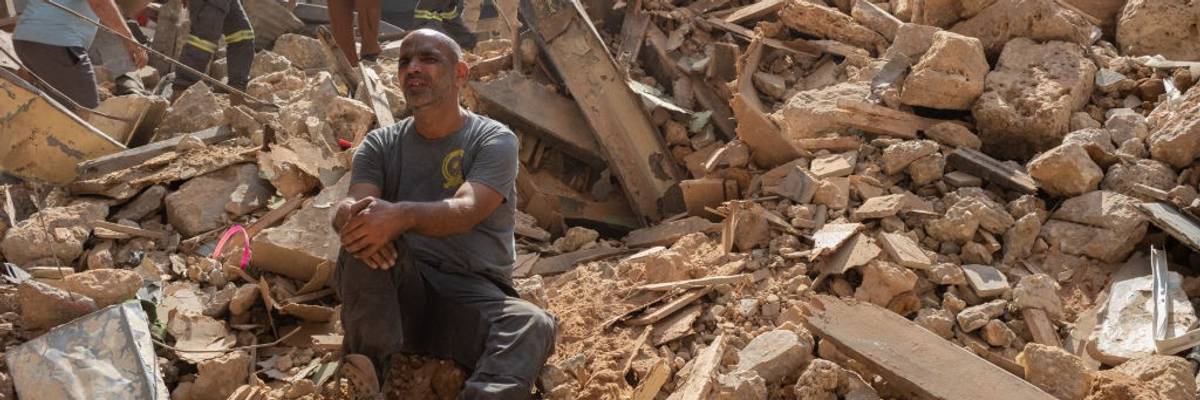
Efforts to violently eliminate militant resistance groups is shortsighted, at best, and is no solution, as it does not address the source of the grievances that make them appealing in the first place.
t’s galling to hear policymakers in the U.S., Israel, and elsewhere suggest that the devastating blows Israel has dealt to Hezbollah and Lebanon have created “an opportunity to put Lebanon on a better path.”
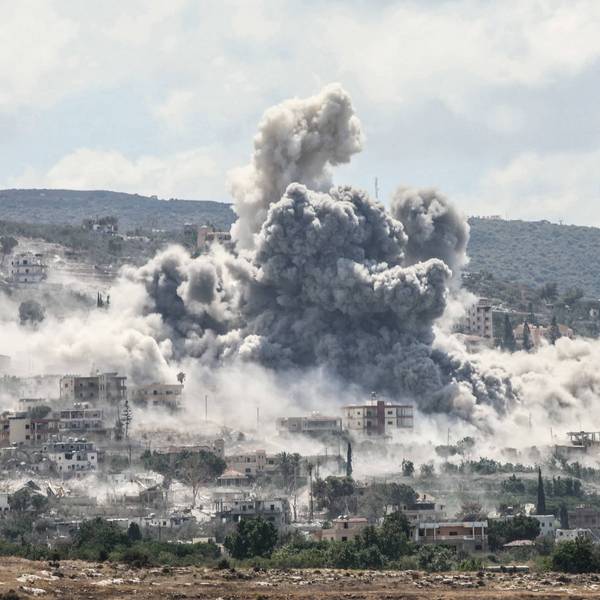
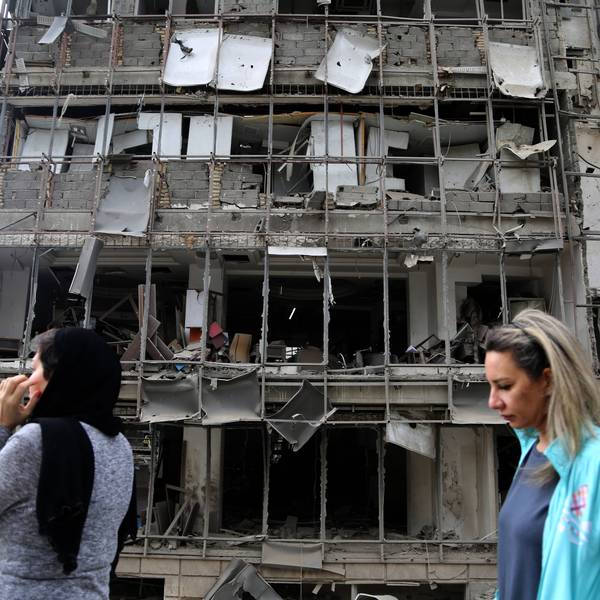
First and foremost, it’s horribly insensitive. There are, to date, thousands dead, major sections of Beirut destroyed, and one-quarter of Lebanon’s people internally displaced without adequate shelter, food, and services. And the toll continues to mount. To suggest that good can from this enormous human tragedy is disgraceful. Such a view not only dishonors the victims, but also is akin to putting “ashes in the mouths” of those who’ve lost loved ones and are in mourning.
This mindset is also dangerously naive as it ignores the lessons of history. Recall how, in the face of similar nightmares in 1982 or 2006, we were told that they would also be opportunities. Each involved Israel’s overwhelming use of force. In each instance, Israel said that its “enemies would be vanquished ushering in a new day.” In the end, each only resulted in a more unsettled situation with a more virulent foe rising from the ashes left behind. This was because at the root of each of these conflicts were real grievances born of injustice, that gave rise to movements of resistance. Instead of addressing and resolving these grievances, Israel, with the full-throated support of the U.S., saw force as the only acceptable solution. What they said, in effect, is, “Once we punish them and pound them into submission, all will be well.” This approach hasn’t worked before, and it won’t work now.
Instead of naive fantasies about opportunities, the only logical step forward is to end this conflict now.
At the heart of these deep grievances is the historical injustice done to the Palestinian people. Former U.S. President Bill Clinton described it eloquently when he told an assembled group of Palestinian leaders that he knew their history of having been “dismembered, dispossessed, and dispersed among the nations.” And for the Lebanese, who have embraced Hezbollah, the grievances include both their abiding fury over Israel’s more than two-decade-long hostile occupation of the south of Lebanon that resulted in the displacement of tens of thousands of Lebanese, and the historical inequities experienced by the Shia community as a result of the country’s sectarian system of governance.
None of this is to say that the Palestinian militia groups or the Shia’s Hezbollah movement haven’t made grave errors as they’ve acted to address the grievances of their constituencies. What it does say is that this effort to violently eliminate these groups is shortsighted, at best, and is no solution, as it does not address the source of the grievances that make them appealing in the first place. This is a recipe for disaster. And finally, to ignore the responsibility that Israel bears for its actions that have created much of the pain at the heart of the problem and then refusing to press them to change direction only ensures that the grievances will metastasize into more virulent forms.
This is where we are today. In an effort to totally eliminate resistance to their occupation and annexation of Palestine, Israel is committing genocide in Gaza coupled with a reign of violent terror across the West Bank. Meanwhile with Hezbollah launching missiles into Israel to back the survival of its “resistance ally” in Palestine, Israel has now turned its attention to methodically eliminating the leadership and cadre of Hezbollah.
In both Lebanon and Gaza, Israel has pursued this effort at “total victory” without regard for civilian casualties or damage to the broader society and its infrastructure. Seeing Iran as the main backer of both Hezbollah and Hamas, Israel has gone a step further by attacking Iranian sites and assassinating Iranian allies in Lebanon, Syria, and Iran itself—bringing the Middle East to the brink of a devastating regional war.
While the U.S. worries aloud about the dangers of expanding this war, it has done nothing to restrain Israel’s behavior. We’ve established red lines that Israel continues to cross; expressed concern with civilian casualties which Israel ignores; and repeatedly put forward cease-fire proposals which Israel rejects. All the while we are flooding Israel with sophisticated deadly weaponry and unlimited diplomatic support. The result is Israeli impunity, more Arab casualties and greater suffering, and a Middle East ever further from addressing the problems at the root of the conflict. When the fighting ends, if anything, the grievances will be even greater.
If history is prologue, in the coming years we’ll most likely see: the emergence of a Hamas 2.0; a reconstituted movement of Lebanese with an ax to grind with both Israel and those whom they feel betrayed them; a bottomless well of anger and bitterness directed at both Israel and the U.S.; and a region more unstable that it has been.
That said, there is no opportunity in this tragedy. In fact, there’s only one thing about which we can be certain. And that is that Israel’s war in Lebanon and Gaza will not end well.
Instead of naive fantasies about opportunities, the only logical step forward is to end this conflict now. For that to happen, the U.S., as we say, “needs to put on its big boy pants,” tell Israel to “stop,” and back this up by suspending arms shipments. At that point, we will need to address the human cost and work to alleviate some of the suffering. Then, and only then, can we begin to assess the steps that must be taken to deal with the grievances at the root of this tragedy. That’s not an opportunity. It’s a responsibility.
Dear Common Dreams reader, It’s been nearly 30 years since I co-founded Common Dreams with my late wife, Lina Newhouser. We had the radical notion that journalism should serve the public good, not corporate profits. It was clear to us from the outset what it would take to build such a project. No paid advertisements. No corporate sponsors. No millionaire publisher telling us what to think or do. Many people said we wouldn't last a year, but we proved those doubters wrong. Together with a tremendous team of journalists and dedicated staff, we built an independent media outlet free from the constraints of profits and corporate control. Our mission has always been simple: To inform. To inspire. To ignite change for the common good. Building Common Dreams was not easy. Our survival was never guaranteed. When you take on the most powerful forces—Wall Street greed, fossil fuel industry destruction, Big Tech lobbyists, and uber-rich oligarchs who have spent billions upon billions rigging the economy and democracy in their favor—the only bulwark you have is supporters who believe in your work. But here’s the urgent message from me today. It's never been this bad out there. And it's never been this hard to keep us going. At the very moment Common Dreams is most needed, the threats we face are intensifying. We need your support now more than ever. We don't accept corporate advertising and never will. We don't have a paywall because we don't think people should be blocked from critical news based on their ability to pay. Everything we do is funded by the donations of readers like you. When everyone does the little they can afford, we are strong. But if that support retreats or dries up, so do we. Will you donate now to make sure Common Dreams not only survives but thrives? —Craig Brown, Co-founder |
t’s galling to hear policymakers in the U.S., Israel, and elsewhere suggest that the devastating blows Israel has dealt to Hezbollah and Lebanon have created “an opportunity to put Lebanon on a better path.”
First and foremost, it’s horribly insensitive. There are, to date, thousands dead, major sections of Beirut destroyed, and one-quarter of Lebanon’s people internally displaced without adequate shelter, food, and services. And the toll continues to mount. To suggest that good can from this enormous human tragedy is disgraceful. Such a view not only dishonors the victims, but also is akin to putting “ashes in the mouths” of those who’ve lost loved ones and are in mourning.
This mindset is also dangerously naive as it ignores the lessons of history. Recall how, in the face of similar nightmares in 1982 or 2006, we were told that they would also be opportunities. Each involved Israel’s overwhelming use of force. In each instance, Israel said that its “enemies would be vanquished ushering in a new day.” In the end, each only resulted in a more unsettled situation with a more virulent foe rising from the ashes left behind. This was because at the root of each of these conflicts were real grievances born of injustice, that gave rise to movements of resistance. Instead of addressing and resolving these grievances, Israel, with the full-throated support of the U.S., saw force as the only acceptable solution. What they said, in effect, is, “Once we punish them and pound them into submission, all will be well.” This approach hasn’t worked before, and it won’t work now.
Instead of naive fantasies about opportunities, the only logical step forward is to end this conflict now.
At the heart of these deep grievances is the historical injustice done to the Palestinian people. Former U.S. President Bill Clinton described it eloquently when he told an assembled group of Palestinian leaders that he knew their history of having been “dismembered, dispossessed, and dispersed among the nations.” And for the Lebanese, who have embraced Hezbollah, the grievances include both their abiding fury over Israel’s more than two-decade-long hostile occupation of the south of Lebanon that resulted in the displacement of tens of thousands of Lebanese, and the historical inequities experienced by the Shia community as a result of the country’s sectarian system of governance.
None of this is to say that the Palestinian militia groups or the Shia’s Hezbollah movement haven’t made grave errors as they’ve acted to address the grievances of their constituencies. What it does say is that this effort to violently eliminate these groups is shortsighted, at best, and is no solution, as it does not address the source of the grievances that make them appealing in the first place. This is a recipe for disaster. And finally, to ignore the responsibility that Israel bears for its actions that have created much of the pain at the heart of the problem and then refusing to press them to change direction only ensures that the grievances will metastasize into more virulent forms.
This is where we are today. In an effort to totally eliminate resistance to their occupation and annexation of Palestine, Israel is committing genocide in Gaza coupled with a reign of violent terror across the West Bank. Meanwhile with Hezbollah launching missiles into Israel to back the survival of its “resistance ally” in Palestine, Israel has now turned its attention to methodically eliminating the leadership and cadre of Hezbollah.
In both Lebanon and Gaza, Israel has pursued this effort at “total victory” without regard for civilian casualties or damage to the broader society and its infrastructure. Seeing Iran as the main backer of both Hezbollah and Hamas, Israel has gone a step further by attacking Iranian sites and assassinating Iranian allies in Lebanon, Syria, and Iran itself—bringing the Middle East to the brink of a devastating regional war.
While the U.S. worries aloud about the dangers of expanding this war, it has done nothing to restrain Israel’s behavior. We’ve established red lines that Israel continues to cross; expressed concern with civilian casualties which Israel ignores; and repeatedly put forward cease-fire proposals which Israel rejects. All the while we are flooding Israel with sophisticated deadly weaponry and unlimited diplomatic support. The result is Israeli impunity, more Arab casualties and greater suffering, and a Middle East ever further from addressing the problems at the root of the conflict. When the fighting ends, if anything, the grievances will be even greater.
If history is prologue, in the coming years we’ll most likely see: the emergence of a Hamas 2.0; a reconstituted movement of Lebanese with an ax to grind with both Israel and those whom they feel betrayed them; a bottomless well of anger and bitterness directed at both Israel and the U.S.; and a region more unstable that it has been.
That said, there is no opportunity in this tragedy. In fact, there’s only one thing about which we can be certain. And that is that Israel’s war in Lebanon and Gaza will not end well.
Instead of naive fantasies about opportunities, the only logical step forward is to end this conflict now. For that to happen, the U.S., as we say, “needs to put on its big boy pants,” tell Israel to “stop,” and back this up by suspending arms shipments. At that point, we will need to address the human cost and work to alleviate some of the suffering. Then, and only then, can we begin to assess the steps that must be taken to deal with the grievances at the root of this tragedy. That’s not an opportunity. It’s a responsibility.
t’s galling to hear policymakers in the U.S., Israel, and elsewhere suggest that the devastating blows Israel has dealt to Hezbollah and Lebanon have created “an opportunity to put Lebanon on a better path.”
First and foremost, it’s horribly insensitive. There are, to date, thousands dead, major sections of Beirut destroyed, and one-quarter of Lebanon’s people internally displaced without adequate shelter, food, and services. And the toll continues to mount. To suggest that good can from this enormous human tragedy is disgraceful. Such a view not only dishonors the victims, but also is akin to putting “ashes in the mouths” of those who’ve lost loved ones and are in mourning.
This mindset is also dangerously naive as it ignores the lessons of history. Recall how, in the face of similar nightmares in 1982 or 2006, we were told that they would also be opportunities. Each involved Israel’s overwhelming use of force. In each instance, Israel said that its “enemies would be vanquished ushering in a new day.” In the end, each only resulted in a more unsettled situation with a more virulent foe rising from the ashes left behind. This was because at the root of each of these conflicts were real grievances born of injustice, that gave rise to movements of resistance. Instead of addressing and resolving these grievances, Israel, with the full-throated support of the U.S., saw force as the only acceptable solution. What they said, in effect, is, “Once we punish them and pound them into submission, all will be well.” This approach hasn’t worked before, and it won’t work now.
Instead of naive fantasies about opportunities, the only logical step forward is to end this conflict now.
At the heart of these deep grievances is the historical injustice done to the Palestinian people. Former U.S. President Bill Clinton described it eloquently when he told an assembled group of Palestinian leaders that he knew their history of having been “dismembered, dispossessed, and dispersed among the nations.” And for the Lebanese, who have embraced Hezbollah, the grievances include both their abiding fury over Israel’s more than two-decade-long hostile occupation of the south of Lebanon that resulted in the displacement of tens of thousands of Lebanese, and the historical inequities experienced by the Shia community as a result of the country’s sectarian system of governance.
None of this is to say that the Palestinian militia groups or the Shia’s Hezbollah movement haven’t made grave errors as they’ve acted to address the grievances of their constituencies. What it does say is that this effort to violently eliminate these groups is shortsighted, at best, and is no solution, as it does not address the source of the grievances that make them appealing in the first place. This is a recipe for disaster. And finally, to ignore the responsibility that Israel bears for its actions that have created much of the pain at the heart of the problem and then refusing to press them to change direction only ensures that the grievances will metastasize into more virulent forms.
This is where we are today. In an effort to totally eliminate resistance to their occupation and annexation of Palestine, Israel is committing genocide in Gaza coupled with a reign of violent terror across the West Bank. Meanwhile with Hezbollah launching missiles into Israel to back the survival of its “resistance ally” in Palestine, Israel has now turned its attention to methodically eliminating the leadership and cadre of Hezbollah.
In both Lebanon and Gaza, Israel has pursued this effort at “total victory” without regard for civilian casualties or damage to the broader society and its infrastructure. Seeing Iran as the main backer of both Hezbollah and Hamas, Israel has gone a step further by attacking Iranian sites and assassinating Iranian allies in Lebanon, Syria, and Iran itself—bringing the Middle East to the brink of a devastating regional war.
While the U.S. worries aloud about the dangers of expanding this war, it has done nothing to restrain Israel’s behavior. We’ve established red lines that Israel continues to cross; expressed concern with civilian casualties which Israel ignores; and repeatedly put forward cease-fire proposals which Israel rejects. All the while we are flooding Israel with sophisticated deadly weaponry and unlimited diplomatic support. The result is Israeli impunity, more Arab casualties and greater suffering, and a Middle East ever further from addressing the problems at the root of the conflict. When the fighting ends, if anything, the grievances will be even greater.
If history is prologue, in the coming years we’ll most likely see: the emergence of a Hamas 2.0; a reconstituted movement of Lebanese with an ax to grind with both Israel and those whom they feel betrayed them; a bottomless well of anger and bitterness directed at both Israel and the U.S.; and a region more unstable that it has been.
That said, there is no opportunity in this tragedy. In fact, there’s only one thing about which we can be certain. And that is that Israel’s war in Lebanon and Gaza will not end well.
Instead of naive fantasies about opportunities, the only logical step forward is to end this conflict now. For that to happen, the U.S., as we say, “needs to put on its big boy pants,” tell Israel to “stop,” and back this up by suspending arms shipments. At that point, we will need to address the human cost and work to alleviate some of the suffering. Then, and only then, can we begin to assess the steps that must be taken to deal with the grievances at the root of this tragedy. That’s not an opportunity. It’s a responsibility.