5
#000000
#FFFFFF
To donate by check, phone, or other method, see our More Ways to Give page.
Daily news & progressive opinion—funded by the people, not the corporations—delivered straight to your inbox.
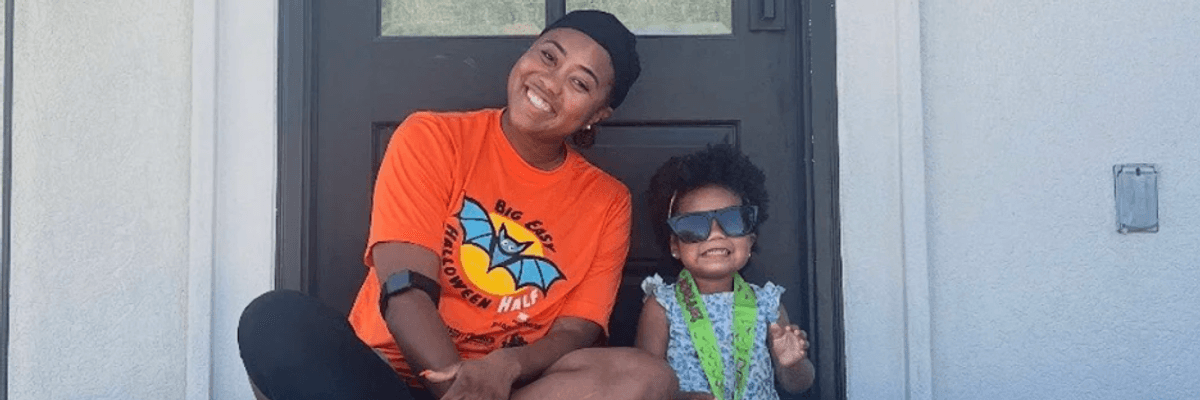
Julienne poses for a photo with her daughter.
I’m sending my daughter into the world armed with a legacy of misbehaving. I hope she meets your girls on the way. Because the more misbehaving girls we raise, the closer we get to a world where women get what we deserve.
Fifty years ago, Pulitzer Prize-winning historian Laurel Thatcher Ulrich popularized the phrase, “Well-behaved women rarely make history.” It became a feminist call to action. Even women who didn’t claim feminism invoked it before challenging a rule, a system, or a societal norm—a permission slip to be loud, difficult, and disruptive.
But lately, I wonder if something has shifted—if girls are not just discouraged from making history, but conditioned against it. What happens to the women and girls who still live the phrase?
Look around.
Jasmine Crockett faces backlash for refusing to shrink herself. Female athletes at Howard University were criticized for protesting. Joy Ann Reid, once a prominent voice on MSNBC, was pushed out of the very spaces that benefited from her boldness. Leqaa Kordia became a flash point, punished for her pro-Palestine speech at Columbia. Renee Nicole Good murdered for talking back to Immigration and Customs Enforcement.
The women in my life taught me that there are repercussions to being “misbehaving”—but that the courage to continue is worth it.
Different circumstances. Different stakes. But a similar message: Misbehave, and there will be consequences.
I come from a lineage of women who refused to be well-behaved.
Long before it was popular to challenge Confederate symbols, my grandmother protested John McDonogh Day in New Orleans public schools. While others celebrated a man tied to oppression, my granny and her friends resisted—even when it meant detention. She modeled that courage for my mother.
As a school board member, my mother openly challenged the charter takeover after Hurricane Katrina. It cost her reelection. Well-funded lobbying groups backed her opponents, and she lost. But she did not bend.
Later, in my own career, I spoke out against unfair disciplinary policies—three-strikes rules and bans on hooded sweatshirts that disproportionately targeted Black students. I did so publicly. I was not promoted. Instead, my mental and emotional health were questioned.
The women in my life taught me that there are repercussions to being “misbehaving”—but that the courage to continue is worth it.
That is why the Women's National Basketball Association (WNBA) collective bargaining fight meant so much to me. The players weren’t asking for excess—just the standard their male counterparts had long received. Even so, they were met with resistance; fans and commentators questioned their gratitude.
For months, the women of the league misbehaved. They rejected lowball offers. They challenged the status quo. They held the line—and even threatened to strike—because they refused to be mistreated.
And it worked. A historic agreement will bring higher salaries, revenue recognition, and support for injured and pregnant players.
Central to that fight were WNBA Players Association leaders Nneka Ogwumike and Napheesa Collier—women who understood that progress requires pressure. Ogwumike has credited her family for instilling discipline and purpose. Collier’s parents modeled misbehavior early, creating opportunities when she was shut out. Years later, she took it further—co-founding Unrivaled, a rival league that pressured the WNBA.
Those foundations don’t just produce great athletes; they produce fighters. And when misbehaving women connect, things change.
During those negotiations, I found myself explaining courage to my 3-year-old daughter. She is too young to understand contracts or labor rights—but not that her voice matters. And I will continue to nurture that—even when it’s inconvenient. When she says, “Mom, stop, you’re hurting me” while I’m combing her hair. When she insists, “I can do it myself,” even if it means wasted strawberries and a mess I’ll have to clean up. Because the alternative is a girl who does not believe in her own agency, her own power.
In my work with girls, I’ve learned that many of us are not raised this way. Caregivers—often out of love, fear, or inherited trauma—teach girls that silence and compliance will lead to an easier life. And that belief is understandable. Who doesn’t want ease and safety for their children?
But as Viola Davis shared in a recent conversation with Amy Poehler, being a “good girl” didn’t protect her. It taught her to shrink, to tolerate hurt. That’s the lie we don’t talk about enough: that if girls (and women) are agreeable enough, soft enough, accommodating enough—they will be safe.
If history has taught us anything, it’s that progress has never come from compliance. It has always come from those willing to disrupt, to demand, and to refuse. To misbehave.
So, to the adults raising and influencing young girls, here’s what I’ve learned as an educator, advocate, and mother:
This isn’t just for parents. Anyone who has girls in their lives has the power to shape their beliefs.
I’m sending my daughter into the world armed with a legacy of misbehaving. I hope she meets your girls on the way. Because the more misbehaving girls we raise, the closer we get to a world where women get what we deserve.
Well-behaved women rarely make history. And they damn sure don’t get things done.
I’m raising the next generation of misbehaving girls. Who’s with me? Whose #RaisinMisbehavinGirls
Dear Common Dreams reader, It’s been nearly 30 years since I co-founded Common Dreams with my late wife, Lina Newhouser. We had the radical notion that journalism should serve the public good, not corporate profits. It was clear to us from the outset what it would take to build such a project. No paid advertisements. No corporate sponsors. No millionaire publisher telling us what to think or do. Many people said we wouldn't last a year, but we proved those doubters wrong. Together with a tremendous team of journalists and dedicated staff, we built an independent media outlet free from the constraints of profits and corporate control. Our mission has always been simple: To inform. To inspire. To ignite change for the common good. Building Common Dreams was not easy. Our survival was never guaranteed. When you take on the most powerful forces—Wall Street greed, fossil fuel industry destruction, Big Tech lobbyists, and uber-rich oligarchs who have spent billions upon billions rigging the economy and democracy in their favor—the only bulwark you have is supporters who believe in your work. But here’s the urgent message from me today. It's never been this bad out there. And it's never been this hard to keep us going. At the very moment Common Dreams is most needed, the threats we face are intensifying. We need your support now more than ever. We don't accept corporate advertising and never will. We don't have a paywall because we don't think people should be blocked from critical news based on their ability to pay. Everything we do is funded by the donations of readers like you. When everyone does the little they can afford, we are strong. But if that support retreats or dries up, so do we. Will you donate now to make sure Common Dreams not only survives but thrives? —Craig Brown, Co-founder |
Fifty years ago, Pulitzer Prize-winning historian Laurel Thatcher Ulrich popularized the phrase, “Well-behaved women rarely make history.” It became a feminist call to action. Even women who didn’t claim feminism invoked it before challenging a rule, a system, or a societal norm—a permission slip to be loud, difficult, and disruptive.
But lately, I wonder if something has shifted—if girls are not just discouraged from making history, but conditioned against it. What happens to the women and girls who still live the phrase?
Look around.
Jasmine Crockett faces backlash for refusing to shrink herself. Female athletes at Howard University were criticized for protesting. Joy Ann Reid, once a prominent voice on MSNBC, was pushed out of the very spaces that benefited from her boldness. Leqaa Kordia became a flash point, punished for her pro-Palestine speech at Columbia. Renee Nicole Good murdered for talking back to Immigration and Customs Enforcement.
The women in my life taught me that there are repercussions to being “misbehaving”—but that the courage to continue is worth it.
Different circumstances. Different stakes. But a similar message: Misbehave, and there will be consequences.
I come from a lineage of women who refused to be well-behaved.
Long before it was popular to challenge Confederate symbols, my grandmother protested John McDonogh Day in New Orleans public schools. While others celebrated a man tied to oppression, my granny and her friends resisted—even when it meant detention. She modeled that courage for my mother.
As a school board member, my mother openly challenged the charter takeover after Hurricane Katrina. It cost her reelection. Well-funded lobbying groups backed her opponents, and she lost. But she did not bend.
Later, in my own career, I spoke out against unfair disciplinary policies—three-strikes rules and bans on hooded sweatshirts that disproportionately targeted Black students. I did so publicly. I was not promoted. Instead, my mental and emotional health were questioned.
The women in my life taught me that there are repercussions to being “misbehaving”—but that the courage to continue is worth it.
That is why the Women's National Basketball Association (WNBA) collective bargaining fight meant so much to me. The players weren’t asking for excess—just the standard their male counterparts had long received. Even so, they were met with resistance; fans and commentators questioned their gratitude.
For months, the women of the league misbehaved. They rejected lowball offers. They challenged the status quo. They held the line—and even threatened to strike—because they refused to be mistreated.
And it worked. A historic agreement will bring higher salaries, revenue recognition, and support for injured and pregnant players.
Central to that fight were WNBA Players Association leaders Nneka Ogwumike and Napheesa Collier—women who understood that progress requires pressure. Ogwumike has credited her family for instilling discipline and purpose. Collier’s parents modeled misbehavior early, creating opportunities when she was shut out. Years later, she took it further—co-founding Unrivaled, a rival league that pressured the WNBA.
Those foundations don’t just produce great athletes; they produce fighters. And when misbehaving women connect, things change.
During those negotiations, I found myself explaining courage to my 3-year-old daughter. She is too young to understand contracts or labor rights—but not that her voice matters. And I will continue to nurture that—even when it’s inconvenient. When she says, “Mom, stop, you’re hurting me” while I’m combing her hair. When she insists, “I can do it myself,” even if it means wasted strawberries and a mess I’ll have to clean up. Because the alternative is a girl who does not believe in her own agency, her own power.
In my work with girls, I’ve learned that many of us are not raised this way. Caregivers—often out of love, fear, or inherited trauma—teach girls that silence and compliance will lead to an easier life. And that belief is understandable. Who doesn’t want ease and safety for their children?
But as Viola Davis shared in a recent conversation with Amy Poehler, being a “good girl” didn’t protect her. It taught her to shrink, to tolerate hurt. That’s the lie we don’t talk about enough: that if girls (and women) are agreeable enough, soft enough, accommodating enough—they will be safe.
If history has taught us anything, it’s that progress has never come from compliance. It has always come from those willing to disrupt, to demand, and to refuse. To misbehave.
So, to the adults raising and influencing young girls, here’s what I’ve learned as an educator, advocate, and mother:
This isn’t just for parents. Anyone who has girls in their lives has the power to shape their beliefs.
I’m sending my daughter into the world armed with a legacy of misbehaving. I hope she meets your girls on the way. Because the more misbehaving girls we raise, the closer we get to a world where women get what we deserve.
Well-behaved women rarely make history. And they damn sure don’t get things done.
I’m raising the next generation of misbehaving girls. Who’s with me? Whose #RaisinMisbehavinGirls
Fifty years ago, Pulitzer Prize-winning historian Laurel Thatcher Ulrich popularized the phrase, “Well-behaved women rarely make history.” It became a feminist call to action. Even women who didn’t claim feminism invoked it before challenging a rule, a system, or a societal norm—a permission slip to be loud, difficult, and disruptive.
But lately, I wonder if something has shifted—if girls are not just discouraged from making history, but conditioned against it. What happens to the women and girls who still live the phrase?
Look around.
Jasmine Crockett faces backlash for refusing to shrink herself. Female athletes at Howard University were criticized for protesting. Joy Ann Reid, once a prominent voice on MSNBC, was pushed out of the very spaces that benefited from her boldness. Leqaa Kordia became a flash point, punished for her pro-Palestine speech at Columbia. Renee Nicole Good murdered for talking back to Immigration and Customs Enforcement.
The women in my life taught me that there are repercussions to being “misbehaving”—but that the courage to continue is worth it.
Different circumstances. Different stakes. But a similar message: Misbehave, and there will be consequences.
I come from a lineage of women who refused to be well-behaved.
Long before it was popular to challenge Confederate symbols, my grandmother protested John McDonogh Day in New Orleans public schools. While others celebrated a man tied to oppression, my granny and her friends resisted—even when it meant detention. She modeled that courage for my mother.
As a school board member, my mother openly challenged the charter takeover after Hurricane Katrina. It cost her reelection. Well-funded lobbying groups backed her opponents, and she lost. But she did not bend.
Later, in my own career, I spoke out against unfair disciplinary policies—three-strikes rules and bans on hooded sweatshirts that disproportionately targeted Black students. I did so publicly. I was not promoted. Instead, my mental and emotional health were questioned.
The women in my life taught me that there are repercussions to being “misbehaving”—but that the courage to continue is worth it.
That is why the Women's National Basketball Association (WNBA) collective bargaining fight meant so much to me. The players weren’t asking for excess—just the standard their male counterparts had long received. Even so, they were met with resistance; fans and commentators questioned their gratitude.
For months, the women of the league misbehaved. They rejected lowball offers. They challenged the status quo. They held the line—and even threatened to strike—because they refused to be mistreated.
And it worked. A historic agreement will bring higher salaries, revenue recognition, and support for injured and pregnant players.
Central to that fight were WNBA Players Association leaders Nneka Ogwumike and Napheesa Collier—women who understood that progress requires pressure. Ogwumike has credited her family for instilling discipline and purpose. Collier’s parents modeled misbehavior early, creating opportunities when she was shut out. Years later, she took it further—co-founding Unrivaled, a rival league that pressured the WNBA.
Those foundations don’t just produce great athletes; they produce fighters. And when misbehaving women connect, things change.
During those negotiations, I found myself explaining courage to my 3-year-old daughter. She is too young to understand contracts or labor rights—but not that her voice matters. And I will continue to nurture that—even when it’s inconvenient. When she says, “Mom, stop, you’re hurting me” while I’m combing her hair. When she insists, “I can do it myself,” even if it means wasted strawberries and a mess I’ll have to clean up. Because the alternative is a girl who does not believe in her own agency, her own power.
In my work with girls, I’ve learned that many of us are not raised this way. Caregivers—often out of love, fear, or inherited trauma—teach girls that silence and compliance will lead to an easier life. And that belief is understandable. Who doesn’t want ease and safety for their children?
But as Viola Davis shared in a recent conversation with Amy Poehler, being a “good girl” didn’t protect her. It taught her to shrink, to tolerate hurt. That’s the lie we don’t talk about enough: that if girls (and women) are agreeable enough, soft enough, accommodating enough—they will be safe.
If history has taught us anything, it’s that progress has never come from compliance. It has always come from those willing to disrupt, to demand, and to refuse. To misbehave.
So, to the adults raising and influencing young girls, here’s what I’ve learned as an educator, advocate, and mother:
This isn’t just for parents. Anyone who has girls in their lives has the power to shape their beliefs.
I’m sending my daughter into the world armed with a legacy of misbehaving. I hope she meets your girls on the way. Because the more misbehaving girls we raise, the closer we get to a world where women get what we deserve.
Well-behaved women rarely make history. And they damn sure don’t get things done.
I’m raising the next generation of misbehaving girls. Who’s with me? Whose #RaisinMisbehavinGirls