SUBSCRIBE TO OUR FREE NEWSLETTER
Daily news & progressive opinion—funded by the people, not the corporations—delivered straight to your inbox.
5
#000000
#FFFFFF
To donate by check, phone, or other method, see our More Ways to Give page.
Daily news & progressive opinion—funded by the people, not the corporations—delivered straight to your inbox.

168 pairs of shoes are placed on the US Capitol grounds representing those killed by a US strike on an Iranian School, on March 18, 2026 in Washington, DC.
Grief shared, grief felt, grief that moves us into the streets and into each other's arms, is the soil from which solidarity grows.
More than a month into a war with Iran, President Donald Trump finally addressed the nation (perhaps appropriately) on April Fool's Day. It was his first televised speech to justify a war to the American people that he had promised would never happen. During that brief 19-minute speech, which mostly repeated his arguably unstable and unverified posts on social media, he said nothing new, closing with: "We are going to hit them extremely hard over the next two to three weeks. We're going to bring them back to the stone ages where they belong."
Where they belong. To the stone age. Where THEY belong. While speaking to the nation in an effort to help us see the reason for the costs we are incurring, Trump placed an entire people outside of modernity, outside of civilization, outside of the category of the fully human. Pete Hegseth, the secretary of war, rhymes about ignoring basic moral obligations to our fellow humans every chance he gets: "Maximum lethality, not tepid legality"; "Violent effect, not politically correct." While Iranian neighborhoods burned and children in schools were bombed by US weapons, Trump was having this exchange on Fox News:
"Do you have any insight as to how they are doing? Do they have drinking water? Do they have food? It's upsetting," Dana Perino asked.
"I do, but first, do you remember when we had lunch years ago in the base of Trump Tower when it was a brand new building?" Trump continued… "You have not changed," he told the Fox News host before turning his attention to her looks: "Now, I'm not allowed to say this—it's the end of my political career—but you may be even better looking, okay?"
When we are told, implicitly or explicitly, that the people of Iran or Gaza are not people in the way that we are people, the first act of resistance is to interrupt that narrative of dehumanization by allowing for the swelling of our own grief.
The performance was grotesque in its banality. We are no longer surprised. The ridiculous rhymes, the dangerous dehumanizing language, the slimy sexism—all of it has become the grammar of power and the grammar of war under Trump 2.0.
No clarity was offered about why we are at war with Iran. Not to Dana Perino, not to the American people who tuned in during prime time to watch the president talk. No articulation of what the goal is. No naming of the dead. Instead, our daily content about the war is a cacophonous chatter of stock-market updates, defense-contractor earnings, and abstract references to "success." The human beings on the other end of our weapons have been evacuated from the language entirely.
I know we are all feeling this on some level. Because as Dana Perino rightly noted, the starvation of people is upsetting—but also because of what this dehumanization is doing to all of us.
What we are witnessing is not thoughtless language. It is the operation of a very old logic—one that critical psychologist Thomas Teo calls subhumanism: a way of thinking, feeling, and being that makes certain people disposable. The philosopher Achille Mbembe gives this logic its political name: necropolitics, which is the power to decide who may live, who must die, and the creation of what he calls "death-worlds," where entire populations are reduced to a kind of living dead. When Trump threatens to bomb a country "back to the stone ages," he is exercising necropolitical power in its most obvious form on prime time television. He is not merely threatening destruction but declaring that the people who live there already belong to a time before civilization, and therefore their annihilation is not a devastating event. It is not even, really, an event at all.
This is how dehumanization works. Steadily, without blinking an eye, looking straight into the cameras, evacuating humanity from the people we intend to harm.
And this has become the norm, not an aberration. We might even be experiencing numbness in the face of its routine relentlessness. When Israeli Prime Minister Benjamin Netanyahu called Hamas "bloodthirsty monsters," he was laying the groundwork for the immoral destruction of Gaza and the families within it—a destruction that has, at the time of this writing, caused unspeakable harm to entire communities, and that the United Nations has unequivocally identified as genocide. As David Livingstone Smith has documented in On Inhumanity, the language of monstrosity has a horrific lineage. For centuries, European Christians represented Jews as monstrous beings, a trajectory that culminated in the Holocaust. During Jim Crow, Black men were cast as subhuman predators enabling the horrors of lynchings—and then the same language is used to justify our inhuman incarceration policies. First the language changes. Then the unquestioned permissions to eliminate communities follow.
The language used around the war in Iran follows this same pattern. And it is not separate from what has happened—and continues to happen—in Gaza. The pattern enacts the same story over and over again: that some lives are disposable, that some deaths do not count, and that the proper response to their destruction is not grief—not the acknowledgment of our shared humanity and brokenhearted-ness—but a market update.
There is a concept in psychology called moral injury: the harm that comes from witnessing, participating in, or being forced to live inside systems that violate one's deepest commitments. It describes what happens to us—educators, clinicians, organizers, parents, ordinary citizens—as we watch atrocity become normalized. It names what we feel when the excruciating recognition of lives lost to senseless violence gets replaced by financial indicators, and we are expected to go on as though nothing has happened. This is the crisis many of us are living through right now. Not the crisis of war alone, but the crisis of witnessing. The demand is not simply that we tolerate violence. The demand is that we stop feeling it.
And yet, feeling persists. It persists because we know that we belong to each other, we are responsible for each other. And this is what motivates acts of incredibly courageous resistance.
The people of Iran have been resisting—through art, through protest, through organizing—often at devastating personal cost. The Women, Life, Freedom movement is among the most courageous uprisings of our time. Women refused to be silent even when the consequences included imprisonment and death. It was not Trump who advanced liberation in Iran. It was Iranian women, students, workers, artists. What the current war has done is undermine those very movements and murder the very people who have been fighting for their own freedom.
We must hold both of these realities at once: the machinery of dehumanization, and the stubborn, courageous insistence on humanity by those targeted by it. The moral injury is real. And so is the resistance. Both require us to refuse numbness and keep feeling.
Poet and scholar Audre Lorde wrote that to resist, to survive, requires feeling. To grieve is to insist that a life mattered. When we are told, implicitly or explicitly, that the people of Iran or Gaza are not people in the way that we are people, the first act of resistance is to interrupt that narrative of dehumanization by allowing for the swelling of our own grief. To insist that what has been done to them is a wound in the fabric of all of our humanity. You cannot organize on behalf of people whose deaths you have not allowed yourself to feel. You cannot resist a logic of disposability if you have internalized the numbness it requires.
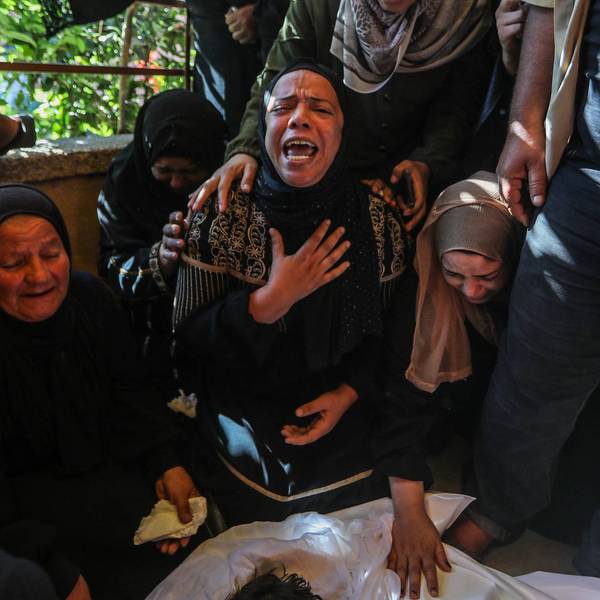
And we owe each other the right to feel. In a culture that rewards numbness and calls it professionalism, that treats emotional response as naivety, that measures the success of a war by the Dow Jones—the most radical thing we can do is refuse to stop feeling. To insist that the people being bombed are people. To feel our hearts shatter when we think about the kids in the school who were annihilated by a bomb paid for by us, as taxpayers. To let that shatter us. To not move on.
And, importantly, this grief must be a shared grief. Isolation is a tool of the authoritarian. Our grief points us toward the injustices that we can no longer tolerate and enable. It allows us to trace the wounds—to feel where our humanity is being carved away by the witnessing of this brutality. So grieve in community. Grieve alongside the Iranian people. Grieve with our neighbors who are being targeted by Immigration and Customs Enforcement. Grieve with our trans siblings. And let that shared grief become the foundation for what we do next, because grief that is felt together demands action.
Yes, we must march and allow for spaces where resistance can be joyful and defiant and absurd, because joy in the face of a regime that demands despair is its own form of refusal. And we must show up for our communities, organize alongside them, and hold the pain in our souls together as we feel the immeasurable loss of human lives. Grief shared, grief felt, grief that moves us into the streets and into each other's arms, is the soil from which solidarity grows and is the place where we refuse to let the necropolitical grammar of war, of subhumanism, become the grammar of our souls.
Dear Common Dreams reader, It’s been nearly 30 years since I co-founded Common Dreams with my late wife, Lina Newhouser. We had the radical notion that journalism should serve the public good, not corporate profits. It was clear to us from the outset what it would take to build such a project. No paid advertisements. No corporate sponsors. No millionaire publisher telling us what to think or do. Many people said we wouldn't last a year, but we proved those doubters wrong. Together with a tremendous team of journalists and dedicated staff, we built an independent media outlet free from the constraints of profits and corporate control. Our mission has always been simple: To inform. To inspire. To ignite change for the common good. Building Common Dreams was not easy. Our survival was never guaranteed. When you take on the most powerful forces—Wall Street greed, fossil fuel industry destruction, Big Tech lobbyists, and uber-rich oligarchs who have spent billions upon billions rigging the economy and democracy in their favor—the only bulwark you have is supporters who believe in your work. But here’s the urgent message from me today. It's never been this bad out there. And it's never been this hard to keep us going. At the very moment Common Dreams is most needed, the threats we face are intensifying. We need your support now more than ever. We don't accept corporate advertising and never will. We don't have a paywall because we don't think people should be blocked from critical news based on their ability to pay. Everything we do is funded by the donations of readers like you. When everyone does the little they can afford, we are strong. But if that support retreats or dries up, so do we. Will you donate now to make sure Common Dreams not only survives but thrives? —Craig Brown, Co-founder |
More than a month into a war with Iran, President Donald Trump finally addressed the nation (perhaps appropriately) on April Fool's Day. It was his first televised speech to justify a war to the American people that he had promised would never happen. During that brief 19-minute speech, which mostly repeated his arguably unstable and unverified posts on social media, he said nothing new, closing with: "We are going to hit them extremely hard over the next two to three weeks. We're going to bring them back to the stone ages where they belong."
Where they belong. To the stone age. Where THEY belong. While speaking to the nation in an effort to help us see the reason for the costs we are incurring, Trump placed an entire people outside of modernity, outside of civilization, outside of the category of the fully human. Pete Hegseth, the secretary of war, rhymes about ignoring basic moral obligations to our fellow humans every chance he gets: "Maximum lethality, not tepid legality"; "Violent effect, not politically correct." While Iranian neighborhoods burned and children in schools were bombed by US weapons, Trump was having this exchange on Fox News:
"Do you have any insight as to how they are doing? Do they have drinking water? Do they have food? It's upsetting," Dana Perino asked.
"I do, but first, do you remember when we had lunch years ago in the base of Trump Tower when it was a brand new building?" Trump continued… "You have not changed," he told the Fox News host before turning his attention to her looks: "Now, I'm not allowed to say this—it's the end of my political career—but you may be even better looking, okay?"
When we are told, implicitly or explicitly, that the people of Iran or Gaza are not people in the way that we are people, the first act of resistance is to interrupt that narrative of dehumanization by allowing for the swelling of our own grief.
The performance was grotesque in its banality. We are no longer surprised. The ridiculous rhymes, the dangerous dehumanizing language, the slimy sexism—all of it has become the grammar of power and the grammar of war under Trump 2.0.
No clarity was offered about why we are at war with Iran. Not to Dana Perino, not to the American people who tuned in during prime time to watch the president talk. No articulation of what the goal is. No naming of the dead. Instead, our daily content about the war is a cacophonous chatter of stock-market updates, defense-contractor earnings, and abstract references to "success." The human beings on the other end of our weapons have been evacuated from the language entirely.
I know we are all feeling this on some level. Because as Dana Perino rightly noted, the starvation of people is upsetting—but also because of what this dehumanization is doing to all of us.
What we are witnessing is not thoughtless language. It is the operation of a very old logic—one that critical psychologist Thomas Teo calls subhumanism: a way of thinking, feeling, and being that makes certain people disposable. The philosopher Achille Mbembe gives this logic its political name: necropolitics, which is the power to decide who may live, who must die, and the creation of what he calls "death-worlds," where entire populations are reduced to a kind of living dead. When Trump threatens to bomb a country "back to the stone ages," he is exercising necropolitical power in its most obvious form on prime time television. He is not merely threatening destruction but declaring that the people who live there already belong to a time before civilization, and therefore their annihilation is not a devastating event. It is not even, really, an event at all.
This is how dehumanization works. Steadily, without blinking an eye, looking straight into the cameras, evacuating humanity from the people we intend to harm.
And this has become the norm, not an aberration. We might even be experiencing numbness in the face of its routine relentlessness. When Israeli Prime Minister Benjamin Netanyahu called Hamas "bloodthirsty monsters," he was laying the groundwork for the immoral destruction of Gaza and the families within it—a destruction that has, at the time of this writing, caused unspeakable harm to entire communities, and that the United Nations has unequivocally identified as genocide. As David Livingstone Smith has documented in On Inhumanity, the language of monstrosity has a horrific lineage. For centuries, European Christians represented Jews as monstrous beings, a trajectory that culminated in the Holocaust. During Jim Crow, Black men were cast as subhuman predators enabling the horrors of lynchings—and then the same language is used to justify our inhuman incarceration policies. First the language changes. Then the unquestioned permissions to eliminate communities follow.
The language used around the war in Iran follows this same pattern. And it is not separate from what has happened—and continues to happen—in Gaza. The pattern enacts the same story over and over again: that some lives are disposable, that some deaths do not count, and that the proper response to their destruction is not grief—not the acknowledgment of our shared humanity and brokenhearted-ness—but a market update.
There is a concept in psychology called moral injury: the harm that comes from witnessing, participating in, or being forced to live inside systems that violate one's deepest commitments. It describes what happens to us—educators, clinicians, organizers, parents, ordinary citizens—as we watch atrocity become normalized. It names what we feel when the excruciating recognition of lives lost to senseless violence gets replaced by financial indicators, and we are expected to go on as though nothing has happened. This is the crisis many of us are living through right now. Not the crisis of war alone, but the crisis of witnessing. The demand is not simply that we tolerate violence. The demand is that we stop feeling it.
And yet, feeling persists. It persists because we know that we belong to each other, we are responsible for each other. And this is what motivates acts of incredibly courageous resistance.
The people of Iran have been resisting—through art, through protest, through organizing—often at devastating personal cost. The Women, Life, Freedom movement is among the most courageous uprisings of our time. Women refused to be silent even when the consequences included imprisonment and death. It was not Trump who advanced liberation in Iran. It was Iranian women, students, workers, artists. What the current war has done is undermine those very movements and murder the very people who have been fighting for their own freedom.
We must hold both of these realities at once: the machinery of dehumanization, and the stubborn, courageous insistence on humanity by those targeted by it. The moral injury is real. And so is the resistance. Both require us to refuse numbness and keep feeling.
Poet and scholar Audre Lorde wrote that to resist, to survive, requires feeling. To grieve is to insist that a life mattered. When we are told, implicitly or explicitly, that the people of Iran or Gaza are not people in the way that we are people, the first act of resistance is to interrupt that narrative of dehumanization by allowing for the swelling of our own grief. To insist that what has been done to them is a wound in the fabric of all of our humanity. You cannot organize on behalf of people whose deaths you have not allowed yourself to feel. You cannot resist a logic of disposability if you have internalized the numbness it requires.
And we owe each other the right to feel. In a culture that rewards numbness and calls it professionalism, that treats emotional response as naivety, that measures the success of a war by the Dow Jones—the most radical thing we can do is refuse to stop feeling. To insist that the people being bombed are people. To feel our hearts shatter when we think about the kids in the school who were annihilated by a bomb paid for by us, as taxpayers. To let that shatter us. To not move on.
And, importantly, this grief must be a shared grief. Isolation is a tool of the authoritarian. Our grief points us toward the injustices that we can no longer tolerate and enable. It allows us to trace the wounds—to feel where our humanity is being carved away by the witnessing of this brutality. So grieve in community. Grieve alongside the Iranian people. Grieve with our neighbors who are being targeted by Immigration and Customs Enforcement. Grieve with our trans siblings. And let that shared grief become the foundation for what we do next, because grief that is felt together demands action.
Yes, we must march and allow for spaces where resistance can be joyful and defiant and absurd, because joy in the face of a regime that demands despair is its own form of refusal. And we must show up for our communities, organize alongside them, and hold the pain in our souls together as we feel the immeasurable loss of human lives. Grief shared, grief felt, grief that moves us into the streets and into each other's arms, is the soil from which solidarity grows and is the place where we refuse to let the necropolitical grammar of war, of subhumanism, become the grammar of our souls.
More than a month into a war with Iran, President Donald Trump finally addressed the nation (perhaps appropriately) on April Fool's Day. It was his first televised speech to justify a war to the American people that he had promised would never happen. During that brief 19-minute speech, which mostly repeated his arguably unstable and unverified posts on social media, he said nothing new, closing with: "We are going to hit them extremely hard over the next two to three weeks. We're going to bring them back to the stone ages where they belong."
Where they belong. To the stone age. Where THEY belong. While speaking to the nation in an effort to help us see the reason for the costs we are incurring, Trump placed an entire people outside of modernity, outside of civilization, outside of the category of the fully human. Pete Hegseth, the secretary of war, rhymes about ignoring basic moral obligations to our fellow humans every chance he gets: "Maximum lethality, not tepid legality"; "Violent effect, not politically correct." While Iranian neighborhoods burned and children in schools were bombed by US weapons, Trump was having this exchange on Fox News:
"Do you have any insight as to how they are doing? Do they have drinking water? Do they have food? It's upsetting," Dana Perino asked.
"I do, but first, do you remember when we had lunch years ago in the base of Trump Tower when it was a brand new building?" Trump continued… "You have not changed," he told the Fox News host before turning his attention to her looks: "Now, I'm not allowed to say this—it's the end of my political career—but you may be even better looking, okay?"
When we are told, implicitly or explicitly, that the people of Iran or Gaza are not people in the way that we are people, the first act of resistance is to interrupt that narrative of dehumanization by allowing for the swelling of our own grief.
The performance was grotesque in its banality. We are no longer surprised. The ridiculous rhymes, the dangerous dehumanizing language, the slimy sexism—all of it has become the grammar of power and the grammar of war under Trump 2.0.
No clarity was offered about why we are at war with Iran. Not to Dana Perino, not to the American people who tuned in during prime time to watch the president talk. No articulation of what the goal is. No naming of the dead. Instead, our daily content about the war is a cacophonous chatter of stock-market updates, defense-contractor earnings, and abstract references to "success." The human beings on the other end of our weapons have been evacuated from the language entirely.
I know we are all feeling this on some level. Because as Dana Perino rightly noted, the starvation of people is upsetting—but also because of what this dehumanization is doing to all of us.
What we are witnessing is not thoughtless language. It is the operation of a very old logic—one that critical psychologist Thomas Teo calls subhumanism: a way of thinking, feeling, and being that makes certain people disposable. The philosopher Achille Mbembe gives this logic its political name: necropolitics, which is the power to decide who may live, who must die, and the creation of what he calls "death-worlds," where entire populations are reduced to a kind of living dead. When Trump threatens to bomb a country "back to the stone ages," he is exercising necropolitical power in its most obvious form on prime time television. He is not merely threatening destruction but declaring that the people who live there already belong to a time before civilization, and therefore their annihilation is not a devastating event. It is not even, really, an event at all.
This is how dehumanization works. Steadily, without blinking an eye, looking straight into the cameras, evacuating humanity from the people we intend to harm.
And this has become the norm, not an aberration. We might even be experiencing numbness in the face of its routine relentlessness. When Israeli Prime Minister Benjamin Netanyahu called Hamas "bloodthirsty monsters," he was laying the groundwork for the immoral destruction of Gaza and the families within it—a destruction that has, at the time of this writing, caused unspeakable harm to entire communities, and that the United Nations has unequivocally identified as genocide. As David Livingstone Smith has documented in On Inhumanity, the language of monstrosity has a horrific lineage. For centuries, European Christians represented Jews as monstrous beings, a trajectory that culminated in the Holocaust. During Jim Crow, Black men were cast as subhuman predators enabling the horrors of lynchings—and then the same language is used to justify our inhuman incarceration policies. First the language changes. Then the unquestioned permissions to eliminate communities follow.
The language used around the war in Iran follows this same pattern. And it is not separate from what has happened—and continues to happen—in Gaza. The pattern enacts the same story over and over again: that some lives are disposable, that some deaths do not count, and that the proper response to their destruction is not grief—not the acknowledgment of our shared humanity and brokenhearted-ness—but a market update.
There is a concept in psychology called moral injury: the harm that comes from witnessing, participating in, or being forced to live inside systems that violate one's deepest commitments. It describes what happens to us—educators, clinicians, organizers, parents, ordinary citizens—as we watch atrocity become normalized. It names what we feel when the excruciating recognition of lives lost to senseless violence gets replaced by financial indicators, and we are expected to go on as though nothing has happened. This is the crisis many of us are living through right now. Not the crisis of war alone, but the crisis of witnessing. The demand is not simply that we tolerate violence. The demand is that we stop feeling it.
And yet, feeling persists. It persists because we know that we belong to each other, we are responsible for each other. And this is what motivates acts of incredibly courageous resistance.
The people of Iran have been resisting—through art, through protest, through organizing—often at devastating personal cost. The Women, Life, Freedom movement is among the most courageous uprisings of our time. Women refused to be silent even when the consequences included imprisonment and death. It was not Trump who advanced liberation in Iran. It was Iranian women, students, workers, artists. What the current war has done is undermine those very movements and murder the very people who have been fighting for their own freedom.
We must hold both of these realities at once: the machinery of dehumanization, and the stubborn, courageous insistence on humanity by those targeted by it. The moral injury is real. And so is the resistance. Both require us to refuse numbness and keep feeling.
Poet and scholar Audre Lorde wrote that to resist, to survive, requires feeling. To grieve is to insist that a life mattered. When we are told, implicitly or explicitly, that the people of Iran or Gaza are not people in the way that we are people, the first act of resistance is to interrupt that narrative of dehumanization by allowing for the swelling of our own grief. To insist that what has been done to them is a wound in the fabric of all of our humanity. You cannot organize on behalf of people whose deaths you have not allowed yourself to feel. You cannot resist a logic of disposability if you have internalized the numbness it requires.
And we owe each other the right to feel. In a culture that rewards numbness and calls it professionalism, that treats emotional response as naivety, that measures the success of a war by the Dow Jones—the most radical thing we can do is refuse to stop feeling. To insist that the people being bombed are people. To feel our hearts shatter when we think about the kids in the school who were annihilated by a bomb paid for by us, as taxpayers. To let that shatter us. To not move on.
And, importantly, this grief must be a shared grief. Isolation is a tool of the authoritarian. Our grief points us toward the injustices that we can no longer tolerate and enable. It allows us to trace the wounds—to feel where our humanity is being carved away by the witnessing of this brutality. So grieve in community. Grieve alongside the Iranian people. Grieve with our neighbors who are being targeted by Immigration and Customs Enforcement. Grieve with our trans siblings. And let that shared grief become the foundation for what we do next, because grief that is felt together demands action.
Yes, we must march and allow for spaces where resistance can be joyful and defiant and absurd, because joy in the face of a regime that demands despair is its own form of refusal. And we must show up for our communities, organize alongside them, and hold the pain in our souls together as we feel the immeasurable loss of human lives. Grief shared, grief felt, grief that moves us into the streets and into each other's arms, is the soil from which solidarity grows and is the place where we refuse to let the necropolitical grammar of war, of subhumanism, become the grammar of our souls.