SUBSCRIBE TO OUR FREE NEWSLETTER
Daily news & progressive opinion—funded by the people, not the corporations—delivered straight to your inbox.
5
#000000
#FFFFFF
To donate by check, phone, or other method, see our More Ways to Give page.
Daily news & progressive opinion—funded by the people, not the corporations—delivered straight to your inbox.
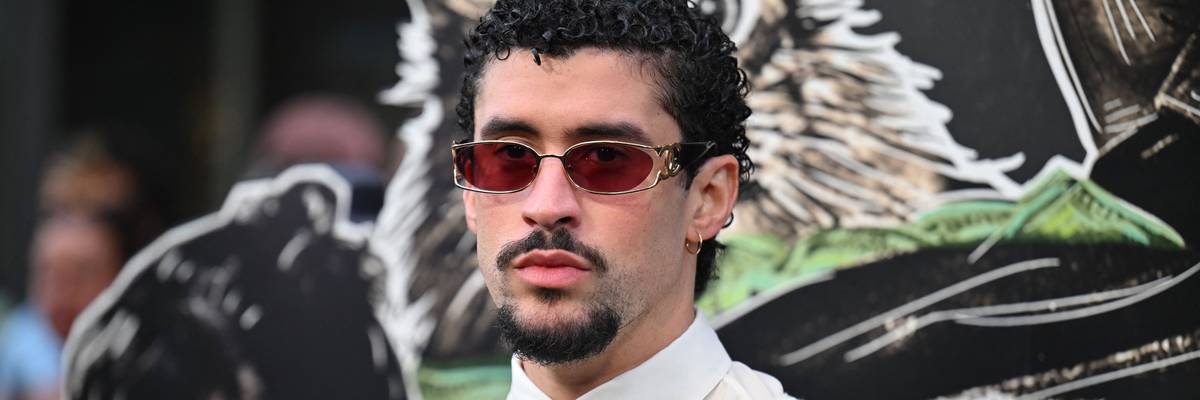
Puerto Rican singer Bad Bunny attends the premiere of "Caught Stealing" at the Regal Union Square in New York on August 26, 2025.
As a recording artist, the world is his classroom, and his performances function as public pedagogy.
While the NFL is promising the American public a Super Bowl they can dance to, keep in mind that half-time show headliner Bad Bunny is way more than just the world’s most-played recording artist of 2025 and Latin Grammy and Grammy winner: Benito Antonio Martínez Ocasio is also a bona fide environmental justice educator.
As a former public school educator, a professor, and an author of two books on teaching climate change and environmental justice, I know that climate change disproportionately impacts marginalized communities, which means you can’t teach about the climate crisis without also teaching about equity, race, and justice.
Bad Bunny knows this, too.
Consider that Mr. Ocasio was born in Puerto Rico (where he recently held an extensive concert residency that reportedly boosted the economy of the unincorporated US territory by up to $400 million), where he reportedly has held or holds property, along with Los Angeles, Miami, and San Juan. It is not lost on Bad Bunny that all of these areas face severe climate change impacts, from record-breaking wildfire seasons to rising waters to extreme heat.
His call to action also aligns with the environmentally just future that Puerto Ricans have been envisioning.
Mr. Ocasio frequently incorporates commentary about social and political issues into his music and has spoken out about Immigration and Customs Enforcement Raids, transphobia, and racial justice. As a recording artist, the world is his classroom, and his performances function as public pedagogy. K-12 teachers, college professors, and environmental leaders alike may draw inspiration from his work to develop their own environmental justice curricula, projects, and investigations as they take action in their communities.
Bad Bunny’s music video, El Apagón, embeds an 18-minute documentary featuring investigative journalist Bianca Graulau and provides evidence of unparalleled gentrification driven by outsiders, the widespread displacement of families with decades of roots in their lost communities, and the purposeful and profound persistence of colonialism.
Moreover, the video takes its title from the rolling blackouts that occurred in Puerto Rico after Hurricane Maria in 2017. Hurricane Maria resulted in the largest blackout in US history and the second-largest in the world.
Puerto Rico’s power grid was devastated by Hurricane Maria, prompting privatization by LUMA Energy, which was met with fierce resistance and protest. However, since privatization, blackouts have persisted, including those caused by a 6.4-magnitude earthquake in 2020, Hurricane Fiona in 2022, and a blackout in 2025. Even without natural disasters, Puerto Ricans lose about 27 hours of power per year.
More than just time spent in the dark, blackouts disrupt access to clean water and air conditioning, both of which are essential in tropical climates. In addition, reliance on generators during blackouts has increased respiratory health impacts, such as asthma.
Children are among the most vulnerable, and blackouts have also resulted in mental health impacts for Puerto Rico’s K-12 students, such as a sense of hopelessness and isolation.
Add it all up, and you get systemic environmental racism. And it leads to the disproportionate impact of environmental hazards on people of color. A concerted push toward environmental justice is the only antidote.
The preparation of students and community members to work toward environmental justice began more than 30 years ago at the First National People of Color Leadership Summit. The 1,100-person delegation drafted 17 Principles of Environmental Justice and the Principles of Working Together. They significantly redefined the meaning of what constitutes the “environment.”
Historically, “environment” referred to pristine natural areas outside cities. At the summit, “environment” was redefined to capture the places where people (particularly those of color) live, work, study, play, and pray. This enabled the inclusion of issues such as toxic pollution, worker safety, transportation, housing, health, and recurring blackouts, such as those in Puerto Rico.
To combat local environmental racism in any community, it is imperative to begin with community-generated solutions and to view residents through a lens of self-determination, as they are the most knowledgeable about the issues that directly affect their communities. This includes K-12 students, who are capable and eager to take action.
Young students can apply an investigative journalism lens to their communities by conducting research to address environmental issues of concern. For example, students can interview residents and conduct community surveys in their neighborhood to identify environmental injustices. Students can also create an oral history project to archive local perspectives of environmental injustices and partner with their local public library to host a showcase or a display of their findings.
Elementary, middle, and high school teachers can also encourage students to develop their historical literacy, social consciousness, and critical thinking skills by comparing the US response time to Hurricane Maria with that of other natural disasters, with particular attention to US states versus US territories.
Again, look no further than Bad Bunny. He is intentionally and powerfully elevating Puerto Rico to the national consciousness while simultaneously using his global platform to highlight environmental racism.
Bad Bunny has turned his global stage into a worldwide classroom.
More pointedly, his call to action also aligns with the environmentally just future that Puerto Ricans have been envisioning. Teachers, students, and environmental leaders are well-positioned to respond to this call. However, we can’t rely on our global pop stars to teach our K-12 students about environmental racism and environmental justice; it must start in public schools.
Dear Common Dreams reader, It’s been nearly 30 years since I co-founded Common Dreams with my late wife, Lina Newhouser. We had the radical notion that journalism should serve the public good, not corporate profits. It was clear to us from the outset what it would take to build such a project. No paid advertisements. No corporate sponsors. No millionaire publisher telling us what to think or do. Many people said we wouldn't last a year, but we proved those doubters wrong. Together with a tremendous team of journalists and dedicated staff, we built an independent media outlet free from the constraints of profits and corporate control. Our mission has always been simple: To inform. To inspire. To ignite change for the common good. Building Common Dreams was not easy. Our survival was never guaranteed. When you take on the most powerful forces—Wall Street greed, fossil fuel industry destruction, Big Tech lobbyists, and uber-rich oligarchs who have spent billions upon billions rigging the economy and democracy in their favor—the only bulwark you have is supporters who believe in your work. But here’s the urgent message from me today. It's never been this bad out there. And it's never been this hard to keep us going. At the very moment Common Dreams is most needed, the threats we face are intensifying. We need your support now more than ever. We don't accept corporate advertising and never will. We don't have a paywall because we don't think people should be blocked from critical news based on their ability to pay. Everything we do is funded by the donations of readers like you. When everyone does the little they can afford, we are strong. But if that support retreats or dries up, so do we. Will you donate now to make sure Common Dreams not only survives but thrives? —Craig Brown, Co-founder |
While the NFL is promising the American public a Super Bowl they can dance to, keep in mind that half-time show headliner Bad Bunny is way more than just the world’s most-played recording artist of 2025 and Latin Grammy and Grammy winner: Benito Antonio Martínez Ocasio is also a bona fide environmental justice educator.
As a former public school educator, a professor, and an author of two books on teaching climate change and environmental justice, I know that climate change disproportionately impacts marginalized communities, which means you can’t teach about the climate crisis without also teaching about equity, race, and justice.
Bad Bunny knows this, too.
Consider that Mr. Ocasio was born in Puerto Rico (where he recently held an extensive concert residency that reportedly boosted the economy of the unincorporated US territory by up to $400 million), where he reportedly has held or holds property, along with Los Angeles, Miami, and San Juan. It is not lost on Bad Bunny that all of these areas face severe climate change impacts, from record-breaking wildfire seasons to rising waters to extreme heat.
His call to action also aligns with the environmentally just future that Puerto Ricans have been envisioning.
Mr. Ocasio frequently incorporates commentary about social and political issues into his music and has spoken out about Immigration and Customs Enforcement Raids, transphobia, and racial justice. As a recording artist, the world is his classroom, and his performances function as public pedagogy. K-12 teachers, college professors, and environmental leaders alike may draw inspiration from his work to develop their own environmental justice curricula, projects, and investigations as they take action in their communities.
Bad Bunny’s music video, El Apagón, embeds an 18-minute documentary featuring investigative journalist Bianca Graulau and provides evidence of unparalleled gentrification driven by outsiders, the widespread displacement of families with decades of roots in their lost communities, and the purposeful and profound persistence of colonialism.
Moreover, the video takes its title from the rolling blackouts that occurred in Puerto Rico after Hurricane Maria in 2017. Hurricane Maria resulted in the largest blackout in US history and the second-largest in the world.
Puerto Rico’s power grid was devastated by Hurricane Maria, prompting privatization by LUMA Energy, which was met with fierce resistance and protest. However, since privatization, blackouts have persisted, including those caused by a 6.4-magnitude earthquake in 2020, Hurricane Fiona in 2022, and a blackout in 2025. Even without natural disasters, Puerto Ricans lose about 27 hours of power per year.
More than just time spent in the dark, blackouts disrupt access to clean water and air conditioning, both of which are essential in tropical climates. In addition, reliance on generators during blackouts has increased respiratory health impacts, such as asthma.
Children are among the most vulnerable, and blackouts have also resulted in mental health impacts for Puerto Rico’s K-12 students, such as a sense of hopelessness and isolation.
Add it all up, and you get systemic environmental racism. And it leads to the disproportionate impact of environmental hazards on people of color. A concerted push toward environmental justice is the only antidote.
The preparation of students and community members to work toward environmental justice began more than 30 years ago at the First National People of Color Leadership Summit. The 1,100-person delegation drafted 17 Principles of Environmental Justice and the Principles of Working Together. They significantly redefined the meaning of what constitutes the “environment.”
Historically, “environment” referred to pristine natural areas outside cities. At the summit, “environment” was redefined to capture the places where people (particularly those of color) live, work, study, play, and pray. This enabled the inclusion of issues such as toxic pollution, worker safety, transportation, housing, health, and recurring blackouts, such as those in Puerto Rico.
To combat local environmental racism in any community, it is imperative to begin with community-generated solutions and to view residents through a lens of self-determination, as they are the most knowledgeable about the issues that directly affect their communities. This includes K-12 students, who are capable and eager to take action.
Young students can apply an investigative journalism lens to their communities by conducting research to address environmental issues of concern. For example, students can interview residents and conduct community surveys in their neighborhood to identify environmental injustices. Students can also create an oral history project to archive local perspectives of environmental injustices and partner with their local public library to host a showcase or a display of their findings.
Elementary, middle, and high school teachers can also encourage students to develop their historical literacy, social consciousness, and critical thinking skills by comparing the US response time to Hurricane Maria with that of other natural disasters, with particular attention to US states versus US territories.
Again, look no further than Bad Bunny. He is intentionally and powerfully elevating Puerto Rico to the national consciousness while simultaneously using his global platform to highlight environmental racism.
Bad Bunny has turned his global stage into a worldwide classroom.
More pointedly, his call to action also aligns with the environmentally just future that Puerto Ricans have been envisioning. Teachers, students, and environmental leaders are well-positioned to respond to this call. However, we can’t rely on our global pop stars to teach our K-12 students about environmental racism and environmental justice; it must start in public schools.
While the NFL is promising the American public a Super Bowl they can dance to, keep in mind that half-time show headliner Bad Bunny is way more than just the world’s most-played recording artist of 2025 and Latin Grammy and Grammy winner: Benito Antonio Martínez Ocasio is also a bona fide environmental justice educator.
As a former public school educator, a professor, and an author of two books on teaching climate change and environmental justice, I know that climate change disproportionately impacts marginalized communities, which means you can’t teach about the climate crisis without also teaching about equity, race, and justice.
Bad Bunny knows this, too.
Consider that Mr. Ocasio was born in Puerto Rico (where he recently held an extensive concert residency that reportedly boosted the economy of the unincorporated US territory by up to $400 million), where he reportedly has held or holds property, along with Los Angeles, Miami, and San Juan. It is not lost on Bad Bunny that all of these areas face severe climate change impacts, from record-breaking wildfire seasons to rising waters to extreme heat.
His call to action also aligns with the environmentally just future that Puerto Ricans have been envisioning.
Mr. Ocasio frequently incorporates commentary about social and political issues into his music and has spoken out about Immigration and Customs Enforcement Raids, transphobia, and racial justice. As a recording artist, the world is his classroom, and his performances function as public pedagogy. K-12 teachers, college professors, and environmental leaders alike may draw inspiration from his work to develop their own environmental justice curricula, projects, and investigations as they take action in their communities.
Bad Bunny’s music video, El Apagón, embeds an 18-minute documentary featuring investigative journalist Bianca Graulau and provides evidence of unparalleled gentrification driven by outsiders, the widespread displacement of families with decades of roots in their lost communities, and the purposeful and profound persistence of colonialism.
Moreover, the video takes its title from the rolling blackouts that occurred in Puerto Rico after Hurricane Maria in 2017. Hurricane Maria resulted in the largest blackout in US history and the second-largest in the world.
Puerto Rico’s power grid was devastated by Hurricane Maria, prompting privatization by LUMA Energy, which was met with fierce resistance and protest. However, since privatization, blackouts have persisted, including those caused by a 6.4-magnitude earthquake in 2020, Hurricane Fiona in 2022, and a blackout in 2025. Even without natural disasters, Puerto Ricans lose about 27 hours of power per year.
More than just time spent in the dark, blackouts disrupt access to clean water and air conditioning, both of which are essential in tropical climates. In addition, reliance on generators during blackouts has increased respiratory health impacts, such as asthma.
Children are among the most vulnerable, and blackouts have also resulted in mental health impacts for Puerto Rico’s K-12 students, such as a sense of hopelessness and isolation.
Add it all up, and you get systemic environmental racism. And it leads to the disproportionate impact of environmental hazards on people of color. A concerted push toward environmental justice is the only antidote.
The preparation of students and community members to work toward environmental justice began more than 30 years ago at the First National People of Color Leadership Summit. The 1,100-person delegation drafted 17 Principles of Environmental Justice and the Principles of Working Together. They significantly redefined the meaning of what constitutes the “environment.”
Historically, “environment” referred to pristine natural areas outside cities. At the summit, “environment” was redefined to capture the places where people (particularly those of color) live, work, study, play, and pray. This enabled the inclusion of issues such as toxic pollution, worker safety, transportation, housing, health, and recurring blackouts, such as those in Puerto Rico.
To combat local environmental racism in any community, it is imperative to begin with community-generated solutions and to view residents through a lens of self-determination, as they are the most knowledgeable about the issues that directly affect their communities. This includes K-12 students, who are capable and eager to take action.
Young students can apply an investigative journalism lens to their communities by conducting research to address environmental issues of concern. For example, students can interview residents and conduct community surveys in their neighborhood to identify environmental injustices. Students can also create an oral history project to archive local perspectives of environmental injustices and partner with their local public library to host a showcase or a display of their findings.
Elementary, middle, and high school teachers can also encourage students to develop their historical literacy, social consciousness, and critical thinking skills by comparing the US response time to Hurricane Maria with that of other natural disasters, with particular attention to US states versus US territories.
Again, look no further than Bad Bunny. He is intentionally and powerfully elevating Puerto Rico to the national consciousness while simultaneously using his global platform to highlight environmental racism.
Bad Bunny has turned his global stage into a worldwide classroom.
More pointedly, his call to action also aligns with the environmentally just future that Puerto Ricans have been envisioning. Teachers, students, and environmental leaders are well-positioned to respond to this call. However, we can’t rely on our global pop stars to teach our K-12 students about environmental racism and environmental justice; it must start in public schools.