
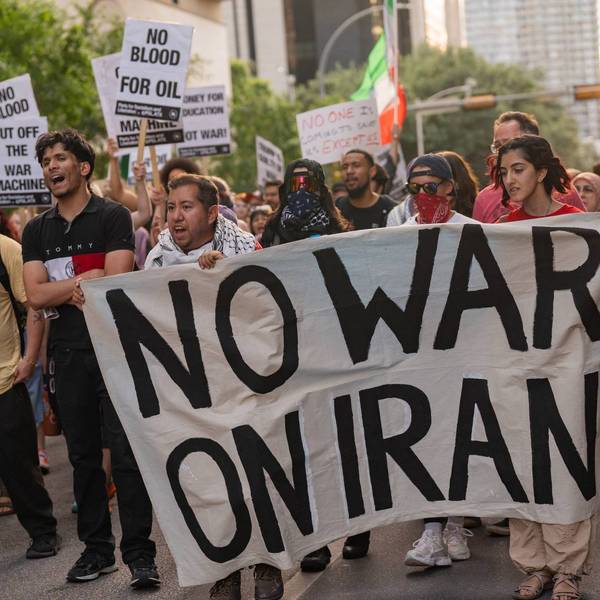
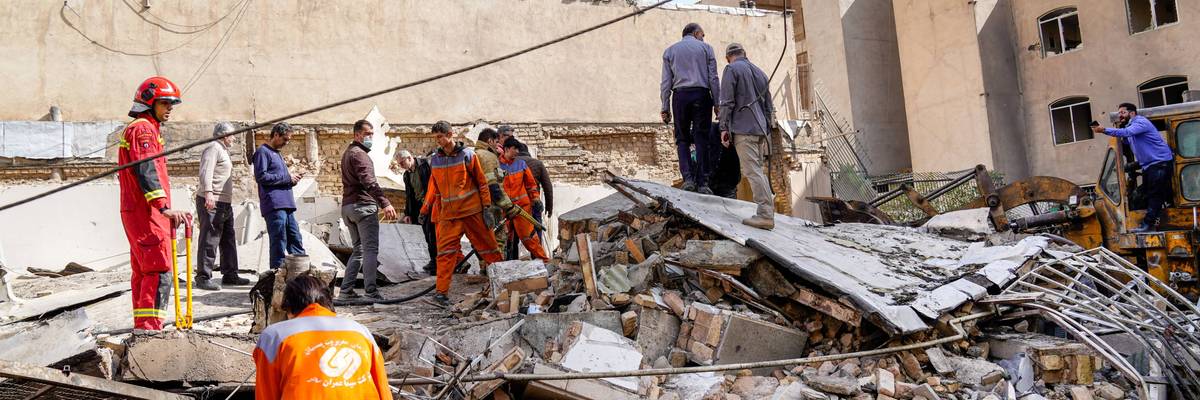
In this picture obtained from Iran's ISNA news agency, rescuers search through the rubble of a collapsed building at the site of a strike on a neighborhood, in Tehran on February 28, 2026.
5 Things to Know About Trump's Illegal War on Iran
Whatever criticisms one may have of Iran’s government, they do not justify this deadly act of aggression.
The Trump administration has joined Israel in launching large-scale attacks across Iran. The strikes mark the beginning of “major combat operations,” according to President Donald Trump, and in response Tehran has reportedly launched retaliatory attacks in Middle Eastern countries that host US military bases.
With hundreds of Iranians already killed and the war threatening to spiral out of control, here are five things Americans need to know.
1: Trump says he’s trying to prevent Iran from getting a nuclear weapon. But it’s the United States and its allies that are the greatest nuclear threat.
The United States, not Iran, is the country setting the worst example in promoting nuclear weapons in the world today.
It was Trump who pulled out of the US-Iran nuclear deal during his first term—even though the United Nations certified that Iran was in compliance—and resumed harsh sanctions, deployed more troops to the region, and even assassinated an Iranian general.
How could Iran—or any country—now take the US seriously at the negotiating table after Trump blew up the Iran nuclear deal?
Trump’s hostility despite Iran’s earlier compliance only bolsters the claim of Iranian leaders who believe the country needs nuclear weapons as a deterrent against aggression.
Meanwhile, Trump just let the last existing nuclear agreement between the US and Russia, the two countries with the most warheads, expire. Trump is also giving unconditional backing to Israel—the only country in the Middle East that actually has nuclear weapons—and is now supporting the launch of a nuclear program in Saudi Arabia.
2: Trump is contributing to the suffering of ordinary Iranians, not rescuing them.
The Iranian government recently carried out a brutal crackdown on protesters and critics. Trump has claimed that the US is “coming to the rescue” of Iranians who’ve challenged their government.
But in reality, his actions have put countless Iranians in harm’s way. Hundreds of civilians have already been killed in the strikes so far—including 165 in an appalling strike on a girl’s school.
Even before the latest violence, US sanctions had devastated Iran’s population—especially women, children, the sick, people with disabilities, and other vulnerable people—leading to countless preventable deaths.
3: The United States is an unreliable negotiator.
How could Iran—or any country—now take the US seriously at the negotiating table after Trump blew up the Iran nuclear deal?
Attacking Iran is not popular, and Trump definitely does not have a mandate to do it.
Moreover, US demands keep changing. In recent negotiations, the US kept moving the goal posts, going from the demand that Iran not develop nuclear weapons to saying that the country’s civilian nuclear program, its treatment of dissidents, its relationship with regional allies, and its ballistic missile arsenal would all be on the negotiating table.
As Trump put it bizarrely on Fox News, the deal he wants should have “no nuclear weapons, no missiles, no this, no that, all the different things that you want.”
4: The United States has been threatening Iran, not the other way around.
Even before the war, US military bases across the region surrounded Iran with troops and weapons. But there are no Iranian troops or military assets anywhere near the United States.
There is also no question that the most aggressive Middle Eastern power at the moment is Washington’s ally Israel—which continues its genocide in Gaza and attacked six other countries in the last year alone—all enabled through military assistance, arms transfers, and political protection by the United States.
5: Trump’s war with Iran—and his aggressive foreign policy generally—are unpopular with Americans.
The majority of Americans—61%—disapprove of Trump’s aggressive foreign policy in general. And in a recent Reuters poll, just one-quarter said they approved of Trump’s decision to strike Iran—and that was before the announcement that US servicemembers had been killed.
Attacking Iran is not popular, and Trump definitely does not have a mandate to do it. Whatever criticisms one may have of Iran’s government, they do not justify this illegal war.
We are at a crossroads
This country and this world are at a monumental crossroads. In a few short weeks, US voters will have an opportunity to beat back the forces of fascism and confront the billionaires who are rigging the economy, our media system, and our democracy, making it increasingly impossible for ordinary people to get by. We’re not just talking about the election. We’re talking about what must be done once these fascist elements are vanquished from power. We need a bolder set of solutions than what either major party has so far been willing to offer and a working-class movement ready to fight like hell for it. Trump didn't emerge from nowhere. The conditions that fueled MAGA authoritarianism were created by decades of radical neoliberal economic policies and a corrupt political system dominated by corporate interests. They slashed taxes on the super-rich, promising that the benefits would trickle down. They said giveaways to the corporate titans would make life more affordable for the rest of us. It was all bullshit. And when a bitter, betrayed populace searches for someone to blame, right-wing demagogues have little trouble finding scapegoats. People know when they're being lied to, but you won't hear any of this from the corporate media. Only independent journalism—powered and funded by people who believe in building a better world—can deliver truly trustworthy daily news. Our Fall Campaign is underway, and we need your help. To power our newsroom through the rest of the year, we need to raise $125,000 by midnight on October 31. So if you share our vision, please contribute whatever you can to sustain our work. |
The Trump administration has joined Israel in launching large-scale attacks across Iran. The strikes mark the beginning of “major combat operations,” according to President Donald Trump, and in response Tehran has reportedly launched retaliatory attacks in Middle Eastern countries that host US military bases.
With hundreds of Iranians already killed and the war threatening to spiral out of control, here are five things Americans need to know.
1: Trump says he’s trying to prevent Iran from getting a nuclear weapon. But it’s the United States and its allies that are the greatest nuclear threat.
The United States, not Iran, is the country setting the worst example in promoting nuclear weapons in the world today.
It was Trump who pulled out of the US-Iran nuclear deal during his first term—even though the United Nations certified that Iran was in compliance—and resumed harsh sanctions, deployed more troops to the region, and even assassinated an Iranian general.
How could Iran—or any country—now take the US seriously at the negotiating table after Trump blew up the Iran nuclear deal?
Trump’s hostility despite Iran’s earlier compliance only bolsters the claim of Iranian leaders who believe the country needs nuclear weapons as a deterrent against aggression.
Meanwhile, Trump just let the last existing nuclear agreement between the US and Russia, the two countries with the most warheads, expire. Trump is also giving unconditional backing to Israel—the only country in the Middle East that actually has nuclear weapons—and is now supporting the launch of a nuclear program in Saudi Arabia.
2: Trump is contributing to the suffering of ordinary Iranians, not rescuing them.
The Iranian government recently carried out a brutal crackdown on protesters and critics. Trump has claimed that the US is “coming to the rescue” of Iranians who’ve challenged their government.
But in reality, his actions have put countless Iranians in harm’s way. Hundreds of civilians have already been killed in the strikes so far—including 165 in an appalling strike on a girl’s school.
Even before the latest violence, US sanctions had devastated Iran’s population—especially women, children, the sick, people with disabilities, and other vulnerable people—leading to countless preventable deaths.
3: The United States is an unreliable negotiator.
How could Iran—or any country—now take the US seriously at the negotiating table after Trump blew up the Iran nuclear deal?
Attacking Iran is not popular, and Trump definitely does not have a mandate to do it.
Moreover, US demands keep changing. In recent negotiations, the US kept moving the goal posts, going from the demand that Iran not develop nuclear weapons to saying that the country’s civilian nuclear program, its treatment of dissidents, its relationship with regional allies, and its ballistic missile arsenal would all be on the negotiating table.
As Trump put it bizarrely on Fox News, the deal he wants should have “no nuclear weapons, no missiles, no this, no that, all the different things that you want.”
4: The United States has been threatening Iran, not the other way around.
Even before the war, US military bases across the region surrounded Iran with troops and weapons. But there are no Iranian troops or military assets anywhere near the United States.
There is also no question that the most aggressive Middle Eastern power at the moment is Washington’s ally Israel—which continues its genocide in Gaza and attacked six other countries in the last year alone—all enabled through military assistance, arms transfers, and political protection by the United States.
5: Trump’s war with Iran—and his aggressive foreign policy generally—are unpopular with Americans.
The majority of Americans—61%—disapprove of Trump’s aggressive foreign policy in general. And in a recent Reuters poll, just one-quarter said they approved of Trump’s decision to strike Iran—and that was before the announcement that US servicemembers had been killed.
Attacking Iran is not popular, and Trump definitely does not have a mandate to do it. Whatever criticisms one may have of Iran’s government, they do not justify this illegal war.
- As Trump Marches US Toward Iran War, Critics Ask: Where's the 'Pushback' From Dems and Media? ›
- Only the Coalition of the Foolish Wants a War With Iran ›
- Pressure Builds on US Lawmakers to Support Iran War Powers Resolution ›
- Israel, Iran, and the War Machine’s Global Lust for the Rapture ›
- No US War on Iran: An Open Letter to the UN Security Council ›
- Damning CNN Supercut Exposes GOP Doublespeak About Trump's Iran War ›
The Trump administration has joined Israel in launching large-scale attacks across Iran. The strikes mark the beginning of “major combat operations,” according to President Donald Trump, and in response Tehran has reportedly launched retaliatory attacks in Middle Eastern countries that host US military bases.
With hundreds of Iranians already killed and the war threatening to spiral out of control, here are five things Americans need to know.
1: Trump says he’s trying to prevent Iran from getting a nuclear weapon. But it’s the United States and its allies that are the greatest nuclear threat.
The United States, not Iran, is the country setting the worst example in promoting nuclear weapons in the world today.
It was Trump who pulled out of the US-Iran nuclear deal during his first term—even though the United Nations certified that Iran was in compliance—and resumed harsh sanctions, deployed more troops to the region, and even assassinated an Iranian general.
How could Iran—or any country—now take the US seriously at the negotiating table after Trump blew up the Iran nuclear deal?
Trump’s hostility despite Iran’s earlier compliance only bolsters the claim of Iranian leaders who believe the country needs nuclear weapons as a deterrent against aggression.
Meanwhile, Trump just let the last existing nuclear agreement between the US and Russia, the two countries with the most warheads, expire. Trump is also giving unconditional backing to Israel—the only country in the Middle East that actually has nuclear weapons—and is now supporting the launch of a nuclear program in Saudi Arabia.
2: Trump is contributing to the suffering of ordinary Iranians, not rescuing them.
The Iranian government recently carried out a brutal crackdown on protesters and critics. Trump has claimed that the US is “coming to the rescue” of Iranians who’ve challenged their government.
But in reality, his actions have put countless Iranians in harm’s way. Hundreds of civilians have already been killed in the strikes so far—including 165 in an appalling strike on a girl’s school.
Even before the latest violence, US sanctions had devastated Iran’s population—especially women, children, the sick, people with disabilities, and other vulnerable people—leading to countless preventable deaths.
3: The United States is an unreliable negotiator.
How could Iran—or any country—now take the US seriously at the negotiating table after Trump blew up the Iran nuclear deal?
Attacking Iran is not popular, and Trump definitely does not have a mandate to do it.
Moreover, US demands keep changing. In recent negotiations, the US kept moving the goal posts, going from the demand that Iran not develop nuclear weapons to saying that the country’s civilian nuclear program, its treatment of dissidents, its relationship with regional allies, and its ballistic missile arsenal would all be on the negotiating table.
As Trump put it bizarrely on Fox News, the deal he wants should have “no nuclear weapons, no missiles, no this, no that, all the different things that you want.”
4: The United States has been threatening Iran, not the other way around.
Even before the war, US military bases across the region surrounded Iran with troops and weapons. But there are no Iranian troops or military assets anywhere near the United States.
There is also no question that the most aggressive Middle Eastern power at the moment is Washington’s ally Israel—which continues its genocide in Gaza and attacked six other countries in the last year alone—all enabled through military assistance, arms transfers, and political protection by the United States.
5: Trump’s war with Iran—and his aggressive foreign policy generally—are unpopular with Americans.
The majority of Americans—61%—disapprove of Trump’s aggressive foreign policy in general. And in a recent Reuters poll, just one-quarter said they approved of Trump’s decision to strike Iran—and that was before the announcement that US servicemembers had been killed.
Attacking Iran is not popular, and Trump definitely does not have a mandate to do it. Whatever criticisms one may have of Iran’s government, they do not justify this illegal war.
- As Trump Marches US Toward Iran War, Critics Ask: Where's the 'Pushback' From Dems and Media? ›
- Only the Coalition of the Foolish Wants a War With Iran ›
- Pressure Builds on US Lawmakers to Support Iran War Powers Resolution ›
- Israel, Iran, and the War Machine’s Global Lust for the Rapture ›
- No US War on Iran: An Open Letter to the UN Security Council ›
- Damning CNN Supercut Exposes GOP Doublespeak About Trump's Iran War ›