SUBSCRIBE TO OUR FREE NEWSLETTER
Daily news & progressive opinion—funded by the people, not the corporations—delivered straight to your inbox.
5
#000000
#FFFFFF
To donate by check, phone, or other method, see our More Ways to Give page.
Public Citizen is a nonprofit consumer advocacy organization that champions the public interest in the halls of power. We defend democracy, resist corporate power and work to ensure that government works for the people - not for big corporations. Founded in 1971, we now have 500,000 members and supporters throughout the country.
(202) 588-1000
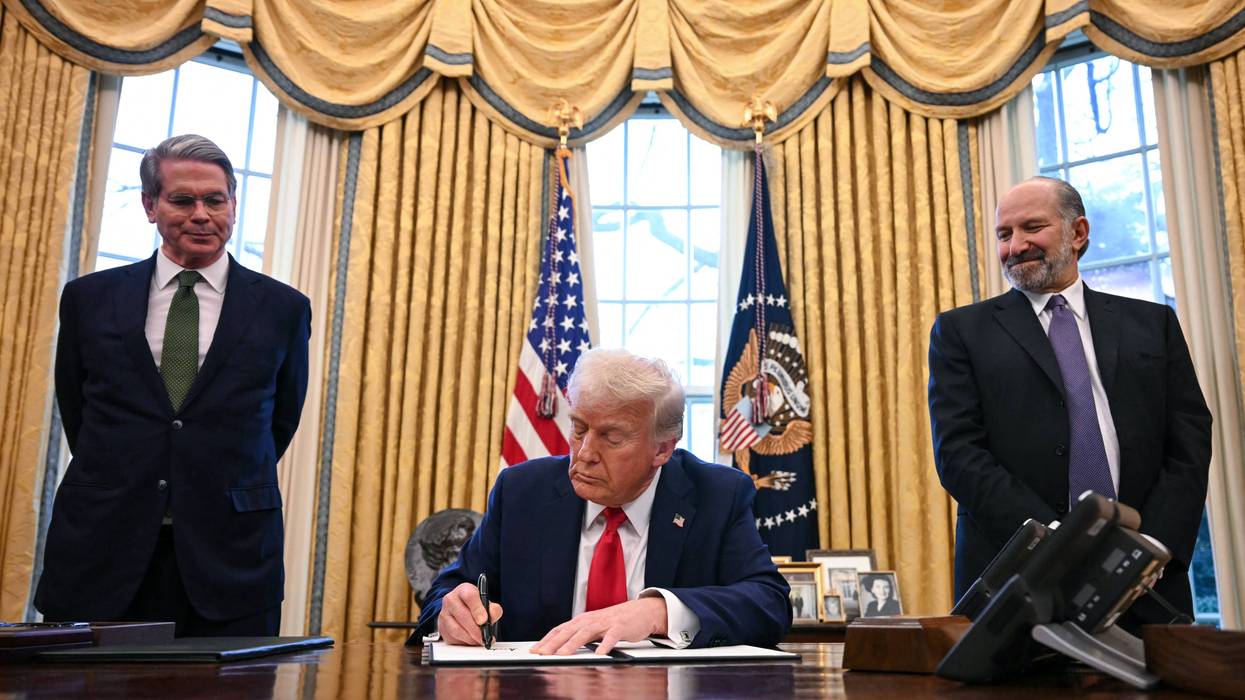
The publication points out that "the stunning size of the federal income tax breaks corporations claimed this year dwarfs past corporate tax breaks, themselves sizeable. Microsoft received $18.7 billion in federal income tax breaks, a record high for single-year federal tax breaks for one publicly traded company. Alphabet claimed a staggering $18.4 billion, and Amazon walked away with $17.4 billion in tax breaks. Meta received $13.7 billion, JPMorgan Chase received $8.3 billion, and Nvidia received $6.8 billion."
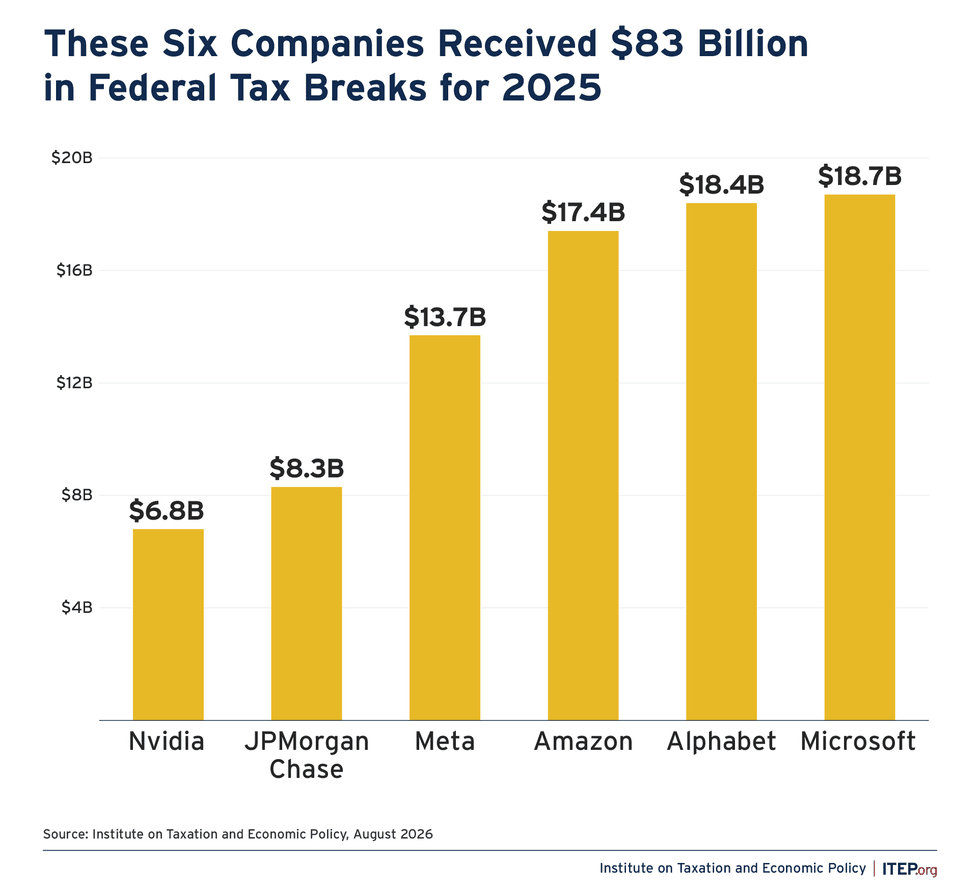
To put that $83 billion into context, the report highlights that it "represents nearly 18%, or almost $1 out of ever $5, of total federal corporation tax collections according to the Congressional Budget Office." It also "exceeds the entire annual discretionary budget of the US Department of Education," which Trump is notably aiming to eliminate as part of a broader mission to gut the federal government in his second term.
"This is an extraordinary concentration of tax benefits among some of the biggest and most profitable companies in the world," report co-author and ITEP senior fellow Matthew Gardner said in a statement. "When six companies can collect tax breaks equal to nearly one-fifth of what the federal government raises from the corporate income tax altogether, policymakers should be asking whether these provisions are serving the public interest or simply rewarding companies that are already enormously profitable and politically influential."
Gardner and his co-author, ITEP intern Sarah Buttikofer, emphasized that the top four firms featured in their analysis are tech giants: "Microsoft, Alphabet, Amazon, and Meta collectively received $68 billion in federal income tax breaks—which represents roughly 33% of the overall total."
"These figures show what Americans intuitively know: Corporate profits and economic power are increasingly concentrated among a relatively small number of extremely large companies," the pair wrote. "The presence of half a dozen tech CEOs at Donald Trump's January 2025 inauguration was a stark reminder that the economic leverage these companies are gaining is being translated into political power as well. That makes the tax treatment of these companies especially important."
Amazon founder Jeff Bezos and Meta CEO Mark Zuckerberg were among the Big Tech executives with prime seating at the inauguration. There was also the world's richest man, Elon Musk, who went on to help Trump rip apart the federal workforce as the de facto leader of the so-called Department of Government Efficiency.
Musk leads various businesses, including Tesla, which was among 88 companies that paid no federal income tax last year, despite making almost $5.7 billion, according to an April analysis from ITEP. The others range from airlines and banks to energy, entertainment, and tech companies, such as Citigroup, Edison International, Palantir, United, and Walt Disney.
Meanwhile, near the end of last year, as Trump dismissed affordability concerns, an Associated Press-NORC Center for Public Affairs Research poll found that only 31% of voters approved of Trump's handling of the economy, the survey's lowest figure for his two terms.
Then, a January analysis by Democrats on the Joint Economic Committee revealed that the average American family paid $1,625 in higher costs last year as his policies drove up prices.
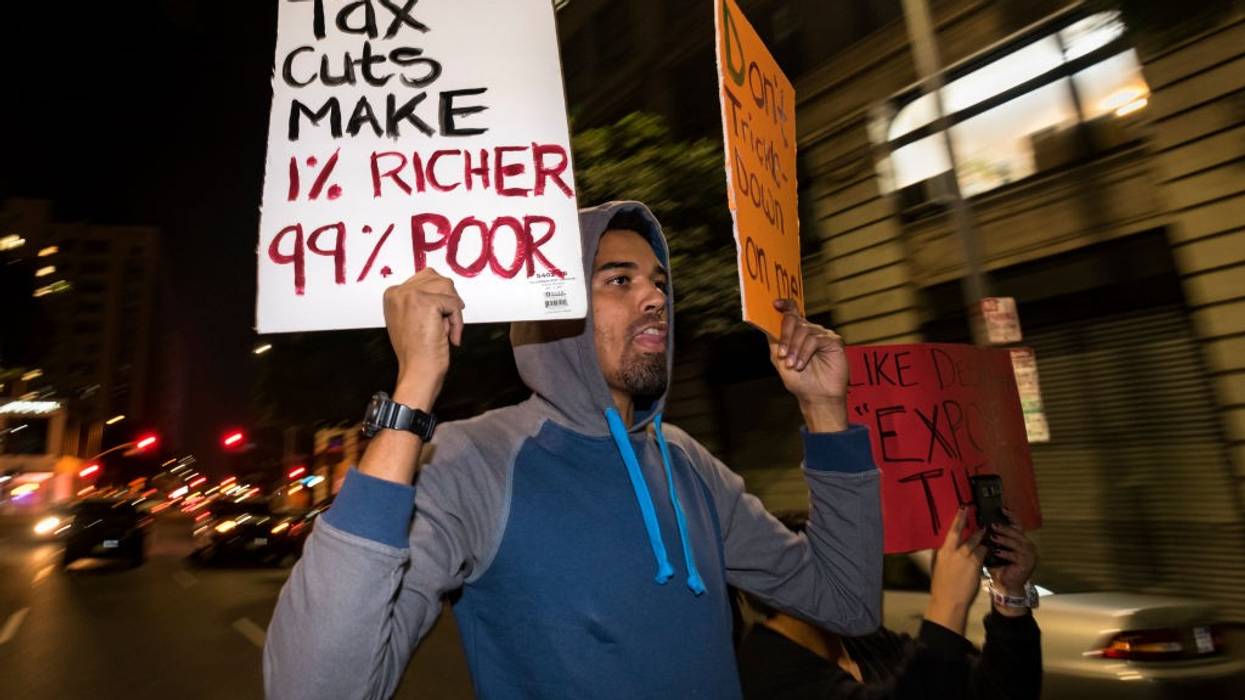
That was followed by a February warning from the Economic Policy Institute that Trump's economic agenda "will make ordinary families reliably poorer in the future." EPI's chief economist, Josh Bivens, pointed to the president's anti-labor policies, cuts to federal spending and jobs, mass deportation efforts, and tariffs—as well as the OBBBA, which gave tax breaks to the rich while stripping healthcare and food assistance from Americans in need.
With the US now enduring the consequences of Trump's war of choice on Iran, inflation remains high. Americans are struggling with the cost of gasoline, groceries, healthcare, housing, and more. After the latest figures were released last week, Alex Jacquez, a former Obama administration official who is now senior vice president of policy and advocacy at Groundwork Collaborative, said that "prices started climbing again in July, and Trump's catastrophic mismanagement of our economy means more spikes in the months ahead."

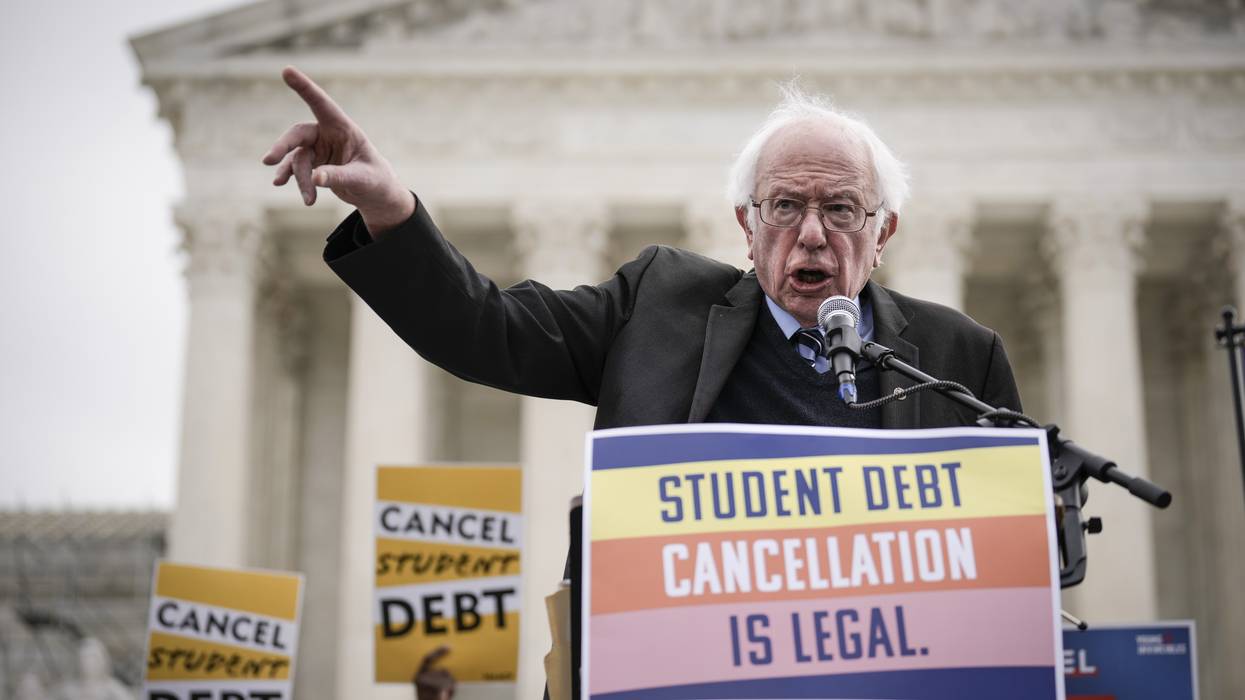



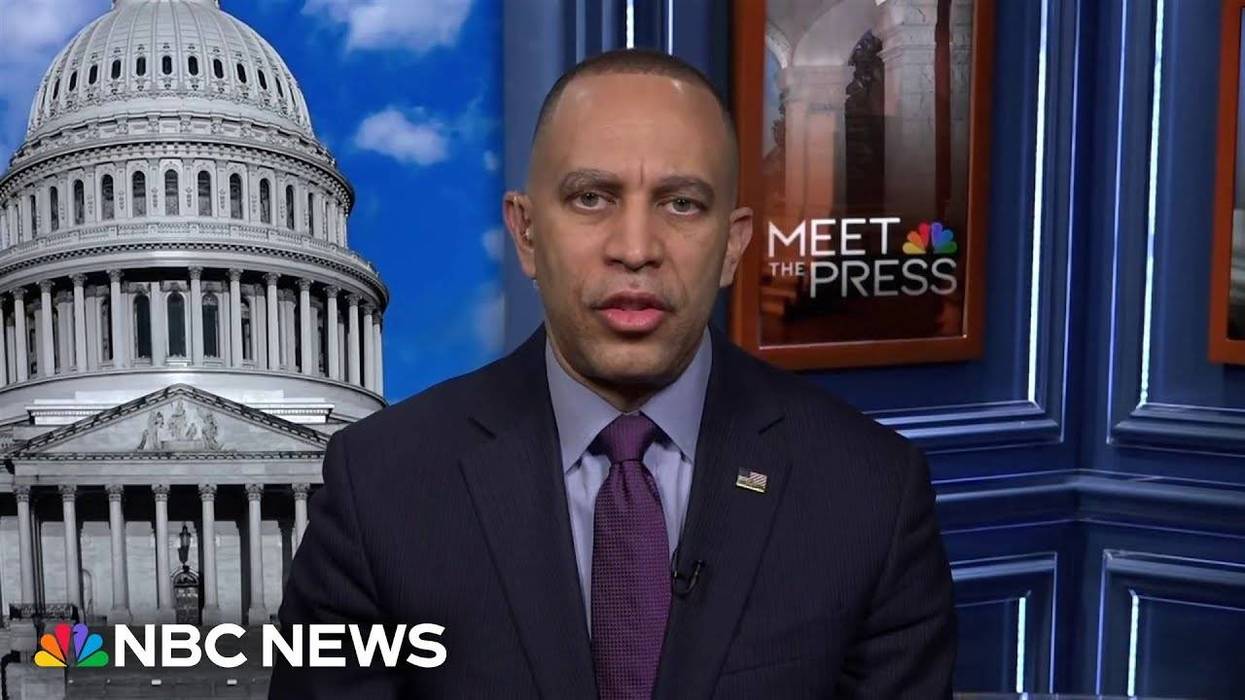
But pressed by Welker if he "personally" supports Medicare for All at this time, Jeffries said, "No," explaining that "it’s not legislation that I currently am co-sponsoring or that I support."
The remarks were hardly surprising, but landed hard for critics, who quickly pointed out that a new CBS/YouGov poll released Sunday showed—as survey after survey has also documented—that hunger for Medicare for All among Democratic voters is remarkably high.
As Common Dreams reported last week, a recent Yale University study found that Medicare for All, as drafted in a bill by Sen. Bernie Sanders (I-Vt.), would save over 114,000 lives annually and $1 trillion per year in US healthcare spending.
In the poll, conducted between Aug. 12-14, a full 90% of Democratic voters said they would "like to see the Democratic Party focus on plans for passing Medicare for All," compared to just 10% who said it should not be a focus.
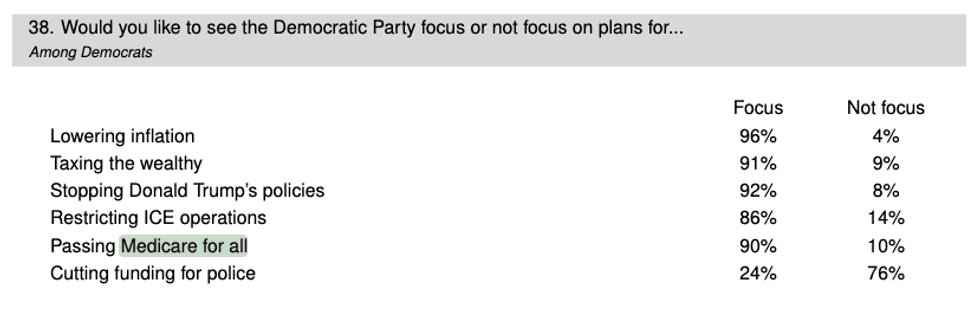
"A reminder that the vast majority of Democrats across the country support Medicare for All," said progressive journalist Mehdi Hasan in response to Jeffries' answer on the question. "This man is so out of touch with his party. How is he their leader?"
The Lever's David Sirota also issued a rebuke, explaining that Jeffries' comments, juxtaposed with the CBS/YouGov poll, show exactly "why Democratic voters are so enraged."
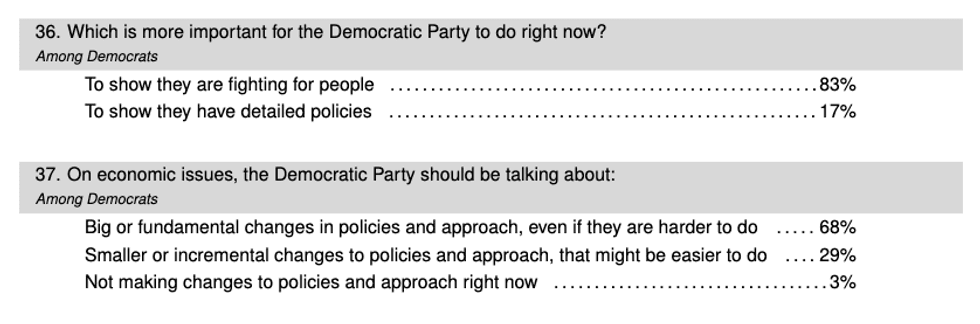
Also notable from the poll were responses to two questions that preceded the question about the specific policies Democrats should focus on.
Asked if it was more important for the Democratic Party to "show they are fighting for people" or that "they have detailed policies," 83% said it was more important for Democrats to show they are fighting, while just 17% said detailed policies were more important. Similarly, when it came to economic issues, voters—by a 68% to 29% margin—said they'd prefer "big or fundamental changes in policies and approach, even if they are harder to do" compared to those who wanted "smaller or incremental changes to policies and approach, that might be easier to do."
Appearing after Jeffries on "Meet the Press," Rep. Ro Khanna (D-Calif.), a top ally of Sanders and a current co-sponsor of the Medicare for All Bill introduced earlier this year in the House, disagreed with the Minority Leader's position.
"Medicare for All is arguably the most important priority," Khanna said. "It would save money, and it would save lives. Look, there was just a Yale study that came out. It would save $1 trillion in terms of costs, in terms of health care."
Asked by Welker if he was "disappointed" in Jeffries' remarks, Khanna said that while "I respect the difference" of opinion, "I will say this: it needs to have a vote on the House floor."
"The majority of the House Democrats are going to support it," he continued. "It is one of the most important policies if you actually believe in saving lives and in helping increase wages for working-class Americans. You talk to folks, and they’ll say, 'The biggest thing that pushes me into bankruptcy is if someone gets cancer. And I can’t afford the bills.' And even people who have insurance, look at how many premiums have been increasing. This would save money for ordinary Americans. And it would increase their wages. It’s the single biggest roadblock in our economic system hurting working families."
In a social media post on Sunday, Sanders—while not mentioning the latest comments by Jeffries—said, "Our current healthcare system is broken. Progressives understand healthcare must be a human right, guaranteed to all, not a source of billions in profits for insurance and drug companies.
"A recent poll showed 64% of Americans want Medicare for All," added Sanders. "They’re right. Let’s do it."