SUBSCRIBE TO OUR FREE NEWSLETTER
Daily news & progressive opinion—funded by the people, not the corporations—delivered straight to your inbox.
5
#000000
#FFFFFF
To donate by check, phone, or other method, see our More Ways to Give page.
Daily news & progressive opinion—funded by the people, not the corporations—delivered straight to your inbox.

Sharon Singh, ssingh@aiusa.org, 202-509-8194
The death of North Korean leader Kim Jong-il and assumption of power by his son, Kim Jong-un, present an important opportunity for improving the country's catastrophic human rights record, Amnesty International said today.
"Kim Jong-il, like his father before him, left millions of North Koreans mired in poverty, without access to adequate food and healthcare, and with hundreds of thousands of people detained in brutal prison camps," said Sam Zarifi, Amnesty International's Asia-Pacific director. "With this transition, we hope that the new government will step away from the horrific, failed policies of the past."
However, recent reports received by Amnesty International suggest that the North Korean government has purged possibly hundreds of officials deemed to be a threat to Kim Jong-un's succession, by having them executed or sent to political prison camps.
"Our information over the last year indicates that Kim Jong-un and his supporters will try to consolidate his new rule by intensifying repression and crushing any possibility of dissent," said Zarifi.
In the months immediately following Kim Jong-il's own succession to the North Korean leadership, after the 1994 death of his father Kim Il-Sung, tens of thousands of perceived or potential political opponents and their family members were sent to political prison camps. Political opponents were also executed either in secret or publicly following grossly unfair trials, or no trial at all.
Amnesty International has documented North Korea's abysmal human rights record for years. Freedom of expression and association are almost non-existent. Hundreds of thousands of people deemed to oppose the state are held in detention camps such as the notorious Yodok facility, which detain family members up to three generations. Inmates are forced into hard labor for up to 12 hours a day.
Meanwhile, more than a third of the population is suffering food shortages and the healthcare system is in critical decline. Amnesty International has received reports of people surviving on eating bark and grass, the use of unsterilized needles, and major surgeries undertaken without anesthesia.
"Authorities speak of North Korea as becoming a 'strong and prosperous nation,'" said Zarifi. "To ensure this, the new leadership should adopt a human rights agenda and stop the repression that characterized the Kim Jong-il era."
Amnesty International is repeating its call on the North Korean government, as well as international donors, to ensure that food is adequately distributed to the neediest people in North Korea.
"The people of North Korea should not have to suffer even more deprivation now because of political uncertainty," said Zarifi.
Nearly a million people have died in North Korea because of acute food shortages since the mid-1990s. Millions more, especially children and the elderly, continue to suffer from chronic malnutrition. This is in large part due to failed or counterproductive government policies implemented under the leadership of Kim Il-Sung and then under Kim Jong-il.
The North Korean authorities and the new leader of North Korea must make immediate improvements in human rights including:
* Immediately and unconditionally release all prisoners of conscience, including family members, held in all political prison camps. All other inmates should be released unless they are charged with an internationally recognizable offense, remanded by an independent court and are given a fair trial
* Act immediately to stop forced labor, torture and other ill-treatment of prisoners including those held in all political prisons camps
* Grant immediate and unfettered access to international humanitarian agencies such as the U.N. World Food Program to ensure that food reaches those most in need
* Address severe shortages in the healthcare system including through accepting international humanitarian assistance and providing full cooperation and access to ensure that care reaches those most in need
* Immediately end public and secret executions
* Thoroughly, independently and impartially investigate past and current allegations of abductions and enforced disappearances
* Ensure the rights to freedom of expression and religion provided for in the Constitution and in relevant international human rights instruments are fully guaranteed in practice
* Take immediate action to implement the recommendations of international human rights experts and recommendations made to North Korea during the Universal Periodic Review.
* Invite independent monitors such as the U.N. Special Rapporteurs on the right to food, the right to freedom of opinion and expression, freedom of religion and belief, and in particular the situation on human rights in the Democratic People's Republic of Korea to the country
Amnesty International is a worldwide movement of people who campaign for internationally recognized human rights for all. Our supporters are outraged by human rights abuses but inspired by hope for a better world - so we work to improve human rights through campaigning and international solidarity. We have more than 2.2 million members and subscribers in more than 150 countries and regions and we coordinate this support to act for justice on a wide range of issues.
"No work, no school, no shopping. We're going to show up and say we're putting workers over billionaires and kings."
Ezra Levin, co-founder of Indivisible, said on Saturday that a nationwide general strike is being planned for May 1 that will be modeled on the day of action residents of Minnesota organized in January against the brutality carried out by federal immigration enforcement officials.
Appearing at the flagship No Kings rally in Minneapolis, Levin praised the strength shown by the Minnesota protesters in the face of the US Immigration and Customs Enforcement (ICE) siege of their city this year, and said his organization wanted to replicate it across the country.
"The next major national action of this movement is not just going to be another protest," Levin said. "It is a tactical escalation... It is an economic show of force, inspired by Minnesota's own day of truth and action."
Levin then outlined what the event would entail.
"On May 1, on May Day, we are saying, 'No business as usual,'" he said. "No work, no school, no shopping. We're going to show up and say we're putting workers over billionaires and kings."
Levin: This is the largest protest in Minnesota history… The next major national action of this movement is not just gonna be another protest. On May 1st, across the country, we are saying no business as usual. No work, no school, no shopping. We're gonna show up and say we're… pic.twitter.com/bRPR7K5DuP
— Acyn (@Acyn) March 28, 2026
Levin added that "we are going to build on that courage, that sacrifice" that Minnesota residents showed during their day of action in January, and vowed "to demonstrate that regular people are the greatest threat to fascism in this country."
In an interview with Payday Report published Saturday, Indivisible co-founder Leah Greenberg said that the goal of the nationwide strike action would be to send "a clear message: we demand a government that invests in our communities, not one that enriches billionaires, fuels endless war, or deploys masked agents to intimidate our neighbors.”
The No Kings protests against President Donald Trump's authoritarian government, which Indivisible has been central in organizing, have brought millions of Americans into the streets.
Polling analyst G. Elliott Morris estimated that the previous No Kings event, held in October, drew at least 5 million people nationwide, making it likely "the largest single-day political protest ever."
"You thought it was bad when Iran throttled the Strait of Hormuz?... The Houthis have already proven they can keep the Red Sea closed despite a year of US Navy skirmishing," said one journalist.
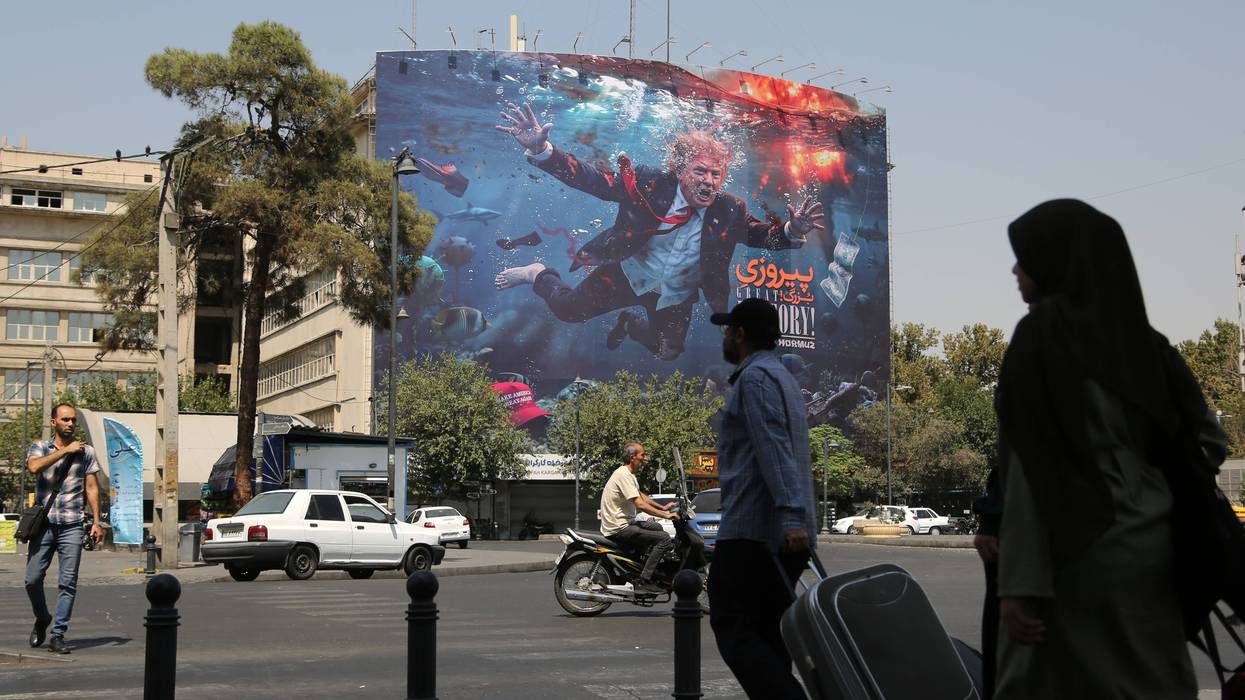
The Houthis on Saturday took credit for launching a ballistic missile at Israel, opening a new front in the war US President Donald Trump illegally started with Iran nearly one month ago.
As reported by Axios, the attack by the Houthis signals that the Yemen-based militia is joining the conflict to aide Iran, which has been under aerial assault from the US and Israel for the past four weeks.
Although the Houthi missile was intercepted by Israeli defenses, it is likely just the opening salvo in an expanding conflict throughout the Middle East.
Axios noted that while the Houthis entered the war by launching an attack on Israel, they could inflict the most damage on the US and its allies in the region by shutting down the strait of Bab al-Mandeb in the Red Sea.
"Doing that," Axios explained, "would dramatically increase the global economic crisis that has been created due to the war with Iran" and its closure of the Strait of Hormuz, which has sent global energy prices skyrocketing.
Sky News international correspondent John Sparks reported on Saturday that the Houthis' entrance into the war shows that "this crisis is expanding, it is escalating."
'This crisis is expanding and escalating.'
Houthi rebels in Yemen have confirmed they launched a missile at Israel, marking the Iran-backed group's first involvement in the war.
@sparkomat reports live from Jerusalem
https://t.co/Leuc4SnGfG
📺 Sky 501 and YouTube pic.twitter.com/TmlyFHkCZN
— Sky News (@SkyNews) March 28, 2026
Sparks argued that the Houthis' decision to fire a missile at Israel signals that "the geographical spread of this conflict is expanding," adding that "the Houthis have shown the ability to attack shipping in the Red Sea and the waters around the Arabian Peninsula."
Sparks said that even though Trump and Secretary of State Marco Rubio "have been projecting confidence" about having the war under control, "it's not playing out that way... on the ground."
Danny Citrinowicz, senior researcher at the Institute for National Security Studies, argued that the Houthis' main value to Iran isn't launching strikes on Israel, but their ability to increase economic pressure on the US.
Citrinowicz also outlined ways the Houthis could further drive up the global price of energy.
"This raises a key question: whether the Houthis will escalate further by targeting Saudi infrastructure and shipping lanes more directly, or whether they will preserve this capability as an additional lever of pressure as the conflict evolves," he wrote. "With each passing day of the conflict, particularly in light of its expanding scope against Iran, the likelihood of this scenario materializing continues to grow. It is increasingly not a question of if, but when."
Journalist Spencer Ackerman similarly pointed to the Houthis' ability to cause economic havoc as the biggest concern about their entrance into the conflict.
"You thought it was bad when Iran throttled the Strait of Hormuz?" he asked rhetorically. "The Houthis have already proven they can keep the Red Sea closed despite a year of US Navy skirmishing."
"Messiah complexes, talk of revenge, and the use of force against journalists are just symptoms of what's been happening to the army over the past three years," said one Israeli journalist.
Soldiers in the Israel Defense Forces on Friday were caught on camera assaulting and detaining a crew of CNN journalists while they were reporting from the occupied West Bank.
A video of the incident posted on social media by CNN Jerusalem correspondent Jeremy Diamond shows the CNN crew walking near the Palestinian village of Tayasir, which in recent days has come under assault from Israeli settlers who established an illegal outpost in the area.
The crew are then accosted by armed members of the IDF, who order them to sit down. After the crew complies with their commands, the soldiers come to seize the journalists' cameras and phones that are being used to record the incident.
A soldier then puts CNN photojournalist Cyril Theophilos in a chokehold and forces him to the ground. Writing about the assault later, Theophilos said that the soldier "pushed and strangled me," adding that this kind of violence "is just a symptom of the IDF's actions in the West Bank."
According to Diamond, the CNN crew were subsequently detained for two hours. During that time, Diamond wrote, it became clear that the ideology of the Israeli settlers movement was "motivating many of the soldiers who operate in the occupied West Bank" and that the Israeli military regularly acts "in service of the settler movement."
For instance, one IDF soldier acknowledged during conversations with the CNN crew that the settler outpost near Tayasir was unlawful under both international and Israeli law, but insisted "this will be a legal settlement... slowly, slowly."
The soldier also said he wanted to exact "revenge" on local Palestinians for the death of 18-year-old Israeli settler Yehuda Sherman, who was killed last week by a Palestinian driver. Palestinians who witnessed Sherman's killing have said that the driver was trying to stop Sherman from stealing sheep.
The IDF issued an apology to CNN over the incident, insisting that "the actions and behavior of the soldiers in the incident are incompatible with what is expected of IDF soldiers."
However, this apology was deemed insufficient by Barak Ravid, global affairs correspondent for Axios.
"Apologies are not enough," he wrote on social media. "There is a need for clear accountability. 99.9% of the time there is zero accountability."
The soldiers' actions also drew condemnation from Haaretz reporter Bar Peleg, who argued that problems in the IDF have only grown worse under the far-right government led by Prime Minister Benjamin Netanyahu.
"Messiah complexes, talk of revenge, and the use of force against journalists are just symptoms of what's been happening to the army over the past three years," Peleg said. "The chief of staff and the commanding general can write another thousand letters and wave flags all they want, but the process already seems irreversible."
Palestinian human rights activist Ihab Hassan argued that incidents like the one captured by CNN are all too common for the IDF.
"The Israeli army arrests and assaults journalists, while settlers who commit horrific crimes against Palestinian civilians enjoy total impunity," he wrote. "This is state-backed terrorism."