SUBSCRIBE TO OUR FREE NEWSLETTER
Daily news & progressive opinion—funded by the people, not the corporations—delivered straight to your inbox.
5
#000000
#FFFFFF
To donate by check, phone, or other method, see our More Ways to Give page.


Daily news & progressive opinion—funded by the people, not the corporations—delivered straight to your inbox.
Nell Greenberg, Communications Director
(415) 659-0557
David Daniel is traveling 1,500 miles from the Piney Woods of East Texas to midtown Manhattan this week with a message for Citigroup, the nation's third-largest bank: Don't help a Canadian oil pipeline company endanger my community.
Citigroup is a major financier to TransCanada Corp. of Calgary, which is seeking State Department approval to build the Keystone XL pipeline, a proposed 1,980-mile pipeline that would carry tar sands oil from northern Alberta to Gulf Coast refineries. Citigroup has raised more than $5.8 billion for TransCanada and its related companies since 2007. At Citigroup's annual stockholders meeting Thursday, April 21, Daniel will ask CEO Vikram Pandit to stop financing TransCanada.
Daniel is one of the landowners in five heartland states whose property lies in the path of the proposed Keystone XL pipeline.
The $7 billionpipeline project would double the export of Canadian tar sands to the United States. It would carry tar sands oil across Montana, South Dakota, Nebraska, Kansas, Oklahoma and Texas--mostly across private property owned by farmers and ranchers. The route also runs through the Ogallala Aquifer, putting one-third of the groundwater used in American agriculture at risk of contamination from diluted bitumen, a more corrosive product than conventional crude oil.
"As a landowner in the path of Keystone XL, my family, just as so many others, has experienced trespassing, broken agreements, lies pertaining to payment for damages, lies about permitting, eminent domain abuse, and a complete disregard for our personal safety," said Daniel, who lives outside of Winnsboro, Tex., about 100 miles east of Dallas. "I have no reason to trust TransCanada with the lives of my family. Mr. Pandit needs to hear about the human consequences of financing this dangerous project."
In September 2010, Citigroup managed a $1 billion bond for TransCanada, purchasing $295 million of notes issued. Last year, Citi raised more than $34 billion for the coal and oil industries, but raised less than two percent of that amount for companies developing renewable energy like wind and solar.
Also attending the shareholders' meeting will be Alex Moore, dirty fuels campaigner at Friends of the Earth, and Brant Olson, oil campaigner at Rainforest Action Network.
"Leading banks recognize that Canada's tar sands are a dead end," said Olson. "Citigroup should cut its ties to the sector and help shift investment capital into critical clean energy technologies like green grids and electric transportation."
"Citi has no business lending money to a disreputable company like TransCanada," said Moore. "TransCanada is proposing to pump some of the dirtiest oil on Earth through Americans' backyards, risking spills along the way, and is bullying ordinary Americans who stand in its way."
Canada is the United States' number one source of foreign oil, and the tar sands comprise about half of Canadian oil exports. Producing a barrel of tar sands oil emits up to 3 times as much climate-disrupting gas as producing conventional oil. Building Keystone XL would be the greenhouse gas equivalent of adding roughly 6.5 million cars to the road, or building 12 new coal-fired power plants . Tar sands extraction also uses huge amount of water, which ends up in massive toxic waste ponds that have never been successfully reclaimed.
Daniel, a former stuntman, is founder of Stop Tarsands Oil Pipelines, which is organizing Texas landowners against the project. If the project is approved, he says he'll build a platform in one of the century-old elms on his land and stand his ground. "If I am in it, they can't cut the tree down."
Rainforest Action Network (RAN) is headquartered in San Francisco, California with offices staff in Tokyo, Japan, and Edmonton, Canada, plus thousands of volunteer scientists, teachers, parents, students and other concerned citizens around the world. We believe that a sustainable world can be created in our lifetime and that aggressive action must be taken immediately to leave a safe and secure world for our children.
“There’s very little in our product portfolio that has benefited from tariffs,” said the CEO of one North Carolina-based steel product company.
US President Donald Trump pledged that the manufacturing industry would come "roaring back into our country" after what he called "Liberation Day" last April, which was marked by the announcement of sweeping tariffs on imported goods—a policy that has shifted constantly in the past 10 months as Trump has changed rates, canceled tariffs, and threatened new ones.
But after promising to turn around economic trends that have developed over decades—the shipping of jobs overseas, automation, and the obliteration of towns and cities that had once been manufacturing centers—Trump's trade policy appears to have put any progress achieved in the sector in recent years "in reverse," as the Wall Street Journal reported on Monday.
Federal data shows that in each of the eight months that followed Trump's Liberation Day tariffs, manufacturing companies reduced their workforce, with a total of 72,000 jobs in the industry lost since April 2025.
The Census Bureau also estimates that construction spending in the manufacturing industry contracted in the first nine months of Trump's second term, after surging during the Biden administration due to investments in renewable energy and semiconductor chips.
"But the tariffs haven’t helped," said Hanson.
Trump has insisted that his tariff policy would force companies to manufacture goods domestically to avoid paying more for foreign materials—just as he has claimed consumers would see lower prices.
But numerous analyses have shown American families are paying more, not less, for essentials like groceries as companies have passed on their higher operating costs to consumers, and federal data has made clear that companies are also avoiding investing in labor since Trump introduced the tariffs—while the trade war the president has kicked off hasn't changed the realities faced by many manufacturing sectors.
"While tariffs do reduce import competition, they can also increase the cost of key components for domestic manufacturers," wrote Emma Ockerman at Yahoo Finance. "Take US electric vehicle plants that rely on batteries made with rare earth elements imported from overseas, for instance. Some parts simply aren’t made in the United States."
At the National Interest, Ryan Mulholland of the Center for American Progress wrote that Trump's tariffs have created "three overlapping challenges" for US businesses.
"The imported components and materials needed to produce goods domestically now cost more—in some cases, a lot more," wrote Mulholland. "Foreign buyers are now looking elsewhere, often to protest Trump’s global belligerence, costing US firms market share abroad that will be difficult to win back. And if bad policy wasn’t enough, US manufacturers must also contend with the Trump administration’s unpredictability, which has made long-term investment decisions nearly impossible. Perhaps it’s no surprise, then, that small business bankruptcies have surged to their highest level in years."
Trump's unpredictable threats of new tariffs and his retreats on the policy, as with European countries in recent weeks when he said he would impose new levies on countries that didn't support his push to take control of Greenland, have also led to "a lost year for investment" for many firms, along with the possibility that the US Supreme Court could soon rule against the president's tariffs.
“If Trump just picked a number—whatever it was, 10% or 15% to 20%—we might all say it’s bad, I’d say it’s bad, I think most economists would say it’s bad,” Dean Baker, senior economist at the Center for Economic and Policy Research, told Yahoo Finance. “But the worst thing is there’s no certainty about it.”
Constantly changing tariff rates make it "very difficult for businesses... to plan," said Baker. “I think you’ve had a lot of businesses curtail investment plans because they just don’t know whether the plans will make sense.”
While US manufacturers have struggled to compete globally, China and other countries have continued exporting their goods.
“There’s very little in our product portfolio that has benefited from tariffs,” H.O. Woltz III, chief executive of North Carolina-based Insteel Industries, told the Wall Street Journal.
US Rep. Marcy Kaptur (D-Ohio) noted Monday that the data on manufacturing job losses comes a week after Vice President JD Vance visited his home state to tout "record job growth."
"Here’s the reality: Families face higher costs, tariffs are costing manufacturing jobs, and over $200 million in approved federal infrastructure and manufacturing investments here were cut by this administration," said Kaptur. "Ohio deserves better."
"These types of abusive subpoenas are designed to intimidate and sow fear of government retaliation," said a lawyer for the ACLU.
The Department of Homeland Security is using a little-known legal power to surveil and intimidate critics of the Trump administration, according to a harrowing report published Tuesday by the Washington Post.
Experts told the Post that DHS annually issues thousands of "administrative subpoenas," which allow federal agencies to request massive amounts of personal information from third parties—like technology companies and banks—without an order from a judge or a grand jury, and completely unbeknownst to the people whose privacy is being invaded.
As the Post found, even sending a politely critical email to a government official can be enough to have someone's entire life brought under the microscope.
That is what Jon, a 67-year-old retiree living in Philadelphia, who has been a US citizen for nearly three decades, found out after he sent a short email urging a DHS prosecutor, Joseph Dernbach, to reconsider an attempt to deport an Afghan asylum seeker who faced the threat of being killed by the Taliban if he was forced to return to his home country.
In the email, Jon warned Dernbach not to "play Russian roulette" with the man's life and implored him to “apply principles of common sense and decency.”
Just five hours after he sent the email, Jon received a message from Google stating that DHS had used a "subpoena" to request information about his account. Google gave him seven days to respond to the subpoena, but did not provide him with a copy of the document; instead, it told him to request one from DHS.
From there, he was sent on “a maddening, hourslong circuit of answering machines, dead numbers, and uninterested attendants,” which yielded no answers.
Within weeks of sending the email, a pair of DHS agents visited Jon's home and asked him to explain it. They told Jon that his email had not clearly broken any law, but that the DHS prosecutor may have felt threatened by his use of the phrase "Russian Roulette" and his mention of the Taliban.
Days later, after weeks of hitting a wall, Google finally sent Jon a copy of the subpoena only after the company was contacted by a Post reporter. It was then that Jon learned the breadth of what DHS had requested:
Among their demands, which they wanted dating back to Sept. 1: the day, time, and duration of all his online sessions; every associated IP and physical address; a list of each service he used; any alternate usernames and email addresses; the date he opened his account; his credit card, driver’s license, and Social Security numbers.
Google also informed him that it had not yet responded to the subpoena, though the company did not explain why.
But this is unusual. Google and other companies, including Meta, Microsoft, and Amazon, told the Post that they nearly always comply with administrative subpoenas unless they are barred from doing so.
With the ACLU's help, Jon filed a motion in court on Monday to challenge the subpoena issued to Google.
"In a democracy, contacting your government about things you feel strongly about is a fundamental right," Jon said. "I exercised that right to urge my government to take this man's life seriously. For that, I am being investigated, intimidated, and targeted. I hope that by standing up for my rights and sharing my story, others will know what to do when these abusive subpoenas and investigations come knocking on their door."
As the Trump administration uses DHS and other agencies to compile secret watchlists and databases of protesters for surveillance, targets people for deportation based solely on political speech, and asserts its authority to raid residences without a judicial warrant, administrative subpoenas appear to be another weapon in its arsenal against free speech and civil rights.
According to “transparency reports” reviewed by the Post, Google and Meta both received a record number of administrative subpoenas during the first six months of the second Trump administration. In several instances, they have been used to target protesters or other dissidents for First Amendment-protected activity:
In March, Homeland Security issued two administrative subpoenas to Columbia University for information on a student it sought to deport after she took part in pro-Palestinian protests. In July, the agency demanded broad employment records from Harvard University with what the school’s attorneys described as “unprecedented administrative subpoenas.” In September, Homeland Security used one to try to identify Instagram users who posted about [US Immigration and Customs Enforcement] raids in Los Angeles. Last month, the agency used another to demand detailed personal information about some 7,000 workers in a Minnesota health system whose staff had protested Immigration and Customs Enforcement’s intrusion into one of its hospitals.
“These types of abusive subpoenas are designed to intimidate and sow fear of government retaliation," said Stephen A. Loney, a senior supervising attorney for the ACLU of Pennsylvania. "If you can’t criticize a government official without the worry of having your private records gathered and agents knocking on your door, then your First Amendment rights start to feel less guaranteed. They want to bully companies into handing over our data and to chill users’ speech. This is unacceptable in a democratic society.”
"You don’t see evidence of gang association," said one legal expert. "It just feels like a dirtying up of the defendant."
After a US Border Patrol Agent shot two Venezuelan immigrants in Portland, Oregon in January, the Department of Homeland Security claimed that the two victims were "vicious Tren de Aragua gang members" who "weaponized their vehicle" against federal agents, who had no choice but to open fire in self-defense.
However, court records obtained by the Guardian reveal that a Department of Justice prosecutor subsequently told a judge the government was "not suggesting" that one of the victims, Luis Niño-Moncada, was a gang member.
The Guardian also obtained an FBI affidavit contradicting DHS claims about the second victim, Yorlenys Zambrano-Contreras, being "involved" in a shooting in Portland last year, when in reality she was a "reported victim of sexual assault and robbery."
Attorneys representing Niño-Moncada and Zambrano-Contreras, who both survived the shooting and were subsequently hospitalized, told the Guardian that neither of them have any prior criminal convictions.
Legal experts who spoke with the Guardian about the shooting said it appeared that DHS was waging a "smear campaign" against the victims.
Sergio Perez, a civil rights lawyer and former US prosecutor, noted in an interview that prosecutors filed criminal charges against Niño-Moncada and Zambrano-Contreras just two days after they were shot, even before it had obtained crucial video evidence of the incident.
"This government needs to go back to the practice of slow and thorough investigations," he told the Guardian, "rather than what we consistently see in immigration enforcement activities—which is a rush to smear individuals."
Carley Palmer, a former federal prosecutor, told the Guardian that the court records obtained by the paper don't show DOJ presenting any of the usual evidence that prosecutors use to establish defendants' alleged gang membership.
"What’s interesting about the filings is that you don’t see evidence of gang association," said Palmer. "It just feels like a dirtying up of the defendant."
DHS in recent months has made a number of claims about people who have been shot or killed by federal immigration officers that have not held up to scrutiny.
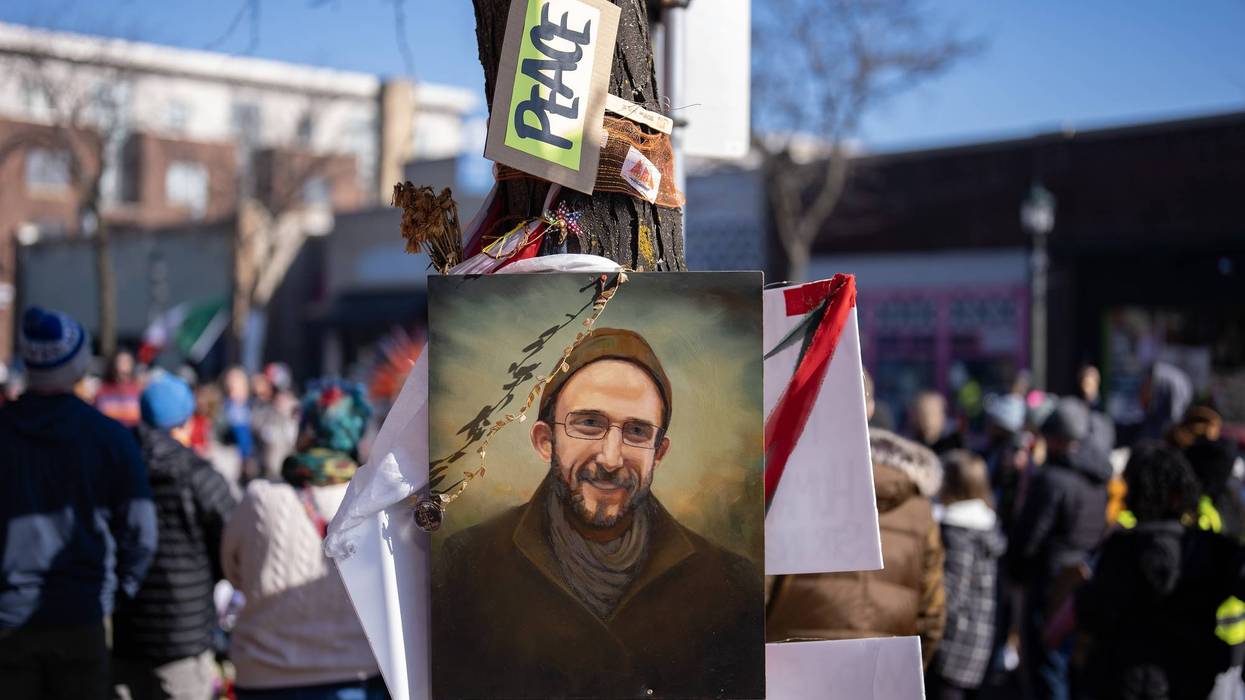
Most recently, Homeland Security Secretary Kristi Noem claimed that slain Minneapolis intensive care nurse Alex Pretti was a "domestic terrorist" intent on inflicting "maximum damage" on federal agents, when video clearly showed that Pretti was swarmed by multiple federal agents and was disarmed before two agents opened fire and killed him.
Noem also openly lied about the circumstances and actions that resulted in the shooting death of Renee Nicole Good by a federal agent weeks earlier.
In November, federal prosecutors abruptly dropped charges against Marimar Martinez, a woman who was shot multiple times by a US Border Patrol agent in October in Chicago’s Brighton Park neighborhood.
In the indictment filed against Martinez, prosecutors said that the Border Patrol agent who shot her had been acting in self-defense, and that he had only opened fire after Martinez’s car collided with his vehicle.
However, uncovered text messages showed the Border Patrol agent apparently bragging about shooting Martinez, as he boasted that he “fired five rounds and she had seven holes” in a message sent to fellow agents.
An attorney representing Martinez also claimed that he had seen body camera footage that directly undermined DHS claims about how the shooting unfolded.
No explanation was provided for why charges against Martinez were dropped.