SUBSCRIBE TO OUR FREE NEWSLETTER
Daily news & progressive opinion—funded by the people, not the corporations—delivered straight to your inbox.
5
#000000
#FFFFFF
To donate by check, phone, or other method, see our More Ways to Give page.


Daily news & progressive opinion—funded by the people, not the corporations—delivered straight to your inbox.

Today Sierra Club Executive Director Michael Brune
released the following statement regarding Tuesday's midterm election results
and an important victory against Proposition 23 in California.
Statement of Sierra Club Executive
Director Michael Brune
"We did have a particularly bright spot
in California. San Francisco
beat Texas in the World Series, and California thumped Texas in the fight for clean energy.
We
played big and scored big against Big Oil with the defeat of California's Proposition 23.
Despite more than $10 million spent
on deceptive advertising campaign funded by out-of-state oil barons--more
than $8 Million from Texaco and Valero alone, to undermine the state's landmark
clean-energy and climate law, California voters took a stand for clean energy -
not in spite of a major economic downturn, but because of it. As National Journal said last week, we
could point to existing jobs that would be lost with the passage of Prop
23.
With the third-highest unemployment numbers in the nation, California voters chose clean energy as one of the
best paths to recovery.
This victory also shows what
can happen when we work together to create jobs and protect our environment.
When given the chance to vote on the actual issues, the public embraced our
belief that a clean environment and a strong economy are not mutually exclusive.
A broad coalition of clean
tech companies, small businesses, public health advocates, social justice
groups, environmental organizations, organized labor, seniors and young people,
Republicans and Democrats, all worked in tandem to defeat Proposition 23 and
continue our path toward a future powered by clean energy.
Not surprisingly, polling, including our own, shows that jobs
and the economy were the top priority for voters this election and last night
they showed their dissatisfaction with the current state of the economy and
both political parties. That will be the
case until the country's economic situation improves. And the way to that future is a clean energy
economy and good jobs for American workers.
This election was indeed the year of The Empire Strikes Back. Big Oil and corporate polluters spent in
record amounts to try to buy back our government--eclipsing progressive groups'
election spending by nearly two to one.
According to the Alliance for Climate Protection, corporate
polluters and energy interests spent 247 million dollars this year on
advertising alone to target legislators in their fight to block clean energy
jobs.
That said, it doesn't appear that their attacks on clean energy
contributed to Democratic defeats - 27 of the 44 House Democrats
who voted against ACES have been voted out of office or retired.
The open question is with
whom the new House Republican Majority will side. With the Big Oil and Coal interests who
expect a return on their investment? Or with the American people who want
lawmakers to start making the choices that they've been making for years in
their own lives and communities--saving energy in their homes and conserving
resources for a cleaner, safer, and more prosperous America to pass on to their
children.
Americans still
want more jobs, less pollution and greater security. When given the opportunity to vote directly
on the clean energy issue, as we saw in Prop 23, voters will side with clean
energy. We have no intention of ceding America's future to Big Oil. We are confident that over the next several
years we will make significant progress at the federal, state and local levels
to build a clean energy economy made in America."
The Sierra Club is the most enduring and influential grassroots environmental organization in the United States. We amplify the power of our 3.8 million members and supporters to defend everyone's right to a healthy world.
(415) 977-5500Rep. Gregory Meeks, who introduced a war powers resolution, said Trump’s actions combine the “worst excesses of the war on drugs and the war on terror.”
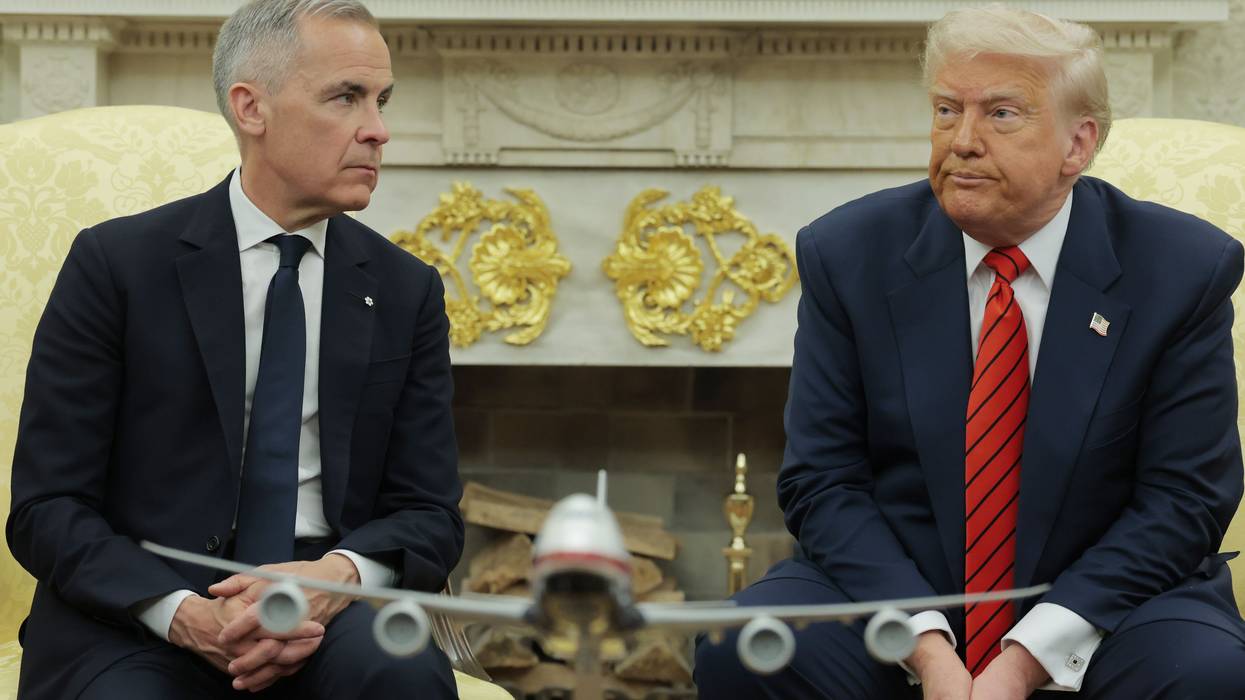
As Democrats in the US House of Representatives introduced their latest measure to stop President Donald Trump from continuing his attacks against alleged drug cartels without approval from Congress, the president said he wouldn't "rule out" deploying US ground troops in Venezuela—and warned he could escalate attacks across Latin America, with possible strikes in Mexico and Colombia as well.
Shortly after the Department of Defense, called the Department of War by the Trump administration, announced its 21st illegal airstrike on what they've claimed, without evidence, to be "narco-terrorist" vessels mostly in the Caribbean—attacks that have killed at least 83 people—Trump told reporters in the Oval Office on Monday that he may soon begin similar operations against drug cartels in mainland Mexico.
“Would I launch strikes in Mexico to stop drugs? It’s OK with me. I’ve been speaking to Mexico. They know how I stand,” he said. “We’re losing hundreds of thousands of people to drugs. So now we’ve stopped the waterways, but we know every route."
Earlier this month, following reports from US officials that the Trump administration had started “detailed planning” to send US troops to Mexico, the nation's president, Claudia Sheinbaum, retorted that "it’s not going to happen."
In his comments Monday, Trump threatened to carry out strikes in Colombia as well, saying: "Colombia has cocaine factories where they make cocaine. Would I knock out those factories? I would be proud to do it personally.”
Colombian President Gustavo Petro has been one of Latin America's fiercest critics of Trump's extrajudicial boat bombings, last week referring to the US president as a "barbarian." Trump, meanwhile, has baselessly accused Petro of being "an illegal drug leader," slapping him and his family with sanctions and cutting off aid to the country.
In response to Trump's threats on Monday, Petro touted the number of cocaine factories that have been "destroyed" under his tenure. According to figures from the Colombian Ministry of Defense, around 18,000 of them have been taken out of commission since Petro took office in 2022, a 21% increase from Colombia's previous president.
Immediately after Trump issued his threat against Colombia, he backpedaled, saying: "I didn't say I'm doing it, I would be proud to do it."
However, reporting from Drop Site News earlier this month has suggested that Sen. Lindsey Graham (R-SC) "was briefed by Secretary of War Pete Hegseth on the new list of hard targets inside Venezuela, Colombia, and Mexico in early October, and lobbied fellow senators on expanding the war to include drug-related sites in Colombia."
The senator had alluded to the plans on CBS News' "Face the Nation," saying: “We’re not gonna sit on the sidelines and watch boats full of drugs come into our country. We’re gonna blow them up and kill the people who want to poison America. And we’re now gonna expand our operations, I think, to the land. So please be clear about what I’m saying today. President Donald Trump sees Venezuela and Colombia as direct threats to our country, because they house narco-terrorist organizations.”
On Tuesday, a group of Democrats in the US House of Representatives introduced another measure that would stop Trump from continuing his attacks against alleged drug cartel members without approval from Congress.
The measure would require the removal of “United States Armed Forces from hostilities with any presidentially designated terrorist organization in the Western Hemisphere,” unless Congress authorizes the use of military force or issues a declaration of war. Previous measures to stall Trump’s extrajudicial attacks have been narrowly stymied, despite receiving some support from the Republican majority.
“There is no evidence that the people being killed are an imminent threat to the United States of America,“ said Rep. Gregory Meeks (NY), the top Democrat on the House Foreign Affairs Committee, who introduced the resolution.
Meeks added that Trump’s campaign of assassinations in Latin America combines “the worst excesses of the war on drugs and the war on terror.”
Trump's threats of military action come after Hegseth announced what he called "Operation Southern Spear" last week, which he said would be aimed at "remov[ing] narco-terrorists from our hemisphere." In a description that evoked the 19th-century Monroe Doctrine, Hegseth wrote on social media that "the Western Hemisphere is America's neighborhood—and we will protect it."
In the Oval Office, Trump declared, without evidence, that with each strike his administration carries out against Venezuelan boats, "we save 25,000 American lives," which experts say is obviously false since Venezuela plays a very minor role in global drug trafficking.
Several international legal experts have said Trump’s strikes constitute a war crime. Earlier this month, Oona A. Hathaway, a professor of international law at Yale Law School, said that members of the Trump administration “know what they are doing is wrong.”
“If they do it, they are violating international law and domestic law,” Hathaway said. “Dropping bombs on people when you do not know who they are is a breach of law.”
The Trump administration has argued that its actions are consistent with Article 51 of the UN’s founding charter, which requires the UN Security Council to be informed immediately of actions taken in self-defense against an armed attack.
The administration has not provided evidence that its attacks constitute a necessary form of self-defense. But last month, a panel of independent UN experts said that “even if such allegations were substantiated, the use of lethal force in international waters without proper legal basis violates the international law of the sea and amounts to extrajudicial executions.”
"By selling parts of the federal student loan portfolio, the Trump administration may seek to unlawfully strip borrowers of their legally guaranteed protections," wrote a group of more than 40 Democratic lawmakers.
Dozens of Democratic lawmakers in the US House and Senate warned Monday that the Trump administration's reported push to sell off the federal government's massive student portfolio to the private market would be disastrous for borrowers and a "lucrative giveaway" to predatory corporations.
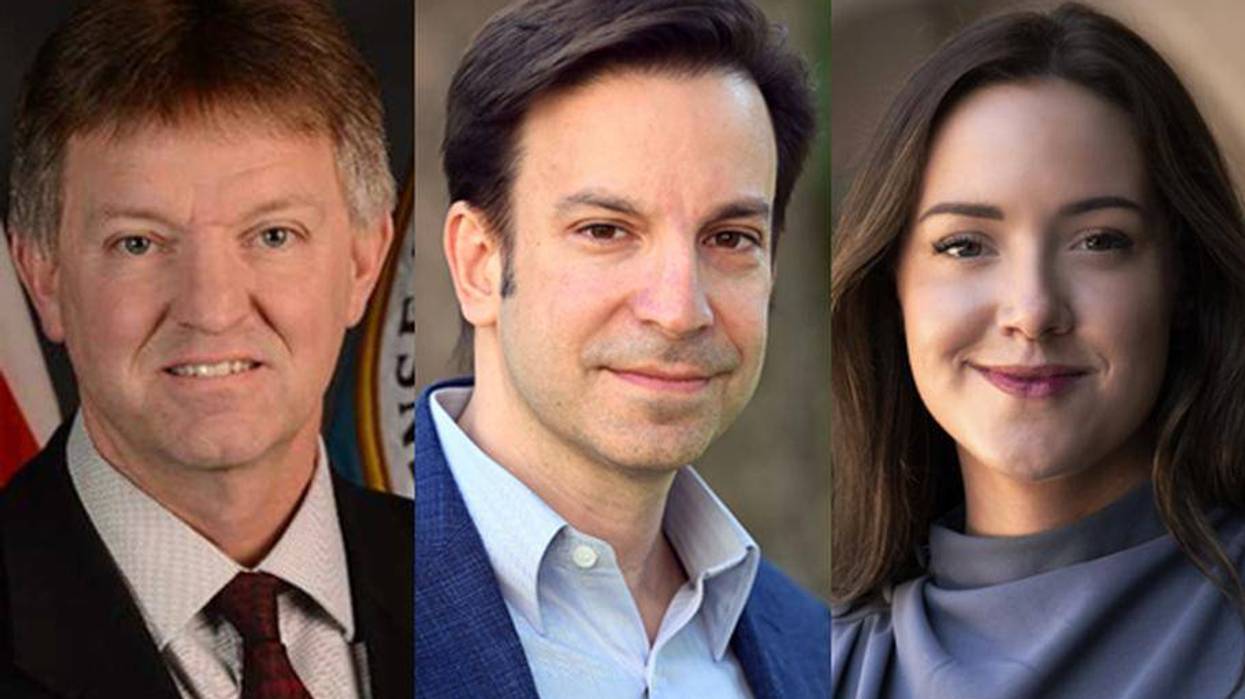
The lawmakers, led by Sens. Elizabeth Warren (D-Mass.) and Bernie Sanders (I-Vt.) in the Senate and Rep. Ayanna Pressley (D-Mass.) in the House, pointed with alarm to recent reports indicating that Treasury and Education Department officials have met repeatedly with finance industry executives for the purpose of valuing the federal government's student loan portfolio, which is believed to be worth around $1.7 trillion.
"By selling parts of the federal student loan portfolio, the Trump administration may seek to unlawfully strip borrowers of their legally guaranteed protections," the lawmakers wrote in a letter to Education Secretary Linda McMahon and Treasury Secretary Scott Bessent. "As experts have explained, private investors' 'interest would likely be to squeeze as much profit from the repayment as they could.' Those profits would likely come at the expense of the borrower via fewer protections and less generous benefits."
Politico reported last month that the Trump administration is considering selling at least part of the federal government's student loan portfolio to private companies.
Though small relative to the federal portfolio, the private student loan market has an "outsized" impact on borrowers, the advocacy group Protect Borrowers explained earlier this year.
"While private student loans account for roughly 8% of all student loan debt, more than 40% of student-loan-related complaints submitted to the Consumer Financial Protection Bureau (CFPB) are about private loans," the group said. "Of these private student loan complaints, roughly one-third are from borrowers who are struggling and can’t afford their monthly payment. This is because, unlike federal student loans, private loans lack critical safeguards for students and parents."
In their letter to McMahon and Bessent, the Democratic lawmakers demanded that the Trump administration "immediately cease any efforts to privatize the federal student loan portfolio," arguing that "this sale would be a giveaway to wealthy insiders at the expense of working-class borrowers and taxpayers."
Warren echoed that sentiment in a statement, saying, "Any way you spin it, this sale would be a massive giveaway to giant companies."
"It'd be a tremendous mistake," the senator added.
"Our city has gone from a thriving city to a standstill," said one local official.
Residents in Charlotte, North Carolina are expressing outrage after two local women were arrested for honking their car horn to alert others that US Border Patrol was in the area.
Local news station WCNC reported on Monday that the two women, who are US citizens, were taken into custody in the city's Plaza Midwood neighborhood after Border Patrol agents pulled them over and accused them of interfering in operations by honking their horn.
Video of the incident shows masked federal agents yelling at the women and demanding that they roll down their car windows. When the women do not comply, one officer smashes through the window and then he and other officers pull them out of the vehicle.
The two women, who have not been identified, then spent several hours in an FBI facility before being released with citations.
Local resident Shea Watts, who took video of the encounter, told WCNC that he was feeling "somewhere between disbelief and just being really upset that this is our reality now" as he watched the incident unfold.
Watts also discussed his own interactions with the federal officers whom he was filming.
"I was already close to despair and feeling helpless and hopeless," he said. "But I think just the reminder that if we see something, to document it. I tried to be respectful and ask questions and knowing my own rights, and I was told to back up a couple times, which, that's fine, but at the end of the day, this all feels a little heavy handed."
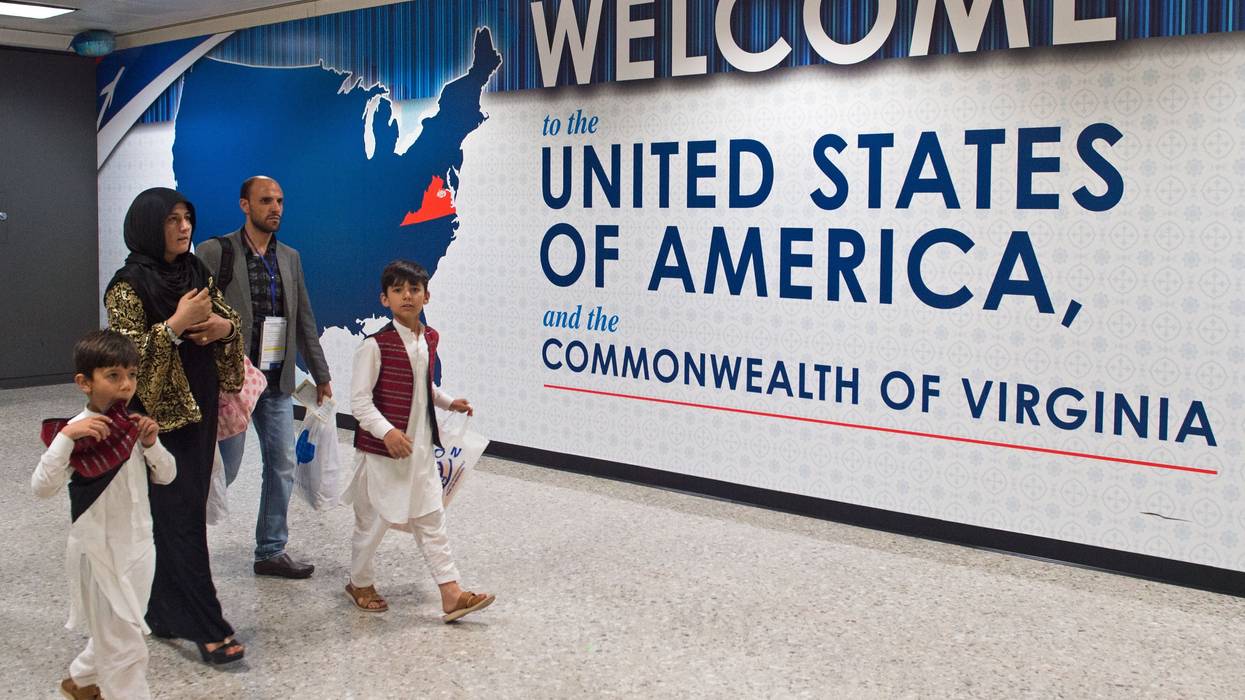
Charlotte has become the latest target of the Trump administration's mass deportation operation, which has already drawn opposition from both local residents and elected officials in the North Carolina city.
NBC News reported on Monday that many Charlotte residents are living in fear of immigration operations in the city, with some local businesses closing down and some local churches reporting dramatic drops in attendance during the current operation.
Jonathan Ocampo, US citizen of Colombian descent who lives in the area, told NBC News that he's started carrying his passport with him everywhere for fear of being mistaken for an undocumented immigrant.
"I’m carrying it here right now, which is sad," he said. "It's just scary."
Charlotte city council member-elect JD Mazuera Arias told The Guardian on Monday that the immigration enforcement operations have had a chilling effect on the entire community.
"Our city has gone from a thriving city to a standstill," he said.