SUBSCRIBE TO OUR FREE NEWSLETTER
Daily news & progressive opinion—funded by the people, not the corporations—delivered straight to your inbox.
5
#000000
#FFFFFF
To donate by check, phone, or other method, see our More Ways to Give page.
Daily news & progressive opinion—funded by the people, not the corporations—delivered straight to your inbox.
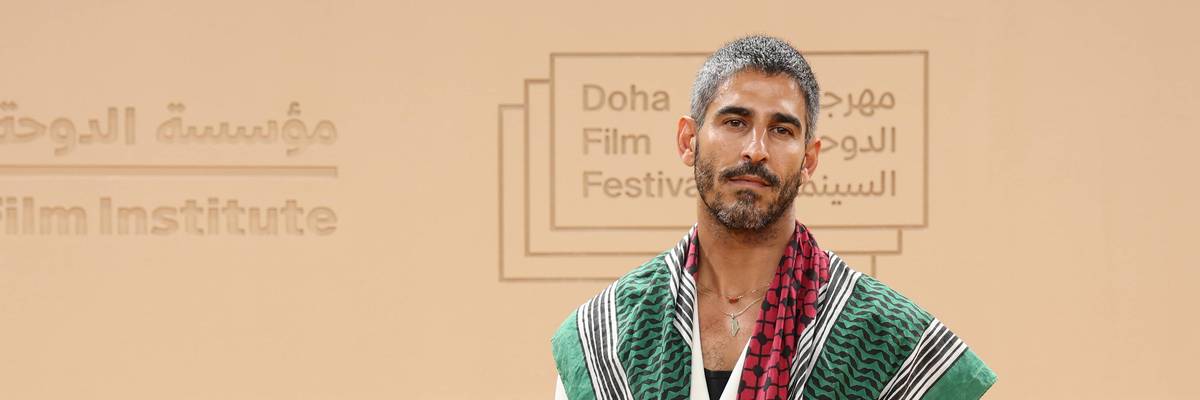
Ahmed Shihab‑Eldin during the Doha Film Festival 2025 on November 24, 2025, in Doha, Qatar.
The head of the Committee to Protect Journalists has called Shihab-Eldin's arrest for social media posts about the Iran war part of a trend of “increasing restrictions on freedom of expression” in the Gulf states.
US-Kuwaiti journalist Ahmed Shihab-Eldin is expected to be released after more than seven weeks in jail following his acquittal by a Kuwaiti court on Thursday.
The 41-year-old Shihab-Eldin, an award-winning reporter and documentarian who has worked at HuffPost, The New York Times, and Al Jazeera English, was detained by Kuwaiti authorities on March 2, just days after the US and Israel launched the opening salvos of their aggressive war against Iran, which was met with retaliatory strikes against US military bases across the Persian Gulf, including in Kuwait.
Shihab-Eldin, a US and Kuwaiti citizen who was in Kuwait to visit family, frequently commented on his public Substack account about news related to the war. One of his recent posts included a geolocated video, which was already public, of an American F-15 Strike Eagle jet falling from the sky near a US air base.
CNN later confirmed the video's authenticity, while the US military confirmed it was one of three American planes downed that day in what was described as a "friendly fire incident."
But shortly after posting the video, Shihab-Eldin found himself detained by Kuwaiti authorities on charges of "spreading malicious information online" and "harming national security."
The Committee to Protect Journalists (CPJ) called these "vague and overly broad accusations that are routinely used to silence independent journalists."
Legal counsel hired by Shihab-Eldin's sisters said on Thursday that he had been declared innocent of the charges by a Kuwaiti court and was expected to be released imminently, though some details were still being finalized.
“We are relieved that Ahmed Shihab-Eldin has been found innocent after 52 days in detention,” said Jodie Ginsberg, CEO of the CPJ. “Ahmed’s freedom and safety remain our topmost priority, and we will continue to closely monitor his case.”
Kuwait has come under heavy fire from Iran since the war began. In addition to attacks against American air bases, which have killed at least six US soldiers, Iran has targeted Kuwait's main airport and facilities at the Kuwait Petroleum Corporation.
Shihab-Eldin's arrest came as the Kuwaiti government began an aggressive clampdown on the sharing of video and other information related to Iranian attacks.
On May 2, Kuwait's Ministry of Information warned the public "not to photograph or publish any clips or information related to missiles or relevant locations."
Days later, the ministry announced that it was referring several "media law violators" for prosecution. It said, "Freedom of opinion and expression is guaranteed within the framework of the law and is coupled with professional responsibility, accuracy, credibility, and obtaining information from official sources."
On March 15, Kuwait introduced a censorship law stating that companies and individuals were "obligated to preserve the supreme interests of the military authorities." It imposed prison sentences of up to 10 years for anyone who “disseminates news, publishes statements, or spreads false rumors related to military entities” with the intent to undermine confidence in them.
The verdict in Shihab-Eldin's case was just one of 137 handed down on Thursday by a new court meant to oversee crimes related to national security and terrorism. Those defendants have been accused of “inciting sectarian strife on social media platforms,” according to Drop Site News, which cited Jordan's Al-Rai newspaper.
Shihab-Eldin was just one of nine defendants to be acquitted, though in 109 of the cases, no criminal punishment was handed down. Seventeen defendants received three years in prison, while another 10 received one year.
Ginsberg said Kuwait's repressive clampdown is part of a trend of "increasing restrictions on freedom of expression” that has been observed across the wider Middle East, and particularly the autocratic Gulf states that host American military bases, since the war's outbreak.
The governments of Qatar, Bahrain, and the United Arab Emirates have each arrested hundreds of people for filming or sharing content relating to Iranian strikes or other information related to the war or protests against the government, according to a report by Democracy for the Arab World Now (DAWN).
"This wave of repression reflects a deeper trend among Arab regimes: growing public frustration with US policy in the region and their governments' alignment with Washington," said Yara Bataineh, an editorial associate at DAWN's Democracy in Exile. "This crackdown did not begin with the war on Iran. Across several Arab states, authorities had already moved to suppress pro-Palestinian activism during Israel's genocide in Gaza—a pattern that has since intensified."
Israel's genocide in Gaza and expansionist military campaign into Lebanon have also proven historically deadly to journalists—including the Lebanese journalist Amal Khalid, who died under a pile of rubble on Wednesday from an attack by Israeli forces, who also attacked Red Cross workers attempting to rescue her. She is among hundreds of journalists and media workers who have been killed by Israeli attacks since 2023, according to the International Federation of Journalists.
“Almost inevitably, during a war, we see countries try to impose restrictions in the name of national security, and almost always that doesn’t just target genuine national security issues, but ends up covering a broad range of issues that are essential for us to understand what is happening,” Ginsberg told MS NOW. “That’s why we need journalists. We need journalists on the ground who can be our eyes and ears when we can’t get into these places and see for ourselves, so that we can understand what’s happening.”
She added, "It is an incredibly challenging time to be a journalist, and Ahmed’s case is emblematic of that."
Dear Common Dreams reader, It’s been nearly 30 years since I co-founded Common Dreams with my late wife, Lina Newhouser. We had the radical notion that journalism should serve the public good, not corporate profits. It was clear to us from the outset what it would take to build such a project. No paid advertisements. No corporate sponsors. No millionaire publisher telling us what to think or do. Many people said we wouldn't last a year, but we proved those doubters wrong. Together with a tremendous team of journalists and dedicated staff, we built an independent media outlet free from the constraints of profits and corporate control. Our mission has always been simple: To inform. To inspire. To ignite change for the common good. Building Common Dreams was not easy. Our survival was never guaranteed. When you take on the most powerful forces—Wall Street greed, fossil fuel industry destruction, Big Tech lobbyists, and uber-rich oligarchs who have spent billions upon billions rigging the economy and democracy in their favor—the only bulwark you have is supporters who believe in your work. But here’s the urgent message from me today. It's never been this bad out there. And it's never been this hard to keep us going. At the very moment Common Dreams is most needed, the threats we face are intensifying. We need your support now more than ever. We don't accept corporate advertising and never will. We don't have a paywall because we don't think people should be blocked from critical news based on their ability to pay. Everything we do is funded by the donations of readers like you. When everyone does the little they can afford, we are strong. But if that support retreats or dries up, so do we. Will you donate now to make sure Common Dreams not only survives but thrives? —Craig Brown, Co-founder |
US-Kuwaiti journalist Ahmed Shihab-Eldin is expected to be released after more than seven weeks in jail following his acquittal by a Kuwaiti court on Thursday.
The 41-year-old Shihab-Eldin, an award-winning reporter and documentarian who has worked at HuffPost, The New York Times, and Al Jazeera English, was detained by Kuwaiti authorities on March 2, just days after the US and Israel launched the opening salvos of their aggressive war against Iran, which was met with retaliatory strikes against US military bases across the Persian Gulf, including in Kuwait.
Shihab-Eldin, a US and Kuwaiti citizen who was in Kuwait to visit family, frequently commented on his public Substack account about news related to the war. One of his recent posts included a geolocated video, which was already public, of an American F-15 Strike Eagle jet falling from the sky near a US air base.
CNN later confirmed the video's authenticity, while the US military confirmed it was one of three American planes downed that day in what was described as a "friendly fire incident."
But shortly after posting the video, Shihab-Eldin found himself detained by Kuwaiti authorities on charges of "spreading malicious information online" and "harming national security."
The Committee to Protect Journalists (CPJ) called these "vague and overly broad accusations that are routinely used to silence independent journalists."
Legal counsel hired by Shihab-Eldin's sisters said on Thursday that he had been declared innocent of the charges by a Kuwaiti court and was expected to be released imminently, though some details were still being finalized.
“We are relieved that Ahmed Shihab-Eldin has been found innocent after 52 days in detention,” said Jodie Ginsberg, CEO of the CPJ. “Ahmed’s freedom and safety remain our topmost priority, and we will continue to closely monitor his case.”
Kuwait has come under heavy fire from Iran since the war began. In addition to attacks against American air bases, which have killed at least six US soldiers, Iran has targeted Kuwait's main airport and facilities at the Kuwait Petroleum Corporation.
Shihab-Eldin's arrest came as the Kuwaiti government began an aggressive clampdown on the sharing of video and other information related to Iranian attacks.
On May 2, Kuwait's Ministry of Information warned the public "not to photograph or publish any clips or information related to missiles or relevant locations."
Days later, the ministry announced that it was referring several "media law violators" for prosecution. It said, "Freedom of opinion and expression is guaranteed within the framework of the law and is coupled with professional responsibility, accuracy, credibility, and obtaining information from official sources."
On March 15, Kuwait introduced a censorship law stating that companies and individuals were "obligated to preserve the supreme interests of the military authorities." It imposed prison sentences of up to 10 years for anyone who “disseminates news, publishes statements, or spreads false rumors related to military entities” with the intent to undermine confidence in them.
The verdict in Shihab-Eldin's case was just one of 137 handed down on Thursday by a new court meant to oversee crimes related to national security and terrorism. Those defendants have been accused of “inciting sectarian strife on social media platforms,” according to Drop Site News, which cited Jordan's Al-Rai newspaper.
Shihab-Eldin was just one of nine defendants to be acquitted, though in 109 of the cases, no criminal punishment was handed down. Seventeen defendants received three years in prison, while another 10 received one year.
Ginsberg said Kuwait's repressive clampdown is part of a trend of "increasing restrictions on freedom of expression” that has been observed across the wider Middle East, and particularly the autocratic Gulf states that host American military bases, since the war's outbreak.
The governments of Qatar, Bahrain, and the United Arab Emirates have each arrested hundreds of people for filming or sharing content relating to Iranian strikes or other information related to the war or protests against the government, according to a report by Democracy for the Arab World Now (DAWN).
"This wave of repression reflects a deeper trend among Arab regimes: growing public frustration with US policy in the region and their governments' alignment with Washington," said Yara Bataineh, an editorial associate at DAWN's Democracy in Exile. "This crackdown did not begin with the war on Iran. Across several Arab states, authorities had already moved to suppress pro-Palestinian activism during Israel's genocide in Gaza—a pattern that has since intensified."
Israel's genocide in Gaza and expansionist military campaign into Lebanon have also proven historically deadly to journalists—including the Lebanese journalist Amal Khalid, who died under a pile of rubble on Wednesday from an attack by Israeli forces, who also attacked Red Cross workers attempting to rescue her. She is among hundreds of journalists and media workers who have been killed by Israeli attacks since 2023, according to the International Federation of Journalists.
“Almost inevitably, during a war, we see countries try to impose restrictions in the name of national security, and almost always that doesn’t just target genuine national security issues, but ends up covering a broad range of issues that are essential for us to understand what is happening,” Ginsberg told MS NOW. “That’s why we need journalists. We need journalists on the ground who can be our eyes and ears when we can’t get into these places and see for ourselves, so that we can understand what’s happening.”
She added, "It is an incredibly challenging time to be a journalist, and Ahmed’s case is emblematic of that."
US-Kuwaiti journalist Ahmed Shihab-Eldin is expected to be released after more than seven weeks in jail following his acquittal by a Kuwaiti court on Thursday.
The 41-year-old Shihab-Eldin, an award-winning reporter and documentarian who has worked at HuffPost, The New York Times, and Al Jazeera English, was detained by Kuwaiti authorities on March 2, just days after the US and Israel launched the opening salvos of their aggressive war against Iran, which was met with retaliatory strikes against US military bases across the Persian Gulf, including in Kuwait.
Shihab-Eldin, a US and Kuwaiti citizen who was in Kuwait to visit family, frequently commented on his public Substack account about news related to the war. One of his recent posts included a geolocated video, which was already public, of an American F-15 Strike Eagle jet falling from the sky near a US air base.
CNN later confirmed the video's authenticity, while the US military confirmed it was one of three American planes downed that day in what was described as a "friendly fire incident."
But shortly after posting the video, Shihab-Eldin found himself detained by Kuwaiti authorities on charges of "spreading malicious information online" and "harming national security."
The Committee to Protect Journalists (CPJ) called these "vague and overly broad accusations that are routinely used to silence independent journalists."
Legal counsel hired by Shihab-Eldin's sisters said on Thursday that he had been declared innocent of the charges by a Kuwaiti court and was expected to be released imminently, though some details were still being finalized.
“We are relieved that Ahmed Shihab-Eldin has been found innocent after 52 days in detention,” said Jodie Ginsberg, CEO of the CPJ. “Ahmed’s freedom and safety remain our topmost priority, and we will continue to closely monitor his case.”
Kuwait has come under heavy fire from Iran since the war began. In addition to attacks against American air bases, which have killed at least six US soldiers, Iran has targeted Kuwait's main airport and facilities at the Kuwait Petroleum Corporation.
Shihab-Eldin's arrest came as the Kuwaiti government began an aggressive clampdown on the sharing of video and other information related to Iranian attacks.
On May 2, Kuwait's Ministry of Information warned the public "not to photograph or publish any clips or information related to missiles or relevant locations."
Days later, the ministry announced that it was referring several "media law violators" for prosecution. It said, "Freedom of opinion and expression is guaranteed within the framework of the law and is coupled with professional responsibility, accuracy, credibility, and obtaining information from official sources."
On March 15, Kuwait introduced a censorship law stating that companies and individuals were "obligated to preserve the supreme interests of the military authorities." It imposed prison sentences of up to 10 years for anyone who “disseminates news, publishes statements, or spreads false rumors related to military entities” with the intent to undermine confidence in them.
The verdict in Shihab-Eldin's case was just one of 137 handed down on Thursday by a new court meant to oversee crimes related to national security and terrorism. Those defendants have been accused of “inciting sectarian strife on social media platforms,” according to Drop Site News, which cited Jordan's Al-Rai newspaper.
Shihab-Eldin was just one of nine defendants to be acquitted, though in 109 of the cases, no criminal punishment was handed down. Seventeen defendants received three years in prison, while another 10 received one year.
Ginsberg said Kuwait's repressive clampdown is part of a trend of "increasing restrictions on freedom of expression” that has been observed across the wider Middle East, and particularly the autocratic Gulf states that host American military bases, since the war's outbreak.
The governments of Qatar, Bahrain, and the United Arab Emirates have each arrested hundreds of people for filming or sharing content relating to Iranian strikes or other information related to the war or protests against the government, according to a report by Democracy for the Arab World Now (DAWN).
"This wave of repression reflects a deeper trend among Arab regimes: growing public frustration with US policy in the region and their governments' alignment with Washington," said Yara Bataineh, an editorial associate at DAWN's Democracy in Exile. "This crackdown did not begin with the war on Iran. Across several Arab states, authorities had already moved to suppress pro-Palestinian activism during Israel's genocide in Gaza—a pattern that has since intensified."
Israel's genocide in Gaza and expansionist military campaign into Lebanon have also proven historically deadly to journalists—including the Lebanese journalist Amal Khalid, who died under a pile of rubble on Wednesday from an attack by Israeli forces, who also attacked Red Cross workers attempting to rescue her. She is among hundreds of journalists and media workers who have been killed by Israeli attacks since 2023, according to the International Federation of Journalists.
“Almost inevitably, during a war, we see countries try to impose restrictions in the name of national security, and almost always that doesn’t just target genuine national security issues, but ends up covering a broad range of issues that are essential for us to understand what is happening,” Ginsberg told MS NOW. “That’s why we need journalists. We need journalists on the ground who can be our eyes and ears when we can’t get into these places and see for ourselves, so that we can understand what’s happening.”
She added, "It is an incredibly challenging time to be a journalist, and Ahmed’s case is emblematic of that."