SUBSCRIBE TO OUR FREE NEWSLETTER
Daily news & progressive opinion—funded by the people, not the corporations—delivered straight to your inbox.
5
#000000
#FFFFFF
To donate by check, phone, or other method, see our More Ways to Give page.
Daily news & progressive opinion—funded by the people, not the corporations—delivered straight to your inbox.
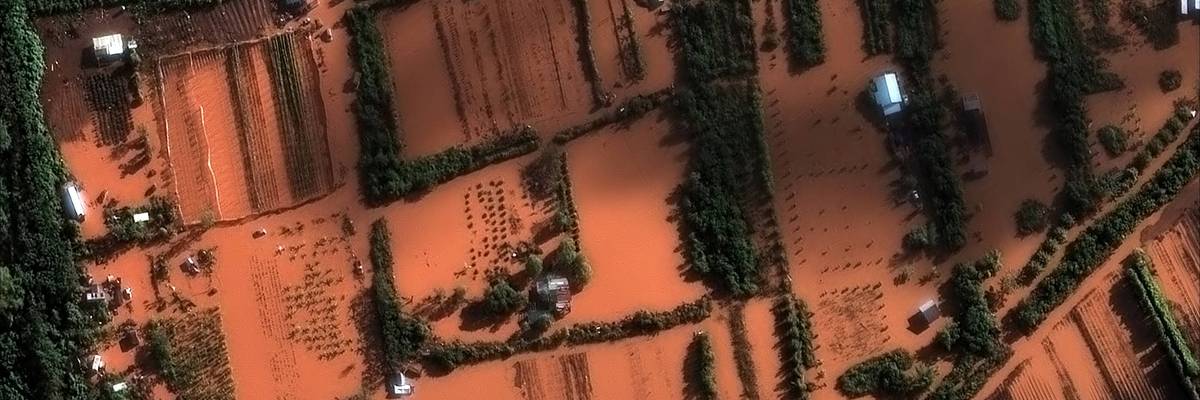
Vantor satellite image shows flooded farms, fields, and buildings near Waialua, North Shore, Oahu, Hawaii on March 23, 2026 with muddy storm debris flowing into the ocean after severe rains caused major flooding.
Experts agree that the climate emergency caused by the burning of fossil fuels is making extreme rainfall events on the islands wetter and more common, reigniting the debate about who should foot the bill.
Hawaii was inundated by its worst flooding in 20 years over the weekend, in another reminder of how the climate crisis disrupts the lives of ordinary people by increasing the likelihood and frequency of extreme weather events.
Hawaii Gov. Josh Green on Tuesday formally requested federal aid for a series of storms this month that he said could cost the state more than $1 billion in debris clearing and repairs to homes, roads, and infrastructure.
“These storms have impacted every county in our state and stretched our emergency response capabilities,” Green said in a statement.
Hawaii's waterlogged woes began on March 10 with the first in a series of winter Pacific rainstorms known as Kona lows. The initial storm caused upwards of $400 million in damages, including to Maui's Kula Hospital, and left the ground saturated when another storm rolled in beginning March 19, leading to what Green told Hawaii News Now was “the largest flood that we’ve had in Hawaii in 20 years."
“Should the residents just consider it an act of God and open up their checkbooks whenever this happens when the record is clear about who knew what and when they knew it?”
This second storm inundated Oahu's North Shore on Friday night, necessitating more than 230 rescues and placing 5,500 people under an evacuation order at one point, according to The Associated Press. The storm damaged hundreds of homes as well as schools, airports, and highways. All told, the two storms dumped a total of four feet of rain on parts of Oahu and Maui, Green said, as CBS reported.
"We lost everything," Oahu resident Melanie Lee told CBS News after visiting her flood-damaged home on Monday. "My children's pictures. Just real sentimental stuff. Now it's like, now where we go from here?"
The agricultural sector was also hard hit, with farmers on Oahu, Maui, Molokai, and the Big Island reporting over $10.5 million in damages, according to Honolulu Civil Beat.
Yet Friday's storm was not the end. On Monday, another downpour brought flash flooding to southern Oahu, as rain fell at a rate for 2-4 inches per hour, shocking even meteorologists.
“When you think it’s over, it’s not quite over,” National Weather Service forecaster Cole Evans told AP on Tuesday.
Oahu Emergency Management Agency spokesperson Molly Pierce told AP: “Most of us have not seen something that just keeps going like this... We feel like we keep getting punched down. But we’ll keep getting back up.”
Experts agree that the climate emergency is making extreme rainfall events on the islands wetter and more common.
As Honolulu Today reported:
The intense flooding in Hawaii highlights the growing threat of extreme weather events driven by climate change. The frequency and intensity of heavy rainfall have increased in the islands, leading to devastating impacts on infrastructure, homes, and communities.
Retired University of Hawaii professor Tom Giambelluca, who now supervises weather monitoring towers, told Honolulu Civil Beat that scientists have observed Hawaii's weather getting dryer generally, while storms tend to drop more rain that causes more flooding.
“It’s not like we never had extremes before. You know, something like this could have happened with no warming, probably,” Giambelluca said. “But these kinds of events seem to be getting more frequent.”
US Rep. Jill Takuda (D-Hawaii) told Maui Now: “We are accustomed to saying, ‘Well, this was a 100-year flood,’ right?... Well, 100-plus-year floods are happening every few years. We literally have to throw away the book in terms of the way we used to look at weather patterns in Hawaii.”
The flooding is also an example of how the impacts of climate disasters can build on each other. Some of the rains fell on Lahaina in Maui, where soil is less absorbent due to scarring from 2023's deadly climate-fueled wildfires.
“We think about evacuation routes when it comes to a fire,” Maui resident Kaliko Storer told Maui Now. “And now we say, when are we going to really sit down and talk about these (flood) controls?”
The connection between the burning of fossil fuels and the uptick in extreme weather events is reigniting the debate about who should pay for the damages from storms like those that swamped Hawaii this month.
State lawmakers are working to pass legislation that would allow insurers to recoup some storm costs from oil and gas companies directly, as Honolulu Civil Beat reported Tuesday.
"This is the third generational rain event we’ve had in the last four weeks,” state Sen. Jarrett Keohokalole (D-24) said. Referring to reporting that large fossil fuels companies have known for decades about the climate-heating impacts of their products and chose to lie to the public instead of act, he added, “Should the residents just consider it an act of God and open up their checkbooks whenever this happens when the record is clear about who knew what and when they knew it?”
Hawaii is also one of several states that has sued Big Oil for climate damages.
Even as oil prices climb due to the US and Israeli war on Iran, Emily Atkin of Heated argued that disasters like Hawaii's prove that the cost is still deflated.
"This is what the true price of oil looks like: Hawaiians wading through their flooded homes while the state scrambles to find a billion dollars for cleanup," she wrote.
Dear Common Dreams reader, It’s been nearly 30 years since I co-founded Common Dreams with my late wife, Lina Newhouser. We had the radical notion that journalism should serve the public good, not corporate profits. It was clear to us from the outset what it would take to build such a project. No paid advertisements. No corporate sponsors. No millionaire publisher telling us what to think or do. Many people said we wouldn't last a year, but we proved those doubters wrong. Together with a tremendous team of journalists and dedicated staff, we built an independent media outlet free from the constraints of profits and corporate control. Our mission has always been simple: To inform. To inspire. To ignite change for the common good. Building Common Dreams was not easy. Our survival was never guaranteed. When you take on the most powerful forces—Wall Street greed, fossil fuel industry destruction, Big Tech lobbyists, and uber-rich oligarchs who have spent billions upon billions rigging the economy and democracy in their favor—the only bulwark you have is supporters who believe in your work. But here’s the urgent message from me today. It's never been this bad out there. And it's never been this hard to keep us going. At the very moment Common Dreams is most needed, the threats we face are intensifying. We need your support now more than ever. We don't accept corporate advertising and never will. We don't have a paywall because we don't think people should be blocked from critical news based on their ability to pay. Everything we do is funded by the donations of readers like you. When everyone does the little they can afford, we are strong. But if that support retreats or dries up, so do we. Will you donate now to make sure Common Dreams not only survives but thrives? —Craig Brown, Co-founder |
Hawaii was inundated by its worst flooding in 20 years over the weekend, in another reminder of how the climate crisis disrupts the lives of ordinary people by increasing the likelihood and frequency of extreme weather events.
Hawaii Gov. Josh Green on Tuesday formally requested federal aid for a series of storms this month that he said could cost the state more than $1 billion in debris clearing and repairs to homes, roads, and infrastructure.
“These storms have impacted every county in our state and stretched our emergency response capabilities,” Green said in a statement.
Hawaii's waterlogged woes began on March 10 with the first in a series of winter Pacific rainstorms known as Kona lows. The initial storm caused upwards of $400 million in damages, including to Maui's Kula Hospital, and left the ground saturated when another storm rolled in beginning March 19, leading to what Green told Hawaii News Now was “the largest flood that we’ve had in Hawaii in 20 years."
“Should the residents just consider it an act of God and open up their checkbooks whenever this happens when the record is clear about who knew what and when they knew it?”
This second storm inundated Oahu's North Shore on Friday night, necessitating more than 230 rescues and placing 5,500 people under an evacuation order at one point, according to The Associated Press. The storm damaged hundreds of homes as well as schools, airports, and highways. All told, the two storms dumped a total of four feet of rain on parts of Oahu and Maui, Green said, as CBS reported.
"We lost everything," Oahu resident Melanie Lee told CBS News after visiting her flood-damaged home on Monday. "My children's pictures. Just real sentimental stuff. Now it's like, now where we go from here?"
The agricultural sector was also hard hit, with farmers on Oahu, Maui, Molokai, and the Big Island reporting over $10.5 million in damages, according to Honolulu Civil Beat.
Yet Friday's storm was not the end. On Monday, another downpour brought flash flooding to southern Oahu, as rain fell at a rate for 2-4 inches per hour, shocking even meteorologists.
“When you think it’s over, it’s not quite over,” National Weather Service forecaster Cole Evans told AP on Tuesday.
Oahu Emergency Management Agency spokesperson Molly Pierce told AP: “Most of us have not seen something that just keeps going like this... We feel like we keep getting punched down. But we’ll keep getting back up.”
Experts agree that the climate emergency is making extreme rainfall events on the islands wetter and more common.
As Honolulu Today reported:
The intense flooding in Hawaii highlights the growing threat of extreme weather events driven by climate change. The frequency and intensity of heavy rainfall have increased in the islands, leading to devastating impacts on infrastructure, homes, and communities.
Retired University of Hawaii professor Tom Giambelluca, who now supervises weather monitoring towers, told Honolulu Civil Beat that scientists have observed Hawaii's weather getting dryer generally, while storms tend to drop more rain that causes more flooding.
“It’s not like we never had extremes before. You know, something like this could have happened with no warming, probably,” Giambelluca said. “But these kinds of events seem to be getting more frequent.”
US Rep. Jill Takuda (D-Hawaii) told Maui Now: “We are accustomed to saying, ‘Well, this was a 100-year flood,’ right?... Well, 100-plus-year floods are happening every few years. We literally have to throw away the book in terms of the way we used to look at weather patterns in Hawaii.”
The flooding is also an example of how the impacts of climate disasters can build on each other. Some of the rains fell on Lahaina in Maui, where soil is less absorbent due to scarring from 2023's deadly climate-fueled wildfires.
“We think about evacuation routes when it comes to a fire,” Maui resident Kaliko Storer told Maui Now. “And now we say, when are we going to really sit down and talk about these (flood) controls?”
The connection between the burning of fossil fuels and the uptick in extreme weather events is reigniting the debate about who should pay for the damages from storms like those that swamped Hawaii this month.
State lawmakers are working to pass legislation that would allow insurers to recoup some storm costs from oil and gas companies directly, as Honolulu Civil Beat reported Tuesday.
"This is the third generational rain event we’ve had in the last four weeks,” state Sen. Jarrett Keohokalole (D-24) said. Referring to reporting that large fossil fuels companies have known for decades about the climate-heating impacts of their products and chose to lie to the public instead of act, he added, “Should the residents just consider it an act of God and open up their checkbooks whenever this happens when the record is clear about who knew what and when they knew it?”
Hawaii is also one of several states that has sued Big Oil for climate damages.
Even as oil prices climb due to the US and Israeli war on Iran, Emily Atkin of Heated argued that disasters like Hawaii's prove that the cost is still deflated.
"This is what the true price of oil looks like: Hawaiians wading through their flooded homes while the state scrambles to find a billion dollars for cleanup," she wrote.
Hawaii was inundated by its worst flooding in 20 years over the weekend, in another reminder of how the climate crisis disrupts the lives of ordinary people by increasing the likelihood and frequency of extreme weather events.
Hawaii Gov. Josh Green on Tuesday formally requested federal aid for a series of storms this month that he said could cost the state more than $1 billion in debris clearing and repairs to homes, roads, and infrastructure.
“These storms have impacted every county in our state and stretched our emergency response capabilities,” Green said in a statement.
Hawaii's waterlogged woes began on March 10 with the first in a series of winter Pacific rainstorms known as Kona lows. The initial storm caused upwards of $400 million in damages, including to Maui's Kula Hospital, and left the ground saturated when another storm rolled in beginning March 19, leading to what Green told Hawaii News Now was “the largest flood that we’ve had in Hawaii in 20 years."
“Should the residents just consider it an act of God and open up their checkbooks whenever this happens when the record is clear about who knew what and when they knew it?”
This second storm inundated Oahu's North Shore on Friday night, necessitating more than 230 rescues and placing 5,500 people under an evacuation order at one point, according to The Associated Press. The storm damaged hundreds of homes as well as schools, airports, and highways. All told, the two storms dumped a total of four feet of rain on parts of Oahu and Maui, Green said, as CBS reported.
"We lost everything," Oahu resident Melanie Lee told CBS News after visiting her flood-damaged home on Monday. "My children's pictures. Just real sentimental stuff. Now it's like, now where we go from here?"
The agricultural sector was also hard hit, with farmers on Oahu, Maui, Molokai, and the Big Island reporting over $10.5 million in damages, according to Honolulu Civil Beat.
Yet Friday's storm was not the end. On Monday, another downpour brought flash flooding to southern Oahu, as rain fell at a rate for 2-4 inches per hour, shocking even meteorologists.
“When you think it’s over, it’s not quite over,” National Weather Service forecaster Cole Evans told AP on Tuesday.
Oahu Emergency Management Agency spokesperson Molly Pierce told AP: “Most of us have not seen something that just keeps going like this... We feel like we keep getting punched down. But we’ll keep getting back up.”
Experts agree that the climate emergency is making extreme rainfall events on the islands wetter and more common.
As Honolulu Today reported:
The intense flooding in Hawaii highlights the growing threat of extreme weather events driven by climate change. The frequency and intensity of heavy rainfall have increased in the islands, leading to devastating impacts on infrastructure, homes, and communities.
Retired University of Hawaii professor Tom Giambelluca, who now supervises weather monitoring towers, told Honolulu Civil Beat that scientists have observed Hawaii's weather getting dryer generally, while storms tend to drop more rain that causes more flooding.
“It’s not like we never had extremes before. You know, something like this could have happened with no warming, probably,” Giambelluca said. “But these kinds of events seem to be getting more frequent.”
US Rep. Jill Takuda (D-Hawaii) told Maui Now: “We are accustomed to saying, ‘Well, this was a 100-year flood,’ right?... Well, 100-plus-year floods are happening every few years. We literally have to throw away the book in terms of the way we used to look at weather patterns in Hawaii.”
The flooding is also an example of how the impacts of climate disasters can build on each other. Some of the rains fell on Lahaina in Maui, where soil is less absorbent due to scarring from 2023's deadly climate-fueled wildfires.
“We think about evacuation routes when it comes to a fire,” Maui resident Kaliko Storer told Maui Now. “And now we say, when are we going to really sit down and talk about these (flood) controls?”
The connection between the burning of fossil fuels and the uptick in extreme weather events is reigniting the debate about who should pay for the damages from storms like those that swamped Hawaii this month.
State lawmakers are working to pass legislation that would allow insurers to recoup some storm costs from oil and gas companies directly, as Honolulu Civil Beat reported Tuesday.
"This is the third generational rain event we’ve had in the last four weeks,” state Sen. Jarrett Keohokalole (D-24) said. Referring to reporting that large fossil fuels companies have known for decades about the climate-heating impacts of their products and chose to lie to the public instead of act, he added, “Should the residents just consider it an act of God and open up their checkbooks whenever this happens when the record is clear about who knew what and when they knew it?”
Hawaii is also one of several states that has sued Big Oil for climate damages.
Even as oil prices climb due to the US and Israeli war on Iran, Emily Atkin of Heated argued that disasters like Hawaii's prove that the cost is still deflated.
"This is what the true price of oil looks like: Hawaiians wading through their flooded homes while the state scrambles to find a billion dollars for cleanup," she wrote.