5
#000000
#FFFFFF
To donate by check, phone, or other method, see our More Ways to Give page.
Daily news & progressive opinion—funded by the people, not the corporations—delivered straight to your inbox.
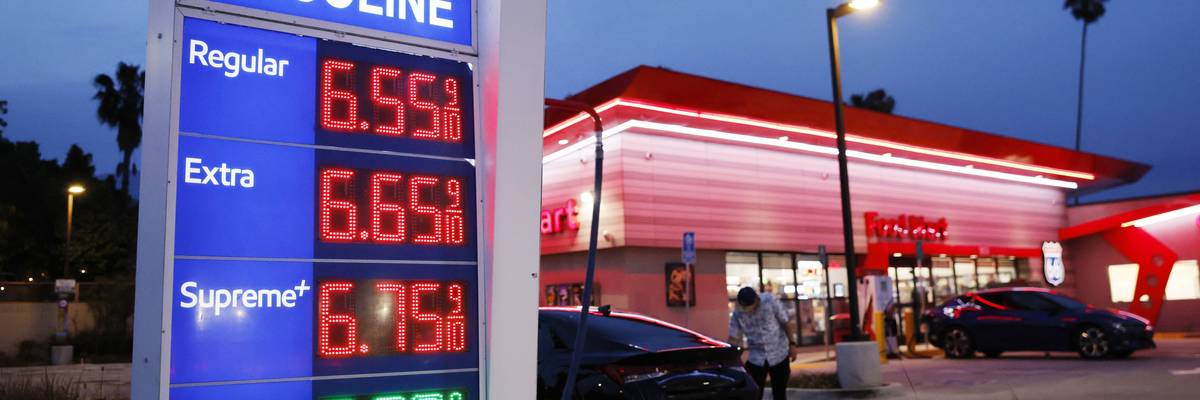
Gas prices are displayed at a Mobil gas station in Pasadena, California on March 30, 2026.
"How about we start by suspending the biggest gas tax of them all, Trump’s illegal war in Iran," said US Senate candidate Graham Platner.
As President Donald Trump's ongoing war of choice on Iran sends US pump prices skyrocketing by 50%, the president and congressional Republicans are moving this week to suspend the federal gasoline tax—a proposal that critics note would reduce funding for the nation's deteriorating highway infrastructure.
Trump said Monday that he would push to suspend the 18.4-cent-per-gallon federal tax on gasoline and 24.4-cent diesel tax "until it's appropriate," as the average price for a gallon of regular gas has soared from just under $3 before the war to over $4.50 today.
Such a move would require congressional authorization. Sen. Josh Hawley (R-Mo.) on Monday introduced the Gas Tax Suspension Act, citing "record profits" reaped by "some of the biggest corporations in the world"—but not the root cause of the price spike, the illegal war itself.
Meanwhile in the House, Rep. Jeff Van Drew (R-NJ) on Monday introduced similar legislation, while calling on state lawmakers and Democratic Gov. Mikie Sherrill to also suspend New Jersey's roughly $0.49-per-gallon gas tax. Rep. Anna Paulina Luna (R-Fla.) also said Monday that she "will be introducing a bill in the House to suspend the federal gas tax in light of Trump’s recent remarks."
This, after Sens. Mark Kelly (D-Ariz.) and Richard Blumenthal (D-Conn.) and Rep. Chris Pappas (D-NH) in March introduced the Gas Prices Relief Act, which would suspend the 18.4-cent tax through October 1. Kelly's office noted the pain of "skyrocketing gas prices due to war in Iran" as the reason for the legislation. Rep. Brendan Boyle (D-Pa.) in April also proposed a similar bill.
"Never before in American history have we seen a 50% increase in the price of gas in such a short time," Boyle said during a Monday interview on MS NOW, adding that the Trump administration's "actions have caused this mess."
Republican support for a gas tax holiday marks a reversal from just four years ago, when they opposed then-President Joe Biden's call to suspend the tax after Russia launched its ongoing full-scale invasion of Ukraine. GOP lawmakers argued at the time that such a suspension would cause the delay or cancellation of critical infrastructure projects, as federal gas taxes provide the vast bulk of Highway Trust Fund money. Such arguments were nowhere to be seen from Republicans after Trump's Monday comments.
Democratic Senate candidate Graham Platner of Maine is pushing a multipronged approach to the issue. First, he is backing a permanent end to federal gas and diesel taxes, whose revenue would be replaced by increased taxation of billionaires.
"Relying on fossil fuels to fund basic infrastructure does not make sense if we want to reduce fossil fuels used in transportation," the climate-conscious candidate explained last week.
Platner's plan also calls for 50% per-barrel windfall tax on Big Oil profits, as well as a national freeze on electric rate increases.
Finally, Platner advocates addressing the number one current cause of high gas prices.
"How about we start by suspending the biggest gas tax of them all: Trump’s illegal war in Iran," he said Monday on X.
Most congressional Republicans and a few Democrats have refused to pass war powers resolutions intended to end Trump's assault—which the administration claims has been "terminated," despite continuing its naval blockade and conducting some alleged "self-defense" strikes during the current ceasefire.
Dear Common Dreams reader, It’s been nearly 30 years since I co-founded Common Dreams with my late wife, Lina Newhouser. We had the radical notion that journalism should serve the public good, not corporate profits. It was clear to us from the outset what it would take to build such a project. No paid advertisements. No corporate sponsors. No millionaire publisher telling us what to think or do. Many people said we wouldn't last a year, but we proved those doubters wrong. Together with a tremendous team of journalists and dedicated staff, we built an independent media outlet free from the constraints of profits and corporate control. Our mission has always been simple: To inform. To inspire. To ignite change for the common good. Building Common Dreams was not easy. Our survival was never guaranteed. When you take on the most powerful forces—Wall Street greed, fossil fuel industry destruction, Big Tech lobbyists, and uber-rich oligarchs who have spent billions upon billions rigging the economy and democracy in their favor—the only bulwark you have is supporters who believe in your work. But here’s the urgent message from me today. It's never been this bad out there. And it's never been this hard to keep us going. At the very moment Common Dreams is most needed, the threats we face are intensifying. We need your support now more than ever. We don't accept corporate advertising and never will. We don't have a paywall because we don't think people should be blocked from critical news based on their ability to pay. Everything we do is funded by the donations of readers like you. When everyone does the little they can afford, we are strong. But if that support retreats or dries up, so do we. Will you donate now to make sure Common Dreams not only survives but thrives? —Craig Brown, Co-founder |
As President Donald Trump's ongoing war of choice on Iran sends US pump prices skyrocketing by 50%, the president and congressional Republicans are moving this week to suspend the federal gasoline tax—a proposal that critics note would reduce funding for the nation's deteriorating highway infrastructure.
Trump said Monday that he would push to suspend the 18.4-cent-per-gallon federal tax on gasoline and 24.4-cent diesel tax "until it's appropriate," as the average price for a gallon of regular gas has soared from just under $3 before the war to over $4.50 today.
Such a move would require congressional authorization. Sen. Josh Hawley (R-Mo.) on Monday introduced the Gas Tax Suspension Act, citing "record profits" reaped by "some of the biggest corporations in the world"—but not the root cause of the price spike, the illegal war itself.
Meanwhile in the House, Rep. Jeff Van Drew (R-NJ) on Monday introduced similar legislation, while calling on state lawmakers and Democratic Gov. Mikie Sherrill to also suspend New Jersey's roughly $0.49-per-gallon gas tax. Rep. Anna Paulina Luna (R-Fla.) also said Monday that she "will be introducing a bill in the House to suspend the federal gas tax in light of Trump’s recent remarks."
This, after Sens. Mark Kelly (D-Ariz.) and Richard Blumenthal (D-Conn.) and Rep. Chris Pappas (D-NH) in March introduced the Gas Prices Relief Act, which would suspend the 18.4-cent tax through October 1. Kelly's office noted the pain of "skyrocketing gas prices due to war in Iran" as the reason for the legislation. Rep. Brendan Boyle (D-Pa.) in April also proposed a similar bill.
"Never before in American history have we seen a 50% increase in the price of gas in such a short time," Boyle said during a Monday interview on MS NOW, adding that the Trump administration's "actions have caused this mess."
Republican support for a gas tax holiday marks a reversal from just four years ago, when they opposed then-President Joe Biden's call to suspend the tax after Russia launched its ongoing full-scale invasion of Ukraine. GOP lawmakers argued at the time that such a suspension would cause the delay or cancellation of critical infrastructure projects, as federal gas taxes provide the vast bulk of Highway Trust Fund money. Such arguments were nowhere to be seen from Republicans after Trump's Monday comments.
Democratic Senate candidate Graham Platner of Maine is pushing a multipronged approach to the issue. First, he is backing a permanent end to federal gas and diesel taxes, whose revenue would be replaced by increased taxation of billionaires.
"Relying on fossil fuels to fund basic infrastructure does not make sense if we want to reduce fossil fuels used in transportation," the climate-conscious candidate explained last week.
Platner's plan also calls for 50% per-barrel windfall tax on Big Oil profits, as well as a national freeze on electric rate increases.
Finally, Platner advocates addressing the number one current cause of high gas prices.
"How about we start by suspending the biggest gas tax of them all: Trump’s illegal war in Iran," he said Monday on X.
Most congressional Republicans and a few Democrats have refused to pass war powers resolutions intended to end Trump's assault—which the administration claims has been "terminated," despite continuing its naval blockade and conducting some alleged "self-defense" strikes during the current ceasefire.
As President Donald Trump's ongoing war of choice on Iran sends US pump prices skyrocketing by 50%, the president and congressional Republicans are moving this week to suspend the federal gasoline tax—a proposal that critics note would reduce funding for the nation's deteriorating highway infrastructure.
Trump said Monday that he would push to suspend the 18.4-cent-per-gallon federal tax on gasoline and 24.4-cent diesel tax "until it's appropriate," as the average price for a gallon of regular gas has soared from just under $3 before the war to over $4.50 today.
Such a move would require congressional authorization. Sen. Josh Hawley (R-Mo.) on Monday introduced the Gas Tax Suspension Act, citing "record profits" reaped by "some of the biggest corporations in the world"—but not the root cause of the price spike, the illegal war itself.
Meanwhile in the House, Rep. Jeff Van Drew (R-NJ) on Monday introduced similar legislation, while calling on state lawmakers and Democratic Gov. Mikie Sherrill to also suspend New Jersey's roughly $0.49-per-gallon gas tax. Rep. Anna Paulina Luna (R-Fla.) also said Monday that she "will be introducing a bill in the House to suspend the federal gas tax in light of Trump’s recent remarks."
This, after Sens. Mark Kelly (D-Ariz.) and Richard Blumenthal (D-Conn.) and Rep. Chris Pappas (D-NH) in March introduced the Gas Prices Relief Act, which would suspend the 18.4-cent tax through October 1. Kelly's office noted the pain of "skyrocketing gas prices due to war in Iran" as the reason for the legislation. Rep. Brendan Boyle (D-Pa.) in April also proposed a similar bill.
"Never before in American history have we seen a 50% increase in the price of gas in such a short time," Boyle said during a Monday interview on MS NOW, adding that the Trump administration's "actions have caused this mess."
Republican support for a gas tax holiday marks a reversal from just four years ago, when they opposed then-President Joe Biden's call to suspend the tax after Russia launched its ongoing full-scale invasion of Ukraine. GOP lawmakers argued at the time that such a suspension would cause the delay or cancellation of critical infrastructure projects, as federal gas taxes provide the vast bulk of Highway Trust Fund money. Such arguments were nowhere to be seen from Republicans after Trump's Monday comments.
Democratic Senate candidate Graham Platner of Maine is pushing a multipronged approach to the issue. First, he is backing a permanent end to federal gas and diesel taxes, whose revenue would be replaced by increased taxation of billionaires.
"Relying on fossil fuels to fund basic infrastructure does not make sense if we want to reduce fossil fuels used in transportation," the climate-conscious candidate explained last week.
Platner's plan also calls for 50% per-barrel windfall tax on Big Oil profits, as well as a national freeze on electric rate increases.
Finally, Platner advocates addressing the number one current cause of high gas prices.
"How about we start by suspending the biggest gas tax of them all: Trump’s illegal war in Iran," he said Monday on X.
Most congressional Republicans and a few Democrats have refused to pass war powers resolutions intended to end Trump's assault—which the administration claims has been "terminated," despite continuing its naval blockade and conducting some alleged "self-defense" strikes during the current ceasefire.