

SUBSCRIBE TO OUR FREE NEWSLETTER
Daily news & progressive opinion—funded by the people, not the corporations—delivered straight to your inbox.
5
#000000
#FFFFFF
To donate by check, phone, or other method, see our More Ways to Give page.
More than 160 advocacy groups on Monday sent letters to President Joe Biden and congressional leaders decrying a proposal to slash up to $1.65 billion in U.S. Department of Agriculture funding, a move that comes during a pandemic-driven global hunger crisis.
"Ultimately, the $1.65 billion proposed rescission will impact the most vulnerable among us."
House lawmakers introduced the Coronavirus Supplemental Appropriations Act in March in order to fund ongoing Covid-19 pandemic management by cutting $1.65 billion from the USDA's 2021 allotment, or about 5% of the agency's total programs and operations budget. The Senate, and subsequently the White House, have expressed support for the measure.
Although House Appropriations Committee Chair Rosa DeLauro (D-Conn.) said the proposed legislation will not have any "problematic offsets," critics including the groups signing Monday's letters contend it will take money away from essential food system resiliency programs.
Arguing that the proposed cuts "will diminish the ability of our food and farm system to respond to future disasters and crises," the letters' signers urge Biden and Congress to "continue to honor your investments in a more just, equitable, and resilient food and farm system--particularly to the historically underserved people and communities who comprise it."
"The Covid-19 pandemic has laid bare the multiple vulnerabilities of our highly consolidated food system," the letters state, "and even after years of robust federal response, supply chain disruptions continue, and rising food prices put more families at risk of nutrition insecurity."
"Ultimately, the $1.65 billion proposed rescission will impact the most vulnerable among us," the signers warn, and "will leave USDA without resources to respond to supply chain disruptions exacerbated by the instability in Europe and attendant market and input price disruptions."
Farm Action, which signed the letters, said in a statement that "this money grab is particularly hard to swallow when you consider that we're on the brink of an international food crisis, food inflation is already up 20%, and farmers are probably looking at yet another year of negative income."
"Congress needs to understand that the programs they're stealing from are every bit as important to keep people safe and healthy," the group added.
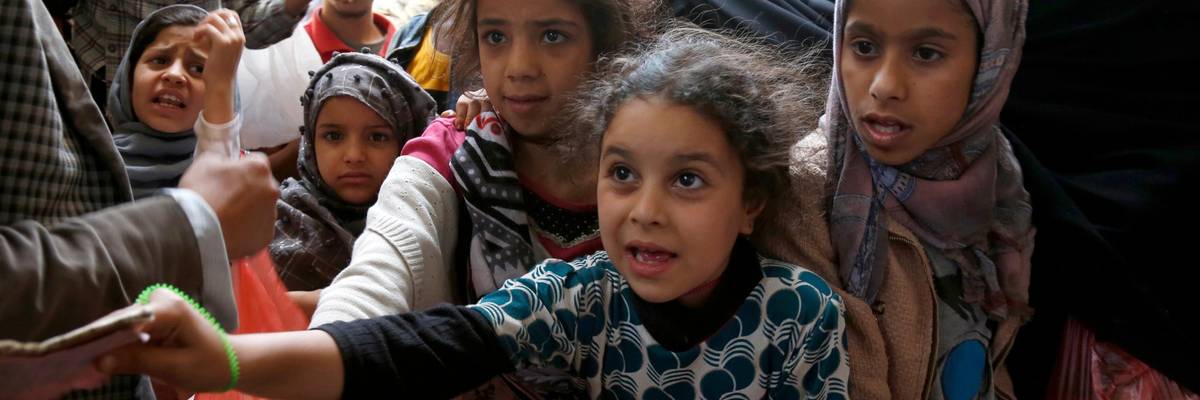
The proposed cuts come amid a pandemic-driven surge in hunger in the United States and around the world.
Related Content

On Monday, Oxfam warned that West Africa is facing its worst food crisis in a decade, with 27 million people currently suffering from hunger and another 11 million at risk of being pushed into hunger in the next three months. Last month, Oxfam said 28 million people in East Africa are at risk of extreme hunger amid a drought of historic proportions.
War-torn Yemen and Afghanistan have also seen deadly spikes in hunger, with 13,000 Afghan newborns starving to death this year alone, according to Human Rights Watch.
Russia's invasion of Ukraine has further exacerbated global food insecurity. The two countries combined--often referred to as the "world's breadbasket"--provide over a quarter of the world's wheat exports. Ukrainian corn exports also account for more than one-sixth of the global total.
More than 160 advocacy groups on Monday sent letters to President Joe Biden and congressional leaders decrying a proposal to slash up to $1.65 billion in U.S. Department of Agriculture funding, a move that comes during a pandemic-driven global hunger crisis.
"Ultimately, the $1.65 billion proposed rescission will impact the most vulnerable among us."
House lawmakers introduced the Coronavirus Supplemental Appropriations Act in March in order to fund ongoing Covid-19 pandemic management by cutting $1.65 billion from the USDA's 2021 allotment, or about 5% of the agency's total programs and operations budget. The Senate, and subsequently the White House, have expressed support for the measure.
Although House Appropriations Committee Chair Rosa DeLauro (D-Conn.) said the proposed legislation will not have any "problematic offsets," critics including the groups signing Monday's letters contend it will take money away from essential food system resiliency programs.
Arguing that the proposed cuts "will diminish the ability of our food and farm system to respond to future disasters and crises," the letters' signers urge Biden and Congress to "continue to honor your investments in a more just, equitable, and resilient food and farm system--particularly to the historically underserved people and communities who comprise it."
"The Covid-19 pandemic has laid bare the multiple vulnerabilities of our highly consolidated food system," the letters state, "and even after years of robust federal response, supply chain disruptions continue, and rising food prices put more families at risk of nutrition insecurity."
"Ultimately, the $1.65 billion proposed rescission will impact the most vulnerable among us," the signers warn, and "will leave USDA without resources to respond to supply chain disruptions exacerbated by the instability in Europe and attendant market and input price disruptions."
Farm Action, which signed the letters, said in a statement that "this money grab is particularly hard to swallow when you consider that we're on the brink of an international food crisis, food inflation is already up 20%, and farmers are probably looking at yet another year of negative income."
"Congress needs to understand that the programs they're stealing from are every bit as important to keep people safe and healthy," the group added.
The proposed cuts come amid a pandemic-driven surge in hunger in the United States and around the world.
Related Content
On Monday, Oxfam warned that West Africa is facing its worst food crisis in a decade, with 27 million people currently suffering from hunger and another 11 million at risk of being pushed into hunger in the next three months. Last month, Oxfam said 28 million people in East Africa are at risk of extreme hunger amid a drought of historic proportions.
War-torn Yemen and Afghanistan have also seen deadly spikes in hunger, with 13,000 Afghan newborns starving to death this year alone, according to Human Rights Watch.
Russia's invasion of Ukraine has further exacerbated global food insecurity. The two countries combined--often referred to as the "world's breadbasket"--provide over a quarter of the world's wheat exports. Ukrainian corn exports also account for more than one-sixth of the global total.
More than 160 advocacy groups on Monday sent letters to President Joe Biden and congressional leaders decrying a proposal to slash up to $1.65 billion in U.S. Department of Agriculture funding, a move that comes during a pandemic-driven global hunger crisis.
"Ultimately, the $1.65 billion proposed rescission will impact the most vulnerable among us."
House lawmakers introduced the Coronavirus Supplemental Appropriations Act in March in order to fund ongoing Covid-19 pandemic management by cutting $1.65 billion from the USDA's 2021 allotment, or about 5% of the agency's total programs and operations budget. The Senate, and subsequently the White House, have expressed support for the measure.
Although House Appropriations Committee Chair Rosa DeLauro (D-Conn.) said the proposed legislation will not have any "problematic offsets," critics including the groups signing Monday's letters contend it will take money away from essential food system resiliency programs.
Arguing that the proposed cuts "will diminish the ability of our food and farm system to respond to future disasters and crises," the letters' signers urge Biden and Congress to "continue to honor your investments in a more just, equitable, and resilient food and farm system--particularly to the historically underserved people and communities who comprise it."
"The Covid-19 pandemic has laid bare the multiple vulnerabilities of our highly consolidated food system," the letters state, "and even after years of robust federal response, supply chain disruptions continue, and rising food prices put more families at risk of nutrition insecurity."
"Ultimately, the $1.65 billion proposed rescission will impact the most vulnerable among us," the signers warn, and "will leave USDA without resources to respond to supply chain disruptions exacerbated by the instability in Europe and attendant market and input price disruptions."
Farm Action, which signed the letters, said in a statement that "this money grab is particularly hard to swallow when you consider that we're on the brink of an international food crisis, food inflation is already up 20%, and farmers are probably looking at yet another year of negative income."
"Congress needs to understand that the programs they're stealing from are every bit as important to keep people safe and healthy," the group added.
The proposed cuts come amid a pandemic-driven surge in hunger in the United States and around the world.
Related Content
On Monday, Oxfam warned that West Africa is facing its worst food crisis in a decade, with 27 million people currently suffering from hunger and another 11 million at risk of being pushed into hunger in the next three months. Last month, Oxfam said 28 million people in East Africa are at risk of extreme hunger amid a drought of historic proportions.
War-torn Yemen and Afghanistan have also seen deadly spikes in hunger, with 13,000 Afghan newborns starving to death this year alone, according to Human Rights Watch.
Russia's invasion of Ukraine has further exacerbated global food insecurity. The two countries combined--often referred to as the "world's breadbasket"--provide over a quarter of the world's wheat exports. Ukrainian corn exports also account for more than one-sixth of the global total.

