SUBSCRIBE TO OUR FREE NEWSLETTER
Daily news & progressive opinion—funded by the people, not the corporations—delivered straight to your inbox.
5
#000000
#FFFFFF
To donate by check, phone, or other method, see our More Ways to Give page.


Daily news & progressive opinion—funded by the people, not the corporations—delivered straight to your inbox.

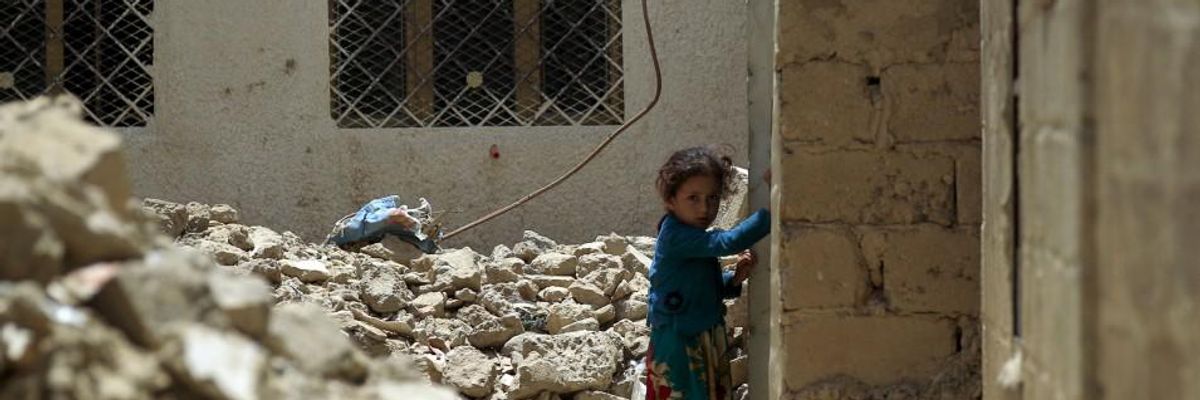
A young girl stands amidst the ruins of a building destroyed during past Saudi-led coalition air strikes, in the province of Amran, some 50 kilometres (30 miles) north of the Yemeni capital Sanaa, on July 6, 2019. (Photo: Mohammed Huwais/AFP/Getty Images)
Warning: This story contains graphic images and video.
A Saudi Arabia-led coalition attack on Yemen Tuesday killed 16 people, including seven children, the latest massacre in the years long conflict.
"These children should not be victims of this conflict," Save the Children in Yemen country director Tamer Kirolos told Middle East Eye. "Yet, they have paid the highest price imaginable. We're calling for an independent investigation into the attack and for perpetrators to be held to account."
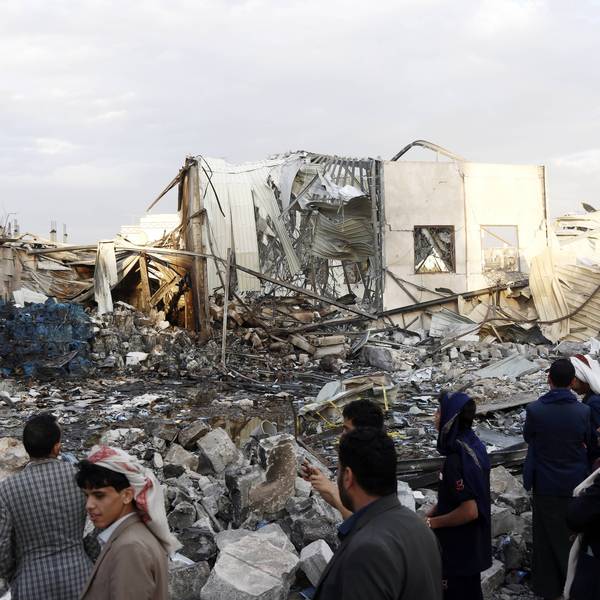
Graphic video and photos from the attack showed the extent of the destruction and human devastation.
Survivors buried the victims in a mass grave, Yemeni journalist Mohammed Hojily reported.
The attack was took place in Dhalea province, an area controlled by Houthi rebels, China's Xinhua News Agency reported.
The Saudi-led war on Yemen--backed by the U.S. government--has raged for over four years.
According to Al Jazeera, the Houthis had hoped for a mutual drawdown in hostilities:
The deadly strikes came four days after the Houthi rebels said they would stop missile and drone attacks on Saudi Arabia--if the military alliance targeting Yemen does the same--after the militia that controls most of the country claimed responsibility for a brazen attack on oil facilities in the kingdom.
"The aggressors do not understand the message of peace... but only messages of drones and of missile power," Houthi rebels said on their Al Masirah television station.
Tuesday's attack came less than a week after a drone strike on a Saudi oil field on September 19. The oil field strike, which killed nobody, drew widespread condemnation from leaders in Europe and the U.S., but thus far those leaders have been silent about the Yemen attack.
"Europe will not condemn this," tweeted Quincy Institute for Responsible Statecraft vice president Trita Parsi. "But a strike against an oil field in Saudi Arabia that killed no one, they condemned in 'strongest terms.'"

Dear Common Dreams reader, It’s been nearly 30 years since I co-founded Common Dreams with my late wife, Lina Newhouser. We had the radical notion that journalism should serve the public good, not corporate profits. It was clear to us from the outset what it would take to build such a project. No paid advertisements. No corporate sponsors. No millionaire publisher telling us what to think or do. Many people said we wouldn't last a year, but we proved those doubters wrong. Together with a tremendous team of journalists and dedicated staff, we built an independent media outlet free from the constraints of profits and corporate control. Our mission has always been simple: To inform. To inspire. To ignite change for the common good. Building Common Dreams was not easy. Our survival was never guaranteed. When you take on the most powerful forces—Wall Street greed, fossil fuel industry destruction, Big Tech lobbyists, and uber-rich oligarchs who have spent billions upon billions rigging the economy and democracy in their favor—the only bulwark you have is supporters who believe in your work. But here’s the urgent message from me today. It's never been this bad out there. And it's never been this hard to keep us going. At the very moment Common Dreams is most needed, the threats we face are intensifying. We need your support now more than ever. We don't accept corporate advertising and never will. We don't have a paywall because we don't think people should be blocked from critical news based on their ability to pay. Everything we do is funded by the donations of readers like you. When everyone does the little they can afford, we are strong. But if that support retreats or dries up, so do we. Will you donate now to make sure Common Dreams not only survives but thrives? —Craig Brown, Co-founder |
Warning: This story contains graphic images and video.
A Saudi Arabia-led coalition attack on Yemen Tuesday killed 16 people, including seven children, the latest massacre in the years long conflict.
"These children should not be victims of this conflict," Save the Children in Yemen country director Tamer Kirolos told Middle East Eye. "Yet, they have paid the highest price imaginable. We're calling for an independent investigation into the attack and for perpetrators to be held to account."
Graphic video and photos from the attack showed the extent of the destruction and human devastation.
Survivors buried the victims in a mass grave, Yemeni journalist Mohammed Hojily reported.
The attack was took place in Dhalea province, an area controlled by Houthi rebels, China's Xinhua News Agency reported.
The Saudi-led war on Yemen--backed by the U.S. government--has raged for over four years.
According to Al Jazeera, the Houthis had hoped for a mutual drawdown in hostilities:
The deadly strikes came four days after the Houthi rebels said they would stop missile and drone attacks on Saudi Arabia--if the military alliance targeting Yemen does the same--after the militia that controls most of the country claimed responsibility for a brazen attack on oil facilities in the kingdom.
"The aggressors do not understand the message of peace... but only messages of drones and of missile power," Houthi rebels said on their Al Masirah television station.
Tuesday's attack came less than a week after a drone strike on a Saudi oil field on September 19. The oil field strike, which killed nobody, drew widespread condemnation from leaders in Europe and the U.S., but thus far those leaders have been silent about the Yemen attack.
"Europe will not condemn this," tweeted Quincy Institute for Responsible Statecraft vice president Trita Parsi. "But a strike against an oil field in Saudi Arabia that killed no one, they condemned in 'strongest terms.'"
Warning: This story contains graphic images and video.
A Saudi Arabia-led coalition attack on Yemen Tuesday killed 16 people, including seven children, the latest massacre in the years long conflict.
"These children should not be victims of this conflict," Save the Children in Yemen country director Tamer Kirolos told Middle East Eye. "Yet, they have paid the highest price imaginable. We're calling for an independent investigation into the attack and for perpetrators to be held to account."
Graphic video and photos from the attack showed the extent of the destruction and human devastation.
Survivors buried the victims in a mass grave, Yemeni journalist Mohammed Hojily reported.
The attack was took place in Dhalea province, an area controlled by Houthi rebels, China's Xinhua News Agency reported.
The Saudi-led war on Yemen--backed by the U.S. government--has raged for over four years.
According to Al Jazeera, the Houthis had hoped for a mutual drawdown in hostilities:
The deadly strikes came four days after the Houthi rebels said they would stop missile and drone attacks on Saudi Arabia--if the military alliance targeting Yemen does the same--after the militia that controls most of the country claimed responsibility for a brazen attack on oil facilities in the kingdom.
"The aggressors do not understand the message of peace... but only messages of drones and of missile power," Houthi rebels said on their Al Masirah television station.
Tuesday's attack came less than a week after a drone strike on a Saudi oil field on September 19. The oil field strike, which killed nobody, drew widespread condemnation from leaders in Europe and the U.S., but thus far those leaders have been silent about the Yemen attack.
"Europe will not condemn this," tweeted Quincy Institute for Responsible Statecraft vice president Trita Parsi. "But a strike against an oil field in Saudi Arabia that killed no one, they condemned in 'strongest terms.'"