SUBSCRIBE TO OUR FREE NEWSLETTER
Daily news & progressive opinion—funded by the people, not the corporations—delivered straight to your inbox.
5
#000000
#FFFFFF
To donate by check, phone, or other method, see our More Ways to Give page.
Daily news & progressive opinion—funded by the people, not the corporations—delivered straight to your inbox.
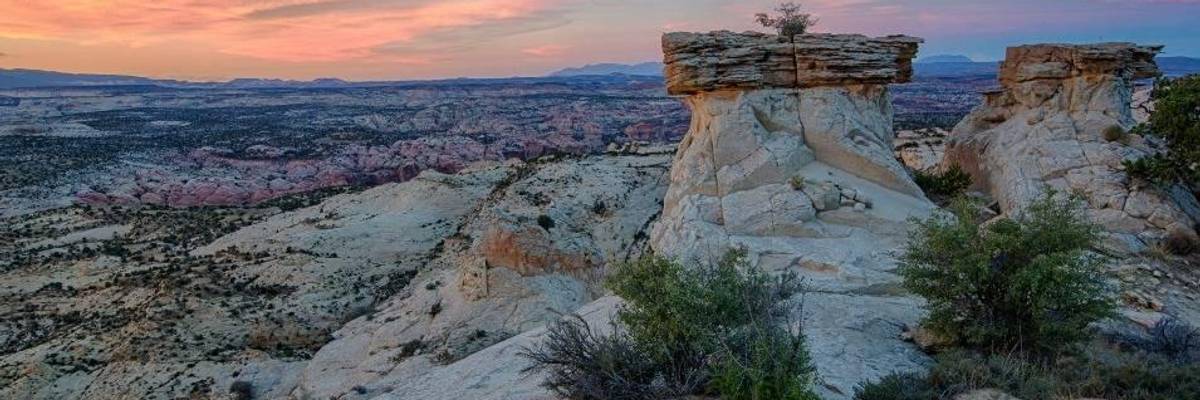
Grand Staircase-Escalante National Monument's boundaries were reduced by about 47 percent after the Interior Department's review last year. (Photo: Bureau of Land Managment/Flickr/cc)
House Democrats, indigenous tribal leaders, and public land protection advocates all rebuked the Trump administration's downsizing of two national monuments Wednesday, arguing that President Donald Trump and former Interior Secretary Ryan Zinke acted illegally by conducting what at least one critic called a "sham" review process.
The administration acted in the interest of pro-fossil fuel lawmakers, the oil and gas industry, and other monument opponents when they conducted a hasty review of Bears Ears and Grand Staircase-Escalante National Monuments in 2017, critics argued.
"President Trump's unprecedented proclamation revoking Bears Ears and replacing it with two small monument units violates the Antiquities Act and exceeds the power delegated to the president by Congress." --Tony Small, Ute TribeThe House Natural Resources Committee invited several witnesses to testify at a hearing entitled "Forgotten Voices," including three representatives from native tribes which had vocally opposed President Donald Trump's decision to shrink the two monuments by about two million acres in 2017, citing their sacred connection to the lands.
"To Hopi people, the Bears Ears National Monument is a spiritually occupied landscape," said Clark Tenakhongva, vice chairman of the Hopi tribe, at the hearing. "This land is a testament of Hopi stewardship through thousands of years, manifested by the 'footprints' of ancient villages, sacred springs, migration routes, pilgrimage trails, [and] artifacts."
Rep. Deb Haaland (D-N.M.), one of two Native American women who made history when they were elected to Congress last year, expressed solidarity with the Hopi and other tribes.
"I can say the bones of my ancestors are buried in Bears Ears," Haaland said. "It's easy to get emotional about tribal land when your ancestors have lived there for generations and it's only because of them that you're able to sit here today...I appreciate local tribes for coming so far to explain why this land is important."
Committee Chairman Raul Grijalva (D-Ariz.) noted in his opening remarks that the Interior Department's own inspector general had found the review conducted by Zinke to be unsatisfactory, and Zinke himself to be apparently unconcerned with whether the process was "legal, whether it was improperly influenced, or whether it best protected public lands."
"When my colleagues read the full report they will say administration's process was hollow and improper," Grijalva said. "Industry was given special consideration in this process...and the voice of the American people was ignored."
In addition to Tenakhongva, two other witnesses at the hearing--Tony Small, vice chairman of the Ute Tribe, and Carleton Bowekaty, lieutenant governor of the Pueblo of Zuni--described how they were given just an hour of Zinke's time during the review process, while monument opponents were able to join the secretary on his four-day tour of the lands. The inequity amounted to a violation of the Antiquities Act, they argued.
"The current administration," Bowekaty said, "conducted a National Monument review that largely ignored tribal interests and concerns. It appears that this so-called review was conducted with a pre-determined objective of justifying executive action--action which we are now challenging in federal court--to greatly reduce the area protected by the Bears Ears National Monument so that excluded lands can be available for mineral exploration and development."
"President Trump's unprecedented proclamation revoking Bears Ears and replacing it with two small monument units violates the Antiquities Act and exceeds the power delegated to the president by Congress," testified Small.
"The Antiquities Act does not authorize a president to rescind or modify national monuments created by their predecessors, and certainly does not authorize them to revoke and replace existing monuments with smaller ones as has been attempted here," he added.
As the hearing was underway, the Western Values Project released an analysis of documents obtained through the Freedom of Information Act (FOIA) by the Utah Bureau of Land Management, which showed that the Interior Department misrepresented findings regarding the monuments' effects on Utah's economy.
"The Trump Administration steamrolled expertise on the ground in Utah in order to push a narrow political agenda from Washington, D.C.," said the group's executive director, Chris Saeger, in a statement.
"It is my firm belief that this was a pre-destined outcome and everything since has been to justify that outcome," Grijalva concluded at the hearing.
Dear Common Dreams reader, It’s been nearly 30 years since I co-founded Common Dreams with my late wife, Lina Newhouser. We had the radical notion that journalism should serve the public good, not corporate profits. It was clear to us from the outset what it would take to build such a project. No paid advertisements. No corporate sponsors. No millionaire publisher telling us what to think or do. Many people said we wouldn't last a year, but we proved those doubters wrong. Together with a tremendous team of journalists and dedicated staff, we built an independent media outlet free from the constraints of profits and corporate control. Our mission has always been simple: To inform. To inspire. To ignite change for the common good. Building Common Dreams was not easy. Our survival was never guaranteed. When you take on the most powerful forces—Wall Street greed, fossil fuel industry destruction, Big Tech lobbyists, and uber-rich oligarchs who have spent billions upon billions rigging the economy and democracy in their favor—the only bulwark you have is supporters who believe in your work. But here’s the urgent message from me today. It's never been this bad out there. And it's never been this hard to keep us going. At the very moment Common Dreams is most needed, the threats we face are intensifying. We need your support now more than ever. We don't accept corporate advertising and never will. We don't have a paywall because we don't think people should be blocked from critical news based on their ability to pay. Everything we do is funded by the donations of readers like you. When everyone does the little they can afford, we are strong. But if that support retreats or dries up, so do we. Will you donate now to make sure Common Dreams not only survives but thrives? —Craig Brown, Co-founder |
House Democrats, indigenous tribal leaders, and public land protection advocates all rebuked the Trump administration's downsizing of two national monuments Wednesday, arguing that President Donald Trump and former Interior Secretary Ryan Zinke acted illegally by conducting what at least one critic called a "sham" review process.
The administration acted in the interest of pro-fossil fuel lawmakers, the oil and gas industry, and other monument opponents when they conducted a hasty review of Bears Ears and Grand Staircase-Escalante National Monuments in 2017, critics argued.
"President Trump's unprecedented proclamation revoking Bears Ears and replacing it with two small monument units violates the Antiquities Act and exceeds the power delegated to the president by Congress." --Tony Small, Ute TribeThe House Natural Resources Committee invited several witnesses to testify at a hearing entitled "Forgotten Voices," including three representatives from native tribes which had vocally opposed President Donald Trump's decision to shrink the two monuments by about two million acres in 2017, citing their sacred connection to the lands.
"To Hopi people, the Bears Ears National Monument is a spiritually occupied landscape," said Clark Tenakhongva, vice chairman of the Hopi tribe, at the hearing. "This land is a testament of Hopi stewardship through thousands of years, manifested by the 'footprints' of ancient villages, sacred springs, migration routes, pilgrimage trails, [and] artifacts."
Rep. Deb Haaland (D-N.M.), one of two Native American women who made history when they were elected to Congress last year, expressed solidarity with the Hopi and other tribes.
"I can say the bones of my ancestors are buried in Bears Ears," Haaland said. "It's easy to get emotional about tribal land when your ancestors have lived there for generations and it's only because of them that you're able to sit here today...I appreciate local tribes for coming so far to explain why this land is important."
Committee Chairman Raul Grijalva (D-Ariz.) noted in his opening remarks that the Interior Department's own inspector general had found the review conducted by Zinke to be unsatisfactory, and Zinke himself to be apparently unconcerned with whether the process was "legal, whether it was improperly influenced, or whether it best protected public lands."
"When my colleagues read the full report they will say administration's process was hollow and improper," Grijalva said. "Industry was given special consideration in this process...and the voice of the American people was ignored."
In addition to Tenakhongva, two other witnesses at the hearing--Tony Small, vice chairman of the Ute Tribe, and Carleton Bowekaty, lieutenant governor of the Pueblo of Zuni--described how they were given just an hour of Zinke's time during the review process, while monument opponents were able to join the secretary on his four-day tour of the lands. The inequity amounted to a violation of the Antiquities Act, they argued.
"The current administration," Bowekaty said, "conducted a National Monument review that largely ignored tribal interests and concerns. It appears that this so-called review was conducted with a pre-determined objective of justifying executive action--action which we are now challenging in federal court--to greatly reduce the area protected by the Bears Ears National Monument so that excluded lands can be available for mineral exploration and development."
"President Trump's unprecedented proclamation revoking Bears Ears and replacing it with two small monument units violates the Antiquities Act and exceeds the power delegated to the president by Congress," testified Small.
"The Antiquities Act does not authorize a president to rescind or modify national monuments created by their predecessors, and certainly does not authorize them to revoke and replace existing monuments with smaller ones as has been attempted here," he added.
As the hearing was underway, the Western Values Project released an analysis of documents obtained through the Freedom of Information Act (FOIA) by the Utah Bureau of Land Management, which showed that the Interior Department misrepresented findings regarding the monuments' effects on Utah's economy.
"The Trump Administration steamrolled expertise on the ground in Utah in order to push a narrow political agenda from Washington, D.C.," said the group's executive director, Chris Saeger, in a statement.
"It is my firm belief that this was a pre-destined outcome and everything since has been to justify that outcome," Grijalva concluded at the hearing.
House Democrats, indigenous tribal leaders, and public land protection advocates all rebuked the Trump administration's downsizing of two national monuments Wednesday, arguing that President Donald Trump and former Interior Secretary Ryan Zinke acted illegally by conducting what at least one critic called a "sham" review process.
The administration acted in the interest of pro-fossil fuel lawmakers, the oil and gas industry, and other monument opponents when they conducted a hasty review of Bears Ears and Grand Staircase-Escalante National Monuments in 2017, critics argued.
"President Trump's unprecedented proclamation revoking Bears Ears and replacing it with two small monument units violates the Antiquities Act and exceeds the power delegated to the president by Congress." --Tony Small, Ute TribeThe House Natural Resources Committee invited several witnesses to testify at a hearing entitled "Forgotten Voices," including three representatives from native tribes which had vocally opposed President Donald Trump's decision to shrink the two monuments by about two million acres in 2017, citing their sacred connection to the lands.
"To Hopi people, the Bears Ears National Monument is a spiritually occupied landscape," said Clark Tenakhongva, vice chairman of the Hopi tribe, at the hearing. "This land is a testament of Hopi stewardship through thousands of years, manifested by the 'footprints' of ancient villages, sacred springs, migration routes, pilgrimage trails, [and] artifacts."
Rep. Deb Haaland (D-N.M.), one of two Native American women who made history when they were elected to Congress last year, expressed solidarity with the Hopi and other tribes.
"I can say the bones of my ancestors are buried in Bears Ears," Haaland said. "It's easy to get emotional about tribal land when your ancestors have lived there for generations and it's only because of them that you're able to sit here today...I appreciate local tribes for coming so far to explain why this land is important."
Committee Chairman Raul Grijalva (D-Ariz.) noted in his opening remarks that the Interior Department's own inspector general had found the review conducted by Zinke to be unsatisfactory, and Zinke himself to be apparently unconcerned with whether the process was "legal, whether it was improperly influenced, or whether it best protected public lands."
"When my colleagues read the full report they will say administration's process was hollow and improper," Grijalva said. "Industry was given special consideration in this process...and the voice of the American people was ignored."
In addition to Tenakhongva, two other witnesses at the hearing--Tony Small, vice chairman of the Ute Tribe, and Carleton Bowekaty, lieutenant governor of the Pueblo of Zuni--described how they were given just an hour of Zinke's time during the review process, while monument opponents were able to join the secretary on his four-day tour of the lands. The inequity amounted to a violation of the Antiquities Act, they argued.
"The current administration," Bowekaty said, "conducted a National Monument review that largely ignored tribal interests and concerns. It appears that this so-called review was conducted with a pre-determined objective of justifying executive action--action which we are now challenging in federal court--to greatly reduce the area protected by the Bears Ears National Monument so that excluded lands can be available for mineral exploration and development."
"President Trump's unprecedented proclamation revoking Bears Ears and replacing it with two small monument units violates the Antiquities Act and exceeds the power delegated to the president by Congress," testified Small.
"The Antiquities Act does not authorize a president to rescind or modify national monuments created by their predecessors, and certainly does not authorize them to revoke and replace existing monuments with smaller ones as has been attempted here," he added.
As the hearing was underway, the Western Values Project released an analysis of documents obtained through the Freedom of Information Act (FOIA) by the Utah Bureau of Land Management, which showed that the Interior Department misrepresented findings regarding the monuments' effects on Utah's economy.
"The Trump Administration steamrolled expertise on the ground in Utah in order to push a narrow political agenda from Washington, D.C.," said the group's executive director, Chris Saeger, in a statement.
"It is my firm belief that this was a pre-destined outcome and everything since has been to justify that outcome," Grijalva concluded at the hearing.