
SUBSCRIBE TO OUR FREE NEWSLETTER
Daily news & progressive opinion—funded by the people, not the corporations—delivered straight to your inbox.
5
#000000
#FFFFFF
To donate by check, phone, or other method, see our More Ways to Give page.


Daily news & progressive opinion—funded by the people, not the corporations—delivered straight to your inbox.
The answer to the question is this: No.
At 9:49 pm on Sunday evening, President Donald Trump posted an AI-generated image (previously shared months ago online by MAGA zealot Nick Adams and others) that depicts him as a healing Jesus Christ-like figure.
Like the president himself, the image is absurd on its face. It is also deeply concerning in terms of the deranged narcissism it represents—not to mention the timing as Trump drags the nation and the world further into ruin with his illegal war of choice against Iran.
Let the record show that Trump is neither holy nor a healer. He's an unrepentant war criminal and a billionaire enemy to the working class.
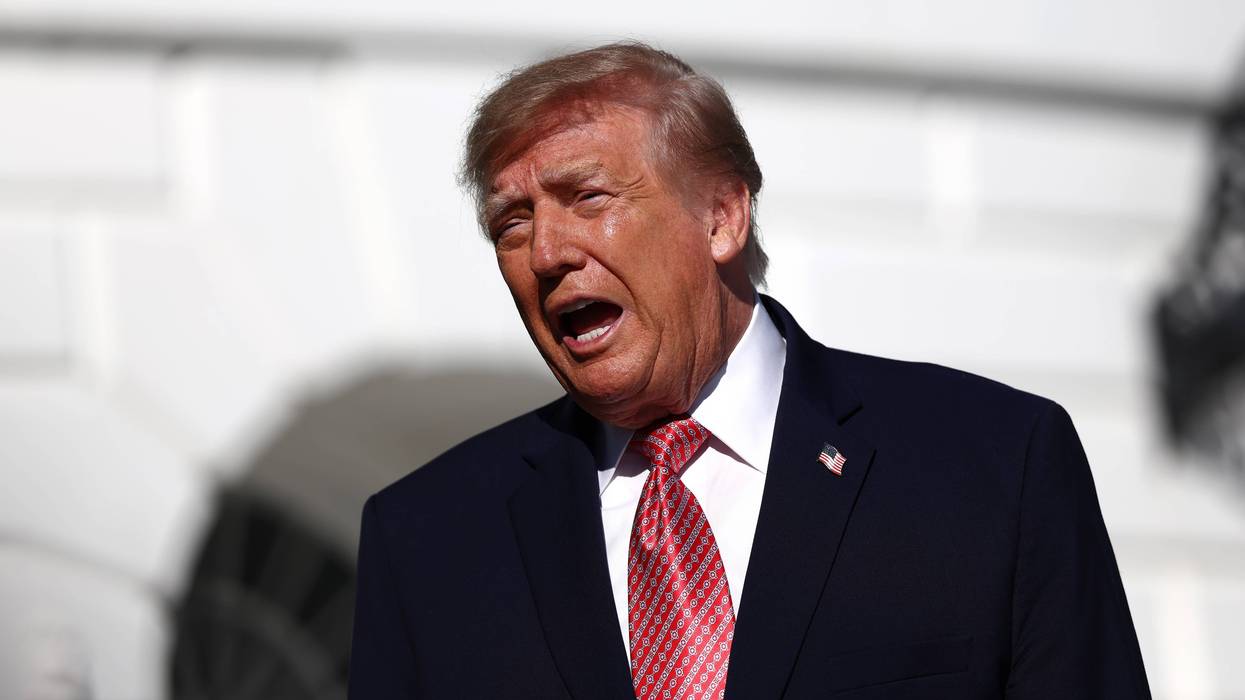
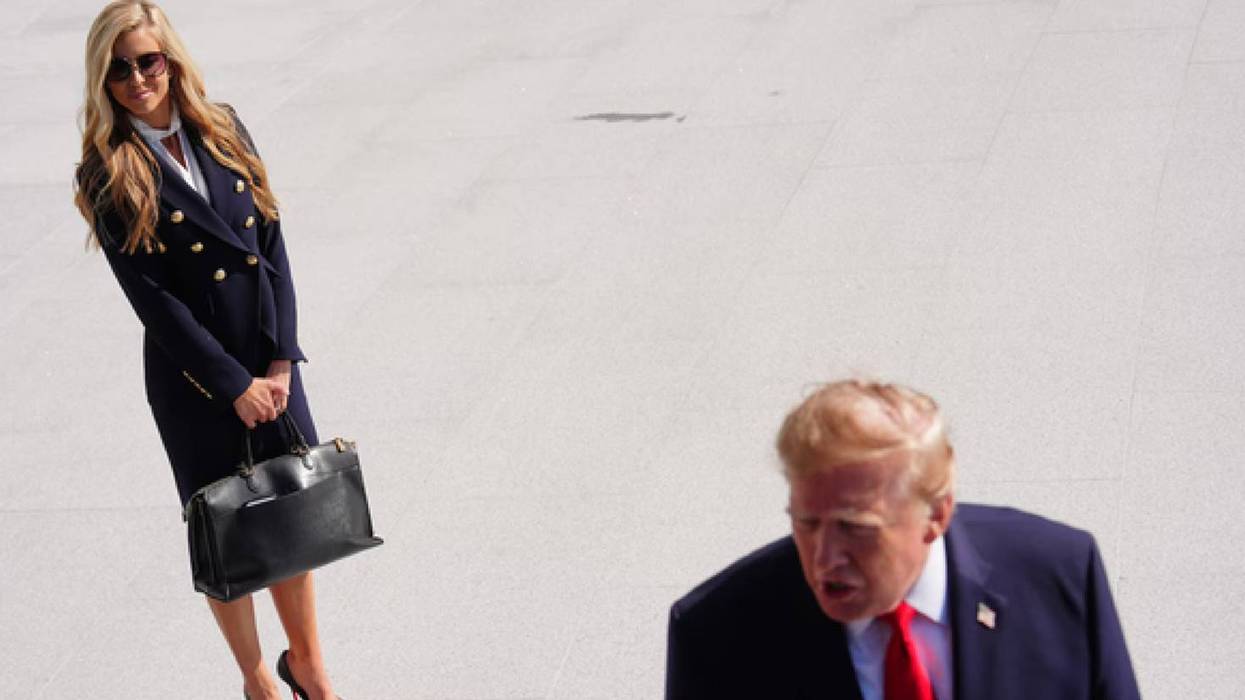
We asked an AI image generator to create a picture of "Trump as a war criminal" but the response was "an error occurred." But that's okay. Every real picture of Trump is a picture of a war criminal and a deceitful, lying, crude, and greedy man. We decided to use one of those instead.

That's better. Though, honestly, no more enjoyable to look at.
One of the worst Western US snow droughts of the century—exacerbated by a historically warm winter and a record-shattering March heatwave—has experts increasingly worried about wildfire and water supply risks heading into the spring and summer months.
On Wednesday, the California Department of Water Resources reported "no measurable snow" recorded at Phillips Station in the Sierra Nevada range. Because there was some visible snow already on the ground, DWR is calling this the second-lowest April measurement on record.
The agency said this is "a stark indicator of how record‑hot March temperatures and high‑elevation rain have erased the Sierra Nevada snowpack months ahead of schedule."
"The combination of warm storms and unusually hot temperatures rapidly melted what remained of this year’s already sparse snowpack," DWR added. "Statewide, the snowpack is now just 18% of average for this date, according to the automated snow sensor network."
DWR Director Karla Nemeth said that “it feels like we skipped spring this year and dropped straight into a summer heatwave."
“What should be gradual snowmelt happened suddenly weeks ago," Nemeth added. "We’re seeing fewer, warmer storms and shorter wet seasons. Future water supplies will depend upon our ability to capture water when it’s available and manage it more efficiently.”

Jeff Mount, a senior fellow at the Public Policy Institute of California’s Water Policy Center, told the San Francisco Chronicle on Wednesday: "It didn’t snow where we needed it to snow, and where it did snow, it didn’t stick. This is going to be an ugly summer."
Oregon's iconic Crater Lake is experiencing its lowest snow water equivalent levels on record for this time of year, according to the National Weather Service.
In Colorado, US Department of Agriculture (USDA) data show the statewide snowpack is at just 26% of median levels as of Thursday.
“This year is on a whole other level,” Colorado State University climatologist Russ Schumacher told The Guardian. "Seeing this year so far below any of the other years we have data for is very concerning."
Last week, the Denver Board of Water Commissioners declared Stage 1 drought restrictions, a move that seeks to reduce water use by 20%.
“The snowpack within Denver Water’s collection system has deteriorated significantly and continues to decline,” said Nathan Elder, Denver Water’s manager of water supply. “Snowpack levels in both basins are now the lowest observed in the past 40 years, with accelerated melting underway. The conditions we are experiencing are unprecedented, and we need customers to save water to protect the supply we have right now.”
April measurements of alpine snowpacks—which are sometimes described as water savings accounts—typically indicate peak levels of water that, with spring warming, melt into reservoirs, rivers, and other bodies that help hydrate the West during the parched summer and fall months.
“March is often a big month for snowstorms,” Schumacher said. “Instead of getting snow we would normally expect we got this unprecedented, way-off-the-scale warmth.”
“This year has the potential of being way worse than any of the years we have analogues for in the past,” he added.
As University of California Agriculture and Natural Resources climate scientist Daniel Swain explained last week:
Meteorologically speaking, March 2026 will go down in the record books as the warmest March on record for at least a third, and possibly half or more, of the continental United States. But even more remarkable is the ~10 day window of peak heat during this truly exceptional March heatwave—when many, if not most, locations across the western two thirds of the United States in a broad swath stretching from the Pacific Coast in California eastward past the Mississippi River broke their all-time March monthly heat records. The margin by which March heat records were shattered was so wide that more than a handful of locations also broke their all-time April heat records, and in a few locations even tied or broke their May heat records!
“Beyond the conspicuous ‘weirdness’ of it all, the most consequential impact of our record-shattering March heat will likely be the decimation of the water year 2025-26 snowpack across nearly all of the American west," Swain warned. "The toll wrought on our 'water tower in the sky' is nothing short of shocking."
I agree. This event has been meteorologically astonishing, and its impacts will be felt long after it ends in terms of record low snowpack, sharply increased wildfire risk, and extreme low watershed runoff/streamflow into summer and beyond.
[image or embed]
— Daniel Swain (@weatherwest.bsky.social) March 25, 2026 at 2:25 PM
The National Interagency Fire Center is among those projecting above-normal fire risk throughout the American West in the coming months.
“Unless there’s a major change in the weather patterns and we somehow pull out some sort of miracle springtime precipitation, we’re looking at an extended fire season,” Joel Lisonbee, senior associate scientist at the Cooperative Institute for Research at the University of Colorado Boulder, told The Guardian.
In addition to the risk of drought and wildfire, low water levels threaten wildlife, including California's flagging salmon runs—which are also imperiled by Trump administration actions including habitat disruption caused by water flow manipulation.
“No sooner do we start to gain a little ground back in rebuilding our salmon runs, the federal Bureau of Reclamation is destroying them again,” Vance Staplin, executive director of the Golden State Salmon Association, told The Sacramento Bee last week. "These fish are in big trouble if the bureau doesn’t relent very soon.”
Scientists have long warned that planetary heating driven by human burning of fossil fuels will result in longer and more frequent snow droughts. One 2020 study showed how the Western United States is fast becoming a "global snow drought hot spot," with the length of such dry spells increasing by 28% between 1980 and 2018.
“Climate change is going to result in a lot of these extreme events worsening,” Clark University climatologist Abby Frazier told The Guardian on Thursday. "It is heartbreaking to see it all playing out as we have predicted for so long. The changes we have teed up for ourselves are going to be catastrophic.”
Just over a week away from Tax Day in the United States, a think tank on Monday released an analysis highlighting how most Americans will see their taxes go up this year, while the wealthy will see substantial cuts, thanks to "a mix of legislative action and illegal executive actions" from the Republican-controlled Congress and President Donald Trump.
"The president, in concert with Congress, has dramatically increased tariff taxes, enacted large tax cuts that primarily benefit the well-off and corporations, dramatically curtailed IRS enforcement, and issued legally problematic regulations," states the Institute on Taxation and Economic Policy (ITEP) report, referring to the Internal Revenue Service.
The bottom 95% of Americans will generally see higher taxes, according to report author Michael Ettlinger, a senior fellow at ITEP and the University of New Hampshire's Carsey School of Public Policy. The middle 60% will see an average increase of $900—though that estimate tops $1,000 for taxpayers in Alaska, Florida, Georgia, Idaho, Nebraska, North Carolina, South Dakota, Texas, Utah, Vermont, and Wyoming.
The primary drivers of tax hikes for working people are Trump's tariffs—which his administration continues to pursue despite a major setback at the US Supreme Court—and the so-called One Big Beautiful Bill Act (OBBBA), the budget reconciliation package that congressional Republicans passed and the president signed last summer.
The OBBBA slashed programs for the working class, including food assistance and Medicaid, and failed to extend Affordable Care Act premium tax credits that helped people afford health insurance. The Republican package is also expected to give the wealthiest 1% of Americans $1 trillion in tax cuts while adding $4.6 trillion to the federal deficit over the next decade.
This year alone, "the highest-income 20% get a $380 billion tax cut, with $117 billion going to the richest 1% alone," Ettlinger detailed. "To put the $117 billion going to the top 1% in 2026 in perspective, it is more than the federal government will spend in 2026 on the combined budgets of the Department of Education, Department of Transportation, Department of Justice, the State Department, the National Aeronautics and Space Administration, the Environmental Protection Agency, the National Endowment for the Humanities, and the National Endowment for the Arts."
"Or, put in another context, that $117 billion could buy every Major League Baseball team (all of them together) or pay for the combined cost of every wedding in the country for a year, as we described in July, along with other comparisons," he added.

Ettlinger pointed out that "the wealthiest have also saved many billions with the elimination of more than $40 billion over 10 years in IRS tax enforcement funding that was aimed specifically at cracking down on tax evasion by the wealthy. The Trump administration has also, administratively, strangled IRS enforcement initiatives targeted at high-wealth tax sheltering."
The expert also noted that the "OBBBA included large tax cuts for corporations, and the administration has added on to the benefits of these tax cuts with legally doubtful regulatory changes." For example, some major companies had an effective federal income tax rate of 0% in 2025, including Chenier Energy, LiveNation, Peter Thiel's Palantir, Elon Musk's Tesla, and Yum! Brands, whose subsidiaries include the fast food chains KFC, Pizza Hut, and Taco Bell.
Jeff Bezos' Amazon had an effective tax rate of 1.4%. For Meta, the parent company of Facebook, Instagram, and WhatsApp, it was 3.6%. Alphabet, the company behind Google, had an 8% rate. Ettlinger stressed that "these companies' ultralow tax bills are just the tip of the iceberg of what has been done to business taxes in the first year of President Trump's second term. From OBBBA alone, corporations and other businesses will pay $234 billion less in 2026 and $1.7 trillion less over 10 years."
It's not just rich Americans who are benefiting from Trump and his party's policies. As Ettlinger explained: "A total of $32 billion in tax savings from OBBBA will go offshore in 2026. Many foreign shareholders are likely to end up paying zero US corporate tax despite benefiting from the US economy and the role of the government in sustaining it."
The report concludes with a warning: "Unfortunately, it could get worse. The administration is being heavily lobbied to add to its unlawful regulatory record by indexing capital gains for inflation—which would be a benefit hugely skewed to the wealthy. In addition, the congressional Republican Study Committee has a tax plan that would, likewise, be of substantial benefit to those with the highest income and wealth."
Early last month, Sens. Ted Cruz (R-Texas) and Tim Scott (R-SC) sent a letter urging Treasury Secretary Scott Bessent to make the change to federal tax on capital gains, or the profits from selling investments, including bonds, real estate, and stocks.
"Ted Cruz is asking the Treasury Department to break the law to give another round of tax breaks to the ultrarich," Senate Finance Committee Ranking Member Ron Wyden (D-Ore.) responded at the time. "These guys can’t help themselves."
Poll after poll shows that support for Israel and political candidates' associations with the American Israel Public Affairs Committee, the powerful pro-Israel lobbying group that poured more than $100 million into the 2024 elections, are toxic for the Democratic Party.
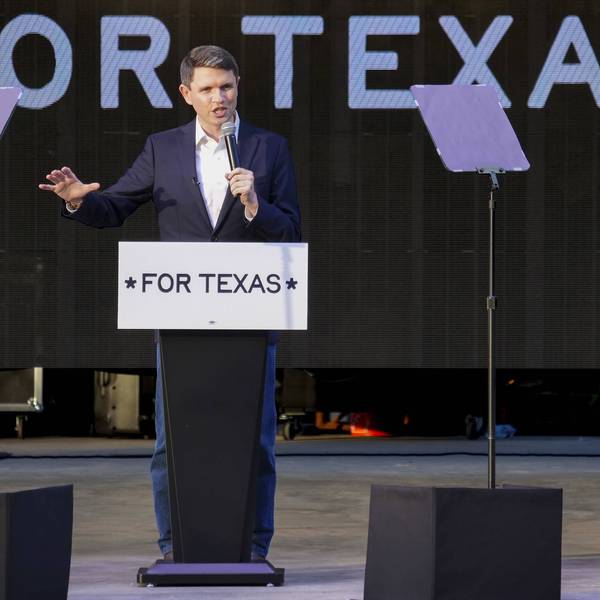
One of the most closely watched Democratic primary elections last month was significantly swayed toward US Senate candidate James Talarico in Texas when he spoke out against the US arming Israel.
And the Democratic National Committee's (DNC) own suppressed autopsy of the 2024 election found that the Biden administration's support for Israel's genocidal assault on Gaza harmed then-Vice President Kamala Harris' efforts to win over some voters.
But the mounting evidence that voters want candidates to shift away from the party's decadeslong alliance with Israel wasn't enough on Thursday to convince a DNC panel to approve a resolution condemning the "growing influence" of dark money and corporate spending in Democratic races, particularly by AIPAC.
The committee's resolutions panel killed the motion, which called for "robust" campaign finance transparency, at its spring meeting in New Orleans.
“The use of massive outside spending to support or oppose candidates based on their positions regarding international conflicts or foreign governments raises concerns about undue influence over democratic debate and policymaking, potentially constraining elected officials’ ability to represent the views of their constituents,” reads the resolution, which was submitted by Allison Minnerly, a DNC member from Florida.
The resolution was voted down weeks after organizations linked to AIPAC accounted for $22 million in super political action committee spending in Illinois' US House primaries.
Margaret DeReus, executive director of the Institute for Middle East Understanding (IMEU) Policy Project, said the vote shows that "Democratic leadership is asleep at the wheel when it comes to one of the biggest existential threats to the party."
"AIPAC’s extreme agenda for unconditional weapons funding to Israel is deeply out of step not just with most Democrats, but with the majority of the American people," said DeReus. "We know DNC officials conducting their unreleased post-2024 autopsy found President [Joe] Biden’s support for Israel cost Democrats votes in the last presidential election and paved the way for [President] Donald Trump to ascend to the White House. Party leadership needs to wake up.”
In a memo to the DNC resolutions committee ahead of the vote, the IMEU Policy Project stressed that "the vast majority of Democratic voters agree Israel is committing genocide and support ending weapons to Israel."
"Democratic elected officials face intense pressure from AIPAC to not align with their voters and most voters across the country," wrote the group.
Resolutions like the one Minnerly put forward, said DeReus on Thursday, are "entirely in step with the vast majority of Democratic voters."
Progressive advocate Brian Tashman wrote that "as Israeli settlers carry out violent pogroms, Israeli soldiers shoot children in Gaza in the head, Israeli warplanes bomb apartment buildings in Beirut, and Israeli leaders try to sabotage the Iran ceasefire, the pro-Israel lobby still demands total support for Israeli war crimes."
The global anti-poverty group Oxfam International warned this week that US President Donald Trump’s decision to slash foreign aid by more than half could kill nearly 10 million people by the end of the decade.
Responding to new data released Thursday by the Organization for Economic Cooperation and Development (OECD) showing the largest annual drop in the history of official development assistance, Oxfam said “wealthy governments are turning their backs on the lives of millions of women, men, and children in the Global South.”
The OECD released preliminary data on international aid that was provided last year by member countries of the organization's Development Assistance Committee (DAC), finding the largest annual drop in the history of official development assistance.
OECD member countries provided $174.3 billion in aid last year, according to the new data, representing 0.26% of the countries' combined gross national income.
In 2024, the countries sent $215.1 billion, or 0.34% of their gross national income to developing countries, including across the Global South—helping to provide nutritional assistance and healthcare initiatives among other programs.
US foreign aid spending dropped by 56.9% after Trump dismantled the US Agency for International Development, cut smaller aid programs, and pushed Congress to rescind previously approved foreign assistance.
"At a time when aid cuts are already driving instability and fostering greater inequality, government donors are cutting life-saving aid budgets while financing conflict and militarization."
Overall, wealthy OECD countries provided 23.1% less in foreign aid last year than they did in 2024—a greater decline than what the Institute of Global Health in Barcelona projected in February when it released a study in The Lancet, evaluating the impact of development assistance funding declines around the world.
The institute found that aid cuts in 2025 alone, which it assumed would represent a 21% decrease in funding, would lead to 695,238 excess deaths. If cuts continued at the same rate, an estimated 9,416,417 people could die of preventable diseases like malaria and AIDS, starvation, and other impacts by 2030.
The drop in foreign aid spending would suggest even more people could be killed by the cuts over the next four years.
“We are in a time of increasing humanitarian needs; strong pressures on the poorest and most fragile countries; and facing growing global uncertainties and massive insecurity," said Carsten Staur, chair of the OECD's Development Assistance Committee (DAC), which compiled the data. "In this situation, the world needs more ODA, not less—to help fight extreme poverty, improve resilience, and mobilize more private resources."
Trump's cuts helped make Germany the largest provider of development assistance for the first time ever, providing $29.1 billion to countries in need. The US sent $29 billion while the United Kingdom provided $17.2 billion, Japan sent $16.2 billion, and France sent $14.5 billion. All five of the top ODA providers reduced their foreign aid spending, accounting for 95.7% of the total decline.
Eight out of the DAC's 34 member countries either maintained or increased their development aid spending, and four countries—Denmark, Luxembourg, Norway, and Sweden—exceeded the United Nations' target of spending 0.7% of their gross national income on ODA.
Didier Jacobs, development finance lead for Oxfam, emphasized that while "recklessly" cutting foreign aid, "the Trump administration has been preparing to ask Congress for tens of billions in additional funding for bombs, ammunition, and other military equipment relating to its unlawful war against Iran."
"At a time when aid cuts are already driving instability and fostering greater inequality, government donors are cutting life-saving aid budgets while financing conflict and militarization. Cuts from donors including Germany, France and the UK will be felt by the world’s poorest," said Jacobs.
In addition to slashing military spending instead of crucial foreign aid, he said, "there are other ways to find tens of billions, such as by taxing the $2.84 trillions of dollars that the super-rich hide in tax havens.”
"Governments must restore their aid budgets," he said, "and shore up the global humanitarian system that faces its most serious crisis in decades."
He may prefer Biggie over Tupac, but New York City Mayor Zohran Mamdani gave a nod to the latter's immortal observation on misplaced national priorities during an interview in which he condemned the US-Israeli war against Iran.
"I've made clear my very deep opposition to this war in Iran," Mamdani told Richard Gaisford in a "Talk to Al Jazeera" segment aired Thursday on the Qatari news network. "It is an opposition not just of a procedural nature or a political nature, but frankly of a moral nature."
"We are speaking about a war that has killed thousands of civilians, a war that is deeply unpopular across this city and across this country," Mamdani said. "Not just because of what we are seeing it result in, but also because it is utilizing tens of billions of dollars to kill people, money that could otherwise be spent on making life easier for people across this city and this country."
"The very things that I often speak about that are necessary for working class New Yorkers that we are told are impossible or unrealistic, they would cost a fraction of this tens of billions that we're seeing," the mayor asserted.
Gaisford asked Mamdani if he is frustrated that "$900 million a day [is] being spent on the war, when you have projects that cost much less that can make a difference."
"I think it should frustrate all of us, you know what I mean?" the democratic socialist mayor replied. "Tupac said it decades ago, it continues to be true, about the fact that we always seem to have money for war but not to feed the poor. And that is not the way politics should be; that is not what Americans want politics to be."
Mamdani was referring to Tupac Shakur's 1993 track "Keep Ya Head Up," which contains the lyrics, "You know, it's funny when it rains it pours/They got money for wars, but can't feed the poor."
Shakur's 1998 song "Changes" also feels relevant today, as the slain rapper asks, "Can't a brother get a little peace?/It's war on the streets and the war in the Middle East/Instead of war on poverty, they got a war on drugs so the police can bother me."
Watch Mamdani's interview with Gaisford here:
"The result will be fewer opportunities for creators, fewer jobs across the production ecosystem, higher costs, and less choice for audiences."
A group of Hollywood actors, directors, and producers on Monday published an open letter demanding the proposed merger between Paramount and Warner Bros. Discovery be blocked.
In their letter, the Hollywood heavyweights outlined the harms that would come from allowing Paramount—which is owned by David Ellison, son of billionaire Trump donor Larry Ellison—to acquire Warner Bros. Discovery.
"This transaction would further consolidate an already concentrated media landscape, reducing competition at a moment when our industries—and the audiences we serve—can least afford it," the letter states. "The result will be fewer opportunities for creators, fewer jobs across the production ecosystem, higher costs, and less choice for audiences in the United States and around the world. Alarmingly, this merger would reduce the number of major US film studios to just four."
The letter goes on to describe how consolidation in the entertainment industry has already "accelerated the disappearance of the mid-budget film, the erosion of independent distribution, the collapse of the international sales market, the elimination of meaningful profit participation, and the weakening of screen credit integrity."
Looking at the bigger picture, the letter notes that "competition is essential for a healthy economy and a healthy democracy," then goes on to praise California Attorney General Rob Bonta and other state AGs for filing legal actions aimed at blocking the merger amid fears that the Trump administration could rubber-stamp it.
"We are grateful for their leadership," the letter concludes, "and stand ready to support all efforts to preserve competition, protect jobs, and ensure a vibrant future for our industry, for American culture, and for our single most significant export."
Actor Mark Ruffalo, a signatory of the letter, published an article on his Substack page outlining his own reasons for opposing the merger, which he described as "the epitome of crony capitalism and the oligarchs consolidating more corporations and media power to shape the outcome of their business interests."
Ruffalo also said he's spoken with others in Hollywood who were reluctant to sign the letter over concerns about retaliation from Trump or Ellison should the attempt to block the merger fail.
"The people pushing monopolies such as this one use fear to keep the workers in line," Ruffalo said. "I have heard it time and time again from my fellows, they are afraid of retribution. Some didn’t want to sign because they are afraid. How sad is that? In America the artists are afraid to speak out against power."
Actress Jane Fonda, founder of the modern Committee for the First Amendment, said that the proposed Paramount-Warner Bros. merger "would be one of the most destructive threats to free speech and creative expression in our history," because it would put "unprecedented power in the hands of a single corporation that already appears to have proven itself willing to sacrifice integrity for political favor."
The letter earned praise from democracy and antitrust advocates, who argued that blocking the merger was necessary to stopping President Donald Trump's ambitions for a right-wing takeover of US media.
“The future of free media and a strong entertainment industry in America is at stake here,” said Norm Eisen, co-founder and executive chair of Democracy Defenders Fund. “This proposed merger would not only harm competition and creativity, it would erode the very bedrock of our democracy."
Matt Stoller, director of research at the American Economic Liberties Project, noted that "consolidation in Hollywood has been a disaster, and has led to the weak state of the industry," and said the Paramount-Warner Bros. merger needed to be blocked to prevent further damage.
"Not only does this kind of concentration hollow out creative markets," said Stoller, "it concentrates control over culture and information in the hands of a few unaccountable executives, and in this case totalitarian Gulf countries, undermining a free and pluralistic media ecosystem that democracy depends on."
"The extremist Netanyahu government that has committed genocide in Gaza does not need more military support from American taxpayers."
With members of Congress returning to Washington, DC, Sen. Bernie Sanders on Monday pledged that he will, yet again, force a vote aimed at cutting off the flow of US weapons to Israel over its genocide against Palestinians in the Gaza Strip.
"I will be forcing a vote on legislation to block the sale of nearly half a billion dollars worth of bombs and bulldozers to the Israeli military," Sanders (I-Vt.) said on social media, taking aim at Israeli Prime Minister Benjamin Netanyahu, who is wanted by the International Criminal Court over the mass slaughter in Gaza.
"The extremist Netanyahu government that has committed genocide in Gaza does not need more military support from American taxpayers," declared Sanders, who has forced multiple votes on measures targeting US arms to Israel since it began bombarding Gaza in retaliation for the Hamas-led October 7, 2023 attack.
The next vote, which could come as soon as Wednesday, follows a similar effort last July, when a majority of the Senate Democratic Caucus backed his resolutions disapproving of the Trump administration's sale of 1,000-pound bombs, Joint Direct Attack Munition guidance kits, and tens of thousands of assault rifles to the Israeli government. Previous votes had garnered less support.
"The American people do not want to spend billions to starve children in Gaza," Sanders said last summer, after the resolutions failed. "The Democrats are moving forward on this issue, and I look forward to Republican support in the near future."
Republicans currently have narrow majorities in both chambers of Congress, though Democrats aim to flip both in the November midterm elections.
According to a Pew Research poll released last week, 60% of US adults have an unfavorable view of Israel, up from 53% last year, and 59% have little or no confidence that Netanyahu will do the right thing regarding world affairs, up from 52% in 2025.
Although much of the world's attention has been focused on Netanyahu and President Donald Trump's war on Iran—and Israel's related assault on Lebanon—in recent weeks, Israeli forces have also continued to kill Palestinians in Gaza, despite an October 2025 ceasefire agreement.
As of Monday, Gaza officials put the death toll at 72,333, with another 172,202 wounded, though global experts have warned the true figures could be far higher. Over 750 deaths and 2,100 injuries have been recorded since the ceasefire took effect, with another 760 bodies recovered during that time.
"At least two children a day have been killed or injured in the six months since the ceasefire for Gaza was agreed," said Save the Children International CEO Inger Ashing last week, as her group and others released a report marking six months since the deal was reached. “This is not peace for children in Gaza. The ceasefire agreement has not translated into meaningful protection for children or created conditions for recovery."
Among the children killed was Ritaj Rihan, a 9-year-old girl reportedly shot by Israeli forces in front of her third grade class at Abu Ubaida bin al-Jarrah School in Beit Lahiya last week. The Gaza Ministry of Health said that "it was not an isolated incident, but a direct extension of a systematic policy targeting the Palestinian people."
“Unless we fundamentally transform our economic and political systems, the worst is yet to come,” Sen. Bernie Sanders warned.
As Republican policies, union-busting corporations, and the imminent threat of artificial intelligence put unprecedented pressure on the US workforce, Sen. Bernie Sanders headlined Sunday's launch of a movement "to strengthen the labor movement and expand worker power across the country."
Sanders (I-Vt.) spoke at the “Union Now: Building the Labor Movement” rally at Terminal 5 in Hell's Kitchen in Midtown Manhattan alongside New York City Mayor Zohran Mamdani, Association of Flight Attendants-CWA international president Sara Nelson, and other labor and social movement leaders.
“Unless we fundamentally transform our economic and political systems, the worst is yet to come,” Sanders warned. “If the middle class of this country is going to survive, we must understand that status quo politics and status quo economics is no longer good enough."
LIVE Bernie Sanders Zohran Mamdani UNION NOW Rally in NYC https://t.co/uC6atxCK7N
— Status Coup News (@StatusCoup) April 12, 2026
“It’s absolutely important that all of us here and every American understand that in the ruling class of this country today, there is an extraordinary level of arrogance and cruelty,” the senator said.
"The truth is that the 1% the people on top, people running this country have never, ever had it so good,” Sanders told the crowd. “But the sad reality is that for these people, all that they have is not good enough. They want more and more and more, and they don’t care who they step on to get what they want."
“These guys are extremely, extremely greedy people, and they could care less in terms of what happens to our children, what happens to our parents and our grandparents, and what happens to our environment today," the senator argued.
“One of the goals of the oligarchs and the media that they own is to make ordinary people feel that there is nothing that they can do to shape the future,” he added. “And what we are here today to say to [Elon] Musk and his friends: Go to hell.”
Mamdani, who marked 100 days in office, said: "When we talk about the importance of taking on the crisis of income inequality, we know that the most effective tool to do so is increasing union density. Organizing drives and strikes can, frankly, be lonely work. So Union Now is going to support workers and provide them with more resources, and my administration will stand right alongside them. This moment demands nothing less."
“AI and robots are coming for human jobs," the mayor warned. "Worker protections are being eroded. There are companies that think that exploitation is a viable business model. They are wrong.”
Nelson asserted that “growing union membership and bargaining power is crucial for workers' rights and economic justice.”
“Too often, the boss has all the power to starve workers during a fight," she said. "Union Now will work with unions directly to ensure workers have the means to win."
Brittany Norris, a Delta AFA Organizing Committee member and flight attendant, told the crowd that "when it comes to striking, when it comes to public actions, a lot of those things cost money and it’s a lot of time, dedication, and efforts coming from the workers."
“We continuously hear about the profits... that our industry is making, but then we’re begging for a raise that comes up close to what the cost of living increase is every year,” she added.
Sunday's Union Now launch comes amid Sanders' ongoing "Fighting Oligarchy" tour, which has drawn large crowds across the country, including in so-called "red" states. The rally also follows last year's "Workers Over Billionaires" Labor Day rallies and marches in over 1,000 locations.
The Union Now launch also coincides with growing wealth inequality not only in the United States but around a world in which the richest 10% of the global population own three-quarters of planetary wealth and account for nearly half of all consumer spending.
“If [President Donald] Trump and his fellow oligarchs get their way, we will be living in a society where fewer and fewer people have more and more wealth and more and more power, where democracy will be undermined, where workers will be thrown out on the street with no recourse," Sanders said Sunday. “That is not the America we want for ourselves or for our kids."
“The good news is," he added, "if we stand together and we not let Trump and his friends divide us up, when we stand together and fight for a government that works for all of us, there is nothing that we cannot accomplish."