SUBSCRIBE TO OUR FREE NEWSLETTER
Daily news & progressive opinion—funded by the people, not the corporations—delivered straight to your inbox.
5
#000000
#FFFFFF
To donate by check, phone, or other method, see our More Ways to Give page.
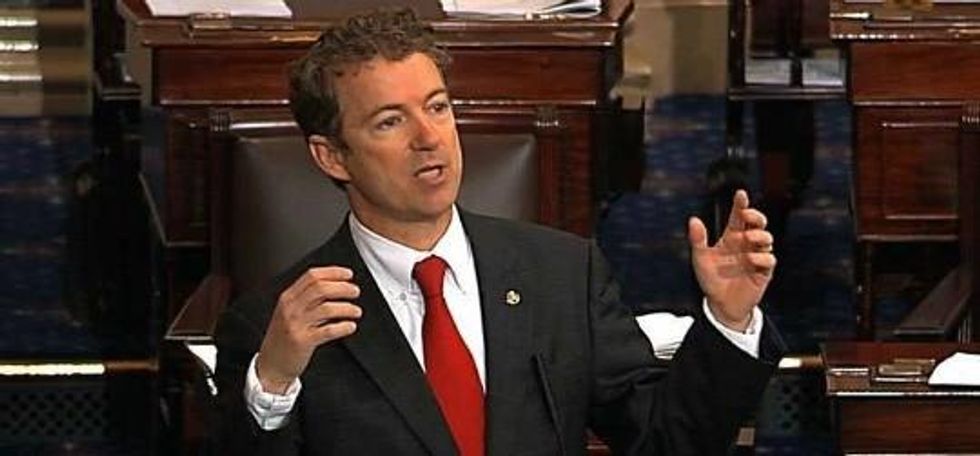
During a filibuster led by Tea Party champion and Republican US Sen. Rand Paul journalist Jeremy Scahill sent out a tweet that summed up the position of many progressives who might abhor Paul's political philosophy broadly but couldn't help but champion his stand against a declaration by the Department of Justice earlier this week stating that President Obama could, in theory, target US citizens for extrajudicial killing, even while on US soil.
As Paul spoke during his filibuster that lasted nearly 13 hours, running from late Wednesday morning into early Thursday, Scahill tweeted:
Specifically, the filibuster was taken up by Sen. Paul to block a confirmation vote for John Brennan, Obama's nominee to head the CIA who is widely seen as the architect of the controversial 'targeted assassination' program that's been run out of the White House during the Obama presidency.
As the Huffington Post's Luke Johnson explained:
Paul, an outspoken libertarian, pointed to what he called the abuses of executive power and civil liberties under Obama's administration. In particular, he objected to the contents of a letter he received from Attorney General Eric Holder that asserted the U.S. government had the legal authority to kill a U.S. citizen on American soil.
"Where is the Barack Obama of 2007?" he asked, referring to then-presidential candidate Obama's criticism of Bush-era violations of civil liberties. "If there were an ounce of courage in this body, I would be joined by many other senators," he added. "Are we going to give up our rights to politicians?"
Though progressives are deeply at odds with libertarian views on domestic policies, the role of government, the economy, reproductive rights, and many other issues--there has been wide agreement on issues surrounding what's been called "the imperial presidency," in which the executive branch claims sweeping powers. In addition, there is also shared opposition--if not a shared critique--of US military adventures overseas.
What has become most obvious during the Obama presidency, however, is though Democrats (at least on occasion) would raise alarm bells and protest against President George W. Bush's imperial overreach or contentious violations of civil liberties, now that a Democratic president has claimed powers even more radical--such as extrajudicial killings--Democrats have mostly gone silent in their opposition.
Progressive legal blogger and civil libertarian Glenn Greenwald has been the most astute observer of this phenomenon in recent years. His response to the Paul filibuster, also via twitter, was this:
And this pronouncement by journalist Zaid Jilani was much re-tweeted by progressives who shared the sentiment:
Radio and TV host of Democracy Now! Amy Goodman pointed out, "Among the Democrats[...] only Sen. Ron Wyden of Oregon had joined in the genuine, old-fashioned "talking filibuster," wherein the activities of the Senate floor are held up by a senator's speech."
As the filibuster came to its end after almost fourteen hours, CodePink activist, full-throated progressive, and strong critic of the Obama drone program Medea Benjamin tweeted:
"We were delighted to see Rand Paul taking on the Obama administration's illegal, immoral drone program," Benjamin, author of Drone Warfare: Killing by Remote Control, said in a statement. "We've been waiting for years for someone to step up and say no to extrajudicial killing."
Making sure, however, that the Kentucky senator's other deplorable positions didn't go unremarked, others used the #standwithrand hashtag to remind the twitter audience:
#StandWithRand because nobody can defend your civil liberties quite like a white supremacist funded Senator who opposes the Civil Rights Act
-- Paul Conrad (@Paul_Conrad) March 7, 2013
As Goodman notes:
The issue of extrajudicial execution of U.S. citizens, whether on U.S. soil or elsewhere, is clearly vital. But also important is the U.S. government's now-seemingly routine killing of civilians around the world, whether by drone strikes, night raids conducted by special operations forces or other lethal means.
Rand Paul's filibuster followed a curious route, including references to Lewis Carroll's "Alice in Wonderland," and quotes from noted progressive, constitutional attorney and Guardian columnist Glenn Greenwald and blogger Kevin Gosztala of Firedoglake.
Here is Sen. Rand Paul's (R-KY) introduction to the filibuster, including his reasoning for opposing the John Brennan nomination:
______________________________
During a filibuster led by Tea Party champion and Republican US Sen. Rand Paul journalist Jeremy Scahill sent out a tweet that summed up the position of many progressives who might abhor Paul's political philosophy broadly but couldn't help but champion his stand against a declaration by the Department of Justice earlier this week stating that President Obama could, in theory, target US citizens for extrajudicial killing, even while on US soil.
As Paul spoke during his filibuster that lasted nearly 13 hours, running from late Wednesday morning into early Thursday, Scahill tweeted:
Specifically, the filibuster was taken up by Sen. Paul to block a confirmation vote for John Brennan, Obama's nominee to head the CIA who is widely seen as the architect of the controversial 'targeted assassination' program that's been run out of the White House during the Obama presidency.
As the Huffington Post's Luke Johnson explained:
Paul, an outspoken libertarian, pointed to what he called the abuses of executive power and civil liberties under Obama's administration. In particular, he objected to the contents of a letter he received from Attorney General Eric Holder that asserted the U.S. government had the legal authority to kill a U.S. citizen on American soil.
"Where is the Barack Obama of 2007?" he asked, referring to then-presidential candidate Obama's criticism of Bush-era violations of civil liberties. "If there were an ounce of courage in this body, I would be joined by many other senators," he added. "Are we going to give up our rights to politicians?"
Though progressives are deeply at odds with libertarian views on domestic policies, the role of government, the economy, reproductive rights, and many other issues--there has been wide agreement on issues surrounding what's been called "the imperial presidency," in which the executive branch claims sweeping powers. In addition, there is also shared opposition--if not a shared critique--of US military adventures overseas.
What has become most obvious during the Obama presidency, however, is though Democrats (at least on occasion) would raise alarm bells and protest against President George W. Bush's imperial overreach or contentious violations of civil liberties, now that a Democratic president has claimed powers even more radical--such as extrajudicial killings--Democrats have mostly gone silent in their opposition.
Progressive legal blogger and civil libertarian Glenn Greenwald has been the most astute observer of this phenomenon in recent years. His response to the Paul filibuster, also via twitter, was this:
And this pronouncement by journalist Zaid Jilani was much re-tweeted by progressives who shared the sentiment:
Radio and TV host of Democracy Now! Amy Goodman pointed out, "Among the Democrats[...] only Sen. Ron Wyden of Oregon had joined in the genuine, old-fashioned "talking filibuster," wherein the activities of the Senate floor are held up by a senator's speech."
As the filibuster came to its end after almost fourteen hours, CodePink activist, full-throated progressive, and strong critic of the Obama drone program Medea Benjamin tweeted:
"We were delighted to see Rand Paul taking on the Obama administration's illegal, immoral drone program," Benjamin, author of Drone Warfare: Killing by Remote Control, said in a statement. "We've been waiting for years for someone to step up and say no to extrajudicial killing."
Making sure, however, that the Kentucky senator's other deplorable positions didn't go unremarked, others used the #standwithrand hashtag to remind the twitter audience:
#StandWithRand because nobody can defend your civil liberties quite like a white supremacist funded Senator who opposes the Civil Rights Act
-- Paul Conrad (@Paul_Conrad) March 7, 2013
As Goodman notes:
The issue of extrajudicial execution of U.S. citizens, whether on U.S. soil or elsewhere, is clearly vital. But also important is the U.S. government's now-seemingly routine killing of civilians around the world, whether by drone strikes, night raids conducted by special operations forces or other lethal means.
Rand Paul's filibuster followed a curious route, including references to Lewis Carroll's "Alice in Wonderland," and quotes from noted progressive, constitutional attorney and Guardian columnist Glenn Greenwald and blogger Kevin Gosztala of Firedoglake.
Here is Sen. Rand Paul's (R-KY) introduction to the filibuster, including his reasoning for opposing the John Brennan nomination:
______________________________
During a filibuster led by Tea Party champion and Republican US Sen. Rand Paul journalist Jeremy Scahill sent out a tweet that summed up the position of many progressives who might abhor Paul's political philosophy broadly but couldn't help but champion his stand against a declaration by the Department of Justice earlier this week stating that President Obama could, in theory, target US citizens for extrajudicial killing, even while on US soil.
As Paul spoke during his filibuster that lasted nearly 13 hours, running from late Wednesday morning into early Thursday, Scahill tweeted:
Specifically, the filibuster was taken up by Sen. Paul to block a confirmation vote for John Brennan, Obama's nominee to head the CIA who is widely seen as the architect of the controversial 'targeted assassination' program that's been run out of the White House during the Obama presidency.
As the Huffington Post's Luke Johnson explained:
Paul, an outspoken libertarian, pointed to what he called the abuses of executive power and civil liberties under Obama's administration. In particular, he objected to the contents of a letter he received from Attorney General Eric Holder that asserted the U.S. government had the legal authority to kill a U.S. citizen on American soil.
"Where is the Barack Obama of 2007?" he asked, referring to then-presidential candidate Obama's criticism of Bush-era violations of civil liberties. "If there were an ounce of courage in this body, I would be joined by many other senators," he added. "Are we going to give up our rights to politicians?"
Though progressives are deeply at odds with libertarian views on domestic policies, the role of government, the economy, reproductive rights, and many other issues--there has been wide agreement on issues surrounding what's been called "the imperial presidency," in which the executive branch claims sweeping powers. In addition, there is also shared opposition--if not a shared critique--of US military adventures overseas.
What has become most obvious during the Obama presidency, however, is though Democrats (at least on occasion) would raise alarm bells and protest against President George W. Bush's imperial overreach or contentious violations of civil liberties, now that a Democratic president has claimed powers even more radical--such as extrajudicial killings--Democrats have mostly gone silent in their opposition.
Progressive legal blogger and civil libertarian Glenn Greenwald has been the most astute observer of this phenomenon in recent years. His response to the Paul filibuster, also via twitter, was this:
And this pronouncement by journalist Zaid Jilani was much re-tweeted by progressives who shared the sentiment:
Radio and TV host of Democracy Now! Amy Goodman pointed out, "Among the Democrats[...] only Sen. Ron Wyden of Oregon had joined in the genuine, old-fashioned "talking filibuster," wherein the activities of the Senate floor are held up by a senator's speech."
As the filibuster came to its end after almost fourteen hours, CodePink activist, full-throated progressive, and strong critic of the Obama drone program Medea Benjamin tweeted:
"We were delighted to see Rand Paul taking on the Obama administration's illegal, immoral drone program," Benjamin, author of Drone Warfare: Killing by Remote Control, said in a statement. "We've been waiting for years for someone to step up and say no to extrajudicial killing."
Making sure, however, that the Kentucky senator's other deplorable positions didn't go unremarked, others used the #standwithrand hashtag to remind the twitter audience:
#StandWithRand because nobody can defend your civil liberties quite like a white supremacist funded Senator who opposes the Civil Rights Act
-- Paul Conrad (@Paul_Conrad) March 7, 2013
As Goodman notes:
The issue of extrajudicial execution of U.S. citizens, whether on U.S. soil or elsewhere, is clearly vital. But also important is the U.S. government's now-seemingly routine killing of civilians around the world, whether by drone strikes, night raids conducted by special operations forces or other lethal means.
Rand Paul's filibuster followed a curious route, including references to Lewis Carroll's "Alice in Wonderland," and quotes from noted progressive, constitutional attorney and Guardian columnist Glenn Greenwald and blogger Kevin Gosztala of Firedoglake.
Here is Sen. Rand Paul's (R-KY) introduction to the filibuster, including his reasoning for opposing the John Brennan nomination:
______________________________