SUBSCRIBE TO OUR FREE NEWSLETTER
Daily news & progressive opinion—funded by the people, not the corporations—delivered straight to your inbox.
5
#000000
#FFFFFF
To donate by check, phone, or other method, see our More Ways to Give page.
Daily news & progressive opinion—funded by the people, not the corporations—delivered straight to your inbox.
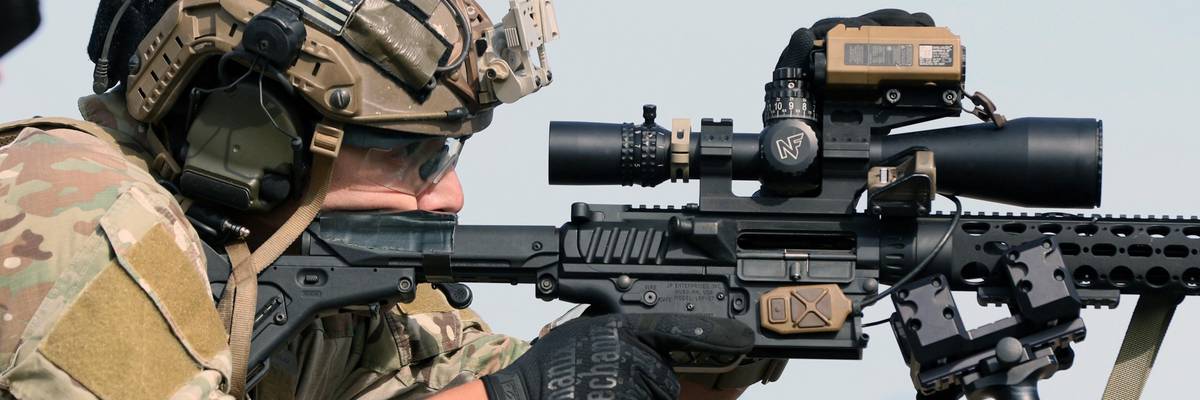
President Joe Biden's proposed budget, writes Koehler, "remains horrifically generous." (Photo: U.S. Army/flickr/cc/K. Kassens)
Americans "need to imagine their vote has an impact on policy, an illusion the media encourages them to believe in."
Ouch!
Peter Isaacson, writing in Fair Observer, seems to be saying . . . oh my God, democracy is a cliche, a big sham. I stand up, put my hand on my heart, pledge allegiance to the flag. This is America, land of the empowered voter. Then I read about our president's latest budget proposal, which includes $813 billion for "national defense" -- pushing the Pentagon budget's already record-setting enormity further into outer space -- and I feel myself collapse (yet again) into nothingness.
Why, why, why, as our ecosystem collapses, as millions of refugees flee the horrors of war and poverty, as the pandemic continues, as World War III and the possibility of nuclear Armageddon rears its evil head, as the planet trembles, does ever-expanding, global militarism remain our primary national purpose?
This question stabs me anew every year, as President Whoever announces his latest proposed military budget, as Congress increases it, as the media shrugs. Every year I hear the voice of George W. Bush, telling the American public -- telling me -- not to worry: "Just go shopping."
Why, why, why, as our ecosystem collapses, as millions of refugees flee the horrors of war and poverty, as the pandemic continues, as World War III and the possibility of nuclear Armageddon rears its evil head, as the planet trembles, does ever-expanding, global militarism remain our primary national purpose?
So what the hell is going on? Is our military insanity totally the work of the so-called military-industrial complex? Do Lockheed Martin, Boeing, Raytheon, General Dynamics, Northrop Grumman, et al, rule the country via their lobbying muscle (which, ironically, is financed by the military budget for which they lobby)?
That's only part of it. The mystery is deeper -- and, of course, classified. Consider the legacy of President Eisenhower, who went into office in 1953 speaking against increased militarism, yet was unable to control the nuclear arms race and expanding Cold War while in office (the CIA, for instance, helped overthrow progressive regimes in Iran, Guatemala and the Republic of the Congo); and eight years later, in his farewell address, regretfully sounded the warning about the influence of the military-industrial complex. This warning, however iconic, accomplished nothing. Waging or financing war has been the American way throughout my lifetime.
As William Hartung writes: "Perhaps the biggest source of overspending on national defense is rooted in the U.S. 'cover the globe' military strategy, which attempts to sustain the capability to go anywhere and fight any battle. The United States maintains 750 overseas military bases and conducts counter-terror operations in at least 85 countries."
And then, of course, Biden's proposed budget remains horrifically generous regarding the country's nuclear weapons, allotting further billions of dollars to the Department of Energy to modernize the nuclear triad of ballistic missile submarines, bombers and land-based missiles. Now! As the world shudders over Russia's invasion of Ukraine and Putin's placement of the Russian nuclear arsenal on high alert. Yet this has not ignited a serious interest, at the national level, to rid the world of nukes: to disarm. Are we not trapped in a world of insanely limited thinking?
Rather: "Russian aggression in Ukraine spurs demands for more military spending," Reuters tells us with a vague shrug. The world is what it is.
New York Times columnist Farhad Manjoo begins pulling open the door of awareness. "(S)houldn't we ask," he wonders, "whether it remains wise to keep handing the military what is effectively a blank check? Are such lavish resources even good for national defense, or might the Pentagon's near-bottomless access to funds have encouraged a culture of waste and indulgence that made it easier to blunder into Iraq and contributed to its failures in Afghanistan?"
And Bernie Sanders, part of the congressional minority that isn't owned by the military-industrial lobby, put it this way: "This shameful spending makes the U.S. less secure."
While he noted that "we do not need a massive increase in the defense budget," I wish he had said what we do need: a massive decrease in the defense budget, a flip in humanity's collective consciousness. There are ways to address conflict without going to war, without dehumanizing and giving ourselves permission to kill "the enemy." Our ecosystem is crashing and burning, for God's sake! The actual problems humanity faces, from climate change to nuclear disaster to the pandemic, have precisely nothing to do with national borders.
Knowing this, what could possibly be stupider than declaring those borders sacred and devoting limitless energy (and money) to their so-called defense? Once again, I throw the question wide open: Why? Why? Why? Joe Biden is smart enough to know this. Can you at least explain to the public, Mr. President, what is actually motivating your $813 billion military budget proposal? You don't want to go to war with Russia. You don't want World War III. Yet you feel committed to ensuring that such a war remains a possibility for the future.
What is preventing you from using the power bequeathed to you by a majority of American voters to work on unity, both political and ecological, at the global level? I ask this knowing that such work is enormously complex. Is that the problem? Or is the problem that you have no more impact on national policy than the people who voted for you?
This country and this world are at a monumental crossroads. US voters have an opportunity to beat back the forces of fascism and confront the billionaires who are rigging the economy, our media system, and our democracy, making it increasingly impossible for ordinary people to get by. We’re not just talking about the election. We’re talking about what must be done once these fascist elements are vanquished from power. We need a bolder set of solutions than what either major party has so far been willing to offer and a working-class movement ready to fight like hell for it. Trump didn't emerge from nowhere. The conditions that fueled MAGA authoritarianism were created by decades of radical neoliberal economic policies and a corrupt political system dominated by corporate interests. They slashed taxes on the super-rich, promising that the benefits would trickle down. They said giveaways to the corporate titans would make life more affordable for the rest of us. It was all bullshit. And when a bitter, betrayed populace searches for someone to blame, right-wing demagogues have little trouble finding scapegoats. People know when they're being lied to, but you won't hear any of this from the corporate media. Only independent journalism—powered and funded by people who believe in building a better world—can deliver truly trustworthy daily news. If you share our vision, please contribute whatever you can to sustain our work. |
Americans "need to imagine their vote has an impact on policy, an illusion the media encourages them to believe in."
Ouch!
Peter Isaacson, writing in Fair Observer, seems to be saying . . . oh my God, democracy is a cliche, a big sham. I stand up, put my hand on my heart, pledge allegiance to the flag. This is America, land of the empowered voter. Then I read about our president's latest budget proposal, which includes $813 billion for "national defense" -- pushing the Pentagon budget's already record-setting enormity further into outer space -- and I feel myself collapse (yet again) into nothingness.
Why, why, why, as our ecosystem collapses, as millions of refugees flee the horrors of war and poverty, as the pandemic continues, as World War III and the possibility of nuclear Armageddon rears its evil head, as the planet trembles, does ever-expanding, global militarism remain our primary national purpose?
This question stabs me anew every year, as President Whoever announces his latest proposed military budget, as Congress increases it, as the media shrugs. Every year I hear the voice of George W. Bush, telling the American public -- telling me -- not to worry: "Just go shopping."
Why, why, why, as our ecosystem collapses, as millions of refugees flee the horrors of war and poverty, as the pandemic continues, as World War III and the possibility of nuclear Armageddon rears its evil head, as the planet trembles, does ever-expanding, global militarism remain our primary national purpose?
So what the hell is going on? Is our military insanity totally the work of the so-called military-industrial complex? Do Lockheed Martin, Boeing, Raytheon, General Dynamics, Northrop Grumman, et al, rule the country via their lobbying muscle (which, ironically, is financed by the military budget for which they lobby)?
That's only part of it. The mystery is deeper -- and, of course, classified. Consider the legacy of President Eisenhower, who went into office in 1953 speaking against increased militarism, yet was unable to control the nuclear arms race and expanding Cold War while in office (the CIA, for instance, helped overthrow progressive regimes in Iran, Guatemala and the Republic of the Congo); and eight years later, in his farewell address, regretfully sounded the warning about the influence of the military-industrial complex. This warning, however iconic, accomplished nothing. Waging or financing war has been the American way throughout my lifetime.
As William Hartung writes: "Perhaps the biggest source of overspending on national defense is rooted in the U.S. 'cover the globe' military strategy, which attempts to sustain the capability to go anywhere and fight any battle. The United States maintains 750 overseas military bases and conducts counter-terror operations in at least 85 countries."
And then, of course, Biden's proposed budget remains horrifically generous regarding the country's nuclear weapons, allotting further billions of dollars to the Department of Energy to modernize the nuclear triad of ballistic missile submarines, bombers and land-based missiles. Now! As the world shudders over Russia's invasion of Ukraine and Putin's placement of the Russian nuclear arsenal on high alert. Yet this has not ignited a serious interest, at the national level, to rid the world of nukes: to disarm. Are we not trapped in a world of insanely limited thinking?
Rather: "Russian aggression in Ukraine spurs demands for more military spending," Reuters tells us with a vague shrug. The world is what it is.
New York Times columnist Farhad Manjoo begins pulling open the door of awareness. "(S)houldn't we ask," he wonders, "whether it remains wise to keep handing the military what is effectively a blank check? Are such lavish resources even good for national defense, or might the Pentagon's near-bottomless access to funds have encouraged a culture of waste and indulgence that made it easier to blunder into Iraq and contributed to its failures in Afghanistan?"
And Bernie Sanders, part of the congressional minority that isn't owned by the military-industrial lobby, put it this way: "This shameful spending makes the U.S. less secure."
While he noted that "we do not need a massive increase in the defense budget," I wish he had said what we do need: a massive decrease in the defense budget, a flip in humanity's collective consciousness. There are ways to address conflict without going to war, without dehumanizing and giving ourselves permission to kill "the enemy." Our ecosystem is crashing and burning, for God's sake! The actual problems humanity faces, from climate change to nuclear disaster to the pandemic, have precisely nothing to do with national borders.
Knowing this, what could possibly be stupider than declaring those borders sacred and devoting limitless energy (and money) to their so-called defense? Once again, I throw the question wide open: Why? Why? Why? Joe Biden is smart enough to know this. Can you at least explain to the public, Mr. President, what is actually motivating your $813 billion military budget proposal? You don't want to go to war with Russia. You don't want World War III. Yet you feel committed to ensuring that such a war remains a possibility for the future.
What is preventing you from using the power bequeathed to you by a majority of American voters to work on unity, both political and ecological, at the global level? I ask this knowing that such work is enormously complex. Is that the problem? Or is the problem that you have no more impact on national policy than the people who voted for you?