SUBSCRIBE TO OUR FREE NEWSLETTER
Daily news & progressive opinion—funded by the people, not the corporations—delivered straight to your inbox.
5
#000000
#FFFFFF
To donate by check, phone, or other method, see our More Ways to Give page.
Daily news & progressive opinion—funded by the people, not the corporations—delivered straight to your inbox.
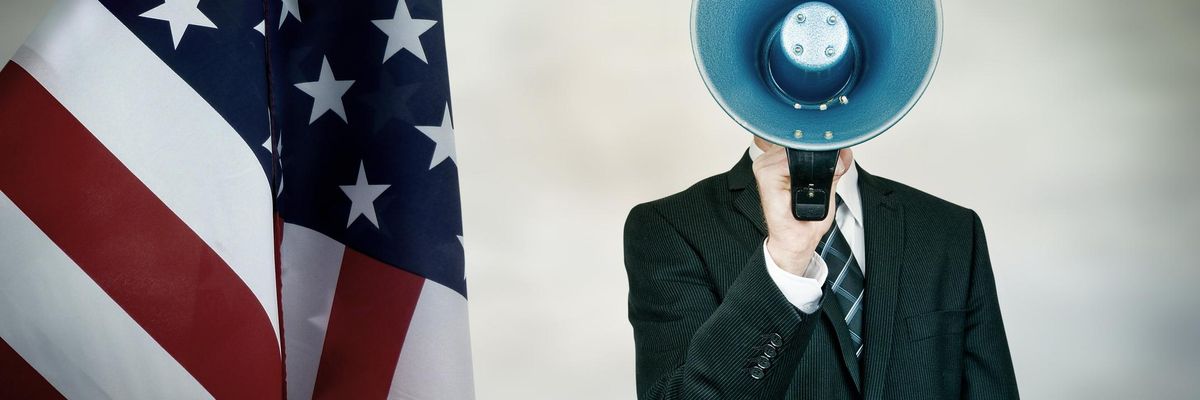
After people protested police violence, lawmakers are making it a crime to protest. (Photo: Getty/Stock Photo/SEAN GLADWELL)
The massive marches against racial injustice and police violence after 2020's killings of Breonna Taylor, George Floyd and Ahmaud Arbery. Protests on Native American landagainst the Dakota Access pipeline. The January 6 insurrection at the U.S. Capitol.
Arguably, these three events have little in common with each other, except that now they've inspired some bad ideas and worse legislation in a number of statehouses and on Capitol Hill--most, although not all, from Republicans-- that would criminalize one of the most fundamental rights in American democracy, to dissent against the government.
The biggest gut punch to the American Experiment came last week in Kentucky, which just this Saturday marked the one-year anniversary of the senseless killing of Louisville's Taylor, a 26-year-old ER technician who was gunned down in a police drug raid gone horribly wrong. It's bad enough that none of the responding officers has been charged in her death. But now state legislators in conservative Kentucky, which has seen continuous protests since the killing, have advanced a law--of dubious constitutionality--to make it illegal to say bad things to a cop.
The bill that the Kentucky Senate passed last week makes it a misdemeanor to taunt a police officer, with words or gestures, "that would have a direct tendency to provoke a violent response from the perspective of a reasonable and prudent person." In the past, state jurists and the U.S. Supreme Court have cited the 1st Amendment in finding that it's not a crime to say rude things or even curse at a police officer, but now the Bluegrass State is saying that if you flip the bird at a cop and he tries to bash in your skull, the whole thing was your fault.
Lawmakers are using false narratives about protests, which have been overwhelmingly peaceful, to pass laws they hope will make many folks including ones who seek to protest police violence, white supremacy or climate change to simply stay home.
Although the anti-taunting-the-police provision garnered the most headlines, the Kentucky bill also expands the definition of illegal protest while strengthening the penalties for "rioting"and making it harder to get out of jail, and it even includes some vague language intended to thwart the "defund the police" movement. If the bill passes the state House and is signed by the state's Democratic governor, Andy Beshear (an uncertain prospect), it would surely put more people behind bars for protesting the killing of Breonna Taylor than people who actually killed her.
In a vacuum, this alone would be outrageous. But instead--after a decade in which more Americans protested more things, from Occupy Wall Street to Ferguson to the Women's Marchto the George Floyd protests, than any time since the 1960s--the Kentucky scheme is just the most extreme example of a flurry of bills meant to criminalize your right to air your grievances against the government.
A bill in Oklahoma, for example, would protect drivers who plowed their car into a crowd of protesters and make it illegal to post information about law-enforcement officers online which, as critics noted, might criminalize videos like the ones that showed the world what happened to George Floyd. In Florida, Gov. Ron DeSantis--considered a GOP presidential frontrunner for 2024 if Donald Trump doesn't run--is pushing legislation for steep felony sentences for those found to be rioting, and to shield people who shoot protesters or run them over from lawsuits.
The International Center for Not-for-Profit Law said recently that 23 states are considering 48 anti-protest bills so far in 2021. That includes four states looking to join 14 others that have declared oil-and-gas pipelines and other fossil-fuel facilities as "critical infrastructure," which would mean stricter penalties for protesting them--a movement that started after the Dakota Access actions in 2016.
Additionally, some leaders in both parties--even President Biden--are citing the January 6 assault on the Capitol in calling for harsher penalties, including new laws against domestic terrorism. But critics say that even well-meaning efforts to quell certain kinds of dissent have a way of backfiring. "But by using the 'domestic terrorism' label to promote more criminal statutes and police authorities, our country's leaders are invoking systems that have been--and will continue to be--used to target and harm Black and brown people," wrote Hina Shamsi, director of the ACLU's National Security Project, and Manar Waheed, ACLU senior legislative and advocacy counsel.
The bigger picture is that--even in a time of optimism over increasing coronavirus vaccines and a generous $1.9 trillion relief package signed by Biden--lawmakers are using false narratives about protests, which have been overwhelmingly peaceful, to pass laws they hope will make many folks including ones who seek to protest police violence, white supremacy or climate change to simply stay home. Just like many of these same Republican legislators want to use the Big Lie about 2020 election fraud that never happened to pass laws in the hopes that many voters will also stay home. Citizens in the affected states need to get out and fight these anti-democratic measures--while they still can.
Dear Common Dreams reader, It’s been nearly 30 years since I co-founded Common Dreams with my late wife, Lina Newhouser. We had the radical notion that journalism should serve the public good, not corporate profits. It was clear to us from the outset what it would take to build such a project. No paid advertisements. No corporate sponsors. No millionaire publisher telling us what to think or do. Many people said we wouldn't last a year, but we proved those doubters wrong. Together with a tremendous team of journalists and dedicated staff, we built an independent media outlet free from the constraints of profits and corporate control. Our mission has always been simple: To inform. To inspire. To ignite change for the common good. Building Common Dreams was not easy. Our survival was never guaranteed. When you take on the most powerful forces—Wall Street greed, fossil fuel industry destruction, Big Tech lobbyists, and uber-rich oligarchs who have spent billions upon billions rigging the economy and democracy in their favor—the only bulwark you have is supporters who believe in your work. But here’s the urgent message from me today. It's never been this bad out there. And it's never been this hard to keep us going. At the very moment Common Dreams is most needed, the threats we face are intensifying. We need your support now more than ever. We don't accept corporate advertising and never will. We don't have a paywall because we don't think people should be blocked from critical news based on their ability to pay. Everything we do is funded by the donations of readers like you. When everyone does the little they can afford, we are strong. But if that support retreats or dries up, so do we. Will you donate now to make sure Common Dreams not only survives but thrives? —Craig Brown, Co-founder |
The massive marches against racial injustice and police violence after 2020's killings of Breonna Taylor, George Floyd and Ahmaud Arbery. Protests on Native American landagainst the Dakota Access pipeline. The January 6 insurrection at the U.S. Capitol.
Arguably, these three events have little in common with each other, except that now they've inspired some bad ideas and worse legislation in a number of statehouses and on Capitol Hill--most, although not all, from Republicans-- that would criminalize one of the most fundamental rights in American democracy, to dissent against the government.
The biggest gut punch to the American Experiment came last week in Kentucky, which just this Saturday marked the one-year anniversary of the senseless killing of Louisville's Taylor, a 26-year-old ER technician who was gunned down in a police drug raid gone horribly wrong. It's bad enough that none of the responding officers has been charged in her death. But now state legislators in conservative Kentucky, which has seen continuous protests since the killing, have advanced a law--of dubious constitutionality--to make it illegal to say bad things to a cop.
The bill that the Kentucky Senate passed last week makes it a misdemeanor to taunt a police officer, with words or gestures, "that would have a direct tendency to provoke a violent response from the perspective of a reasonable and prudent person." In the past, state jurists and the U.S. Supreme Court have cited the 1st Amendment in finding that it's not a crime to say rude things or even curse at a police officer, but now the Bluegrass State is saying that if you flip the bird at a cop and he tries to bash in your skull, the whole thing was your fault.
Lawmakers are using false narratives about protests, which have been overwhelmingly peaceful, to pass laws they hope will make many folks including ones who seek to protest police violence, white supremacy or climate change to simply stay home.
Although the anti-taunting-the-police provision garnered the most headlines, the Kentucky bill also expands the definition of illegal protest while strengthening the penalties for "rioting"and making it harder to get out of jail, and it even includes some vague language intended to thwart the "defund the police" movement. If the bill passes the state House and is signed by the state's Democratic governor, Andy Beshear (an uncertain prospect), it would surely put more people behind bars for protesting the killing of Breonna Taylor than people who actually killed her.
In a vacuum, this alone would be outrageous. But instead--after a decade in which more Americans protested more things, from Occupy Wall Street to Ferguson to the Women's Marchto the George Floyd protests, than any time since the 1960s--the Kentucky scheme is just the most extreme example of a flurry of bills meant to criminalize your right to air your grievances against the government.
A bill in Oklahoma, for example, would protect drivers who plowed their car into a crowd of protesters and make it illegal to post information about law-enforcement officers online which, as critics noted, might criminalize videos like the ones that showed the world what happened to George Floyd. In Florida, Gov. Ron DeSantis--considered a GOP presidential frontrunner for 2024 if Donald Trump doesn't run--is pushing legislation for steep felony sentences for those found to be rioting, and to shield people who shoot protesters or run them over from lawsuits.
The International Center for Not-for-Profit Law said recently that 23 states are considering 48 anti-protest bills so far in 2021. That includes four states looking to join 14 others that have declared oil-and-gas pipelines and other fossil-fuel facilities as "critical infrastructure," which would mean stricter penalties for protesting them--a movement that started after the Dakota Access actions in 2016.
Additionally, some leaders in both parties--even President Biden--are citing the January 6 assault on the Capitol in calling for harsher penalties, including new laws against domestic terrorism. But critics say that even well-meaning efforts to quell certain kinds of dissent have a way of backfiring. "But by using the 'domestic terrorism' label to promote more criminal statutes and police authorities, our country's leaders are invoking systems that have been--and will continue to be--used to target and harm Black and brown people," wrote Hina Shamsi, director of the ACLU's National Security Project, and Manar Waheed, ACLU senior legislative and advocacy counsel.
The bigger picture is that--even in a time of optimism over increasing coronavirus vaccines and a generous $1.9 trillion relief package signed by Biden--lawmakers are using false narratives about protests, which have been overwhelmingly peaceful, to pass laws they hope will make many folks including ones who seek to protest police violence, white supremacy or climate change to simply stay home. Just like many of these same Republican legislators want to use the Big Lie about 2020 election fraud that never happened to pass laws in the hopes that many voters will also stay home. Citizens in the affected states need to get out and fight these anti-democratic measures--while they still can.
The massive marches against racial injustice and police violence after 2020's killings of Breonna Taylor, George Floyd and Ahmaud Arbery. Protests on Native American landagainst the Dakota Access pipeline. The January 6 insurrection at the U.S. Capitol.
Arguably, these three events have little in common with each other, except that now they've inspired some bad ideas and worse legislation in a number of statehouses and on Capitol Hill--most, although not all, from Republicans-- that would criminalize one of the most fundamental rights in American democracy, to dissent against the government.
The biggest gut punch to the American Experiment came last week in Kentucky, which just this Saturday marked the one-year anniversary of the senseless killing of Louisville's Taylor, a 26-year-old ER technician who was gunned down in a police drug raid gone horribly wrong. It's bad enough that none of the responding officers has been charged in her death. But now state legislators in conservative Kentucky, which has seen continuous protests since the killing, have advanced a law--of dubious constitutionality--to make it illegal to say bad things to a cop.
The bill that the Kentucky Senate passed last week makes it a misdemeanor to taunt a police officer, with words or gestures, "that would have a direct tendency to provoke a violent response from the perspective of a reasonable and prudent person." In the past, state jurists and the U.S. Supreme Court have cited the 1st Amendment in finding that it's not a crime to say rude things or even curse at a police officer, but now the Bluegrass State is saying that if you flip the bird at a cop and he tries to bash in your skull, the whole thing was your fault.
Lawmakers are using false narratives about protests, which have been overwhelmingly peaceful, to pass laws they hope will make many folks including ones who seek to protest police violence, white supremacy or climate change to simply stay home.
Although the anti-taunting-the-police provision garnered the most headlines, the Kentucky bill also expands the definition of illegal protest while strengthening the penalties for "rioting"and making it harder to get out of jail, and it even includes some vague language intended to thwart the "defund the police" movement. If the bill passes the state House and is signed by the state's Democratic governor, Andy Beshear (an uncertain prospect), it would surely put more people behind bars for protesting the killing of Breonna Taylor than people who actually killed her.
In a vacuum, this alone would be outrageous. But instead--after a decade in which more Americans protested more things, from Occupy Wall Street to Ferguson to the Women's Marchto the George Floyd protests, than any time since the 1960s--the Kentucky scheme is just the most extreme example of a flurry of bills meant to criminalize your right to air your grievances against the government.
A bill in Oklahoma, for example, would protect drivers who plowed their car into a crowd of protesters and make it illegal to post information about law-enforcement officers online which, as critics noted, might criminalize videos like the ones that showed the world what happened to George Floyd. In Florida, Gov. Ron DeSantis--considered a GOP presidential frontrunner for 2024 if Donald Trump doesn't run--is pushing legislation for steep felony sentences for those found to be rioting, and to shield people who shoot protesters or run them over from lawsuits.
The International Center for Not-for-Profit Law said recently that 23 states are considering 48 anti-protest bills so far in 2021. That includes four states looking to join 14 others that have declared oil-and-gas pipelines and other fossil-fuel facilities as "critical infrastructure," which would mean stricter penalties for protesting them--a movement that started after the Dakota Access actions in 2016.
Additionally, some leaders in both parties--even President Biden--are citing the January 6 assault on the Capitol in calling for harsher penalties, including new laws against domestic terrorism. But critics say that even well-meaning efforts to quell certain kinds of dissent have a way of backfiring. "But by using the 'domestic terrorism' label to promote more criminal statutes and police authorities, our country's leaders are invoking systems that have been--and will continue to be--used to target and harm Black and brown people," wrote Hina Shamsi, director of the ACLU's National Security Project, and Manar Waheed, ACLU senior legislative and advocacy counsel.
The bigger picture is that--even in a time of optimism over increasing coronavirus vaccines and a generous $1.9 trillion relief package signed by Biden--lawmakers are using false narratives about protests, which have been overwhelmingly peaceful, to pass laws they hope will make many folks including ones who seek to protest police violence, white supremacy or climate change to simply stay home. Just like many of these same Republican legislators want to use the Big Lie about 2020 election fraud that never happened to pass laws in the hopes that many voters will also stay home. Citizens in the affected states need to get out and fight these anti-democratic measures--while they still can.