SUBSCRIBE TO OUR FREE NEWSLETTER
Daily news & progressive opinion—funded by the people, not the corporations—delivered straight to your inbox.
5
#000000
#FFFFFF
To donate by check, phone, or other method, see our More Ways to Give page.
Daily news & progressive opinion—funded by the people, not the corporations—delivered straight to your inbox.
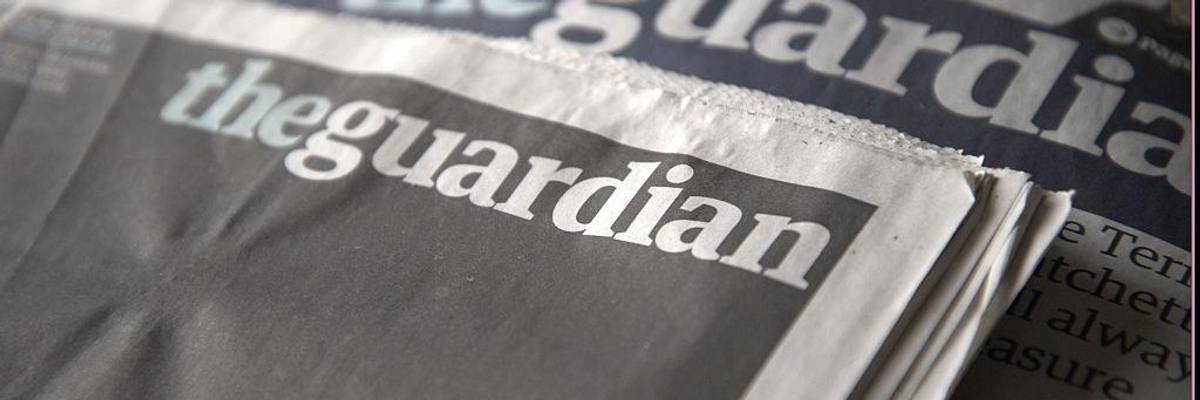
Copies of The Guardian newspaper. (Photo by NurPhoto/NurPhoto via Getty Images)
We write in support of Nathan Robinson, founder of Current Affairs magazine, who was fired as a columnist for The Guardian for a joking tweet critical of U.S. military aid to Israel. This is shocking behavior for a publication that has earned the respect and loyalty of millions of readers around the world for courageous journalism that has often offended the sensibilities of the powerful.
The paper has not denied that it terminated Robinson's column over the tweet and has only said that it did not technically "fire" Robinson because it does not offer its columnists contracts. The Guardian's US editor, John Mulholland, sent Robinson a "confidential" message saying that while Robinson was "free" as an opinion columnist to speak his mind, his tweet had antisemitic connotations. Though Robinson immediately deleted the tweet and apologized for violating the Guardian's unwritten policy, the paper immediately stopped accepting his pitches before discontinuing his column entirely. It was made clear by an editor that this was a direct result of the tweet criticizing U.S. military support for Israel.
The Guardian has been criticized before for its casual use of antisemitism accusations against critics of Israel. We strongly condemn antisemitism. We also strongly condemn the deployment of the baseless charges of antisemitism to silence criticism of Israeli policy or U.S. support of that policy. Regardless of one's opinions on the Middle East, everyone should be distressed by The Guardian's act of blatant censorship.
Aside from the loss of Robinson's contributions to the Guardian, we are worried that this action will have a chilling effect on other media workers, who will be under increased pressure to avoid straying from orthodoxy lest they lose their jobs. The ability to harshly criticize the policies of powerful governments is a basic freedom and is essential to preventing atrocities. Even if the Guardian regularly publishes material critical of Israel's policies, which it does, by not making it clear what writers are and are not allowed to say, the paper chills the ability of its contributors to comment openly and freely on the issue.
The Guardian's termination of Robinson has evoked widespread criticism. His firing has sent a message to writers at The Guardian and elsewhere that they will be punished if they post unapproved opinions on Israel. We demand that Robinson be reinstated and that Mulholland apologize for this crime against free expression. The Guardian must make clear that its writers have the freedom to comment critically on Israel without suffering career consequences.
Support for Palestinian rights and criticism of US policy toward Israel can't be an exception to free speech.
Liza Featherstone, Jacobin & The Nation
Doug Henwood, Behind the News
Noam Chomsky, Laureate Professor of Linguistics, University of Arizona
Rashid Khalidi, Edward Said Professor of Modern Arab Studies, Columbia University
Johann Hari, author, Chasing the Scream and Lost Connections
Ilan Pappe, Director of the European Centre for Palestine Studies, University of Exeter
Avi Shlaim, Emeritus Professor of International Relations, University of Oxford
Dina Matar, Director, Center for Palestine Studies, SOAS, University of London
Nur Masalha, Professor, SOAS, University of London
Maximilian Alvarez, editor in chief, The Real News Network
Jason Stanley, Professor of Philosophy, Yale University
Corey Robin, Professor of Political Science, Brooklyn College
Greg Grandin, C. Vann Woodward Professor of History, Yale University
Noura Erakat, Rutgers University
Katie Halper, Rolling Stone & The Katie Halper Show
Sam Seder, The Majority Report
Katha Pollitt, The Nation
Cornel West, Harvard University
Glenn Greenwald, co-founder, The Intercept
Jeet Heer, The Nation
Meagan Day, Jacobin
Molly Crabapple, artist
Diana Buttu, Institute for Middle East Understanding
Andrew Cockburn, Harper's
Steven Lukes, Professor of Sociology, New York University
Ben Burgis, Jacobin and Rutgers University
Robby Soave, Reason
Ryan Grim, The Intercept
David Palumbo-Liu, Stanford University
David Klion, Jewish Currents
Jonathan Cook, former Guardian journalist
Samuel Moyn, Professor of History, Yale University
Jodi Dean, Professor of Political Science, Hobart & William Smith Colleges
Natasha Lennard, The Intercept
Ken Klippenstein, The Intercept
Osita Nwanevu, New Republic
Briahna Joy Gray, Bad Faith, former press secretary for Bernie Sanders
Ryan Cooper, The Week
Jim Naureckas, Fairness & Accuracy in Reporting (FAIR)
Janine Jackson, Fairness & Accuracy in Reporting (FAIR)
Julie Hollar, Fairness & Accuracy in Reporting (FAIR)
Luke Savage, Jacobin
Branko Marcetic, Jacobin
Jonathan Rosenhead, Emeritus Professor, London School of Economics
Ana Kasparian, The Young Turks
Laura Kipnis, Northwestern University
James Livingston, Rutgers University
Michael Moore, filmmaker
Dear Common Dreams reader, It’s been nearly 30 years since I co-founded Common Dreams with my late wife, Lina Newhouser. We had the radical notion that journalism should serve the public good, not corporate profits. It was clear to us from the outset what it would take to build such a project. No paid advertisements. No corporate sponsors. No millionaire publisher telling us what to think or do. Many people said we wouldn't last a year, but we proved those doubters wrong. Together with a tremendous team of journalists and dedicated staff, we built an independent media outlet free from the constraints of profits and corporate control. Our mission has always been simple: To inform. To inspire. To ignite change for the common good. Building Common Dreams was not easy. Our survival was never guaranteed. When you take on the most powerful forces—Wall Street greed, fossil fuel industry destruction, Big Tech lobbyists, and uber-rich oligarchs who have spent billions upon billions rigging the economy and democracy in their favor—the only bulwark you have is supporters who believe in your work. But here’s the urgent message from me today. It's never been this bad out there. And it's never been this hard to keep us going. At the very moment Common Dreams is most needed, the threats we face are intensifying. We need your support now more than ever. We don't accept corporate advertising and never will. We don't have a paywall because we don't think people should be blocked from critical news based on their ability to pay. Everything we do is funded by the donations of readers like you. When everyone does the little they can afford, we are strong. But if that support retreats or dries up, so do we. Will you donate now to make sure Common Dreams not only survives but thrives? —Craig Brown, Co-founder |
We write in support of Nathan Robinson, founder of Current Affairs magazine, who was fired as a columnist for The Guardian for a joking tweet critical of U.S. military aid to Israel. This is shocking behavior for a publication that has earned the respect and loyalty of millions of readers around the world for courageous journalism that has often offended the sensibilities of the powerful.
The paper has not denied that it terminated Robinson's column over the tweet and has only said that it did not technically "fire" Robinson because it does not offer its columnists contracts. The Guardian's US editor, John Mulholland, sent Robinson a "confidential" message saying that while Robinson was "free" as an opinion columnist to speak his mind, his tweet had antisemitic connotations. Though Robinson immediately deleted the tweet and apologized for violating the Guardian's unwritten policy, the paper immediately stopped accepting his pitches before discontinuing his column entirely. It was made clear by an editor that this was a direct result of the tweet criticizing U.S. military support for Israel.
The Guardian has been criticized before for its casual use of antisemitism accusations against critics of Israel. We strongly condemn antisemitism. We also strongly condemn the deployment of the baseless charges of antisemitism to silence criticism of Israeli policy or U.S. support of that policy. Regardless of one's opinions on the Middle East, everyone should be distressed by The Guardian's act of blatant censorship.
Aside from the loss of Robinson's contributions to the Guardian, we are worried that this action will have a chilling effect on other media workers, who will be under increased pressure to avoid straying from orthodoxy lest they lose their jobs. The ability to harshly criticize the policies of powerful governments is a basic freedom and is essential to preventing atrocities. Even if the Guardian regularly publishes material critical of Israel's policies, which it does, by not making it clear what writers are and are not allowed to say, the paper chills the ability of its contributors to comment openly and freely on the issue.
The Guardian's termination of Robinson has evoked widespread criticism. His firing has sent a message to writers at The Guardian and elsewhere that they will be punished if they post unapproved opinions on Israel. We demand that Robinson be reinstated and that Mulholland apologize for this crime against free expression. The Guardian must make clear that its writers have the freedom to comment critically on Israel without suffering career consequences.
Support for Palestinian rights and criticism of US policy toward Israel can't be an exception to free speech.
Liza Featherstone, Jacobin & The Nation
Doug Henwood, Behind the News
Noam Chomsky, Laureate Professor of Linguistics, University of Arizona
Rashid Khalidi, Edward Said Professor of Modern Arab Studies, Columbia University
Johann Hari, author, Chasing the Scream and Lost Connections
Ilan Pappe, Director of the European Centre for Palestine Studies, University of Exeter
Avi Shlaim, Emeritus Professor of International Relations, University of Oxford
Dina Matar, Director, Center for Palestine Studies, SOAS, University of London
Nur Masalha, Professor, SOAS, University of London
Maximilian Alvarez, editor in chief, The Real News Network
Jason Stanley, Professor of Philosophy, Yale University
Corey Robin, Professor of Political Science, Brooklyn College
Greg Grandin, C. Vann Woodward Professor of History, Yale University
Noura Erakat, Rutgers University
Katie Halper, Rolling Stone & The Katie Halper Show
Sam Seder, The Majority Report
Katha Pollitt, The Nation
Cornel West, Harvard University
Glenn Greenwald, co-founder, The Intercept
Jeet Heer, The Nation
Meagan Day, Jacobin
Molly Crabapple, artist
Diana Buttu, Institute for Middle East Understanding
Andrew Cockburn, Harper's
Steven Lukes, Professor of Sociology, New York University
Ben Burgis, Jacobin and Rutgers University
Robby Soave, Reason
Ryan Grim, The Intercept
David Palumbo-Liu, Stanford University
David Klion, Jewish Currents
Jonathan Cook, former Guardian journalist
Samuel Moyn, Professor of History, Yale University
Jodi Dean, Professor of Political Science, Hobart & William Smith Colleges
Natasha Lennard, The Intercept
Ken Klippenstein, The Intercept
Osita Nwanevu, New Republic
Briahna Joy Gray, Bad Faith, former press secretary for Bernie Sanders
Ryan Cooper, The Week
Jim Naureckas, Fairness & Accuracy in Reporting (FAIR)
Janine Jackson, Fairness & Accuracy in Reporting (FAIR)
Julie Hollar, Fairness & Accuracy in Reporting (FAIR)
Luke Savage, Jacobin
Branko Marcetic, Jacobin
Jonathan Rosenhead, Emeritus Professor, London School of Economics
Ana Kasparian, The Young Turks
Laura Kipnis, Northwestern University
James Livingston, Rutgers University
Michael Moore, filmmaker
We write in support of Nathan Robinson, founder of Current Affairs magazine, who was fired as a columnist for The Guardian for a joking tweet critical of U.S. military aid to Israel. This is shocking behavior for a publication that has earned the respect and loyalty of millions of readers around the world for courageous journalism that has often offended the sensibilities of the powerful.
The paper has not denied that it terminated Robinson's column over the tweet and has only said that it did not technically "fire" Robinson because it does not offer its columnists contracts. The Guardian's US editor, John Mulholland, sent Robinson a "confidential" message saying that while Robinson was "free" as an opinion columnist to speak his mind, his tweet had antisemitic connotations. Though Robinson immediately deleted the tweet and apologized for violating the Guardian's unwritten policy, the paper immediately stopped accepting his pitches before discontinuing his column entirely. It was made clear by an editor that this was a direct result of the tweet criticizing U.S. military support for Israel.
The Guardian has been criticized before for its casual use of antisemitism accusations against critics of Israel. We strongly condemn antisemitism. We also strongly condemn the deployment of the baseless charges of antisemitism to silence criticism of Israeli policy or U.S. support of that policy. Regardless of one's opinions on the Middle East, everyone should be distressed by The Guardian's act of blatant censorship.
Aside from the loss of Robinson's contributions to the Guardian, we are worried that this action will have a chilling effect on other media workers, who will be under increased pressure to avoid straying from orthodoxy lest they lose their jobs. The ability to harshly criticize the policies of powerful governments is a basic freedom and is essential to preventing atrocities. Even if the Guardian regularly publishes material critical of Israel's policies, which it does, by not making it clear what writers are and are not allowed to say, the paper chills the ability of its contributors to comment openly and freely on the issue.
The Guardian's termination of Robinson has evoked widespread criticism. His firing has sent a message to writers at The Guardian and elsewhere that they will be punished if they post unapproved opinions on Israel. We demand that Robinson be reinstated and that Mulholland apologize for this crime against free expression. The Guardian must make clear that its writers have the freedom to comment critically on Israel without suffering career consequences.
Support for Palestinian rights and criticism of US policy toward Israel can't be an exception to free speech.
Liza Featherstone, Jacobin & The Nation
Doug Henwood, Behind the News
Noam Chomsky, Laureate Professor of Linguistics, University of Arizona
Rashid Khalidi, Edward Said Professor of Modern Arab Studies, Columbia University
Johann Hari, author, Chasing the Scream and Lost Connections
Ilan Pappe, Director of the European Centre for Palestine Studies, University of Exeter
Avi Shlaim, Emeritus Professor of International Relations, University of Oxford
Dina Matar, Director, Center for Palestine Studies, SOAS, University of London
Nur Masalha, Professor, SOAS, University of London
Maximilian Alvarez, editor in chief, The Real News Network
Jason Stanley, Professor of Philosophy, Yale University
Corey Robin, Professor of Political Science, Brooklyn College
Greg Grandin, C. Vann Woodward Professor of History, Yale University
Noura Erakat, Rutgers University
Katie Halper, Rolling Stone & The Katie Halper Show
Sam Seder, The Majority Report
Katha Pollitt, The Nation
Cornel West, Harvard University
Glenn Greenwald, co-founder, The Intercept
Jeet Heer, The Nation
Meagan Day, Jacobin
Molly Crabapple, artist
Diana Buttu, Institute for Middle East Understanding
Andrew Cockburn, Harper's
Steven Lukes, Professor of Sociology, New York University
Ben Burgis, Jacobin and Rutgers University
Robby Soave, Reason
Ryan Grim, The Intercept
David Palumbo-Liu, Stanford University
David Klion, Jewish Currents
Jonathan Cook, former Guardian journalist
Samuel Moyn, Professor of History, Yale University
Jodi Dean, Professor of Political Science, Hobart & William Smith Colleges
Natasha Lennard, The Intercept
Ken Klippenstein, The Intercept
Osita Nwanevu, New Republic
Briahna Joy Gray, Bad Faith, former press secretary for Bernie Sanders
Ryan Cooper, The Week
Jim Naureckas, Fairness & Accuracy in Reporting (FAIR)
Janine Jackson, Fairness & Accuracy in Reporting (FAIR)
Julie Hollar, Fairness & Accuracy in Reporting (FAIR)
Luke Savage, Jacobin
Branko Marcetic, Jacobin
Jonathan Rosenhead, Emeritus Professor, London School of Economics
Ana Kasparian, The Young Turks
Laura Kipnis, Northwestern University
James Livingston, Rutgers University
Michael Moore, filmmaker